Last Updated on July 30, 2026 by Caleb Warren
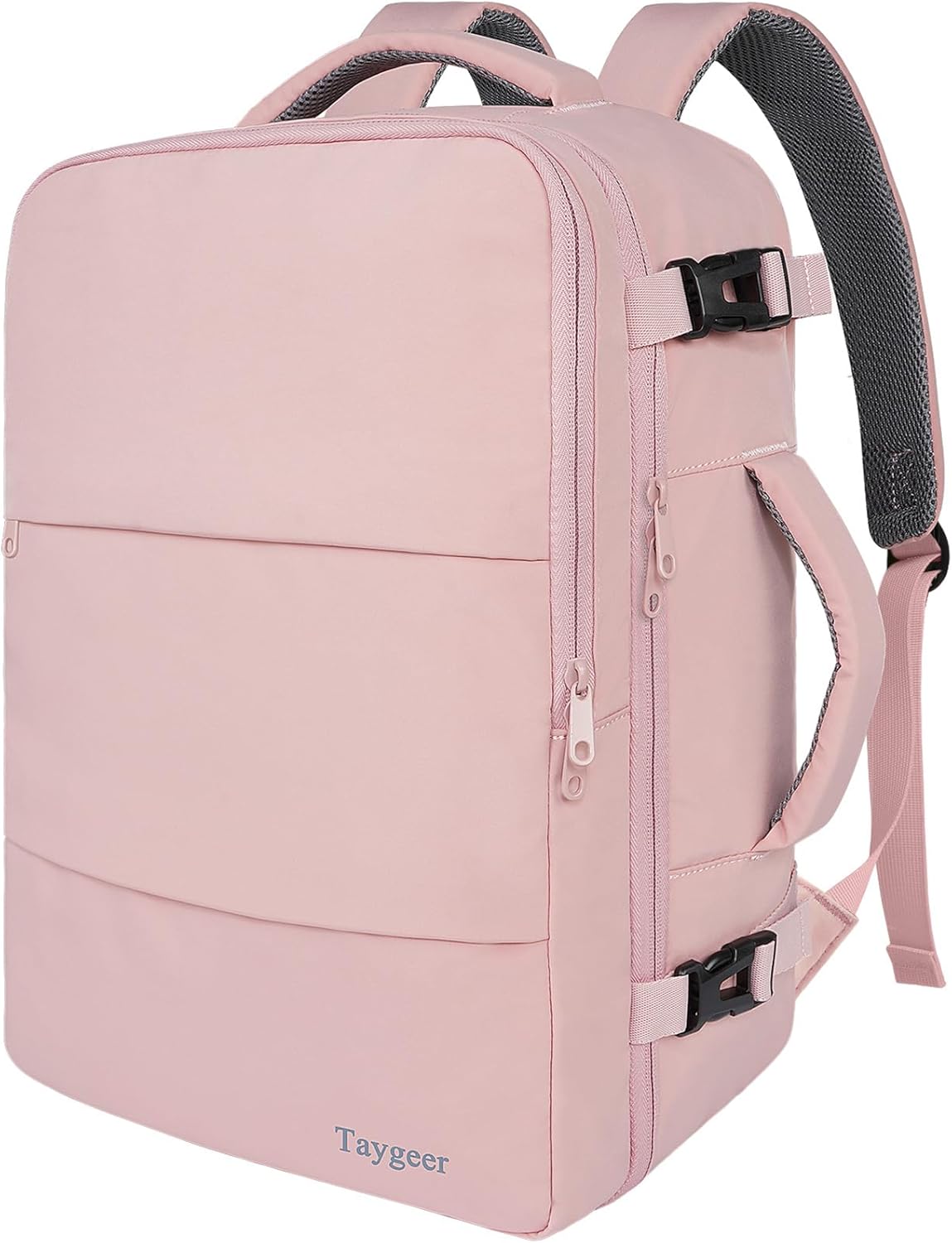
Yes, a backpack can count as your personal item on a flight when it meets the operating airline’s rules and fits completely beneath the seat in front of you. Because airlines use different dimensions—and some publish only an under-seat fit requirement—you should check your exact fare and flight before packing.
Quick Answer
A backpack is normally accepted as a personal item when it fits under the seat and stays within the airline’s stated dimensions. Measure it after packing, including filled pockets, straps, handles, and wheels. Check the operating carrier’s current policy because size, weight, fare, and aircraft restrictions can differ.
Key Takeaways
- A small backpack, laptop bag, tote, or compact duffel may qualify as a personal item if it fits beneath the seat.
- Personal-item dimensions are not standardized, and some airlines do not publish a separate numeric maximum.
- Measure the backpack fully packed and include every exterior part, including handles, straps, wheels, and bulging pockets.
- Your fare may include a personal item without including a larger overhead-bin carry-on.
- Keep medication, documents, valuables, power banks, and spare lithium batteries accessible in case your bag must be checked.
At a Glance
| Time Required | 5–10 minutes to check the policy and measure; 10–20 minutes to pack |
| Difficulty | Easy |
| Tools Needed | Tape measure, booking details, and the airline’s current baggage page; optional luggage scale |
| Cost | $0 when the item is included and compliant; an oversized bag may trigger a variable carry-on or checked-bag charge |
Disclosure: As an Amazon Associate I earn from qualifying purchases. Some links on this page are affiliate links, at no extra cost to you.
Understanding Personal Items
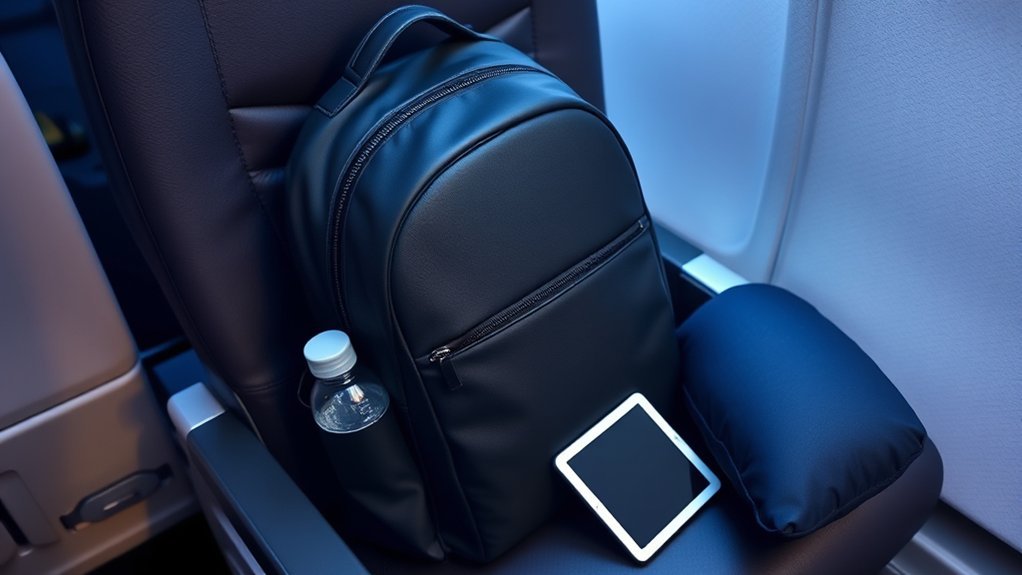
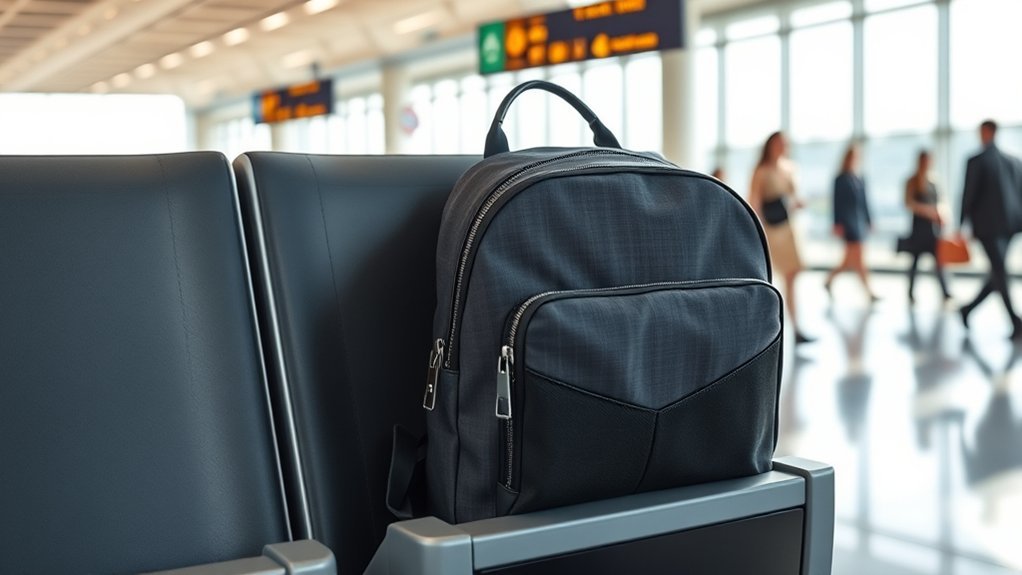
A personal item is a smaller bag that you keep in the cabin and normally store beneath the seat in front of you. Common examples include a small backpack, purse, briefcase, laptop bag, camera bag, tote, or compact duffel.
A personal item is different from a standard carry-on bag. A carry-on usually goes in the overhead bin and may have a larger allowance. Your ticket may include both items, or it may include only the smaller personal item.
| Bag Type | Normal Storage Location | Typical Examples |
|---|---|---|
| Personal item | Completely beneath the seat in front of you | Small backpack, purse, laptop bag, briefcase, tote |
| Carry-on bag | Overhead bin | Roller bag, larger backpack, travel duffel |
Under-seat space can vary by aircraft and seat. Supports, electrical boxes, and other equipment may reduce the usable room. At a bulkhead seat, where there is no seat directly ahead, the crew may require your personal item to be placed in an overhead bin during taxi, takeoff, and landing.
Note: Check the baggage policy of the airline operating the flight. On a codeshare itinerary, the airline shown on your ticket may not be the carrier operating the aircraft, and the operating carrier’s cabin-bag rules may apply.
Size Limits for Personal Items by Airline
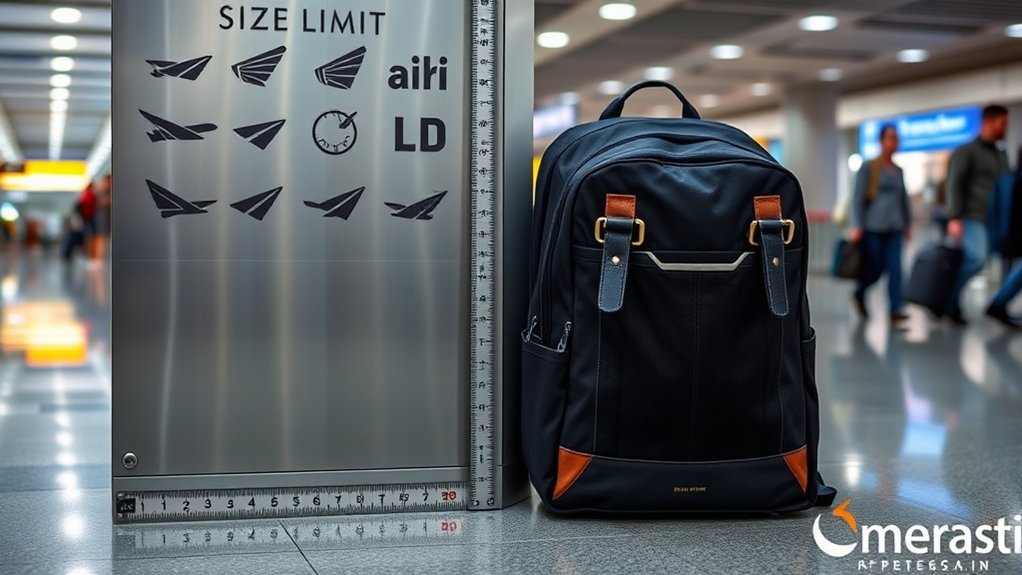
There is no universal personal-item size. Some airlines publish exact dimensions, while others describe the item by examples and require it to fit beneath the seat. Policies can change, so use this comparison as a planning guide and confirm the rule for your itinerary before departure.
Airline-Specific Size Guidelines
| Airline | Published Personal-Item Rule | Important Detail |
|---|---|---|
| American Airlines | 18 x 14 x 8 inches | Must fit beneath the seat in front of you. |
| Delta Air Lines | No separate numeric personal-item maximum is published on the current policy page. | Delta allows a purse, briefcase, small backpack, laptop bag, or similarly sized item beneath the seat. |
| Southwest Airlines | No separate numeric personal-item maximum is published on the current policy page. | One personal item is allowed and must be stored beneath the seat. |
| Spirit Airlines | 18 x 14 x 8 inches | Handles and wheels count. The item must fit in the under-seat space. |
| United Airlines | 9 x 10 x 17 inches | The entire item, including wheels and handles, must fit beneath the seat. |
| JetBlue | 17 inches long x 13 inches wide x 8 inches high | Must be placed beneath the seat in front of you. |
| Frontier Airlines | 18 x 14 x 8 inches and up to 35 pounds | Handles, wheels, and straps count. The bag may be checked in a sizer during boarding. |
Dimension order is not consistent across airline websites. One airline may list length x width x height, while another uses height x width x depth. Compare each labeled dimension instead of assuming the numbers are presented in the same order.
A backpack’s advertised capacity in liters does not determine whether it qualifies as a personal item. Its packed exterior dimensions and ability to fit beneath the seat are what matter.
Measuring Personal Item Dimensions
Measure the bag in the same condition in which you will take it to the gate:
- Pack the backpack first. Empty-bag measurements do not account for bulging clothing, toiletries, or side pockets.
- Set it on a flat surface. Do not press or bend it while taking the first measurement.
- Measure the longest exterior length. Include any rigid frame, handle, or protruding section.
- Measure the widest point. Include filled bottle pockets and side compartments.
- Measure the deepest point. Include the front pocket, back padding, wheels, or expansion panel.
- Tuck loose straps in place. Straps still need to remain within the airline’s allowance when the bag is presented for boarding.
- Compare the packed measurements with the operating airline’s current policy.
Pro Tip: Leave a little unused space instead of packing the backpack until every panel bulges. A soft bag may compress into a sizer, but compression is not guaranteed to make an oversized bag acceptable or usable beneath your assigned seat.
Warning: If the backpack exceeds the personal-item allowance, the airline may treat it as a carry-on or checked bag and charge the applicable fee. Charges and enforcement procedures vary by airline, route, fare, and purchase timing.
Characteristics of an Ideal Personal Item Backpack
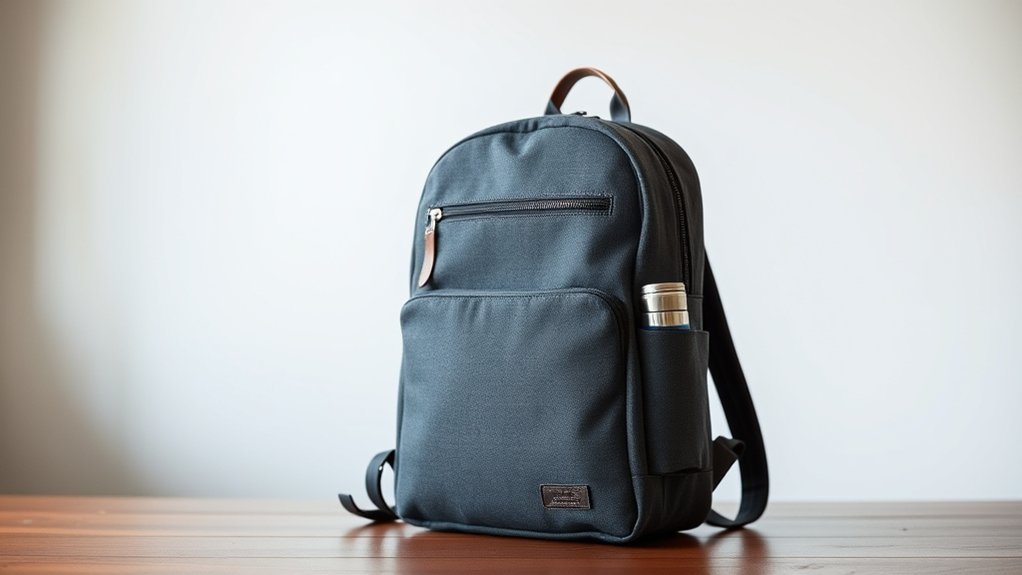
The best personal item backpack is compact enough for the airline’s limit but organized enough to hold everything you need during the flight. Exterior measurements matter more than the bag’s stated liter capacity.
Size and Dimensions
- Under-seat shape: A rectangular or softly structured backpack usually uses the available space more efficiently than a tall hiking pack.
- Low empty weight: A lightweight bag leaves more capacity for your belongings and is easier to carry through the airport.
- Moderate depth: Deep front pockets can cause an otherwise compliant backpack to exceed the allowed depth when filled.
- Controlled expansion: Compression straps can help keep soft contents from bulging.
- No oversized frame: Rigid frames, thick wheels, and fixed handles cannot be compressed into an airline sizer.
A 15- to 25-liter daypack may be convenient for many travelers, but capacity alone is not proof of compliance. Two backpacks with the same liter rating can have very different exterior dimensions.
Organization and Accessibility
A practical layout helps you retrieve documents, medication, and electronics without unpacking everything in the aisle or at the security checkpoint.
| Feature | Why It Helps | Packing Use |
|---|---|---|
| Multiple compartments | Separates small essentials without requiring extra pouches | Chargers, headphones, pens, and travel documents |
| Padded laptop sleeve | Protects the device and makes it easier to remove when requested | Laptop, tablet, or e-reader |
| Accessible top pocket | Keeps frequently used items within reach | ID, wallet, boarding information, and glasses |
| Luggage sleeve | Secures the backpack to a wheeled carry-on | Airport transfers and long terminal walks |
| Tuck-away straps | Reduces snagging and keeps the packed outline controlled | Boarding, sizer checks, and under-seat storage |
Packing Efficiently for Your Personal Item
Efficient packing is not about forcing the greatest possible amount into the bag. The goal is to stay within the limit while keeping safety-critical and frequently used items easy to reach.
- Verify your fare and operating airline. Confirm whether your ticket includes only a personal item or also includes an overhead-bin carry-on.
- Start with essential cabin items. Pack identification, travel documents, medication, keys, valuables, and necessary electronics first.
- Use small packing cubes only when they save space. A large rigid cube can make a soft backpack bulge beyond its depth limit.
- Place dense items close to your back. Keep a laptop, tablet, and other heavier objects centered against the back panel rather than hanging in an outer pocket.
- Keep security items accessible. Store your liquids bag and electronics where you can reach them if a screening officer asks you to remove them.
- Protect fragile equipment. Use padded sleeves and keep pressure away from screens and charging ports.
- Close every expansion zipper. Measure the bag only after all compartments are closed and straps are secured.
- Perform a final fit check. The backpack should slide beneath a chair or similar opening without blocking the space around your feet.
Note: Under the TSA liquids rule, ordinary liquids, gels, aerosols, creams, and pastes in a carry-on are generally limited to containers of 3.4 ounces or 100 milliliters inside one quart-sized bag. Medically necessary liquids may qualify for an exception and should be declared for screening.
Warning: Power banks and spare lithium batteries must remain in carry-on baggage. Protect their terminals from short circuits. If your backpack is taken for gate checking, remove power banks and spare batteries and keep them with you in the cabin.
What to Include in Your Personal Item
Use your personal item for anything you will need during the journey or cannot risk losing in checked baggage.
| Essential Item | Examples and Purpose |
|---|---|
| Travel documents | Passport or ID, boarding information, wallet, visas, and required entry documents |
| Medication | Prescription medicine, medically necessary supplies, and enough essential medication for delays |
| Electronics | Laptop, tablet, phone, headphones, charging cables, and approved power bank |
| Valuables | Keys, cash, jewelry, fragile devices, and irreplaceable items |
| Food and water | Solid snacks and an empty reusable bottle to fill after security; liquid or gel foods may be subject to liquid limits |
| Comfort items | Light layer, eye mask, compact neck pillow, tissues, and warm socks |
| Delay essentials | One change of underwear, basic toiletries, and any item needed during an unexpected overnight delay |
For laptop screening, follow the signs and the officer’s directions at your checkpoint. Travelers in many standard lanes may be asked to remove larger electronics, while TSA PreCheck passengers generally leave laptops in their bags. Some airports also use screening equipment that allows electronics to remain packed.
Backpacks vs. Other Personal Item Options
A backpack is often practical because it keeps your hands free and distributes the load across both shoulders. It is not automatically the best choice for every traveler, however.
| Option | Advantages | Possible Drawbacks |
|---|---|---|
| Backpack | Hands-free, comfortable for longer walks, usually well organized | Front pockets can bulge; tall hiking shapes may not fit well beneath a seat |
| Tote | Wide opening and quick access | Less secure, can become uncomfortable on one shoulder |
| Laptop bag | Good device protection and professional organization | Limited room for clothing and comfort items |
| Compact duffel | Flexible shape and roomy main compartment | Easy to overfill and harder to organize |
Whichever style you choose, the label on the bag does not control its classification. A duffel, purse, or laptop case becomes an oversized item when it exceeds the applicable dimensions or cannot be stored safely.
Tips for Traveling With a Personal Item
- Save the policy page. Take a screenshot or bookmark the operating airline’s baggage rules before leaving for the airport.
- Do not rely on the manufacturer’s measurements alone. Verify the exterior size yourself after packing.
- Avoid attaching bulky items outside the bag. Shoes, pillows, bottles, and jackets strapped to the exterior can increase the measured dimensions.
- Wear the bulkiest clothing. A coat or sweater takes up significant backpack space and may be permitted separately, depending on the airline.
- Keep your ID and boarding information accessible. Do not bury them beneath clothing or packing cubes.
- Prepare for limited under-seat room. Keep a small pouch of in-flight essentials near the top so you do not need to pull out the entire backpack repeatedly.
- Recheck the bag before the return flight. Purchases made during the trip can turn a compliant backpack into an oversized one.
Navigating Airline Policies for Personal Items
Use this checklist whenever you book or pack for a flight:
- Identify the operating airline for every segment. Connections and codeshares may involve more than one carrier.
- Read the fare inclusions. Confirm whether the ticket includes a personal item, an overhead-bin carry-on, or both.
- Check dimensions and weight separately. Do not assume that a bag meeting the size requirement also meets a published weight limit.
- Look for aircraft exceptions. Regional aircraft may have less cabin space, and larger bags may be tagged for planeside or gate checking.
- Review special-item allowances. Assistive devices, medical equipment, diaper bags, child-restraint items, food, coats, and umbrellas may receive different treatment, but the details vary by airline.
- Confirm whether a pet carrier uses your allowance. Many airlines count an in-cabin pet carrier as a personal item or carry-on item.
- Check again shortly before departure. Baggage policies and fees can change after you book.
Note: A free personal item does not always mean a free overhead-bin carry-on. Spirit and Frontier, for example, include a personal item with their basic offerings while larger cabin bags may depend on the fare, bundle, status, or an additional purchase.
Recommendations for Suitable Personal Item Backpacks
Instead of shopping by brand name alone, compare the backpack’s construction with the strictest airline you expect to use.
- Choose exterior dimensions below your limit. A small margin makes it easier to account for filled pockets and measurement differences.
- Prefer a soft rectangular shape. It uses under-seat space efficiently without the height of a hiking pack.
- Look for a lightly padded back panel. Excessively thick padding consumes depth without adding storage.
- Use a protected laptop sleeve. The sleeve should sit close to the back rather than in a bulging front compartment.
- Choose lockable or secure zippers. This helps protect documents and electronics in crowded terminals.
- Consider a luggage pass-through. It can make the backpack easier to manage when you also have a wheeled carry-on.
- Avoid unnecessary wheels and rigid handles. They count toward the dimensions and reduce usable interior volume.
- Test comfort while fully loaded. Adjustable shoulder straps and a sternum strap can help during long walks between gates.
A packable daypack can work well for light travel, but very thin bags may offer little protection for electronics. A compact laptop backpack offers better structure, while a small travel backpack provides more clothing space. The best option is the one that remains compliant when packed with your actual belongings.
Frequently Asked Questions
Can I bring a laptop in my personal item backpack?
Yes. A laptop may be carried in a personal-item backpack when the packed bag meets the airline’s limit. Use a padded sleeve and follow the screening officer’s instructions about whether the laptop must be removed at the checkpoint.
Do airlines allow multiple personal items if they fit?
Usually not. A ticket normally includes one personal item. A second purse, laptop bag, or small backpack may count as another cabin bag. Certain items—such as an assistive device, coat, umbrella, or qualifying infant item—may be exempt under a specific airline’s policy.
What happens if my backpack exceeds the personal-item limit?
The airline may require you to place it in a sizer, reclassify it as a carry-on or checked bag, and charge the applicable fee. If it must be checked, remove medication, documents, valuables, power banks, and spare lithium batteries first.
Can I use a duffel bag as a personal item?
Yes. A compact duffel can qualify when its fully packed exterior dimensions meet the airline’s rules and it fits completely beneath the seat. Avoid overfilling it, because soft sides can bulge beyond the depth limit.
Are there weight restrictions for personal items?
Sometimes. Many major U.S. airlines publish a size or under-seat fit rule without a separate personal-item weight limit. Others do specify a maximum; Frontier currently lists up to 35 pounds. International airlines may apply different cabin-baggage weight rules, so check the operating carrier.
Does a personal item have to fit completely under the seat?
Yes. It should be fully stowed so it does not block the aisle, extend into another passenger’s space, or interfere with access to safety equipment. The crew has final authority over safe stowage.
Does a pet carrier count as a personal item?
It often does, but the treatment varies by airline. Some carriers count the pet and approved carrier as the personal item, while others allow a separate personal item or carry-on under specific conditions. Review the airline’s pet policy before booking.
Conclusion
A backpack can be an excellent personal item when it fits beneath the seat and complies with the operating airline’s current rules. Measure the bag after packing, verify what your fare includes, and keep essential documents, medication, valuables, and batteries accessible. A compact, well-organized backpack helps you move through the airport comfortably without relying on guesswork at the gate.
Sources
- American Airlines — Carry-on Bags — personal-item dimensions and under-seat requirement
- Delta Air Lines — Carry-On Baggage — accepted personal-item examples, cabin allowance, and screening guidance
- Southwest Airlines — Carry-on and Personal Item Policy — cabin-item allowance and storage rules
- United Airlines — Carry-on Bags — personal-item dimensions and under-seat requirement
- Transportation Security Administration — Liquids, Aerosols, and Gels Rule — carry-on liquid limits and screening preparation
- Federal Aviation Administration — PackSafe Lithium Batteries — power-bank, spare-battery, watt-hour, and gate-check rules