Last Updated on July 30, 2026 by Caleb Warren
A backpack can usually qualify as a personal item for air travel when it fits the operating airline’s published limits and can be stored completely under the seat in front of you. There is no universal personal-item size, so measure the backpack after packing it, check your exact itinerary, and keep essential or restricted cabin items easy to reach.
Quick Answer
A backpack counts as a personal item when it meets your airline’s current rule and fits fully under the seat. Some airlines publish exact dimensions, while others use a fit-based standard. Measure the packed bag at its widest points, including bulging pockets, handles, straps, and wheels, before leaving for the airport.
Key Takeaways
- There is no single personal-item size accepted by every airline.
- Measure the backpack after packing it because soft pockets and compressed clothing can expand its depth.
- The airline controls bag size, quantity, and stowage; TSA controls what may pass through a U.S. security checkpoint.
- Keep medication, travel documents, valuables, power banks, and spare lithium batteries in the cabin.
- Check the operating carrier’s policy again shortly before departure, especially for codeshares, international flights, and basic fares.
At a Glance
| Time Required | About 15–30 minutes to check the policy, measure the packed bag, and organize the contents |
| Difficulty | Easy |
| Tools Needed | Tape measure, current airline baggage page, and optional packing cubes or zip pouches |
| Cost | Usually $0 when you use an existing compliant bag; airline fees may apply if it is reclassified as a carry-on or checked bag |
Disclosure: As an Amazon Associate I earn from qualifying purchases. Some links on this page are affiliate links, at no extra cost to you.
Understanding Personal Item Definitions
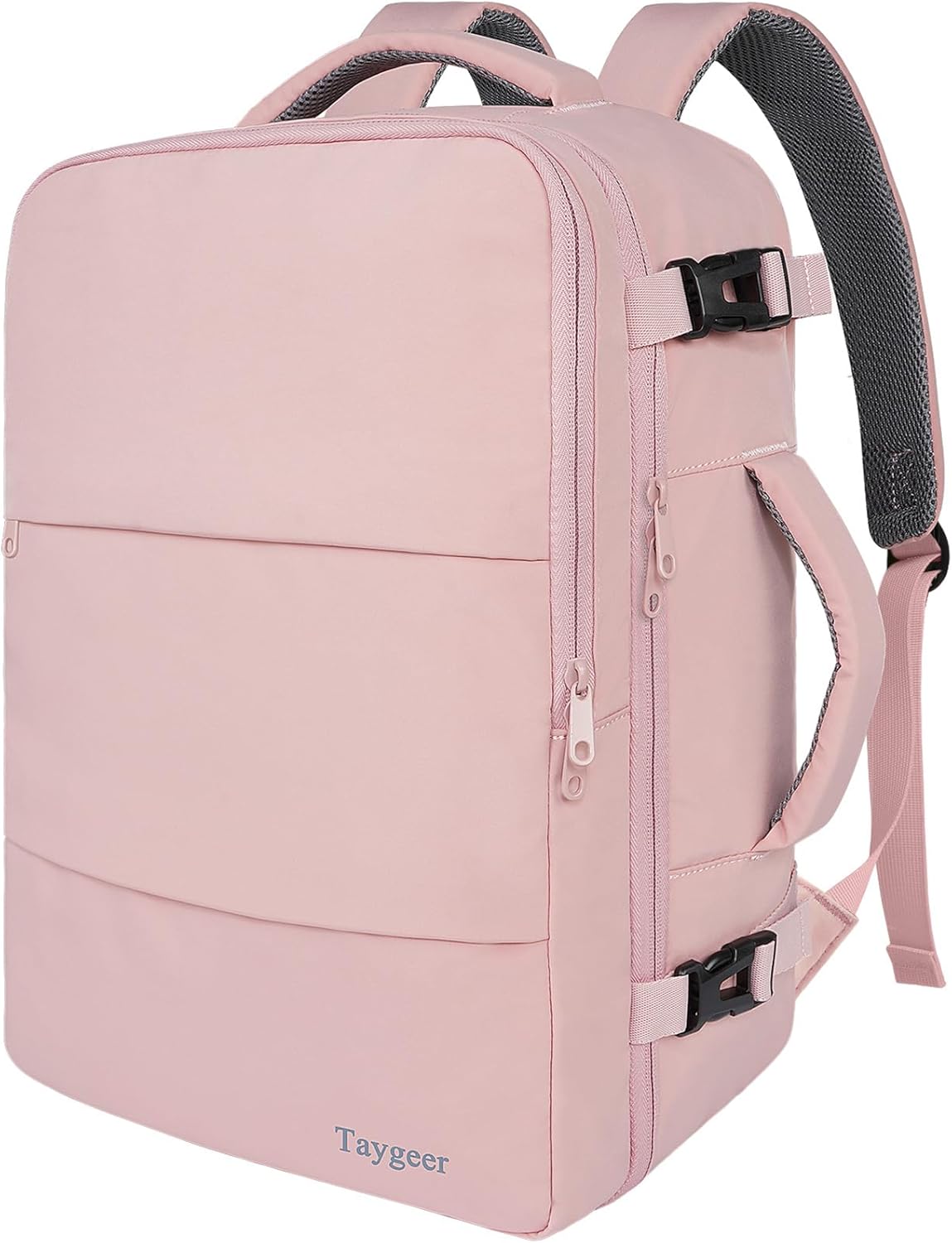
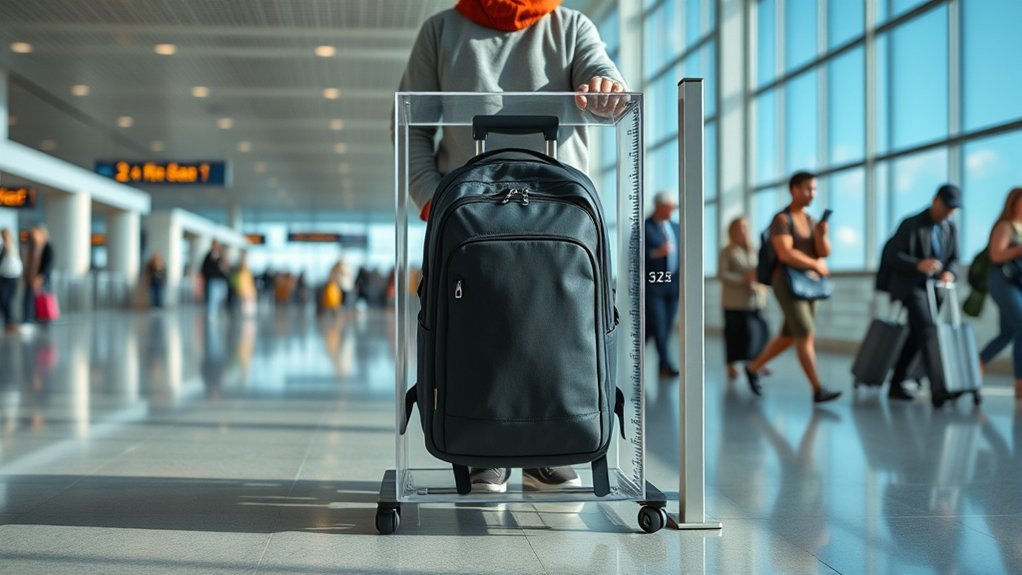
A personal item is a small cabin bag intended to fit under the seat in front of you. Common examples include a backpack, purse, briefcase, tote, or laptop bag. It is different from a standard carry-on suitcase, which is normally stored in an overhead bin.
Many U.S. airline fares allow one personal item, but that does not always mean a full-size overhead-bin carry-on is included. Budget-airline and restricted-fare passengers may need to pay separately for a larger carry-on. Always review the allowance attached to your specific ticket rather than relying only on a general airline chart.
Note: The airline controls the number, dimensions, weight, and storage location of your bags. The Transportation Security Administration controls what may pass through a U.S. security checkpoint. Passing security does not mean an oversized backpack will be accepted at the gate.
There is no universal 18 x 14 x 8-inch standard. That measurement is used by some airlines, including American and Spirit, but other carriers publish smaller dimensions or use a general under-seat-fit requirement. Personal-item weight limits are uncommon on the major U.S. policies compared below, but international carriers and partner airlines may limit the combined weight of cabin baggage.
The safest personal-item backpack is not the largest bag an online chart says might fit. It is a bag that complies with the current operating carrier’s rule even after every pocket is packed.
Personal Item Size Limits by Airline
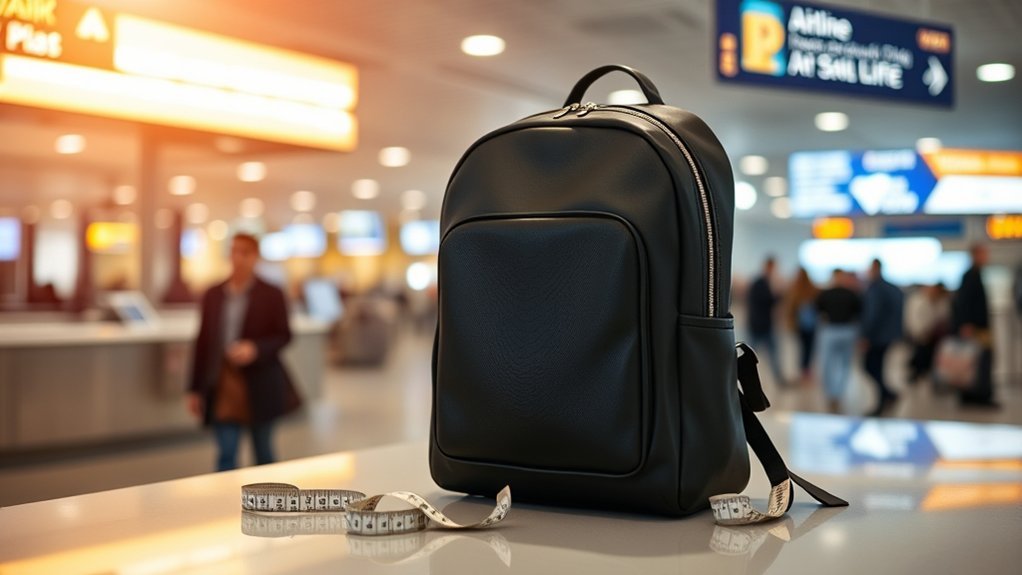
The following rules were checked against official airline information. Policies can change, and available under-seat space can vary by aircraft and seat location, so confirm the rule again before each trip.
| Airline | Current Published Rule | Packing Guidance |
|---|---|---|
| American Airlines | Maximum 18 x 14 x 8 inches (45 x 35 x 20 cm); must fit under the seat | Measure the complete packed bag and keep protruding pockets within the limit. |
| Delta Air Lines | One small personal item; Delta’s current public page does not provide a separate numeric personal-item maximum | Use a genuinely small backpack that fits completely in the available under-seat space. |
| Southwest Airlines | One smaller personal-type item that fits under the seat; the current policy page does not display a numeric personal-item maximum | Do not rely on older online charts that assign Southwest a fixed measurement without checking the official page. |
| Spirit Airlines | Maximum 18 x 14 x 8 inches (45 x 35 x 20 cm), including handles and wheels | Anything larger may be treated as a carry-on or checked bag and may require payment. |
| United Airlines | Maximum 9 x 10 x 17 inches (22 x 25 x 43 cm), including handles and wheels | Compare dimensions in the same order because United’s listed order differs from many luggage charts. |
Warning: Check the operating carrier, not only the airline that sold the ticket. A codeshare or partner-operated segment may apply different cabin-baggage dimensions, weight limits, or fees.
Does Backpack Capacity in Liters Determine Compliance?
No. A liter rating describes internal volume, not the backpack’s external shape. Two 25-liter backpacks can have different heights, frames, pockets, and depths. A tall hiking pack may fail a personal-item limit even when its stated capacity is lower than that of a short, rectangular travel backpack.
How to Measure a Personal Item Backpack
Measure the bag in the condition in which you will carry it. An empty backpack may appear compliant and then become several inches deeper after you fill the front pocket or compress clothing against the zipper.
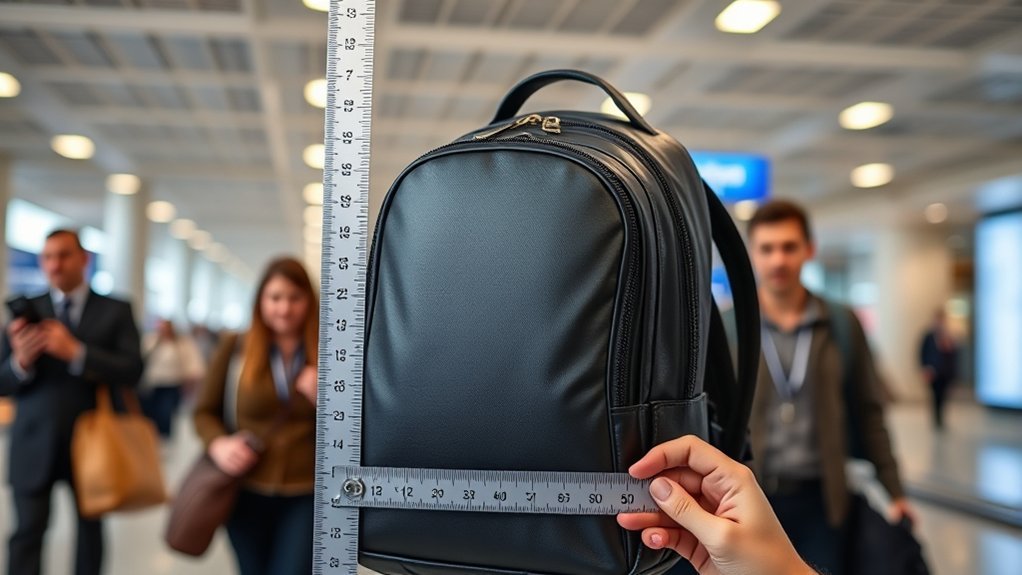
- Pack the backpack normally. Close every zipper and tighten compression straps without forcing the contents into an unrealistic shape.
- Measure the height. Measure from the lowest point to the highest point, including fixed handles, wheels, or a rigid frame.
- Measure the width. Measure across the widest side, including stuffed side pockets or a water bottle if it will remain there while boarding.
- Measure the depth. Measure from the back panel to the furthest bulging point on the front.
- Match the airline’s dimension order. Airlines may list height, width, and length in a different order. Compare each physical side, not merely the sequence of numbers.
- Leave room for variation. Avoid packing directly to every maximum dimension. Soft bags can shift, and airport sizers may not accommodate a tightly bulging pocket.
Pro Tip: Write the packed measurements in your phone and take a photo of the tape measure against the bag. This makes it easier to recheck the same packing setup before your return flight.
Testing the backpack beneath a chair at home can reveal whether it is obviously too tall or rigid, but it cannot confirm airline compliance. Aircraft seats have supports, entertainment boxes, life-vest containers, and different clearances. The airport bag sizer and the airline’s final stowage decision control.
Tips for Packing Your Personal Item
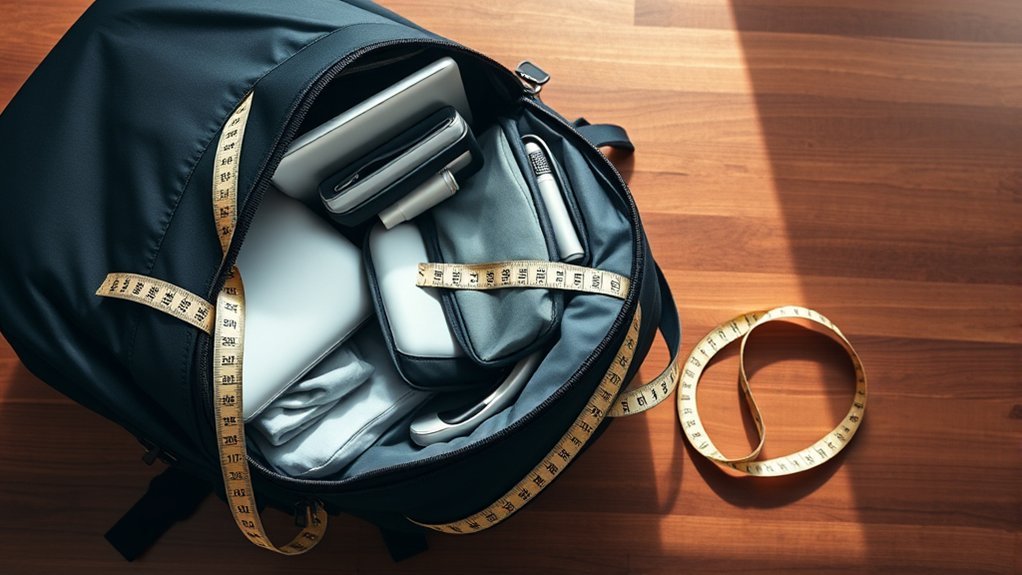
Choose a compact backpack that holds its shape without relying on a thick frame. A soft-sided design can adapt to available space, but it still must remain within the airline’s limit without being forced into the sizer or blocking the aisle.
Use small packing cubes, zip pouches, or document sleeves to separate categories. Large cubes can create a rigid block that wastes the tapered or irregular space inside a backpack. Place items needed at security or during the flight near the top or in an accessible pocket.
What to Pack in a Personal Item Backpack
- Travel documents: Passport, identification, boarding information, visas, and necessary confirmations
- Medication: Prescription and essential nonprescription medication needed during the trip
- Valuables: Wallet, keys, jewelry, irreplaceable documents, and small fragile items
- Electronics: Phone, laptop or tablet, headphones, charging cables, and adapters
- Cabin-only batteries: Power banks and spare lithium batteries with terminals protected from short circuits
- TSA liquids bag: Ordinary liquids, gels, creams, aerosols, and pastes in compliant containers
- Flight comfort: A light layer, eye mask, earplugs, tissues, and an empty reusable water bottle
- Food: Solid snacks that are easy to screen and do not leak
- One-day backup: Underwear, basic toiletries, and a light shirt when checked luggage is part of the trip
Warning: The FAA requires power banks and spare lithium batteries to remain in carry-on baggage. If your backpack or carry-on is checked at the gate, remove these batteries and keep them with you in the cabin. Protect exposed terminals from contact with metal objects.
Packing Liquids and Medication
For a standard U.S. security screening, the TSA 3-1-1 rule generally allows one quart-sized bag containing liquids, aerosols, gels, creams, and pastes in containers of 3.4 ounces or 100 milliliters or less. The container’s labeled capacity matters; a half-full 6-ounce bottle is still too large for the standard bag.
Medically necessary liquids, medications, breast milk, formula, and certain child-nourishment items may qualify for exceptions. Declare exempt liquids to the TSA officer and allow extra time for screening. International security rules may differ on the return journey.
Strategies for Using a Backpack as a Personal Item
Maximizing your backpack’s usable space can keep the bag organized without turning it into an oversized, rounded bundle. Use these strategies:
- Check the exact restriction: Review the airline page for every segment shortly before departure.
- Use multiple compartments carefully: Separate electronics, documents, and personal-care items, but do not fill every outer pocket until it bulges.
- Choose a soft-sided design: A flexible backpack is easier to position under a seat than a rigid case, provided it remains safely contained.
- Keep heavy items close to your back: This improves balance and prevents the front of the bag from sagging outward.
- Use a luggage sleeve: A sleeve can secure the backpack to a wheeled suitcase while moving through the airport.
- Wear the bulkiest practical layer: Wearing a jacket can save space, but do not plan on carrying several loose garments because an airline may require you to consolidate them.
- Keep one pocket intentionally open: Reserve space for items removed at security or anything that must be transferred from a gate-checked carry-on.
Avoid attaching shoes, neck pillows, shopping bags, or pouches to the outside unless the airline clearly excludes them from its baggage count. Gate agents may require separate loose items to be consolidated into your permitted bags.
Personal Item Rules by Fare, Aircraft, and Itinerary
Your backpack may meet the published dimensions and still require special handling in some situations:
- Basic or restricted fares: A personal item may be included while an overhead-bin carry-on costs extra.
- Budget airlines: Bag sizers and reclassification fees may be enforced more closely because cabin baggage is sold separately on many fares.
- Codeshare flights: The operating carrier’s rule may differ from the marketing airline’s allowance.
- International itineraries: Some airlines apply cabin-baggage weight limits in addition to dimensions.
- Regional aircraft: Smaller cabins can have less storage, causing larger cabin bags to be tagged and placed in the cargo compartment.
- Bulkhead or restricted floor-storage rows: You may be instructed to place the backpack overhead during taxi, takeoff, and landing because there is no usable seat directly in front of you.
- Pet carriers: An in-cabin pet carrier may use the personal-item or carry-on allowance, depending on the airline.
Under-seat dimensions can also differ within the same aircraft. Seat legs, electrical boxes, and entertainment equipment may reduce usable space. Follow crew instructions and keep straps tucked away so the bag does not obstruct the aisle.
Common Mistakes to Avoid With Personal Item Regulations
Most personal-item problems occur because the bag was measured incorrectly or the traveler relied on an old, unofficial chart. Use this table as a final check:
| Mistake | Possible Consequence | Better Approach |
|---|---|---|
| Exceeding the published size | The bag may be reclassified, checked, or charged | Measure the fully packed backpack and leave a small margin |
| Relying on an old third-party chart | You may follow a rule the airline no longer publishes | Open the official airline policy for the current itinerary |
| Measuring the empty bag | Stuffed pockets increase the external dimensions | Measure after packing and closing every compartment |
| Ignoring the operating carrier | A partner flight may apply a smaller limit | Check who operates each flight segment |
| Assuming there is never a weight limit | International or partner-carrier restrictions may be missed | Review both dimensional and weight rules |
| Packing power banks in a bag that may be checked | The batteries must be removed before the bag enters the cargo hold | Store them in an accessible cabin-only pouch |
| Treating a household chair as a compliance test | Actual aircraft clearance may be smaller | Use the official measurements and airport sizer |
Frequently Asked Questions
Can I bring a laptop bag as a personal item?
Usually, yes. A laptop bag can be your personal item when it complies with the airline’s current dimensions or under-seat-fit rule. It normally uses your one personal-item allowance, so a separate purse, backpack, or tote may need to be placed inside another permitted bag.
Are there weight restrictions for personal items?
It depends on the airline and itinerary. Several major U.S. carriers focus primarily on dimensions and safe storage, but international and partner airlines may impose a personal-item or combined cabin-baggage weight limit. Check every operating carrier listed on the booking.
Can I store liquids in my personal item?
Yes. At a standard U.S. checkpoint, ordinary liquids, aerosols, gels, creams, and pastes must generally be in containers of 3.4 ounces or 100 milliliters or less and fit inside one quart-sized bag. Medically necessary liquids and certain infant-feeding items can qualify for exceptions and should be declared for screening.
Do strollers count as a personal item?
Child strollers generally do not use the standard personal-item allowance on major U.S. airlines. They are commonly accepted for free checking at the ticket counter or gate, although stroller size and type can affect where they must be checked. Pet strollers and wagons may follow different rules, so verify the operating airline’s child-item policy.
What happens if my personal item exceeds the size limit?
The airline may treat it as an overhead-bin carry-on or checked bag. You could be required to pay the applicable fee, remove items, or check the bag at the gate. A compression bag only helps when the backpack’s external dimensions actually become compliant and remain within the limit after it is closed.
Can I bring both a backpack and a carry-on suitcase?
Many fares permit one personal item plus one carry-on suitcase, but the allowance is not universal. Some budget or restricted fares include only the personal item unless you purchase a carry-on. Confirm what is included in the fare and ensure the backpack is small enough to qualify as the personal item.
Conclusion
A personal item backpack works best when it is measured after packing, matched to the operating airline’s current rule, and organized around the items you must keep in the cabin. Do not assume that 18 x 14 x 8 inches applies everywhere or that an old comparison chart remains current. Check each flight, keep the bag within its external limits, and leave enough space to remove documents, liquids, medication, and batteries without unpacking everything at the gate.
Sources
- American Airlines Carry-On Bags — personal-item dimensions, under-seat storage, and excluded child or medical items
- Delta Air Lines Carry-On Baggage — cabin-baggage allowance and approved storage requirements
- Southwest Airlines Carry-On and Personal Item Policy — current personal-item and carry-on guidance
- Spirit Airlines Contract of Carriage — personal-item dimensions and treatment of oversized bags
- United Airlines Carry-On Bags — personal-item dimensions, examples, and under-seat requirements
- Transportation Security Administration Liquids Rule — U.S. checkpoint limits for liquids, aerosols, gels, creams, and pastes