Last Updated on July 27, 2026 by Caleb Warren
Yes, you can bring a backpack through airport security as long as it complies with TSA security rules and your airline’s carry-on policies. To ensure a smooth journey, verify that your bag meets your carrier’s dimensional limits, follow the 3-1-1 rule for liquids, pack portable power banks in your carry-on, and prepare to remove larger electronics during screening. A backpack offers unmatched convenience and flexibility for air travel — here is everything you need to check before arriving at the terminal.
Quick Answer
Yes, backpacks are permitted as carry-on items or personal items at TSA checkpoints and by all major airlines. Ensure your backpack fits within your airline’s size dimensions (typically around 22 x 14 x 9 inches for overhead carry-ons or 18 x 14 x 8 inches for under-seat personal items), pack liquids under 3.4 oz (100 mL) in a clear quart bag, and keep portable power banks inside your backpack, as they are prohibited in checked luggage.
Key Takeaways
- Backpacks are treated as standard carry-on luggage or personal items by TSA and airlines.
- The 3-1-1 liquids rule (3.4 oz containers in one clear quart bag) applies at standard airport security checkpoints.
- Power banks, spare lithium batteries, and e-cigarettes must be packed in your carry-on backpack, never in checked baggage.
- Screening procedures vary depending on whether your lane uses standard X-ray scanners, upgraded CT 3D scanners, or TSA PreCheck.
- TSA strictly enforces REAL ID rules for domestic flights; bring a REAL ID license or an approved federal photo ID like a valid passport.
At a Glance
| TSA Permission | Allowed as carry-on or personal item at all security checkpoints |
| Carry-On Size Standard | 22 x 14 x 9 inches (56 x 36 x 23 cm) for overhead bin storage |
| Personal Item Size Standard | 18 x 14 x 8 inches (45 x 35 x 20 cm) to fit under the seat in front |
| Liquids Standard | 3-1-1 rule applies (3.4 oz / 100 mL max per container in 1 quart bag) |
| Power Banks / Batteries | Must be in carry-on backpack (max 100Wh standard); strictly banned in checked bags |
Disclosure: As an Amazon Associate I earn from qualifying purchases. Some links on this page are affiliate links, at no extra cost to you.
Understanding TSA Regulations for Backpacks
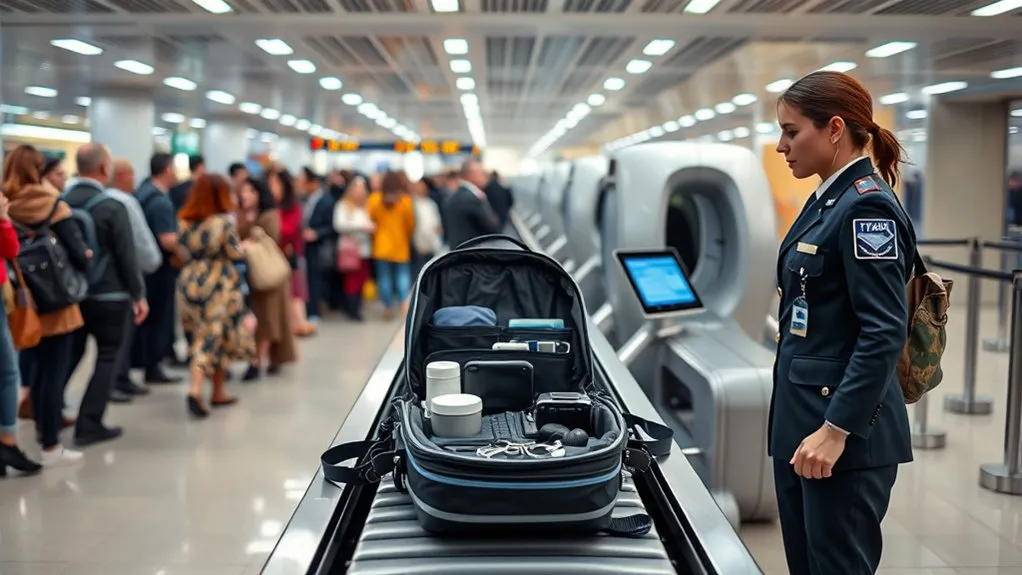
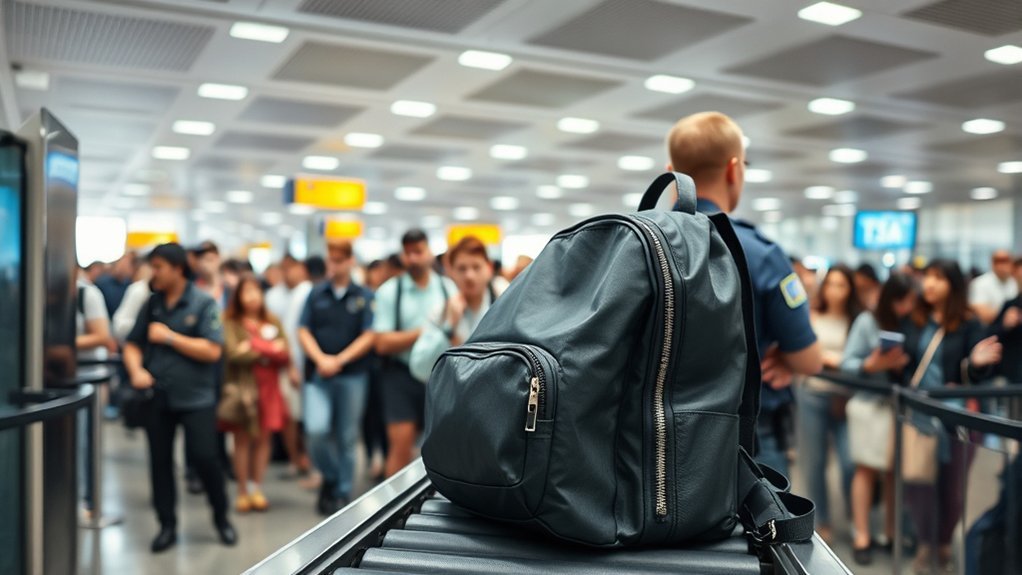
When preparing your backpack for air travel, understanding TSA regulations ensures a fast, stress-free security screening experience. Most airlines accept backpacks as carry-on luggage or personal items, with major domestic carriers referencing a standard carry-on limit around 22 x 14 x 9 inches (56 x 36 x 23 cm). Always adhere to the TSA 3-1-1 liquids rule: liquids, gels, and aerosols must be in containers of 3.4 ounces (100 milliliters) or less, stored together inside a clear, quart-sized resealable bag.
How your backpack is screened depends on the security lane you enter:
- Standard Screening Lanes: You must remove your 3-1-1 liquids bag and any personal electronics larger than a cell phone (laptops, tablets, gaming consoles) from your backpack and place them in separate bins for X-ray inspection.
- CT Scanner Lanes: At modern checkpoints equipped with 3D Computed Tomography (CT) scanners, you generally leave laptops and liquids inside your backpack, as these advanced machines build 3D rotational views of your bag’s contents.
- TSA PreCheck Lanes: If enrolled in TSA PreCheck, you do not need to remove laptops, 3-1-1 liquids, light jackets, or shoes when passing through security.
Warning: Portable power banks, spare lithium-ion batteries, and e-cigarettes must be packed in your carry-on backpack or personal item. The FAA and TSA strictly prohibit lithium power banks in checked baggage due to thermal fire hazards. Ensure your power bank capacity does not exceed 100 watt-hours (Wh) without prior airline approval.
Note: TSA strictly enforces REAL ID requirements for domestic flights. If your state driver’s license is not REAL ID compliant, you must present an alternative approved government photo ID, such as a valid U.S. passport, passport card, military ID, or DHS trusted traveler card (Global Entry, NEXUS, or SENTRI).
Benefits of Using a Backpack as Carry-on Luggage
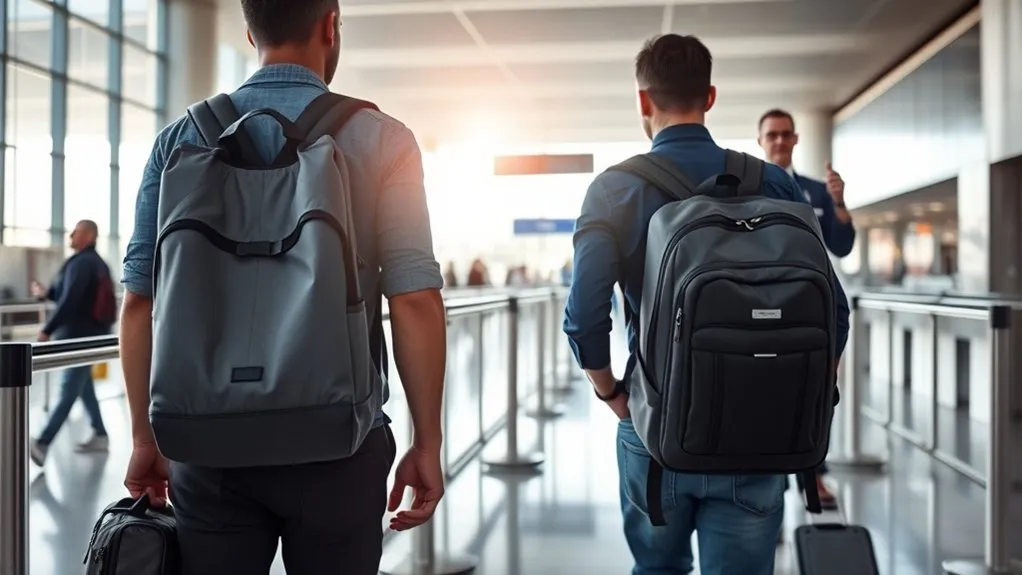
Beyond meeting TSA regulations, choosing a backpack as carry-on luggage offers distinct practical advantages over hard-shell rolling suitcases. Hands-free mobility allows you to navigate bustling airport terminals, stairs, and public transport comfortably, keeping your hands free for boarding passes, identification, or coffee.
Backpacks also provide flexible packing. Soft-sided fabric compresses more easily than rigid luggage, helping you optimize interior space and navigate tight overhead bins or under-seat spaces. Dedicated external compartments allow instant access to travel documents, medication, phone chargers, and water bottles without unzipping your entire main compartment. Additionally, keeping all belongings in a carry-on backpack helps you bypass checked-bag fees and avoid baggage claim delays altogether.
Airline Carry-on Policies for Backpacks
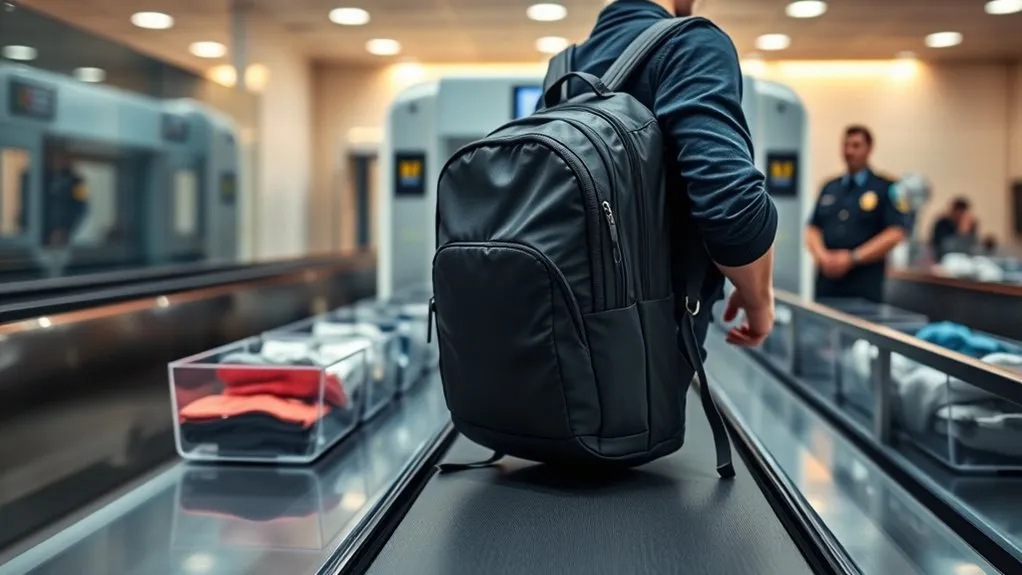
While TSA handles safety and screening at security checkpoints, individual airlines enforce their own restrictions regarding backpack dimensions and weight limits. Understanding these policies prevents unexpected gate-check fees before boarding.
Size Limitations for Backpacks
Airlines categorize bags into two primary groups, each with specific dimension standards:
- Carry-On Bag (Overhead Bin): Major U.S. carriers (such as Delta, American, and United) permit carry-on backpacks up to 22 x 14 x 9 inches (56 x 36 x 23 cm). These fit in overhead storage bins.
- Personal Item (Under-Seat Storage): If you bring a backpack in addition to a rolling suitcase, or if you fly on budget airlines (like Spirit or Frontier), your backpack must meet personal item limits—typically around 18 x 14 x 8 inches (45 x 35 x 20 cm)—and fit completely underneath the seat in front of you.
- International Sizing: European and Asian carriers often enforce slightly smaller carry-on dimensions (such as 21.5 x 15.5 x 9 inches) and strict weight checks.
Weight Regulations Overview
Most domestic U.S. airlines do not enforce explicit weight limits for carry-on backpacks, provided you can lift the bag into the overhead bin unassisted. However, international airlines frequently enforce strict carry-on weight limits ranging between 15 lbs and 22 lbs (7 kg to 10 kg). Gate agents on regional aircraft or international flights may weigh backpacks at boarding, so weighing your bag at home is highly recommended.
Choosing the Right Backpack for Air Travel
Selecting the proper backpack balances capacity, physical ergonomics, and compliance with airline sizing. A travel-specific backpack designed with clamshell unzipping and padded shoulder harness systems outperforms standard school backpacks for long trips.
Size and Weight Considerations
Keep these technical specs in mind when purchasing a travel backpack:
- Volume Capacity: A capacity between 28 to 35 liters works best as an under-seat personal item, while a 35 to 45 liter capacity maximizes overhead carry-on space for multi-day travel.
- External Dimensions: Always measure your backpack when fully packed, including protruding water bottle pockets, top handles, and hip belts, as gate sizers measure outer boundaries.
- Bag Unladen Weight: Opt for lightweight, durable fabrics (such as 420D Cordura or Ripstop Nylon) so the backpack itself does not consume your comfortable carry capacity.
Features for Convenience
Look for features engineered specifically for airport security efficiency: a dedicated TSA-friendly padded laptop sleeve that opens flat, lockable zippers, hidden passport pockets against your back, and padded mesh shoulder straps with a sternum strap. Water-resistant coatings shield your gear during unexpected weather between airport transfers.
Pro Tip: Pack your 3-1-1 liquids bag, laptop, and portable power banks in a top or front external pocket. Even at modern CT-scanner checkpoints where unbagging isn’t always mandatory, keeping key items accessible speeds up processing if a TSA officer requests a manual secondary inspection.
Efficient Packing Tips for Your Backpack
Proper packing optimizes space while helping your backpack pass through X-ray screening without triggering secondary bag inspections. Follow these structured packing steps:
- Roll Clothes & Use Packing Cubes: Tightly rolling garments minimizes wrinkles and saves volume. Packing cubes categorize items, allowing you to unpack single items without disrupting your bag’s arrangement.
- Distribute Weight Strategically: Place heavy items (like extra shoes or books) near the center of the backpack, close to your back. This improves center-of-gravity comfort during terminal walks.
- Avoid Secondary Inspection Triggers: TSA officers frequently pull bags for manual inspection when X-rays display dense, cluttered organic items. Avoid stacking multiple electronic cables, dense food blocks (like cheeses or spreads), or tightly packed liquid bottles directly on top of one another.
- Organize Essential Documents: Store your boarding pass, travel documents, identification, and medication in a secure, quick-access pocket.
Pros and Cons of Using a Backpack as Carry-on
Evaluating the trade-offs between carry-on backpacks and traditional wheeled suitcases helps you choose the right gear for your trip style.
| Pros | Cons |
|---|---|
| Hands-free mobility across cobblestones, stairs, and terminals | Offers less impact protection for fragile items than hard-shell cases |
| Flexible fabric squeezes into tight overhead bins and under seats | Can strain shoulders and back if overloaded or packed poorly |
| Multiple exterior organizational pockets for instant document access | Less internal structure compared to traditional flat suitcases |
| Eliminates risk of lost checked bags and eliminates baggage fees | Strict volume limits compared to large checked bags |
Popular Backpack Recommendations for Travelers
Top-rated travel backpacks trusted by frequent flyers include:
- Osprey Farpoint 40L / Fairview 40L: Widely regarded as an industry standard carry-on backpack, offering stowable harness straps, excellent hip support, and rugged durability.
- Patagonia Refugio 26L / 30L: An excellent choice for light packers or travelers seeking a dual-purpose personal item backpack that fits comfortably under airplane seats.
- Tortuga Outbreaker 35L / 45L: Designed specifically for modern travel with maximum square volume, heavy-duty weatherproofing, and maximum internal organization.
Final Checks Before Heading to the Airport
Perform a final audit of your backpack before leaving for the airport:
- Clear out old pockets from past trips to ensure no hidden pocket knives, excess liquids, or prohibited items remain inside.
- Verify all liquid containers inside your bag are 3.4 oz (100 mL) or smaller and enclosed within a single clear quart bag.
- Confirm portable power banks and spare lithium batteries are in your backpack—not in checked luggage.
- Verify your backpack matches your airline’s dimensional limits for carry-ons or personal items.
- Ensure you carry a REAL ID-compliant driver’s license or valid passport in an easily accessible pocket.
Frequently Asked Questions
Can I bring snacks in my backpack through airport security?
Yes. Solid snacks (like sandwiches, nuts, fruit, and energy bars) are fully permitted through TSA security. However, spreadable or liquid foods (such as yogurt, peanut butter, hummus, or jam) must comply with the 3-1-1 rule and be in containers 3.4 oz or smaller.
Are portable power banks allowed in carry-on backpacks?
Yes, portable power banks and lithium-ion batteries must be placed in your carry-on backpack or personal item. TSA and FAA rules strictly forbid power banks in checked luggage due to fire safety risks. Standard passenger limits allow power banks up to 100 watt-hours (Wh).
Are there specific size restrictions for backpacks at airport security?
TSA checkpoints screen bags for safety rather than size. However, your airline enforces size rules. Standard overhead carry-on size limits are roughly 22 x 14 x 9 inches, while under-seat personal items should stay within roughly 18 x 14 x 8 inches.
Do I need to take laptops and liquids out of my backpack at security?
In standard screening lanes, yes—you must place laptops, large electronics, and 3-1-1 liquid bags in separate screening bins. If your lane uses modern 3D CT scanners or if you use TSA PreCheck, you can usually leave electronics and liquids inside your backpack.
Can I bring a backpack and a personal item on board?
Yes. Most full-service airlines allow one carry-on bag (such as a 40L backpack for overhead storage) plus one smaller personal item (like a purse, laptop case, or small 20L backpack) that fits under the seat in front of you.
What should I do if my backpack is too heavy?
If your backpack exceeds airline weight limits (common on international flights), wear heavier items (such as jackets or heavy shoes) onto the plane, redistribute items into your personal item, or layer clothes to reduce bag weight before gate check-in.
Conclusion
Using a backpack as your carry-on luggage streamlines air travel, offering versatile organization, comfortable hands-free mobility, and fee savings. By adhering to TSA 3-1-1 liquid limits, stowing power banks in your carry-on, carrying approved REAL ID identification, and selecting a backpack sized appropriately for your airline, you can move efficiently through security checkpoints and enjoy a hassle-free journey.
Sources
- TSA — Liquids Rule — Official regulation on 3-1-1 liquids, gels, and aerosols allowance.
- TSA — What Can I Bring? — Master list of approved and prohibited items in carry-on baggage.
- FAA SafeCargo — Lithium Batteries — Safety rules mandating power banks and lithium batteries in carry-on bags.
- TSA — REAL ID Standards — Official guidelines for domestic identity verification requirements.