Last Updated on September 10, 2026 by Daniel Globe
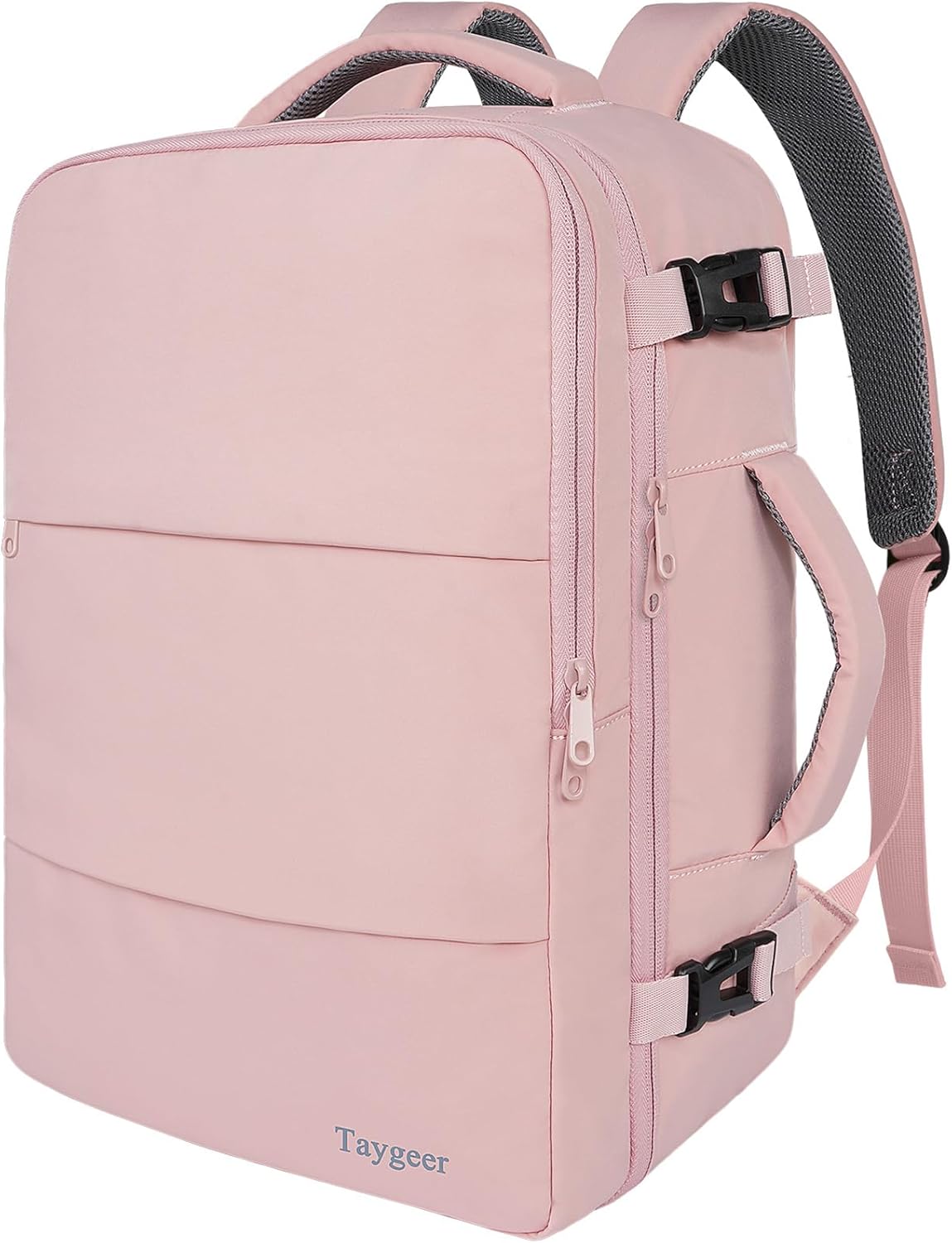
A personal item backpack is a compact travel bag designed to fit completely beneath the seat in front of you. It keeps documents, electronics, medication, snacks, and other in-flight essentials close at hand. The right size is not universal, however, because each airline sets its own dimensions, weight rules, and fare conditions.
Quick Answer
A personal item backpack is a small backpack that fits completely under the seat in front of you and counts as your airline’s personal item. There is no universal size. Choose a soft-sided bag that meets the smallest limit on your itinerary, then use it for valuables, medication, documents, compliant electronics, and in-flight essentials.
Key Takeaways
- A personal item normally goes under the seat, while a larger carry-on usually goes in an overhead bin.
- Airline limits vary, so check the operating carrier for every flight on your itinerary.
- Measure the backpack after packing it, including handles, straps, wheels, and filled exterior pockets.
- Keep travel documents, medication, valuables, power banks, and spare lithium batteries in the cabin with you.
- Do not overfill an expandable or soft-sided bag just because its empty measurements meet the limit.
Disclosure: As an Amazon Associate I earn from qualifying purchases. Some links on this page are affiliate links, at no extra cost to you.
Definition of a Personal Item Backpack
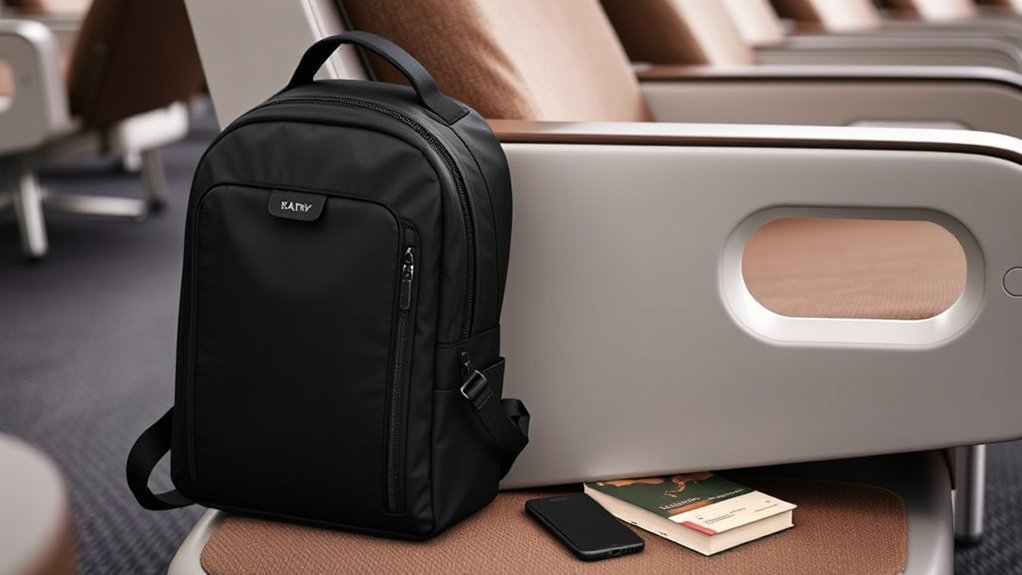
A personal item backpack is a small backpack that an airline accepts as your personal-item allowance. Common examples include small daypacks, laptop backpacks, camera bags, briefcases, purses, and compact tote-style backpacks. The defining feature is not the product name on the label; it is whether the packed bag meets the airline’s limit and fits in the required underseat space.
For example, American Airlines publishes a personal-item limit of 18 x 14 x 8 inches, while United publishes dimensions of 9 x 10 x 17 inches. Both are valid airline policies, but neither is a universal industry standard.
A personal item is also different from a checked bag. It remains with you in the aircraft cabin, which makes it the best place for identification, travel documents, medication, keys, electronics, valuables, and anything you may need during the flight.
Note: Some airlines exempt certain medical, mobility, infant, or assistive items from the normal baggage count. These exceptions are airline-specific, so review the carrier’s policy before relying on one.
Advantages of Using a Personal Item Backpack

A well-designed personal item backpack can make airport travel easier without forcing you to carry a bag in one hand. Its two shoulder straps spread the load more evenly than a one-strap tote or briefcase, although comfort still depends on the strap design, bag weight, and fit.
- Easy access: Keep your passport, boarding pass, headphones, charging cable, snacks, and other essentials within reach.
- Hands-free movement: A backpack is easier to manage while using a phone, handling another suitcase, or moving through public transportation.
- Better organization: Separate compartments can prevent chargers, documents, toiletries, and small items from collecting at the bottom.
- Cabin protection: Valuables and fragile electronics remain with you rather than traveling in checked baggage.
- Everyday usefulness: Many personal item backpacks also work for commuting, school, sightseeing, and short day trips.
- Potential cost savings: A qualifying underseat bag is often included with a ticket, although the exact allowance depends on the airline and fare.
A personal-item size is an airline rule, not a universal backpack size.
Ideal Scenarios for Using a Personal Item Backpack
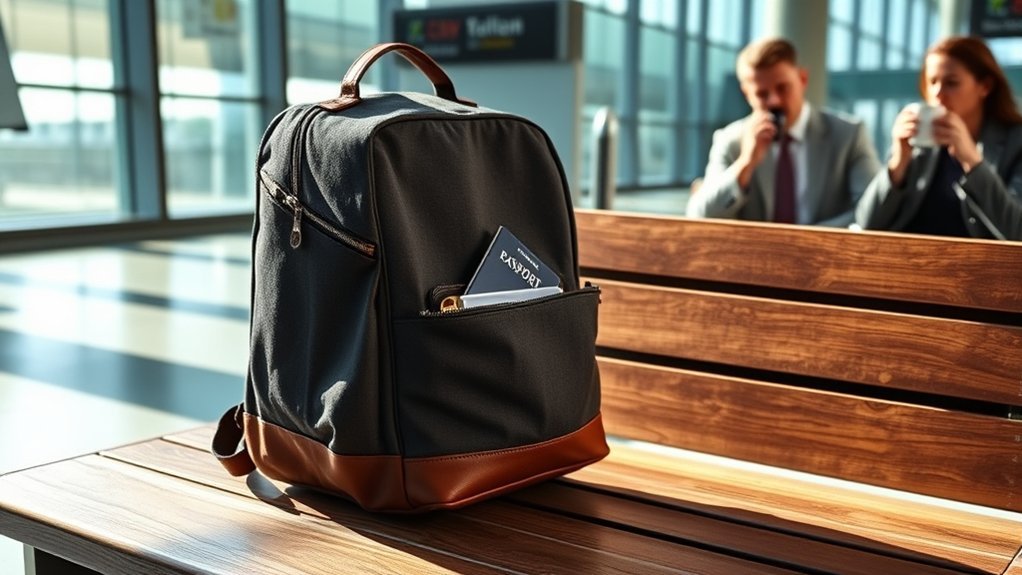
A personal item backpack is especially useful when you want to keep the most important parts of your trip in one compact bag.
- Short flights: Pack entertainment, medication, a light layer, snacks, and charging accessories without opening an overhead bag.
- Weekend trips: A carefully packed backpack may hold enough for a brief trip when the airline’s allowance and your clothing needs permit it.
- Travel with checked luggage: Use the backpack for anything you cannot afford to lose if a checked bag is delayed.
- Business travel: Carry a laptop, charger, documents, notebook, and personal necessities in organized compartments.
- Multi-city travel: A small backpack is easier to manage on trains, buses, and crowded sidewalks than a rigid suitcase.
- Daily use: After the flight, the same bag can serve as a commuter, school, gym, sightseeing, or day-hike bag when its design suits the activity.
A travel-focused personal item backpack is not automatically an ideal hiking pack. For longer outdoor use, look for appropriate ventilation, weather resistance, load support, hydration storage, and trail durability.
Personal Item Backpack Size Rules
There is no single size that every airline accepts. The operating airline—not necessarily the company that sold the ticket—sets the baggage rules for a flight. Check each segment of a codeshare, connecting, or international itinerary and use the smallest limit when you want one bag to work throughout the trip.
The examples below were checked against official airline pages on July 30, 2026. Policies can change, so verify them again before departure.
| Airline | Published Personal-Item Limit | Important Detail |
|---|---|---|
| American Airlines | 18 x 14 x 8 in 45 x 35 x 20 cm |
Must fit under the seat in front of you. |
| United Airlines | 9 x 10 x 17 in 22 x 25 x 43 cm |
Published as the maximum underseat personal-item size. |
| Frontier Airlines | 18 x 14 x 8 in Up to 35 lb |
Measurements include handles, wheels, and straps; oversized items may be charged. |
| Ryanair | 40 x 30 x 20 cm About 15.7 x 11.8 x 7.9 in |
All fares include one small bag that must fit under the seat. |
Warning: A backpack marketed as “airline approved” is not guaranteed to meet every carrier’s rules. Airlines may check the packed bag in a sizer, and an oversized item may be treated as a carry-on or checked bag with an added fee.
How to Measure a Personal Item Backpack
- Pack it first. Fill the backpack with the items you intend to carry. Empty product dimensions do not show how far soft sides and pockets will bulge.
- Close every zipper. Do not depend on an expansion zipper unless your fare allows the expanded measurements.
- Set it on a flat surface. Measure the longest, widest, and deepest exterior points.
- Include protruding parts. Count handles, wheels, rigid frames, stuffed bottle pockets, straps that cannot be tucked away, and any bulging compartment.
- Compare each dimension. Do not rely only on total linear inches because airlines normally limit length, width, and depth separately.
- Check all flights. Use the strictest operating-airline limit on a multi-airline itinerary.
Pro Tip: Leave a little unused space instead of packing to the exact maximum. A soft backpack that technically matches the measurements can still fail a sizer when a jacket, water bottle, or front pocket makes it bulge.
Key Features to Look for in a Personal Item Backpack
The best personal item backpack is not necessarily the one with the most pockets. It is the one that fits your airline limits, protects your essentials, and remains comfortable at the weight you plan to carry.
- Compliant exterior dimensions: Compare the packed dimensions with the smallest airline limit on your trip.
- Soft-sided construction: A flexible bag can fit irregular underseat spaces more easily, but it must not be overstuffed.
- Rectangular shape: A simple shape often uses limited space more efficiently than a rounded hiking pack.
- Padded laptop sleeve: Confirm both the sleeve size and the bag’s external dimensions. A laptop that fits the sleeve can still make the backpack too rigid or thick.
- Comfortable shoulder straps: Look for adjustable straps with enough width and padding for the expected load.
- Supportive back panel: Light padding helps prevent chargers, plugs, and other hard objects from pressing into your back.
- Useful organization: Prioritize quick-access storage for travel documents and a secure pocket for valuables.
- Clamshell or wide opening: A suitcase-style opening makes clothing and packing cubes easier to arrange.
- Secure zippers: Lockable zipper pulls or concealed pockets can help in crowded terminals and public transportation.
- Water-resistant material: This can protect against light rain and spills, although water-resistant does not mean waterproof.
- Luggage pass-through: A rear sleeve can secure the backpack to the handle of a rolling suitcase.
- Compressible bottle pocket: It should lie flat when empty and remain within the airline’s depth limit when filled.
Avoid choosing capacity by liters alone. Two bags with the same stated capacity can have very different exterior dimensions, frames, pocket shapes, and underseat fit.
Packing Tips for Your Personal Item Backpack
Pack around access, safety, and the possibility that another bag may be delayed or gate-checked. The personal item should contain what you need during the flight and what you cannot safely lose.
- Start with irreplaceable essentials. Pack identification, travel documents, wallet, keys, medication, glasses, and valuables first.
- Add electronics carefully. Use the padded sleeve for a laptop or tablet and place charging cables in a small pouch.
- Pack one basic change of clothes. A shirt, underwear, and socks can help if checked luggage is delayed.
- Use small pouches. Separate toiletries, electronics, snacks, and health items so you can find them without emptying the bag.
- Place dense items close to your back. This improves balance and reduces the feeling that the backpack is pulling away from you.
- Keep checkpoint items accessible. Place the liquids bag and any electronics you may need to remove where they can be reached quickly.
- Fill gaps with soft items. Roll clothing or use a small packing cube, but avoid creating a rigid, overfilled block.
- Test the packed size and comfort. Measure it again, wear it for several minutes, and confirm that every zipper closes without strain.
What to Pack in a Personal Item Backpack
- Passport, identification, boarding pass, visas, and itinerary
- Wallet, payment cards, keys, and emergency contact information
- Prescription medication and essential medical supplies
- Laptop, tablet, e-reader, phone, headphones, and charging cables
- Power bank and protected spare batteries
- Travel-size toiletries that meet security rules
- Reusable empty water bottle to fill after screening
- Snacks that comply with departure and destination rules
- Light sweater, scarf, or packable jacket
- One compact change of clothing
- Pen, tissues, hand wipes, and a small waste bag
TSA Liquid and Battery Rules
For standard U.S. checkpoint screening, the TSA liquids rule generally limits liquids, aerosols, gels, creams, and pastes to containers of 3.4 ounces or 100 mL or less. Those containers must fit inside one quart-size resealable bag. Medications, infant nourishment, and certain other necessary liquids can have separate screening procedures.
The Federal Aviation Administration requires spare lithium batteries and power banks to travel in carry-on baggage, not checked baggage. Protect exposed battery terminals from short circuits. If your backpack is taken for gate-checking, remove power banks and spare batteries and keep them with you in the cabin.
Warning: Do not travel with a damaged, swollen, overheating, or recalled battery. Tell a crew member immediately if a battery or device becomes hot, expands, smokes, or burns during a flight.
Personal Item Backpack vs. Other Bags
A personal item backpack is defined mainly by its size and storage location. A backpack, tote, briefcase, or small duffel may all count as a personal item when they meet the operating airline’s requirements.
| Bag Type | Typical Storage | Main Advantage | Main Limitation |
|---|---|---|---|
| Personal item backpack | Under the seat | Hands-free carrying and organized access | Reduces available foot space |
| Carry-on suitcase | Usually the overhead bin | More packing space and structure | May cost extra or be gate-checked |
| Tote bag | Under the seat when compliant | Wide opening and quick access | One-shoulder carrying can become uncomfortable |
| Small duffel | Under the seat when compliant | Flexible packing space | Fewer compartments and less balanced carrying |
Size Comparison With Carry-Ons
A personal item is normally the smaller bag and is expected to fit under the seat. A carry-on is normally larger and usually goes in the overhead bin. However, exact dimensions and included allowances vary. American Airlines, for example, publishes 18 x 14 x 8 inches for a personal item and 22 x 14 x 9 inches for a carry-on. Frontier publishes 18 x 14 x 8 inches for a personal item and 24 x 16 x 10 inches for a carry-on.
Do not assume that purchasing a carry-on allowance lets you enlarge the personal item as well. Each bag must independently meet the limit assigned to it.
Versatility of Backpack Types
A backpack’s two-strap design is useful for airports, commuting, sightseeing, and public transportation. A clamshell travel backpack favors clothing and packing cubes, while a laptop backpack favors electronics and office supplies. A small daypack is lighter and less structured, and a tote-pack can switch between backpack straps and tote handles.
The most versatile choice depends on what you carry after landing. A business traveler may need a protective laptop sleeve, while a traveler who walks all day may value ventilation, low weight, and comfortable straps more than a large number of compartments.
Popular Personal Item Backpack Options
Personal item backpacks come in several useful styles. Choose by dimensions and function rather than relying only on product marketing.
Small Daypacks
Small daypacks are lightweight and simple. They work well for documents, a light layer, snacks, and basic electronics, but they may have limited laptop protection and structure.
Laptop Backpacks
Laptop backpacks provide padded device storage and organized pockets for chargers, notebooks, and work accessories. Check the external depth after inserting the laptop because a rigid device can reduce the bag’s ability to compress.
Clamshell Travel Backpacks
These open like a suitcase, making clothing and packing cubes easy to arrange. They use space efficiently but can become too thick when every compartment is filled.
Convertible Tote Backpacks
A convertible model can switch between backpack straps and tote handles. It can work well for business or city travel, but dangling straps should be secured before the bag goes under a seat.
Expandable Personal Item Backpacks
An expandable bag offers flexibility after arrival, but the expanded size may exceed the airline’s personal-item limit. Keep the expansion zipper closed during the flight unless the expanded measurements are still compliant.
Common Personal Item Backpack Mistakes
- Trusting the product label: “Personal item” and “airline approved” are marketing terms, not guarantees for every carrier.
- Measuring the empty bag: Soft panels, bottle pockets, and front compartments can expand beyond the listed dimensions.
- Ignoring the operating airline: A ticket sold by one airline may include a flight operated by a partner with different rules.
- Using the largest airline limit: One oversized segment can create a fee or force the bag to be checked.
- Overpacking expandable compartments: A compressed bag may fit at home but fail the airport sizer when fully loaded.
- Hiding straps outside the sizer: Handles, wheels, and straps may be included in the measurement.
- Packing power banks where they may be checked: Spare lithium batteries and portable chargers must remain in the cabin.
- Burying travel documents: Keep identification and boarding information in a secure, quick-access pocket.
- Making the bag too heavy: Even when no separate limit is published, an uncomfortable load can strain your shoulders and back.
Frequently Asked Questions
Can I use a personal item backpack for international flights?
Yes. A small backpack can qualify as a personal item on an international flight when it meets the operating airline’s rules. Check every flight segment because partner airlines and connecting carriers may use different dimensions, weight limits, and baggage terms.
What size should a personal item backpack be?
There is no universal size. Select a backpack that fits the smallest published personal-item dimensions on your itinerary. Measure it after packing and include handles, wheels, straps, rigid frames, and filled exterior pockets.
Are personal item backpacks allowed on budget airlines?
They often are, but low-cost airlines may enforce small dimensions closely and charge for a bag that exceeds the included allowance. Review the exact fare and operating-airline policy instead of assuming that every small backpack is free.
How do I clean my personal item backpack?
Follow the manufacturer’s care label first. Empty every pocket, shake out debris, and spot-clean the fabric with mild soap and cool water. Avoid soaking padded laptop sleeves or coated materials unless the care instructions permit it. Air-dry the backpack fully before storing it.
Can I fit a laptop in a personal item backpack?
Yes, when the backpack has a sleeve that matches the laptop and the packed bag remains within the airline’s exterior limits. A large or rigid laptop can make a soft backpack thicker, so measure the bag with the computer inside.
Do backpack straps and handles count toward the size?
They can. Several airlines expressly include handles, wheels, straps, and other attachments in their exterior measurements. Tuck loose straps away when possible and measure every part that cannot be compressed inside the bag sizer.
What happens if my personal item backpack is too large?
The airline may classify it as a carry-on or checked bag, charge the applicable fee, or require it to be gate-checked. The result depends on the fare, airline, aircraft, and available space. Remove power banks, spare batteries, medication, documents, and valuables before handing over the bag.
Can I put my personal item in the overhead bin?
A personal item is normally expected to go under the seat so overhead space remains available for larger carry-on bags. Follow the flight crew’s instructions because approved storage locations and available space can vary by aircraft and flight.
Conclusion
A personal item backpack is a practical underseat bag for documents, electronics, medication, valuables, snacks, and other travel essentials. Its usefulness comes from easy access and hands-free carrying, but its eligibility depends on the operating airline rather than a universal backpack standard.
Before leaving for the airport, check every airline on your itinerary, pack the bag, measure all exterior points, and confirm any weight rule. Leave a little room so the backpack can fit the sizer without force. Most importantly, keep power banks, spare lithium batteries, medication, identification, and valuables with you if another bag must be checked.
Sources
- American Airlines — Carry-on Bags — personal-item and carry-on dimensions, underseat storage, and special-item exceptions.
- United Airlines — Carry-on Bags — United’s published personal-item dimensions.
- Frontier Airlines — Bag Options — included personal item, dimensions, weight, attachments, and oversize enforcement.
- Ryanair — Bag Policy — international low-cost carrier underseat-bag dimensions and fare allowance.
- Transportation Security Administration — Liquids, Aerosols, and Gels Rule — U.S. carry-on liquid-container and quart-size bag requirements.
- Federal Aviation Administration — PackSafe Lithium Batteries — power-bank, spare-battery, terminal-protection, and gate-checking requirements.