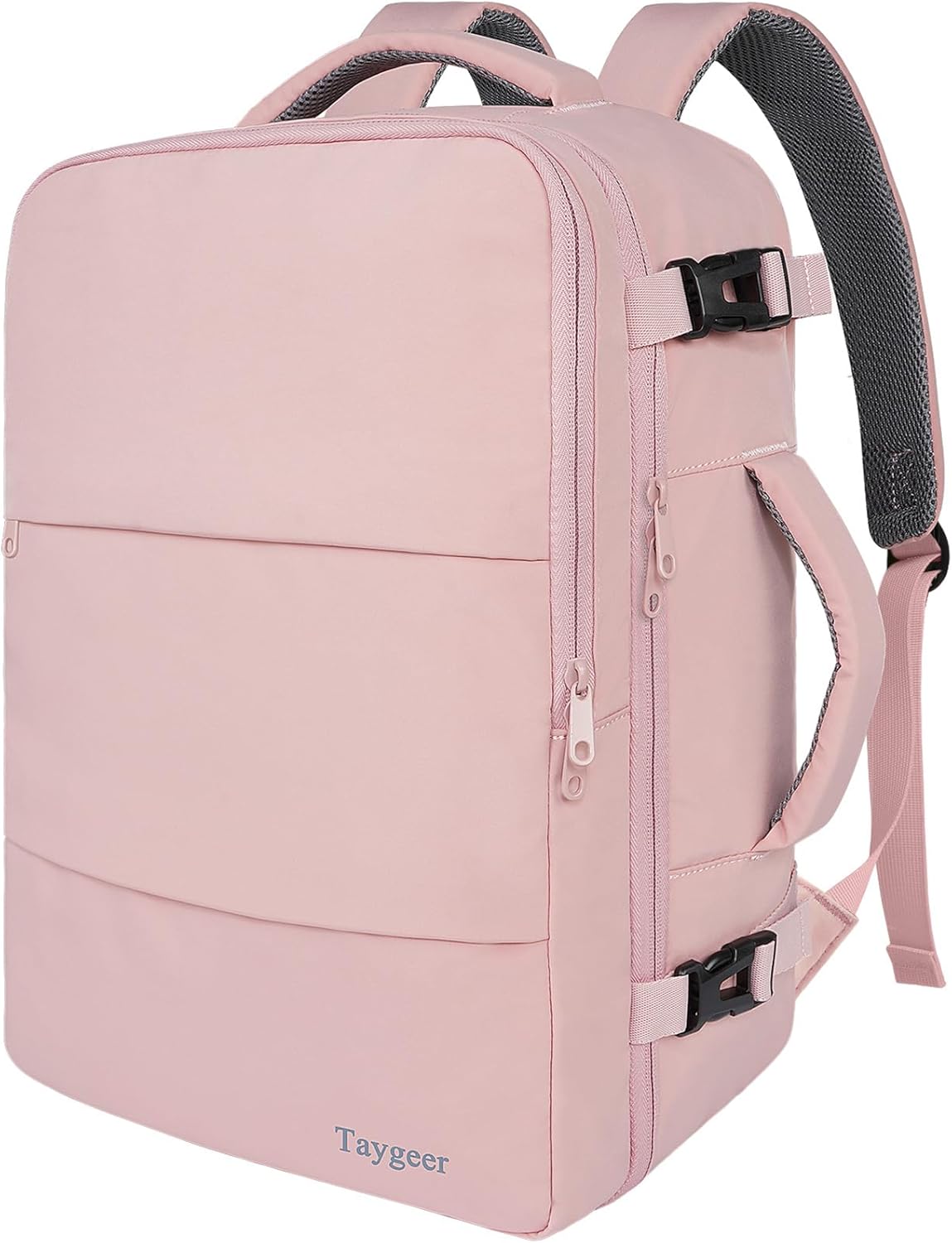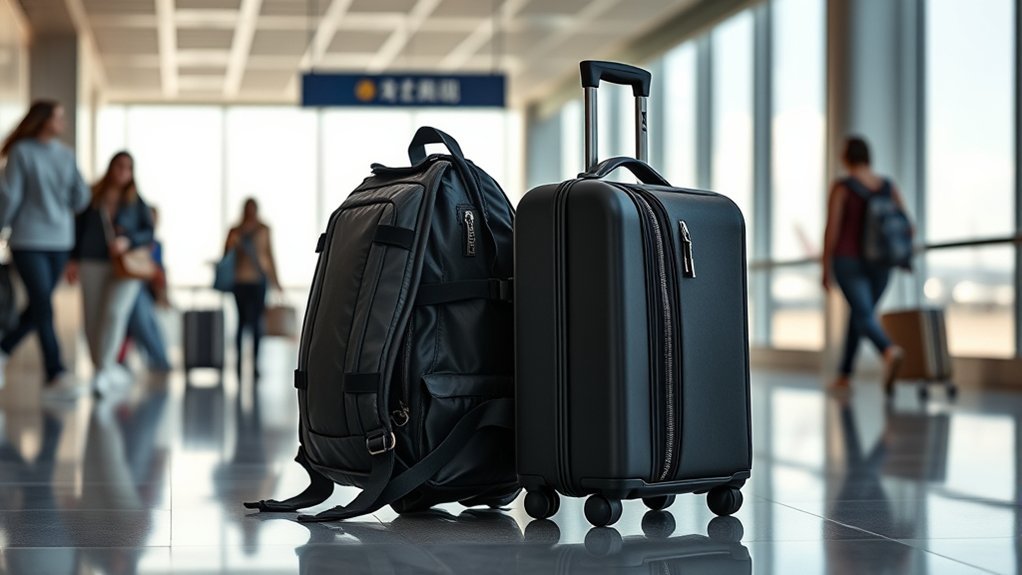
Last Updated on September 10, 2026 by Daniel Globe
A carry-on backpack and a wheeled cabin bag can both work for carry-on-only travel, but they solve different problems. A backpack is easier to manage on stairs, public transit, and uneven streets. A wheeled suitcase rolls more comfortably through smooth terminals and gives packed items a more rigid structure. Your best choice depends on your airline allowance, walking distance, load weight, clothing, and travel style.
Quick Answer
Choose a carry-on backpack for stairs, public transit, uneven streets, and hands-free movement. Choose a wheeled cabin bag for smooth airport-to-hotel trips, formal clothing, heavier loads, or items that benefit from a rigid shell. Neither option is automatically free or airline-compliant, so check your fare, dimensions, and weight allowance before packing.
Key Takeaways
- A backpack and a wheeled suitcase can both count as carry-on bags. The airline judges their packed dimensions, weight, fare allowance, and storage location.
- The common 22 × 14 × 9-inch U.S. limit is not a worldwide standard. Some airlines allow larger bags, while others use smaller limits.
- A backpack is a free personal item only when it fits the airline’s under-seat size limit. A full-size travel backpack may require a paid overhead allowance.
- Backpacks handle stairs and rough ground well, while wheeled bags reduce the need to carry the full load across smooth surfaces.
- Packing cubes improve organization, but compression does not reduce the bag’s weight or guarantee that an overfilled bag will fit the airport sizer.
What’s in This Article
- Understanding the Luggage Terms
- Understanding Carry-On Backpacks
- Understanding Wheeled Cabin Bags
- Side-by-Side Comparison
- The Personal Item Factor
- Size and Weight Considerations
- Comfort, Mobility, and Accessibility
- Capacity, Protection, and Security
- How to Pack a Backpack
- How to Pack a Cabin Bag
- Carry-On Backpack: Pros and Cons
- Cabin Bag: Pros and Cons
- How to Choose the Right Luggage
- Frequently Asked Questions
- Final Decision
Disclosure: As an Amazon Associate I earn from qualifying purchases. Some links on this page are affiliate links, at no extra cost to you.
Understanding Carry-On, Cabin Bag, and Personal Item Terms
Airlines usually classify luggage by its size and where it will be stored, not by whether it has shoulder straps or wheels. A backpack, duffel, or suitcase can all qualify as a carry-on bag when they meet the airline’s rules.
- Carry-on or cabin bag: A bag that travels in the passenger cabin, usually in the overhead bin.
- Personal item: A smaller bag that must fit completely under the seat in front of you.
- Carry-on backpack: A backpack designed to stay within an airline’s cabin-baggage dimensions.
- Wheeled cabin bag: A two-wheel or four-wheel suitcase designed for overhead-bin storage.
Note: In this guide, “cabin bag” means a wheeled carry-on suitcase. A backpack can also be a cabin bag under an airline’s official terminology.
The name printed on a bag does not determine whether it can fly for free. Its packed size, weight, fare allowance, and storage location do.
Understanding Carry-On Backpacks
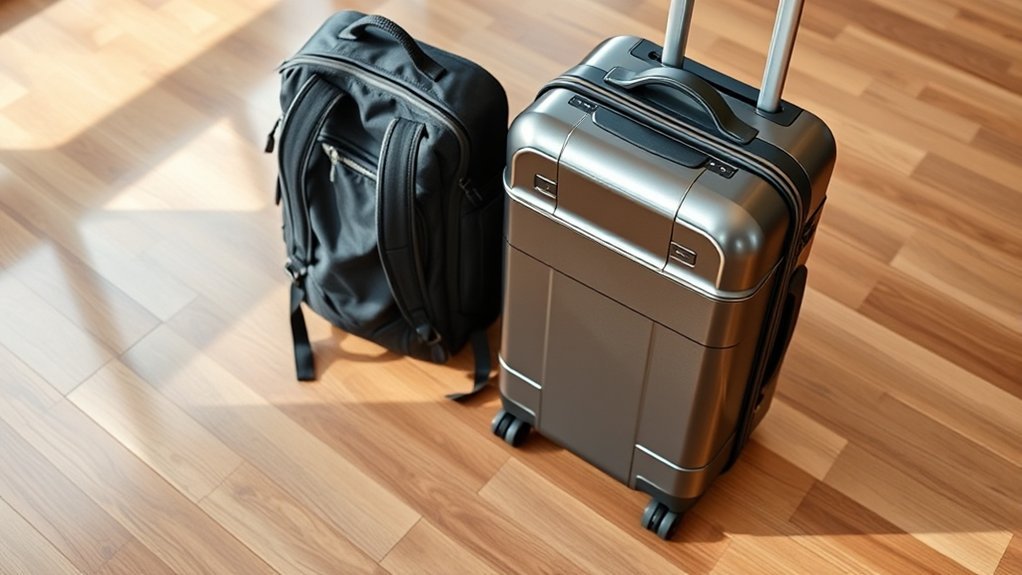
Carry-on backpacks combine flexible storage with hands-free movement. Many travel models use a wide clamshell opening, which lets you pack them more like a suitcase than a top-loading hiking pack.
Because a backpack does not need wheels, wheel housings, or a telescoping handle, it can have a lower empty weight than a similarly sized suitcase. That may leave more of your airline weight allowance for clothing and equipment. The exact difference depends on the frame, fabric, padding, laptop compartment, and harness.
Useful backpack features include:
- A padded laptop sleeve close to your back
- A full clamshell or panel-loading opening
- Comfortable shoulder straps and an adjustable sternum strap
- A hip belt on bags intended for heavier loads or long walks
- Compression straps that control the bag’s depth
- Lockable zipper pulls and concealed passport pockets
- An external bottle pocket that does not push the bag beyond its size limit
Soft sides make a backpack easier to squeeze into irregular spaces, but they also allow the contents to bulge. A packed backpack that meets its stated dimensions while empty may become too deep after you fill the front pockets.
Understanding Wheeled Cabin Bags
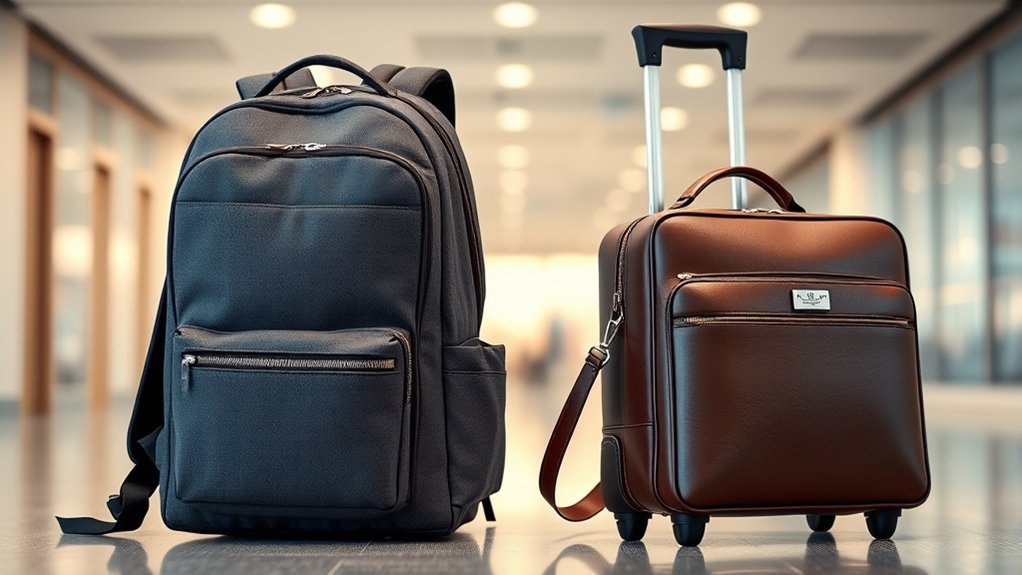
A wheeled cabin bag gives you a structured packing space and lets you move the load across smooth surfaces without carrying it on your shoulders. It is often a practical choice for airports, hotels, cruises, road trips, and business travel.
Size and Dimensions
There is no universal cabin-bag size. For example, American Airlines lists a maximum of 22 × 14 × 9 inches, including handles and wheels. Frontier permits up to 24 × 16 × 10 inches and 35 pounds for a carry-on bag. Ryanair uses 55 × 40 × 20 cm with a 10 kg limit for its larger onboard cabin bag.
Airlines normally include wheels, handles, side pockets, straps, and other projections when measuring a bag. Check the operating airline rather than relying only on the airline that sold the ticket, especially on codeshare trips.
You can also review this American Airlines baggage guide when comparing baggage costs and allowances.
Organizational Features
Hard-shell suitcases usually open into two divided halves. Soft-shell suitcases often use one deeper main compartment and may include an exterior pocket. Neither layout is automatically better. Choose the one that matches what you pack and how often you need access during the journey.
A four-wheel spinner moves easily beside you in a terminal and can fit through narrow aisles when turned sideways. A two-wheel bag usually has larger recessed wheels that may handle cracked pavement better and consume less internal space, but you must pull it behind you.
Packing Structure
The rectangular interior of a suitcase works well for folded clothes, shoes, files, and packing cubes. A rigid shell can resist some external pressure, but fragile items still need padding and should be placed away from the outer corners.
Expandable zippers add temporary capacity, but opening the expansion panel can make the suitcase too deep for the airline sizer. Measure it again after packing.
Carry-On Backpack vs. Wheeled Cabin Bag at a Glance
| Feature | Carry-On Backpack | Wheeled Cabin Bag |
|---|---|---|
| Empty weight | Often lighter, although padded harnesses and frames add weight | Usually heavier because of wheels, frame, shell, and handle |
| Stairs and uneven terrain | Excellent when the pack fits properly | Must be lifted or carried |
| Smooth airport floors | You carry the full load | Excellent rolling comfort |
| Under-seat use | Possible only with a personal-item-sized model | Possible with a purpose-built under-seat roller, but not a standard cabin suitcase |
| Organization | Flexible pockets and compartments; often improved by packing cubes | Structured halves, dividers, and compression panels |
| Quick access | Good when it has front and top pockets | Limited on many hard-shell models; better on soft-shell bags with exterior pockets |
| Crush resistance | Lower unless the bag has a frame or padded compartments | Higher with a rigid shell, although internal padding is still needed |
| Weather protection | Varies widely; a rain cover or dry bag may be needed | A hard shell sheds light rain, but zippers and seams may still leak |
| Home storage | Some models flatten or compress | Retains its shape and uses more storage space |
| Best starting choice | Transit-heavy, multi-stop, hostel, rail, and adventure trips | Business, cruise, resort, road-trip, and airport-to-hotel travel |
The Personal Item Factor
A backpack does not automatically qualify as a personal item. It must fit completely within the airline’s under-seat dimensions after you pack it.
For example, American Airlines permits a personal item up to 18 × 14 × 8 inches. Frontier uses the same maximum dimensions, including handles, wheels, and straps. Ryanair’s included small bag is 40 × 30 × 20 cm. These examples show why “personal-item size” cannot be reduced to one worldwide measurement.
Some entry-level or restricted fares include only the under-seat item. Other Basic Economy fares include both a personal item and an overhead carry-on. Check the exact fare conditions instead of assuming that every low fare follows the same rule.
A compact backpack can save baggage fees when it meets the airline’s limit. A large travel backpack that measures close to a standard overhead carry-on normally does not qualify just because it has soft sides. Review your airline’s rules and this guide to personal-item packing dimensions before departure.
Note: Keep medication, travel documents, keys, valuables, essential electronics, and spare batteries in your personal item. This protects your essentials if the overhead bag is checked at the gate.
Size and Weight Considerations
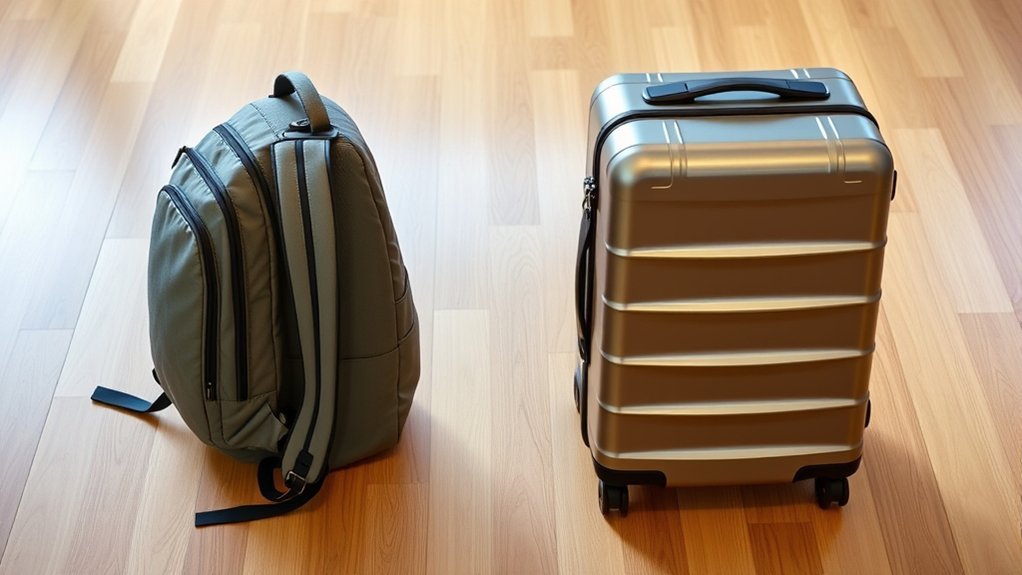
Size and weight can change which bag is practical, even when both options appear to be labeled “carry-on.” Use the following checks before choosing or packing your luggage:
- Check the operating airline: Rules may differ when another airline operates a codeshare flight.
- Read the fare allowance: Confirm whether your ticket includes an overhead bag, only a personal item, or both.
- Measure the packed bag: Include wheels, handles, stuffed pockets, compression straps, bottle pockets, and any attached items.
- Check the weight limit: Some airlines publish a low cabin-bag weight, while others allow a much heavier bag or focus on whether you can lift it safely.
- Close expansion panels: An expanded suitcase or overfilled backpack may exceed the depth limit.
- Test the complete load: Wear the backpack for at least 10 to 15 minutes or roll and lift the suitcase before committing to it.
Advertised liters can help you compare models from the same brand, but dimensions matter more at the airport. Two bags with the same listed capacity may use their space differently because of wheel wells, padding, frames, curved corners, and exterior pockets.
Warning: Airline baggage rules vary by route, aircraft, fare, and carrier. Budget and low-fare airlines may check bag size at boarding and charge more at the gate. Review your carrier’s official policy before packing. For specialized equipment, also confirm rules such as whether you can bring collapsible hiking poles on a plane.
Comfort, Mobility, and Accessibility
A backpack keeps both hands free and moves easily through stations, crowds, stairs, and narrow sidewalks. It works best when the back length and straps fit your body. A poorly fitted bag can pull backward, press on your shoulders, or feel unstable.
For a heavier load, look for a supportive hip belt, adjustable sternum strap, padded shoulder straps, and load lifters. The hip belt should transfer part of the load away from your shoulders. A ventilated back panel can also improve comfort in warm weather.
A wheeled bag removes most of the carrying effort on level ground, but you still need to lift it over curbs, onto trains, and into an overhead bin. Four-wheel spinners are easy to move beside you, while two-wheel bags often perform better on cracked pavement.
Choose the option you can control, carry, and lift safely. A smaller roller or a checked bag may be more practical than an overloaded carry-on. Travelers who need assistance should review the airline’s accessibility procedures before departure rather than depending on another passenger to lift the bag.
Capacity, Protection, Security, and Weather
Usable Packing Space
A box-shaped suitcase often uses its rectangular dimensions efficiently. However, wheel housings and telescoping-handle channels can reduce the usable interior. A backpack avoids wheel wells but may lose space to curved corners, thick padding, harness components, and multiple small compartments.
Do not choose by liters alone. Compare the packed outside dimensions, empty weight, opening style, and actual compartment shape.
Fragile Items and Formal Clothing
A rigid suitcase resists crushing better than an unstructured backpack, which can help with shoes, files, and carefully folded clothing. It does not make fragile items unbreakable. Wrap breakable items, place them near the center, and surround them with soft clothing.
For suits, dresses, or shirts, use a garment folder or structured packing cube. A clamshell backpack can carry formal clothing, but a suitcase usually makes it easier to maintain a flat packing surface.
Security
Both bag types can have lockable zippers. A small travel lock may discourage casual opening, but it cannot prevent someone from taking the entire bag. Keep passports, payment cards, medication, and high-value electronics in a compartment you can monitor.
On crowded transit, move the backpack to your front or hold it by the top handle. Do not leave a rolling bag behind you where you cannot see it.
Rain and Spills
“Water-resistant” does not mean waterproof. Water can enter through zippers, seams, and openings on both backpacks and suitcases. Use waterproof pouches or dry bags for electronics and documents. Add a rain cover when you expect prolonged outdoor exposure.
How to Pack a Backpack for Travel
Start with the airline limit and stop packing before the bag becomes too deep. A soft backpack can expand beyond its listed measurement even when the zipper still closes.
- Place light items at the bottom: Soft clothing, sleepwear, or a light jacket can form a stable base.
- Keep dense items close to your back: Put shoes, a toiletry kit, chargers, or other heavy items near the middle of the back panel instead of at the outer edge.
- Balance both sides: An uneven load can make the bag pull toward one shoulder.
- Protect the laptop: Use the padded sleeve and avoid placing hard objects against the screen.
- Use packing cubes: Group clothing by type or outfit without filling every cube to maximum compression.
- Keep security items accessible: Store documents, medication, liquids, and electronics where you can reach them without unpacking the main compartment.
- Tighten compression straps: Control the depth and stop the contents from shifting.
- Tuck away loose straps: This reduces snagging and helps the bag fit the airport sizer.
For more detailed loading guidance, Osprey recommends keeping heavy items close to the middle of your back in its official guide to packing a backpack.
Pro Tip: Weigh the finished bag with a luggage scale. Then wear it around your home, climb a flight of stairs, and check whether the straps, balance, and total load remain comfortable.
How to Pack a Wheeled Cabin Bag
A wheeled cabin bag is easiest to handle when the load is stable, balanced, and below the airline limit. Pack with the suitcase standing position in mind.
Optimize Space Efficiently
- Put heavier items near the wheel end: Shoes and dense toiletry bags near the bottom help keep the suitcase from tipping when upright.
- Use the handle channels: Fill the spaces between internal handle rails with socks, belts, cables, or other small items.
- Roll or fold by fabric: Roll soft casual clothing and fold structured garments that crease easily.
- Wear bulky items: Wearing your heaviest shoes or jacket can free space, provided you remain comfortable during the flight.
Prioritize Essential Items
Place documents, medication, electronics, and your liquids bag in an exterior pocket when the suitcase has one. With a hard-shell case that lacks outside access, keep these items in your separate personal item.
For U.S. screening, the TSA 3-1-1 rule generally limits carry-on liquids, aerosols, gels, creams, and pastes to containers of 3.4 ounces or less inside one quart-size bag. Medically necessary liquids can have different screening procedures.
Use Packing Cubes Carefully
Packing cubes group clothing and make unpacking faster. Compression cubes can reduce the volume of soft clothing, but they do not reduce its weight. They can also make it easy to create an overweight bag.
Use separate cubes for clean clothes, sleepwear, underwear, and laundry. Leave enough room to close the suitcase without sitting on it or opening the expansion panel.
Note: Be ready for a possible gate check. The FAA advises removing spare lithium batteries, power banks, vapes, and lithium-powered devices from a bag that will be placed in the cargo hold. Keep them protected in the cabin and follow the airline’s battery limits.
Carry-On Backpack: Pros and Cons
Advantages
- Keeps both hands free
- Handles stairs, cobblestones, gravel, and public transit well
- Often has a lower empty weight than a wheeled suitcase
- Can offer quick-access laptop and document pockets
- May compress for easier storage at home
- Can qualify as a personal item when the packed dimensions are small enough
Disadvantages
- Places the full load on your body
- Can feel hot or uncomfortable in warm weather
- Requires the correct fit and strap adjustment
- Provides less resistance to crushing unless it has a frame
- Can become oversized when soft pockets are overfilled
- May look less formal in some business settings
Wheeled Cabin Bag: Pros and Cons
Advantages
- Rolls easily across smooth airport and hotel floors
- Provides a stable, rectangular packing area
- A rigid shell can resist pressure and light impacts
- Works well for folded formal clothing, shoes, and files
- Does not place the full load on your shoulders while rolling
- Can offer a polished appearance for business travel
Disadvantages
- Wheels and handles add empty weight and reduce interior space
- Must be carried on stairs, curbs, gravel, and cobblestones
- Requires one hand while moving
- Can be awkward on crowded trains and buses
- Most standard cabin suitcases do not fit under a seat
- Still needs to be lifted into the overhead compartment
How to Choose the Right Luggage for Your Trip
Start with the airline rules, then compare the journey between your home and accommodation. The time spent outside the airport often matters more than the terminal itself.
| Trip Type | Better Starting Choice | Why |
|---|---|---|
| Multi-city rail or bus trip | Backpack | Easier on stairs, platforms, narrow aisles, and uneven streets |
| Business trip | Wheeled cabin bag or structured backpack | Better support for formal clothing, files, and work equipment |
| Airport-to-hotel stay | Wheeled cabin bag | Most movement occurs on smooth floors or in a taxi |
| Hostel or adventure trip | Backpack | Flexible storage and easier hands-free movement |
| Cruise or resort stay | Wheeled cabin bag | Structured organization and limited long-distance carrying |
| Personal-item-only fare | Compact backpack or under-seat roller | Must fit the airline’s exact under-seat dimensions |
Ask yourself these questions before buying or packing:
- Does my fare include an overhead bag?
- What are the operating airline’s exact packed dimensions and weight limit?
- How many stairs, train changes, and walking sections will the trip involve?
- Can I comfortably carry the backpack or lift the suitcase?
- Am I packing fragile items or clothing that must remain structured?
- Do I need quick laptop, document, or medication access?
- Where will I store the empty bag at my destination and at home?
For a business-class journey, a wheeled suitcase can pair well with a small laptop bag or backpack. This also keeps in-flight essentials close to you. See this business-class comfort guide for related packing considerations.
A hybrid roller backpack is another option. It gives you wheels plus hidden shoulder straps, but the wheel system, frame, and harness add weight and reduce packing space. Test both carrying modes before choosing one.
If your itinerary includes United, these United route and travel tips can help with the wider trip-planning process. Always use the airline’s official baggage page for the final allowance check.
Frequently Asked Questions
Are carry-on backpacks suitable for business travel?
Yes. Choose a structured model with a padded laptop sleeve, clean exterior, clamshell opening, and separate document storage. A backpack works especially well when you use trains or walk between meetings. A wheeled suitcase may be better when you carry formal clothing that must stay flat.
Can cabin bags fit under airplane seats?
A standard overhead cabin suitcase usually cannot. A purpose-built under-seat roller may fit when its packed dimensions meet the airline’s personal-item limit. Measure the wheels and handles as part of the bag.
What materials are best for carry-on backpacks?
Nylon and polyester are common because they can provide good strength without excessive weight. Check the fabric density, seam quality, zipper design, reinforcement points, and water-resistant coating. Use a rain cover or waterproof inner pouch when you need stronger weather protection.
How do I clean and maintain a cabin bag?
Follow the manufacturer’s care instructions. In general, empty the bag, vacuum loose dirt, and wipe the exterior with a damp cloth and mild soap. Clean wheel axles, inspect handles and zippers, dry the bag fully, and store it away from heat and direct sunlight.
Do airlines apply different restrictions to backpacks?
Airlines normally apply the same carry-on or personal-item measurements regardless of whether the bag is a backpack, duffel, or suitcase. A soft backpack may attract attention when it is bulging, has loose attachments, or cannot fit fully inside the airport sizer.
Does a backpack or suitcase hold more?
It depends on the design. A suitcase offers a box-shaped interior, but wheels and handle rails use space. A backpack avoids wheel hardware but may lose capacity to padding, curved edges, and its harness. Compare packed dimensions and usable compartment shape rather than relying only on advertised liters.
Is a 40-liter backpack always carry-on size?
No. Capacity in liters does not confirm compliance. A 40-liter backpack may be too tall or deep for one airline and acceptable on another. Check the packed outside dimensions, including filled pockets and attached straps.
Which option is better if I cannot carry much weight?
A wheeled bag usually reduces carrying on smooth ground, but you must still manage curbs, stairs, and overhead-bin lifting. Choose a light bag, reduce the packed load, consider checking it, or arrange airline assistance when needed.
Make the Right Call for Your Next Trip
There is no universal winner in the carry-on backpack vs. cabin bag comparison. A backpack is usually the stronger choice for public transit, stairs, multi-city trips, and uneven streets. A wheeled cabin bag is often better for smooth airport-to-hotel travel, business clothing, structured organization, and loads you do not want to carry on your back.
Match the bag to the complete journey, not just the flight. Check the operating airline’s current dimensions, weight limit, fare allowance, and battery rules. Pack the bag fully, measure it, weigh it, and test how it feels before departure. That preparation will do more to reduce travel stress than choosing either design by name alone.
Sources
- American Airlines Carry-On Bags — official personal-item and carry-on dimensions
- Frontier Airlines Bag Options — official personal-item, carry-on size, weight, and fare information
- Ryanair Bag Policy — official small-bag and 10 kg cabin-bag allowance
- British Airways Baggage Essentials — official cabin-bag dimensions, weight, and lifting requirements
- FAA Carry-On Baggage Tips — cabin storage, gate checking, heavy-item placement, and lithium-battery guidance
- TSA Travel Tips — U.S. liquids, medication, and security-screening guidance