
Last Updated on July 28, 2026 by Caleb Warren
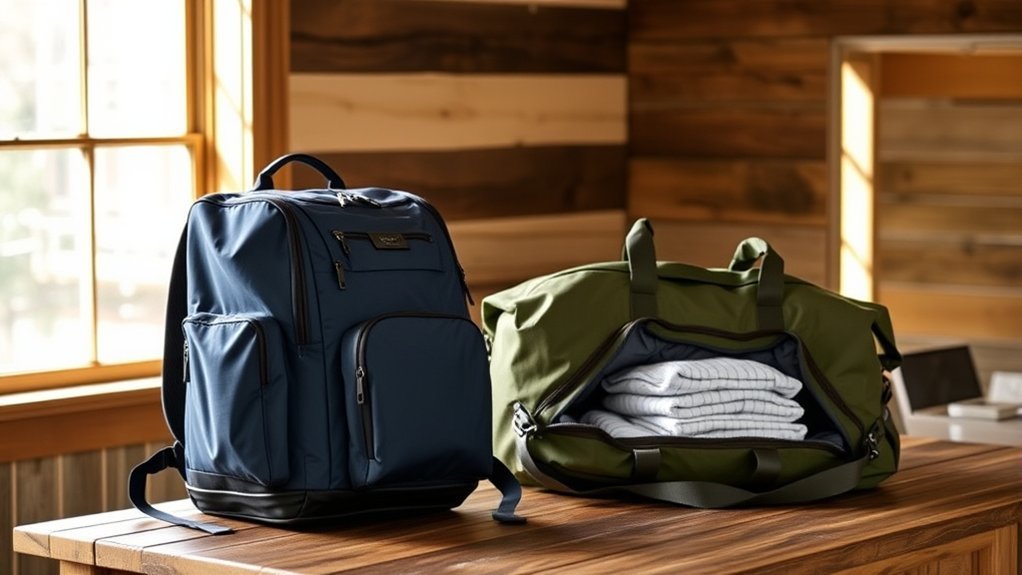
Choosing between a backpack and a duffel bag comes down to more than capacity. The better travel bag depends on how far you will carry it, what you need to pack, how often you need quick access, and whether the packed bag must meet an airline’s size limits. A backpack usually wins for walking and organization, while a duffel is often easier for bulky gear and fast packing.
Quick Answer
Choose a backpack for airports, public transit, long walks, organized packing, and hands-free movement. Choose a duffel bag for road trips, gym use, bulky equipment, or a short weekend getaway. For flights, compare the bag’s packed exterior dimensions with your airline’s limits rather than relying on liters alone.
Key Takeaways
- A properly fitted backpack spreads the load across two shoulder straps and, on supported models, a hip belt. This usually makes it better for walking.
- A duffel’s wide opening and flexible main compartment make bulky clothing, shoes, and sports gear easier to pack.
- Backpacks usually provide more built-in organization, while duffels often work best with packing cubes or separate pouches.
- Airlines enforce packed exterior dimensions, not a universal liter limit. Soft bags can become too large when overfilled.
- Hybrid duffel-backpacks can work well when you need both a wide opening and hands-free carrying.
Disclosure: As an Amazon Associate I earn from qualifying purchases. Some links on this page are affiliate links, at no extra cost to you.
Key Differences Between Backpacks and Duffel Bags
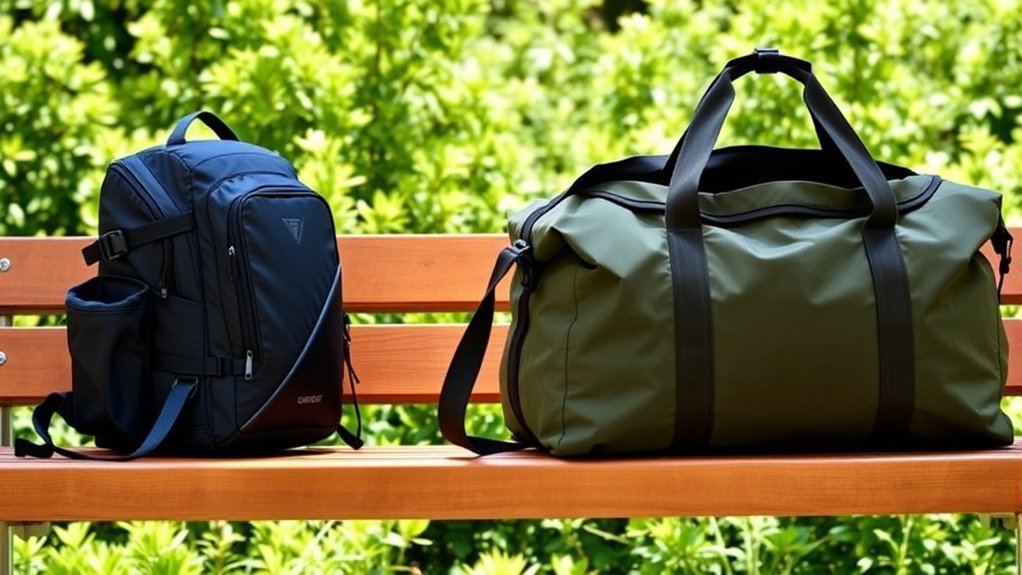
The main differences are carrying comfort, access, structure, and organization. A backpack places the load on both shoulders and leaves your hands free. A duffel usually hangs from one hand or one shoulder, but its broad opening makes it easier to load awkwardly shaped items.
Design matters as much as the bag category. A clamshell travel backpack can open almost like a suitcase, while a top-loading hiking pack may require more digging. Likewise, a structured travel duffel with end pockets and backpack straps will behave differently from a basic single-compartment gym bag.
| Feature | Backpack | Duffel Bag |
|---|---|---|
| Long-distance comfort | Usually better when the pack fits correctly and has supportive straps | Usually less comfortable when carried on one shoulder for a long time |
| Organization | Often includes sleeves, dividers, and quick-access pockets | Often has one large compartment with fewer built-in dividers |
| Bulky gear | Fixed compartments can restrict awkward items | Wide opening and flexible sides handle bulky gear well |
| Quick access | Good when exterior pockets are planned well; slower with top-loading designs | Wide opening makes the main compartment easy to see and reach |
| Hands-free movement | Excellent | Limited unless it has backpack straps |
| Storage at home | Structured models may keep their shape | Many soft models fold or flatten easily |
| Best fit | Flights, trains, commuting, walking, and one-bag travel | Road trips, gym visits, sports, short stays, and bulky equipment |
How to Choose by Trip Type
Airports, Trains, and Public Transit
A backpack is usually easier when you must use escalators, climb stairs, stand in lines, or keep one hand free for a phone, ticket, or suitcase. A clamshell travel backpack is especially useful because it combines suitcase-style access with hands-free carrying.
Road Trips and Short Hotel Stays
A duffel works well when the bag will spend most of the journey in a car. You can place it across a trunk, slide it onto a luggage rack, and open the top without unpacking everything. Its shape also makes it convenient for spare shoes, jackets, and last-minute additions.
Business Travel
A structured backpack can keep a laptop, charger, documents, and small accessories separated. A restrained design may also suit many workplaces. A duffel can be better when you need folded clothing and shoes, but look for a padded laptop compartment if you plan to carry electronics.
Hiking and Outdoor Trips
For actual trail use, choose a fitted hiking backpack rather than a basic travel backpack or one-shoulder duffel. Hiking packs are designed around torso fit, load stability, ventilation, and access to water. Duffels remain useful for transporting equipment to a campsite, lodge, vehicle, or base camp.
Gym, Sports, and Bulky Equipment
A duffel is often the practical choice for shoes, helmets, pads, towels, and clothing. Look for a reinforced base, washable lining, ventilation, and a separate wet or shoe compartment when odor and moisture are concerns.
When to Choose a Backpack
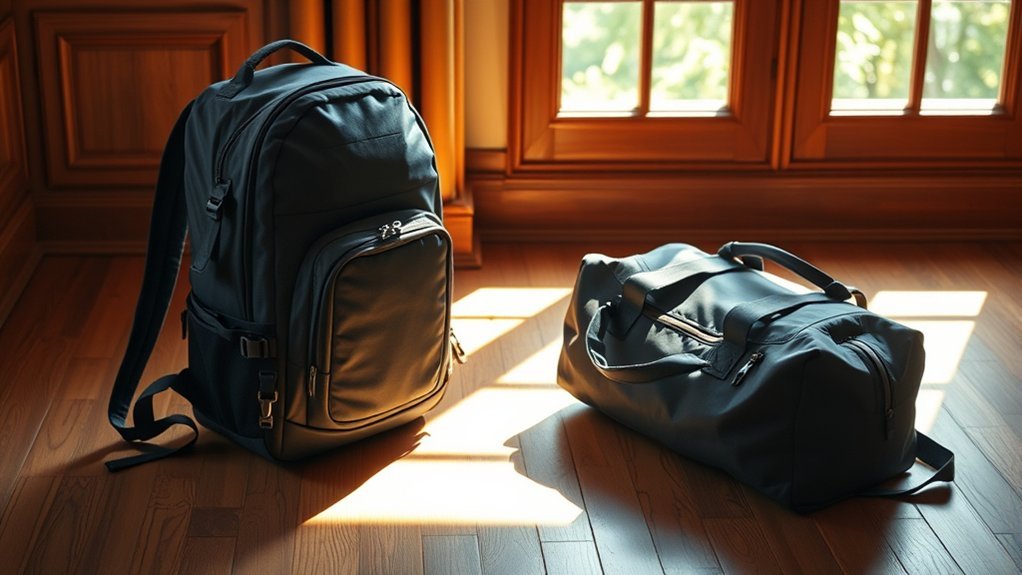
A backpack makes sense when you expect to walk, commute, or move frequently between terminals, stations, and accommodations. It keeps your hands free and can separate essentials such as a laptop, snacks, toiletries, and travel documents.
Choose a clamshell or panel-loading backpack when you want suitcase-style packing. Choose a top-loading model when trail performance, compression, or carrying outdoor equipment matters more than immediate access to every item.
Hidden pockets and lockable zipper pulls may discourage casual access, but no travel backpack is theft-proof. Keep passports, medication, payment cards, and other critical items in a pocket you can monitor.
Pro Tip: Try the backpack with realistic weight inside it. Adjust the hip belt first when the pack has a load-bearing belt, then the shoulder straps, load lifters, and sternum strap. Walk, bend, and climb a few stairs before deciding whether the fit is comfortable.
Advantages of Backpacks

Backpacks are strongest when mobility, organization, and frequent access matter. They are easy to carry through crowded spaces, and their upright shape usually takes up less horizontal room than a duffel hanging at your side.
Ergonomic Comfort Features
A supportive backpack may include several features that improve fit and load stability:
- Padded, adjustable shoulder straps that sit flat without cutting into your neck.
- A load-bearing hip belt that rests around the top of the hip bones on compatible travel or hiking packs.
- A sternum strap that helps stabilize the shoulder straps.
- Load-lifter straps that bring the upper part of a larger pack closer to your body.
- A shaped or ventilated back panel that reduces pressure points and allows some airflow.
These features only help when they fit your torso and are adjusted correctly. A decorative waist strap on a small daypack will not transfer weight in the same way as a padded hip belt connected to a supportive frame or harness.
Enhanced Organization Options
Travel backpacks often provide dedicated areas for electronics, documents, bottles, cables, and small accessories. This can reduce the need for separate pouches and make airport security or in-transit access easier.
More pockets are not automatically better. Before buying, decide where you would place your passport, laptop, charger, liquids bag, water bottle, and clothing. A simpler layout that matches your routine is often easier to use than a maze of small compartments.
Disadvantages of Backpacks
A backpack’s structure can limit the shape of what fits inside. Laptop sleeves, frames, dividers, and curved back panels all use space. A tightly packed backpack may also be difficult to search unless it opens fully.
Limited Storage Capacity
Travel backpacks are sold in many capacities, but liters should be treated as a rough measure of interior volume rather than a promise about trip length or airline acceptance. As a planning guide, smaller bags often suit light overnight use, while bags in the mid-30-liter to low-40-liter range are common among one-bag travelers. Your clothing, packing style, bag shape, and airline rules matter more than the number alone.
- Fixed compartments may make bulky or unusually shaped items harder to pack.
- A supportive frame or thick laptop sleeve can reduce usable interior space.
- Items at the bottom of a top-loading pack may be slow to reach.
- A backpack can become uncomfortable when it is overloaded or fitted poorly.
Complicated Organization Structure
The same compartments that create order can also create confusion. Small items may disappear into rarely used pockets, and packing every section tightly can make the bag rigid or uneven.
| Disadvantage | Description | Travel Impact |
|---|---|---|
| Too Many Compartments | It becomes difficult to remember where small items were placed. | Time wasted searching |
| Shifted Items | Loose items move within partially filled sections. | Untidy or unbalanced load |
| Slow Access | Some pockets are awkward to reach while the bag is being worn. | Frequent stops to remove the bag |
Warning: Do not ignore numbness, tingling, sharp pain, or straps that restrict comfortable movement. Reduce the load, readjust the bag, or switch to luggage that does not require you to carry the full weight on your body.
When to Choose a Duffel Bag
A duffel bag is a strong choice for a short trip, gym visit, road trip, or gear-heavy outing. Its broad opening makes packing and unpacking fast, and its flexible shape accepts items that do not fit neatly into fixed backpack compartments.
- Ideal for clothes and shoes on a weekend trip.
- Useful for helmets, pads, boots, and other sports equipment.
- Easy to place in a car trunk or on a hotel luggage rack.
- Flexible enough for last-minute additions when airline sizing is not a concern.
A duffel is less suitable when you must carry it for a long distance, especially if all the weight hangs from one shoulder. For walking-heavy trips, consider a model with padded backpack straps or choose a travel backpack instead.
Advantages of Duffel Bags
Duffel bags stand out for fast access and adaptable packing space. Their main compartment can hold folded clothing, packing cubes, shoes, and bulky equipment without a rigid internal layout dictating where each item must go.
Many soft duffels also flatten for storage when they are empty. Larger expedition or equipment duffels can exceed 60 or 70 liters, but size varies widely. A large capacity does not mean the bag will qualify as a carry-on.
A duffel may also be easier to load into a vehicle because you can grip it from different handles and compress it around other luggage. Reinforced end handles are especially useful when two people need to lift a heavy bag.
Disadvantages of Duffel Bags
A large open compartment can become disorganized without packing cubes or smaller pouches. Electronics and fragile items may also receive less protection unless the duffel includes padding or a suspended laptop sleeve.
- Limited Organization: One main compartment can make small belongings difficult to find.
- Uneven Carrying: A shoulder strap concentrates the load on one side of the body.
- Overpacking: Flexible sides make it easy to add more until the bag becomes heavy or exceeds airline dimensions.
- Less Protection: Soft walls may provide limited impact protection for laptops, cameras, or fragile items.
- Awkward in Crowds: A wide bag hanging at hip level can bump seats, people, or doorways.
Carry-On Size and Airline Rules
Airlines normally judge a bag by its packed outside dimensions, including handles, wheels, straps, and anything bulging from an exterior pocket. The Federal Aviation Administration advises travelers to check their airline’s rules and notes that 45 linear inches is a common maximum. Airline and aircraft restrictions can still differ.
As current U.S. examples, American Airlines, Delta Air Lines, and United Airlines publish standard carry-on limits of about 22 × 14 × 9 inches. This is not a universal international standard, and the allowance can depend on the carrier, fare, route, or aircraft.
A backpack or duffel may also count as a personal item when it fits beneath the seat and meets the airline’s personal-item rules. Do not assume that a bag advertised as a “weekender,” “flight bag,” or “personal-item bag” meets the rules for every airline.
Pro Tip: Measure the bag after packing it. A soft 40-liter bag may fit one airline’s sizer when lightly packed but fail when the lid, side pockets, or shoe compartment are full.
Capacity and Packing Style
Liters help compare interior volume, but they do not show how efficiently a bag uses that space. A curved backpack with a thick harness may hold less usable clothing than a rectangular bag with the same listed capacity. A duffel may accept bulky gear more easily, but small items can settle beneath larger ones.
How to Pack a Backpack
- Place dense items close to your back rather than in an outer pocket.
- Use the laptop sleeve only for a device that fits without forcing the zipper.
- Keep documents, medication, and valuables in a secure, reachable pocket.
- Use packing cubes when the main compartment opens clamshell-style.
- Leave frequently used items near the top in a top-loading pack.
- Tighten compression straps evenly so the load stays close to your body.
How to Pack a Duffel Bag
- Use packing cubes or pouches to prevent one large pile of clothing.
- Place shoes in a separate compartment or washable bag.
- Keep heavy items near the center and bottom so the duffel does not twist while carried.
- Protect laptops and cameras in padded sleeves rather than relying on the soft outer fabric.
- Leave a clear path to toiletries, chargers, and clothing needed first.
- Do not fill every flexible corner when the bag must fit an airline sizer.
Materials, Durability, and Weather Resistance
Fabric is only one part of durability. Inspect the zippers, stitching, handle attachment points, shoulder-strap anchors, and bottom panel. These areas often receive more stress than the middle of the fabric.
High-tenacity nylon, qualifying CORDURA fabrics, and durable polyester constructions can provide strong resistance to abrasion and tearing. However, a material name or high denier number does not guarantee that the whole bag is equally strong.
“Water-resistant” normally means the fabric or coating can handle limited moisture. It does not mean water cannot enter through seams, zippers, or openings. For heavy rain, use a rain cover, waterproof liner, dry bag, or a product specifically designed and tested for waterproof protection.
Security and Access
Backpacks can keep zippers close to your body, but rear-facing pockets may also be difficult to watch in a crowd. Duffels are easier to place in front of you, though exposed end pockets and long zipper openings may be easy to access.
Look for lockable zipper pulls, covered zippers, restrained exterior pockets, and a secure place for documents. These features can discourage casual tampering, but they cannot replace awareness. Avoid leaving valuables in an unattended bag, even when the zipper is locked.
Hybrid Duffel-Backpacks and Other Alternatives
A hybrid bag combines a duffel-style opening with stowable or removable backpack straps. It can be a practical middle ground for travelers who pack bulky items but occasionally need hands-free carrying.
Check the strap design before buying. Some hybrid straps are suitable for a short walk through an airport but lack the frame, torso adjustment, ventilation, and hip support of a true travel or hiking backpack.
A wheeled duffel or small rolling suitcase may be better for travelers who cannot comfortably carry a loaded bag. Wheels add weight and reduce flexible packing space, but they also remove most of the load from your shoulders and back.
Note: Some hybrid duffel-backpacks include removable or stowable straps. They offer useful flexibility, but their backpack mode may be less supportive than a purpose-built pack.
How to Test a Bag Before Buying
Backpack Fit Test
- Add approximately the amount of weight you expect to carry.
- Put the pack on and adjust it according to the manufacturer’s instructions.
- Check that the shoulder straps sit smoothly without a large gap or pressure near your neck.
- On a supported pack, confirm that the hip belt sits securely around the top of your hip bones.
- Walk for several minutes and test stairs, turning, and bending.
- Check whether you can reach the pockets you expect to use in transit.
Manufacturer fitting systems differ, so follow the instructions supplied with the bag. The Osprey pack-fitting guide, for example, begins with the hip belt, harness, and load-lifter straps loosened before the pack is adjusted around the wearer.
Duffel Carry Test
- Load the duffel with realistic clothing or equipment.
- Carry it by the handles and shoulder strap.
- Check whether the strap slides, twists, or presses against your neck.
- Walk through a narrow doorway to judge how far the bag extends from your side.
- Set it down and confirm that the base remains stable.
- Open it fully and verify that frequently used items are easy to reach.
How to Clean and Store Travel Bags
Follow the sewn-in care label or manufacturer’s instructions first. Coated fabrics, leather trim, foam panels, and waterproof membranes may require different methods.
When spot-cleaning is permitted, empty every pocket, shake or vacuum loose debris, and use a soft cloth with a small amount of mild soap and water. Avoid bleach, strong solvents, and aggressive scrubbing unless the manufacturer specifically allows them. Leave all compartments open until the bag is fully dry.
Before storage, remove damp clothing, food, and toiletries. Store the bag in a dry, ventilated place without sharply folding padded straps or back panels. Loosen compression straps and inspect zippers, seams, buckles, and handle attachments before the next trip.
Frequently Asked Questions
Can I use a backpack for business travel?
Yes. A structured travel backpack can work well for business trips, especially when it has a padded laptop sleeve, document storage, and a restrained design. Check that it also has enough space for clothing without crushing work materials.
Are duffel bags suitable for hiking trips?
A duffel can transport equipment to a campsite, lodge, vehicle, or trailhead, but it is usually a poor choice for carrying gear over a long trail. A fitted hiking backpack provides better stability and load support.
How do I clean a backpack or duffel bag?
Read the care label first. If spot-cleaning is allowed, empty the bag, remove loose debris, clean marks with mild soap and water, and leave every compartment open until fully dry. Do not machine-wash a bag unless its manufacturer permits it.
Can I carry a backpack as a personal item on flights?
Usually, provided the packed backpack fits under the seat and meets the airline’s personal-item limit. Exact dimensions vary, so check the operating airline before your flight.
Can a duffel bag be used as a carry-on?
Yes. The bag type does not determine eligibility. A packed duffel must meet the airline’s exterior size rules and fit in the required sizer or storage area. Measure flexible sides after packing because they may bulge.
Which is better for international travel?
A backpack is often better for trains, stairs, uneven streets, and frequent hotel changes. A duffel can work well for direct flights, vehicle-based travel, and bulky gear. Check every operating carrier because international size and weight limits vary.
What materials are best for durability in travel bags?
High-tenacity nylon, qualifying CORDURA fabrics, and durable polyester are common options. Also inspect the zipper size, seam reinforcement, strap anchors, handles, lining, and bottom panel because the fabric alone does not determine the life of the bag.
Conclusion
Choose a backpack when your trip involves long walks, public transit, frequent movement, or a need for organized hands-free access. Choose a duffel when you want a wide opening, flexible packing space, and an easy way to carry bulky gear over short distances.
Do not make the decision from liters alone. Check the packed dimensions, test the bag with realistic weight, inspect its straps and construction, and think about how you will move from one place to another. The right bag is the one that fits both your belongings and the way you actually travel.
Sources
- Federal Aviation Administration — Carry-On Baggage Tips — supports dimensions-first planning and checking airline-specific baggage rules.
- American Airlines — Carry-On Bags — provides current American Airlines carry-on and personal-item dimensions.
- Delta Air Lines — Carry-On Baggage — provides Delta’s current carry-on dimensions.
- United Airlines — Carry-On Bags — provides United’s current carry-on and under-seat guidance.
- Osprey — Backpack Size and Fit Guide — supports the backpack fitting and strap-adjustment guidance.
- CORDURA — Classic Fabric — supports the discussion of abrasion resistance, tear strength, and fabric construction.

