
Last Updated on July 30, 2026 by Caleb Warren
Wearing a backpack in hot weather can make an ordinary walk, commute, or hike feel much harder. The pack blocks airflow, adds weight, and traps sweat where it touches your back and shoulders. A ventilated design helps, but proper fit, a lighter load, easy water access, suitable clothing, and smart heat planning matter just as much.
Quick Answer
To wear a backpack comfortably in hot weather, use the smallest pack that fits your essentials, choose a ventilated back panel, adjust the hip belt and straps correctly, keep dense items close to your spine, carry easy-access water, wear lightweight sun-protective clothing, and stop immediately if heat-illness symptoms appear.
Key Takeaways
- A suspended-mesh or channeled back panel can reduce heat buildup, but no backpack will completely prevent sweating.
- Choose capacity for the activity. Carrying an oversized or overloaded pack creates unnecessary heat and fatigue.
- Fit a framed pack from the hip belt upward so the load stays close to your body without crushing your shoulders.
- Water is generally enough for shorter moderate outings; electrolyte replacement becomes more useful after several hours of heavy sweating.
- Confusion, slurred speech, collapse, or fainting can indicate heat stroke. Remove the pack, begin rapid cooling, and call 911.
At a Glance
| Time Required | About 5–10 minutes to fit and organize the pack, plus hydration and cooling breaks during the outing |
| Difficulty | Easy |
| Tools Needed | Properly sized backpack, water bottle or reservoir, sun protection, and only the gear needed for the route |
| Cost | No added cost when using existing gear; the cost varies if you need a different pack or hydration system |
Disclosure: As an Amazon Associate I earn from qualifying purchases. Some links on this page are affiliate links, at no extra cost to you.
Importance of Comfort and Breathability in Hot Weather
A backpack presses fabric and padding against areas where sweat normally evaporates. That contact can make your back feel hotter, especially in humid weather, when sweat evaporates slowly. A suspended-mesh back panel creates a gap between your body and the pack, while channeled foam panels reduce the amount of material touching your back.
Ventilation improves comfort, but it does not make a backpack sweat-proof. Your body will still produce heat, and shoulder straps, hip belts, and contact points will remain warmer than uncovered skin. The practical goal is to reduce heat buildup and prevent unnecessary rubbing rather than expecting your back to remain completely dry.
A ventilated backpack can reduce heat buildup, but the lightest suitable load and a well-planned route usually matter more than any single cooling feature.
Fit also affects comfort. On a framed hiking pack, the hip belt should sit over the top of your hip bones so your hips can support much of the load. Shoulder straps should follow the curve of your shoulders without pinching, while load lifters and a sternum strap help stabilize the pack. Osprey’s current pack-fitting guidance recommends adjusting the pack from the hip belt upward.
Light-colored clothing can reflect more sunlight than dark clothing, and the CDC recommends loose, lightweight, light-colored clothing in extreme heat. Backpack color is a smaller factor because ventilation, total weight, fit, exposure time, and the amount of shade have a stronger effect on the wearer.
Features to Look for in a Hot Weather Backpack
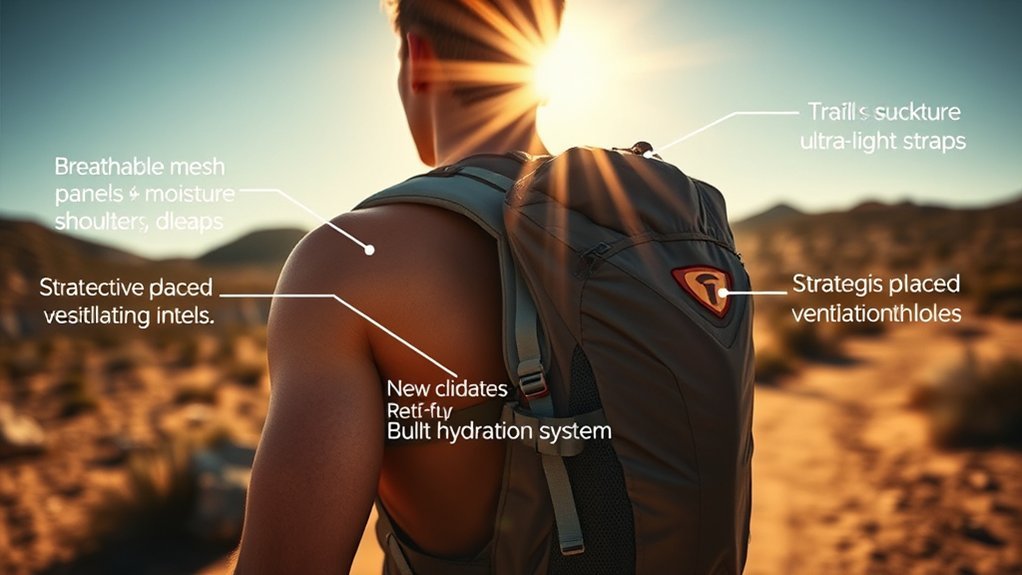
The best hot-weather backpack is not necessarily the pack with the most padding or the largest number of features. It is the smallest pack that fits the load, matches the activity, and remains stable without pressing unnecessary material against your body.
- Suspended mesh or ventilation channels: These create airflow or reduce the contact area between the pack and your back.
- Breathable contact surfaces: Look for spacer mesh, perforated foam, or open mesh where the back panel, shoulder straps, and hip belt touch you.
- Low empty weight: A lighter pack reduces the work required to carry it, provided it still supports the intended load.
- Correct torso size: A pack that is too long, short, wide, or narrow can create pressure points and poor weight transfer.
- Hydration access: Reservoir sleeves, hose ports, and reachable bottle pockets make regular drinking easier.
- Adjustable support: A hip belt, sternum strap, and load lifters are helpful on larger hiking packs but may be unnecessary on a lightly loaded commuter bag.
- External access: Pockets for water, snacks, sunscreen, a hat, and a damp cooling cloth reduce the need to unpack in direct sun.
- Compression straps: These keep the load close to your body and prevent it from swaying as you walk.
Note: UV-resistant fabric can slow sun-related material damage, but a UV treatment does not automatically make a backpack cooler. Choose it for durability, not as a substitute for ventilation, shade, hydration, or a lighter load.
Top Picks for Hot Weather Backpacks
There is no single best hot-weather backpack for every activity. A compact hydration pack may be ideal for cycling, while a suspended-mesh daypack is usually better for hiking and a larger travel pack is more suitable for airports and multi-day travel. Compare the following categories before choosing a model.
- Best style for short walks and commuting: A streamlined 10- to 20-liter pack with a channeled or open-mesh back panel, minimal padding, and reachable bottle pockets.
- Best style for day hiking: A roughly 15- to 30-liter pack with a suspended-mesh back panel, adjustable torso length, stable hip belt, and hydration compatibility.
- Best style for running or cycling: A low-profile hydration pack with breathable shoulder straps, limited bounce, and enough reservoir capacity for the planned route.
- Best style for warm-weather travel: A travel pack that balances access, load support, and back-panel ventilation without carrying more capacity than you need.
The original article identified the Osprey Farpoint 40 as a hot-weather option. The current Osprey Farpoint 40 is a 40-liter travel pack with an AirScape back panel made from mesh-covered ridged foam. It can be a practical travel choice when you need that capacity, but it is not the same as a fully suspended-mesh hiking pack and may be unnecessarily large for a short summer hike.
For more separation between the pack and your back, compare systems such as Deuter Aircomfort or ventilated suspended-mesh designs used on several Gregory hiking packs. Osprey, Deuter, and Gregory all make ventilated models, but the brand name alone does not guarantee a good fit. Try the pack with realistic weight whenever possible.
Breathable Materials and Design
Focus on the materials that actually touch your body. Spacer mesh, perforated foam, and three-dimensional mesh can create small air spaces and let moisture move away from contact points. Wide, heavily padded straps may feel soft in a store but can trap more warmth than thinner straps designed for the expected load.
The pack body itself is usually made from nylon or polyester because those materials can be light, durable, and abrasion-resistant. “Ripstop” means stronger reinforcement threads are woven into the material to limit tearing. It does not mean the shell is automatically breathable or moisture-wicking.
Ventilation and Comfort Features
Suspended-mesh systems generally provide the most obvious airflow because the body of the pack curves away from your back. Channeled foam panels keep the load closer and may provide better stability, but more of the pack remains in contact with you. Neither design is always superior; the right choice depends on the load, terrain, activity, and how much ventilation you value.
Check that the pack does not rub the back of your neck, pull away from your shoulders, or slide down your hips. A hydration reservoir should sit close to the spine for balance, but the reservoir itself is not a cooling system. Back-panel construction determines how much air can move between the reservoir compartment and your body.
Best Materials for Moisture-Wicking and Airflow
Different parts of a backpack perform different jobs, so no single material determines hot-weather comfort.
- Nylon and polyester shells: These are commonly used for strength, abrasion resistance, and manageable weight. Their denier, weave, coating, and construction affect durability more than ventilation.
- Ripstop fabric: Reinforcement threads help limit the spread of a tear. Ripstop construction does not by itself wick sweat or create airflow.
- Spacer mesh and three-dimensional mesh: These are useful on back panels and straps because they create space for air and moisture movement.
- Perforated or channeled foam: Openings reduce full-surface contact and provide cushioning without forming one solid pad against the body.
- Moisture-managing liner fabrics: These may help move sweat across the surface of shoulder straps and back panels, although the area can still become wet during hard activity.
Your clothing is also part of the system. Wear a loose, lightweight layer that protects exposed skin and does not bunch under the shoulder straps. Quick-drying synthetic fabrics, lightweight merino, and ventilated sun shirts can all work, depending on humidity, sun exposure, and personal comfort.
Pro Tip: Test the backpack with the shirt you expect to wear. A seam, zipper, collar, or thick logo that feels harmless without a pack may cause rubbing once a loaded shoulder strap presses against it.
Tips for Staying Cool While Wearing a Backpack
A ventilated backpack helps, but the safest way to manage heat is to reduce your total exposure. Check the forecast and heat alerts, choose a shaded route when possible, start during a cooler part of the day, shorten the outing, and turn around before you use your reserve water.
- Use the smallest suitable pack. Extra capacity encourages overpacking and adds unnecessary fabric against your body.
- Remove nonessential weight. Do not carry duplicate tools, oversized containers, or gear that does not match the route.
- Wear lightweight sun protection. Use suitable clothing, a brimmed hat, sunglasses, and sunscreen rather than exposing more skin to intense sun.
- Begin at a controlled pace. Starting too fast produces more body heat and can make the rest of the outing harder.
- Rest in shade. Remove or loosen the backpack during breaks so heat and moisture can escape from your back.
- Use water for cooling when appropriate. A damp cloth on the neck or wet clothing can support evaporative cooling, although this is less effective in very humid conditions.
- Do not depend on the backpack to make unsafe heat safe. Extreme temperatures, exposed routes, limited water, illness, and poor acclimatization may require postponing the trip.
The CDC recommends scheduling outdoor activity carefully, pacing yourself, drinking fluids, and wearing loose, lightweight clothing. People who are not accustomed to heat should be especially conservative during their first hot-weather outings.
Adjust Your Backpack for Hot Weather
- Loosen every strap before putting the pack on. This gives you room to position it correctly instead of tightening around a poor starting position.
- Set the hip belt first on framed packs. Center the padded section over the top of your hip bones and tighten it firmly without restricting breathing.
- Tighten the shoulder straps. Bring the pack toward your upper back while avoiding excessive pressure on the tops of your shoulders.
- Adjust the load lifters. Use them to bring the upper pack closer and reduce backward pull. Do not overtighten them until the shoulder straps lift away from your body.
- Fasten the sternum strap. Position it comfortably across the upper chest so it stabilizes the shoulder straps without limiting chest expansion.
Walk for several minutes after adjusting the pack. Loosen any strap that causes numbness, pinching, restricted breathing, or concentrated pressure. A stable fit should not require every strap to be pulled as tight as possible.
Hydration Solutions for Hot Weather Adventures
Carry water where you can reach it without unloading the pack. Side bottle pockets work well when you can remove and replace the bottle while walking. A reservoir and drinking hose can make small, regular drinks easier, but you should still track how much water remains.
Reservoirs are commonly sold in capacities between about 1.5 and 3 liters. Capacity alone does not tell you whether you have enough water. Your needs depend on temperature, humidity, activity intensity, duration, body size, altitude, shade, available water sources, and the distance to safety. Carry a reserve and verify whether natural or developed water sources are reliable before leaving.
As a workplace heat benchmark, NIOSH advises about 8 ounces of water every 15–20 minutes for moderate activity in heat lasting less than two hours. Individual needs vary, and NIOSH also cautions against consuming excessive amounts in a short period.
- Shorter moderate outings: Plain water is generally sufficient when you begin hydrated and eat normally.
- Several hours of heavy sweating: A balanced electrolyte drink or salty food may help replace sodium and other minerals lost in sweat.
- Very long or remote routes: Plan water quantity, refill points, treatment equipment, food, and an emergency reserve before departure.
- Medical considerations: People with heart, kidney, blood-pressure, or fluid-balance conditions should follow guidance from their clinician rather than a generic hydration formula.
Note: Cold or insulated water can be more pleasant to drink, which may make regular hydration easier. It should not be described as a guaranteed method for lowering core temperature or improving performance in every situation.
Packing Strategies for Efficient Weight Distribution
A lighter, stable pack produces less strain and requires less corrective movement as you walk. Before packing, separate essential safety items from items that are merely convenient. Then position the load so it stays centered and close to your body.
Balance Weight Distribution
Place dense items close to your spine rather than against the outside panel. In a hiking pack, water, food, and other heavy gear normally ride near the middle of the back or around shoulder-blade height. Keeping all the weight at the bottom can make the pack sag, while putting heavy items far from your back creates leverage that pulls you backward.
Keep the left and right sides balanced. A full bottle on one side and an empty pocket on the other can cause the pack to lean. If you use two bottles, drink from them evenly or move items as the water level changes.
Utilize Compression Straps
Compression straps reduce unused volume and keep gear from shifting. Tighten them enough to stabilize the contents, but do not crush a hydration reservoir, damage fragile equipment, or distort the back panel. Recheck the straps after drinking water or removing clothing because the load becomes smaller during the outing.
Organize Pack Contents
Keep frequently used items in easy-access pockets so you do not have to unpack in direct sun. Good candidates include water, snacks, sunscreen, a hat, a map, a phone, and a lightweight rain or wind layer.
- Place dense items close to the back panel.
- Use small pouches or packing cubes to prevent loose gear from shifting.
- Keep emergency items accessible rather than buried beneath clothing.
- Separate wet items from dry clothing and electronics.
- Do not block ventilation channels with improvised padding or bulky objects.
- Leave unnecessary gear at home instead of using compression straps to force it into the pack.
Pro Tip: Weigh the packed bag before a long outing. Removing one or two nonessential heavy items often improves hot-weather comfort more than adding another ventilation accessory.
Heat Safety: When to Remove the Backpack
Do not treat dizziness, nausea, weakness, or an unusual headache as normal backpack discomfort. Stop, remove the pack, move to shade or an air-conditioned place, and begin cooling if you or a companion develops possible heat-illness symptoms.
Signs of Heat Exhaustion
Possible signs include heavy sweating, weakness, dizziness, headache, nausea, irritability, thirst, and cool or clammy skin. Stop the activity, loosen or remove unnecessary clothing and equipment, cool the skin, and sip water if the person is fully alert and able to swallow. Seek medical help if symptoms worsen, do not improve, or the person has a health condition that raises the risk.
Signs of Heat Stroke
Warning: Confusion, slurred speech, collapse, fainting, seizures, or very hot skin can indicate heat stroke. Call 911 immediately, remove the backpack and excess clothing, move the person to a cooler location, and begin rapid cooling with cold water, wet cloths, ice packs, or immersion when available. Do not give fluids to a person who is confused, having a seizure, vomiting repeatedly, or unconscious.
The CDC identifies heat stroke as the most serious heat-related illness. Waiting to see whether a confused or collapsed person “feels better” can delay lifesaving treatment.
Maintenance and Care for Hot Weather Backpacks
Sweat leaves salt and body oils on shoulder straps, hip belts, and back-panel mesh. Dirt and salt can stiffen fabric, hold odors, and increase abrasion. There is no universal two-week cleaning schedule; inspect the backpack after hot or humid use and clean it when it is visibly dirty, salty, stained, or noticeably odorous.
- Empty every compartment. Remove food, dirt, sand, wet clothing, and the hydration reservoir.
- Air the pack after use. Open the compartments and let the pack dry completely before storage.
- Follow the care label. Some packs should not be machine-washed or fully immersed.
- Use mild soap and warm water. Gently clean dirty fabric, mesh, straps, buckles, and zippers with a soft sponge or brush.
- Rinse thoroughly. Soap residue can attract dirt and irritate skin.
- Air-dry away from direct sunlight. Do not use a clothes dryer unless the manufacturer specifically permits it.
- Clean the reservoir separately. Wash and dry the bladder, tube, and bite valve according to the reservoir manufacturer’s directions.
Osprey’s backpack-cleaning guidance recommends mild soapy water, gentle brushing, thorough rinsing, and complete air-drying. Do not routinely apply silicone lubricant, waterproofing spray, odor treatment, or fabric protector unless the pack manufacturer confirms that the product is compatible with the materials and coatings.
Store the backpack in a cool, dry, ventilated location with the straps loosened. Avoid long-term storage in a hot vehicle, damp basement, sealed plastic container, or direct sunlight.
Frequently Asked Questions
Can I wear a backpack over lightweight clothing in hot weather?
Yes. Choose loose, lightweight clothing that does not bunch beneath the shoulder straps or hip belt. Check for raised seams, thick collars, buttons, and rough printed areas that may rub once the loaded pack presses against them.
How do I choose the right size backpack for hot weather?
Choose the smallest capacity that holds your water, safety gear, clothing, and food without being overstuffed. The torso length and harness fit matter more than the stated liter capacity. A short walk may need only a compact pack, while a full-day hike normally requires more water and emergency equipment.
Are there specific brands known for hot-weather backpacks?
Osprey, Deuter, and Gregory all offer packs with ventilated back systems, but ventilation varies by model. Compare the exact back-panel design, pack weight, capacity, torso sizing, and intended activity instead of choosing by brand alone.
What are the best backpack colors for sunny conditions?
A lighter-colored backpack may absorb less solar energy than a very dark pack, but color is a secondary consideration. Back-panel ventilation, total load, clothing, shade, pace, and exposure time have a greater effect on comfort and heat risk.
How often should I clean my backpack in hot weather?
Air it out after sweaty use and clean it when salt, dirt, stains, spills, or odors build up. Follow the care label because some packs can be hand-washed while others should only be spot-cleaned. Always let the pack dry fully before storage.
Will a ventilated backpack stop my back from sweating?
No. A suspended mesh or channeled back panel can improve airflow and reduce contact, but it cannot stop sweat during warm or strenuous activity. A lighter load, slower pace, shaded route, suitable clothing, and regular breaks remain important.
Do I need electrolytes when carrying a backpack in the heat?
Not for every outing. Water is generally sufficient for shorter periods of moderate activity when you begin hydrated and eat normally. Electrolyte drinks or salty foods become more useful when heavy sweating continues for several hours or when a qualified medical professional recommends them.
Conclusion
To wear a backpack more comfortably in hot weather, start with the smallest suitable pack and give equal attention to ventilation, fit, load weight, hydration, clothing, route timing, and rest. Suspended mesh and channeled back panels can reduce heat buildup, but they cannot eliminate sweat or make dangerous heat safe.
Pack dense items close to your spine, keep water easy to reach, and loosen or remove the backpack during shaded cooling breaks. Most importantly, stop at the first signs of heat illness. A comfortable backpack supports the trip; it should never encourage you to continue when the conditions or your body are telling you to turn back.
Sources
- CDC: Protect Yourself From the Dangers of Extreme Heat — outdoor timing, clothing, hydration, and pacing guidance.
- CDC/NIOSH: Workplace Recommendations for Heat Stress — water frequency, fluid limits, and electrolyte context.
- CDC/NIOSH: Heat-Related Illnesses — symptoms and emergency risks of heat exhaustion and heat stroke.
- Osprey: Backpack Size and Fit Guide — hip-belt, harness, sternum-strap, and load-lifter adjustment.
- Osprey: How to Clean Your Backpack — mild cleaning, rinsing, and air-drying guidance.
- Deuter: Backpack Back Systems — suspended mesh, ventilation channels, load stability, and back-panel design.
