
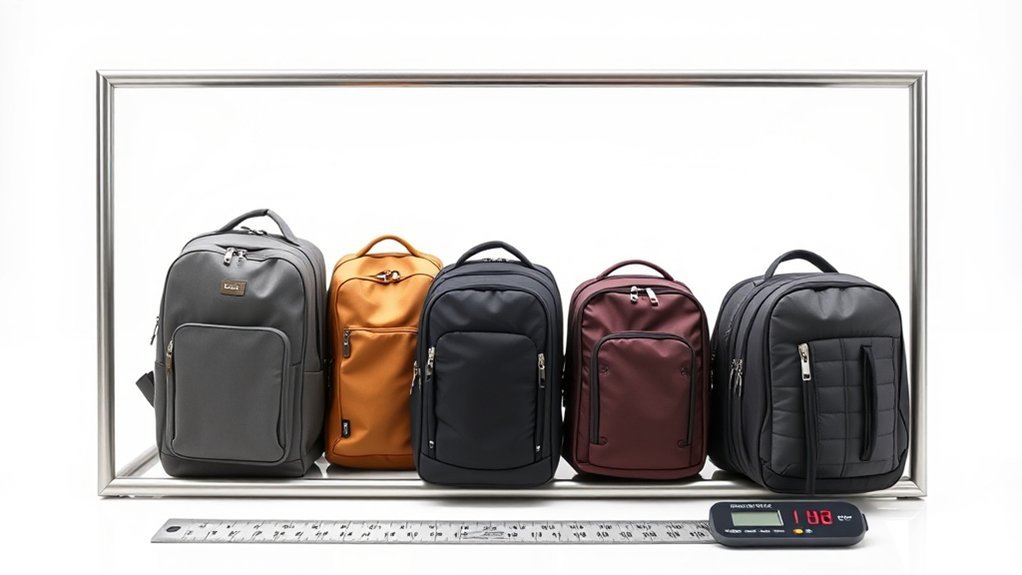
Last Updated on July 30, 2026 by Caleb Warren
A carry-on backpack can make airport travel easier, but only when the packed bag matches the rules for your airline, fare, route, and aircraft. Although 22 x 14 x 9 inches is a common limit on several large U.S. airlines, it is not a universal standard. Measure the outside of your fully packed backpack and verify every flight segment before leaving for the airport.
Quick Answer
A carry-on backpack must match the limits for your airline, fare, and aircraft—not one universal size. A 22 x 14 x 9-inch bag is a useful U.S. starting point, but some airlines allow more, less, or only a personal item. Measure the packed bag, including handles and straps, and check any weight cap.
Key Takeaways
- The airline—not TSA—sets your carry-on and personal-item dimensions.
- A 22 x 14 x 9-inch backpack fits several major U.S. airline limits, but it is not accepted everywhere.
- A bag’s liter capacity does not prove that it will fit an airport baggage sizer.
- Weight limits vary from no published numerical cap to strict limits of 8 kg, 35 lb, or another amount.
- If your backpack is gate-checked, remove power banks, spare lithium batteries, medication, travel documents, and valuables.
At a Glance
| Time Required | 10–15 minutes to pack, measure, weigh, and check the airline policy |
| Difficulty | Easy |
| Tools Needed | Flexible measuring tape, luggage scale, and the official policy for each operating airline |
| Cost | $0 when you already have a tape and scale; checking before travel can prevent baggage fees |
Disclosure: As an Amazon Associate I earn from qualifying purchases. Some links on this page are affiliate links, at no extra cost to you.
Understanding Carry-On Size Regulations
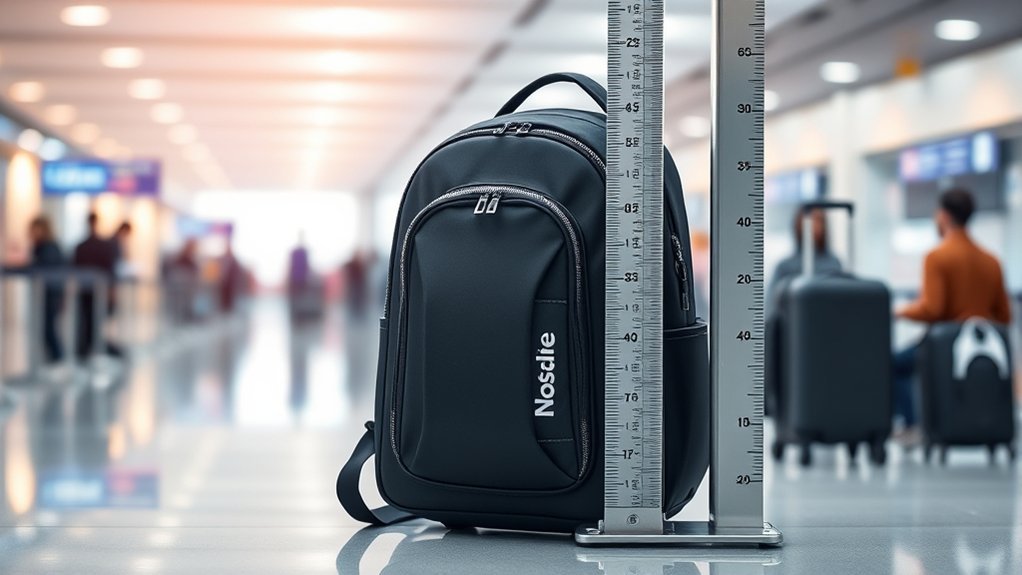
There is no single worldwide carry-on backpack size. The Transportation Security Administration explains that cabin-bag dimensions vary by airline. TSA screens bags and enforces prohibited-item rules, while each airline decides how many cabin bags your fare includes and how large or heavy they may be.
Carry-On Backpack vs. Personal Item
A carry-on bag normally goes in the overhead bin. A personal item must fit under the seat in front of you and is usually smaller. A backpack can be either one. Its classification depends on its packed dimensions and the allowance attached to your ticket.
Many standard fares include one carry-on plus one personal item. However, some low-cost or basic fares include only a personal item. For example, certain Air Canada Economy Basic itineraries and Lufthansa Economy Basic short- and medium-haul fares may not include a full-size carry-on.
Note: Check the operating airline for every segment of a connecting or codeshare itinerary. A bag accepted on the first flight may face a smaller limit or stricter weight rule on the next flight.
Current Airline Size Examples
The table below shows how much published limits can differ. These examples were checked on July 30, 2026, but airline rules and fare inclusions can change at any time.
| Airline | Published Carry-On Maximum | Personal Item | Important Note |
|---|---|---|---|
| American Airlines | 22 x 14 x 9 in | 18 x 14 x 8 in | Handles and wheels are included in the measurements. |
| Delta Air Lines | 22 x 14 x 9 in | Must fit under the seat | The bag must also stay within 45 total linear inches. |
| Southwest Airlines | 24 x 16 x 10 in | Must fit under the seat | Wheels, handles, and other attachments count. |
| Frontier Airlines | 24 x 16 x 10 in; up to 35 lb | 18 x 14 x 8 in | The personal item is included; a full carry-on may require purchase. |
| Air Canada | 55 x 40 x 23 cm 21.5 x 15.5 x 9 in |
43 x 33 x 16 cm 17 x 13 x 6 in |
No numerical weight limit, but you must be able to stow the bag without help. Some Basic fares include only a personal item. |
| Lufthansa | 55 x 40 x 23 cm; up to 8 kg | 40 x 30 x 15 cm | Economy Basic on short- and medium-haul flights may include only the personal item. |
Ideal Dimensions for Carry-On Backpacks
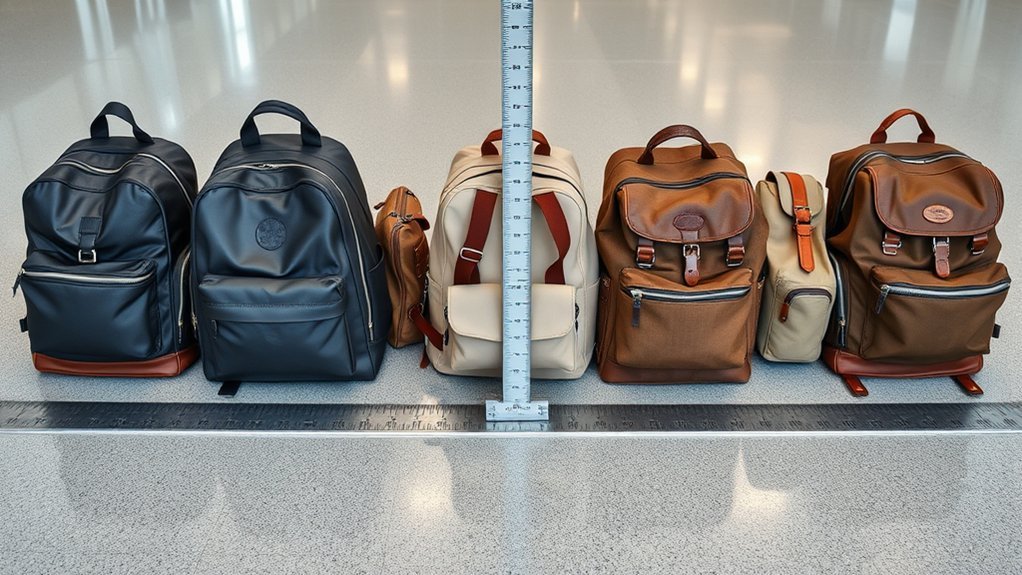
If you mainly fly with large U.S. carriers, a backpack that stays within 22 x 14 x 9 inches is a useful starting point. It matches the published limits of airlines such as American and Delta. It does not guarantee acceptance on every airline, route, fare, or aircraft.
For mixed domestic and international travel, choose a backpack that is slightly smaller than the strictest limit on your itinerary. Leaving a little unused space also prevents soft fabric, exterior pockets, or compression straps from bulging beyond the permitted depth.
Does Backpack Capacity in Liters Matter?
Liter capacity describes approximate internal volume. Airlines normally judge the bag’s external packed dimensions. Two 35L backpacks can have very different shapes: one may be tall and narrow, while another may be too deep for the same sizer.
A backpack is approved by its packed outside measurements and weight—not by the liter number printed on its product page.
As a practical shopping guide rather than an airline rule:
- About 18L to 26L: Often easier to use as an under-seat personal item, although the exact shape still matters.
- About 28L to 35L: A common range for a full-size travel backpack that is designed around cabin dimensions.
- About 36L to 40L: May fit some full-size carry-on limits, but overpacking can push the depth or height beyond the airline’s allowance.
- Above 40L: Increasingly difficult to use as a reliable carry-on across several airlines.
Pro Tip: Avoid packing an expandable backpack at its maximum depth unless the airline’s published allowance has enough room for the expanded measurement.
Weight Restrictions and Packing Light
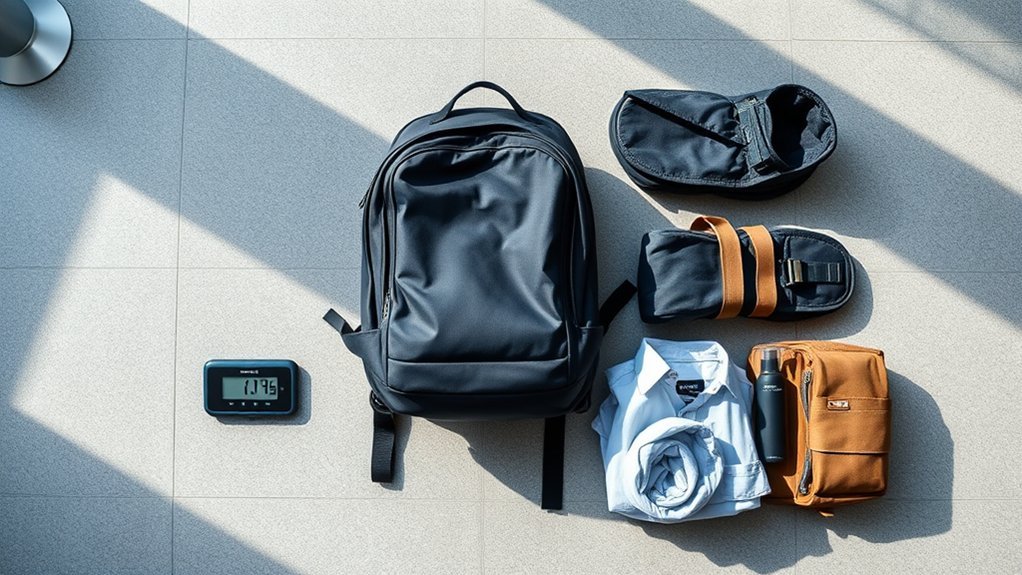
Carry-on weight limits vary more than the original article suggests. Some airlines publish no numerical limit but require you to lift the bag into the overhead bin without help. Others enforce limits such as 8 kg, 10 kg, or 35 lb. International and low-cost carriers are more likely to weigh cabin baggage, but any airline may enforce its published policy.
Weigh the fully packed backpack at home. Do not forget items added at the last minute, including a laptop, water bottle, camera, food, or duty-free purchase.
Ways to Reduce Carry-On Weight
- Wear the heaviest practical shoes and outer layer during boarding.
- Pack clothing that can be combined into several outfits.
- Use small toiletry containers rather than carrying full-size products.
- Remove duplicate chargers, cables, and “just in case” items.
- Use compression cubes to organize clothing, but remember that compression reduces bulk rather than weight.
- Place only permitted items in coat pockets and your personal item; do not assume an airline will ignore an overloaded second bag.
How to Measure a Carry-On Backpack Accurately
Measure the backpack after it is packed as it will be for the flight. An empty manufacturer measurement may not account for bulging compartments or an expanded zipper.
- Close every zipper. Leave expansion panels closed unless the expanded depth is within the airline’s allowance.
- Set the packed bag on a level floor. Let it stand in its normal travel position.
- Measure the height. Measure between the farthest external points, including wheels, top handles, or a rigid frame.
- Measure the width. Include side pockets, straps, buckles, and anything attached to the outside.
- Measure the depth. Measure the thickest point from front to back, including packed bulges.
- Compare every measurement separately. A 45-linear-inch total does not help if one side exceeds the airline’s individual maximum.
- Weigh the finished bag. Use the airline’s units and convert carefully when the policy is stated in kilograms.
- Repeat the check for every operating airline. Use the smallest size and lowest weight limit that applies to the itinerary.
A soft backpack may be accepted when it slides into the airline’s sizer without force. Do not depend on being able to crush an overfilled bag while employees or other passengers wait at the gate.
Tips for Efficient Organization and Security
Organize the bag so that security items and gate-check essentials can be reached without unpacking everything.
- Use a clamshell opening: A suitcase-style opening makes clothing, electronics, and packing cubes easier to inspect and repack.
- Separate clothing: Use lightweight packing cubes or zippered compartments to prevent loose items from shifting.
- Keep documents secure and accessible: Store your passport, identification, boarding pass, and wallet in a protected pocket rather than an exposed bottle pocket.
- Prepare liquids: For standard U.S. screening, the TSA 3-1-1 rule allows containers of 3.4 oz or 100 mL or less inside one quart-size clear zip-top bag per passenger.
- Follow checkpoint instructions: Electronics-removal procedures can differ by airport, screening lane, and equipment, so follow the officer’s directions.
- Keep batteries accessible: Store power banks and spare lithium batteries where you can remove them quickly if the backpack must be checked.
Medically necessary liquids, breast milk, formula, and certain child-nourishment items can have different TSA screening procedures. Review the official rules before travel and tell the officer about exempt liquids at the checkpoint.
Warning: If your carry-on backpack is checked at the gate or planeside, remove all power banks and spare lithium batteries. The FAA requires these batteries to remain in the aircraft cabin and to be protected from short circuits.
What Happens if Your Backpack Is Too Large?
An oversized backpack may be placed in a baggage sizer, charged as a full carry-on, or sent to the cargo hold. A bag that was inexpensive to bring during online booking can cost more when added or checked at the airport gate.
Possible consequences include:
- Paying a carry-on, checked-bag, oversized-bag, or gate-service fee;
- Repacking items into a smaller personal item;
- Checking the backpack and waiting at baggage claim;
- Removing items that cannot travel in checked baggage;
- Missing boarding time if the issue is handled late;
- Leaving nonessential items behind when no other option is available.
Even a compliant backpack can be gate-checked when overhead bins are full or when a regional aircraft has smaller storage compartments. The FAA advises passengers to expect limited overhead space on some aircraft.
Pack a Removable Gate-Check Pouch
Keep the following items together in a small pouch or packing cube that fits under the seat:
- Passport, identification, boarding pass, and wallet;
- Prescription medication and essential medical supplies;
- Keys and valuable jewelry;
- Phone, tablet, laptop, and other fragile electronics;
- Power banks and spare lithium batteries;
- One charging cable;
- Any item needed during the flight.
Special Cases and Exceptions
Basic and Personal-Item-Only Fares
Do not assume a cabin-size backpack is included because it fits the overhead bin. Some fares permit only one under-seat personal item. Confirm the allowance shown in your booking rather than relying only on the airline’s general maximum dimensions.
Regional and Small Aircraft
Commuter and regional aircraft may have smaller bins than mainline jets. Airline staff may tag a compliant backpack for planeside or gate checking. Keep the removable essentials pouch ready before boarding.
Medical and Assistive Items
Mobility devices, medical equipment, breast pumps, diaper bags, and child-restraint items may receive special treatment and may not count against the normal cabin-bag allowance. Requirements differ, so contact the airline before travel when an exception is important to your trip.
Musical Instruments and Unusual Items
A small instrument may count as your carry-on if it fits safely in an approved cabin storage area. Larger or unusually shaped items can require advance approval, a separate seat, or checked handling.
Carry-On Backpack Checklist Before You Fly
- Open the airline’s official baggage page rather than relying on an old screenshot or third-party chart.
- Confirm whether your fare includes a full-size carry-on, a personal item, or both.
- Check every operating airline on a connecting itinerary.
- Pack the backpack completely before measuring it.
- Measure height, width, and depth at the farthest external points.
- Include wheels, handles, straps, pockets, buckles, and bulging fabric.
- Compare every dimension separately with the airline’s limits.
- Weigh the finished bag and leave a small margin below the maximum.
- Close expansion zippers unless the expanded bag still qualifies.
- Prepare the TSA liquids bag when departing through a U.S. checkpoint.
- Keep power banks and spare lithium batteries in the cabin.
- Pack a removable pouch in case the backpack is gate-checked.
Pro Tip: Save the airline’s current baggage-policy page on your phone after booking. You will still need to follow airport staff instructions, but having the official policy available can help you confirm what your ticket includes.
Frequently Asked Questions
Can I bring a backpack and a personal item on board?
Many fares include one full-size carry-on and one smaller personal item. Your backpack can serve as either one, depending on its dimensions. Some basic fares include only a personal item, so check the allowance attached to your ticket before packing two bags.
What happens if my backpack exceeds the size limits?
The airline may charge a carry-on or checked-bag fee, require you to repack, or send the backpack to the cargo hold. Gate fees can be higher than fees paid earlier. Remove medication, travel documents, valuables, power banks, and spare lithium batteries before surrendering the bag.
Are carry-on sizes different on international airlines?
Yes. International airlines often use metric measurements and may allow a different shape rather than a simply larger or smaller bag. They may also enforce weight limits more closely. Check the operating airline for each segment and use the strictest applicable dimensions and weight.
Can I use a suitcase as a carry-on instead of a backpack?
Yes. Airlines generally care about the bag’s allowance, packed dimensions, weight, and safe storage rather than whether it is a suitcase, duffel, or backpack. Measure a suitcase with its wheels, handles, and exterior pockets included.
Are there restrictions on liquids in a carry-on backpack?
At standard U.S. TSA checkpoints, liquids, gels, aerosols, creams, and pastes must normally be in containers of 3.4 oz or 100 mL or less, and the containers must fit inside one quart-size clear zip-top bag per passenger. Medically necessary liquids and infant or child nourishment have separate screening provisions.
Is a 35L backpack always carry-on compliant?
No. The 35L label describes approximate volume, not the bag’s outside shape. A 35L backpack may fit one airline’s overhead limit, exceed another airline’s depth limit, or be too large for a free personal item. Check its fully packed height, width, depth, and weight.
Can an airline gate-check a backpack that meets the size limit?
Yes. Full overhead bins, a smaller regional aircraft, operational restrictions, or an unusually shaped bag can lead to gate checking. Prepare a removable essentials pouch and keep all spare lithium batteries and power banks with you in the cabin.
Conclusion
The best carry-on backpack is not simply a 35L or 40L model advertised as “airline approved.” It is a bag that fits the smallest packed dimensions, lowest weight limit, and baggage allowance on your specific itinerary. Check the fare, measure every outside edge, weigh the finished backpack, and prepare for a possible gate check. These steps reduce surprise fees and keep essential items safely within reach.
Sources
- Transportation Security Administration: Carry-On Size Restrictions — confirms that cabin-bag dimensions vary by airline.
- Transportation Security Administration: Liquids, Aerosols, and Gels Rule — supports the U.S. 3-1-1 liquids guidance.
- Federal Aviation Administration: Carry-On Baggage Tips — covers storage, limited overhead space, and cabin safety.
- Federal Aviation Administration: PackSafe Lithium Batteries — supports the power-bank and spare-battery gate-check warning.
- American Airlines: Carry-On Bags — supports the 22 x 14 x 9-inch carry-on and 18 x 14 x 8-inch personal-item examples.
- Lufthansa: Carry-On Baggage — supports the metric dimensions, 8 kg limit, and Economy Basic fare distinction.
