Last Updated on July 27, 2026 by Caleb Warren
Securing a backpack zipper is less about making the bag impossible to open and more about removing the quick, easy access that opportunistic theft depends on. Whether you’re commuting, walking through a crowded city, staying in a hostel, or checking a bag at the airport, the right zipper lock, clip, and packing habits can make your belongings harder to reach without making the backpack difficult for you to use.
Quick Answer
To lock backpack zippers, close the compartment fully, bring compatible zipper pulls together, and secure them with a small luggage padlock or TSA-recognized lock. For quick access, a locking carabiner or reusable tie can slow tampering. Position secured pulls against your body or under a flap, and keep valuables in interior pockets.
Key Takeaways
- A small padlock or TSA-recognized luggage lock provides a true lock between compatible zipper pulls; carabiners and reusable ties mainly act as quick-access deterrents.
- Park secured zipper pulls where they are awkward for another person to reach, such as against your back, beneath a flap, or in a built-in zipper dock.
- Use a TSA-recognized lock on checked baggage when you want security officers to have an authorized way to open and relock it during screening.
- A locked pair of zipper pulls does not make an ordinary soft backpack theft-proof; the zipper track, fabric, straps, or whole bag can still be attacked.
- Keep passports, jewelry, cash, and other important valuables under your control rather than relying on a luggage lock alone.
At a Glance
| Time Required | About 1–2 minutes |
| Difficulty | Easy |
| Tools Needed | Small luggage lock, locking carabiner, reusable gear tie, or thin cable lock |
| Cost | Often under $20 for a basic luggage lock; no added cost if you already have suitable hardware |
Warning: Treat a zipper lock as a deterrent, not a safe. TSA recommends keeping valuable jewelry with you rather than putting it in checked baggage and recommends carrying expensive, fragile electronics in your carry-on when permitted. See the TSA What Can I Bring? guidance.
Disclosure: As an Amazon Associate I earn from qualifying purchases. Some links on this page are affiliate links, at no extra cost to you.
Understanding Backpack Zipper Security
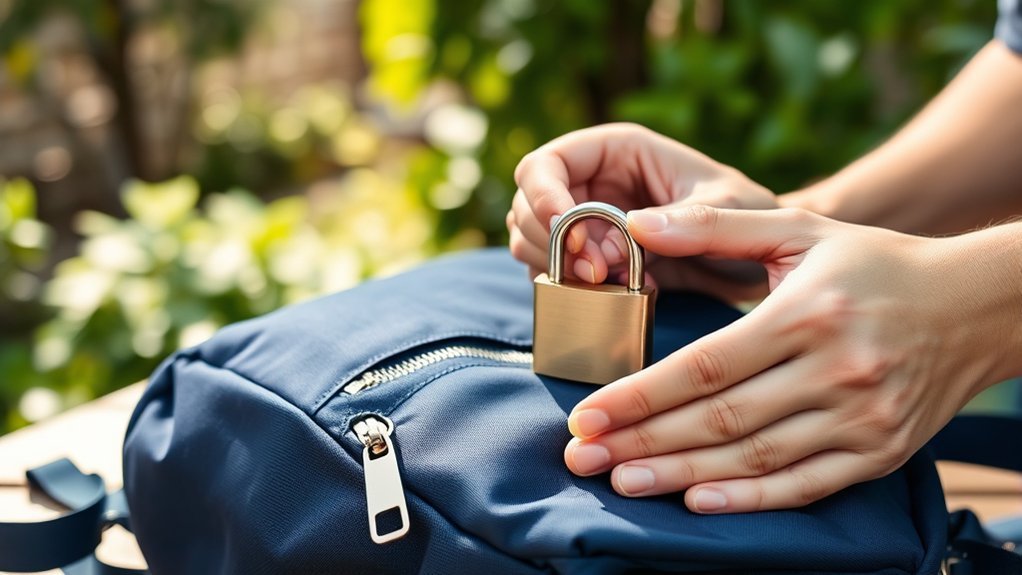
Zipper security matters most when someone could reach your backpack without you noticing, such as on crowded public transport, in a queue, at a tourist attraction, or in a busy terminal. Joining or anchoring the zipper pulls forces another person to perform an extra step before opening the compartment.
Where you leave the pulls matters more than whether they are technically at the top or side of the bag. When possible, close the zipper so the pulls rest against your back, underneath a fabric flap, inside a built-in locking dock, or next to another protected attachment point.
Keep the backpack fitted close enough to your body that you can notice unusual movement. Put passports, wallets, and small electronics in interior or back-panel pockets rather than exposed outer compartments whenever practical.
The goal of zipper security is to turn a quick, unnoticed opening into a slower and more obvious action.
Choosing the Right Lock for Your Backpack
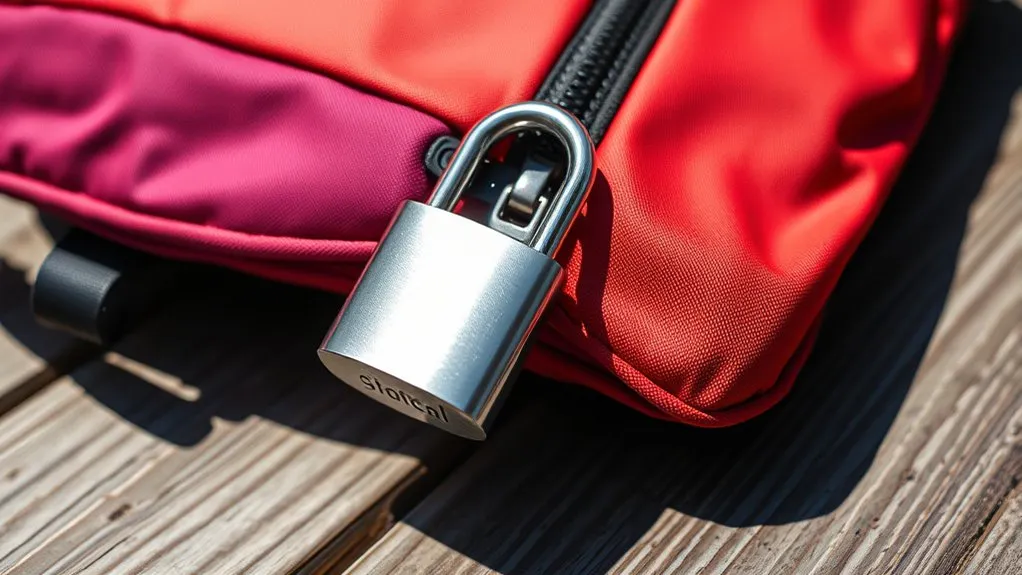
The best hardware depends on whether you need actual locking security, fast everyday access, or the ability to anchor the entire backpack.
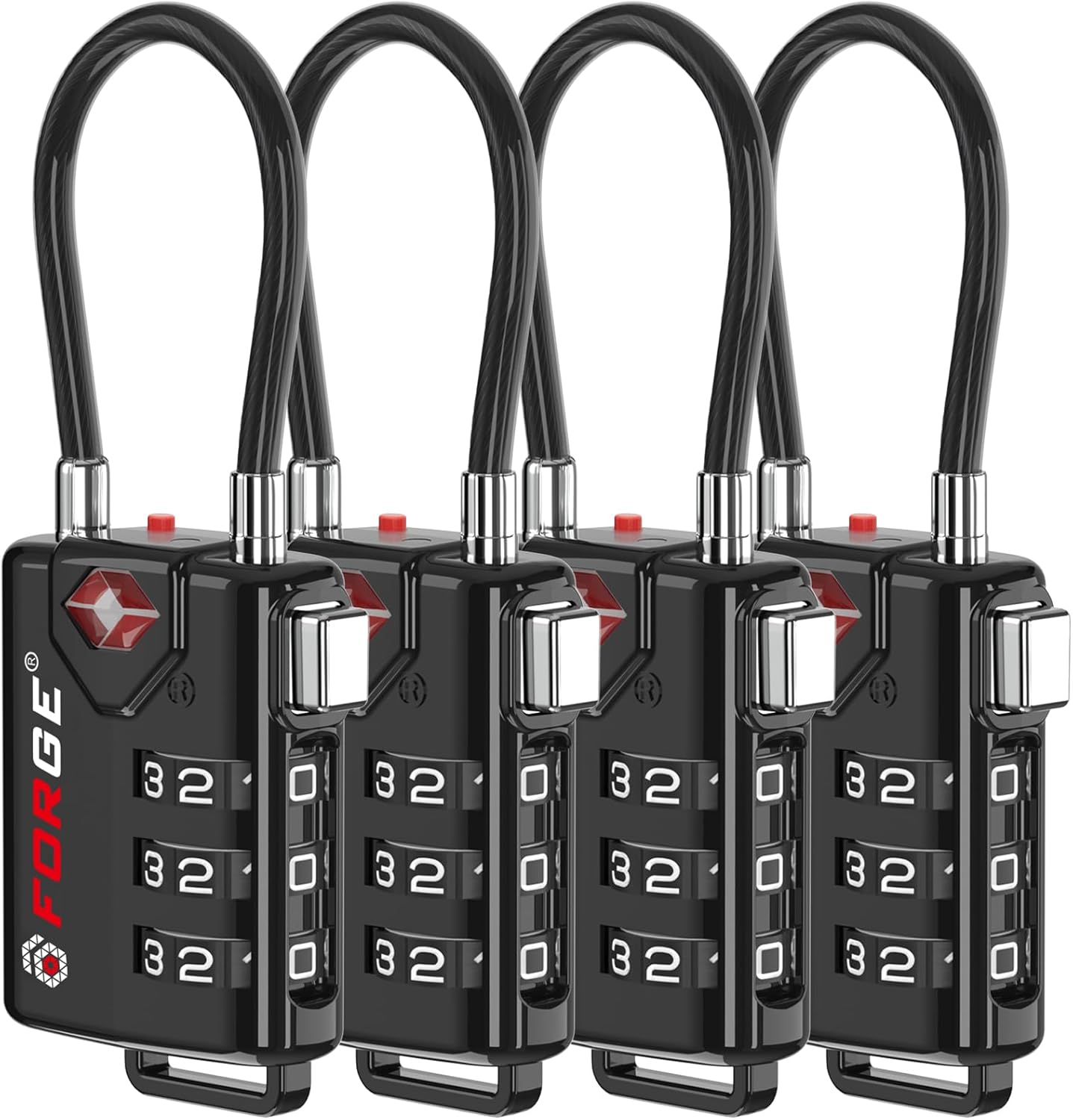
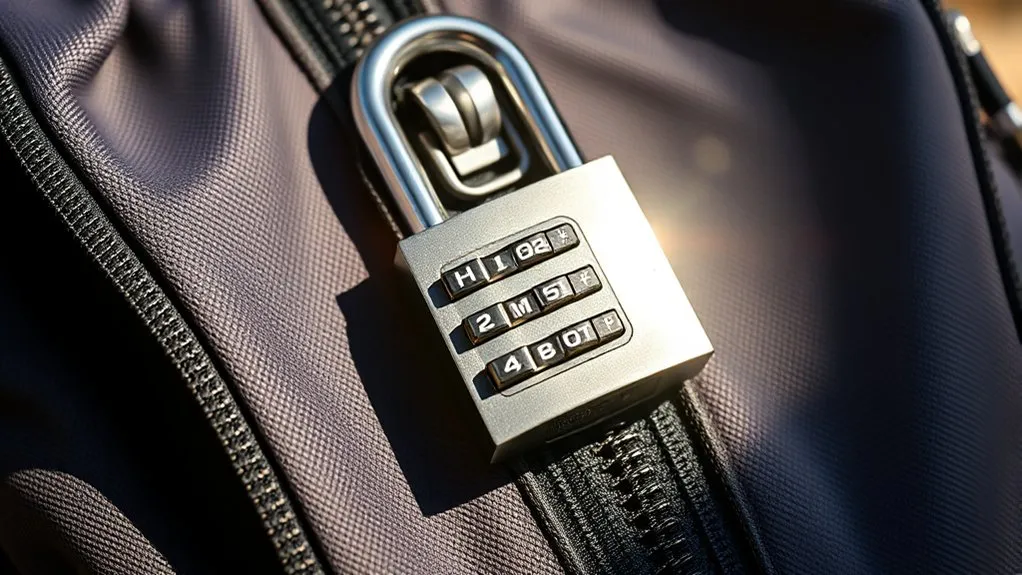
- Combination luggage lock — locks compatible zipper pulls together without requiring you to carry a key. It works best when both pulls have holes large enough for the shackle.
- Keyed luggage lock — compact and straightforward, but you need to keep the key somewhere separate from the locked backpack.
- Thin cable lock — useful when zipper-pull openings are too small for a thick shackle. A longer cable can also help secure the bag to an appropriate fixed object.
- Locking carabiner — faster to open than a padlock and useful for everyday deterrence. Confirm that it actually locks; an ordinary spring-gate carabiner is only a clip.
- Reusable gear tie or zipper clip — inexpensive and quick, but best viewed as a tamper delay rather than a true lock.
Look for hardware that fits through the zipper pulls without forcing, bending, or twisting them. A lock that barely fits can put unnecessary stress on the pull tabs and zipper sliders.
TSA-Recognized Locks for Checked Baggage
If you plan to check the backpack when flying in the United States, TSA recommends looking for a TSA-recognized baggage lock. TSA officers have authorized tools for compatible locking systems, allowing them to open and relock a bag when a physical inspection is necessary instead of automatically cutting the lock.
Travel Sentry Approved locks carry the Red Diamond mark. According to Travel Sentry, its inspection system is now implemented in about 80 countries and 800 airports worldwide.
A TSA-recognized lock is not legally required for an ordinary checked backpack. If TSA cannot open a locked bag by an authorized method and a physical inspection is required, the lock may have to be cut. TSA also notes that locks can sometimes be damaged by airport baggage-handling equipment.
Note: For a carry-on backpack that remains with you, TSA compatibility is not necessary simply to secure the zipper pulls. Choose hardware that fits the bag well and that you can open quickly when screening or access is required.
How to Lock Backpack Zippers Step by Step
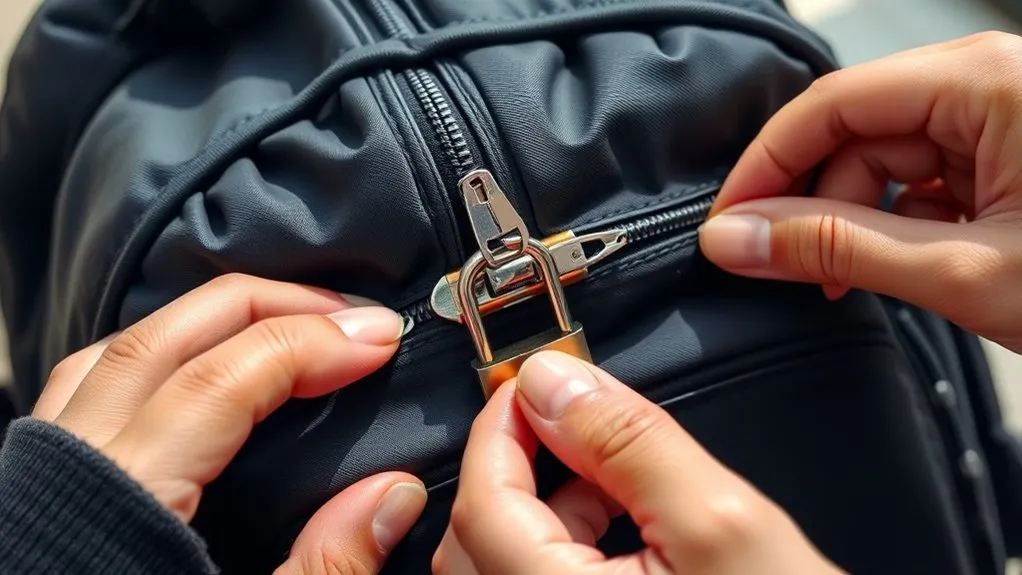
- Close the compartment completely. Bring the zipper sliders to the point where you want them to remain while the bag is secured.
- Choose the least accessible parking point. When the design allows it, place the pulls against your body, beneath a flap, beside a D-ring, or in the backpack’s built-in zipper dock.
- Bring compatible pulls together. Align the holes or locking tabs without twisting or forcing them.
- Thread the security device through the pulls. Use a small padlock, TSA-recognized luggage lock, locking carabiner, cable lock, or reusable tie that fits without stressing the hardware.
- Close or lock the device. Remove excessive slack while still allowing the zipper hardware to sit naturally.
- Test the closure. Pull gently on the sliders to confirm they cannot travel far enough to create a usable opening.
- Do a quick condition check. Make sure the sliders, pull tabs, stitching, and lock are not cracked, bent, or jammed before relying on them.
Pro Tip: Keep a spare key or a securely recorded combination somewhere separate from the backpack. Do not attach the spare key to the bag you just locked.
Alternative Security Solutions for Quick Use
A padlock is not the only way to make a backpack harder to open unnoticed. Choose the simplest method that you will actually use consistently.
Securing a Single-Slider Zipper
If a compartment has only one zipper slider, look for a strong sewn-in D-ring, locking loop, handle base, or purpose-built zipper dock close to the closed position. Connect the zipper pull to that point with a thin cable, locking carabiner, or suitable clip. Do not attach it to decorative fabric or weak stitching that could tear under tension.
When the Zipper-Pull Hole Is Too Small
A thin cable-shackle luggage lock is often easier to fit through small pull tabs than a thick metal shackle. Another option is a sturdy split ring or purpose-built zipper connector added to the pull, provided it does not interfere with normal zipper movement.
Securing the Whole Backpack
A longer locking cable or cut-resistant anchor strap can secure the bag to an appropriate fixed object in a hostel room, cafe, or other setting where doing so is permitted. Do not attach a bag to emergency equipment, doors, walkways, or transit fixtures where it could create an obstruction.
If you’re buying a new backpack, anti-theft designs may combine lockable zipper tabs with hidden pockets, cut-resistant materials, anchor straps, and more puncture-resistant zipper construction. Pacsafe’s anti-theft technology overview, for example, shows why securing only the zipper pulls addresses just one possible access point.
What a Zipper Lock Can and Cannot Protect Against
Locking two zipper pulls together is useful against quick opening, but it does not turn an ordinary soft-sided backpack into a secure container. Depending on the construction, a determined person may attack the zipper track, cut fabric or straps, damage the pull tabs, or simply take the entire backpack.
This is why security works best in layers:
- Secure the zipper pulls.
- Keep valuables in concealed internal compartments.
- Wear or position the bag where you can monitor it.
- Use an anchor cable when leaving the bag beside you in an appropriate location.
- Keep irreplaceable or especially valuable items under your direct control.
Best Practices for Organizing Your Backpack
Security and good weight distribution are related, but they are not the same thing. For security, place passports, wallets, cards, and small electronics in internal or back-panel compartments rather than easy-access exterior pockets. Exterior pockets are better suited to lower-value items you need often, such as snacks, tissues, or a charging cable.
For carrying comfort, place heavier gear close to your spine, generally around the middle of the pack rather than automatically at the bottom. Osprey’s packing guidance recommends keeping heavy items close to the spine and stabilizing the load around them.
Organize the rest into predictable zones so you do not need to open every compartment in public to find one item. Fewer unnecessary access points also make it easier to remember which zippers should be secured.
Enhancing Awareness While Wearing Your Backpack
Stay Alert and Vigilant
- Keep the bag close — tighten the shoulder straps enough to reduce excessive swinging without making the fit uncomfortable.
- Move it to the front in dense crowds — this is especially useful on packed trains, buses, escalators, and queues.
- Notice unexpected contact — an unexplained tug, pressure change, or shift in the bag deserves attention.
- Keep the bag in sight when you set it down — a locked zipper does not prevent someone from taking the whole backpack.
Use Reflective Surfaces for Awareness
Shop windows, transit glass, and mirrors can sometimes give you an extra view of the space behind you. Use them as a supplement to direct awareness rather than relying on reflections alone.
| Reflective Surface | Best Use | Limitation |
|---|---|---|
| Shop Windows | Brief view behind you while walking or waiting | Reflection quality changes with lighting |
| Bathroom or Elevator Mirrors | Checking zipper position and bag closure | Only useful while stationary |
| Transit Windows or Glass Panels | Extra awareness in stations or vehicles | Do not let watching a reflection distract you from your surroundings |
Engage Your Senses
- Touch — periodically check that the pack and straps still feel normal.
- Movement — pay attention to an unexpected change in the bag’s position or weight.
- Sound — zipper movement, clicking hardware, or unusual fabric noise behind you may be worth checking.
- Visibility — when practical, keep the most vulnerable part of the bag where you can see or feel it.
Troubleshooting Common Zipper-Locking Problems
The Lock Will Not Fit Through the Pulls
Do not force a thick shackle through a small zipper-pull hole. Use a thin cable-shackle lock, a purpose-built zipper connector, or another compatible attachment method instead.
A Zipper Pull Tab Breaks
If the slider itself is still functional, attach a sturdy replacement pull, small split ring, or strong cord through the slider’s attachment point. Avoid oversized hardware that could snag or place extra leverage on the slider.
You Forgot the Combination
Check the lock manufacturer’s reset or recovery instructions. Most resettable combination locks require the lock to already be open before the combination can be changed, so record the code securely before travel.
The Lock or Zipper Feels Stiff
Stop forcing it. Check whether fabric is trapped in the zipper, whether the pull tabs are twisted, and whether the lock is putting sideways pressure on the sliders. Reposition the hardware before continuing.
The Security Device Is Too Slow for Everyday Access
Use the stronger lock on compartments holding valuables and a quicker locking carabiner or zipper clip on pockets you open frequently. A security method only helps when it is practical enough that you keep using it.
Engaging With the Community: Share Your Tips
Travelers use everything from simple reusable ties to backpacks with built-in security hardware. The useful question is not which method looks strongest, but which one fits your backpack and the level of access control you need.
| Method | Best Use | Main Limitation |
|---|---|---|
| Reusable Ties | Fast, inexpensive tamper deterrence | Not equivalent to a true lock |
| Small Locks | Securing compatible zipper pulls together | Can be inconvenient on frequently opened pockets |
| Built-in Security Features | Frequent travel in crowded environments | Adds cost and still does not make a bag theft-proof |
| Organizing Techniques | Keeping valuable items away from easy-access pockets | Works best when combined with awareness and secure closures |
Final Backpack Security Check
Before heading into a crowded area or handing over a checked backpack, take a few seconds to confirm that:
- Important compartments are fully zipped.
- The secured zipper pulls are parked in the least accessible practical position.
- The lock, clip, or cable is completely closed.
- Nothing valuable is sitting unnecessarily in an exposed exterior pocket.
- Your passport, jewelry, cash, and other irreplaceable valuables are under your direct control.
- The backpack straps, zipper sliders, stitching, and locking hardware show no obvious damage.
Frequently Asked Questions
Can I use any type of lock for zipper security?
Use a lock that fits the zipper pulls without forcing or bending them. Small luggage padlocks and thin cable-shackle locks usually work better than large general-purpose padlocks. For a checked bag, choose a TSA-recognized lock if you want TSA officers to have an authorized way to open and relock it during screening.
How do I know if my lock is durable enough?
Check that the body, shackle, cable, and locking mechanism feel solid and that nothing is bent, cracked, loose, or badly corroded. The lock should fit the zipper pulls naturally rather than placing sideways force on them.
What if my zipper pull tab breaks?
If the zipper slider still works, attach a sturdy replacement pull, small split ring, or strong cord to the slider’s attachment point. Keep the replacement compact so it does not snag or put excessive leverage on the zipper.
Can I lock multiple zippers together?
Yes, if the pulls naturally meet at the same secure point and the lock or cable fits without twisting them. Do not force several sliders together if doing so strains the zipper tracks or pull tabs.
Are there locks specifically for backpacks?
Yes. Small luggage padlocks, thin cable locks, locking zipper clips, and backpacks with built-in locking docks are all designed for this type of use. Match the hardware to the size and shape of your zipper pulls.
How do I secure a backpack with only one zipper pull?
Connect the single pull to a strong built-in D-ring, zipper dock, locking loop, or another reinforced attachment point near the closed end of the zipper. A thin cable or locking carabiner is often easier to use than a conventional padlock.
Can a locked zipper still be forced open?
Yes. Locking the pulls mainly prevents the sliders from being moved normally. Depending on the backpack, a determined thief may still attack the zipper track, fabric, straps, or the entire bag. Puncture-resistant zippers and cut-resistant construction provide additional layers of protection.
Conclusion
Locking backpack zippers is a simple way to make quick, unnoticed access more difficult while traveling or commuting. Use a lock or clip that fits the bag properly, position the zipper pulls somewhere awkward to reach, keep important valuables in protected interior compartments, and stay aware of the backpack itself. The strongest setup is not one lock but several small layers of security working together.
Sources
- Transportation Security Administration — TSA Recognized Locks — explains why TSA may need to open checked baggage, how recognized locks work, and why other locks can sometimes be cut.
- Transportation Security Administration — Travel Checklist — advises travelers purchasing baggage locks to look for TSA-recognized models.
- Travel Sentry — What Happens When TSA Cuts Your Lock? — explains the Red Diamond system and its current international reach.
- Master Lock — What Are TSA-Accepted Locks? — explains compatible luggage-lock operation and Travel Sentry identification.
- Travelpro — Luggage Locks and How to Reset Them — provides manufacturer guidance on luggage-lock types and combination-lock use.
- Pacsafe — Anti-Theft Technology — demonstrates how lockable zipper systems can be combined with anchor points, cut-resistant materials, and other security layers.