
Last Updated on September 11, 2026 by Daniel Globe
If you are exploring traditional wooden-bow projects, choosing the right woodworking tools and reference material can make the learning process clearer and safer. A drawknife can handle coarse woodworking, cabinet scrapers help with fine surface work, and well-established books can give you historical and technical context before you work with functional archery equipment.
This guide compares five tools and books that fit different stages of learning. It focuses on product selection, verified specifications, responsible woodworking, and modern archery safety rather than treating a homemade bow as ordinary craft equipment.
Quick Answer
For coarse woodworking, the UTAKU Drawknife is the most relevant tool here. For fine finishing, DFM’s curved cabinet scrapers are the stronger choice. Beginners who want structured reading can start with Clay C. Hayes’s Traditional Bowyer’s Handbook, while The Traditional Bowyer’s Bible offers the deepest reference material in this group.
Affiliate disclosure: This article contains Amazon affiliate links. We may earn a commission from qualifying purchases made through those links, at no extra cost to you.
Key Takeaways
- Choose a drawknife for controlled coarse woodworking and a scraper for fine surface refinement.
- DFM identifies its curved scraper set as 0.032-inch American Blue Spring Steel rather than stainless steel.
- Traditional Bowyer’s Handbook is the most approachable single-volume starting reference in this group.
- The Traditional Bowyer’s Bible Volume 1 is the more extensive technical and historical reference.
- Amazon ratings and review counts change, so dated figures in this article should be treated as snapshots rather than permanent specifications.
- Use functional archery equipment only with current safety guidance and on an appropriate range.
Warning: Bows, arrows, sharp woodworking tools, and stressed wooden limbs can cause serious injury. Work with secure workholding and appropriate protective equipment, inspect archery equipment before use, never dry-fire a bow, and shoot only toward a safe target on an appropriate range. Beginners should learn from a qualified instructor or experienced bowyer.
Top Picks
|
Category |
Product |
Editorial Fit Score |
|---|---|---|
|
🔧 Best for Shaping |
84/100 |
|
|
🎨 Best for Fine Finishes |
92/100 |
|
|
📘 Best Beginner Guide |
90/100 |
|
|
🏹 Best Classic Read |
93/100 |
|
|
⭐ Best Comprehensive Reference |
94/100 |
Note: The scores above are editorial fit scores for this roundup, not Amazon star ratings or laboratory test results. They reflect how well each item fits its stated role, available product information, usability, and value as a learning resource.
Selection Criteria
The selections were evaluated according to their role in a traditional woodworking project rather than treated as interchangeable products. For hand tools, the main considerations were control, material information, durability, ease of maintenance, and suitability for the type of woodworking described by the manufacturer or seller.
For books, the focus was different: clarity, scope, usefulness to a beginner, historical value, and whether the book could remain useful as the reader gains experience. Current customer ratings were treated only as one signal because ratings and review totals change over time.
Safety was also considered. A useful woodworking tool still requires correct handling and secure workholding, while a book about historical archery should be supplemented with current range rules, equipment inspection practices, and applicable laws.
Which Option Fits Your Needs?
- Choose the UTAKU Drawknife if you primarily need a conventional hand tool for coarse wood shaping and bark removal.
- Choose the DFM Scrapers when the priority is controlled finishing, smoothing, glue cleanup, or working on curved woodworking surfaces.
- Choose Traditional Bowyer’s Handbook if you want a relatively compact introductory reference focused on traditional wooden bows and arrows.
- Choose Hunting With the Bow and Arrow if historical archery, fieldcraft, and period perspective interest you as much as practical information.
- Choose The Traditional Bowyer’s Bible Volume 1 when you want the broadest reference in this group and expect to return to the book repeatedly.
Pro Tip: Buy for the task you actually need to perform. A coarse shaping tool, a fine finishing tool, and a reference book solve different problems; owning more tools does not replace careful instruction, practice, or safe work habits.
UTAKU Drawknife

The UTAKU is an 8-inch straight drawknife sold as a general woodworking and wood-shaping tool. Available listing information identifies an alloy-steel blade, wooden handles, and a weight of roughly 1.6 pounds. Its basic design suits jobs where a woodworker needs more aggressive material removal than a scraper provides.
For a traditional woodworking project, the main appeal is simplicity: two handles give the user direct feedback from the cut, and the exposed straight blade is easy to inspect and maintain. That simplicity also means there is no guard or powered safety system between the user and the cutting edge.
What People Say
Ratings and review totals for this ASIN vary between indexed storefronts and can change over time. Because a stable current Amazon.com review count could not be independently confirmed during this update, this article does not freeze a live star rating for the UTAKU drawknife.
That is more reliable than presenting an old rating as permanent. Check the live Amazon listing if the latest customer score is important to your purchase decision.
Overall Sentiment: Generally positive in indexed customer feedback, but live totals vary.

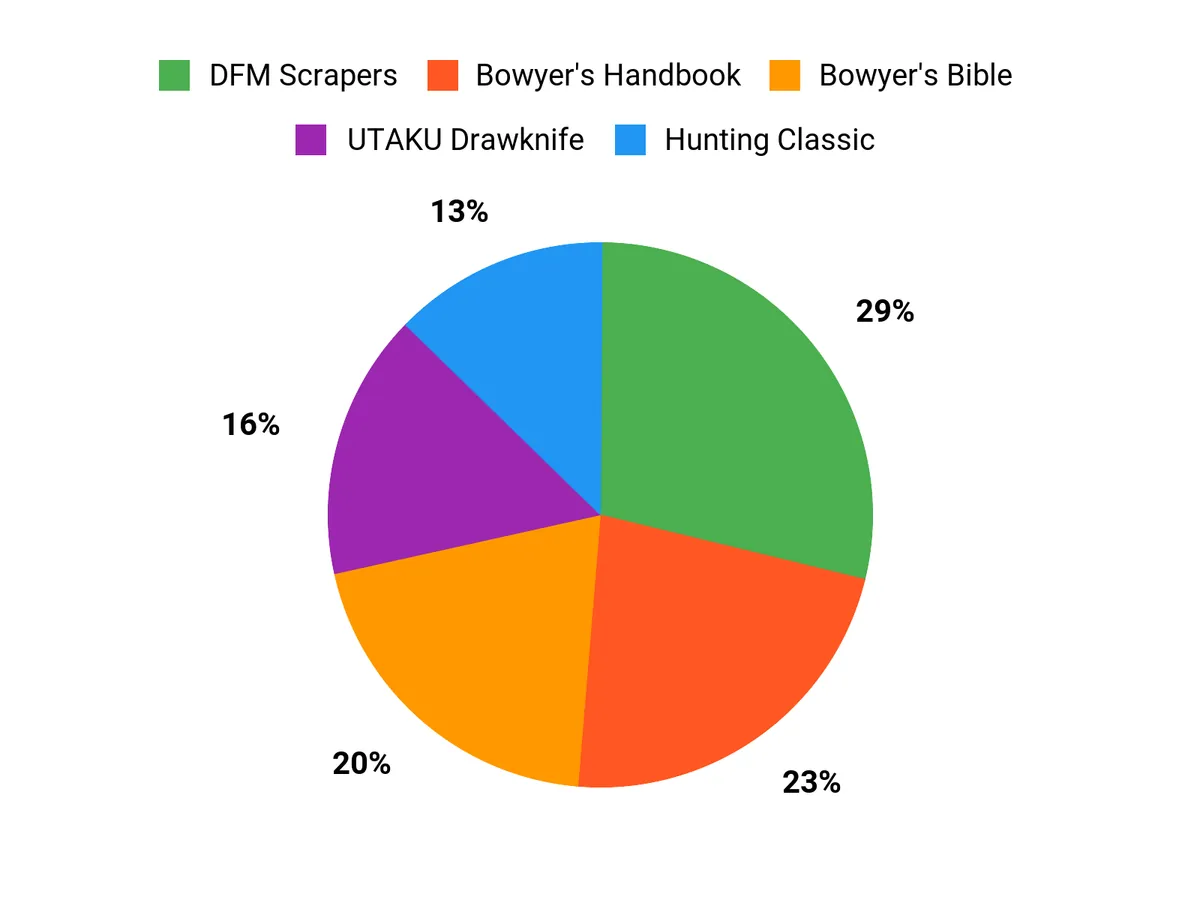
This sentiment chart is retained from the original article and should be treated as a historical visualization rather than a live Amazon review metric.
Versatility
The tool is sold for general wood shaping and bark removal, so it is more versatile than a tool intended only for archery work. It can be useful anywhere controlled coarse stock removal is needed before finer tools take over.
Safety and Handling
A drawknife has a fully exposed cutting edge. Keep the workpiece securely restrained, maintain a stable working position, keep hands away from the cutting path, and store or cover the edge safely when the tool is not in use. Inspect the edge and handles before starting work.
Key Benefits
- 8-inch straight alloy-steel blade
- Wooden handles and simple hand-tool construction
- Suitable for coarse woodworking and bark removal
- Easy to pair with finer finishing tools later in a woodworking project
Live rating: Check the current Amazon listing; ratings and review totals change over time.
DFM Scrapers

DFM Tool Works’ curved scraper cards are the most specialized finishing tools in this roundup. According to DFM, the set is made in the United States from 0.032-inch American Blue Spring Steel, with high-carbon steel rated at 50 C Rockwell. The manufacturer also says the scrapers need sharpening before use and recommends a burnisher for best performance.
Scrapers remove very small amounts of material and are useful when a coarse cutting tool would be excessive. Their curved profiles also make them more adaptable to rounded and compound woodworking surfaces.
What People Say
Amazon displayed a 4.7-out-of-5 rating from 1,997 reviews when checked on August 26, 2026. DFM’s own customer feedback also emphasizes edge quality, hardwood performance, and reduced reliance on sanding.
Remember that Amazon ratings and review counts can change after publication.
Overall Sentiment: Positive

This chart is retained from the original article and is not a live representation of the current Amazon review distribution.
Versatility
DFM describes these scrapers as woodworking tools for shaping, molding, glue or epoxy cleanup, and fine finishing. Their main advantage over a coarse cutting tool is the amount of control available during final surface refinement.
Safety
Scraper edges can be sharp enough to cut skin. Keep the workpiece stable, control the tool with deliberate pressure, and protect the sharpened edges during storage. Follow the manufacturer’s sharpening guidance rather than assuming the cards are ready for peak performance straight out of the package.
Key Benefits
- Made in the USA from 0.032-inch American Blue Spring Steel
- High-carbon steel rated at 50 C Rockwell by DFM
- Three curved profiles for varied woodworking surfaces
- Designed for fine scraping and surface refinement
Rating checked August 26, 2026: 4.7/5 (1,997 reviews)
Bowyer’s Handbook

Traditional Bowyer’s Handbook: How to Build Wooden Bows and Arrows by Clay C. Hayes is the most obvious beginner-oriented reference in this group. Amazon lists the paperback at 168 pages, 9.6 ounces, and 6 × 0.38 × 9 inches.
The book focuses specifically on traditional wooden bows and arrows, making it a more targeted starting point than a general woodworking manual. Readers should still combine any construction reference with current equipment inspection and archery-range safety guidance.
What People Say
Amazon displayed a 4.7-out-of-5 rating from 640 reviews on August 26, 2026. That is a stronger and more transparent signal than making undocumented claims about what a particular percentage of readers praise or criticize.
Overall Sentiment: Positive

The retained chart represents earlier sentiment analysis and should not be interpreted as a live Amazon review breakdown.
Versatility
This book works best as a structured reference for readers studying traditional bowyery rather than as a general archery manual. Its compact format also makes it easier to consult than a multi-volume reference when you are learning the terminology and overall workflow.
Safety
Use the book alongside current safety guidance from recognized archery organizations. Any functional bow should be inspected before shooting, and beginners should learn range procedures and equipment handling from a qualified instructor or experienced archery professional.
Key Benefits
- Written specifically about traditional wooden bows and arrows
- 168-page paperback format
- Focused enough for a beginner to use as an introductory reference
- Useful companion to supervised hands-on instruction
Rating checked August 26, 2026: 4.7/5 (640 reviews)
Hunting Classic

Hunting With the Bow and Arrow by Saxton Pope is fundamentally different from the modern instructional books in this roundup. It is a historical archery work that combines period techniques, equipment, field experience, and storytelling.
That historical perspective is its main strength. It can deepen a reader’s understanding of traditional archery culture, but its age means it should not be used as the final authority for present-day hunting laws, equipment standards, or safety practices.
What People Say
Amazon showed a 4.8-out-of-5 rating from 73 reviews when checked on August 26, 2026. The relatively small review base is worth keeping in mind when comparing it with products that have hundreds or thousands of ratings.
Overall Sentiment: Positive

The retained sentiment graphic is historical and does not update automatically with Amazon’s current reviews.
Versatility
The book works best as historical background, recreational reading, and a companion to more current traditional-archery references. Readers interested in both the history and practice of archery may get more from it than someone looking only for a modern technical manual.
Safety
Historical descriptions should always be supplemented with current range rules, applicable hunting regulations, and modern equipment-safety practices. Laws and accepted safety procedures may differ substantially from those of Pope’s era.
Key Benefits
- Classic historical perspective on traditional archery
- Written by Saxton Pope
- Combines narrative, equipment history, and field experience
- Useful companion to modern references rather than a replacement for them
Rating checked August 26, 2026: 4.8/5 (73 reviews)
Bowyer’s Bible
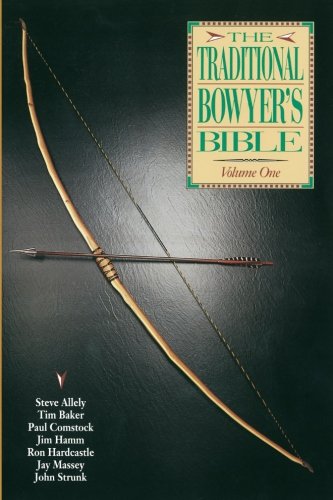
The Traditional Bowyer’s Bible Volume 1 is the most extensive reference in this roundup. Google Books identifies Jim Hamm, Tim Baker, Paul Comstock, Jay Massey, and Steve Allely among its contributors, while Amazon lists the current paperback at 320 pages.
Amazon lists dimensions of 6 × 0.73 × 9 inches and a weight of 15.5 ounces. Its broader scope makes it better suited to readers who want a reference they can revisit over time rather than a short introduction.
What People Say
Amazon showed a 4.8-out-of-5 rating from 362 reviews when checked on August 26, 2026. As with the other books, that rating is a snapshot and can change as new reviews are added.
Overall Sentiment: Positive

The chart is retained from the original article and should be viewed as historical rather than live review data.
Versatility
The book’s depth makes it suitable as a long-term reference for readers studying traditional bow design, history, materials, and craftsmanship. It can complement shorter introductory books when you want more background or multiple authors’ perspectives.
Safety
Technical references should be paired with current archery safety standards and competent hands-on instruction. Before any functional equipment is shot, inspect it carefully and use it only in a controlled environment designed for archery.
Key Benefits
- 320-page Volume 1 reference
- Multiple experienced contributors
- Broader scope than the shorter introductory handbook
- Useful as a reference readers can revisit as their knowledge develops
Rating checked August 26, 2026: 4.8/5 (362 reviews)
Frequently Asked Questions
What wood is commonly associated with traditional wooden bows?
Traditional bowyers have used woods including yew, Osage orange, hickory, ash, elm, and maple. Species alone does not make a piece of wood suitable for functional archery equipment; grain quality, defects, condition, design, and workmanship also matter. Beginners should learn material selection from an experienced bowyer or reputable course rather than relying on species name alone.
Which tools are most useful for learning traditional bow woodworking?
Different tools serve different purposes. A drawknife is a coarse woodworking tool, while cabinet scrapers are intended for much finer surface refinement. Files, rasps, measuring tools, clamps, secure workholding, and suitable sharpening equipment are also common woodworking tools. Learn safe handling before using any sharp tool.
How can I learn tillering and testing safely?
Learn the process from an experienced bowyer, archery instructor, class, or reputable reference and treat stressed wooden limbs as potentially hazardous if damaged or incorrectly made. Inspect equipment frequently, stop if you see cracking, separation, or other damage, and do not shoot questionable equipment.
Can I shoot a homemade bow as soon as it looks finished?
Appearance alone does not establish that functional archery equipment is safe. Have unfamiliar or homemade equipment checked by someone with appropriate experience before shooting it, and use it only on a proper range with a safe backstop and current range procedures.
Why should I never dry-fire a bow?
Dry firing means releasing the string without an arrow. Archery safety guidance warns against it because the energy that would normally be transferred to an arrow remains in the bow and can damage equipment or contribute to a failure.
Why do the Amazon review totals change?
Amazon ratings and review counts are dynamic. New reviews may be added, removed, merged across editions or variants, or displayed differently by marketplace. The figures in this article are dated snapshots where a current Amazon.com value could be verified.
Customer Preferences
Choosing among the UTAKU Drawknife, DFM Scrapers, Traditional Bowyer’s Handbook, Hunting With the Bow and Arrow, and The Traditional Bowyer’s Bible depends more on your immediate goal than on one universal ranking. Coarse woodworking favors the drawknife, fine finishing favors the scrapers, introductory study favors the Handbook, historical context favors the Hunting Classic, and deeper reference work favors the Bowyer’s Bible.
Across the group, the most useful buying criteria are task fit, comfortable and controlled handling, documented materials or specifications, current safety practices, and information that remains useful beyond a single project.
Wrapping Up
The strongest choice depends on what you need next. The UTAKU Drawknife fills the coarse-shaping role, while the DFM curved scrapers are better suited to precise finishing. Clay C. Hayes’s Traditional Bowyer’s Handbook is the more approachable starting reference, The Traditional Bowyer’s Bible Volume 1 offers greater depth, and Saxton Pope’s classic provides historical context.
Whichever route you take, separate woodworking skill from archery safety. Learn sharp-tool handling with secure workholding, inspect functional equipment before use, follow current range procedures, never dry-fire a bow, and seek qualified instruction when you are new to traditional archery.
| Product Name | Image | Rating | Material / Format | Weight | Dimensions / Size |
|---|---|---|---|---|---|
| 8″ Draw Knife Straight Draw Shave Wood Wooking |
|
Live rating varies; check current listing | Wood handles; alloy-steel blade | Approx. 1.6 lb | 8-inch blade |
| DFM Tool Works Blue Curved Cabinet Scraper Cards (Set of 3) |
|
4.7/5 (1,997 reviews; checked Aug. 26, 2026) | 0.032-inch American Blue Spring Steel / high-carbon steel | Manufacturer does not prominently specify set weight | 0.032-inch thickness; three curved scraper profiles |
| Traditional Bowyer’s Handbook |
|
4.7/5 (640 reviews; checked Aug. 26, 2026) | Paperback | 9.6 ounces | 6 × 0.38 × 9 inches |
| Hunting With The Bow And Arrow – Legacy Edition |
|
4.8/5 (73 reviews; checked Aug. 26, 2026) | Paperback | 14.6 ounces | 6 × 0.7 × 9 inches |
| Traditional Bowyer’s Bible Volume 1 |
|
4.8/5 (362 reviews; checked Aug. 26, 2026) | Paperback | 15.5 ounces | 6 × 0.73 × 9 inches |
Sources
- DFM Tool Works — Blue Curved Cabinet Scraper Set — manufacturer specifications for material, thickness, hardness, origin, and sharpening.
- USA Archery Club Handbook — current archery-program safety and range guidance.
- World Archery Beginners Manual — shooting-line, target-direction, and dry-fire safety guidance.
- Google Books — The Traditional Bowyer’s Bible — bibliographic information and contributors.
- Federal Trade Commission Endorsement Guides FAQ — affiliate-disclosure guidance.
This Roundup is reader-supported. When you click through links we may earn a referral commission on qualifying purchases.
