
Last Updated on July 28, 2026 by Caleb Warren
Rolling clothes maximizes space and minimizes wrinkles for lightweight fabrics, while folding maintains structure and reduces creasing in sturdier, natural fibers. Rolling improves visibility and works fast for small items, but it can be slower and less effective for bulky garments. Packing cubes make either method more organized and space-efficient. Here’s how to pick the right approach for your trip.
Quick Answer
Rolling wins on space efficiency and wrinkle prevention for lightweight, casual clothes like t-shirts, shorts, and synthetic athletic wear. Folding is superior for bulky items (sweaters, jackets) and structured or natural fabrics (linen, cotton dress shirts, suits) that crease under tight tension. Most experienced travelers combine both methods.
Key Takeaways
- Rolling saves volume and cuts wrinkles for lightweight synthetics and casual basics.
- Folding protects structured garments, tailored suits, and heavy knitwear from stretched seams and deep creases.
- Rolled clothes eliminate empty corner gaps in suitcases, whereas folded stacks often leave dead space.
- Compression packing cubes enhance both techniques by eliminating air pockets and organizing categories.
- A hybrid approach—rolling daily casuals and folding formal or bulky wear—delivers the best overall result.
At a Glance: Rolling vs. Folding
| Primary Objective | Rolling: Maximize bag volume & visibility. Folding: Maintain sharp garment structure & flat stacking. |
| Best Garment Types | Rolling: T-shirts, athletic shorts, socks, synthetic knits, jeans. Folding: Blazers, dress shirts, linen trousers, thick wool sweaters. |
| Packing Difficulty | Rolling: Moderate (requires tight smoothing). Folding: Easy (standard drawer-style folding). |
| Recommended Luggage | Rolling: Backpacks, duffels, softside carry-ons. Folding: Hardshell suitcases, garment bags, flat luggage compartments. |
Disclosure: As an Amazon Associate I earn from qualifying purchases. Some links on this page are affiliate links, at no extra cost to you.
Understanding the Basics of Rolling and Folding
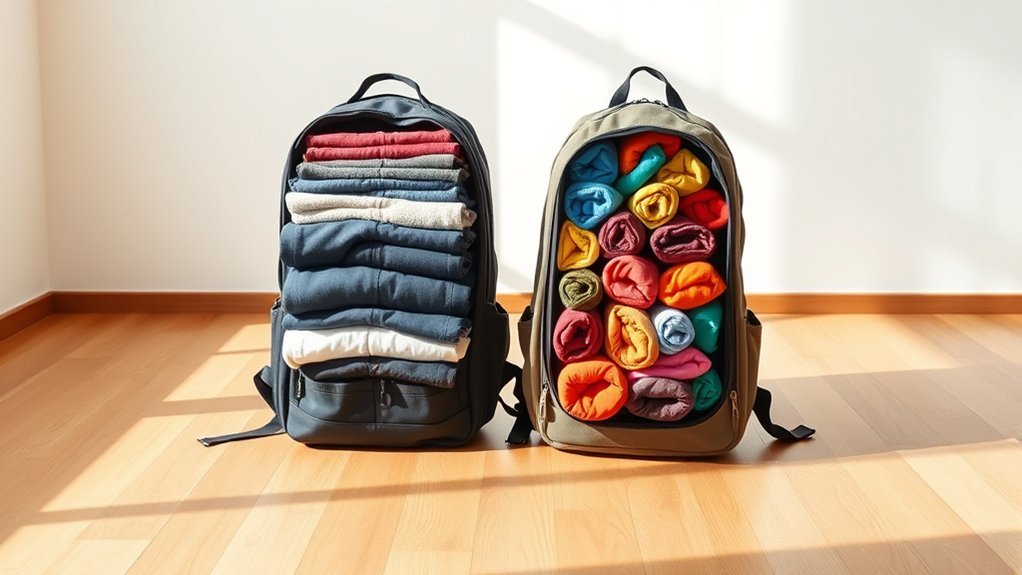
When you’re packing for a trip, understanding the mechanical differences between rolling and folding clothes can dramatically influence your luggage capacity and garment care. Rolling compresses lightweight items like t-shirts and casual pants into tight cylinders, allowing you to fill awkward gaps around shoes or bag frames. Folding suits natural fiber textiles like woven cotton and linen because flat layering preserves garment structure and reduces surface tension across stiff seams.
From a textile perspective, wrinkles occur when polymer chains within fabric fibers break under heat, moisture, or mechanical pressure and reform in displaced positions. Synthetic fibers like polyester and nylon possess high elasticity, allowing them to stretch around a tight roll without forming permanent creases. Natural cellulosic fibers (cotton, linen) have lower elastic recovery, meaning tight rolling can force hard micro-folds into the weave. Tucking smaller rolled items into corners works brilliantly to use every cubic inch, while flat folding allows easy stacking for quick access at your hotel.
Advantages of Rolling Clothes
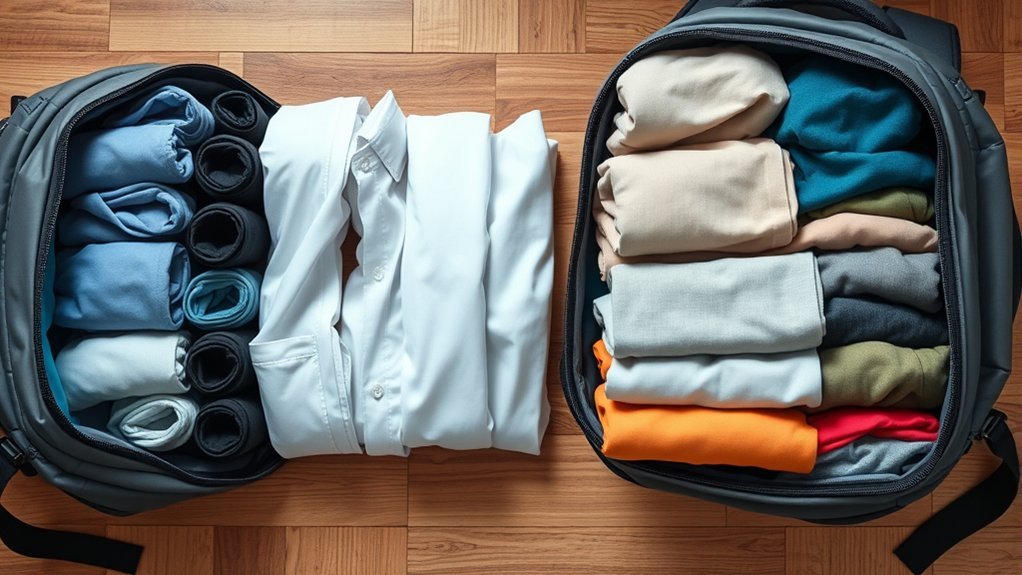
Rolling your clothes comes with distinct functional advantages: it maximizes usable volume in your suitcase, minimizes hard fold-line wrinkles on knit and elastic fabrics, and lets you view your entire wardrobe without disturbing stacked layers. If you want an organized, space-conscious approach to packing, rolling is the ideal starting point.
Space-Saving Benefits
If your goal is to fit a full week of outfits into a single carry-on bag, rolling is mathematically superior for flexible fabrics. Rolled items conform dynamically to the contours of your luggage, filling empty spaces that traditional rectangular folds leave vacant. In fact, one real-world packing test found rolling the exact same wardrobe freed up enough extra space to fit three additional t-shirts compared to conventional flat folding. Rolling is especially effective for lightweight items that compress down under mild hand pressure.
Reduced Wrinkling Potential
Rolling eliminates the harsh 90-degree creases created by standard folding. Synthetic materials like polyester, spandex, and nylon blends flex naturally around a circular core. Smooth rolling keeps these elastic fabrics taut without overstretching the weave, ensuring they unroll ready to wear.
Here is a detailed breakdown comparing fabric behavior under both techniques:
| Method | Wrinkle Risk | Best Garment & Fabric Applications |
|---|---|---|
| Rolling | Low | Stretchy synthetics (polyester, nylon, spandex), t-shirts, socks, synthetic activewear |
| Rolling | High | Heavy or bulky fabrics (chunky wool, thick knits) — better flat folded or compressed |
| Folding | Moderate | Woven cotton, pure linen, casual button-down shirts, denim trousers |
| Folding | High (if unpadded) | Structured pieces (blazers, suit jackets) — ideal in a garment bag or bundle fold |
Enhanced Visibility and Access
When placed vertically side-by-side inside your suitcase or packing cube (a technique known as file packing), rolled garments function like a filing cabinet. You can see every item instantly without pulling from the bottom of a stack and messing up your entire bag. Grouping rolled items by category or color streamlines your morning routine during travel.
Disadvantages of Rolling Clothes

Despite its efficiency, rolling is not a universal solution. It can be time-consuming during prep and performs poorly with stiff, structured, or overly bulky clothing items.
Time-Consuming Technique
Proper rolling requires deliberate preparation. Every sleeve must be smoothed flat, seams aligned, and air pressed out before rolling begins. Loose or sloppy rolling causes severe internal creasing that is difficult to remove without steam. If you are packing last-minute, folding lightweight stacks can feel significantly faster.
Note: If you are pressed for time, fold your heaviest, bulkiest items flat on the bottom of your suitcase, and spend your rolling effort exclusively on t-shirts, athletic wear, and underwear.
Bulky Items Challenge
Thick winter clothing poses a severe challenge to the rolling technique:
- Volume Expansion: Chunky wool sweaters and heavy hoodies spring back when rolled, creating oversized log-like shapes that take up more space than a flat fold.
- Uneven Luggage Topology: Irregularly sized rolls leave deep gaps between items, preventing a flat, stable surface inside your suitcase.
- Inaccessible Bottom Layers: Large rolled items easily get trapped underneath smaller rolls, forcing you to remove multiple pieces to reach one sweater.
Wrinkle Potential Increase
When applied to stiff natural fibers like linen or heavy poplin cotton, rolling locks in spiral compression creases. Collared dress shirts, tailored jackets, and pleated garments suffer damaged structures when rolled tightly.
| Item & Fabric Category | Crease Severity When Rolled |
|---|---|
| Stiff Natural Fibers (Linen, Oxford Cotton) | High |
| Structured Tailored Pieces (Blazers, Collared Shirts) | Moderate to High |
| Lightweight Stretch Basics (T-Shirts, Underwear) | Low |
| Thick Winter Outerwear (Sweaters, Fleece) | Moderate |
Advanced Techniques: Ranger Roll & Bundle Packing
Mastering basic rolling and folding is helpful, but advanced traveler methods unlock even higher efficiency for specific wardrobe challenges.
The Military “Ranger Roll”
The Ranger Roll locks garment ends inside an inside-out tuck, keeping rolled items tightly bound so they cannot unravel inside your luggage during transport:
Pro Tip (Ranger Rolling a T-Shirt): Lay the shirt completely flat. Fold the bottom 3 to 4 inches of the hem inside-out to create an exterior pocket. Fold both sleeves inward to form a long rectangle, then roll tightly from the collar down to the hem. Finally, flip the bottom cuff over the roll to seal it into a tight, self-contained pod.
The Bundle Packing Method for Formalwear
Bundle packing involves wrapping garments around a central core (like a dopp kit or soft pouch) in a specific order. Because garments wrap around gentle curves rather than sharp angles, hard fold lines are entirely prevented. It is the single best method for packing multiple suits, dresses, and dress shirts into standard suitcases without creasing.
Benefits of Folding Clothes
Folding remains the industry standard for business attire and structured garments that require crisp lines and flat presentation. Key advantages include:
- Optimal Volume Usage for Flat Garments: Flat-folded sweaters and heavy trousers lie flat across the base of rectangular suitcases, building a uniform layer.
- Preservation of Structured Tailoring: Collars, shoulder pads, button plackets, and pleats maintain their factory shapes when folded along natural seamlines.
- Stackability: Folded stacks mimic dressers, making it straightforward to transfer clothing directly from your bag into hotel drawers.
Drawbacks of Folding Clothes
Standard folding has undeniable drawbacks that impact travel efficiency:
| Drawback | Impact on Traveler |
|---|---|
| Unused Gap Creation | Square folds leave empty spaces along suitcase edges and soft corners, wasting up to 15–20% of internal volume. |
| Pressure-Line Creasing | The weight of upper layers presses downward on lower folds, embedding sharp horizontal fold lines across chest and leg panels. |
| Rummaging Disruption | Pulling a shirt from the bottom of a stack causes the remaining layers to dislodge and wrinkle. |
Luggage Weight Distribution Strategy
How you arrange your rolled and folded items inside your bag impacts wheel balance and bag ergonomics. Following a deliberate loading order protects fragile items and makes your bag easier to roll or carry.
Warning: Always place heavy items like shoes, toiletry kits, and dense rolled jeans at the bottom of your rolling suitcase (near the wheels). Packing heavy items at the top causes them to crush lightweight folded clothes below and tips upright bags over.
- Bottom Tier (Wheel Base): Heavy footwear (filled with rolled socks) and heavy denim rolls.
- Middle Tier: Rolled t-shirts, activewear, and everyday casual shorts packed firmly in cubes.
- Top Tier: Flat-folded dress shirts, blazers, and delicate natural fabrics prone to crushing.
Products Worth Considering

All-in-One Organization for Your Travel Needs - This 9-piece set includes four compression cubes (S/M/L/XL) for systematic packing: S for underwear/socks, M for T-shirts and shirts, L for jeans and light sweaters, and XL for coats or bulky items. Also features two PVC toiletry/makeup bags, a machine-washable laundry bag, a shoe bag, and a multi-purpose zippered pouch—keeping your luggage tidy and efficient.
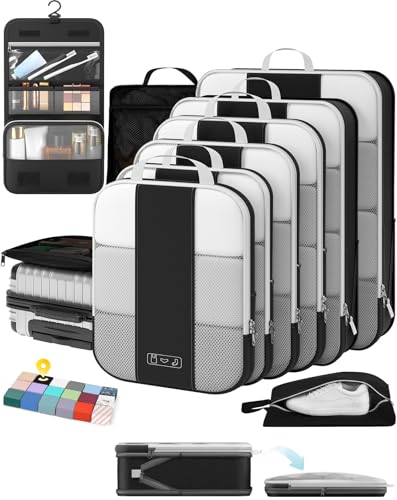
All-in-One Travel Storage Solution - Say goodbye to chaotic packing! This comprehensive set includes four compression packing cubes in varying sizes (XL, L, M, S) to accommodate everything from bulky coats to delicate tops. Plus, enjoy added convenience with a hanging toiletry bag, shoe bag, machine-washable laundry bag, and versatile pouch—all designed to keep your luggage perfectly organized and clutter-free.
The Role of Packing Cubes in Organization
Packing cubes elevate both rolling and folding by compressing air out of fabric matrixes and creating modular compartments.
- Categorization: Separate outfits by day, weather condition, or garment type (e.g., activewear in one cube, evening wear in another).
- Hygiene Isolation: Keep dirty laundry, muddy outdoor gear, or shoes separated from fresh clothes throughout your trip.
- Volume Reduction: Specialized compression cubes feature a secondary perimeter zipper that squeezes out trapped air, shrinking clothing bulk by up to 30–40%.
Pairing rolled basics inside medium compression cubes while keeping formalwear flat inside a slim garment folder represents the gold standard in modern luggage organization.
Products Worth Considering

How to Compress:The cube is compressed by the middle zipper; Using steps: 1)Fold and flatten clothes 2)Pack clothes in the cube and zip the front zipper 3) Put a finger on the back of the middle zipper when compressing to avoid zipper get stuck in fabric

6 Set Compression Packing Cubes - If you'll be preparing multiple outfit options for your travel, you no longer have to sacrifice style for luggage space when you come across BAGSMART PACKING CUBES. Large for jackets, sweaters, and trousers, Medium for shirts, and blouses, Small for underwear, drawstring can be used as a laundry bag to separate your dirty/wet clothes or shoes.
Choosing the Right Method for Your Trip
Selecting the optimal method comes down to auditing your itinerary, clothing mix, and luggage style. For backpacking, road trips, or multi-stop adventures where you live out of a carry-on, rolling offers speed, high capacity, and easy access. For formal business trips or destination events requiring suits, dresses, and crisp cotton garments, folding (supplemented by a garment folder or bundle packing) is necessary to preserve a pristine appearance.
Most experienced travelers adopt a hybrid approach: roll your casual, stretchy, and synthetic items to fill edge gaps, then fold structured jackets and dress shirts neatly across the top level.
Products Worth Considering
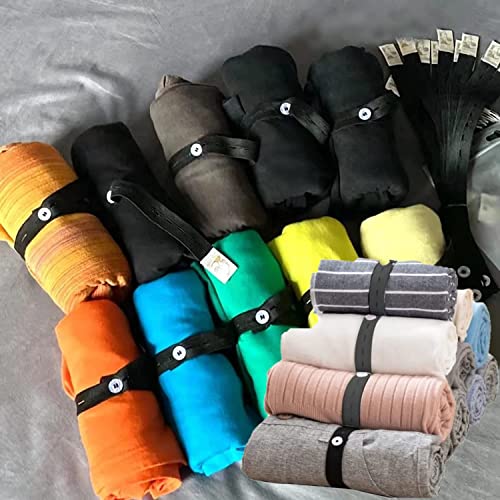
HIGH-QUALITY MATERIAL : The elastic band with buttonholes made of polyester material, sturdy and durable, reusable. Lightweight and convenient to carry around. No adhesive or other tools are needed to roll it up.ll it up directly.

Easily create additional permanent or temporary hanging space

[Match Needs with Possibilities] - With ELEZAY hanging packing organizer, you can get both a portable closet and a packing cube: the hanging shape for wardrobes; the compression shape for space saving by the buckle+adjustable binding strap. All you need to do is pack, compress, and buckle the collapsible storage bag, put it in the carry-on luggage, and hang it in the hotel closet, no more digging for clothes.
Frequently Asked Questions
Which method is better for fragile or delicate items?
For fragile, embellished, or delicate items (silk, lace, beaded garments), folding is significantly safer. Folding minimizes mechanical friction inside the bag and allows you to interleave acid-free tissue paper between folds to cushion delicate embellishments and prevent friction creasing.
Are there specific fabrics that suit rolling or folding?
Yes. Elastic synthetics like polyester, nylon, and spandex blends perform best when rolled tight. Natural woven textiles like linen, stiff cotton, heavy wool knits, and silk respond better to flat folding or bundle packing to avoid structural fiber damage.
Can I mix both methods in my packing?
Absolutely. Combining both methods—rolling casual basics, socks, and synthetic layers while flat-folding tailored coats, dress pants, and collared shirts—yields the highest possible space efficiency while keeping formal wear presentable.
What are some tips for rolling and folding efficiently?
Always smooth out wrinkles with your hands before making the first fold or roll. Use the “Ranger Roll” technique to lock rolls from unravelling, place heavy rolls at the bottom of your bag near the wheels, and utilize compression cubes to hold rolled items neatly together.
How can I release minor wrinkles from clothes after unpacking?
Hang clothes in your hotel bathroom while taking a hot shower—the steam relaxes fabric fibers and releases mild travel creases within 10–15 minutes. Alternatively, carry a travel-sized fabric smoothing spray or hang garments immediately upon arrival.
Conclusion
Both rolling and folding have proven places in a well-packed suitcase. Rolling excels at maximizing space, maintaining visibility, and eliminating creases in flexible, lightweight casual wear. Folding preserves the structural integrity of formalwear, tailored suits, and delicate natural fabrics that demand flat protection. By adopting a hybrid strategy—rolling your casual basics and folding your structured pieces inside compression packing cubes—you get the best of both worlds: a compact bag and a wrinkle-free wardrobe wherever you travel.
Sources
- Where The Road Forks — Rolling vs. Folding Clothes Packing Test — Benchmark comparison verifying volume and space differential between rolled and folded apparel.
- Beis Travel — Folding vs. Rolling Clothes Guide — Guidance on fabric care, fiber sensitivity, and garment structure preservation during travel.
- Eagle Creek — How to Fold & Roll Clothes for Packing — Practical techniques for luggage organization, compression cube usage, and weight distribution.
