
Last Updated on July 28, 2026 by Caleb Warren
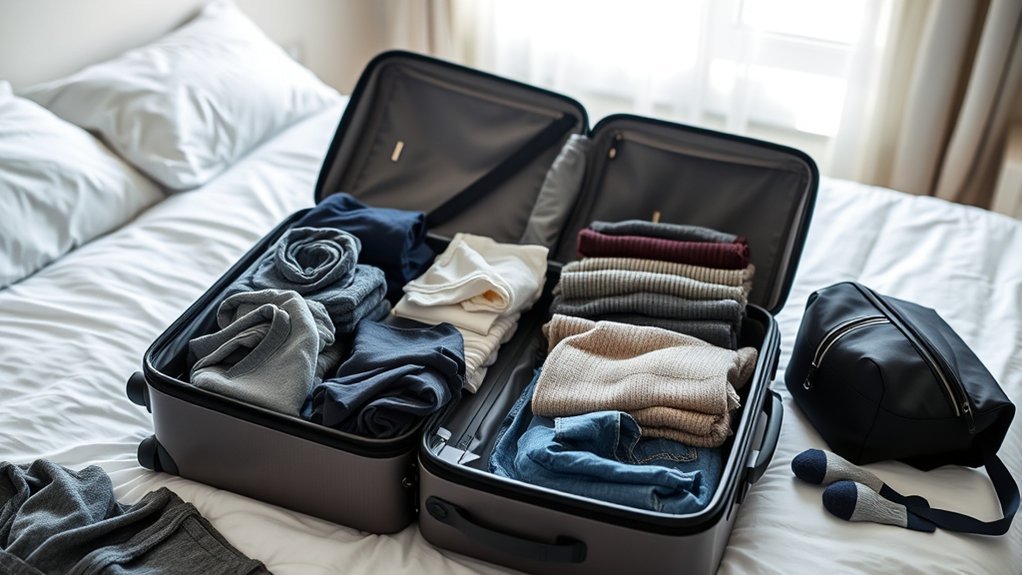
Packing well does not require choosing one technique for every garment. Roll flexible, casual clothes when compact rows help you use awkward suitcase space, and fold structured or crease-prone pieces when preserving their shape matters more. Packing cubes can organize either method, while compression cubes can reduce bulk. For most trips, a hybrid system gives you the best balance of space, visibility, and wrinkle control.
Quick Answer
Roll T-shirts, shorts, underwear, socks, and other flexible casual clothes when you want compact, easy-to-see rows. Fold dress shirts, blazers, trousers, dresses, and other structured or crease-prone garments. Neither method wins for every item, so a hybrid approach with packing cubes is usually the most practical choice.
Key Takeaways
- Roll flexible casual garments such as T-shirts, shorts, socks, underwear, leggings, and many synthetic pieces.
- Fold structured or dressier garments such as blazers, button-up shirts, trousers, dresses, and bulky sweaters.
- Rolling can fill small gaps efficiently, but there is no universal percentage by which it beats folding.
- Standard packing cubes mainly organize clothing; compression cubes can also squeeze out excess air and reduce bulk.
- Compression saves volume, not weight, so check your airline’s baggage limits before leaving.
At a Glance: Roll or Fold?
| Roll | T-shirts, shorts, socks, underwear, leggings, activewear, and flexible wrinkle-resistant garments |
| Fold | Dress shirts, blazers, suits, trousers, structured dresses, delicate garments, and bulky sweaters |
| Best for Filling Gaps | Rolling small and flexible garments into compact rows |
| Best for Structured Clothes | Careful folding along natural seams or using a garment folder |
| Best Overall Method | A hybrid system: roll casual items and fold structured or crease-prone pieces |
Disclosure: As an Amazon Associate I earn from qualifying purchases. Some links on this page are affiliate links, at no extra cost to you.
Roll or Fold: Which Clothes Need Each?
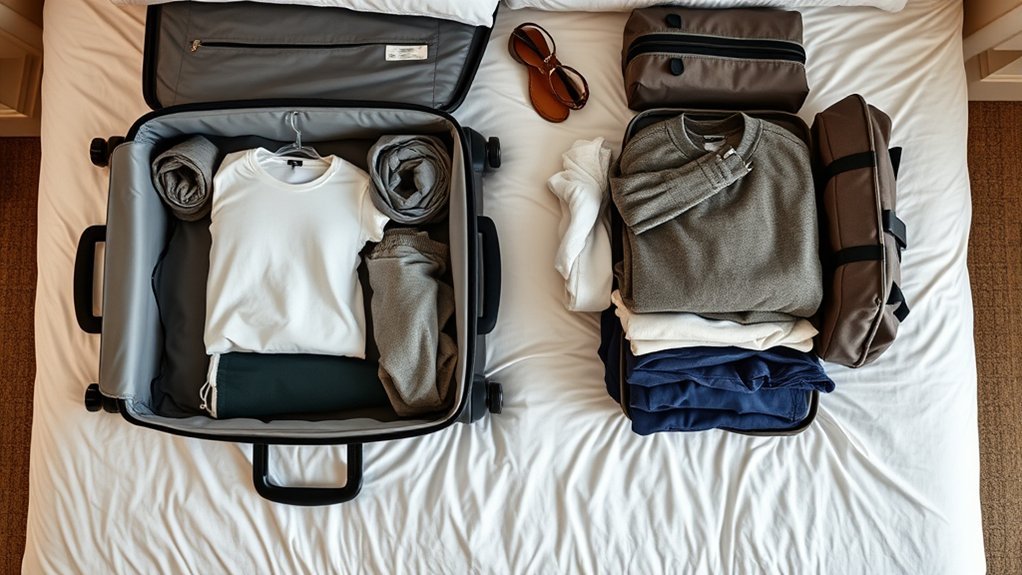
The easiest way to decide is to look at the garment’s structure. Flexible clothes that can bend without developing obvious hard creases are usually good candidates for rolling. T-shirts, shorts, leggings, underwear, socks, pajamas, and many activewear pieces fit this group.
Structured garments deserve more care. Button-up shirts, blazers, suits, tailored trousers, formal dresses, and pieces with stiff collars or pleats generally travel better when folded neatly or placed in a garment folder. Bulky sweaters are also usually easier to pack flat because rolling them can create a large cylinder that wastes space.
Fabric still matters, but there is no simple rule that every natural fiber must be folded and every synthetic fabric should be rolled. Linen and some cotton fabrics crease easily, while certain blends resist wrinkles well. Pay attention to the garment’s weave, structure, care label, and how easily it creases when handled.
Eagle Creek’s packing guidance similarly recommends rolling many lightweight casual garments while folding dressier or structured clothing.
Note: Pack shoes separately from clothing, preferably in a shoe bag or other clean barrier. Keep toiletries in a leak-resistant pouch. For U.S. carry-ons, TSA generally limits liquids, gels, aerosols, creams, and pastes to containers of 3.4 oz (100 mL) or less inside one quart-size bag, with exceptions for items such as medically necessary liquids.
How Rolling Clothes Saves Space
Rolling does not magically shrink fabric. Its advantage is shape: compact rolls can fit into narrow spaces, line up neatly inside packing cubes, and fill areas where a stack of wide folded garments would be awkward.
The result depends on what you pack. Rolling thin T-shirts or leggings can work very well, while rolling a thick sweatshirt or bulky sweater may produce a large cylinder that takes up more room than a flat fold.
Rolling can make flexible garments easier to fit into gaps and packing cubes, but there is no reliable universal percentage by which rolling saves more space than folding.
- Use rolls for lightweight and flexible casual clothes.
- Line rolls up side by side so you can see each garment.
- Use small rolls to fill narrow suitcase spaces.
- Avoid turning bulky sweaters or jackets into oversized cylinders.
- Use compression only when the garment can tolerate extra pressure.
How to Roll a T-Shirt for Packing
- Lay the shirt flat and smooth out existing wrinkles.
- Fold each sleeve inward so the shirt forms a long rectangle.
- Fold the sides inward if you need a narrower roll for your packing cube.
- Starting at the bottom hem, roll steadily toward the collar.
- Keep the roll snug but do not pull hard enough to stretch the fabric.
- Place the loose edge downward so the roll stays closed.
For travelers trying to travel light, the bigger benefit is often organization: compact clothing makes it easier to see how much space remains before adding the rest of your gear.
Pro Tip: Roll garments only after smoothing them flat. Rolling an already wrinkled shirt simply compresses the wrinkles into the bundle. A snug roll is enough; tighter is not always better.
How Folding Clothes Reduces Wrinkles
Folding is useful when you want to preserve a garment’s structure and control where creases form. It does not eliminate wrinkles, but careful folds can keep collars, lapels, seams, pleats, and trouser creases aligned instead of bunching them together inside a tight roll.
Dress shirts, blazers, tailored trousers, formal dresses, and delicate pieces usually benefit most. Travelpro’s wrinkle-prevention guidance recommends smoothing garments first and using deliberate folding or packing folders for clothing that needs to arrive looking polished.
How to Fold a Dress Shirt for a Suitcase
- Button the shirt, including enough front buttons to keep the placket aligned.
- Lay it face down on a clean, flat surface.
- Smooth the back, sleeves, and collar with your hands.
- Fold one side toward the center and lay the sleeve along the folded edge.
- Repeat on the other side to create a long rectangle.
- Fold the bottom upward once or twice, depending on the suitcase or garment-folder size.
- Place the shirt where it will not be crushed by shoes or heavy toiletries.
How to Keep Folded Clothes from Wrinkling
- Start with clothing that is completely dry.
- Smooth out wrinkles before making the first fold.
- Follow natural seams where practical.
- Avoid overstuffing the cube or suitcase.
- Use a garment folder for suits, blazers, and dress shirts when appearance matters.
- Unpack and hang crease-prone clothing soon after arrival.
Garment folders can be particularly useful for formalwear because they hold folded items in place during transit. Luggage makers such as Briggs & Riley use garment-folder systems specifically to limit movement and creasing in suits, dresses, and formal shirts.
Are Packing Cubes Worth It?
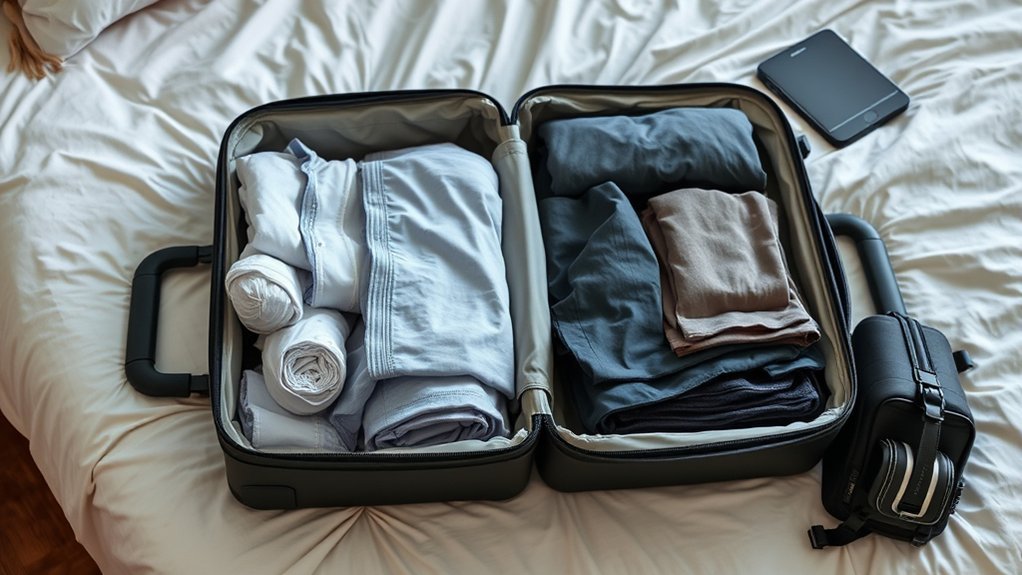
Packing cubes are worth using when organization matters. They let you separate shirts, underwear, layers, sleepwear, or outfits so you can find one item without disturbing the rest of your suitcase.
However, a standard packing cube and a compression cube do different jobs. A regular cube mainly contains and organizes clothing. A compression cube includes an additional zipper or panel that squeezes the contents into a thinner package by reducing empty air between garments.
Packing cubes are primarily organizers. Compression cubes add a second benefit by reducing the bulk of compressible clothing, but neither type makes the contents weigh less.
- Use separate cubes for shirts, bottoms, underwear, or different travelers.
- Roll or fold inside the cube according to the garment.
- Use compression cubes for flexible clothes that tolerate pressure.
- Keep formalwear out of aggressive compression when wrinkles matter.
- Use a separate laundry cube or bag to isolate worn clothing.
REI’s travel-light guidance recommends organizers such as packing cubes and compression bags for keeping gear compact and accessible, while also warning that extra available space can tempt travelers to add more weight.
Pro Tip: Compress the cube gradually. If you have to force the zipper around an overfilled cube, remove an item instead of using the zipper as a clamp. Excess pressure can create deeper wrinkles and put unnecessary stress on the cube.
How to Combine Rolling and Folding in One Suitcase
A hybrid system works because each garment gets the treatment it needs instead of forcing your entire wardrobe into one packing style.
- Choose your wardrobe first. Pack versatile pieces that work together instead of trying to solve overpacking through compression.
- Fold structured garments. Put dress shirts, trousers, blazers, and similar pieces in a garment folder or flat section.
- Roll casual clothing. Pack T-shirts, shorts, leggings, underwear, and sleepwear in rows or cubes.
- Fill small spaces. Use socks and other soft small items in gaps rather than creating a separate bulky bundle.
- Separate shoes and liquids. Keep dirty soles and possible leaks away from clothing.
- Compress selectively. Use compression for flexible clothes, not everything in the suitcase.
- Weigh the finished bag. A smaller-looking suitcase can still exceed your airline’s weight limit.
Warning: Compression reduces volume, not mass. Fitting several extra garments into a cube can make your luggage heavier even though it looks smaller.
Check Airline and Carry-On Rules Before You Pack
Do not assume that a suitcase that closes is ready to fly. Airlines set their own baggage allowances, and size, weight, and overweight-bag policies can vary by airline, fare, route, and sometimes aircraft. The U.S. Department of Transportation recommends checking the carrier’s baggage policies, including additional restrictions or charges for oversized and overweight bags.
For travelers departing through U.S. airport security, TSA’s current travel guidance states that ordinary carry-on liquids, aerosols, gels, creams, and pastes generally must be in containers of 3.4 oz (100 mL) or less and fit inside one quart-size clear bag. Different rules and exemptions can apply to medication and other special items.
That is why weighing your bag and checking your specific airline is more reliable than relying on a universal suitcase-weight number.
Rolling vs. Folding: Which Wins?
Neither method wins every category.
Rolling wins for flexibility and visibility. It works particularly well for T-shirts, shorts, leggings, underwear, socks, and other casual pieces that can form compact rolls. The rows are easy to scan in a packing cube, and small rolls can fill irregular spaces.
Folding wins for structure. Dress shirts, blazers, tailored trousers, formal dresses, and bulky sweaters generally benefit from controlled folds that keep the garment’s shape predictable.
Compression wins when volume is the problem. A compression cube can squeeze air from soft garments, but it can also deepen creases and encourage overpacking.
The best packing strategy is therefore a hybrid approach: roll what rolls well, fold what needs structure, and use cubes to keep the two groups organized. That gives you usable space without treating every garment as though it were made the same way.
Frequently Asked Questions
What is the 3-3-3 rule for packing clothes?
The common 3-3-3 packing method uses three tops, three bottoms, and three pairs of shoes chosen to mix and match. It is a minimalist guideline rather than an airline rule, and you can adjust it for weather, laundry access, activities, and trip length.
Is it better to roll or fold your clothes when packing?
Use both methods. Roll flexible casual clothes such as T-shirts, shorts, leggings, socks, and underwear. Fold structured or crease-prone pieces such as dress shirts, blazers, trousers, dresses, and bulky sweaters. The best choice depends on the garment rather than one universal rule.
What is the 5-4-3-2-1 rule when packing?
The 5-4-3-2-1 method is a flexible capsule-wardrobe framework popularized by Geneva Vanderzeil. A common modern version uses five tops, four bottoms, three pairs of shoes, two dresses or layers, and one accessory category, but the formula has been adapted in many ways for climate, activities, and personal style.
Does rolling clothes really save more space?
Rolling can use suitcase space efficiently because flexible rolls fit into gaps and line up neatly inside cubes, but there is no universal percentage of space saved. Bulky garments can actually take up more room when rolled, so compare the shape of the packed item rather than assuming rolling always wins.
Do packing cubes actually save space?
Standard packing cubes mainly improve organization. Compression cubes can also reduce the bulk of soft clothing by squeezing out excess air. Neither type reduces luggage weight, and overcompressing crease-prone garments can leave deeper wrinkles.
What are the 5 biggest packing mistakes to avoid?
Five common mistakes are overpacking, using the same packing method for every garment, overcompressing wrinkle-prone clothes, putting liquids or dirty shoes against clean clothing, and forgetting airline size or weight limits. A travel checklist can also help you catch trip-specific essentials before you close your bag.
Conclusion
You do not need to pick a side in the rolling-versus-folding debate. Roll flexible casual garments when compact rows and easy visibility help. Fold structured, bulky, or crease-prone pieces when protecting their shape matters more. Use ordinary packing cubes for organization and compression cubes selectively when you need less bulk. The result is a suitcase that is easier to unpack, easier to keep organized, and better suited to the clothes you actually bring.
Sources
- Eagle Creek — rolling, folding, garment-type, and packing-cube guidance; updated June 30, 2026
- REI Co-op — travel-light guidance covering packing organizers, compression, and baggage weight
- Travelpro — wrinkle-reduction, rolling, folding, and garment-folder guidance
- Transportation Security Administration — current U.S. carry-on liquids and security guidance
- U.S. Department of Transportation — airline baggage fees, overweight restrictions, and carrier-policy guidance
- Geneva Vanderzeil / Collective Gen — primary source for the original 5-4-3-2-1 packing framework

