
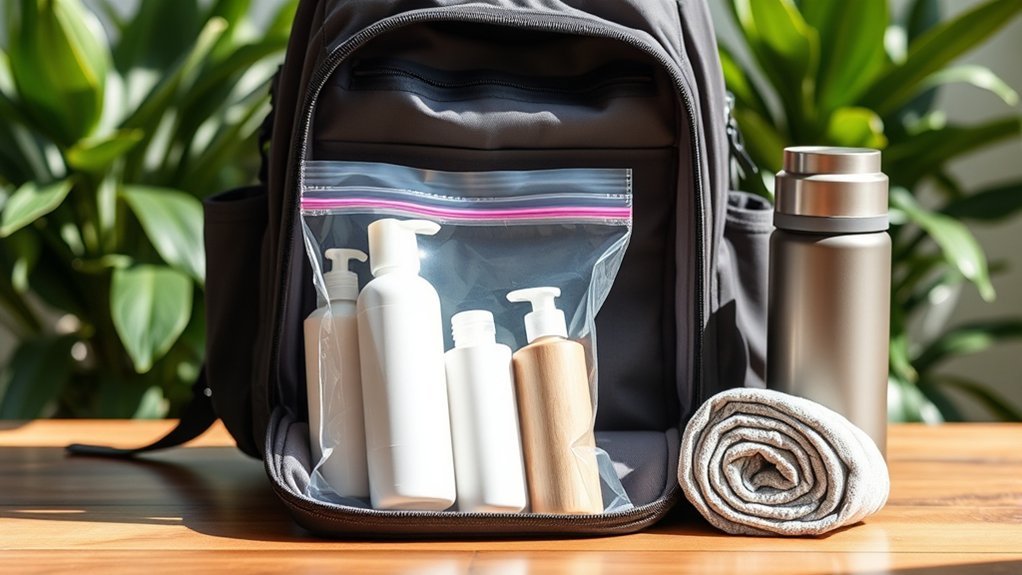
Last Updated on July 28, 2026 by Caleb Warren
Quick Answer
TSA’s 3-1-1 rule requires carry-on liquids, gels, and aerosols to be in containers of 3.4 oz (100 ml) or less, all fitting into one quart-sized clear bag per traveler. The rule still applies at every U.S. airport in 2026, though some CT-scanner-equipped checkpoints let you leave liquids inside your backpack during screening.
Key Takeaways
- Liquid containers must be 3.4 oz (100 ml) or less and fit inside one clear, quart-sized zip-top bag.
- Wet wipes and solid toiletries are not classified as liquids and can be packed loose.
- Medications, formula, breast milk, and ice packs are exempt from the 3.4 oz limit if declared to TSA.
- Select airports with CT scanners let travelers keep liquids inside their backpack during screening.
- Checked baggage has no TSA volume limits for standard non-hazardous liquids.
At a Glance
| Time Required | 10–15 minutes |
| Difficulty | Easy |
| Tools Needed | 1-quart clear resealable bag, 3.4 oz travel containers, electrical or painter’s tape |
| Cost | $5 – $15 |
Disclosure: As an Amazon Associate I earn from qualifying purchases. Some links on this page are affiliate links, at no extra cost to you.
Understanding the TSA 3-1-1 Rule
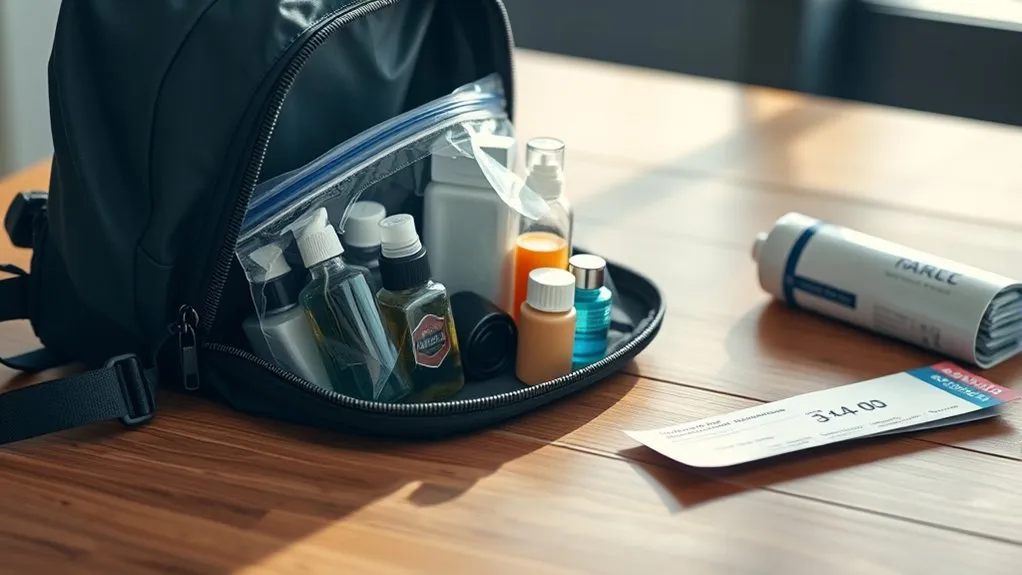
When you’re preparing for a flight, understanding the TSA 3-1-1 rule is essential for seamless carry-on packing. This regulation dictates that all liquids, gels, and aerosols must be stored in containers holding 3.4 ounces (100 milliliters) or less. Furthermore, every single container must fit comfortably within a single one-quart, clear, resealable plastic bag.
You are limited to just one quart-sized bag per traveler. Items like mascara, lip gloss, peanut butter, toothpaste, and yogurt count as liquids under TSA standards, whereas solid items and wet wipes do not. Container sizing is strictly enforced: even if a 6 oz bottle only contains 1 oz of lotion, TSA security officers will confiscate it because the container capacity exceeds 3.4 oz. If you need to travel with full-size cosmetics or toiletries, pack them inside your checked baggage, where liquid volume restrictions do not apply.
2026 Update: CT Scanners Are Changing Screening at Some Airports
The 3-1-1 rule itself remains in effect nationwide, but screening procedures have evolved at modern airport checkpoints. Advanced Computed Tomography (CT) scanners create high-resolution 3D images of bag contents. At lanes equipped with operational CT technology, officers often allow travelers to leave their quart-sized liquids bag inside their backpack during screening.
Major hubs including Atlanta (ATL), New York (JFK), Los Angeles (LAX), Boston (BOS), Denver (DEN), Orlando (MCO), and Dallas Fort Worth (DFW) continue expanding CT scanner availability. However, because scanner deployment varies by terminal and lane, always pack your backpack as if the standard removal rule applies.
Note: Not every security lane at a CT-equipped airport features the new scanners. TSA officers may still direct you to remove your liquids bag for manual visual inspection, so keep it easily accessible.
Choosing the Right Containers
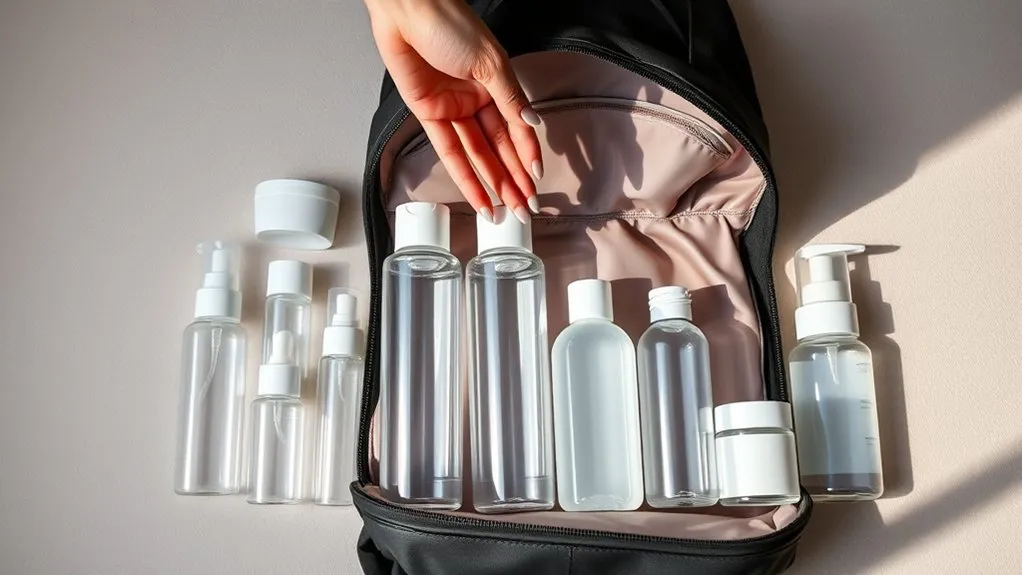
Selecting high-quality travel-sized containers is critical when packing liquids in a backpack. Standard retail packaging can burst under airplane cabin pressure changes, leading to messy spills across your clothes and electronics.
Key Container Criteria
Adhering to TSA guidelines requires selecting durable containers engineered for air travel:
- Volume Compliance: Confirm that the printed capacity on each bottle explicitly states 3.4 oz (100 ml) or less.
- Material Flexibility: Food-grade silicone bottles flex under atmospheric pressure drops, reducing the risk of caps popping open.
- Transparent Design: Clear or semi-transparent bottles allow quick visual checks during security screening.
Leak-Proof Container Options
Opt for silicone squeeze tubes or heavy-duty BPA-free plastic bottles featuring triple-sealed screw caps or flip-top locking mechanisms. Specialized silicone travel pouches offer an extra layer of containment for liquids prone to leaking, such as facial oils or alcohol-based toner. Always test new containers filled with water at home before packing them for a flight.
Organizing Liquids for Security Checks
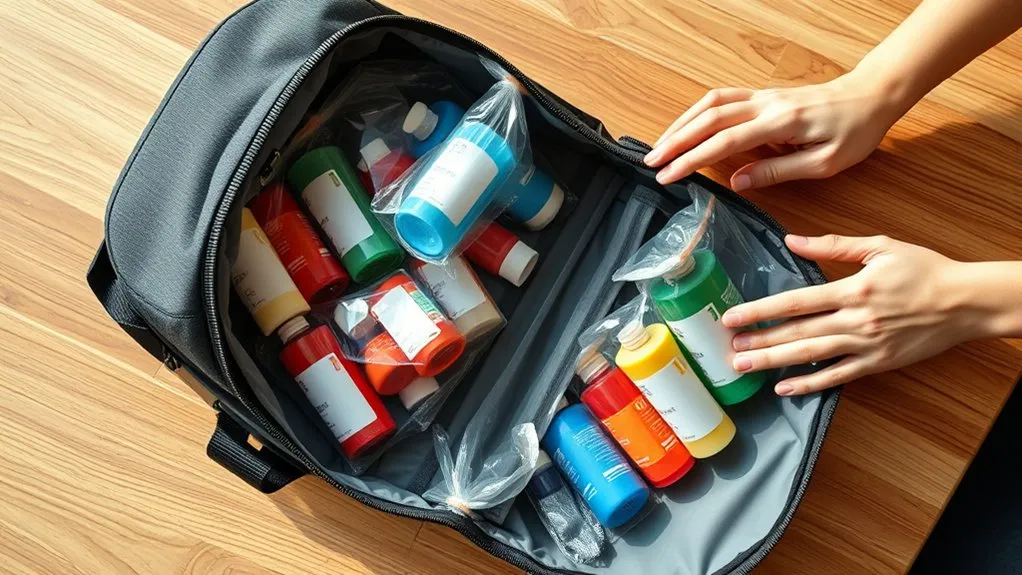
When packing a backpack, placement determines how quickly you clear security lines. Follow these organization steps:
- Verify All Limits: Ensure all liquid, aerosol, and gel items are in individual containers under 3.4 oz.
- Consolidate into One Clear Bag: Place all bottles flat inside a single clear, zip-top quart bag so the seal closes completely without strain.
- Pack for Top-Pocket Access: Stash the quart-sized bag in the very top pocket or front quick-access zip of your backpack rather than burying it deep in the main compartment.
Medical, Infant, and Special Liquid Exemptions
TSA maintains explicit exemptions allowing certain necessary liquids to exceed the standard 3.4 oz limit:
- Medications: Prescription liquids, eye drops, nasal sprays, and over-the-counter liquid medicines are permitted in reasonable quantities for your flight.
- Infant Care: Baby formula, breast milk, toddler drinks, and liquid-filled baby food jars are allowed in volumes larger than 3.4 oz.
- Ice Packs and Cooling Gel Packs: Freezer packs required to keep medication or breast milk cold are permitted through security, provided they are 100% frozen solid when presented at the checkpoint. If melted or slushy, they must comply with the 3.4 oz rule.
- Duty-Free Purchases: Duty-free liquids (e.g., alcohol or perfume) exceeding 3.4 oz are allowed in carry-on bags if purchased within 48 hours, packed in a Secure Tamper-Evident Bag (STEB), and accompanied by the original receipt.
Pro Tip: Keep medical liquids, infant supplies, and freezer packs in a separate outer pocket. Declare them verbally to the TSA officer as soon as you step up to the screening belt so they can be inspected separately.
TSA Powder Rules and Solid Alternatives
In addition to liquids, TSA enforces enhanced screening rules for powder-like substances in carry-on bags. Powders in containers larger than 12 oz (350 ml)—such as protein powders, makeup powders, or baby powder—may require secondary screening and could be opened or prohibited if officers cannot verify their contents.
To minimize liquid volume and simplify your backpack setup, consider switching to solid grooming alternatives:
- Swap liquid shampoo and conditioner for solid shampoo bars.
- Use solid stick deodorant instead of gel or spray deodorants.
- Try toothpaste tablets in place of standard liquid toothpaste tubes.
- Opt for bar soap or solid facial cleansing sticks.
Tips for Preventing Leaks
Air pressure variations in airplane cabins cause air pockets inside liquid bottles to expand, forcing liquid out around caps and seams.
Use High-Quality Leak-Proof Containers
Prevent ruined gear by choosing leak-proof containers and filling them strategically:
- Leave Headroom: Fill bottles to approximately 80–90% capacity, leaving a small air buffer for pressure expansion.
- Squeeze Air Out Before Sealing: For flexible silicone bottles, gently squeeze out excess air before screwing on the top.
- Use Waterproof Cubes: Enclose your quart-sized bag inside a small waterproof packing cube for double-layer protection.
Seal Caps with Plastic Wrap or Tape
A proven travel hack involves unscrewing the cap, placing a small piece of plastic wrap over the bottle opening, and screwing the cap back on tightly over the film. For added security, wrap a piece of electrical tape or painter’s tape around the seam where the cap meets the bottle body.
Warning: Never pack high-proof alcohol (over 70% ABV or 140 proof) in either carry-on or checked baggage. FAA regulations strictly prohibit flammable liquids with high alcohol content on commercial aircraft.
Essential Liquids Checklist for Travel
Stick to essential toiletries in travel-compliant sizes to make full use of your single quart-sized plastic bag:
| Liquid Type | Travel-Sized Container Limit | Key Recommendation |
|---|---|---|
| Shampoo & Conditioner | 3.4 oz (100 ml) max | Use flexible silicone squeeze bottles |
| Sunscreen & Moisturizer | 3.4 oz (100 ml) max | Select pump-locking travel dispensers |
| Toothpaste | 3.4 oz (100 ml) max | Use travel tubes or toothpaste tablets |
| Liquid Cosmetics (Mascara/Foundation) | 3.4 oz (100 ml) max | Pack in clear internal pouches |
| Liquid Prescription Medicines | Exempt from 3.4 oz limit | Declare separately to TSA officers |
Packing Techniques for Efficient Backpack Storage
Organizing your backpack correctly ensures fast retrieval at security checkpoints without disrupting the rest of your packed gear:
- Position at the Top: Store your liquids bag in the top quick-access lid pocket or dedicated external zippered pocket of your backpack.
- Cushion with Clothing: If storing liquids inside the main compartment, place the zip-top bag between soft clothing layers to protect containers from external impact.
- Keep Solids Separate: Store non-liquid items like hairbrushes, dry cosmetics, and wet wipes in a separate toiletry pouch to keep your 1-quart bag uncluttered.
Navigating Security With Ease
Streamline your passage through TSA screening checkpoints by keeping these rules and operational reminders in mind:
| Tip | Details | Operational Reminder |
|---|---|---|
| Container Sizing | Must be 3.4 oz (100 ml) or smaller | Base limit on container capacity, not remaining liquid volume |
| Backpack Staging | Keep quart bag in top pocket | Allows fast retrieval in standard screening lanes |
| Wet Wipes & Solids | No volume restrictions | Pack anywhere in your backpack without counting toward 3-1-1 limits |
Staying Informed on TSA Regulations
TSA rules and airport technologies update continuously. Keep these resources handy before heading to the airport:
- Official 3-1-1 Directives: Always double-check container rules for specialized items (e.g., gel shoe inserts or snow globes).
- Ask TSA Service: Submit real-time questions to TSA representatives via X (formerly Twitter) or Facebook Messenger (@AskTSA) for immediate clarification on specific items.
- Checked Luggage Backup: Remember that full-sized liquid containers over 3.4 oz are allowed in checked luggage without volume restrictions.
Frequently Asked Questions
Can I bring liquids in my checked baggage?
Yes. There are no volume limits on standard non-hazardous liquids in checked baggage. Pack them securely inside sealed plastic bags surrounded by soft clothing to insulate against leakage caused by baggage handling.
What happens if I exceed the liquid limit in my carry-on?
If a container exceeds 3.4 oz, a TSA officer will require you to voluntarily surrender it or step out of line to place it into checked luggage. There is no monetary fine for honest packing errors, but non-compliant items cannot pass the security checkpoint.
Are there exceptions for medical liquids and infant supplies?
Yes. Liquid prescription medicines, over-the-counter health products, baby formula, breast milk, and ice packs are exempt from the 3.4 oz limit. Declare these items to a TSA officer at the start of screening for separate examination.
Can I carry liquid snacks like yogurt or peanut butter?
Yes, but TSA classifies spreadable foods like yogurt, peanut butter, hummus, and jelly as liquids. Containers must be 3.4 oz or smaller and fit inside your single quart-sized clear bag.
How do I declare liquids at the security checkpoint?
In standard screening lanes, remove your quart-sized liquids bag from your backpack and place it in a screening bin so it is clearly visible to x-ray operators. Inform officers verbally of any exempt medical or infant liquids.
Do CT scanners mean I no longer need the quart-sized bag?
Not necessarily. While CT scanner lanes allow passengers to leave liquids inside backpacks at participating terminals, rules vary across airports. Always pack liquids inside a compliant quart-sized bag in case you are routed to a standard x-ray lane.
Conclusion
By packing liquids methodically, you can breeze through airport security lines without delays or confiscated items. Adhere strictly to the TSA 3-1-1 rule, select leak-proof travel containers, and store your quart-sized clear bag in an easily accessible top pocket of your backpack. Even as CT scanner technology simplifies screening at modern checkpoints, careful preparation guarantees a smooth, stress-free start to your travel journey.
Sources
- TSA — Liquids, Aerosols, and Gels Rule — Official 3.4 oz / 100ml carry-on liquids directive
- TSA — Special Procedures & Disability Screening — Guidelines for medical liquid exemptions and infant supplies
- TSA — Frequently Asked Questions — Answers regarding freezer packs, duty-free items, and screening procedures
- TSA — Ask TSA Support Channel — Real-time travel customer service via social media and SMS

