
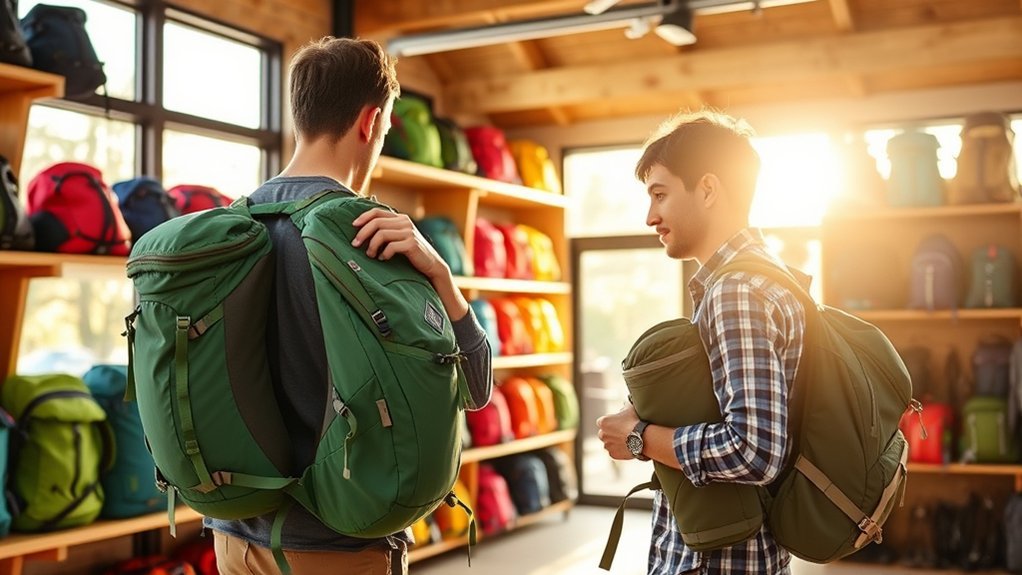
Choosing a hiking backpack starts with defining your trip’s purpose and duration. Consider your backpacking style and how much gear you typically carry. Pay attention to fit; a well-fitted pack distributes weight properly and reduces fatigue. Evaluate your gear needs and budget for quality options. Look for features like adjustability and multiple pockets for organization. Engaging with experienced hikers can provide valuable insights. There’s more to explore on selecting the perfect pack for your adventures.
Decide What It’s For

When choosing a hiking backpack, have you considered what activities you’ll primarily use it for? Identifying your main activity—like day hiking, backpacking, or climbing—is essential for ideal performance. Each type of pack is designed with specific needs in mind, so avoid the temptation to buy one pack for every adventure. Instead, think about gradually building a collection to suit various outings.
Assess your typical hiking conditions, including climate and terrain, as well as the duration of your trips. This will guide you in selecting the most appropriate style. Remember, the backpack’s volume and weight capacity should align with your planned gear load and personal comfort. A well-chosen pack not only enhances your experience but also empowers you to explore freely. Prioritizing your specific needs will lead to greater satisfaction on the trails.
Determine Backpacking Style
To determine your backpacking style, start by identifying the type of trips you’ll take—whether they’re day hikes or multi-day adventures. Consider how much gear you usually carry and the climate of your hiking locations, as these factors will dictate the size and features of the backpack you need. Balancing the weight of your load with your comfort preferences will help you choose between lightweight and gear-intensive options.
Lightweight vs. Gear-Intensive
Choosing the right backpacking style—whether lightweight or gear-intensive—greatly impacts your outdoor experience. If you lean towards quick, agile trips, consider lightweight options that keep your pack between 30-35 pounds. This style allows for faster movement and easier navigation. On the other hand, gear-intensive packs are ideal for extended adventures, accommodating 40-50 pounds and all the equipment you might need. Think about your typical trips—are they weekend getaways or weeklong excursions? Understanding the climate conditions you’ll face will also guide your gear choice. Finally, assess your personal comfort with weight and load distribution. This awareness will help you select a backpack that matches your preferred style, ensuring you feel liberated on every hike.
Trip Duration Considerations
Understanding trip duration is key in determining the right backpacking style for your adventures. For weekend hikes, you might lean towards a lightweight setup, while weeklong excursions often call for larger, gear-intensive packs. Assess how much gear and food you’ll need; your pack should comfortably accommodate 30-35 pounds for mid-size options, or more for extended trips. If you’re hiking with children, consider their needs—lighter packs can make all the difference. Think about your hiking style: do you prefer lightweight or ultralight gear? Finally, guarantee your pack’s size matches your load, keeping your comfort and mobility in mind. This will help you stay liberated and focused on enjoying the journey ahead.
Climate and Terrain Factors
When planning your hike, it’s essential to contemplate both the climate and terrain of your destination, as these factors greatly influence your choice of backpack. For wet and cold environments, opt for packs with weather-resistant features. In drier climates, prioritize ventilation to stay comfortable. Assess the terrain: rugged trails may require a robust pack with gear attachment points, while smoother paths allow for lighter, simpler options. Identify your backpacking style—whether lightweight or gear-intensive—to determine the right size and features based on your load and trip length. Remember that day hikes typically need smaller packs (20-30L), whereas multi-day trips often require larger capacities (50L or more). Seasonal changes can also affect your gear load, so plan accordingly.
Decide on Capacity and Weight
Deciding on the right capacity and weight for your hiking backpack is essential for a comfortable experience on the trail. Start by considering the duration of your trips. For lightweight excursions, opt for packs around 50L (3,051 cubic inches) or smaller, ideally weighing under 3 pounds. Mid-size packs are great for loads of 30-35 pounds, while larger packs, 65L and above, weigh 4-5 pounds and are designed for family or gear-intensive trips carrying 40-50 pounds. Most backpackers find that managing 30-45 pounds is the sweet spot for comfort and endurance. Always choose a pack size based on your gear’s bulk and weight distribution; avoid exceeding necessary capacity to prevent unnecessary strain. The right capacity and weight can liberate your hiking experience, allowing you to focus on nature rather than discomfort.
Importance of Fit
Getting the right fit for your hiking backpack is essential for a comfortable experience on the trail. Start by measuring your torso length to guarantee the pack sits properly, and make sure the hip straps align at your hips for ideal weight distribution. Remember, adjustable features can enhance your fit, so take the time to customize it for stability and balance while you hike.
Measuring Torso Length
Accurately measuring your torso length is vital for finding a hiking backpack that fits properly. Start by locating the C7 vertebra at the base of your neck and measure down to the iliac crest, or the top of your hip bone. This measurement helps guarantee your backpack provides the right support, as a poor fit can lead to discomfort and affect how weight is distributed. If you’re in between sizes, it’s usually best to opt for the smaller one for a snugger fit. Remember, comfortable alignment of hip straps is critical for effective weight distribution, reducing shoulder strain. Don’t forget to measure your waist as well, as this will help you select the right hip belt size for overall comfort.
Hip Strap Alignment
Proper hip strap alignment is essential for maximizing comfort and stability while hiking. When your hip straps sit above the iliac crest and comfortably at your hips, they effectively transfer weight from your shoulders to your hips. This alignment not only enhances comfort but also reduces fatigue on long hikes. Make sure to check the placement of your hip straps before you hit the trail; misalignment can lead to discomfort and strain. A well-fitted backpack with adjustable waist belts accommodates various body shapes, ensuring ideal hip strap positioning. This helps maintain stability and balance, preventing the pack from shifting during movement. Prioritize proper alignment to enjoy a liberating and enjoyable hiking experience.
Adjustable Features Importance
When you’re out on the trail, adjustable features in a hiking backpack can make all the difference in your comfort and performance. Shoulder straps, hip belts, and load lifters allow you to customize the fit, enhancing weight distribution and reducing strain. Properly adjusting the hip strap is essential; it should sit comfortably at your hips to effectively carry the pack’s weight. Look for backpacks that offer multiple sizes or adjustable components to match your torso length. A well-fitted pack minimizes fatigue, making long hikes enjoyable. Adjustability also maintains balance and stability, especially with heavier loads, keeping the pack close to your body. Investing in a versatile, adjustable backpack is key to liberating your hiking experience.
Evaluate Gear and Weight Distribution
As you prepare for your hiking adventure, examining your gear and weight distribution is essential to ensuring a comfortable trek. Start by evaluating the total weight of your gear and food; make sure your chosen pack can handle the load without excess bulk. Remember, comfort and functionality should take precedence over pack weight alone. A well-fitted pack can elevate your hiking experience.
To improve fit, consider downsizing bulky gear, which can streamline your carrying system. Pay attention to how you distribute weight within the pack—place heavier items close to your back and centered for better balance and stability. Regularly review your gear to align with your personal needs and specific trip requirements. This way, you’ll only carry what’s necessary, maintaining an ideal weight distribution. By fine-tuning your load, you’ll enhance both your comfort and freedom on the trail.
Features and Functionality
Choosing the right features and functionality in a hiking backpack can make all the difference in your outdoor experience. To guarantee you’re fully equipped for your adventure, consider the following essential features:
Selecting the right features in a hiking backpack enhances your outdoor experience and ensures you’re ready for any adventure.
- Multiple pockets for organization, allowing easy access to gear.
- Hydration reservoir compatibility to keep you hydrated hands-free.
- Weather resistance with durable materials and rain covers to protect your belongings.
Also, adjustable straps like load lifters and sternum straps help distribute weight evenly, enhancing comfort during long hikes. Ventilated back panels improve airflow, reducing sweat and discomfort on warmer days. Finally, evaluate the ease of access to your pack’s compartments; this can greatly improve your efficiency while on the trail. By focusing on these features, you’ll create a more enjoyable and liberating hiking experience, allowing you to connect with nature without unnecessary distractions.
Gear Selection
When selecting gear, prioritize ultralight options to keep your backpack weight down and enhance your comfort on the trail. Look for multifunctional equipment that can serve several purposes to maximize space and efficiency. Regularly reassess your gear to guarantee it meets your evolving hiking needs.
Ultralight Gear Benefits
While you might be tempted to stick with traditional gear, opting for ultralight options can greatly enhance your hiking experience. By reducing your overall pack weight, you can comfortably carry 30-35 pounds or less on long trips. This choice boosts your mobility and reduces fatigue, helping you navigate challenging terrain with ease.
Consider these ultralight gear benefits:
- Enhanced Comfort: Lighter packs mean less strain on your body, allowing you to enjoy your hike longer.
- Improved Performance: With less weight, you’ll move faster and conserve energy for those tough climbs.
- Space Efficiency: Many ultralight items serve multiple purposes, maximizing your pack’s potential without adding extra weight.
Upgrading to ultralight gear can considerably improve your outdoor adventures.
Multifunctional Equipment Choices
Opting for multifunctional equipment can greatly streamline your packing process and enhance your hiking experience. Look for ultralight gear that minimizes weight without sacrificing comfort, allowing you to carry more with ease. Invest in high-quality, durable items that stand up to outdoor conditions, ensuring reliability trip after trip. Prioritize gear that serves multiple purposes, like a tent that can also function as a rain cover, saving space and reducing weight in your pack. Regularly assess and update your gear based on your evolving needs, considering trip lengths and conditions. Finally, evaluate the comfort versus weight trade-offs in your gear choices; striking the right balance can markedly enhance your freedom on the trail.
Budget and Value
Setting a budget before you start shopping for a hiking backpack can greatly streamline your options and help you focus on what fits your financial constraints. While it’s tempting to opt for the cheapest option, consider that higher-priced packs often offer improved durability, features, and comfort. This makes them a better long-term investment for regular hikers. To maximize your value, keep these tips in mind:
- Check for sales and discounts to reduce costs on quality packs.
- Research reviews and recommendations to understand the performance of different models.
- View your backpack as a long-term investment, as a good-quality pack can last for years, saving you money over time.
Community Feedback and Experiences
After establishing a budget for your hiking backpack, tapping into community feedback can greatly enhance your decision-making process. Engaging with experienced hikers through forums allows you to gather invaluable insights on suitable pack sizes tailored to your specific needs. Seasoned hikers often stress the importance of weight management, urging you to reflect on both the pack and gear weight for a more comfortable experience.
Sharing your experiences within hiking communities helps refine your gear choices, as discussions reveal practical tips and tricks for effective packing. Feedback frequently emphasizes the need to choose a pack that aligns with your hiking style, whether you’re planning day hikes or multi-day backpacking trips.
Participating in local hiking groups can also foster knowledge sharing about the latest gear trends and recommendations, enriching your overall hiking journey. Don’t underestimate the power of community—it’s a treasure trove of information waiting to be revealed!
Adjustability and Weight Distribution Features
When you’re out on the trail, having a backpack that adjusts to your body can make a world of difference in comfort and performance. Look for features that enhance adjustability and weight distribution to help you stay liberated on your journey.
- Wide shoulder straps: Customize the fit according to your shoulder width for enhanced comfort.
- Sternum straps: These help relieve shoulder pressure, distributing weight more evenly across your upper body.
- Load lifters: Keep the pack close to your body, improving stability and balance while you move.
Additionally, adjustable waist belts secure the pack around your hips, transferring weight from your shoulders. Proper alignment of all straps is vital to maintain balance and reduce fatigue, especially on long hikes. Prioritizing these features guarantees you can focus on the beauty around you, not the burden on your back.
Frequently Asked Questions
What Materials Are Best for Hiking Backpacks?
For hiking backpacks, look for durable materials like nylon or polyester, which resist wear and tear. Waterproof coatings help keep your gear dry, while breathable mesh enhances comfort. Choose lightweight options for easier carrying on your adventures.
How Do I Clean and Maintain My Backpack?
Think of your backpack as a trusted companion. To keep it in top shape, wipe it down with a damp cloth, use mild soap for stains, and air dry it completely after washing.
Can I Use a Regular Backpack for Hiking?
You can use a regular backpack for hiking, but it might not provide the support or features you need. For longer treks, investing in a hiking-specific backpack is a smarter choice for comfort and functionality.
What Brands Are Considered the Best for Hiking Backpacks?
Some of the best brands for hiking backpacks include Osprey, Deuter, Gregory, and REI Co-op. These brands offer durability, comfort, and functionality, ensuring you’ll have an enjoyable hiking experience without any unnecessary hassle.
How Do I Choose a Color for My Hiking Backpack?
Choose a color that resonates with you and suits your style. Bright colors enhance visibility in outdoor settings, while earth tones blend with nature. Make certain it reflects your personality, making each hike feel more personal and enjoyable.
Conclusion
Choosing the right hiking backpack isn’t just important; it’s like picking the perfect partner for an epic adventure! You want something that fits like a glove, carries your gear effortlessly, and feels like it’s made of clouds. With the right fit and features, you’ll conquer mountains and trails like a pro. So, don’t rush it—your ideal backpack is out there, waiting to transform your hikes into legendary journeys. Now go out there and gear up for greatness!