

Last Updated on July 27, 2026 by Caleb Warren
If your travel pillow is not supporting your neck, do not assume you need a new one immediately. The problem is often the fit, firmness, orientation, or the way the pillow interacts with your seat. Start by adjusting it so it supports the direction your head naturally falls without pushing your head forward. A few small changes can improve travel comfort and reduce avoidable neck strain.
Quick Answer
If your travel pillow is not supporting your neck, adjust its height, firmness, and orientation before replacing it. Position the support where your head tends to fall, and make sure the pillow does not push your head forward. If it still collapses, slips, overheats, or feels restrictive, a different pillow shape may fit you better.
Key Takeaways
- There is no single correct orientation for every travel pillow; use the position that supports your head without forcing it forward.
- Reduce or add air or filling until the pillow supports your head without feeling rigid or collapsing.
- Choose support based on how your head moves while sitting — forward, sideways, or both — rather than how you normally sleep in bed.
- Change position regularly and move your neck and shoulders gently during long trips instead of relying on the pillow alone.
- Replace the pillow when it can no longer hold its shape, stay in place, or provide comfortable support after adjustment.
At a Glance
| Time Required | 2–5 minutes to test and adjust the fit |
| Difficulty | Easy |
| Tools Needed | Travel pillow, your seat or headrest, and an optional phone reminder for movement breaks |
| Cost | $0 to adjust your existing pillow; replacement cost depends on the design |
Disclosure: As an Amazon Associate I earn from qualifying purchases. Some links on this page are affiliate links, at no extra cost to you.
Why Proper Neck Support Is Essential for Travel Comfort
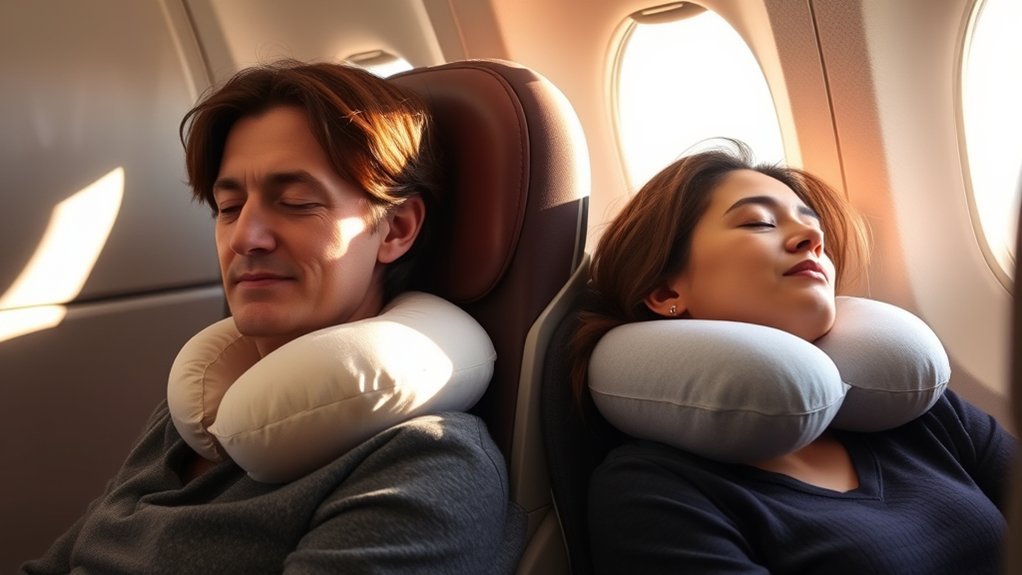
Long periods in one position can leave your neck and shoulders stiff, especially if your head repeatedly drops forward or sideways while you doze. Mayo Clinic notes that neck pain can worsen when the head stays in the same position for a long time and recommends keeping the head centered over the spine when possible.
A travel pillow can help by limiting excessive head movement, but it should not force your neck into an awkward position. Research on sleeping pillows also suggests that pillow height and shape can influence neck comfort and cervical alignment. Although those studies are not specific to upright airline sleep, the same basic lesson applies: the pillow must fit your body rather than simply feeling soft.
A useful travel pillow supports your head where it naturally wants to fall without forcing your chin forward, lifting your shoulders, or locking your neck in an uncomfortable position.
How to Adjust Your Travel Pillow for Better Neck Support
Before buying another pillow, spend a few minutes testing the one you already have. The goal is not to make your neck completely rigid. It is to reduce uncomfortable head drop while allowing you to sit naturally.
| Step | Action | What You Are Checking |
|---|---|---|
| Orientation | Start with the manufacturer’s intended position, then rotate the pillow if the design allows it | Whether it supports the direction your head actually falls |
| Firmness | Inflate, deflate, add filling, or remove filling where the design permits | Whether the pillow holds your head without feeling rigid |
| Seat Check | Lean against the actual seat or headrest | Whether the combined thickness pushes your head forward |
| Final Fit | Relax your shoulders and close your eyes for 30–60 seconds | Whether your head stays comfortable without active muscle effort |
1. Check Where Your Head Actually Falls
Sit back normally and relax your neck for a moment. Does your chin drop toward your chest? Does your head consistently fall toward one shoulder? Or does it stay back against the headrest but need cushioning?
Place the pillow’s strongest support in that direction. A traditional U-shaped pillow may work normally for one traveler and rotated for another. Wrap-style and structured pillows should generally be fitted according to the manufacturer’s instructions because their internal supports are designed for specific positions.
Note: Your normal bed sleeping position is not a reliable guide to your travel-pillow fit. Someone who sleeps on their side at home may still have a forward head drop while sleeping upright on a plane.
2. Reduce the Height if Your Head Is Pushed Forward
If the pillow fills the space behind your neck and the seat already has a thick headrest, the combined padding may push your head forward. Try rotating the pillow, moving more of its padding toward the sides or front, or reducing its volume if it is adjustable.
If you cannot rest against the seat without your chin being forced toward your chest, the pillow may simply be too bulky for that seat.
3. Adjust an Inflatable Pillow Gradually
An inflatable pillow does not have to be completely full. Start slightly underinflated and add small amounts of air until it supports your head without becoming hard or creating pressure against your jaw or neck. If it collapses as soon as you relax, add a little more air or check for a slow leak.
4. Tighten Adjustable Closures Without Restricting Your Neck
Closures can stop a pillow from spreading apart, but tighter is not always better. You should be able to breathe, swallow, and turn your head comfortably. Loosen any wrap or closure that feels constricting.
Pro Tip: Test your travel pillow against a chair or airplane-style headrest before your trip. A pillow that feels comfortable while standing may behave very differently once the seatback adds pressure behind your head.
Top Reasons Your Travel Pillow Fails to Provide Neck Support
Even after basic adjustments, a travel pillow can still fail because its size or support pattern does not match your body and seated posture.
- The support is in the wrong place: If your head falls forward but the pillow only supports the back of your neck, or your head falls sideways while the pillow has very low sides, it cannot control the movement that bothers you.
- The pillow is too tall: Excess padding behind the neck can combine with the seat headrest and push your head forward.
- The pillow is too soft: Filling that collapses completely may provide cushioning without enough structure to slow head drop.
- The pillow is too firm: Excessive firmness can create pressure points and prevent you from settling into a comfortable position.
- The opening or closure does not stay put: A loose pillow can spread apart or slide down as you sleep.
- The shape does not fit your neck and shoulders: Preset U-shaped pillows do not fit every neck length, shoulder width, or seat configuration.
- The material makes you uncomfortable: Some foam designs feel warm, while some inflatable pillows feel rigid or unstable. Covers, ventilation, and personal heat sensitivity all affect comfort.
How to Tell When Adjustments Are Not Enough
A replacement makes sense when the pillow cannot maintain comfortable support even after you change its position and firmness. Look for practical signs rather than replacing it on a fixed calendar.
- Permanent compression: Foam or filling no longer rebounds to its original shape.
- Loss of air: An inflatable pillow noticeably deflates during normal use.
- Broken closures: Snaps, hook-and-loop fasteners, or toggles no longer hold the pillow in position.
- Persistent slipping: The pillow repeatedly moves away from the area that needs support.
- Poor seat compatibility: The pillow pushes your head forward on the seats you use most often.
- Unmanageable hygiene problems: The pillow has odors, stains, or damage that cannot be cleaned according to its care instructions.
Which Travel Pillow Type Is Best for Your Posture?
The best design depends less on marketing labels and more on where you need support during long flights, train rides, or passenger road trips.
| Pillow Type | Key Features | Best Match |
|---|---|---|
| Inflatable | Adjustable firmness and very compact packing | Travelers who want to fine-tune firmness or save luggage space |
| Memory Foam | More substantial cushioning and shape retention | Travelers who prefer firmer, less collapsible support |
| Wrap-Around or Structured | Adjustable support around more of the neck | People whose head falls forward or strongly to one side |
| U-Shaped | Simple, widely available, often supports both sides | Travelers whose main problem is sideways head movement |
| Washable-Cover Design | Removable cover that can be cleaned according to the care label | Frequent travelers who prioritize easier cleaning |
Also consider neck height, shoulder width, adjustability, heat buildup, packability, and whether the pillow works with your usual seat headrest. A more expensive or thicker pillow is not automatically more supportive.
How to Reduce Neck Stiffness While Traveling
A pillow is only one part of travel comfort. Mayo Clinic recommends taking regular breaks during long-distance travel and moving or stretching the neck and shoulders rather than holding one position for hours.
- Keep your head reasonably centered: Avoid staying with your chin dropped toward your chest or your ear pressed toward one shoulder for long periods.
- Relax your shoulders: Use the armrest or another comfortable support for your forearms when possible so you are not constantly shrugging your shoulders.
- Change position regularly: Small posture changes, gentle shoulder rolls, and comfortable neck movement can help reduce stiffness.
- Stand or walk when practical: For long-distance travel, the CDC advises moving the legs frequently and walking about every 1–2 hours when feasible, especially during trips lasting more than four hours.
- Stop any movement that causes sharp pain: Stretching should feel gentle rather than forceful.
Warning: These sleep-support tips are for passengers, not active drivers. Do not wear a travel pillow while driving if it limits your ability to turn your head or safely check traffic. Stop in a safe place before stretching or making major adjustments. Seek prompt medical care for severe neck pain after an injury, pain that spreads into an arm or leg, or pain accompanied by numbness, weakness, tingling, or a severe headache.
How to Clean and Store Your Travel Pillow
Cleaning instructions vary by material, so check the manufacturer’s label before washing anything. Many foam travel pillows have removable washable covers while the foam itself should not be immersed. For example, Tempur-Pedic instructs owners to wash its travel-pillow cover separately and not clean the TEMPUR foam with liquid.
- Remove and wash the cover only according to its care label.
- Do not machine-wash a foam insert unless the manufacturer specifically allows it.
- Allow every component to dry completely before storage.
- Check inflatable pillows for valve leaks before your next trip.
- Avoid storing foam tightly compressed for long periods unless the manufacturer says it is designed for that.
Frequently Asked Questions
Can travel pillows be used for other purposes besides travel?
Yes. A travel pillow can also provide temporary head, neck, or back cushioning while reading, watching TV, or sitting at home. Use it only where it feels comfortable and does not force your neck into an awkward position.
How often should I replace my travel pillow?
There is no universal replacement schedule for an occasional-use travel pillow. Replace it when the filling remains flattened, foam loses its shape, an inflatable model leaks, closures fail, or the pillow no longer supports your head comfortably after adjustment.
Are there travel pillows specifically designed for people whose head leans sideways?
Yes. High-sided U-shaped pillows, wrap-around designs, and structured supports can provide more lateral support than a low, loosely filled pillow. Test the design while sitting upright because your travel posture may differ from your normal sleeping position at home.
What materials should I avoid in travel pillows?
There is no single material everyone needs to avoid. Instead, consider your own sensitivities and comfort. Some people dislike warm, dense foam, while others find thin inflatable pillows too rigid. Check the material list if you have a known sensitivity and choose a removable, washable cover when easy cleaning matters.
Can I wash my travel pillow, and how?
Check the product’s care label first. Many removable covers can be washed separately, but some foam inserts should not be soaked or machine-washed. Follow the manufacturer’s water-temperature and drying instructions and let all components dry completely before reassembly.
Why does my travel pillow push my head forward?
The pillow may be too thick behind your neck, especially when the seat already has a padded headrest. Try rotating the pillow, moving more support toward the sides or front, or reducing the air or filling if the model is adjustable.
Should a travel pillow be firm or soft?
It should be firm enough to resist the direction your head falls but not so rigid that it creates pressure or forces your neck into an unnatural position. Adjustable pillows are useful because you can change the firmness for different seats.
Sources
- Mayo Clinic — Neck Pain — posture, prolonged positioning, movement breaks, prevention, and warning signs
- Centers for Disease Control and Prevention — movement guidance during long-distance travel
- PubMed — 2021 systematic review and meta-analysis of pillow design — pillow shape, height, neck symptoms, and cervical alignment
- PubMed — 2025 systematic review of pillows and chronic neck pain — current evidence on pillow characteristics and neck support
- Tempur-Pedic Travel Pillow Care — example of manufacturer-specific cover and foam cleaning instructions
- Confluent Health — physical-therapy guidance and the Tylenol-commissioned OnePoll travel-pain survey cited in the original article
Conclusion
If your travel pillow is not supporting your neck, start with fit before shopping for a replacement. Check where your head falls, adjust the pillow’s height and firmness, and make sure the seatback is not combining with the pillow to push your head forward. A Tylenol-commissioned OnePoll survey cited by Confluent Health reported that about one in three Americans experience pain while traveling, so stiffness during long trips is not unusual.
Still, a travel pillow is a comfort aid rather than a treatment for neck pain. Combine comfortable support with regular position changes and gentle movement. If the pillow still collapses, slips, restricts you, or forces your neck into an awkward position, a different shape is likely a better fit.
