
Last Updated on July 24, 2026 by Tyler Morgan
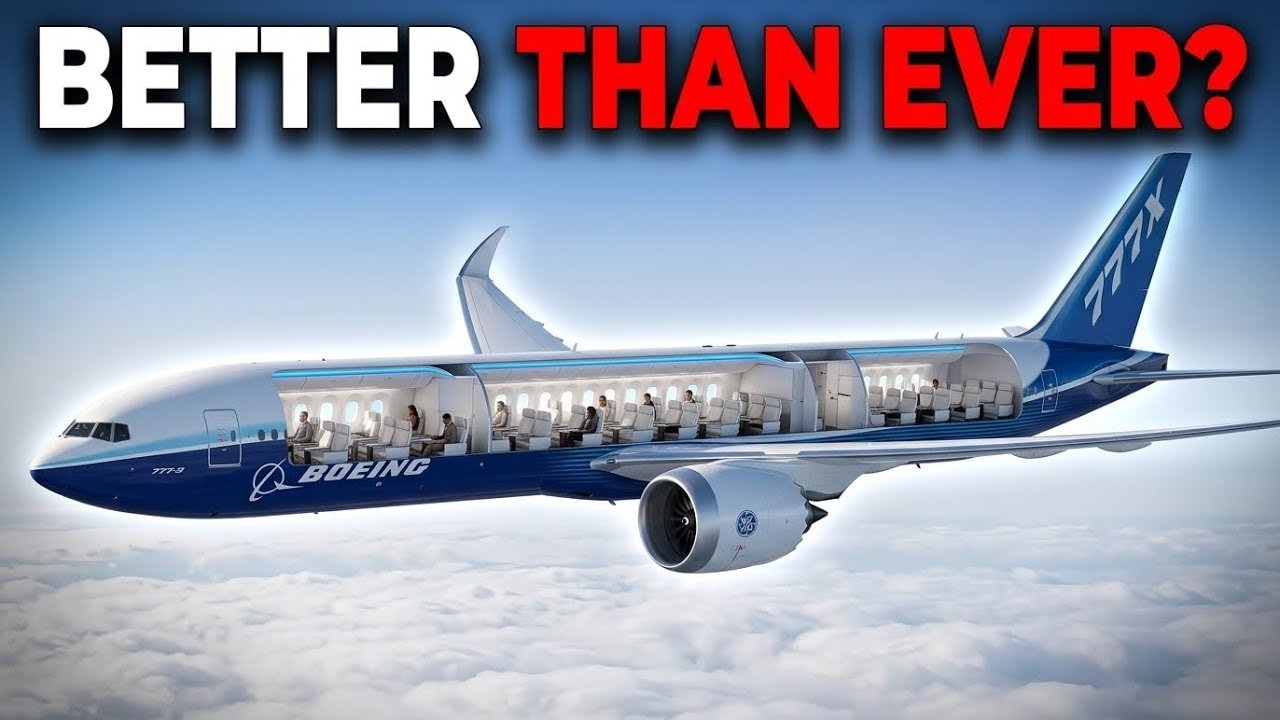
Most long-haul flights can leave you with dry eyes, a scratchy throat, poor sleep, and a heavy feeling after landing. The Boeing 777X is designed to improve several parts of that experience, including cabin pressure, humidity, noise, lighting, windows, storage, and ride quality. However, the aircraft creates the potential for a better trip. Each airline will still decide the seats, spacing, service, and many optional cabin features.
Quick Answer
The Boeing 777X cabin is designed to make long flights feel less tiring through a roughly 6,000-foot cabin altitude, improved humidity, lower noise, larger windows, immersive LED lighting, bigger bins, and turbulence-damping technology. Seat width and many comfort details will still depend on the airline’s final configuration.
Key Takeaways
- The 777X is not yet in regular passenger service. As of July 24, 2026, Boeing is targeting first 777-9 deliveries in 2027.
- A lower cabin altitude can limit the drop in blood oxygen saturation and may reduce discomfort during very long flights.
- Improved humidity should help with dry eyes, skin, and throat, but low cabin humidity alone does not necessarily cause whole-body dehydration.
- Larger windows, quieter surroundings, bigger bins, and smoother lighting may make the cabin feel calmer and more open.
- The airline, not Boeing alone, determines the final seat width, legroom, cabin density, window controls, and class layout.
Disclosure: As an Amazon Associate I earn from qualifying purchases. Some links on this page are affiliate links, at no extra cost to you.
When Will the Boeing 777X Enter Passenger Service?
The most important update is that passengers cannot yet book a normal commercial flight on the 777X. In a July 16, 2026 program update, Boeing said the 777-9 test fleet had completed more than 4,800 flight hours and about 1,700 flights, with roughly half of planned certification testing complete. Boeing currently expects the first 777-9 delivery in 2027.
Note: The cabin features below describe Boeing’s certified design goals, published specifications, and airline cabin plans. The final passenger experience will become clearer after certification and entry into scheduled service.
Why Long-Haul Flights Can Feel So Draining
The seat is only part of the problem. A long flight combines reduced cabin pressure, dry air, limited movement, noise, disrupted sleep, meal timing, and a rapid change in time zones.
At cruise altitude, the cabin is pressurized, but it is not normally kept at sea-level pressure. Many older aircraft can reach cabin-pressure conditions similar to about 8,000 feet above sea level. At that pressure, less oxygen reaches the blood than at sea level. Most healthy passengers tolerate the change, but the effect can add to discomfort during a long exposure.
Cabin air is also very dry. That dryness can irritate your eyes, nose, skin, and throat. It may make you feel thirsty, but research reviews have found that low humidity by itself does not necessarily cause meaningful whole-body dehydration in a healthy traveler. Alcohol, illness, limited fluid intake, and personal health factors can affect hydration separately.
How the 6,000-Foot Cabin Altitude May Help
Boeing has designed the 777X for a cabin altitude of about 6,000 feet at high cruise altitude, compared with the roughly 8,000-foot maximum commonly associated with many conventional airliners. Cabin altitude describes the air pressure inside the aircraft, not the airplane’s actual height above the ground.
A controlled 20-hour cabin-altitude study involving 502 adults found that oxygen saturation fell as simulated altitude increased. Reports of discomfort were more common at 7,000 to 8,000 feet than at the lower altitudes studied, with differences becoming noticeable after several hours.
- Higher oxygen saturation: The drop in blood oxygen should be smaller at 6,000 feet than at 8,000 feet.
- Less altitude-related discomfort: Some passengers may experience fewer headache, lightheadedness, or fatigue-like symptoms.
- More value on long sectors: Small environmental improvements matter more when exposure lasts 12 to 16 hours.
- No guarantee for every traveler: Sleep quality, health, stress, seating, and time-zone changes still affect how you feel.
In a controlled long-duration study, discomfort increased more at simulated cabin altitudes of 7,000 to 8,000 feet than at lower settings.
Note: A lower cabin altitude is a comfort feature, not medical treatment. Travelers with heart, lung, blood, or oxygen-related conditions should follow advice from their clinician and airline.

Improved Humidity, Lower Noise, and a Smoother Ride
Boeing lists improved humidity, a quieter cabin, cleaner air, and Smooth Ride Technology among the 777X cabin-environment features. These changes work in different ways, and each deserves a realistic explanation.
Improved Cabin Humidity
Traditional aircraft cabins often have relative humidity well below the level found in most homes and offices. The 777X is designed to maintain more moisture than older long-haul aircraft, which should reduce local dryness during flight.
In practical terms, improved humidity may mean:
- Less eye and contact-lens irritation
- Less dryness in the nose and throat
- Less dry or tight-feeling skin
- A more comfortable sleep environment
It is more accurate to describe this as relief from dryness than as protection from dehydration. Drinking water is still sensible, especially when you consume alcohol or caffeine, but the cabin’s humidity level is only one part of your overall fluid balance.
A Quieter Cabin
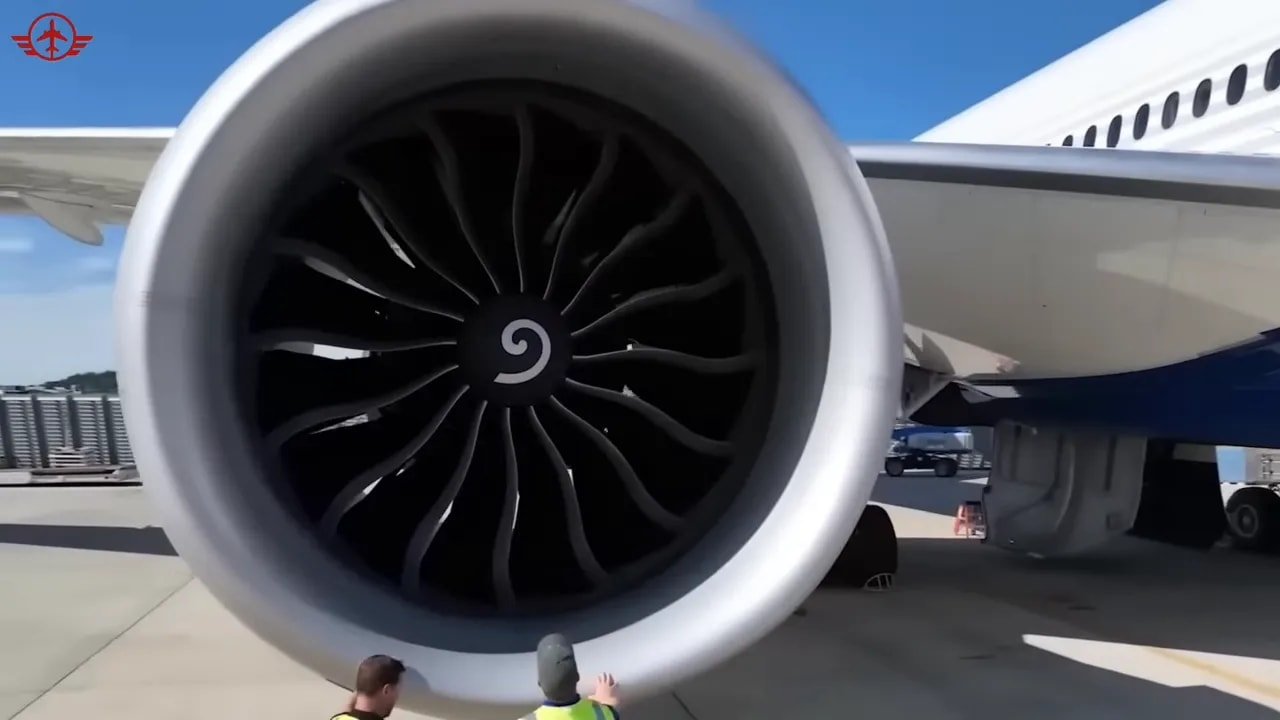
The 777X uses GE9X engines, updated aerodynamics, insulation, and cabin-air distribution changes that Boeing says will create a quieter interior.
A quieter background may make conversation easier and reduce the constant sound load that can interfere with rest. The aircraft will not be silent, and actual noise will vary by seat location, phase of flight, airline interior, and operating conditions.
How Smooth Ride Technology Works
Boeing’s Smooth Ride Technology uses sensors to detect air disturbances and commands flight-control surfaces to damp some gust-induced aircraft motion. The system works automatically in the background. Passengers may notice that certain bumps feel less sharp, but the technology cannot remove all turbulence or prevent every sudden movement.
Warning: A smoother ride does not make turbulence harmless. Keep your seat belt fastened whenever you are seated and follow all crew instructions.
A Wider, More Open Boeing 777X Cabin
The 777X keeps the familiar wide 777 fuselage but uses redesigned sidewalls, ceilings, bins, and cabin architecture to create more usable interior space. Boeing promotes the aircraft as having a wider cabin than its main competitor, with more flexibility for seats and aisles.
The visual effect may matter as much as the measurement. Higher ceilings, shaped sidewalls, open entry areas, larger bins, and better sightlines can make the cabin feel less enclosed, especially during a crowded overnight flight.
What Economy Seat Width May Look Like
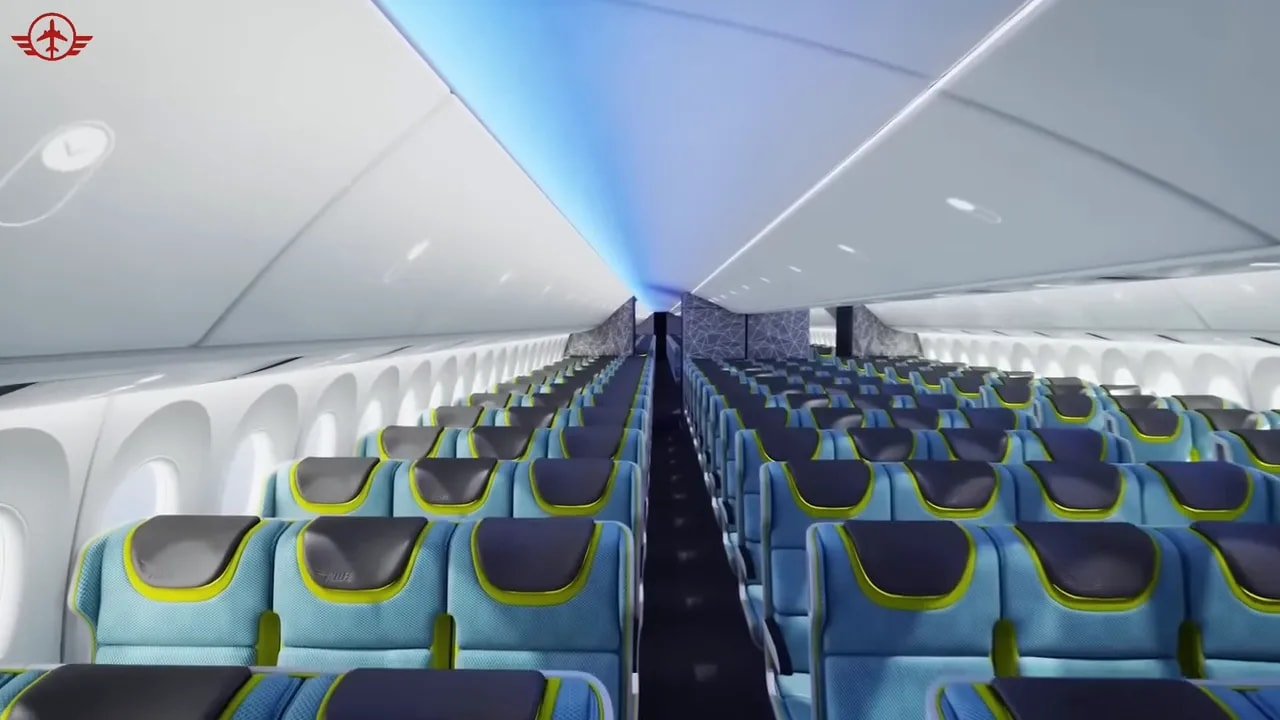
Boeing designed the cabin to support 10-abreast economy seating with seat widths of up to about 18 inches. The words “up to” matter. The final seat width depends on the seat model, armrests, aisle allocation, wall panels, and the airline’s density target.
| Cabin Element | What the 777X Platform Provides | What the Airline Decides |
|---|---|---|
| Seat width | Space for economy seats up to about 18 inches wide in a 10-abreast layout | Exact seat shell, armrest design, and usable width |
| Legroom | A flexible cabin floor and seat-track system | Seat pitch, recline, and number of rows |
| Aisles | A wide twin-aisle cross-section | How much width goes to seats versus aisles |
| Cabin density | Broad layout flexibility | Class mix, premium space, and total seat count |
This is why two 777X flights may feel very different even though the aircraft type is the same. A generous airline layout can preserve the design’s comfort advantage, while a dense layout can trade some of that space for capacity.

Larger Windows and Lighting That Changes the Cabin Mood
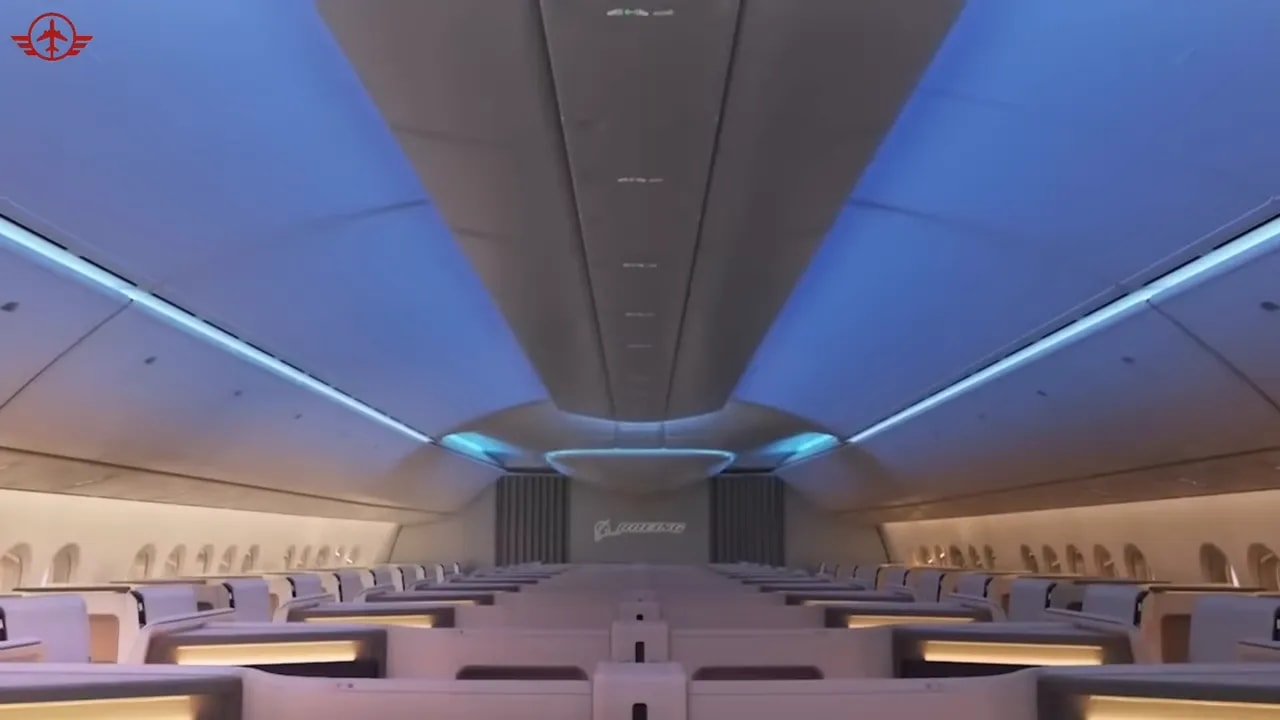
Light and outside views affect how enclosed a cabin feels. The 777X uses larger, higher-positioned windows and programmable LED lighting to make the interior feel brighter during the day and calmer during rest periods.
Larger, Higher Windows
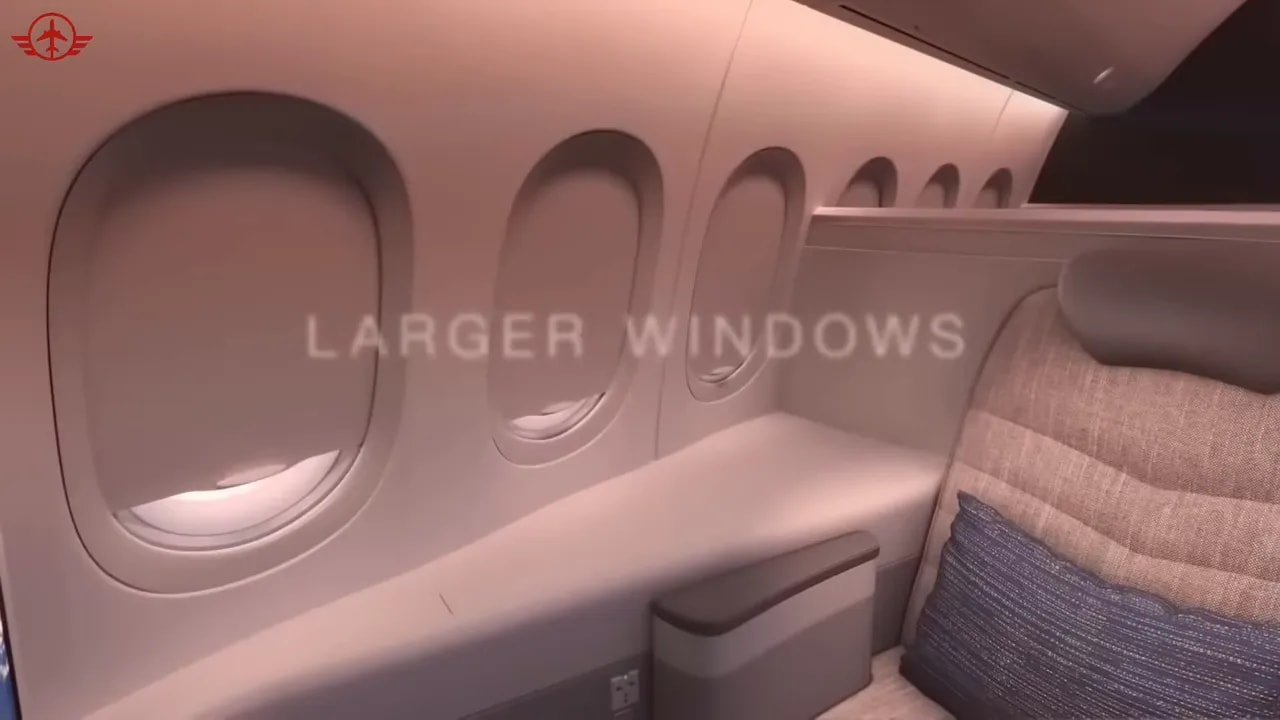
Boeing says the 777X windows are larger than those on many competing and previous-generation aircraft, and their higher position improves sightlines. More passengers may be able to see the horizon or sky without leaning awkwardly toward the wall.
The larger openings also allow more daylight into the cabin. That can make the sidewalls feel less solid and help the space appear more open, even from a middle seat.
Immersive LED Mood Lighting
The 777X lighting system can support gradual changes in color and brightness during boarding, meals, rest, and arrival. A slow transition is less jarring than switching bright ceiling lights on without warning.
- Softer scenes can create a calmer boarding environment.
- Warmer light can support meal service.
- Dimmer, cooler scenes can make it easier to settle down for rest.
- Brighter arrival scenes can help passengers wake before landing.
Lighting can support a better-timed cabin routine, but it cannot eliminate jet lag. Your sleep timing, route direction, destination time zone, and personal circadian rhythm still matter.
Dimmable Windows Are Configuration-Dependent
Electronic window dimming is available within the wider 777X design family, including Boeing Business Jet configurations, but it should not be treated as guaranteed equipment on every commercial airline 777X. Airlines can choose cabin systems and treatments during configuration.
Where installed, electronic dimming allows the window to darken gradually instead of using a conventional plastic shade. The feature can give passengers more control while letting the crew manage cabin light during rest periods.

Cabin Features That Also Help Airlines
The 777X cabin is not designed only around passenger comfort. It also gives airlines more ways to manage boarding, capacity, branding, crew accommodation, and revenue space.
Bigger Overhead Bins
Boeing lists bigger bins as a core 777X feature. More usable storage can reduce the last-minute search for space and the need to gate-check bags. Easier-closing bins may also help passengers and cabin crew during boarding.
That benefit still depends on bag size, passenger load, boarding order, and the airline’s baggage policy. A larger bin cannot guarantee room for every oversized carry-on.
Adaptable Cabin Architecture
The 777X cabin lets airlines customize ceiling shapes, bin arrangements, entry areas, seat products, class boundaries, and lighting scenes. This means one operator may use the aircraft as a premium-heavy flagship while another may prioritize more economy seats.
Modularity does not mean an airline can quickly rebuild the full cabin between ordinary flights. Major layout changes still require engineering, approved parts, certification work, and maintenance time. The advantage is greater choice when the airline designs or later refurbishes the aircraft.
Overhead Crew-Rest Compartments
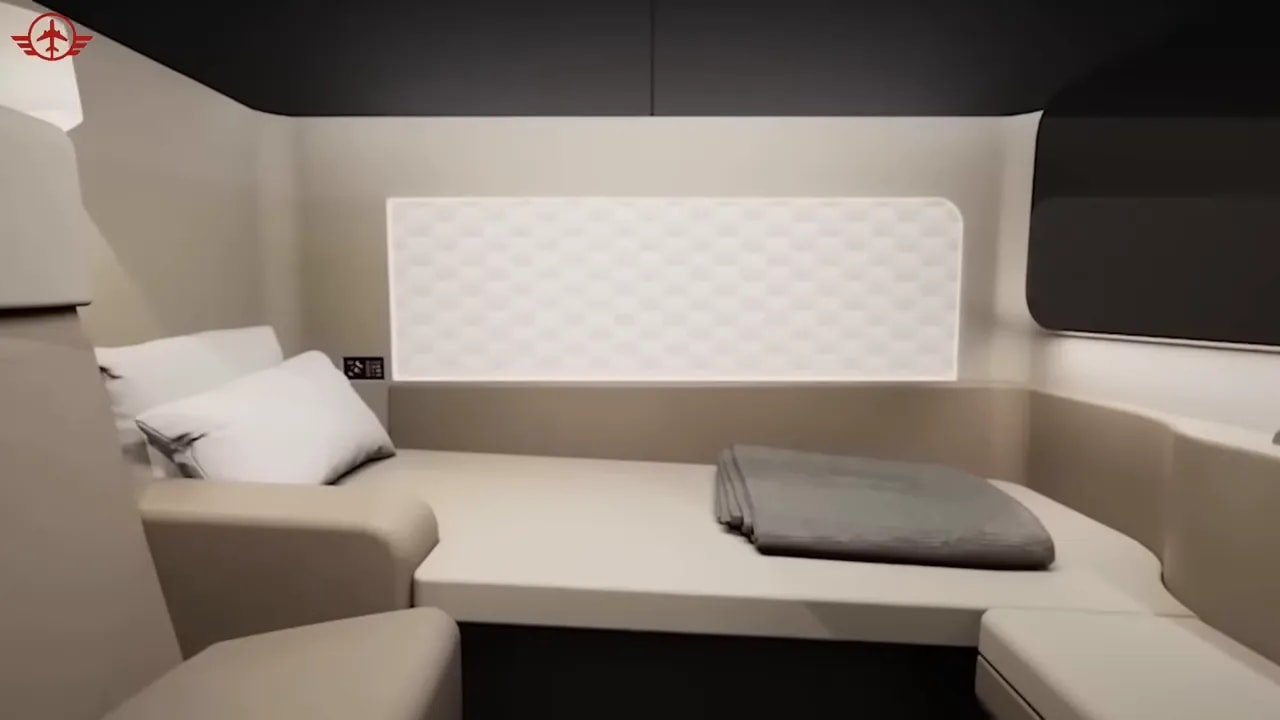
The 777-9 can be equipped with overhead flightcrew and flight-attendant rest compartments in the crown above the passenger cabin. U.S. regulators have published special certification conditions for these spaces. Moving crew-rest facilities away from the passenger floor can preserve more main-deck room for seats, galleys, lavatories, or other cabin uses.
These compartments are restricted work and rest areas for trained crew, not hidden passenger lounges. Their exact location and design depend on the airline’s approved configuration.
What Passengers Will Actually Notice Most
Some of the most technical 777X improvements will be invisible. You will not see the pressurization system working or watch flight controls damp a gust. You may simply notice that the cabin feels brighter, quieter, less dry, or less boxed in.
The features most likely to be obvious are:
- Larger windows and better outside views
- A more open ceiling and sidewall design
- Large overhead bins with easier access
- Gradual lighting changes instead of abrupt brightness
- A quieter background during cruise
- Potentially softer reactions to some turbulence
The features most likely to vary by airline are:
- Economy seat width and legroom
- Seat recline, padding, and headrests
- The number and size of premium cabins
- Window-dimming controls
- Lavatory count and location
- Meal service, bedding, entertainment, and Wi-Fi
Pro Tip: When 777X flights become bookable, check the operating airline’s seat map and cabin details instead of choosing by aircraft name alone. Seat pitch, seat model, and class layout may affect comfort more than the airframe’s extra width.
How the 777X Compares With the 787 and Older 777s
| Feature | 777X | 787 Dreamliner | Earlier 777 Models |
|---|---|---|---|
| Cabin altitude | Designed for about 6,000 feet | About 6,000 feet at cruise | Generally higher, depending on model and flight conditions |
| Humidity | Improved over older long-haul designs | Improved humidity is a core feature | Usually drier than newer-generation widebodies |
| Windows | Large and positioned higher | Very large, electronically dimmable windows | Smaller conventional windows on most cabins |
| Cabin width | Widest and most flexible of these three | Narrower fuselage than the 777 family | Wide, but with less usable interior width than the redesigned 777X |
| Passenger service status | Still in certification as of July 24, 2026 | In worldwide airline service | In worldwide airline service |
The 777X borrows several passenger-experience ideas from the 787 and applies them to a much wider aircraft. Its main advantage is the combination of a modern cabin environment with the space and capacity of the 777 family.
Who Is the 777X Really Designed For?
The honest answer is both passengers and airlines.
Passengers may benefit from lower cabin altitude, improved humidity, larger windows, a quieter environment, more storage, immersive lighting, and technology that damps some turbulence. These are meaningful design changes, even when they are not immediately visible.
Airlines gain a flexible high-capacity platform. They can adjust the balance among first class, business class, premium economy, and economy. They can also choose seats, bins, lighting scenes, crew-rest arrangements, and branded entry spaces.
Those goals can support each other. A well-designed airline cabin can use the 777X platform to create a spacious flagship experience. A dense configuration can still benefit from the improved air, windows, and noise control, but it may give back some of the comfort through tighter seating.
The Bigger Shift the 777X Represents
The most important innovation is not one window, one engine, or one lighting scene. It is the way pressure, humidity, sound, light, space, storage, and motion control are treated as one cabin environment.
The 777X suggests that future long-haul aircraft will be judged by more than seat count and entertainment screens. Travelers will pay closer attention to how the cabin affects sleep, dryness, stress, noise, and the way they feel after landing.
The platform cannot guarantee a comfortable trip because the airline’s choices still matter. Yet it gives operators better tools to create one. Once the 777X enters passenger service, the clearest test will be how well each airline turns those tools into a real cabin experience.
Sources
- Boeing: 777X by Design: cabin architecture, windows, bins, lighting, humidity, noise, and Smooth Ride Technology.
- Boeing: 777-9 Certification Progress, July 16, 2026: current test progress and planned 2027 deliveries.
- Boeing-issued 777X Passenger Experience Release: 6,000-foot cabin altitude, window placement, cabin customization, and seats up to 18 inches wide.
- New England Journal of Medicine: Effect of Aircraft-Cabin Altitude on Passenger Discomfort: oxygen saturation and discomfort at simulated cabin altitudes.
- Aircraft Cabin Environment Review: humidity, dryness, and dehydration evidence.
- U.S. Department of Transportation: 777-9 Overhead Flight Attendant Rest Conditions: regulatory basis for overhead crew-rest compartments.
Frequently Asked Questions
What makes the Boeing 777X cabin different from older long-haul aircraft?
The 777X combines a roughly 6,000-foot cabin altitude with improved humidity, lower noise, larger and higher windows, bigger bins, immersive LED lighting, spacious architecture, and technology designed to damp some turbulence. It also gives airlines more flexibility when designing each cabin.
How may the 777X reduce fatigue on long flights?
Its lower cabin altitude should reduce the drop in blood oxygen saturation compared with an 8,000-foot cabin environment. Improved humidity may reduce dryness, while lower noise and gradual lighting can support rest. These features may reduce discomfort, but they cannot remove jet lag, poor sleep, or the effects of a tight seat.
Does the Boeing 777X have wider economy seats?
The cabin is designed to support 10-abreast economy seats up to about 18 inches wide. That is a design capability, not a guarantee. Each airline chooses the seat model, armrests, aisle width, and seat pitch.
What is Smooth Ride Technology on the 777X?
Smooth Ride Technology uses sensors and flight-control inputs to damp some aircraft motion caused by air disturbances. It may make certain bumps feel less sharp, but it does not eliminate turbulence. Passengers should still keep their seat belts fastened when seated.
Are the 777X windows larger?
Yes. Boeing designed the 777X with larger windows positioned higher on the fuselage. The change brings in more daylight and improves outside sightlines for a larger share of passengers.
Will every commercial 777X have dimmable windows?
Not necessarily. Electronic dimming exists within the 777X design family, but commercial airlines choose their final cabin systems. Some operators may select electronic dimming, while others may use conventional shades or another approved treatment.
Is the Boeing 777X already flying passengers?
No. As of July 24, 2026, the 777-9 remains in certification testing. Boeing is targeting first deliveries in 2027, so regular passenger service has not started yet.
Is the 777X mainly designed for passengers or airlines?
It is designed for both. Passengers may benefit from the improved cabin environment and spacious architecture. Airlines gain a high-capacity aircraft with flexible layouts, larger bins, customizable lighting, and overhead crew-rest options.

