
Last Updated on July 25, 2026 by Caleb Warren
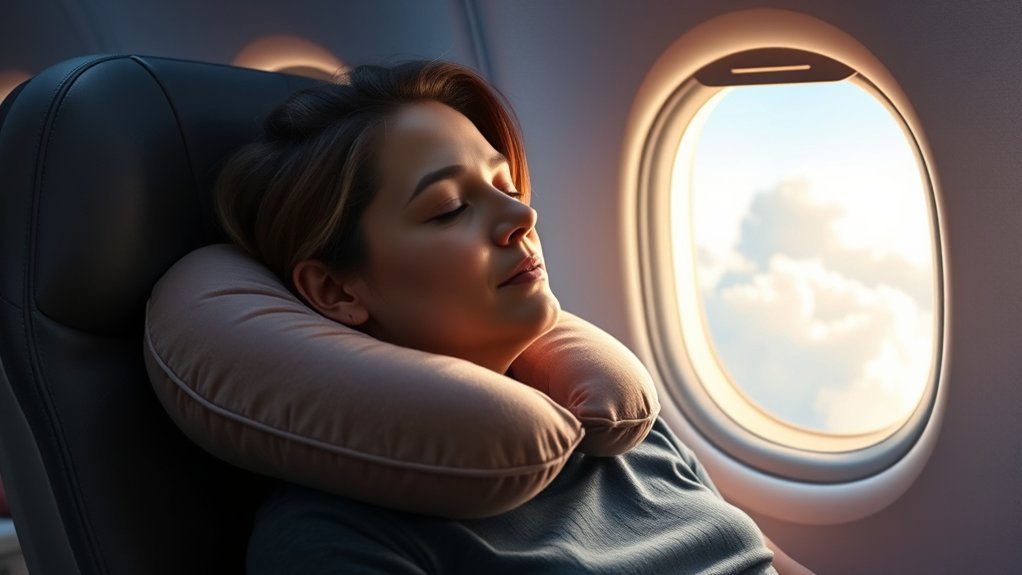
Using a travel pillow for side sleeping requires bridging the gap between your neck and shoulder to prevent lateral strain while sitting upright. By rotating the thickest part of your travel pillow toward your leaning side or securing a wrap-around pillow firmly against your collarbone, you maintain neutral spine alignment throughout your flight or train journey. Below, you will find step-by-step instructions, ergonomic techniques, and troubleshooting advice to turn upright travel into a restful experience.
Quick Answer
To use a travel pillow for side sleeping while sitting in a travel seat, turn a traditional U-shaped pillow 90 degrees so the thickest foam cushion rests directly between your shoulder and jaw. If using a snap or clasp, secure it snugly to prevent slipping. This setup fills the neck gap, holds your head upright, and prevents lateral cervical spine bending.
Key Takeaways
- Rotate for Side Support: Traditional U-shaped travel pillows work best for side sleeping when turned 90 degrees or worn backward to support the jaw and shoulder.
- Fill the Shoulder Gap: Side sleeping requires higher elevation than back sleeping to keep the neck aligned with the spine.
- Adjust Firmness: For inflatable pillows, release 10–20% of the air to allow the pillow to mold against your head and airplane seat back.
- Secure Clashes & Snaps: Utilize front toggles or straps to anchor the pillow in place and stop your head from dropping forward.
At a Glance
| Time Required | 2 Minutes |
| Difficulty | Beginner |
| Tools Needed | Travel Pillow (Memory Foam, Inflatable, or Wrap-around) |
| Cost | $15 – $60 |
Disclosure: As an Amazon Associate I earn from qualifying purchases. Some links on this page are affiliate links, at no extra cost to you.
How to Position Your Travel Pillow for Side Sleeping

When preparing to sleep on a flight or long train ride, standard back-sleeping pillow setups rarely work for side sleepers. In a standard upright seat, leaning sideways without support causes your head to tilt at an extreme angle, straining the sternocleidomastoid and trapezius muscles.
To position your travel pillow correctly for side sleeping, follow these step-by-step instructions based on your pillow design:
- For Standard U-Shaped Pillows: Do not place the opening in the front. Instead, rotate the pillow 90 degrees so that one of the thick side arms rests on top of the shoulder you intend to lean against. Place the opposite side arm along the side of your neck, or turn the opening toward the back of your neck so the thickest cushioning cradles your cheek and jawline.
- For Wrap-Around / Scarf Pillows (e.g., Trtl): Position the internal ergonomic support structure directly under your jaw on the side you prefer to lean. Wrap the fabric snugly around your neck to hold the support beam firmly against your shoulder.
- For Asymmetrical / High-Side Memory Foam Pillows: Position the highest raised bolster against your leaning shoulder. Fasten the front chin straps tightly so the high wall remains vertical against your cheek.
Pro Tip: If you have a window seat, tilt the pillow slightly toward the airplane wall and use a folded jacket or small blanket between the pillow and the window to absorb plane vibrations and fill remaining gaps.
Common Travel Pillow Mistakes to Avoid
Avoidable positioning errors account for the majority of stiffness and waking pain experienced by travelers. Recognizing these mistakes helps you make adjustments before falling asleep.
Incorrect Pillow Positioning
The most frequent error is wearing a U-shaped travel pillow with the opening facing forward while trying to lean sideways. Standard U-shaped pillows were originally designed to keep the head from falling backward or laterally when seated straight. When you lean sideways with the opening in front, your neck bends into empty air, leading to muscle fatigue within minutes.
Always align the fullest part of the pillow’s cushion against the direction of your head tilt. Cradling your jawline with the cushion prevents your head from exceeding a safe 15-degree lateral angle.
Neglecting Neck Support
Another major mistake is selecting a pillow that is too soft or underinflated to support the full weight of your head (which weighs roughly 10 to 12 pounds). When your pillow collapses under this weight, your neck spine curves excessively, pinching nerves and disrupting circulation.
Warning: Never allow your head to hang sideways unsupported for extended periods. Doing so compresses the cervical facet joints, which can cause tension headaches, stiffness, and radiating arm numbness upon waking.
Choosing the Right Travel Pillow Features
Side sleepers require specific design characteristics that differ significantly from back sleepers. Consider these critical features when choosing a pillow:
- Density & Loft Height: Side sleepers need a higher loft (thickness) to fill the gap between the shoulder tip and the ear. High-density memory foam provides the necessary resistance.
- Adjustable Strap / Snaps: Integrated chin straps or locking toggles hold the two ends of the pillow together, keeping the side cushion pressed against your neck even if you shift in your sleep.
- Breathable Covers: Heat retention is common during long travel. Look for removable, machine-washable covers made from bamboo viscose, modal, or athletic mesh fabrics.
- Compactness: Inflatable or compressible foam models allow side sleepers to pack their gear into carry-on bags easily.
Why Neck and Spine Alignment Matters
Maintaining a neutral spinal axis from your cranium down through your thoracic spine is essential for restorative rest during long journeys.
Importance Of Proper Alignment
When seated upright, gravitational forces press down on your vertebral discs. If your neck tilts sideways or slumps forward, that compressive force distributes unevenly across your cervical discs. According to research on cervical spine biomechanics, maintaining a neutral spinal posture significantly reduces muscular strain and decreases localized pressure points during sleep.
Impact On Sleep Quality
When your head is adequately supported without tipping, your central nervous system relaxes, allowing you to transition from light stage 1 sleep into deeper stage 2 and REM cycles. Proper physical support eliminates the body’s natural startle reflex, which triggers whenever your head begins to drop unsupported.
Prevention Of Discomfort Issues
Continuous lateral support prevents muscle spasms, stiffness, and soreness upon landing. Reaching your destination without neck strain means you can start your activities immediately without needing hours to recover.
Adjusting Your Pillow for Comfort
Fine-tuning your setup takes less than a minute and ensures long-lasting comfort throughout your flight:
- Adjust Seat Recline: Recline your seat slightly (if permitted) to transfer some torso weight from your lower lumbar spine to the seat back.
- Position the Cushion: Rotate the pillow until the thickest foam cushion bridges the gap between your shoulder and cheek.
- Tighten Snaps: Draw the front cinch cords tight until you feel gentle, firm support under your jawline.
- Fine-Tune Inflatable Air Pressure: If using an inflatable pillow, release small bursts of air until the firmness perfectly matches your shoulder height without feeling rigid.
Note: Pair your travel pillow with a supportive lumbar roll behind your lower back. Supporting the lumbar curve automatically improves upper neck posture.
Why Proper Travel Pillow Use Enhances Comfort
Proper travel pillow technique changes your posture from slouching to ergonomically stable. Rather than waking up every time your head nods or slides, proper side support keeps your head stable against the seat frame.
“Ergonomic travel support is not about making an airplane seat feel like a bed; it is about keeping your neck in a neutral alignment so your body can enter restorative sleep without triggering protective muscle spasms.”
Personal Experiences: Travel Pillow Success Stories
Many frequent travelers report immediate improvements after changing how they position their pillows. Travelers who previously struggled with neck pain on long flights often find that simply turning a standard U-shaped pillow 90 degrees or switching to a wrap-around neck support eliminates waking stiffness entirely.
Whether traveling for business or vacation, applying proper side-sleeping mechanics ensures you land feeling energized and ready for the day ahead.
Visual and Practical Benefits of Correct Pillow Use
Correctly setting up your travel pillow offers clear benefits for comfort and posture:
- Reduced Muscle Fatigue: Relieves constant tension in the trapezius and levator scapulae muscles.
- Prevented Head Bobbing: Keeps your head stable during sudden movements or flight turbulence.
- Improved Airway Clearance: Keeps your chin elevated, reducing snoring and breathing obstructions caused by forward slumping.
- Compact Convenience: Modern ergonomic pillows compress into small travel pouches for easy carrying.
Troubleshooting Common Travel Pillow Issues
If you still experience discomfort while trying to side sleep, review these quick fixes:
- Pillows Pushing Head Forward: If the back section is too thick, turn the pillow around so the narrow opening rests against the seat back, placing the bulk of the foam under your chin and side jaw.
- Pillows Slipping Away: Use a pillow equipped with seat-attachment straps or cinch cords to anchor it around your neck or the seat headrest.
- Overheating: Switch from dense, unventilated memory foam to inflatable models or cooling gel-infused foams paired with breathable mesh fabrics.
Frequently Asked Questions
Can I Use a Standard Pillow Instead of a Travel Pillow?
While you can use a standard home pillow, standard bed pillows are bulky and lack the structural firmness needed to support your head in an upright position. Travel pillows are specifically designed to fill the shoulder-neck gap while sitting, making them far more effective for travel.
How Do I Clean My Travel Pillow Safely?
Most travel pillows feature removable zippered covers that can be machine washed on a gentle cycle with mild detergent. Memory foam cores should never be submerged in water; instead, spot-clean foam cores with a damp cloth and mild soap, then allow them to air dry completely.
What Materials Are Best for Travel Pillows?
High-density memory foam provides the best combination of pressure relief and firm support for side sleepers. Inflatable pillows offer maximum portability and adjustable firmness, while microbead fillings provide flexible moldability but offer less structural neck support over long journeys.
Are Inflatable Travel Pillows Effective for Side Sleeping?
Yes, inflatable travel pillows work well for side sleepers, provided you do not overinflate them. Inflating the pillow to roughly 80–80% capacity allows it to yield under the weight of your head, creating a cradling support surface for your cheek and jaw.
How Do I Pack My Travel Pillow for Convenience?
Compress memory foam travel pillows into their included travel sacks to reduce their volume by up to 50%. Alternatively, use the pillow’s snap straps to secure it to the outside handles of your backpack or carry-on luggage for easy access during boarding.
Conclusion
Mastering how to use a travel pillow for side sleeping can dramatically change how you experience long journeys. By rotating the thickest padding directly between your shoulder and cheek, choosing high-density memory foam or properly inflated materials, and anchoring the front straps, you protect your neck from strain. Apply these ergonomic techniques on your next trip to arrive rested, energized, and ready to explore.
Sources
- Sleep Foundation — Comprehensive evaluation criteria for travel pillow support and ergonomic materials.
- National Center for Biotechnology Information (NCBI) — Clinical studies on cervical spine alignment, support surfaces, and sleep posture mechanics.
- Mayo Clinic — Medical analysis of neck pain prevention, posture alignment, and muscle tension reduction.
- Spine-health — Research and guidelines on upright seating ergonomics and cervical spine support.

