
Last Updated on July 23, 2026 by Caleb Warren
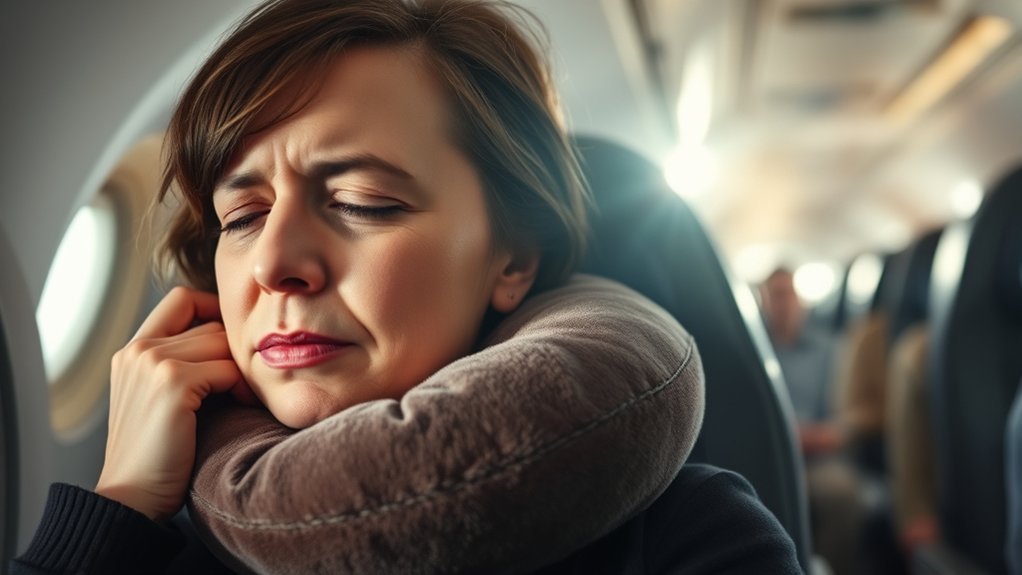
You finally doze off on the plane, propped up by the pillow you packed just for this. Then you land with a stiff, aching neck that ruins the first day of your trip. The pillow meant to protect you might be part of the problem.
Here is what can cause that discomfort, how to check the fit, and how to fix it before your next flight.
Quick Answer
A travel pillow can worsen neck pain if it pushes your head forward, lets it fall sideways, or presses too tightly. There is no single correct height. Choose adjustable support that keeps your head comfortably centered, test it against a high-backed seat, and follow the pillow’s intended orientation. Seek care for severe or neurological symptoms.
Key Takeaways
- There is no evidence-based universal height, including a fixed 5-inch rule, for every traveler.
- The best fit keeps your head comfortably centered without forcing your chin down, lifting it up, or tilting it sideways.
- Pillow orientation depends on the design; many U-shaped models support the chin at the front, but others work differently.
- Your seat angle, headrest, body size, and usual direction of head drop matter as much as the fill material.
- Change position regularly on long trips, and get medical help for severe pain, weakness, numbness, coordination trouble, fever, or pain after an injury.
What’s in This Article
- Why Your Travel Pillow Might Be Causing Neck Pain
- Essential Features to Look for in a Travel Pillow
- Common Travel Pillow Mistakes to Avoid
- How to Choose the Right Travel Pillow for Your Neck
- How to Position a Travel Pillow
- Why Taking Regular Breaks During Travel Matters
- Easy Stretches for Neck Tension
- When to Seek Professional Help
- Alternative Travel Pillow Options
- Other Ways a Travel Pillow Can Help
- Frequently Asked Questions
Disclosure: As an Amazon Associate I earn from qualifying purchases. Some links on this page are affiliate links, at no extra cost to you.
Why Your Travel Pillow Might Be Causing Neck Pain

If your neck hurts after travel, the pillow may be one factor. A pillow that collapses, shifts, or does not match your body and seat can leave your head bent forward or tilted to one side. Holding that awkward position while you sleep may strain muscles and joints.
The pillow may also be too firm, too tall, overinflated, or cinched too tightly. On some seats, a bulky back panel combines with the headrest and pushes your head forward. On others, a pillow with too little front or side support allows your head to drop when your muscles relax.
A travel pillow cannot fix every cause of neck pain. Long periods of sitting, an unsupported lower back, an awkward seat angle, a previous neck problem, or repeatedly looking down at a phone can contribute too.
How to Tell If the Pillow Is Part of the Problem
- Your discomfort starts or becomes worse after sleeping upright with the pillow.
- Your chin is forced toward your chest, your face points upward, or one ear drops toward a shoulder.
- The back of the pillow pushes your head away from the seat.
- You must tense your jaw, shoulders, or neck to keep the pillow in place.
- The pain improves after you loosen, reposition, deflate, or remove the pillow.
Note: These signs can suggest a fit problem, but they cannot diagnose the cause of neck pain. Recurring pain may need an assessment by a healthcare professional or physical therapist.
Essential Features to Look for in a Travel Pillow
A few features make the biggest difference in comfort and support on long trips:
- Adjustable height or firmness: this lets you reduce support if the pillow pushes your head forward or add support if your head still drops.
- Support in the direction your head falls: front support helps with chin drop, while taller side support helps if you lean toward a window or shoulder.
- A seat-friendly back: a slim, flat, or recessed rear section may work better with a thick airplane headrest.
- A stable fit: adjustable straps, a front closure, textured fabric, or a seat attachment can reduce slipping.
- Shape retention: the fill should remain supportive after you relax rather than flatten immediately.
- A removable, washable cover: this makes routine cleaning easier without damaging the core.
- Packability: compression or inflation is useful, but not if it removes the support you need.
Common Travel Pillow Mistakes to Avoid
The right travel pillow can change how you feel after a long trip, but these common mistakes get in the way:
- Buying by height alone: a fixed measurement cannot account for neck length, shoulder width, seat angle, or how much the fill compresses.
- Assuming every U-shape is worn the same way: check the product instructions and place the tallest or most supportive area where your head tends to fall.
- Overinflating or underinflating: too much air can push your head out of position, while too little allows the pillow to collapse.
- Ignoring the seat and headrest: a pillow that works against a wall may fail against a thick, curved, or winged headrest.
- Wearing it too loosely or too tightly: loose support slips; tight support can press on your jaw or throat.
- Trying it for the first time after takeoff: a short seated test at home can reveal pressure points and fit problems.
- Ignoring the care label: washing a foam or inflatable core the wrong way can damage it.
How to Choose the Right Travel Pillow for Your Neck
Start with fit and alignment rather than a brand, material, or advertised height. The pillow should support your head after you relax without forcing it into a new position. Your body size, seat, usual sleep direction, and tolerance for warmth or pressure all matter.
Pillow Height Considerations
There is no universal evidence-based pillow height that works for every person. Research on ordinary sleep pillows shows that height can change neck pressure and cervical alignment, but those studies mainly involve people lying down, not sleeping upright on a plane. The useful lesson is to match the height to your body and position, not to chase one number.
“There are no universal, evidence-based guidelines for pillow design or selection.” — PeerJ pillow-height study
A useful fit check is simple: sit back, relax your shoulders and jaw, close your eyes, and let the pillow carry some of your head’s weight. Your head should remain comfortably centered. If your chin is pushed down, your face tilts upward, or your ear drops toward a shoulder, change the height, firmness, or shape.
Pro Tip: Test the pillow for at least 10 minutes against a high-backed chair. A quick standing test does not show how the fill, closure, and seat headrest will interact after you relax.
Material Quality Matters
The material inside your pillow affects feel, warmth, adjustability, and how well it holds its shape:
- Memory foam or solid foam: usually holds a defined shape and spreads pressure, but it may feel warm or too bulky behind the head.
- Microbeads or fiber fill: feels softer and more flexible, but some designs flatten or shift more easily.
- Inflatable fill: packs small and lets you adjust firmness, but it can feel bouncy or create pressure if overfilled.
- Structured wrap or internal support: can provide strong one-sided support with less bulk, but the fit and warmth may not suit everyone.
- Breathable, durable cover fabric: improves comfort and makes frequent use easier, especially when the cover is removable.
No fill material is automatically best for neck pain. The better choice is the one that holds your head comfortably in the position you need.
Adjustable Support Features
Adjustability helps you fine-tune the fit instead of settling for a one-size pillow. Inflatable designs let you change firmness. Front closures can reduce gaps. Removable inserts can change height, and seat straps may help stop the pillow from sliding.
Wrap-around and J-shaped pillows are worth trying if a standard U-shape has not worked for you. Different necks and different patterns of head drop need different shapes.
Match the Shape to How Your Head Falls
- Forward head drop: look for reliable support beneath the chin or jaw that does not press on the throat.
- Sideways lean: choose taller support on the side you use, a J-shape, a wrap-style support, or a seat headrest with adjustable wings.
- Head pushed forward by the seat: choose a thinner or recessed back panel and use the seat’s headrest at the correct height.
- Mixed movement: a wrap-around design with adjustable front and side support may work better than a loose horseshoe shape.
Tips for Properly Positioning Your Travel Pillow for Maximum Comfort
Position the pillow according to its design and the direction your head tends to fall. Many U-shaped pillows work best with a closure or taller section toward the front, but that is not a universal rule. J-shaped, wrap-style, and asymmetric pillows have different instructions.
Pillow Positioning Techniques
- Set your seat first: sit with your hips back, support your lower back, and adjust the headrest before adding the pillow.
- Use the intended orientation: check the label or instructions. Put the supportive section beneath the chin or beside the head, depending on the design.
- Close obvious gaps: adjust the closure or air level so your head cannot fall through the middle, but do not compress your throat or jaw.
- Keep the rear section compatible with the headrest: if it pushes your head forward, thin, rotate, deflate, or replace that style.
- Use available side support: headrest wings or a window-side pillow can reduce sideways lean, provided you remain within your own seating space.
- Recheck after reclining: even a small seat-angle change can alter the pillow height you need.
Neck Alignment Importance
Comfortable alignment matters more than making your head perfectly rigid. Aim to keep your head balanced over your shoulders without a strong forward bend, backward tilt, or side bend. Your trapezius, sternocleidomastoid, and other neck muscles should be able to relax rather than fight the pillow.
Do not cinch a travel pillow as tightly as a medical neck collar. You should be able to breathe, swallow, move slightly, and remove it quickly. Readjust whenever you change the seat angle or sleeping direction.
Set Up the Rest of Your Seat
- Place a small rolled sweater or cushion at your lower back if the seat leaves you slumped.
- Keep your screen closer to eye level instead of looking down for long periods.
- Use the headrest at a height that supports the back or sides of your head rather than the base of your neck.
- Recline only when permitted and after checking the space behind you.
- Keep your seat belt fastened whenever you are seated, including while sleeping.
Why Taking Regular Breaks During Travel Matters
Sitting still for hours adds up, even with a good pillow. A brief posture reset every 30 to 60 minutes can help you notice slumping early: relax your shoulders, sit back, change your gaze, and reposition the pillow.
- Relax your muscles: change position before one posture becomes painful.
- Reset your posture: support your back and bring your screen closer to eye level.
- Keep blood moving: on long-distance trips, move your legs frequently. The CDC advises walking around every 1 to 2 hours when practical on journeys lasting more than four hours.
- Ease tension early: gentle movement is usually more helpful than holding your neck rigid for the whole trip.
Note: Remain seated when the seat-belt sign is on or the cabin crew instructs you to do so. You can still move your ankles, relax your shoulders, and change your seated posture.
Easy Stretching Exercises to Ease Neck Tension While Traveling
A few gentle movements can help after you have held one position for a long time. Move slowly, stay within a comfortable range, and stop if a movement causes sharp pain, dizziness, numbness, tingling, or weakness.
- Shoulder rolls: lift your shoulders gently, roll them back, and let them drop. Repeat several times without forcing the motion.
- Chin retraction: keep your eyes level and slide your head straight back, as though making a small double chin. Do not force your chin down to your chest.
- Neck rotation: turn your head slowly to one side as far as comfortable, return to center, and repeat on the other side.
- Side bend: bring one ear gently toward the same-side shoulder without lifting the shoulder, then repeat on the other side.
- Shoulder-blade squeeze: draw your shoulder blades gently together, hold briefly, and relax.
Warning: Do not perform stretches while standing during turbulence. Avoid fast neck circles or pulling hard on your head. NHS hospital guidance recommends slow, controlled movement and stopping if symptoms worsen.
How Do You Know When to Seek Professional Help for Neck Pain?
Neck pain is common, affecting an estimated 10% to 20% of adults, but a travel pillow is not always the cause. Mild muscle soreness often improves with movement, rest from the aggravating position, and basic self-care. The severity and accompanying symptoms matter more than a single time cutoff.
Get Urgent or Emergency Care
- Severe neck pain after an accident, fall, or other injury.
- Weakness in an arm or leg, trouble walking, poor balance, or loss of coordination.
- Loss of bladder or bowel control.
- Severe neck pain with a high fever, chills, or a severe headache.
- New numbness or tingling affecting the arms, shoulders, or legs, especially when it is spreading or accompanied by weakness.
Arrange a Medical Appointment
- The pain is very intense, keeps worsening, or disrupts sleep, work, or daily activities.
- It spreads into an arm or leg.
- It does not start improving after a few days of self-care or continues for several weeks.
- The same problem returns after most trips despite changing your pillow and posture.
- You are concerned because of a previous neck condition, surgery, or nerve problem.
Mayo Clinic recommends prompt evaluation when neck pain worsens despite self-care, radiates into the limbs, or occurs with headache, weakness, numbness, or tingling.
Alternative Travel Pillow Options for Enhanced Comfort
Different trips call for different pillows. Inflatable pillows pack down small and let you adjust firmness, which makes them useful for minimalist packing. Stop adding air once the pillow supports you; a rock-hard pillow may push your head out of position.
Memory foam pillows tend to hold a more defined shape, while wrap-style or structured supports can reduce sideways head drop with less bulk behind your neck. J-shaped pillows support one side and the chin. A compact rectangular pillow may work better when you can recline deeply or lie flat.
If you have allergies or sensitive skin, focus on a removable washable cover and materials you already tolerate rather than assuming one fill is universally hypoallergenic.
Other Ways a Travel Pillow Can Help
A travel pillow is not just for sleeping upright. It can support your neck while you watch a movie or work on a laptop, although raising the screen is still important. Some soft or inflatable shapes can also serve as temporary lower-back support while seated.
At a hotel, a clean travel pillow may work under or between your knees if its shape feels comfortable, but it should not replace proper support when you have an injury or ongoing pain.
If you travel often, keeping the pillow in your bag can make it easier to test and use consistently rather than saving it only for flights.
Frequently Asked Questions
Can I use a regular pillow instead of a travel pillow?
Yes. A small compressible pillow, folded sweater, or rectangular travel pillow may work if your seat reclines or you lean against a window. A neck-specific pillow is more useful when you need support on the front or sides while sitting upright. Whatever you use should not push your head forward.
How often should I replace my travel pillow?
There is no universal replacement schedule for travel pillows because use and materials vary. Replace yours when it stays flattened, leaks air, develops damaged seams or odors that cleaning does not remove, or no longer provides even support. A rarely used travel pillow may last longer than a nightly bed pillow.
Are inflatable travel pillows a good option?
Yes, especially when packing space is tight. They let you adjust firmness and height, but they can feel unstable or overly firm. Inflate the pillow only until it supports your head comfortably, and test the valve for slow leaks before your trip.
Can sleeping position affect neck pain with travel pillows?
Yes. Forward head drop needs different support from a sideways lean. Match the pillow to the direction your head naturally moves and to whether you sit upright, lean against a window, or recline. A shape that works in one position may be uncomfortable in another.
What’s the best way to clean my travel pillow?
Check the care label first. Many removable covers can be machine washed, while memory-foam cores usually need spot cleaning and full air drying. Inflatable pillows are commonly wiped clean rather than submerged. Never pack the pillow while it is damp.
Should the opening of a travel pillow face forward?
Often, but not always. Many U-shaped pillows use a front opening or closure so the sides and front support the jaw and chin. Other designs place a tall section on one side or use an internal wrap support. Follow the product instructions and place support where your head actually falls.
What should I do if the pillow pushes my head forward?
First, reduce the air or remove an insert if the pillow is adjustable. Reposition the seat headrest and check whether the rear panel is trapped between your head and a thick cushion. If the problem remains, choose a design with a thinner, flatter, or recessed back.
Medical Disclaimer: This article is for informational purposes only and does not constitute professional medical advice. Consult a qualified healthcare professional about persistent, severe, recurrent, or concerning neck pain.
Conclusion
A travel pillow may help, but only when its shape, firmness, and position match your body and seat. Skip the fixed-height rules. Test the pillow while seated, make sure it does not push your head forward or let it fall sideways, and adjust it whenever your seat angle changes.
Pair the pillow with a supported sitting position, regular posture changes, and gentle movement. If pain is severe, keeps returning, radiates into a limb, follows an injury, or comes with numbness, weakness, fever, balance trouble, or loss of coordination, seek medical care.
Sources
- Systematic review and meta-analysis of pillow designs and neck pain — supports the role of pillow shape and height while showing that evidence varies by design.
- Effect of pillow height on head-neck pressure and cervical alignment — supports individualized height and states that universal evidence-based selection rules are lacking.
- CDC: Understanding Your Risk for Blood Clots With Travel — supports frequent leg movement and walking during long-distance travel.
- Mayo Clinic: Neck Pain, When to See a Doctor — supports medical red flags and appointment guidance.
- Cleveland Clinic: Neck Pain — supports prevalence, posture, common symptoms, and warning signs.
- Frimley Health NHS: Acute Neck Pain — supports slow, controlled movement and cautions against neck circles.
