
Last Updated on July 25, 2026 by Caleb Warren
Taking a travel pillow on long flights, road trips, or train rides keeps your neck supported, but the pillow cover quickly gathers sweat, facial oils, airport grime, and environmental bacteria. When you return home, knowing how to clean and dry your travel pillow cover properly ensures it stays hygienic without losing its softness, stretch, or original shape.
Quick Answer
Yes, most travel pillow covers can safely go in the dryer, provided you use a tumble dry low heat or delicate setting. High heat can warp synthetic fibers like polyester, spandex, and plush fleece. Always check the care label first, secure all zippers to prevent snagging, and air dry if you are unsure of the material.
Key Takeaways
- Always check care tags: Symbols dictate whether machine drying is permitted (a square with a circle and single dot means tumble dry low).
- Zip before washing & drying: Closing zippers and clasps prevents teeth from tearing delicate microfibers or other laundry.
- Protect the core: Remove the inner memory foam or inflatable core before washing. Never put memory foam in a washer or dryer.
- Air drying is safest: Laying the cover flat in a ventilated area prevents shrinkage and preserves elastic stretch.
At a Glance
| Time Required | 45 minutes (machine wash + low heat tumble dry) |
| Difficulty | Easy |
| Tools Needed | Washing machine, dryer or rack, gentle detergent, mesh laundry bag |
| Cost | $0 (using standard household laundry supplies) |
Disclosure: As an Amazon Associate I earn from qualifying purchases. Some links on this page are affiliate links, at no extra cost to you.
How to Properly Wash Your Travel Pillow Cover
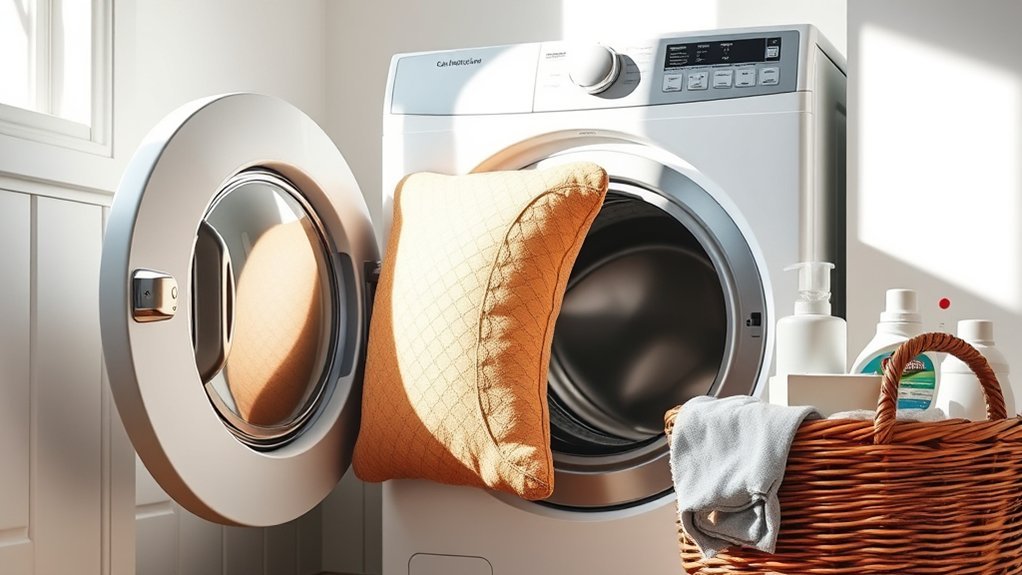
Washing your travel pillow cover correctly keeps the fabric soft and hygienic without causing shrinkage or damage. Follow these step-by-step instructions to launder your cover safely:
- Remove the Core: Unzip the cover and carefully remove the inner memory foam, microbead pouch, or inflatable core.
- Pre-treat Visible Stains: Apply a small drop of liquid mild detergent or enzymatic stain remover directly to saliva, makeup, or food spots. Gently work it in with your fingers and let it sit for 10 minutes.
- Secure Closures: Zip all zippers completely and fasten any snaps or velcro straps to prevent snagging during the wash cycle.
- Use a Mesh Laundry Bag: Place the pillow cover inside a mesh delicate wash bag to protect synthetic fleece, velvet, or elastane fibers from friction.
- Machine Wash on Cold/Gentle: Set your washing machine to a delicate or gentle cycle using cold water (below 80°F / 27°C) and a mild liquid detergent. Avoid bleach or fabric softeners.
Warning: Never Wash the Memory Foam Core! Memory foam is sensitive to water and heat. Submerging memory foam in a washing machine will break down its cellular structure, while dryer heat will melt or disintegrate the foam. Wash only the removable outer fabric cover.
Fabric Care Guide: Is It Safe to Use a Dryer?
Whether your travel pillow cover can handle the dryer depends primarily on its fabric composition. According to the Federal Trade Commission Care Labeling Guide, checking the care tag’s textile symbols is the definitive way to determine heat tolerance.
| Fabric Type | Dryer Safe? | Recommended Drying Setting | Key Risk Factors |
|---|---|---|---|
| Polyester / Spandex Blends | Yes | Tumble Dry Low / Delicate | High heat melts synthetic fibers and destroys elasticity. |
| Plush Velvet / Microfleece | Conditional | Air Fluff / Low Heat (or Air Dry) | High heat singes soft fleece pile, causing stiffness. |
| 100% Cotton | Yes | Low to Medium Heat | Excessive heat causes fabric shrinkage. |
| Silk / Bamboo / Satin | No | Air Dry Only | Tumble drying damages delicate natural fibers and causes friction pills. |
Pro Tip: Look at the laundry symbol on the care tag. A square with a circle inside and a single center dot indicates Tumble Dry Low Heat. If the square has an X over the circle, do not put the cover in the dryer under any circumstances.
Best Practices for Air Drying Travel Pillow Covers
When you want to guarantee zero shrinkage and maximum fabric longevity, air drying is the gold standard recommended by textile experts. It eliminates thermal stress and prevents premature wear on zippers and seam stitching.
- Reshape While Damp: Immediately after the wash cycle finishes, gently pull the pillow cover back into its original shape while it is still damp.
- Lay Flat or Hang in Shade: Lay the cover flat on a clean towel or drying rack in a well-ventilated room. Avoid direct sunlight, as UV rays can fade colors and weaken synthetic elastane fibers.
- Ensure Adequate Air Circulation: Using a drying rack allows air to pass through both sides of the fabric, speeding up moisture evaporation.
- Verify Full Dryness Before Storage: Confirm the cover is 100% dry—especially along thick seam folds and zipper linings—before zipping it back over your pillow core. Storing damp fabric encourages mold, mildew, and persistent damp smells.
When to Wash Your Travel Pillow Cover (Hygiene Guidelines)
Travel environments host high concentrations of germs and allergens. According to the Centers for Disease Control and Prevention (CDC), laundering porous fabrics after exposure to public transportation helps prevent allergen accumulation and bacterial spread.
Routine washing after every trip eliminates skin oils, sweat residue, airport surface germs, and drool stains before they penetrate deep into the pillow core.
Be on the lookout for these clear indicators that your travel pillow cover requires immediate washing:
- Visible Stains & Discoloration: Sweat marks, makeup transfers, or food crumbs leave noticeable spots and harbor bacteria.
- Unpleasant Odors: A sour or stale smell indicates trapped body oils, facial sebum, and moisture buildup.
- Slick or Grimy Texture: When the fabric feels sticky or rough to the touch, skin oils and dust particles have accumulated on the surface fibers.
- Post-Public Transit Exposure: If your pillow rested against airplane windows, airport seat headrests, or train seats, clean it promptly before storing it with clean belongings.
Essential Maintenance Tips for Long-Lasting Use
Extending the lifespan of your travel pillow cover requires consistent care habits. Implement these simple rules to keep your travel gear in top condition for years of journeys:
- Skip the Fabric Softener: According to the American Cleaning Institute, fabric softeners leave a waxy coating on synthetic fibers, which reduces breathability, dulls moisture-wicking properties, and locks in odors over time.
- Use a Protective Travel Bag: When not in use, pack your pillow inside a clean draw-string bag to protect it from dust inside your backpack or luggage.
- Store Uncompressed: Allow the pillow cover and foam to store uncompressed in a cool, dry closet to preserve the elasticity of the fabric and zipper hardware.
- Replace Periodically: If the cover loses its stretch, exhibits broken zipper teeth, or suffers thin spots despite proper care, replace the cover to maintain hygiene and comfort.
Frequently Asked Questions
Can I use fabric softener on my travel pillow cover?
It is best to avoid fabric softeners. Softeners coat microfibers and synthetic materials with a liquid film that clogs fabric pores, reducing breathability and preventing deep odor removal during subsequent washes. Use white distilled vinegar in the rinse cycle as a natural softening alternative.
How often should I replace my travel pillow cover?
You should evaluate your travel pillow cover every 1 to 2 years, or sooner if you travel frequently. Replace it if the elastic loosens, the fabric thins out, or persistent odors remain after thorough washing.
Are there specific fabrics to avoid for travel pillow covers?
Delicate, dry-clean-only fabrics like pure silk, lace, or untreated wool should generally be avoided for heavy travel use. Durable, machine-washable fabrics such as polyester-spandex blends, velour fleece, or breathable cotton jersey are far better suited for frequent cleaning.
Can I wash my travel pillow cover with other laundry?
Yes, you can wash your travel pillow cover with regular laundry of similar colors. Always place the cover inside a mesh wash bag and ensure all zippers are closed to prevent the metal teeth from catching or tearing other garments.
What should I do if my travel pillow cover shrinks?
If a cotton or blend cover shrinks slightly, soak it in lukewarm water mixed with a tablespoon of gentle hair conditioner for 15 minutes. Gently stretch the fabric fibers back to their original size while damp, then lay it flat to air dry.
Conclusion
Taking proper care of your travel pillow cover ensures a clean, comfortable rest on every adventure. While most synthetic and cotton covers can handle the dryer on a low-heat or delicate setting, air drying remains the safest strategy to protect elasticity and prevent shrinkage. Always remember to check the care label, remove the inner memory foam core prior to washing, and secure all zippers. By maintaining a clean pillow cover, you can enjoy fresh, germ-free comfort wherever your travels take you!
Sources
- Federal Trade Commission (FTC) — Textile Care Labeling Regulations and Symbol Guides
- American Cleaning Institute (ACI) — Laundry Best Practices and Synthetic Fabric Care
- Centers for Disease Control and Prevention (CDC) — Travel Hygiene and Laundering Standards
