

Last Updated on September 10, 2026 by Daniel Globe
A stuck zipper can make a washable travel pillow cover difficult to remove, but most jams do not require a new pillow. The safest approach is to stop pulling, reduce pressure on the zipper, identify what is blocking it, and use the least aggressive repair first. A few minutes of careful cleaning or alignment often solves the problem.
Quick Answer
If a travel pillow cover zipper is stuck, stop pulling and remove pressure from the cover. Check both sides for trapped fabric or thread, clear debris with tweezers or a soft brush, and move the slider backward slightly. Apply a tiny amount of zipper-specific lubricant if needed. Replace the slider only when it is worn or damaged.
Key Takeaways
- Do not yank the slider. Force can bend it, tear the zipper tape, or damage the teeth.
- Remove trapped fabric and clean away lint before applying any lubricant.
- Use a zipper-specific cleaner or lubricant sparingly and keep it off the visible fabric.
- A worn slider can often be replaced without replacing the entire zipper.
- Broken teeth, unraveled coils, torn tape, or failed stitching may require a sewn-in replacement zipper.
At a Glance
| Time Required | 5–20 minutes for cleaning or adjustment; longer if the slider must be replaced |
| Difficulty | Easy for a simple jam; moderate for slider replacement |
| Tools Needed | Tweezers, soft toothbrush, clean cloth, mild soap and water, and optional zipper lubricant or replacement slider |
| Cost | Often free with household supplies; a dedicated zipper-care product or replacement slider usually adds a modest cost |
Disclosure: As an Amazon Associate I earn from qualifying purchases. Some links on this page are affiliate links, at no extra cost to you.
Quick Fixes for a Stuck Travel Pillow Cover Zipper
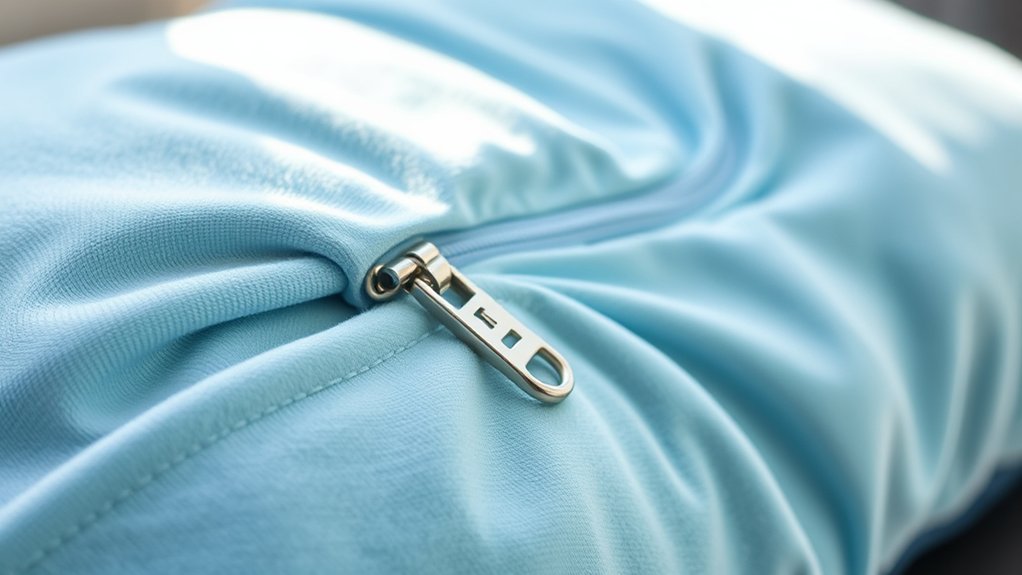
Warning: Do not yank the pull or drag the slider with pliers. Force can crush the slider, damage the zipper teeth, tear the fabric, or make a small jam harder to repair.
Begin with the gentlest fix. Work on a flat, well-lit surface so you can see both sides of the zipper.
- Remove pressure from the cover. Take out the pillow insert when possible. If the zipper is only partly open, compress the pillow away from the zipper instead of pulling on the cover.
- Move the slider backward slightly. A slider often releases when moved a few millimeters toward the position it came from.
- Check for trapped material. Look beneath and behind the slider for fabric, loose thread, hair, or lint.
- Free the obstruction. Hold the fabric flat and use tweezers to pull the trapped material away from the slider. Work slowly rather than pulling the fabric and slider in opposite directions.
- Brush the teeth. Use a clean, dry toothbrush to remove lint and debris from both sides of the zipper.
- Test the slider. Pull it in a straight line while supporting the zipper tape with your other hand.
- Lubricate only if it still feels stiff. Apply a small amount of a zipper-specific lubricant to the teeth, move the slider back and forth, and wipe away the excess.
Pro Tip: If fabric is trapped, push the slider slightly toward the jam before pulling the fabric free. This can reduce the pressure gripping the material.
Why a Travel Pillow Cover Zipper Gets Stuck
A zipper works when its slider guides two rows of teeth or coils together. A problem with the fabric, teeth, tape, or slider can stop that movement. YKK’s zipper guide explains that the slider is the component that joins and separates the two rows of elements.
| Cause | What You May Notice | Best First Step |
|---|---|---|
| Caught fabric or thread | The slider stops suddenly and material is visible beneath it | Back up the slider and remove the material with tweezers |
| Lint, dirt, or dried residue | Movement feels rough along several inches of the zipper | Brush and clean the teeth before lubricating |
| Overfilled cover | The zipper works when empty but binds around the pillow | Remove or compress the insert and reduce tension |
| Worn or loose slider | The teeth separate again behind the slider | Adjust or replace the slider |
| Bent or damaged teeth | The slider stops at the same exact point every time | Inspect the damaged area and stop forcing the slider |
| Torn tape or loose stitching | The zipper track pulls away from the pillow cover | Repair the stitching or replace the zipper |
Heat, moisture, residue, and poor storage can also affect some zipper materials, but the result depends on the zipper type. The most common practical problems on a travel pillow cover are trapped fabric, lint, excess pressure, and slider wear.
How to Lubricate the Zipper Safely
Clean the zipper before adding lubricant. Lubricating over dirt can leave abrasive material inside the slider.
- Open the zipper as far as it will move without force.
- Use a dry toothbrush to remove loose lint and dust.
- If grime remains, wipe the teeth with a cloth lightly dampened with mild soapy water.
- Let the zipper dry.
- Apply a small amount of zipper-specific cleaner or lubricant directly to the teeth.
- Move the slider back and forth several times.
- Wipe away all visible excess before the product touches the pillow or your skin.
GEAR AID’s zipper-care instructions recommend brushing the product onto the teeth, moving the slider to distribute it, and wiping away excess. A plain, dry bar of soap can serve as a temporary household option, but use only a light coating and test an unseen area first.
Note: Avoid WD-40, cooking oil, petroleum jelly, colored lip balm, and uncontrolled silicone spray on a travel pillow cover. These products may leave odors, oily marks, or residue on the fabric. Follow the cover’s care label and the lubricant manufacturer’s instructions.
When to Use a Zipper Repair Product
A lubricant will not repair a cracked, missing, or badly worn slider. Consider a replacement slider when:
- The pull or slider is missing.
- The slider is visibly cracked or distorted.
- The teeth close briefly but separate behind the slider.
- The slider remains loose after cleaning.
- The zipper track is mostly intact, but the original slider no longer guides it correctly.
A product such as FixnZip can be installed without sewing over many metal, molded-plastic, and nylon-coil zippers. However, it must match the zipper size. According to the manufacturer’s sizing guide, small sliders cover zipper sizes 1–4, medium sliders cover sizes 5–7, and large sliders cover sizes 8–10.
Check the back of the old slider for a size number. If no number is visible, measure the width of the joined teeth or coil and compare it with the manufacturer’s chart. A travel pillow or cushion cover often uses a small closed-end zipper, but you should measure rather than assume.
A replacement slider may not solve the problem when the zipper tape is torn, several teeth are missing, molded teeth are badly bent, or a nylon coil has unraveled. FixnZip states that it does not replace missing teeth and may not work properly when nylon coils have come undone.
Installing FixnZip on a Closed-End Pillow Cover Zipper
Most removable pillow covers use a closed-end zipper, meaning the two sides remain connected at one end. Confirm the zipper style and slider size before installation. The following process follows the manufacturer’s closed-end zipper instructions.
- Empty the cover. Remove the pillow insert so the zipper lies flat and is not under tension.
- Inspect the track. Remove lint, trapped thread, and loose fabric. Do not install a new slider over severely damaged teeth or coils.
- Orient the replacement slider. For a standard closed-end zipper, position the thumbscrew toward the outside of the cover.
- Loosen the thumbscrew. Open the replacement slider enough to fit over the zipper elements.
- Place it over one row. Slip one side of the teeth or coil into the slider.
- Feed in the second row. Align both rows evenly inside the slider.
- Move it near the closed end. Position the slider as close to the zipper’s end stop as practical.
- Adjust the screw. Tighten it fully, then loosen it by about one-quarter turn so the slider can move.
- Start the zipper. Squeeze the top and bottom of the slider while supporting the zipper end with your other hand. Pull the slider 1–2 inches.
- Test and fine-tune. If the teeth do not join, tighten the screw slightly. If movement is too stiff, loosen it slightly.
Do not overtighten the thumbscrew. The replacement slider must press the teeth together while still moving freely along the track.
How to Troubleshoot Common Zipper Problems
| Symptom | Likely Cause | What to Do |
|---|---|---|
| Fabric is caught in the slider | Loose lining, seam allowance, or overfilled cover | Back the slider up, flatten the fabric, and remove it with tweezers |
| Slider moves but the zipper stays open | Worn or loose slider | Replace the slider; a careful metal-slider adjustment may be temporary |
| Slider is stiff along the full track | Dirt, residue, corrosion, or dry contact surfaces | Clean, dry, and lightly lubricate the zipper |
| Slider stops at the same tooth | Bent, missing, or damaged element | Stop forcing it and inspect the track; replace the zipper if the damage blocks closure |
| Pull tab has broken off | Damaged pull but usable slider | Attach a replacement pull, small key ring, or cord loop |
| Zipper tape is separating from the cover | Failed stitching or torn fabric | Resew the tape or have the zipper professionally replaced |
| Zipper only jams with the insert installed | Excess pressure or an oversized insert | Compress or reposition the insert and avoid overstuffing the cover |
A zipper that stops at one damaged point needs inspection, not more pulling. Forcing the slider can turn a replaceable part into a torn zipper track.
When the Zipper Needs Full Replacement
Cleaning, lubrication, and a new slider cannot repair every failure. Replace the full zipper or ask a tailor or alteration shop for help when:
- Several teeth are missing or badly bent.
- A nylon coil is cut, stretched, or unraveling.
- The zipper tape is torn through.
- The zipper is pulling away from the pillow cover along a long section.
- The end stop has torn out of the fabric.
- A correctly sized replacement slider cannot keep the track closed.
- The cover fabric is too weak to support another repair.
If only the slider is defective and the track remains sound, replacing the slider is normally faster and less expensive than sewing in an entirely new zipper.
Preventing Future Zipper Issues
- Remove lint and hair from the zipper before washing the cover.
- Close the zipper before laundering when the care label permits it. This helps reduce snagging and stress on the teeth.
- Follow the pillow cover’s care label for water temperature, drying, and cleaning products.
- Do not overfill the cover or force an oversized pillow insert through the opening.
- Pull the slider in line with the zipper instead of outward at an angle.
- Support the fabric near the slider when opening or closing the cover.
- Clean residue from the teeth before long-term storage.
- Store the cover dry and avoid crushing the zipper beneath heavy items.
- Apply a suitable zipper lubricant only when movement becomes rough, not as a substitute for cleaning.
Frequently Asked Questions
Can I prevent my travel pillow zipper from getting stuck?
Yes. Keep lint and loose thread away from the track, avoid overfilling the cover, pull the slider in a straight line, and clean the zipper before storage. Use a small amount of zipper-specific lubricant only when the clean zipper still feels rough.
Is lubricant safe for every zipper and pillow fabric?
Not automatically. Use a product intended for the zipper material, follow its directions, and test it on an unseen part of the cover. Apply it to the teeth rather than spraying the surrounding fabric, and wipe away all excess.
Can I use WD-40 or petroleum jelly on the zipper?
They are poor choices for a washable pillow cover because they can leave an oily residue, odor, or stain and may collect dirt. Use a purpose-made zipper cleaner or lubricant. A tiny amount of plain dry bar soap is a cleaner temporary option when no zipper product is available.
How do I know whether the slider is worn out?
A worn slider may move normally while the teeth remain open or separate again behind it. Clean the track first. If the teeth are intact and aligned but still will not stay joined, the slider is a likely cause and can often be replaced.
How do I know if the zipper is beyond repair?
Full replacement is usually needed when several teeth are missing, a nylon coil has unraveled, the zipper tape is torn, the end stop has pulled out, or a correctly sized replacement slider cannot keep the track closed.
Can I use FixnZip on any zipper type?
FixnZip offers sliders for many metal, molded-plastic, and nylon-coil zippers, but the replacement must match the zipper size. It does not replace missing teeth, and it may not work when a nylon coil has unraveled or the zipper tape is badly damaged.
What should I do if the slider is stuck at the end stop?
Remove pressure from the cover and inspect the stop for trapped thread or bent material. Clean the area and move the slider backward with a gentle, straight pull. Do not pry against the stop or drag the slider with pliers, because the stop or zipper tape may tear out.
Conclusion
A stuck travel pillow cover zipper is usually easiest to fix when you start with the least aggressive method. Remove pressure, back up the slider, free trapped fabric, brush away debris, and test the zipper before adding lubricant. If the teeth separate behind a clean slider, replace the slider with the correct size. Replace the entire zipper only when the teeth, coil, tape, stops, or stitching are too damaged to close reliably.
Sources
- YKK Americas: The Structure of a Zipper — explains zipper teeth, tape, chain, and slider function.
- YKK Americas: How to Maintain and Repair a Zipper — supports cleaning, gentle operation, and suitable zipper lubrication.
- GEAR AID: Zipper Cleaning and Care — provides cleaning, application, movement, and excess-removal instructions.
- FixnZip: How to Measure Zipper Size — provides replacement-slider size ranges and measurement guidance.
- FixnZip: Closed-End Zipper Instructions — provides the installation sequence used for pillow-cover-style zippers.
- FixnZip FAQs — explains slider failures, damaged teeth, nylon-coil limitations, and replacement use.

