
Last Updated on September 10, 2026 by Daniel Globe
Washing a travel pillow cover is usually simple, but the correct method depends on the care label and the pillow’s construction. A removable fabric cover may be machine washable, while memory foam, inflatable chambers, microbeads, or built-in supports may require completely different care. Check what can be removed before adding water, and never assume the whole pillow can go in the washing machine.
Quick Answer
Remove the travel pillow cover and read its care label. If machine washing is allowed, fasten the closures and wash it with mild detergent on the recommended cycle. Hand-wash delicate covers in cool or lukewarm water. Air-dry unless the label specifically permits a low-heat dryer, and never soak a memory foam core.
Key Takeaways
- The care label overrides all general washing advice.
- Remove foam, plastic supports, electronics, and inflatable parts before washing a cover.
- Cold water, mild detergent, and a gentle cycle are common recommendations, but they are not suitable for every model.
- Routine laundering is normally enough; chemical sanitizing is mainly useful after illness or another clear contamination event.
- Dry the cover completely before putting it back on the pillow or storing it.
At a Glance
| Time Required | About 10–15 minutes of active work, plus washing and complete drying time |
| Difficulty | Easy, once you identify the washable parts |
| Tools Needed | Mild detergent, washing machine or basin, clean towel, and drying rack or clothesline |
| Cost | Usually $0 if you already have detergent; generally under $5 for the small amount of supplies used |
Disclosure: As an Amazon Associate I earn from qualifying purchases. Some links on this page are affiliate links, at no extra cost to you.
Why Cleaning Your Travel Pillow Cover Is Essential

A travel pillow cover touches your skin, hair, clothing, luggage, seats, and other surfaces. Over time, it can collect facial oils, sweat, makeup, food residue, dust, and odors. Washing the cover when it is dirty keeps the fabric more comfortable and prevents residue from building up around seams and closures.
Routine cleaning is usually sufficient. The Centers for Disease Control and Prevention recommends laundering washable soft items according to the manufacturer’s instructions and drying them completely.
The safest cleaning method is determined by the care label and the pillow’s internal construction—not by the cover’s appearance alone.
Identify the Cover and Pillow Type Before Washing
Before removing a zipper or adding detergent, identify which parts can safely get wet. A washable outer cover does not mean the entire pillow is washable.
- Removable fabric cover: Look for a zipper, snaps, buttons, or hook-and-loop tabs. Wash only as directed on the cover label.
- Memory foam core: Many foam cores should not be machine washed, submerged, or saturated. Tempur-Pedic, for example, directs owners to wash the removable cover while keeping its foam material away from liquids.
- Inflatable pillow: Water can enter the valve or damage internal seams. Some inflatable pillows must be hand-washed on the surface and never submerged.
- Microbead or bead-filled pillow: Do not machine wash unless the manufacturer expressly permits it. A split seam can release the filling into the washer.
- Pillow with a plastic support: Remove the support before washing if the manufacturer provides that option.
- Nonremovable cover: Spot-clean the surface instead of soaking the pillow unless the care label says otherwise.
Warning: Do not put memory foam, an inflatable bladder, electrical components, or an unidentified internal support in the washing machine. Water and agitation can permanently damage these parts.
How to Check the Care Instructions
Find the sewn-in tag on the cover, inside the zipper opening, or along a side seam. If the tag is missing, search the manufacturer’s website using the exact model name. Avoid borrowing instructions from a different pillow that only looks similar.
| Label Instruction | What It Means |
| Machine wash cold | Use cold water and the listed cycle. Do not raise the temperature to treat a stain. |
| Hand wash only | Use a basin and gentle squeezing. Do not use a machine’s hand-wash setting unless the manufacturer allows it. |
| Do not bleach | Avoid chlorine bleach and other bleaching products unless the label gives a specific exception. |
| Line dry or dry flat | Do not put the cover in a dryer, even on low heat. |
| Tumble dry low | A low-heat dryer is permitted, but the cover should be removed as soon as it is dry. |
| Spot clean only | Clean the affected area with minimal moisture. Do not soak or machine wash the item. |
Step-by-Step Guide to Machine Washing a Travel Pillow Cover
Use this method only when the care label confirms that the removable cover is machine washable.
- Remove the cover carefully. Take out the foam core, inflatable section, plastic brace, or other removable component.
- Inspect the seams. Repair an opening before washing so it does not spread during agitation.
- Pretreat visible spots. Dab a small amount of diluted mild detergent onto the stain. Let it sit briefly without allowing the area to dry.
- Secure the closures. Close the zipper. Fasten hook-and-loop straps so they do not catch on the fabric.
- Use a mesh laundry bag when helpful. A bag can protect thin fabric, straps, and small closures from snagging.
- Sort the load. Wash with similar colors and lightweight items. Avoid towels, garments with exposed hooks, or heavy pieces that can abrade the cover.
- Add a small amount of mild detergent. Follow the detergent label for the load size. More detergent does not produce a cleaner cover and can leave residue.
- Select the permitted cycle and temperature. A cold, gentle cycle is common, but the care label remains the final authority.
- Check the cover after washing. If it still feels soapy, run an extra rinse rather than adding another cleaning product.
- Dry according to the label. Air-dry when required. Use a dryer only when the manufacturer permits it.
Pro Tip: Photograph the care label before washing. The photo remains available if the tag fades or curls over time.
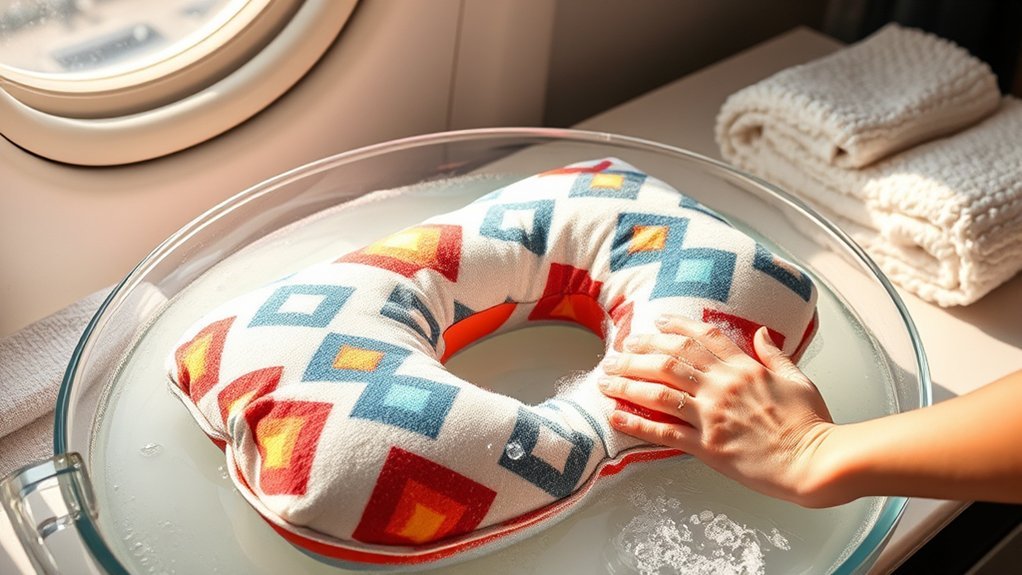
How to Hand-Wash a Travel Pillow Cover
Hand washing is useful for delicate covers, covers with fragile closures, or products whose labels prohibit machine washing.
- Fill a clean basin with cool or lukewarm water at the temperature allowed by the label.
- Add a small amount of mild detergent and mix it into the water before adding the cover.
- Submerge the removable cover and gently squeeze the fabric. Do not twist, wring, or scrub it aggressively.
- Pay extra attention to the neckline, seams, and areas that touch the face.
- Drain the soapy water and rinse with clean water until no detergent remains.
- Press the cover gently between clean towels to remove excess water.
- Reshape it and air-dry it according to the care label.
Do not hand-wash the entire pillow merely because the cover cannot be removed. A foam or inflatable core may still be damaged by submersion.
How Often Should You Wash the Cover?
There is no universal two-week or monthly schedule. Wash the cover based on use, condition, and the manufacturer’s care guidance.
- After a sweaty or long trip: Wash it before storing if it had prolonged skin contact.
- After a spill: Treat the area promptly and wash the cover if permitted.
- After illness: Wash the cover before using it again.
- When visibly dirty or odorous: Do not wait for a calendar date.
- During occasional use: Wash as needed and before long-term storage if the cover is not clean.
How to Sanitize a Travel Pillow Cover Safely
Normal washing with detergent is enough for most routine travel-pillow care. The CDC notes that regular cleaning is sufficient in most situations and that disinfection is generally more relevant when someone is sick.
If sanitizing is appropriate, first confirm that the product is labeled for the cover’s fabric and intended use. The U.S. Environmental Protection Agency advises users to follow the complete product label, including the approved surface, application method, and contact time.
For example, Clorox Disinfecting Mist is labeled to spot-sanitize eligible soft surfaces. Its directions say to spray until the surface is wet without saturating it, keep it visibly wet for five minutes, and let it air-dry. That is different from its hard-surface disinfection directions.
Note: Clean visible dirt and residue before using a sanitizer. Test the product on a hidden area, avoid soaking the cover, and do not apply it to foam unless the pillow manufacturer expressly permits that use.
Removing Stains and Odors From the Cover
Prompt treatment gives you the best chance of removing a stain without harsh scrubbing. Always test a cleaning solution on an inconspicuous area first.
Identifying Common Stains
- Sweat and facial oils: Usually appear around the neckline and face-contact areas.
- Makeup or skin products: May leave oily, tinted, or waxy marks.
- Food and drink: Can contain sugar, oil, dairy, coloring, or protein that requires prompt treatment.
- Dirt and luggage residue: Often collect along the outer edges and storage side of the cover.
Effective Stain-Removal Techniques
- Blot fresh liquid with a clean, absorbent cloth. Do not rub it deeper into the fibers.
- Rinse from the back of the stain with cool water when the fabric permits it.
- Apply a small amount of diluted mild detergent and work it in gently with your fingers.
- Wash the cover according to the care label.
- Check the stain before drying. Dryer heat can make some stains harder to remove.
- Repeat the treatment or use a fabric-compatible stain remover only if the label allows it.
Avoid automatically treating every stain with bleach, vinegar, alcohol, peroxide, or another household chemical. These products can affect dyes, finishes, elastic, adhesives, or foam beneath a nonremovable cover.
Safe Odor-Elimination Methods
- Wash the cover with the recommended detergent amount.
- Use an extra rinse if detergent residue may be trapping odor.
- Dry the cover completely before judging the result.
- Air the clean cover in a shaded, ventilated location.
- Clean the travel bag or storage pouch so it does not transfer the odor back to the cover.
- Replace the cover if odor remains because of permanent contamination or material breakdown.
Do not apply undiluted essential oils to a travel pillow cover. Oil can stain fabric, and strong fragrance may be uncomfortable when the cover sits close to your nose and mouth.
How to Dry Your Travel Pillow Cover Correctly
Complete drying helps prevent musty odors and moisture from becoming trapped between the cover and the pillow core. Follow the drying symbol on the care label rather than using a fixed number of minutes.
Air-Drying Techniques
- Gently press out excess water without twisting the fabric.
- Reshape the cover while it is damp.
- Lay it flat on a clean drying rack or hang it as the label permits.
- Choose a well-ventilated area away from dirt, cooking fumes, and excess humidity.
- Avoid prolonged direct sunlight unless the manufacturer says it is safe for the material.
- Turn or reposition the cover if seams or padded areas remain damp.
Using a Tumble Dryer
Machine-dry the cover only when the label permits it. Use the listed heat setting, keep the load light, and remove the cover when it is dry. Do not assume that low heat is safe for every cover. Hook-and-loop tabs, elastic, laminated fabric, and some synthetic finishes can be damaged by heat.
Some manufacturers specifically require air drying. Ostrichpillow, for example, recommends air drying the removable cover of its Go Neck Pillow, while its memory foam core must not be tumble dried.
How to Clean the Pillow Core and Other Components
Memory Foam
Do not wash or soak memory foam unless the manufacturer explicitly says it is washable. Tempur-Pedic’s pillow-care guidance, for example, says its foam material is sensitive to liquids while the removable cover can be washed separately.
For routine care, remove the cover and let the foam air in a dry, shaded room. If the foam is contaminated by a large spill, persistent mold-like growth, or bodily fluids, contact the manufacturer about safe treatment or replacement.
Inflatable Travel Pillows
Protect the valve and internal chamber from water. Follow the model’s instructions for surface cleaning. Travelrest, for example, instructs owners of one inflatable model to hand-wash it with soapy water, line-dry it, and never submerge it or allow water to enter through the valve.
Microbead and Bead-Filled Pillows
Check the seams before cleaning. Spot-clean the surface unless the care label confirms that the whole pillow is washable. Do not put a damaged bead-filled pillow in a washer because agitation can open the seam and release the filling.
Plastic Supports, Straps, and Closures
Remove a plastic support before washing when the manufacturer provides that option. Wipe nonwashable supports with a slightly damp cloth and dry them before reassembly. Fasten hook-and-loop tabs during washing to reduce snagging and remove lint from the tabs after the cover dries.
Ongoing Maintenance: Keeping Your Travel Pillow Fresh
- Use a clean storage pouch. Wash or wipe the pouch when it becomes dirty.
- Let moisture escape. Do not seal a damp cover or core inside luggage.
- Keep it off the floor. Attach the storage bag to your luggage instead of leaving the bare pillow on public surfaces.
- Wear a washable barrier when practical. A thin pillowcase or clean scarf can reduce direct skin contact on long trips.
- Inspect the cover before storage. Check the zipper, seams, elastic, and hook-and-loop tabs.
- Store it dry. Choose a clean area with airflow rather than a damp basement, bathroom, or tightly sealed container.
Troubleshooting Common Problems
The Cover Shrank
Do not force a shrunken cover over the core because that can tear the zipper or compress the pillow unevenly. While the cover is slightly damp, gently reshape it without stretching the seams. Let it finish drying flat. If it no longer fits, contact the manufacturer about a replacement cover.
The Cover Feels Stiff or Soapy
Detergent residue is the likely cause. Rinse the cover again in clean water or run an extra rinse cycle without adding more detergent. Dry it completely and reassess the texture.
An Odor Remains After Washing
Check whether the odor is coming from the cover, pillow core, or storage pouch. Rewash the cover if permitted, clean the pouch, and air the core according to the manufacturer’s instructions. Replace any part with permanent contamination, visible mold-like growth, or material breakdown.
The Zipper or Fastener Is Damaged
Stop using the cover if the zipper exposes the core or the closure scratches your skin. A small repair may be possible, but a failed closure often makes replacement safer and more comfortable.
When to Replace Your Travel Pillow Cover
A travel pillow cover does not need to be replaced on a fixed six- or twelve-month schedule. Replace it when its condition prevents safe, comfortable use.
- The fabric is thinning, fraying, peeling, or developing holes.
- The zipper or closure no longer stays secure.
- The cover has shrunk and no longer fits without compressing the core.
- Stains or odors remain after proper cleaning.
- The surface feels rough or irritates your skin.
- Elastic, straps, or hook-and-loop tabs have failed.
- The cover has contamination that cannot be safely removed.
If the cover is still clean, intact, comfortable, and correctly fitted, there is no reason to discard it solely because a certain number of months has passed.
Frequently Asked Questions
Can I wash my travel pillow cover with other laundry?
Yes, if the care label allows machine washing. Sort it with similar colors and lightweight fabrics. Fasten zippers and hook-and-loop tabs, and consider a mesh laundry bag. Avoid washing it with towels, exposed hooks, or heavy items that could stretch or abrade the cover.
What should I do if my travel pillow cover shrinks?
Gently reshape the cover while it is slightly damp and let it finish drying flat. Do not force it over the core or pull hard on the zipper. If it no longer fits correctly, order a compatible replacement cover from the manufacturer.
Is it safe to bleach a travel pillow cover?
Use bleach only if the care label expressly permits it. Chlorine bleach can fade color, weaken fibers, damage elastic, or affect specialty finishes. A mild detergent and label-approved stain remover are safer defaults.
How often should I wash my travel pillow cover?
Wash it when it is sweaty, visibly dirty, stained, odorous, used during illness, or ready for long-term storage. Frequent travelers may need to wash it after each demanding trip, while occasional users may clean it less often. Follow the care label rather than a universal calendar schedule.
Can I machine-dry my travel pillow cover?
Only if the care label permits machine drying. Use the listed heat setting and remove the cover when it is dry. Many synthetic or memory-foam pillow covers are best air-dried, and some manufacturers specifically prohibit tumble drying.
Can I wash the memory foam inside my travel pillow?
Usually not. Many memory foam cores can be damaged by water, detergent, agitation, and dryer heat. Remove and wash only the approved cover, then air the foam in a dry room. Follow the manufacturer’s instructions for spills or contamination.
Should I use fabric softener on a travel pillow cover?
Skip fabric softener unless the care label allows it. Softener can leave a coating that affects absorbency, moisture-wicking performance, odor retention, or specialty fabric finishes. Mild detergent and thorough rinsing are normally enough.
Conclusion
To wash a travel pillow cover safely, start with the care label and separate the washable cover from the pillow core. Use mild detergent, the permitted water temperature, and gentle handling. Treat stains promptly, avoid unnecessary chemicals, and dry every part completely before reassembly. The right method protects the fabric without damaging memory foam, inflatable chambers, internal supports, or closures.
Sources
- Centers for Disease Control and Prevention: When and How to Clean and Disinfect Your Home — laundering soft items, following manufacturer instructions, and complete drying
- U.S. Environmental Protection Agency: Selected EPA-Registered Disinfectants — approved surfaces, label directions, and contact times
- Clorox Disinfecting Mist Instructions — spot-sanitizing directions for eligible soft surfaces
- Ostrichpillow Go Neck Pillow Care Instructions — removable-cover washing, closure preparation, air drying, and foam restrictions
- Tempur-Pedic Pillow Care — keeping sensitive foam material out of the wash while cleaning the removable cover
- Travelrest Inflatable Travel Pillow Care Instructions — hand washing, line drying, and protecting the valve from water

