
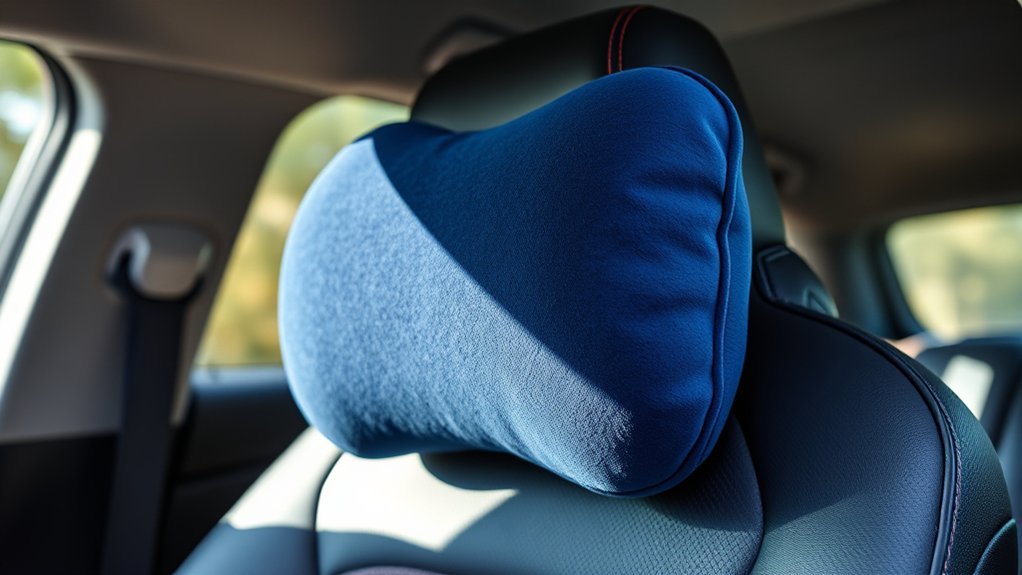
Last Updated on September 10, 2026 by Daniel Globe
Long car rides can be hard on a child’s neck, especially when they fall asleep and their head tips forward or to one side. A soft travel pillow may look like an easy fix, but anything added to a car seat can affect positioning or restraint fit. The safest solution depends on your child’s age, the type of restraint, and what the car-seat manufacturer allows.
Quick Answer
Most aftermarket travel pillows, head positioners, and cushions should not be added to a child’s car seat unless the car-seat manufacturer specifically allows them. For a rear-facing baby whose head falls forward, first check the manufacturer-approved recline angle and harness fit. NHTSA also permits small rolled blankets beside an infant for support in specific circumstances.
Key Takeaways
- Do not add an aftermarket head-support pillow, neck pillow, insert, or strap unless your car-seat manufacturer says it can be used with your specific seat.
- For rear-facing babies, use the seat’s approved recline angle. NHTSA says proper recline is especially important because it helps keep a young baby’s head from falling forward and restricting the airway.
- NHTSA allows small rolled blankets beside a young infant’s shoulders and head when extra support is needed, but thick padding should not be placed underneath or behind the baby unless the car-seat manufacturer recommends it.
- Never change from rear-facing to forward-facing simply to solve head slump or car sickness. Keep your child in each restraint stage until the seat’s height or weight limit is reached.
- If an infant repeatedly slumps forward despite correct installation and harnessing, have the seat checked by a certified Child Passenger Safety Technician or contact the manufacturer.
Disclosure: As an Amazon Associate I earn from qualifying purchases. Some links on this page are affiliate links, at no extra cost to you.
Why Kids Slump in Car Seats — and Why That’s Trickier Than It Looks
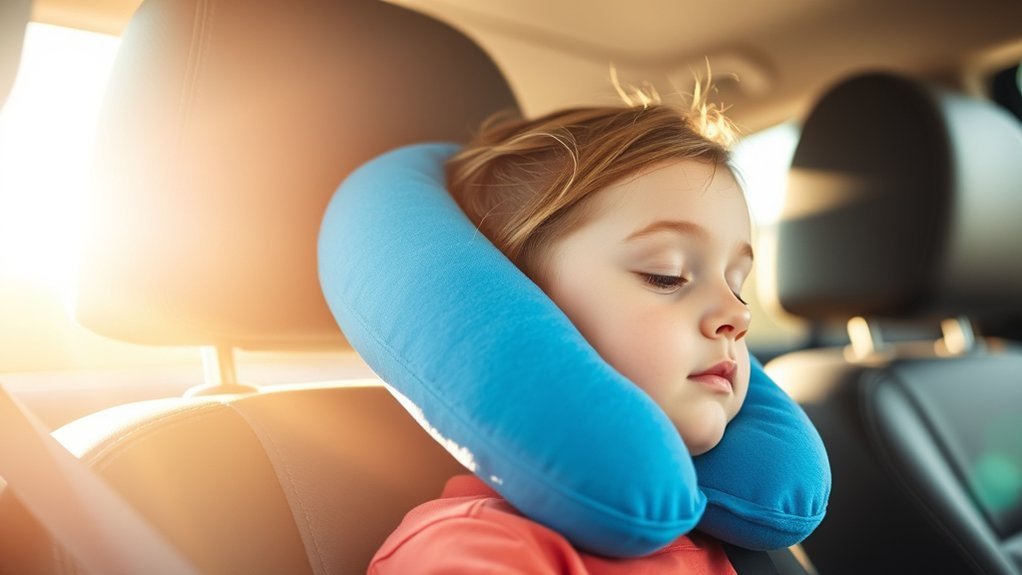
On long drives, it is common for a sleeping child’s head to tilt. The more important concern is not whether the position looks awkward but whether the child is correctly restrained and, for a young infant, whether the head is falling far enough forward to affect the airway.
A car seat is designed to position and restrain a child as a system. The shell, harness, headrest, padding, recline settings, and installation instructions all work together. That is why the National Highway Traffic Safety Administration (NHTSA) says aftermarket products are not recommended unless they are made or allowed by the original car-seat manufacturer.
The safest accessory is one your car-seat manufacturer specifically permits for your exact restraint and mode of use.
Warning: Do not place an unapproved pillow, cushion, head positioner, padding layer, or other bulky item between your child and the car seat or harness. Never use a forehead strap or similar device to hold a sleeping child’s head upright. Follow the car-seat manual whenever an accessory changes the child’s position or touches the restraint system.
Are Travel Pillows Safe in a Child Car Seat?
For a child riding in a harnessed car seat, the safest default is to skip a third-party travel pillow unless the car-seat manufacturer specifically states that the product may be used with that seat. NHTSA defines these add-on items as aftermarket products and does not recommend them unless the original car-seat manufacturer makes or allows them.
This does not mean every soft object near a child is automatically prohibited. What matters is where the item is placed, whether it affects the harness or belt, and whether the car-seat instructions allow it. A blanket placed over a properly tightened harness for warmth, for example, is different from thick padding placed underneath the child.
The Safer Way to Fix Head Slump
1. Check the Recline Angle for a Rear-Facing Baby
For rear-facing infants, start with the seat’s recline indicator or other manufacturer-approved angle setting. NHTSA explains that babies need to ride semi-reclined to help keep the airway open and that the appropriate angle may change as the child grows.
Do not simply recline the seat as far as possible. Use only a recline position permitted by the car-seat manual for your child’s size and the seat’s current mode.
2. Check the Harness Fit
Place your child’s back and bottom flat against the restraint. Harness straps should lie flat without twists and should be snug enough that you cannot pinch extra webbing at the shoulder. For a rear-facing seat, the harness normally comes from at or below the shoulders; follow your manual because exact routing can vary by restraint.
The chest clip should be positioned as directed by the manufacturer. On U.S. seats that use a chest clip, this is typically at armpit level.
3. Use Only the Seat’s Approved Inserts
If your car seat came with an infant insert, body support, head support, or removable padding, use it only for the child sizes and configurations listed in the manual. Some inserts must be removed after a particular weight or fit point.
An accessory sold separately should not be assumed safe simply because it is labeled “universal,” “crash tested,” or “for car seats.” Check whether your car-seat manufacturer expressly permits it with your model.
4. Know When Rolled Blankets Are Appropriate
The original version of this article was too restrictive on this point. Current NHTSA infant-seat fitting guidance says that if a small baby needs support, small rolled blankets may be used to fill empty space on each side of the baby’s shoulders and head.
They should not be used as thick padding underneath or behind the baby. NHTSA also describes using a rolled washcloth or diaper to fill a gap between a young infant and the crotch buckle in appropriate circumstances. Check your restraint’s instructions before using either technique because the car-seat manufacturer remains the final authority for that seat.
Note: There is no universal NHTSA or AAP rule saying side-support material must compress to less than 1/4 inch. Do not rely on a generic thickness formula in place of your car-seat manual.
5. Stop Safely If an Infant’s Head Falls Far Forward
If a young baby’s head falls forward with the chin pressed strongly toward the chest, pull over when it is safe to do so and reposition the baby. Before continuing, recheck the restraint’s recline indicator, installation, harness height, harness tightness, and any required infant insert.
NHTSA notes that correct rear-facing recline is especially important for young babies because it helps prevent the head from falling forward and restricting the airway.
If your child is struggling to breathe, becomes unusually difficult to wake, or develops blue, purple, or gray lips or skin, seek emergency medical help immediately.
What About Toddlers in Forward-Facing Car Seats?
Do not add an aftermarket pillow just to hold a sleeping toddler’s head upright. First verify that the seat is being used within its height and weight limits, that the headrest and harness are adjusted correctly, and that any forward-facing recline position is permitted by the manual.
Do not change a child to forward-facing early because of head slump. The American Academy of Pediatrics’ child passenger safety guidance, reaffirmed in 2025, recommends keeping children rear-facing until they reach the highest rear-facing height or weight allowed by their restraint.
If head slump remains severe or frequent after you confirm the installation and fit, contact the car-seat manufacturer or have the seat inspected by a certified Child Passenger Safety Technician.
What About Travel Pillows in Booster Seats?
A booster seat works by positioning the vehicle’s lap-and-shoulder belt correctly on the child’s body. The lap belt should lie low across the hips, while the shoulder belt should cross the middle of the shoulder and chest rather than the neck, face, or arm.
A pillow, belt pad, clip, or other accessory should not pull the shoulder belt away from its intended route. Follow both the booster-seat instructions and vehicle owner’s manual, and avoid aftermarket belt-positioning devices unless the restraint manufacturer expressly permits them.
Choosing a Comfort Product the Safe Way
If you still want an accessory for comfort, start with your exact car-seat model rather than shopping by pillow shape. Read the manual and check the manufacturer’s accessory guidance. A product made or specifically allowed for your restraint is a better choice than a “universal” product with no confirmed compatibility.
Do not treat compliance with a general infant-cushion standard as proof that a product is approved for a car seat. The U.S. Consumer Product Safety Commission’s infant support cushion requirements apply to qualifying cushions manufactured after May 5, 2025, but those requirements do not make every cushion compatible with every child restraint.
Tips for Cleaning and Maintaining Car Seat Inserts
Cleaning rules vary significantly among car seats. The manual should always take priority because improper washing can damage padding, webbing, buckles, or flame-resistant materials.
- Check the manual first: Confirm whether the seat pad or approved insert is machine washable, hand washable, or spot-clean only.
- Do not dismantle padding unnecessarily: Remove internal pieces only when the manufacturer’s instructions say they are removable.
- Clean the harness exactly as directed: Harness webbing often has stricter cleaning rules than the removable seat cover. Do not soak, bleach, machine wash, iron, or apply strong chemicals unless the manufacturer specifically permits that treatment.
- Clean the buckle carefully: Follow the restraint’s instructions. Soap, lubricants, and household cleaners may be prohibited on some buckle mechanisms.
- Dry as instructed: Some covers require air drying, while others permit different methods. Do not assume high heat or machine drying is safe.
- Reassemble carefully: Make sure the cover, harness, buckle, inserts, and headrest are routed exactly as the manual shows before putting your child back in the seat.
Pro Tip: If you cannot tell whether the recline, harness, insert, or installation is correct, a certified Child Passenger Safety Technician can check the restraint with your child and vehicle. Bring the car-seat manual and vehicle owner’s manual to the appointment.
Car Seats, Naps, and Safe Sleep After the Drive
It is normal for babies to fall asleep while restrained during car travel, but a car seat should not become a routine sleep space once the trip is over. The American Academy of Pediatrics’ safe-sleep guidance says that when a baby falls asleep in a car seat, stroller, swing, carrier, or sling, the baby should be moved to a firm, non-inclined sleep surface as soon as practical.
After you arrive, transfer your baby to an appropriate sleep space rather than leaving the infant sleeping in a detached carrier for an extended nap.
Frequently Asked Questions
Can travel pillows be used on airplanes as well?
It depends on how your child is restrained. An older child sitting directly in an aircraft seat may be able to use an ordinary travel pillow if it does not interfere with the aircraft seat belt or airline rules. If your child is riding in an approved car seat or other child restraint system, do not add an unapproved pillow inside that restraint. The FAA recommends approved child restraints for young children and says the restraint must be certified for aircraft use.
Are car seat inserts machine washable or hand wash only?
It depends on the car seat and the specific component. Some removable covers and approved inserts are machine washable, while others require hand washing or spot cleaning. Harness straps and buckles often have different cleaning restrictions, so follow the car-seat manual rather than applying one cleaning method to every component.
What age is appropriate for using head-support products in a car seat?
There is no universal age at which an aftermarket head-support product becomes safe in a harnessed car seat. Use only the inserts or accessories your restraint manufacturer permits for your child’s current size and seating mode. The car-seat manual should specify when included infant padding must be used or removed.
How do I choose the right size insert for my child?
Do not choose an insert by generic pillow size. Check whether your car-seat manufacturer permits the insert and follow any stated weight, height, or fit requirements. Some factory-supplied infant inserts are intended only for smaller babies and must be removed as the child grows.
Can head support help with car sickness in children?
There is no good evidence that a car-seat head-support pillow prevents motion sickness. More useful strategies include encouraging a child to look outside instead of reading or watching a screen, keeping the vehicle comfortably ventilated, offering a light pre-trip meal, and taking breaks when needed. Do not turn a child forward-facing earlier than the car-seat guidelines allow just to address car sickness.
Can I use rolled blankets beside my baby’s head?
NHTSA says small rolled blankets can be placed on each side of a young baby’s shoulders and head when support is needed. They should not create thick padding underneath or behind the baby. Because restraint designs differ, also check your car-seat manual or ask the manufacturer whether this technique is allowed with your seat.
What should I do if my baby’s head falls forward in the car seat?
Pull over safely and reposition the baby if the head has fallen sharply forward, especially if the chin is pressed toward the chest. Check the rear-facing recline indicator, installation, harness position, harness tightness, and approved infant padding before continuing. If your baby has difficulty breathing, becomes unusually difficult to wake, or develops blue, purple, or gray lips or skin, call 911.
Conclusion
It is completely understandable to want your child comfortable on a long drive, but a car-seat travel pillow is usually not the safest way to solve head slump. Start with the restraint itself: confirm the correct recline, harness fit, headrest position, child-size limits, and any manufacturer-approved padding.
For small rear-facing babies, NHTSA does allow carefully positioned rolled blankets beside the shoulders and head when support is needed, but avoid unapproved padding underneath or behind the child. When in doubt, the car-seat manual, manufacturer, or a certified Child Passenger Safety Technician is a safer resource than a universal aftermarket pillow.
Sources
- National Highway Traffic Safety Administration — Car Seat Glossary — aftermarket accessory guidance, recline terminology, restraint fit, and booster-belt positioning
- NHTSA — How to Install a Rear-Facing Only Infant Car Seat — recline, airway, harness fit, and rolled-blanket support guidance
- American Academy of Pediatrics — Child Passenger Safety — restraint-stage best practices; policy reaffirmed in February 2025
- American Academy of Pediatrics — HealthyChildren Safe Sleep Guidance — moving sleeping infants from sitting devices to a firm, non-inclined sleep surface
- U.S. Consumer Product Safety Commission — Infant Support Cushions — current federal infant-support-cushion requirements and May 5, 2025 applicability date
- Federal Aviation Administration — Kids’ Corner — approved child restraint systems and aircraft-use guidance
