
Last Updated on September 27, 2026 by Caleb Warren
The best travel pillows for neck pain help support your head when you rest upright, so it does not keep dropping forward or sideways. The right shape matters as much as softness: a bulky pillow can push your head forward, while one that is too low may offer little support.
The Trtl Travel Pillow is our overall pick for its structured side support and compact wrap design. For a traditional memory foam option with seat straps, consider the Cabeau Evolution S3 Neck Pillow.
These picks were compared using their support designs, fit adjustments, materials, cleaning instructions, and manufacturer product information. A travel pillow is a comfort aid, not a treatment for a neck condition.
Travel Pillows for Neck Pain Compared
| Product | Best for | Support design | Care and packing |
|---|---|---|---|
|
Mid-range
|
Structured side support | Internal support inside a fleece wrap | Compact; remove insert before washing |
|
Mid-range
|
A flat back against a seat | Contoured memory foam; non-slip backing | Hand-washable cover; compression pouch |
|
Mid-range
|
A traditional pillow with seat straps | Raised memory foam sides; flat back | Removable cover; compression case |
|
Premium
|
Adjustable, multi-position support | Asymmetrical memory foam wrap | Washable cover; travel bag |
| Children ages 8–12 | Overlapping arms support the chin | Entire pillow machine washable |
Travel Pillows for Neck Pain: Our Top Picks
Top Travel Pillows for Neck Pain, Ranked
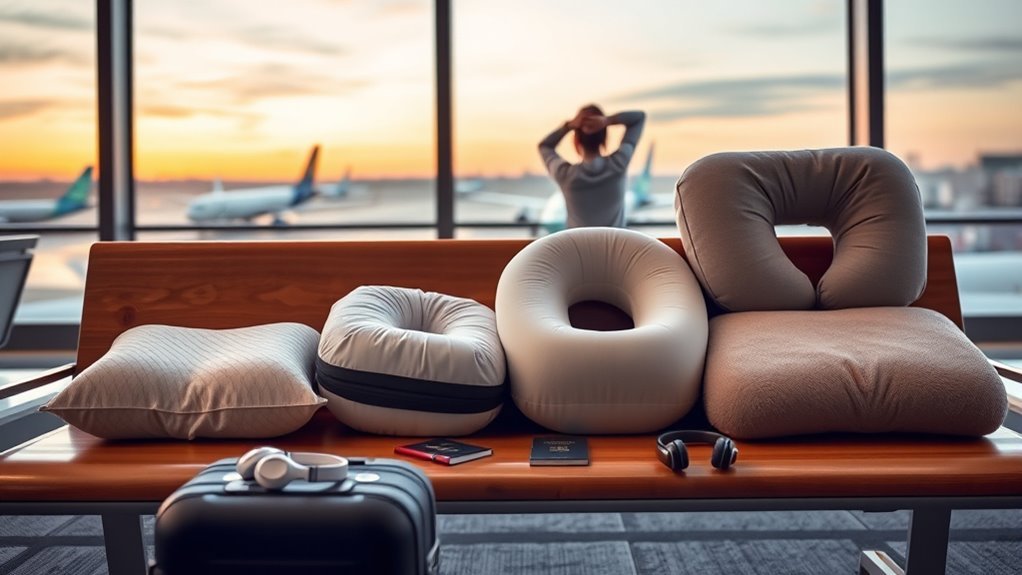
These five designs address different causes of discomfort during seated rest. Some brace one side of your head, while others support the chin or attach to a seat. The best fit depends on your neck size, seat shape, and usual sleep position.
1. Trtl Travel Pillow
Bottom line: The Trtl Travel Pillow suits travelers who want firm side support without carrying a bulky U-shaped cushion. Its internal support holds the head from one side while the fleece wraps around the neck.
- Support: Internal brace, designed to limit sideways head drop.
- Material: Fleece wrap with a removable support insert.
- Fit: Adjustable wrap, so you can change the tension.
- Care: Remove the insert before machine washing the fabric.
- Packing: Compact scarf-style shape, easier to stow than bulky foam.
Unlike a standard neck cushion, the Trtl uses a firm insert as the main support. Place it where your head naturally leans, then wrap the fabric until it feels secure without pressing on your throat. You can change its position as you settle into your seat.
The trade-off is the one-sided design. If you move from side to side throughout a flight, you may need to reposition it. The fleece may also feel warm if you tend to overheat.
- Structured support rather than foam alone
- Adjustable wrap
- Compact shape for packing
- Washable fabric after removing the insert
- Needs repositioning when you change leaning sides
- Fleece may feel warm
- Firm insert will not suit everyone
2. Travelrest Nest Ultimate Memory Foam Travel Pillow
Bottom line: The Travelrest Nest Ultimate Memory Foam Travel Pillow is a traditional foam choice for travelers who dislike a thick cushion behind their head. Its flat, non-slip back is made to rest against a seat.
- Support: Contoured sides with a flat back.
- Material: Thermo-sensitive memory foam that follows your neck shape.
- Fit: Shaped neck opening for seated rest.
- Care: Removable, hand-washable cover.
- Packing: Included pouch compresses it to about a quarter size.
The Nest combines raised walls with a less bulky rear profile. That matters when an airplane headrest already pushes your head forward. Its non-slip backing also helps the cushion stay against the seat as you shift.
The memory foam feels different from a rigid brace. It gives contouring support, but it still takes up space around your neck. Its cover needs hand washing, and the manufacturer advises against keeping the pillow compressed in its pouch during long-term storage.
- Flat back for use against a seat
- Contoured memory foam
- Non-slip backing
- Compression pouch included
- Cover requires hand washing
- Bulkier around the neck than a wrap-style pillow
- Not designed for permanent compressed storage
3. Cabeau Evolution S3 Neck Pillow
Bottom line: The Cabeau Evolution S3 Neck Pillow combines raised memory foam sides with a flat back and adjustable seat straps. Choose it if you like a familiar U-shaped pillow but want extra ways to keep it in place.
- Support: Raised sides and a slim, flat back.
- Material: Memory foam for contoured cushioning.
- Fit: Adjustable front clasp and seat-strap system.
- Care: Removable, washable cover.
- Packing: Included case compresses it to about one-third size.
The raised sides help support your head when you lean left or right. The flat rear section reduces the extra bulk between your neck and the seat, while the front clasp lets you adjust how snugly the pillow fits.
Its distinguishing feature is the seat-strap system, which secures the pillow to a suitable headrest. Check your seat before relying on it: seat shapes and rules differ. You can still use the pillow without attaching the straps.
- Raised side supports
- Flat back for seated use
- Adjustable front clasp and seat straps
- Removable washable cover
- Compression case included
- Seat straps may not suit every seat
- Foam takes more packing space than a flat wrap
- Strap setup adds a step before resting
4. Ostrichpillow Go Neck Pillow
Bottom line: The Ostrichpillow Go Neck Pillow suits travelers who want an adjustable foam wrap with different support heights. Rotate its asymmetrical shape to find a comfortable position for your jaw and neck.
- Support: Asymmetrical wrap with different side heights.
- Material: BASF memory foam core.
- Fit: Adjustable hook-and-loop closure.
- Care: Machine-washable removable cover; spot-clean foam core.
- Packing: Compressible design with a travel bag.
The Go offers more positioning choices than a fixed-height cushion. Turn the higher section toward the side where you need more support, or adjust the wrap to support your chin during upright rest.
Its premium materials and washable outer cover are appealing for frequent use. The tall sides can, however, interfere with large over-ear headphones. Its memory foam core must not go in the washing machine.
- Different support heights in one pillow
- Adjustable closure
- Memory foam core
- Removable machine-washable cover
- Travel bag included
- Premium price tier
- High sides can interfere with bulky headphones
- Foam core is spot-clean only
5. BCOZZY Kids Travel Neck Pillow
Bottom line: The BCOZZY Kids Travel Neck Pillow is the child-size option in this list. Its overlapping arms support the chin, which makes it useful for a child whose head tends to nod forward while seated.
- Support: Overlapping arms for neck and chin support.
- Material: Soft, cushioned construction.
- Fit: Medium size designed for children ages 8–12.
- Care: Entire pillow is machine washable.
- Packing: Carry bag and attachment loop included.
Unlike a U-shaped pillow with an open front, the BCOZZY allows its ends to overlap beneath the chin. Adjust the overlap so the pillow supports the child without pressing tightly against the neck.
Its size is the main limitation: this linked version is intended for children, not most adults. In a vehicle, do not add it if it changes the fit or position of a child restraint, harness, or seat belt. Follow the child-seat manufacturer’s instructions.
- Child-specific size
- Adjustable overlapping chin support
- Entire pillow is machine washable
- Carry bag and attachment loop included
- Too small for most adults
- Softer support than a rigid brace
- Must not interfere with a child restraint or seat belt
Trtl Travel Pillow vs Cabeau Evolution S3 Neck Pillow: Which Should You Get?
The main difference is how each pillow supports your head. Trtl uses a structured support on one side. Cabeau uses foam around the neck and adds straps that can anchor it to a suitable seat.
- Support style: Choose Trtl for a firm side brace; choose Cabeau for cushioned side walls.
- Seat attachment: Cabeau has a seat-strap system; Trtl wraps around your neck instead.
- Packing: Trtl has a compact scarf-like shape; Cabeau compresses into a case.
- Cleaning: Trtl’s fabric can be washed after removing its insert; Cabeau has a removable washable cover.
Which Travel Pillow Should You Buy?
- Firm support where you lean: Get the Trtl Travel Pillow.
- A flat back against the headrest: Get the Travelrest Nest Ultimate Memory Foam Travel Pillow.
- Foam support with seat straps: Get the Cabeau Evolution S3 Neck Pillow.
- Different support heights: Get the Ostrichpillow Go Neck Pillow.
- A pillow sized for an older child: Get the BCOZZY Kids Travel Neck Pillow, provided it fits safely.
How We Chose
We compared the pillows’ stated features and intended uses, rather than claiming they will prevent or treat neck pain. We did not conduct independent clinical or hands-on testing.
- Support design: Whether each pillow addresses side leaning, forward nodding, or both.
- Fit: Adjustable closures, seat compatibility, and size options.
- Materials and care: Manufacturer descriptions of foam, fabric, and washing instructions.
- Packing: Shape, included carry bags, and stated compression features.
- Product checks: Model identification, manufacturer information, and relevant safety notices.
Travel Pillow Tips for Better Alignment
A travel pillow should support your head without forcing your chin toward your chest or pushing the back of your head too far forward. Put it on while sitting in the seat where you plan to rest, because a pillow can feel different against a real headrest than it does at home.
- Adjust the pillow until your neck feels supported without tight pressure.
- Check whether your head still drops forward when you relax.
- Keep the seat belt correctly positioned and visible when required.
- Change position and take movement breaks when possible.
- Follow the manufacturer’s cleaning instructions, especially for foam cores and support inserts.
For a long flight, try the pillow before departure. If it creates pain, numbness, or pressure around your throat or jaw, adjust it or stop using it.
Which Travel Pillow Features Ease Neck Pain?
Look first for a shape that limits uncomfortable head movement. Raised sides or a structured brace can support a sideways lean. A chin-supporting design may help if your head tends to nod forward. A flatter back may feel better against a seat that already holds your head forward.
Adjustability is useful because neck size and resting posture vary. Straps, clasps, or wrap closures should feel secure without being tight. Breathable covers matter if you run warm, while removable covers make regular cleaning easier.
Memory foam can contour around your neck, but it is not automatically the right choice for everyone. Match the pillow’s height and firmness to your seat and preferred resting position.
How to Choose the Right Travel Pillow
Choose a travel pillow that matches your neck support needs, packing habits, and comfort preferences.
Support and Head Position
Notice where your head goes when you start to doze. If it falls sideways, consider a raised side or a brace such as the Trtl Travel Pillow. If your chin drops, a pillow with front support may be more useful. A high wall is not helpful if it forces your neck into an uncomfortable angle.
Seat Shape and Flat Backs
Try to avoid extra bulk behind your head when the seat already has a thick headrest. The Travelrest Nest Ultimate Memory Foam Travel Pillow has a flat back and non-slip backing. The Cabeau Evolution S3 Neck Pillow adds straps for suitable seats.
Adjustability and Size
A pillow should fit your neck rather than require you to hold it in place. Check closures and size guidance before buying. Adult and child sizes are not interchangeable; the linked BCOZZY Kids Travel Neck Pillow is intended for children ages 8–12.
Packing and Cleaning
Choose a pillow you can carry and maintain. Compression pouches save room, while a scarf-like shape can be easier to fit beside other travel gear. Check whether the whole pillow is washable or only its cover. Memory foam cores usually need different care from fabric sleeves.
Mistakes to Avoid When Buying Travel Pillows
- Choosing softness alone: Check how the pillow supports your head when you fully relax.
- Ignoring the headrest: A thick rear cushion may push your head forward.
- Assuming one size fits everyone: Check neck fit and the model’s size guidance.
- Overtightening closures: Support should not create throat or jaw pressure.
- Washing the foam or insert incorrectly: Follow the care label for each component.
Best Travel Pillow Types by Sleep Position
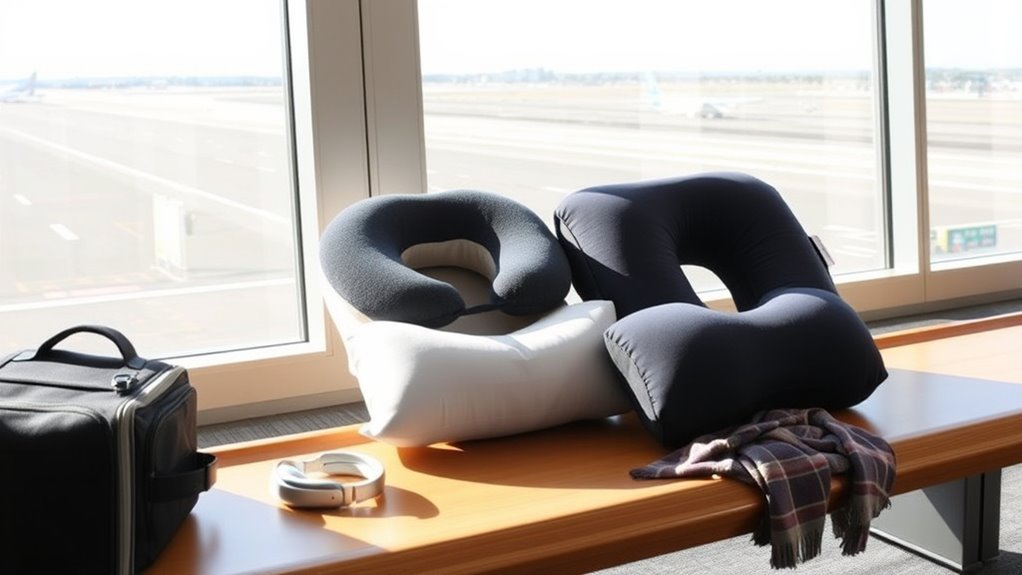
Your usual resting position is a practical starting point, but the seat matters too. Try the pillow while sitting upright and check what happens when your head relaxes.
- Back sleepers: Look for a flat rear profile and enough side support to avoid tilting. The Travelrest Nest and Cabeau Evolution S3 offer this shape.
- Side-leaning sleepers: A brace-style design such as the Trtl can support the side where your head rests.
- People who nod forward: Consider adjustable chin support. The BCOZZY Kids version is sized for children, while the Ostrichpillow Go offers an adjustable adult wrap.
- Hot sleepers: Consider cover fabric and how much material sits against your neck.
- People who change positions: Look at adjustable or asymmetrical designs, such as the Ostrichpillow Go.
Firmness should feel supportive, not restrictive. If you cannot settle into a comfortable position, a different shape may suit you better.
Best Materials for Travel Neck Support
Travel pillow materials affect feel, packing, and cleaning. Contouring foam and a firm internal brace work differently, so start with the support shape rather than choosing by fabric alone.
| Material | Practical features |
|---|---|
| Memory foam | Contours around the neck; usually needs a separately washed cover |
| Latex | Responsive, resilient cushioning; check for material sensitivities |
| Gel-infused foam | Designed to manage heat, though the complete pillow design also matters |
| Microfiber or polyester | Common lightweight fabrics for soft covers and fills |
| Moisture-wicking cover | Can help manage moisture during long periods of use |
For repeated trips, look at whether the cover can be removed and how the core must be cleaned. Do not assume that a washable cover means the whole pillow can go in the machine.
FAQs
Can Travel Pillows Help With Chronic Neck Conditions?
A travel pillow may make seated rest more comfortable by supporting your head, but it does not treat the underlying cause of chronic neck pain. Choose a shape that feels neutral rather than one that forces your head into position. If pain persists or comes with tingling, weakness, or other new symptoms, seek medical advice.
How Often Should I Replace a Travel Neck Pillow?
Replace your travel neck pillow when it no longer holds its shape or provides the support you need. Flattened foam, a damaged brace, failing closures, or a cover you cannot clean properly are practical reasons to replace it. There is no single replacement schedule that fits every material and frequency of use.
Are Inflatable Pillows Good for Long Flights?
Inflatable pillows can work for long flights if their shape supports your usual resting position. They pack down small and let you adjust firmness by changing the air level. Avoid overinflating one until it feels hard against your neck. Test it in a chair before travel, then adjust it again once you are seated.
Do Travel Pillows Fit Children and Smaller Necks?
Some do, but adult pillows may be too tall or loose for a smaller neck. Choose a model with suitable sizing and a fit that does not press against the throat. The BCOZZY Kids Travel Neck Pillow linked in this guide is a medium-size version intended for ages 8–12. Follow child-restraint instructions when traveling by car.
Can I Use a Travel Pillow Outside Transportation?
Yes. A travel pillow may also provide seated support while reading, working at a desk, or resting on a couch. Match its shape to the chair and your posture, and avoid relying on it to hold your neck in one position for hours. Stand up and change position when you can.
Is Memory Foam Better Than a Brace-Style Travel Pillow?
Neither material is automatically better for every person. Memory foam surrounds and contours to your neck, while a brace-style pillow provides more defined support at one point. Choose according to where your head tends to fall and how much firmness you tolerate. The Trtl uses a brace; the Travelrest Nest and Cabeau Evolution S3 use memory foam.
How Should a Travel Neck Pillow Fit?
It should support your head without squeezing your throat, pressing painfully on your jaw, or pushing your chin down. Adjust it while seated against your actual headrest. Relax your head briefly and notice whether it stays comfortable. If you need to keep tightening the pillow or holding it in place, try another shape or size.
Can I Wash a Memory Foam Travel Pillow?
Usually, you should wash only its removable cover unless the manufacturer’s instructions say otherwise. Memory foam cores can be damaged by machine washing or drying. For example, the Ostrichpillow Go has a washable outer cover, but its foam core is spot-clean only. Always check the care label before cleaning either component.
Final Verdict
The best travel pillow for neck pain is one that fits your body and supports the direction your head naturally moves when you rest upright. The Trtl Travel Pillow offers a distinct combination of firm side support and compact packing, but it will not suit everyone who prefers a soft cushion around the neck.
For memory foam and a seat-strap option, see the Cabeau Evolution S3 Neck Pillow. For an adjustable asymmetrical wrap, consider the Ostrichpillow Go Neck Pillow.

