
Last Updated on September 10, 2026 by Daniel Globe
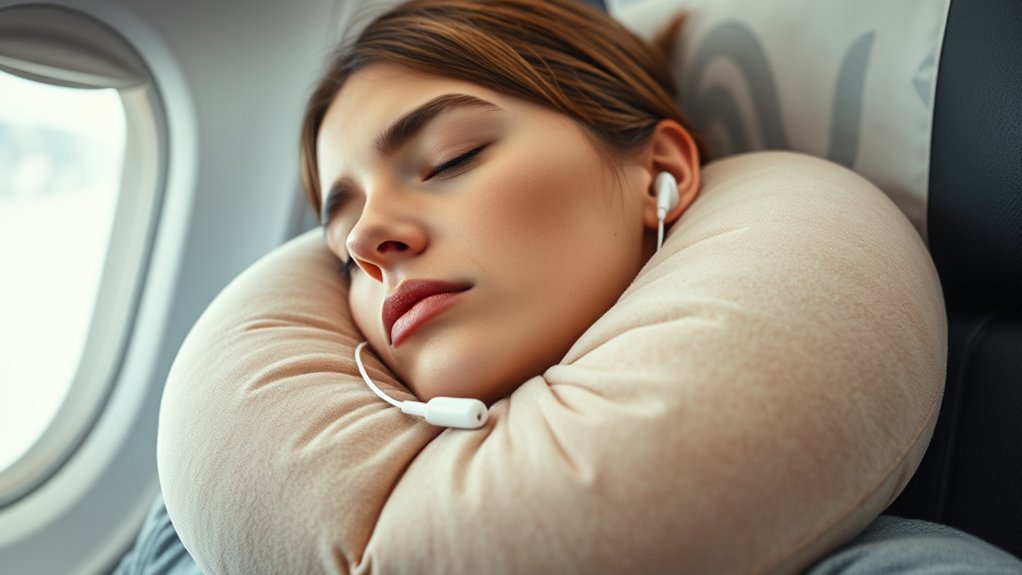
Travel pillows can make earbuds or headphones uncomfortable when the pillow pushes hardware into your ear or forces a headband against your head. The easiest fix is usually to change the pillow position, reduce pressure around the ear, or use audio gear designed for sleeping. A few fit adjustments can often solve the problem without buying anything new.
Quick Answer
A travel pillow can make headphones uncomfortable by pressing earbuds deeper into your ears or pushing bulky earcups and headbands against your head. Start by repositioning the pillow and adjusting your earbud tips. For side sleeping, an ear-cutout pillow, low-profile sleep earbuds, or flat-speaker headband headphones usually creates less pressure.
Key Takeaways
- Standard pillows can press earbuds into the ear or push bulky headphones against your head, especially when you sleep on your side.
- Try repositioning your pillow, changing ear-tip size, or reducing pillow firmness before buying new equipment.
- Ear-cutout pillows, low-profile sleep earbuds, and headband-style sleep headphones can reduce direct pressure around the ear.
- Ordinary wireless earbuds can work for upright travel, but a secure fit does not automatically make them comfortable for side sleeping.
- Keep listening volume low, use a sleep timer when possible, and clean earbuds according to the manufacturer’s instructions.
At a Glance
| Time Required | About 5–10 minutes to test pillow and headphone adjustments |
| Difficulty | Easy |
| Tools Needed | Your existing travel pillow and headphones; optional alternate ear tips |
| Cost | $0 if adjustments work; optional sleep-specific pillows or headphones vary widely in price |
Disclosure: As an Amazon Associate I earn from qualifying purchases. Some links on this page are affiliate links, at no extra cost to you.
How Travel Pillows Cause Headphone Discomfort
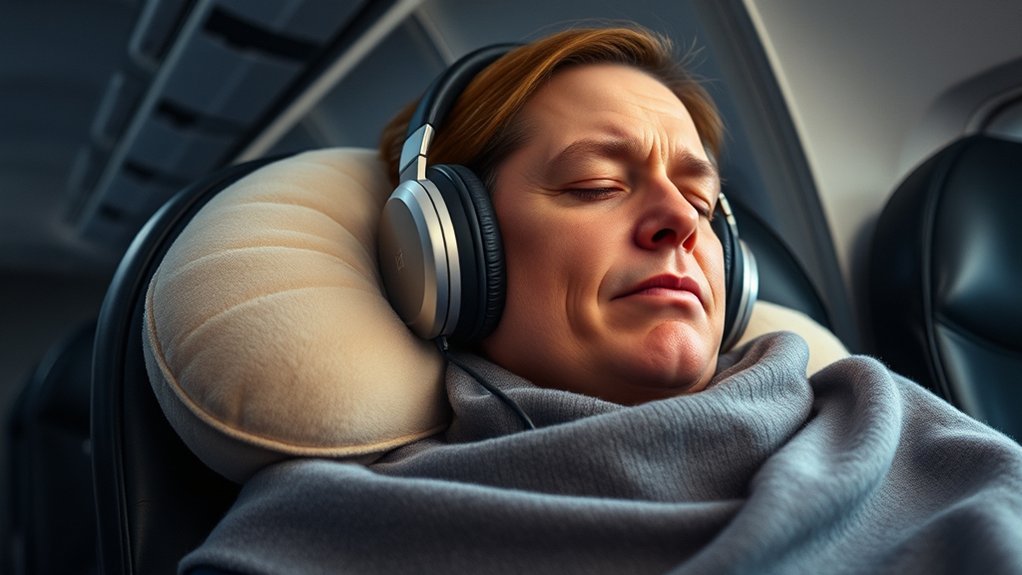
Headphone discomfort usually comes from pressure, not sound. A thick travel pillow can push an earbud farther into the ear canal, press the outer ear against the earbud shell, or force a headphone headband against your skull.
The problem changes with your sleeping position. When sitting upright on a plane, a U-shaped neck pillow may push against large earcups or the lower part of a headband. When you lie on your side, your body weight adds much more pressure between the pillow and whichever ear is facing down.
This is why ordinary earbuds that feel comfortable while walking through an airport may become painful when you lean against a window or try to sleep on your side.
Note: Sleeping with in-ear earbuds for long periods can also contribute to discomfort, trapped moisture and earwax buildup. If you develop persistent pain, swelling, drainage, itching or a noticeable hearing change, stop using the earbuds and seek medical advice rather than trying to force a better fit.
How to Stop Earbuds Hurting With a Travel Pillow
Before replacing your headphones or pillow, run through these steps. Small adjustments often solve the problem.
- Move the pillow away from the ear. Rotate or lower a U-shaped neck pillow so its thickest section supports your neck instead of pressing directly against the earbud.
- Try a different ear-tip size. A tip that is too large can create extra outward pressure. A tip that is too small may force you to push the earbud deeper to keep it secure.
- Rotate the earbud. Many wireless earbuds sit more comfortably when the shell is turned slightly so the highest point does not face the pillow.
- Reduce pillow firmness or pressure. If you use an inflatable pillow, let out a small amount of air. For foam pillows, test a softer contact point or an ear cutout.
- Change the audio device if pressure remains. Low-profile sleep earbuds or flat-speaker headband headphones avoid the large housings found on conventional over-ear models.
Pro Tip: Test your complete pillow-and-headphone setup at home for 15–20 minutes before a long trip. A combination that feels fine for the first minute may reveal pressure points once you stay in one position.
Choosing the Best Travel Pillow for Headphones
When choosing a travel pillow for headphones, focus less on marketing terms and more on where the pillow touches your ears, jaw and neck. The right shape should support your head without pressing your audio gear inward.
Pillow Design Considerations
For long journeys, look for a design that supports your neck while leaving room around your ears. Useful features include:
- Ear cutouts: Remove direct pressure from the ear when you are lying against a pillow.
- Contoured sides: Give the ear and headphone shell more room than a flat, firm surface.
- Adjustable inflation: Lets you soften an inflatable pillow until it supports your neck without pushing hard against your headphones.
- Compressible foam: Can spread pressure more evenly, although very firm foam may still be uncomfortable.
- Stable neck support: Reduces head bobbing, which can repeatedly push earbuds against the seat or window.
If you already use a U-shaped neck pillow, flipping or rotating it can sometimes move the thickest section away from your headphones. Make sure the new position still supports your neck rather than forcing your head forward.
Earbud Compatibility Features
A pillow and earbud combination works best when the earbud sits mostly inside the natural outline of your outer ear. Large stems, thick shells or protruding controls are more likely to contact the pillow.
- Look for enough open space around the ear.
- Choose the smallest ear tip that still creates a secure, comfortable seal.
- Avoid forcing an earbud deeper simply to keep it from falling out.
- Check whether the pillow accidentally activates touch controls.
- For true side sleeping, prioritize low-profile equipment designed for overnight wear.
Supportive Materials Selection
No single pillow material is automatically best. What matters is the combination of firmness, shape, heat retention and portability.
| Material Type | Benefits | Considerations |
|---|---|---|
| Memory Foam | Contours around the head and can spread pressure | May retain heat and can still feel hard if very dense |
| Inflatable | Very portable and firmness can be adjusted | Too much air can make the surface rigid |
| Wrap-around | Provides broad neck support while sitting upright | Raised sides may interfere with large earcups |
| Ear Cutout Design | Removes direct pillow pressure from the ear | Best for lying down; not every design works well as an upright neck pillow |
Headphone Options for Side Sleepers Using Travel Pillows
Side sleepers need to pay more attention to physical size than ordinary travelers. A headphone can have excellent sound and noise cancellation yet still be uncomfortable once a pillow presses against it.
For side sleeping, the most important headphone specification may be the one that rarely appears on a spec sheet: how far the device protrudes from your ear.
- Soundcore Sleep A30: A current sleep-focused model designed for side sleepers. Soundcore lists each earbud at about 3 grams and combines active noise cancellation, passive isolation and adaptive masking.
- Ozlo Sleepbuds: Low-profile sleep earbuds from a company founded by former Bose engineers. They use passive sealing and noise masking rather than conventional active noise cancellation and are designed for overnight and side-sleeper use.
- Apple AirPods Pro 3: Current compact wireless earbuds with a secure in-ear fit and strong noise control. They can be convenient while traveling, but Apple does not market them as sleep earbuds, so side-sleep comfort depends heavily on your ear shape and pillow.
- JBL Tune 125TWS: A legacy true-wireless option that may still work for travelers who already own a pair. JBL currently lists this model as sold out, and it was not designed specifically for side sleeping.
- SleepPhones Wireless: A headband-style alternative with thin speakers positioned over the ears rather than earbuds sitting inside the ear canal. This can reduce in-ear pressure for side sleepers.
Legacy Bose Note: Bose discontinued Sleepbuds II in 2023 and ended Bose Sleep app support and downloads on July 21, 2025. Bose says an already-installed app may continue to work, but future compatibility is not guaranteed. Phone-Free Mode can operate without an active phone connection once it has been configured in the app.
Best Setup by Sleeping Position
| Position | Most Comfortable Approach | What to Avoid |
|---|---|---|
| Upright in a plane, train or bus | Compact earbuds plus a neck pillow that supports the jaw and neck without covering the ears | Raised pillow sides pushing bulky earcups inward |
| Back sleeping | Low-profile earbuds or a flat-speaker headband | Thick headphone bands directly under the back of the head |
| Side sleeping | Ear-cutout pillow, sleep earbuds or thin headband speakers | Bulky over-ear headphones pinned between your head and pillow |
Adjusting Travel Pillows for Better Headphone Comfort
Position your travel pillow so it carries the weight of your neck or head without concentrating that weight on your ears. With an inflatable model, experiment with slightly less air. With a foam pillow, rotate it until a thinner section sits near your headphone.
For side sleeping, an ear cutout can let the ear sit in open space rather than between the mattress-facing pillow surface and the headphone shell. A second small cushion can sometimes support your jaw or forehead while leaving the ear free, but avoid stacking pillows so high that your neck bends sharply.
If you use earbuds, check the fit in both ears independently. Many people need different tip sizes from left to right. Soundcore also advises Sleep A30 users who feel pressure to check the earbud orientation, experiment with ear tips and consider a softer pillow.
Useful Accessories for a More Comfortable Trip
You do not need a bag full of sleep gadgets. Focus on the few items that solve a specific problem:
- A neck pillow that supports your head without covering your ears
- Low-profile earbuds for compact travel
- Sleep-specific earbuds if you regularly sleep on your side
- A flat-speaker headband if in-ear pressure bothers you
- An ear-cutout pillow for hotel or bed use
- A protective headphone or earbud case
- Cleaning supplies recommended by your device manufacturer
On long flights, also keep your charging case accessible rather than buried in checked luggage or an overhead bag. That makes it easier to stop listening and store the earbuds when your ears need a break.
Caring for Your Ears While Using Headphones
Comfort is only part of the equation. Listening volume, wear time and hygiene also matter when headphones stay on for hours.
Keep the Listening Volume Low
The World Health Organization recommends keeping personal audio devices at no more than about 60% of maximum volume. When your device can show actual sound exposure, WHO advises staying below an average of about 80 dB.
This matters during sleep because you may continue listening much longer than intended after you drift off. A sleep timer can shut down music, podcasts or white noise automatically.
Warning: Do not turn the volume up simply to overpower aircraft, train or traffic noise. Long exposure to loud audio can damage hearing. Strong noise isolation can also make alarms, announcements or emergency sounds harder to hear, so use it with situational awareness.
Proper Earbud Hygiene
There is no single cleaning liquid that is correct for every earbud. Follow the manufacturer instructions for your exact model.
- Remove detachable ear tips when the instructions allow it.
- Clear visible wax and debris regularly.
- Keep moisture away from charging contacts and openings unless the manufacturer specifically permits a cleaning method.
- Let all components dry completely before putting them back in the charging case.
- Replace damaged, hardened or badly worn ear tips.
For example, Apple publishes model-specific AirPods cleaning instructions, while Soundcore recommends a lightly alcohol-dampened cotton swab for specific Sleep A30 surfaces. Generic cleaning advice should not replace those instructions.
Comfortable Sleeping Positions
If you are a side sleeper, try keeping the ear with the earbud slightly above the deepest part of the pillow rather than directly underneath your head. An ear-cutout pillow makes this easier.
If that still hurts, switch sides, remove the lower earbud or use a headband-style sleep headphone. Persistent pressure is a sign that the setup does not fit your anatomy; it is not something you should simply tolerate.
Wireless headphones remove cord tangles, but they do not automatically solve pressure. Shape and thickness matter more than the absence of a cable when your ear is pressed against a pillow.
When to Stop Using Earbuds
Take the earbuds out if you develop ongoing ear pain, swelling, drainage, significant itching, ringing that persists after listening, or a sudden change in hearing. Do not keep changing pillow positions to work around those symptoms.
Frequently Asked Questions
Can travel pillows damage my headphones during use?
Normal pillow contact is more likely to cause discomfort than immediate headphone damage. However, repeatedly pinning rigid earcups, hinges or a headband between your head and a hard surface can place extra stress on the hardware. Avoid sleeping directly on bulky over-ear headphones and store them in a protective case when not in use.
Are certain materials better for travel pillows and headphones?
Memory foam can spread pressure well, while inflatable pillows let you change firmness and pack very small. Neither is automatically best. For headphone comfort, pillow shape and the amount of pressure around your ear usually matter more than the filling material alone.
What are the best earbud alternatives for travel?
For sleeping, a flat-speaker headband is a useful alternative because nothing sits inside the ear canal. An ear-cutout pillow may also let you keep using earbuds you already own by removing direct pressure from the ear. For upright travel, compact conventional earbuds are often easier to use than bulky over-ear headphones.
How do I clean my travel pillow without damaging it?
Check the care label first because foam, inflatable inserts and removable covers require different care. Wash a removable cover according to its label, avoid soaking foam unless the manufacturer allows it, and let every component dry completely before packing the pillow away.
Can I use a travel pillow on public transport?
Yes. Travel pillows work on planes, trains and buses as long as they fit your seat space and do not interfere with another passenger. When using headphones at the same time, keep the volume low enough and your awareness high enough to notice important announcements or instructions.
Why do my earbuds hurt only when I lie on my side?
Side sleeping traps the earbud between your ear and the pillow, adding pressure that is not present while you are standing or sitting. Try a smaller or differently shaped ear tip, rotate the earbud, use a softer pillow, or switch to an ear-cutout pillow or sleep-focused headphones.
Is it safe to sleep with earbuds while traveling?
It can be comfortable for some people, but keep the volume low, avoid forcing earbuds deeper into the ear, clean them regularly and consider using a sleep timer. Remove them if they cause persistent pressure or irritation, and remember that strong noise isolation can make alarms and important announcements harder to hear.
Conclusion
A comfortable travel pillow and headphone setup should support your head without putting weight directly on your ears. Start with free adjustments: move the pillow, try another ear-tip size, rotate the earbuds and reduce pillow firmness. If pressure remains, an ear-cutout pillow, sleep-specific earbuds or a flat-speaker headband may be a better fit.
Whatever setup you choose, keep listening volume low and give your ears a break when they feel sore. Good travel sleep should not require putting up with ear pain.
Sources
- World Health Organization — Safe Listening — guidance on headphone volume, listening duration and hearing protection.
- Cleveland Clinic — Is It OK to Sleep With Earbuds In? — medical guidance on ear pressure, moisture, wax, listening volume and overnight earbud use.
- Soundcore Sleep A30 — current manufacturer specifications and side-sleeper design information.
- Bose Support — Sleep App Availability — Sleepbuds II discontinuation, July 21, 2025 app-support end date and Phone-Free Mode guidance.
- Ozlo Sleepbuds — current product information, side-sleeper design and company background.
- Apple Support — How to Clean Your AirPods — model-specific earbud cleaning and drying instructions.

