
Last Updated on September 10, 2026 by Daniel Globe
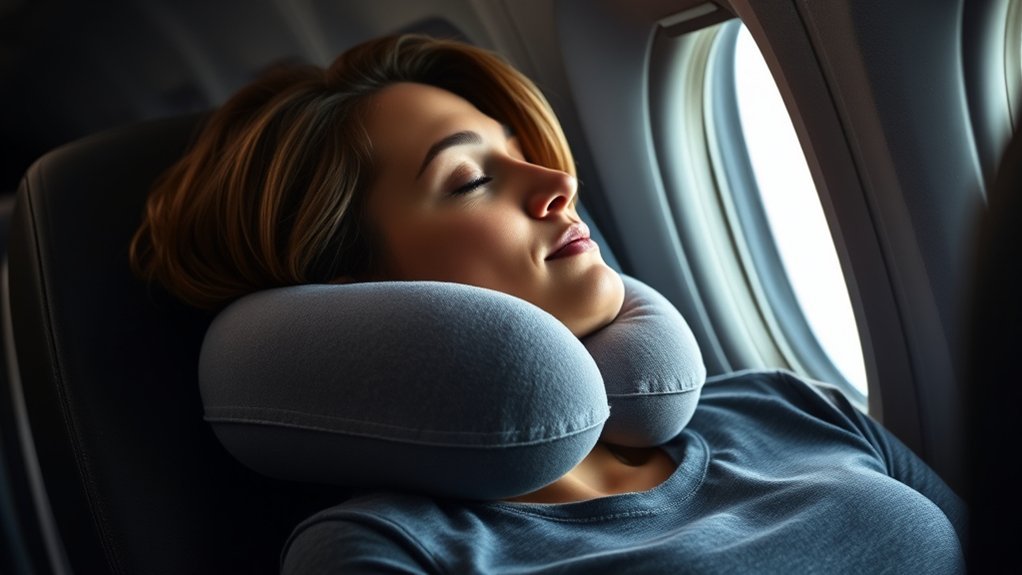
Yes, you can use a travel neck pillow while leaning to one side, but the pillow must support the gap between your shoulder and head without forcing your neck to bend. The best position depends on the pillow’s shape, your shoulder width, the seat, and the direction you lean. A travel pillow is less suitable as your only pillow when you are lying fully on your side in bed.
Quick Answer
You can sleep while leaning sideways with a travel neck pillow if its raised side supports your head without pushing it toward the opposite shoulder. Keep the closure comfortably snug, not tight. When lying fully on your side in bed, use a regular pillow that fills the larger shoulder-to-head gap.
Key Takeaways
- There is no universal rule that the thick part must always sit behind, in front of, or under your neck.
- The supported side should fill the space beside your neck without lifting, twisting, or pushing your head forward.
- High-sided, adjustable, wraparound, or inflatable designs are often easier to adapt for sideways leaning.
- A U-shaped travel pillow usually cannot replace a full-size pillow when you lie on your side in bed.
- Stop using the pillow if it causes pain, throat pressure, numbness, tingling, weakness, or breathing difficulty.
At a Glance
| Time Required | About 10–15 minutes to test and adjust the fit |
| Difficulty | Easy, but the correct setup varies by pillow and seat |
| Tools Needed | Travel neck pillow and, if needed, a thin scarf or small cushion |
| Cost | $0 if you already own the pillow and optional cushion |
Disclosure: As an Amazon Associate I earn from qualifying purchases. Some links on this page are affiliate links, at no extra cost to you.
Common Challenges of Side Sleeping With a Travel Pillow
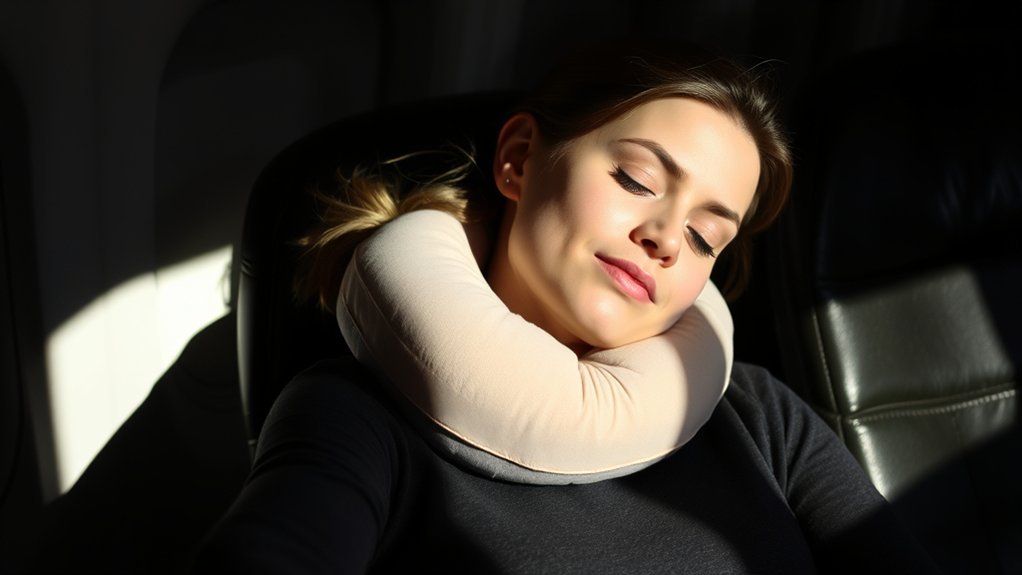
Side sleeping can mean two different things during travel. You may be leaning sideways while seated, such as toward an airplane window, or lying fully on your side in a hotel bed. These positions create different support needs.
When you lean in an upright seat, the pillow mainly limits sideways head drop. When you lie fully on your side, a pillow must fill the larger space between the mattress, shoulder, neck, and head. A standard U-shaped travel pillow is usually too small or uneven to fill that full gap by itself.
Common problems include:
- The pillow is too low: Your ear moves toward your shoulder and the neck bends sideways.
- The pillow is too high: Your head is pushed toward the opposite shoulder.
- The back is too bulky: Your head is pushed forward by the pillow and seatback.
- The pillow shifts: The supportive section moves away from the side where it is needed.
- The closure is too tight: You feel pressure under the jaw or around the throat.
- The seat provides no side surface: You continue leaning until your head drops beyond the pillow’s support.
Research shows that pillow height can influence neck pressure, muscle activity, and cervical alignment. However, the appropriate height varies with body dimensions and position, so there is no single thickness that works for everyone. A 2024 side-sleeper study found that individualized height and neck support affected alignment, although the study included only nine healthy participants.
Note: A travel pillow may make sideways leaning more comfortable, but it cannot make an upright economy seat feel the same as a bed. Seat shape, noise, limited recline, temperature, and personal comfort still affect whether you sleep well.
Essential Features of Travel Neck Pillows for Side Sleepers
Choose a pillow based on how well it controls sideways head movement rather than the material name alone. Useful features include:
- Raised side support: The side you lean toward should be high enough to reduce head drop without lifting your head too far.
- Adjustable height or firmness: Inflatable chambers, removable inserts, or moldable filling let you change the support level.
- A low-profile back: A thinner rear section may prevent the seatback from pushing your head forward.
- Stable attachment: A snap, hook-and-loop closure, drawcord, or seat attachment may limit shifting.
- Breathable contact fabric: Moisture-wicking or ventilated fabric may feel less warm around the neck.
- A washable cover: A removable cover is easier to clean after repeated trips.
- Enough jaw clearance: The pillow should support your head without pressing firmly under your jaw or against your throat.
No material is best for every traveler. Memory foam holds its shape well but can feel warm and bulky. Latex or rubber foam can feel springier. Fiber and microbead pillows are flexible but may compress unevenly. Inflatable pillows pack small and allow firmness adjustment, but overinflation can make them hard and unstable.
A 2021 systematic review of pillow research found that some pillow types improved neck symptoms or satisfaction in selected adults. It did not establish one universally superior material, and pillow design did not consistently improve sleep quality.
How to Position Your Travel Pillow for Optimal Support
Do not rely on a fixed rule such as “always put the thick part behind your neck.” Instead, position the thickest or firmest section where your head is most likely to fall. The goal is to keep the center of your face generally aligned with the center of your chest rather than tilted sharply toward either shoulder.
- Sit in your normal travel posture. Adjust the seat headrest first if it has movable side wings.
- Choose the side you plan to lean toward. A window or raised headrest wing can provide an additional support surface.
- Place the raised section on that side. It should fill the space between your shoulder area and the side of your head.
- Secure the pillow comfortably. The closure should reduce movement without squeezing your throat or jaw.
- Relax for 10–15 minutes. Check for pressure, heat, numbness, jaw discomfort, or increasing neck tension before trying to sleep.
Correct Pillow Orientation
The correct orientation depends on the design and the direction of your head movement. Use the following table as a starting point, then make small adjustments.
| Situation | Starting Orientation | Fit Check |
|---|---|---|
| Leaning toward a window | Place the higher side between your neck and the window-side support | Your head should rest without your ear dropping toward your shoulder |
| Leaning toward a headrest wing | Use the pillow to fill the remaining gap inside the wing | The wing and pillow should support you without pinching your ear |
| Head falls forward | Rotate a front-supporting section under the jaw only if the design allows it | The support must not press on your throat or force your jaw upward |
| Lying on your side in bed | Use a regular pillow under your head; use the travel pillow only as optional extra support | Your head should remain level rather than dropping toward the mattress |
Pro Tip: Ask a companion to look at you from the front, or use your phone’s front camera before departure. If one ear is visibly much closer to its shoulder than the other, adjust the pillow height or orientation.
Secure Snapping Mechanism
A snap or similar closure can help keep a travel neck pillow from sliding, but it should create a comfortably snug fit, not a tight one. You should be able to breathe, swallow, move your jaw, and turn your head slightly without pressure on the front of your neck.
If the pillow has several closure positions, begin with the loosest position that keeps it stable. Tighten it only enough to prevent the supported section from moving away when you relax. If an inflatable pillow feels too rigid, release a small amount of air rather than tightening the closure.
Warning: This guidance is for passengers. Never use a sleep pillow or attempt to sleep while driving. Remove or loosen the pillow immediately if it affects breathing or swallowing or causes throat pressure, dizziness, numbness, tingling, or increasing pain.
Positioning for Neck Alignment
The goal is a comfortable, near-neutral position rather than rigidly holding your neck in one exact angle. Your head should not be pushed sharply forward, backward, or sideways.
| What You Notice | Likely Problem | Adjustment |
|---|---|---|
| Your ear drops toward your shoulder | Side support is too low or soft | Add a thin layer, increase inflation slightly, or use a higher side |
| Your head tilts away from the pillow | Side support is too high or firm | Remove an insert, reduce inflation, or rotate to a lower section |
| Your chin is pushed toward your chest | Rear section is too bulky or the seat is too upright | Move the bulk to the side or use a pillow with a thinner back |
| The pillow slides when you relax | Closure is too loose or the cover is slippery | Use a comfortable closure setting or add a thin fabric layer for grip |
| Your shoulder feels compressed | You are leaning too far or bearing weight directly on the shoulder | Return closer to upright and let the pillow support the head instead |
Tips for Enhancing Comfort While Sleeping on Your Side With a Travel Pillow
- Use the seat’s support first. Adjust the headrest wings before adding the pillow.
- Choose the window side when practical. A window-side surface can reduce how far your head moves, but keep your face away from hard or unclean surfaces.
- Add only a thin layer at a time. A folded scarf can fill a small gap, but a thick extra cushion may overcorrect your neck position.
- Support your arms. Resting your forearms on an armrest, small cushion, or your lap may reduce shoulder tension.
- Keep the pillow dry and breathable. Heat and moisture around the neck can interrupt sleep even when the support height is correct.
- Test it before the trip. Wear the pillow in a chair for 10–15 minutes and try both sides.
- Follow crew instructions. Keep the seat belt visible and fastened as directed, and ensure the pillow does not interfere with safety equipment.
During long journeys, a neck pillow does not replace movement. The CDC advises long-distance travelers to move their legs regularly and, when practical, walk about every one to two hours. People with additional blood-clot risk factors should discuss prevention with a healthcare professional before travel.
Common Travel Pillow Mistakes to Avoid
- Following one orientation rule for every design: Place the support where your head falls rather than assuming the opening must always face one direction.
- Securing the pillow too tightly: Stability should not come from pressure on your throat or jaw.
- Overinflating an inflatable pillow: A very firm pillow may push the head away instead of cushioning it.
- Ignoring the seatback: A thick rear section can push your head forward even when the side height feels correct.
- Leaning without a stable side surface: A pillow may compress and allow continued head drop if there is no window, headrest wing, or structured side support.
- Using a travel pillow as the only bed pillow: When lying fully on your side, use a regular pillow with enough height to support the shoulder-to-head gap.
- Ignoring early discomfort: Do not wait until you wake with severe stiffness before adjusting the pillow.
- Cleaning every pillow the same way: Foam, latex, microbead, fiber, and inflatable designs have different care requirements.
How Proper Usage May Improve Travel Comfort
A well-fitted travel neck pillow may reduce unsupported head movement and make an upright resting position more comfortable. It works best when it supports the direction your head naturally falls without forcing your neck into a fixed or extreme position.
Research on standard sleeping pillows suggests that height and shape can influence waking neck symptoms and cervical loading. However, evidence is mixed, individual responses differ, and improved sleep quality is not guaranteed. A travel pillow should therefore be treated as a comfort aid rather than a treatment for neck pain.
If you regularly wake with neck pain after travel, review the pillow height, rear thickness, closure pressure, seat position, and the side toward which you lean. Persistent pain may have causes that a different pillow cannot correct.
Note: Seek medical advice if neck pain is severe, follows an injury, keeps worsening, or occurs with headache, arm pain, numbness, tingling, or weakness. These symptoms should not be managed only by changing a pillow.
Frequently Asked Questions
Can travel neck pillows be used for back sleeping?
Yes. When you are seated upright, a travel neck pillow may support the sides or back of your head and reduce sudden head drop. Choose a design that does not push your head forward. When lying flat in bed, a regular pillow is generally better suited to supporting the full head and neck.
What material is best for a travel neck pillow?
There is no best material for everyone. Memory foam provides structured support but can feel warm. Inflatable pillows are compact and adjustable but may feel hard when overinflated. Fiber and microbead pillows are flexible but may flatten. Choose based on fit, temperature, packability, washability, and how well the pillow controls head movement.
How do I clean my travel neck pillow?
Follow the care label supplied with the pillow. Wash a removable cover separately when permitted. Do not soak memory foam, latex foam, or an inflatable valve assembly unless the manufacturer specifically allows it. Spot-clean the inner pillow only when its instructions recommend that method, and let every part dry completely before storage.
Are there travel pillows designed for side sleepers?
Some travel pillows use raised side panels, internal supports, adjustable inserts, wraparound sections, or inflatable chambers to provide more lateral support. The label alone does not guarantee a good fit. Test whether the supported side fills the gap beside your neck without tilting your head too far.
Can I use a travel pillow on an airplane seat?
Yes. Adjust the seat headrest first, place the pillow where your head normally falls, and keep the closure comfortably snug. The pillow should not cover your face, interfere with your seat belt, block safety equipment, or prevent you from following crew instructions.
Can I use a U-shaped travel pillow while lying on my side in bed?
You can use it as supplemental support, but it usually should not replace a regular bed pillow. A side sleeper needs enough height to fill the space created by the shoulder. Use a normal pillow under your head and add the travel pillow only if it improves support without twisting your neck or pressing on your throat.
Why does my neck still hurt after using a travel pillow?
The pillow may be too high, too low, too firm, too loose, or too bulky behind your head. Your seat angle or leaning direction may also be contributing. Stop using the pillow if symptoms increase. Seek medical advice for persistent pain or pain accompanied by numbness, tingling, weakness, headache, or symptoms following an injury.
Sources
- The Individualized Optimal Pillow Height and Neck Support Design for Side Sleepers — supports the discussion of body dimensions, pillow height, neck support, and alignment.
- Systematic Review and Meta-Analysis of Pillow Designs — supports the balanced discussion of neck symptoms, pillow satisfaction, material differences, and uncertain sleep-quality benefits.
- CDC: Understanding Your Risk for Blood Clots With Travel — supports advice to move the legs and take walking breaks during long-distance travel.
- Mayo Clinic: Neck Pain and When to See a Doctor — supports the warning about severe pain, injury, numbness, tingling, and weakness.
Conclusion
You can sleep while leaning sideways with a travel neck pillow, provided the pillow supports the side toward which your head falls without forcing your neck out of alignment. Match the support height to your body and seat, keep any closure comfortably snug, and test the setup before a long trip.
When you are lying fully on your side in bed, use a regular pillow to fill the shoulder-to-head gap and treat the travel pillow only as optional extra support. A good setup may improve comfort, but it cannot guarantee restful sleep or prevent neck pain. Adjust or remove the pillow whenever it causes pressure, stiffness, numbness, or other symptoms.
