
Last Updated on September 10, 2026 by Daniel Globe
Getting the fit of your travel pillow right can be the difference between arriving rested and arriving with a stiff, aching neck. A properly fitted pillow cradles your neck snugly, leaves minimal gap between the pillow and your shoulders, and keeps your head aligned with your spine when you are seated. If you are straining, tilting, or constantly readjusting during flights or road trips, the fit is off — and below you will find exactly how to test, position, measure, and correct it for optimal travel comfort.
Quick Answer
A travel pillow fits properly when it cradles your neck snugly, keeps your head aligned with your spine while seated, and leaves little to no gap between the pillow and your shoulders. If you need to constantly adjust it, experience chin drop, or feel pressure points, the size, shape, or firmness is wrong for your neck.
Key Takeaways
- A correct fit maintains neutral spinal alignment and fills the empty space between your neck and the seat.
- Forward head tilt severely increases cervical spinal load, making poor pillow fit a primary driver of post-flight neck strain.
- Side sleepers require thicker, firmer support than back sleepers to bridge the shoulder-to-neck gap.
- Airplane seat headrests often push thick pillows forward; adjusting headrest wings or reversing U-shaped pillows resolves this issue.
- Inflatable pillows expand under cabin pressure and require slight deflation for proper comfort during flight.
At a Glance
| Time Required | 2–3 minutes to test and adjust |
| Difficulty | Easy |
| Tools Needed | Soft measuring tape (or string + ruler), travel pillow |
| Primary Goal | Neutral cervical spine alignment while seated upright |

Disclosure: As an Amazon Associate I earn from qualifying purchases. Some links on this page are affiliate links, at no extra cost to you.
Common Neck Problems From Poor Travel Pillow Fit
When you use a travel pillow that does not fit properly, you are likely to experience a range of neck problems that can spoil your journey. A poorly fitting pillow leads directly to acute neck strain — a widely cited passenger survey on in-flight comfort conducted by Talker Research found that roughly 69% of air travelers develop neck pain after a flight, whether or not they slept.
If the pillow’s sizing or density is off, your head will tilt unnaturally forward or sideways, placing heavy pressure down on your cervical spine. Biomechanical posture research consistently estimates that each inch your head shifts forward adds significant extra load on your neck muscles and spinal discs, a concept detailed in clinical documentation on forward head posture and cervical spine strain.
“Every inch your head shifts forward in a seated position adds roughly 10 extra pounds of load on your neck muscles and cervical spine.”
This structural misalignment forces neck muscles to work overtime throughout a flight or road trip, resulting in painful muscle spasms, tension headaches, and stiffness upon arrival. If you have existing cervical issues, an ill-fitting pillow compounds stress on spinal nerve roots, turning minor tightness into prolonged suffering.
Warning: If you have a diagnosed cervical spine condition, herniated disc, or chronic neck pain, consult a physical therapist or medical doctor about specialized travel neck support before relying on standard off-the-shelf pillows.
How to Position Your Travel Pillow for Comfort
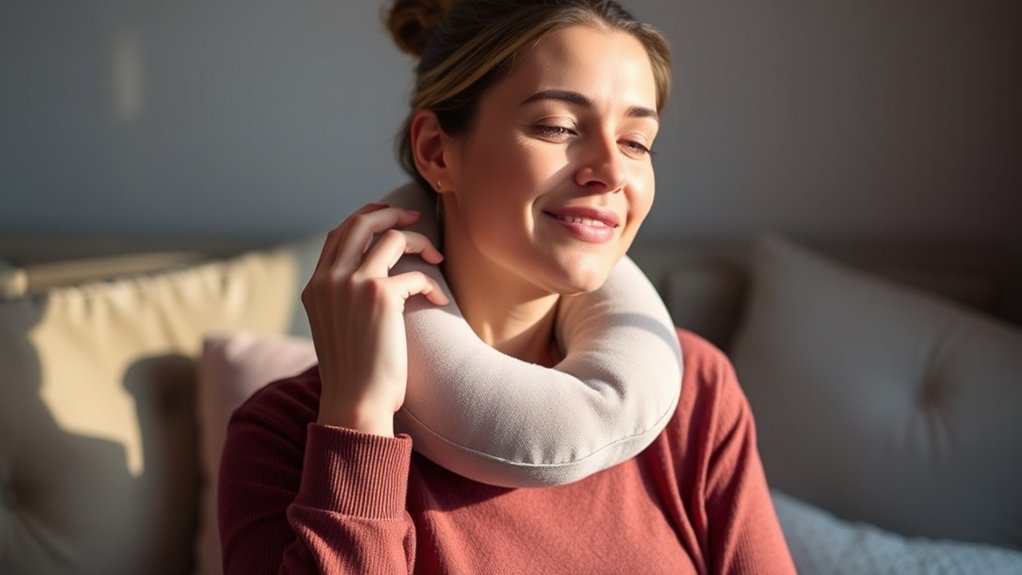
To maximize comfort during your journey, positioning your travel pillow correctly according to your body mechanics is essential. Start by ensuring it cradles your neck snugly, leaving minimal space between the cushion and your shoulders for structural support.
Align the rear cushion of the pillow with the base of your skull to maintain a neutral head position and eliminate strain on your cervical spine. For side sleepers, shift or adjust the lateral bulk of the pillow to bridge the gap between your ear and shoulder, keeping your head level with your spine rather than tilted sideways.
If you are using a standard U-shaped pillow, ensure the central indent rests comfortably under your chin or nape without pushing your head forward. Always test positioning while seated upright in your actual travel stance; a properly adjusted pillow allows your shoulder and neck muscles to relax fully.
How to Measure Your Neck for the Right Pillow Size
Before purchasing or adjusting a pillow, measuring your neck circumference ensures you buy the correct size rather than relying on guesswork. Wrap a soft tailor’s tape measure (or a piece of string measured against a standard ruler) around the base of your neck, positioned just above your collarbone, keeping the tape snug but comfortable.
- Small/Medium (12″ – 15″ circumference): Best for slimmer necks, teens, and shorter frames. Standard wide travel pillows will leave gaps and fail to support this neck size.
- Large/Standard (15″ – 18″ circumference): Fits the vast majority of adult travelers comfortably.
- XL/Plus (18″+ circumference): Ideal for broader necks and larger body frames, preventing dangerous throat compression and tightness.
If a standard pillow leaves visible gaps at your shoulders or cannot be secured snugly, sizing up or choosing a model with adjustable closure toggles is far better than forcing an ill-fitting pillow.
U-Shape vs. Wrap/Collar-Style: Which Fits Better?
The two most popular travel pillow shapes provide support through entirely different mechanics, and choosing the right fit depends on your natural sleeping tendencies:
- Classic U-Shape: Cradles both sides of the neck and back of the head. Best for travelers who tend to tilt their head sideways or back. However, traditional U-shaped pillows can push your head forward if the rear cushion is too thick against an airplane headrest.
- Wrap / Collar-Style (e.g., Turtl): Wraps around the neck like a scarf with internal structural ribs or fabric tension to catch the weight of your head. Excellent for side sleepers and forward nodders because it provides 360-degree support with zero rear bulk behind the head.
How Airplane Seat Headrests Impact Pillow Fit
A major cause of travel pillow fit failure occurs when the pillow interacts with an airplane seat. Most modern long-haul aircraft seats feature built-in adjustable headrests with bendable side wings. When you combine a thick memory foam U-pillow with a protruding seat headrest, your head is forced unnaturally forward, causing severe spinal load.
To fix this fit conflict:
- Adjust the Seat Wings First: Bend the airplane seat’s adjustable headrest wings inward to create a cradle for your head before putting on your pillow.
- Reverse Your U-Pillow: Spin your U-shaped pillow around so the thickest part rests under your chin. This supports your head if it nods forward while leaving the back of your neck flat against the seat.
- Lower the Seat Headrest: Adjust the seat’s built-in cushion upward or downward so it meets the top of your skull rather than jamming against your neck cushion.
Identify the Signs of a Properly Fitting Travel Pillow
Checking your pillow fit before departure prevents painful surprises mid-flight. A properly fitted travel pillow exhibits clear physical signs:
- Spinal Neutrality: Your head rests naturally level above your shoulders without tilting forward, backward, or sideways.
- Zero Gap Fill: The space between your lower jaw, neck, and shoulder top is completely supported without gaps.
- No Throat Pressure: The closure straps hold the cushion secure without applying restrictive pressure against your airway or carotid artery.
- Even Weight Distribution: You feel relaxed resting against the pillow without feeling targeted pressure points behind your ears or base of your skull.
Pro Tip: The 30-Second Fit Test: Sit completely upright in a high-backed chair, put on your travel pillow, close your eyes, and relax all neck muscles for 30 seconds. If your head remains level without drifting or falling, the fit is correct. If your head drops or tips, adjust the size, straps, or firmness before your trip.
Material-Specific Fit Adjustments: Memory Foam, Inflatable, and Microbead
The material inside your travel pillow directly changes how you must adjust it for a proper fit:
- Memory Foam: Temperature-sensitive memory foam requires ambient body heat to conform to your neck contours. Allow 2–3 minutes of wear before judging whether the fit is right.
- Inflatable Air Pillows: Air expands in pressurized airplane cabins at cruising altitude. Inflate your pillow to only 75% to 80% capacity on the ground so it reaches ideal firmness once airborne without becoming rock-hard.
- Microbead & Hybrid Pillows: Microbeads shift continuously under pressure. You must manually squish and shift the fill toward the side where your head leans to customize support depth.
Note: Over-inflating an air travel pillow is the single most common cause of neck stiffness. A slightly under-inflated air pillow allows your neck to sink into a supportive pocket rather than bouncing off a rigid air bladder.
How to Adjust Your Travel Pillow for Optimal Support
Achieving ideal support involves fine-tuning your pillow’s positioning and hardware features step-by-step:
- Set the Base Height: Place the rear curve against the base of your skull, making sure your shoulders do not force the pillow upward off your neck.
- Secure Front Straps or Toggles: Tighten front drawstrings or snaps so the lateral sides stay snug against your cheeks and jawline. This prevents side-to-side wobble.
- Position Chin Support: Verify that the frontal edges catch your jawline comfortably if your chin drops forward during sleep.
- Re-check After Reclining: Recline your travel seat slightly (10 to 15 degrees) and re-adjust the tightness, as reclining alters the angle of cervical gravity.
Troubleshooting 4 Common Travel Pillow Fit Failures
If your travel pillow still feels uncomfortable, use this quick troubleshooting guide to fix the failure point:
- Problem 1: Head Pushed Forward Off the Seat
Cause: Rear cushion is too thick for your seat angle.
Fix: Spin the U-pillow around so the thick opening is behind your neck, or switch to a thin-backed wrap style pillow. - Problem 2: Chin Dropping onto Chest
Cause: Insufficient frontal support or loose front toggles.
Fix: Cross or tighten front chin straps, or choose a collar-style pillow with built-in chin support. - Problem 3: Pillow Slipping Down Neck
Cause: Pillow circumference is too large for your neck.
Fix: Size down, or place a thin scarf under the pillow to fill extra circumference space. - Problem 4: Overheating or Throat Compression
Cause: Non-breathable fabric cover or overly tight front clasp.
Fix: Loosen closure toggles by one notch and opt for cooling gel memory foam or breathable mesh covers.
Key Factors for Selecting the Ideal Travel Pillow Size and Shape
Selecting the ideal travel pillow size and shape requires evaluating four core criteria before buying:
- Neck Circumference & Height: Measure your neck and match it against manufacturer sizing guides. Tall, long-necked travelers require higher side bolsters than short-necked travelers.
- Primary Sleeping Stance: Side sleepers require tall, high-density lateral support. Back sleepers need flat rear profiles with moderate side cradles.
- Packability vs. Comfort: Memory foam offers superior contouring but takes up luggage volume. Inflatable pillows collapse down to pocket size, ideal for minimalist backpackers.
- Adjustable Hardware: Look for heavy-duty drawstrings, multi-snap closures, or Velcro straps that let you customize tightness on the fly.
Frequently Asked Questions
Can I use a travel pillow for sleeping at home?
Yes, you can use a travel pillow at home. It provides excellent cervical support while sitting upright in bed, lounging on a recliner, or taking quick mid-day naps where a full-sized sleeping pillow is impractical.
How do I clean my travel pillow?
Most high-quality memory foam and wrap travel pillows feature removable, machine-washable outer covers. Wash the cover on a delicate cycle in cool water and air dry. Never submerge memory foam cores in water; spot-clean memory foam with a damp cloth and mild detergent instead.
What materials are best for travel pillows?
Memory foam and gel-infused foam offer the best ergonomic support and pressure relief by conforming to your individual neck shape. Inflatable pillows are best for space-saving portability, while fleece wrap pillows offer maximum softness and warmth.
Are inflatable travel pillows comfortable?
Inflatable travel pillows are very comfortable if you adjust their firmness correctly. Inflating them to roughly 75% to 80% capacity allows the air bladder to flex and cradle your neck rather than forcing your head to bounce off a rock-hard surface.
How much should I spend on a travel pillow?
Spending $20 to $50 strikes the ideal balance between ergonomic memory foam density, durable machine-washable fabrics, and adjustable hardware features for long-term travel comfort.
What should I do if my travel pillow pushes my head forward?
If your pillow pushes your head forward, turn it 180 degrees so the open or thin side sits behind your neck while the thick cushion supports your chin. Alternatively, switch to a flat-backed travel pillow or wrap-style support designed specifically for high-backed airplane seats.
Conclusion
A travel pillow is far more than a simple accessory — getting the right fit directly impacts your spinal health and journey quality. Rather than settling for stiff necks and restless flights, taking two minutes to measure your neck, selecting a shape tailored to your sleeping stance, and making precise adjustments before takeoff transforms your travel experience. Measure accurately, test your alignment before traveling, adjust for seat mechanics, and enjoy arriving refreshed and pain-free.
Sources
- Spine-Health: Forward Head Posture’s Effect on the Cervical Spine — Validates spinal load multipliers during forward head posture.
- Medical News Today: Forward Head Posture Causes and Exercises — Clinical overview of cervical muscle strain and posture correction.
- Talker Research: Travel Day Pet Peeves Survey — In-flight passenger statistics regarding sleep comfort and post-flight neck pain.
