

Last Updated on July 28, 2026 by Caleb Warren
Sleeping with a travel neck pillow can be safe and comfortable for many people, as it helps support the neck and keep your head aligned with your shoulders. How well it works, however, depends heavily on your sleeping position, the pillow’s shape, and the materials it is made from. Back sleepers usually benefit the most, while side sleepers often find that standard U-shaped support falls short. Below, we break down when travel neck pillows help, potential drawbacks of using them in bed, and how to choose the right support for your neck.
Quick Answer
Yes, travel neck pillows are generally safe to sleep with. They support your neck and reduce muscle strain, especially for back sleepers and upright napping. However, side sleepers may find them less supportive, and low-density foam or cheap inflatable designs can cause your head to tilt awkwardly and strain your spine.
Key Takeaways
- Travel neck pillows are engineered primarily for upright support; their performance in a flat bed varies greatly by sleep posture.
- High-density memory foam and adjustable wrap designs offer far greater cervical support than basic inflatable options.
- Back sleepers benefit most from U-shaped pillows, whereas side sleepers usually require thicker, firmer side contouring.
- Proper head elevation can help keep airways open and reduce mild snoring, but it is not a cure for obstructive sleep apnea.
- Replace travel pillows every 1–3 years, or immediately once the fill material compresses and loses shape.
Disclosure: As an Amazon Associate I earn from qualifying purchases. Some links on this page are affiliate links, at no extra cost to you.
Understanding Travel Neck Pillows: Are They Safe for Sleep?
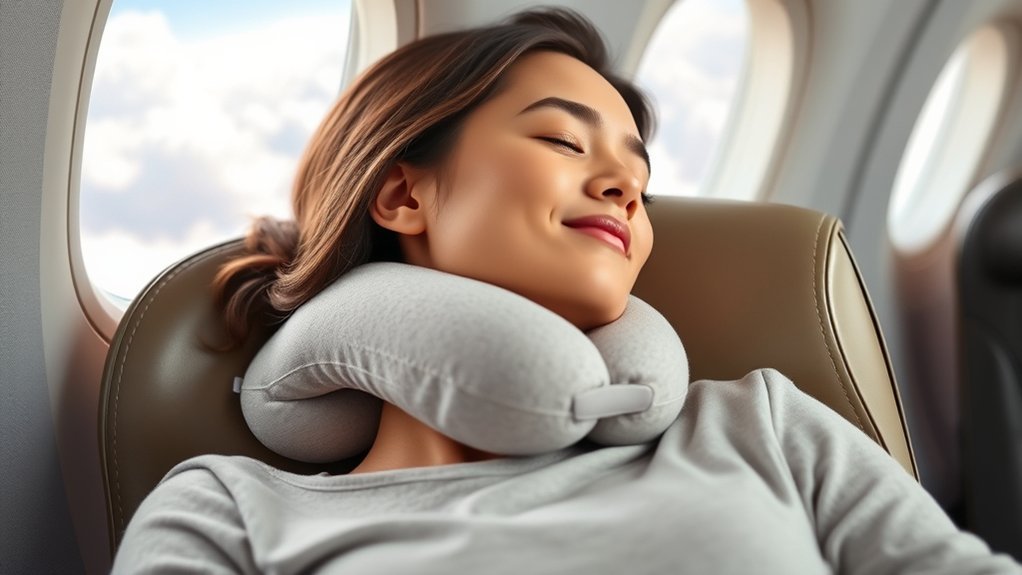
Travel neck pillows are specifically engineered to support your neck during upright seating, promoting proper spinal alignment and reducing muscle discomfort while you sleep in transit. Their effectiveness largely hinges on design features; options made from high-density memory foam or with adjustable filling tend to offer far better ergonomic support than standard inflatable versions. However, individual sleep habits play a significant role—side sleepers may find them less effective compared to back sleepers. While these pillows can enhance sleep posture habits during travel, your muscles may need time to adjust to their firmness and shape.
Travel vs. Traditional Neck Pillows: Key Differences Explained
Travel neck pillows and traditional neck pillows serve distinct anatomical purposes. Travel pillows are typically U-shaped or wrap-around styles prioritizing upright head stability in tight spaces like airplane seats. Traditional bed pillows, on the other hand, are contoured for horizontal sleeping flat on a mattress.
Material differences are also substantial. Travel pillows prioritize portability, using lightweight memory foam, microbeads, or inflatable chambers. Traditional neck pillows utilize denser, heavy memory foam or latex, providing continuous pressure relief across a wider surface area. Understanding these distinctions helps you choose the best option for your specific sleeping needs, whether at home or on the road.
Note: A supportive neck pillow can complement good sleep posture, but it is not a medical device. If you suffer from chronic cervical spine pain, severe snoring, or sleep apnea symptoms, consult a qualified medical specialist.
How to Use a Travel Neck Pillow in Bed
Using a travel neck pillow in bed can ease morning stiffness if you struggle with neck tension. For optimal positioning, place the thickest part of the roll directly under the curve of your neck while keeping your head level with your shoulders. This alignment helps prevent cervical strain and maintains a neutral spine.
If you are a side sleeper, you must adjust the pillow so it fills the entire gap between your ear and shoulder without pushing your neck upward. Back sleepers should ensure the back part of the pillow isn’t too thick, as excess bulk behind the head will force the chin toward the chest and strain upper back muscles.
Pro Tip: Test your travel pillow sitting upright before relying on it flat in bed. If your head tilts noticeably forward or to one side, the pillow does not offer proper support for horizontal sleeping.
Benefits of Sleeping With a Travel Neck Pillow
A well-fitted travel neck pillow provides targeted cervical support and helps prevent sudden head drops during rest, leading to higher quality recovery.
Enhanced Neck Support
By keeping your head in a neutral position, travel neck pillows reduce the workload on your neck muscles during rest. Designed to support cervical spine curvature, these pillows help ease morning stiffness and minor muscle aches. According to National Geographic research on sleep mechanics, maintaining gentle head elevation and proper neck alignment significantly reduces sleep-disordered breathing and improves overall sleep quality.
Improved Sleep Posture
Using a travel neck pillow helps stabilize head placement and discourages excessive twisting during the night. By maintaining the natural curvature of the neck, these pillows reduce stress on joints and ligaments. High-density memory foam and ergonomic wrap models adapt to body heat and pressure, offering consistent contouring whether you are resting on a long flight or sleeping in a recliner at home.
Keeping the head and neck gently elevated and aligned, rather than sharply bent, is one of the clearest links researchers have found between proper pillow support and easier breathing during sleep.
Common Issues With Travel Neck Pillows at Home
Despite their benefits in transit, travel neck pillows can present challenges when used for full-night sleep in bed. Because standard U-shaped pillows feature a thick rear cushion, lying flat on a mattress can push your head forward, causing cervical hyper-flexion and muscular strain. Furthermore, low-density foam or inflatable styles often lack the structural integrity needed to support the head overnight, causing side sleepers’ neck muscles to tire rapidly.
Warning: Inflatable and low-density foam travel pillows flatten quickly and trap sweat and oil. Clean synthetic covers regularly according to care instructions, and replace foam inserts as soon as they lose bounce.
Tips for Finding the Right Travel Pillow
Selecting the right travel pillow requires matching design features to your personal sleep habits. Consider these key parameters before purchasing:
- Material Quality: Opt for high-density memory foam or supportive gel fills that conform to your shape without collapsing under weight.
- Adjustability: Look for models with adjustable clasps, removable fill, or wrap-around straps (such as Trtl-style supports) to customize tightness.
- Ergonomic Contour: Avoid rear cushions that are too thick if you plan to lie back; flatter rear profiles prevent head-forward tilt.
- Cover Fabric: Select breathable, moisture-wicking covers that keep skin cool and are easy to remove and wash.
What Experts Say About Managing Neck Pain While You Sleep
Sleep specialists and orthopedic professionals emphasize spinal alignment as the single most critical factor in preventing nocturnal neck pain. Ideal sleep postures keep the cervical spine in a neutral line continuous with the rest of the back, as highlighted by Sleep Foundation guidelines on pillow posture.
At a Glance
| Back Sleepers | Thinner, contouring pillows that support the neck curve without tilting the chin forward |
| Side Sleepers | Thicker, firmer pillows that bridge the distance between ear and shoulder point |
| Stomach Sleepers | Ultra-thin loft or no pillow to avoid hyper-extending the cervical spine |
| Combination Sleepers | Adjustable-fill pillows that can be adapted for multiple resting positions |
Frequently Asked Questions
Can travel neck pillows cause neck pain if misused?
Yes. If a travel neck pillow does not support your head’s natural alignment, it can leave awkward gaps or force your head forward, leading to muscle strain and stiffness during or after use.
Are there specific materials to avoid in neck pillows?
It is best to avoid low-density foam or flimsy, single-chamber inflatable fillings. These materials compress too quickly and offer little lasting support. High-density memory foam or adjustable fill options maintain their structure much better over time.
How often should I replace my travel neck pillow?
Replace your travel neck pillow every 1 to 3 years, or sooner if it flattens, fails to spring back, or shows visible signs of wear and odor accumulation.
Can children use travel neck pillows safely?
Yes, provided the pillow is specifically sized for a child’s neck dimensions. An oversized adult travel pillow will force a child’s head forward awkwardly, increasing muscle strain.
Do travel neck pillows affect snoring?
They may reduce mild snoring by elevating the head and maintaining an open airway. According to ResMed medical guidance on sleep posture, pillows can serve as a helpful aid but are not a standalone treatment for obstructive sleep apnea.
Conclusion
Sleeping with a travel neck pillow can be a safe, effective way to maintain cervical support when resting upright or taking short naps. However, using standard U-shaped travel pillows flat in bed requires caution to avoid tilting your chin toward your chest. By selecting high-density memory foam or adjustable wrap models and matching pillow thickness to your preferred sleeping position, you can minimize neck pain and enjoy far more restful sleep whether traveling or at home.
Sources
- National Geographic: The wrong pillow can wreck your sleep — Sleep alignment and airway support research
- Sleep Foundation: Best Pillows for Sleep Apnea — Contoured cervical pillow design and airway posture
- ResMed: Can the right pillow help with sleep apnea? — Clinical analysis of sleep positioning and airway management
