
Last Updated on August 2, 2026 by Caleb Warren
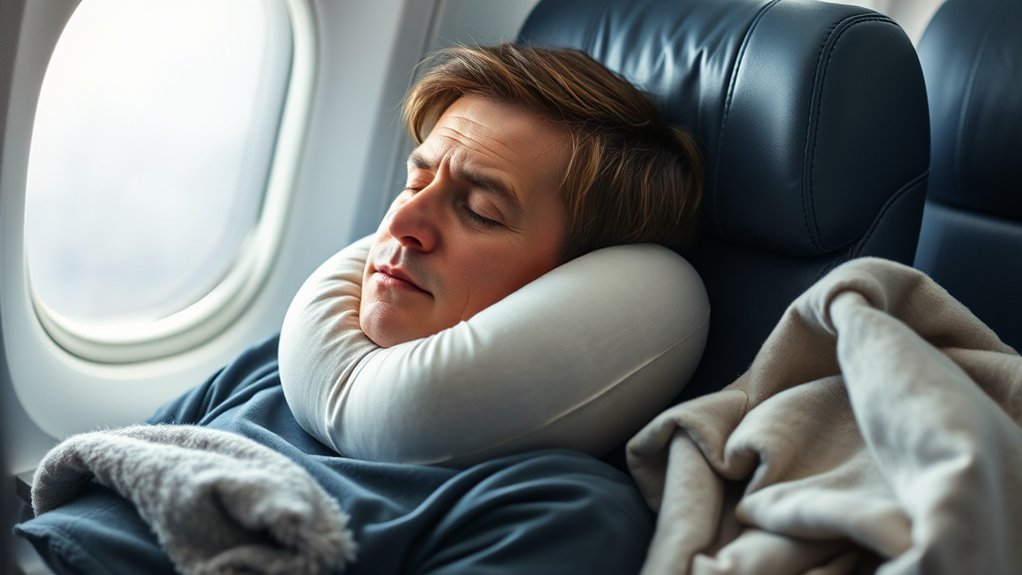
Using a travel pillow incorrectly can turn an enjoyable trip into a painful ordeal by severely disrupting your cervical spinal alignment. Common mistakes—such as choosing an improper pillow height, letting your head slump forward, or relying on overly squishy polyester fill—place unnatural strain on the neck muscles and C1–C7 vertebrae. Correcting these errors with proper ergonomic positioning and pillow selection will keep your neck far more comfortable throughout your journey.
Quick Answer
To reduce travel pillow neck pain, turn traditional U-shaped pillows backward so the thickest cushion rests directly under your chin. This helps prevent forward head drop—a leading cause of cervical strain during upright sleep. Pair this position with a firm memory foam pillow that fills the gap between your neck and seat without pushing your head forward.
Key Takeaways
- Spin the pillow around: Wearing a traditional U-pillow backward (clasp facing rear, thick cushion under chin) helps prevent forward head drop.
- Match pillow height to sleeping style: Aim for ~2–3 inches of rear loft for back sleeping and 4–5 inches of side loft to bridge the gap between neck and shoulder.
- Avoid soft polyester fill: Compressible, overly soft pillows collapse under the weight of your head (~10–12 lbs), leaving your spine unsupported.
- Inflate strategically: Fill inflatable travel pillows to roughly 50–70% capacity so they mold naturally to your neck rather than acting like a rigid ball.
- Pack smart: Choose compressible or inflatable designs if luggage space is tight, and check washability before you buy.
At a Glance: Travel Pillow Setup
| Adjustment Time | 1–2 minutes per flight or car ride |
| Difficulty | Beginner-friendly |
| Key Gear | High-density memory foam or semi-inflated ergonomic pillow |
| Primary Goal | Maintain neutral cervical spine alignment (0° chin tilt) |
Disclosure: As an Amazon Associate I earn from qualifying purchases. Some links on this page are affiliate links, at no extra cost to you.
Top Travel Pillow Mistakes That Cause Neck Pain and How to Avoid Them
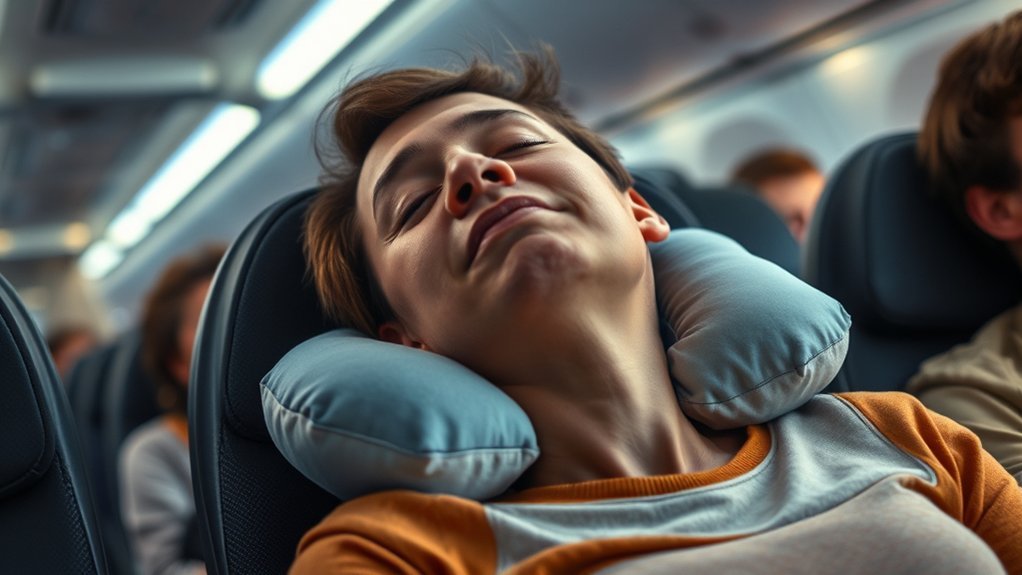
When you’re traveling, selecting and using the right travel pillow is essential for reducing acute neck pain and muscular stiffness. One of the most frequent errors travelers make is choosing a pillow that is either too thick or too thin behind the neck. An overly thick rear cushion forces your neck into unnatural forward flexion, while a cushion that is too thin leaves the head unsustained, causing lateral whipping whenever you fall asleep.
It is vital to select travel pillow designs that hold a neutral position for your head and cervical spine. Incorrect placement further exacerbates discomfort. Verify that the pillow’s ergonomic curve fits snugly against your neck without pushing your head forward from the seat headrest. Avoid overly soft pillows, as they offer inadequate resistance against head weight, leading to muscle fatigue and long-term postural strain. Positioning the main support under your chin prevents excessive forward tilt and can meaningfully improve sleep quality on long trips.
Warning: Allowing your head to drop forward repeatedly during sleep places significant tension on the suboccipital muscles and cervical ligaments. Over a multi-hour flight, this can contribute to tension headaches, nerve irritation, and acute neck spasms.
The Biomechanics of Travel Neck Strain
To understand why travel pillow mistakes cause intense soreness, it helps to review basic cervical spine mechanics. In an upright posture, an adult human head weighs approximately 10 to 12 pounds. Research by spinal surgeon Kenneth Hansraj, published in Surgical Technology International and hosted on the National Center for Biotechnology Information (NCBI/PMC), modeled how tilting the head forward increases the effective force on the cervical spine (C1–C7 vertebrae) — reaching roughly 49 pounds at a 45-degree tilt.
At a 45-degree forward tilt, the modeled gravitational load on the cervical spine increases from roughly 10–12 pounds to about 49 pounds, illustrating how quickly poor posture accelerates neck strain.
When sleeping upright in an airplane or vehicle seat without proper anterior (front) chin support, your neck muscles relax, causing the head to fall forward or bob side-to-side. This loss of alignment forces the levator scapulae and trapezius muscles to overwork in an attempt to stabilize the spine, often resulting in muscular stiffness upon waking.
How to Choose the Right Travel Pillow Height and Material
Determining the ideal height (loft) and material density for a travel pillow requires evaluating your primary sleeping position and seat environment:
- Back Sleepers (Upright Recline): Choose a lower rear profile—around 2 to 3 inches—so the headrest does not shove your skull forward relative to your shoulders.
- Side Sleepers (Leaning Against Seat/Window): Opt for a thicker side profile of approximately 4 to 5 inches to bridge the gap between the tip of your shoulder and your ear.
- Customizable / Adjustable Options: Inflatable or strap-adjusted pillows allow you to tune firmness and height dynamically based on varying airplane seat contours.
- Wrap-Style / Chin-Support Pillows: Designs that cradle the chin directly (rather than the classic U-shape) can offer stronger forward-drop prevention for people who sleep with their mouths open or heads tilted far forward.
Note: Airplane seats are designed with forward-curved headrests. Using a thick, round pillow behind your neck can amplify head push. Look for travel pillows with a flattened back panel to keep your head flat against the seat.
How Soft Pillows Exacerbate Neck Pain
While plush, ultra-soft travel pillows feel cozy to the touch, they often fail to deliver structural support. Soft polyester fiberfill and cheap microbead cushions compress under the weight of your head within minutes, leaving your cervical spine largely unsupported. Sleep ergonomics guidance from the Sleep Foundation emphasizes that supportive, adaptive materials help preserve spinal posture during rest, including while traveling.
| Pillow Fill Material | Support Level | Best Use Case |
|---|---|---|
| Soft Polyester Fiberfill | Low (Collapses easily) | Short trips; cushioning hard armrests |
| High-Density Memory Foam | High (Adaptive contouring) | Long-haul flights; chronic neck pain sufferers |
| Adjustable Air / Inflatable | Moderate to High (Customizable) | Lightweight backpackers; compact packing |
| Microbead Fill | Moderate (Shifts under pressure) | Casual travelers prioritizing squishy comfort |
How to Position Your Travel Pillow for Optimal Neck Support
Proper placement is key to preventing head movement while sleeping in transit. Follow these steps for maximum cervical alignment and stability:
- Position the thickest support under your chin: If using a standard U-pillow, reverse it so the clasp or opening is behind your neck and the main cushion cradles your chin. This holds your head upright and helps prevent forward chin drop.
- Align with the cervical curve: Ensure the pillow’s ergonomic contour fits directly under the center curve of your neck rather than pushing on the back of your skull.
- Sit fully back in your seat: Keep your hips pushed firmly against the seat back. Place a rolled jacket or small lumbar cushion behind your lower back to maintain natural spinal curvature.
- Calibrate inflatable firmness: If using an inflatable pillow, fill it to approximately 50–70% capacity. An over-inflated pillow creates rigid pressure points, whereas a semi-inflated pillow molds more naturally to your anatomy.
Pro Tip: Use the adjustable wings on modern airplane headrests. Bend both sides inward to create a cradle for your head, then secure your travel pillow around your lower neck for more all-around stability.
Tips for Correctly Using a Travel Pillow for Maximum Support
Beyond basic placement, adopting proper ergonomic habits while using your travel pillow maximizes overall comfort and guards against post-flight stiffness:
- Secure the chin strap: Use the pillow’s toggle or velcro strap to keep the sides pulled snug around your neck, preventing the pillow from shifting when you change positions.
- Avoid mobile device neck strain: Do not use a travel pillow while looking down at a phone or tablet in your lap; this creates double flexion strain. Mount your screen at eye level whenever possible.
- Never wear the pillow while walking: Remove your travel pillow while walking through terminals or stations to maintain proper upright posture and walking mechanics.
- Perform gentle post-flight stretches: After landing, perform slow chin-to-chest stretches and gentle side rotations to help restore range of motion to your cervical spine.
- Check washability before buying: Look for a removable, machine-washable cover, since travel pillows pick up oils and allergens on long trips.
- Consider packability: If luggage space is limited, compressible foam or inflatable styles pack down far smaller than fixed-shape memory foam collars.
- Kids and shorter necks: Children and petite adults generally need a smaller, low-profile pillow — an adult-sized pillow can push a small child’s head too far forward.
Frequently Asked Questions
Can travel pillows help with shoulder pain as well?
Yes. By holding your head and neck in a more neutral alignment, a supportive travel pillow can reduce tension on the upper trapezius and levator scapulae muscles, helping prevent muscular tightness from radiating down into your shoulders and upper back.
Are inflatable travel pillows beneficial for neck support?
Inflatable travel pillows can be effective when properly inflated. Because you control the internal air pressure, you can adjust the firmness to match your neck size. Many travelers find inflating to roughly 50–70% capacity helps the pillow cradle the neck without feeling overly hard.
How often should I replace my travel pillow?
A general guideline is every 1 to 2 years for memory foam or fiberfill pillows. Over time, physical pressure breaks down foam cell structure and compresses synthetic fibers, lowering support levels. Replacing your pillow periodically helps maintain both support and hygiene.
Do travel pillows come in different sizes for different neck lengths?
Yes, travel pillows are available in various heights, circumferences, and contoured shapes. People with longer necks often prefer taller high-profile memory foam collars, while those with shorter necks generally do better with low-profile or thin-backed ergonomic pillows to avoid pushing the head forward.
Can I use a travel pillow in a car?
Yes, travel pillows work well for car passengers on long road trips. Make sure the pillow fits flush against the vehicle seat rest without pushing your head forward. Drivers should never wear travel pillows or neck restraints while operating a vehicle, since they can restrict head movement and blind-spot visibility.
Conclusion
Avoiding common travel pillow mistakes goes a long way toward protecting your neck from stiffness and muscular fatigue. Selecting the correct height, avoiding squishy, unsupportive fills, and positioning the thickest part of the cushion under your chin to help stop forward head drop can meaningfully improve your travel comfort. By adopting these practical posture techniques and choosing a high-density memory foam or adjustable pillow suited to your neck size and packing needs, you can reduce travel-induced neck strain and arrive at your destination feeling more rested.
Sources
- Hansraj, K.K., “Assessment of Stresses in the Cervical Spine Caused by Posture and Position of the Head,” Surgical Technology International (via NCBI/PMC) — cervical spine load data at varying head-tilt angles
- Sleep Foundation — sleep ergonomics and pillow support guidance
- Cleveland Clinic — cervical spine health and posture
- Spine-health — neck pain prevention during travel
