
Last Updated on July 28, 2026 by Daniel Globe
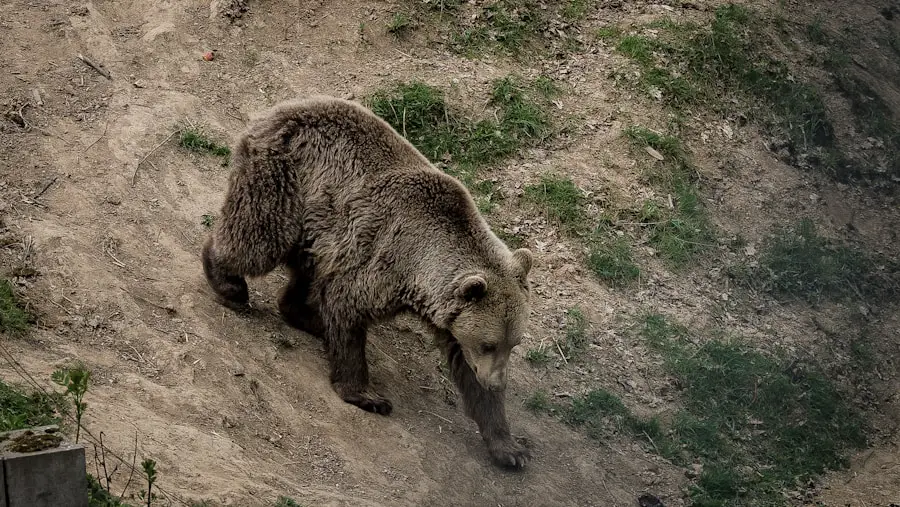
A bear encounter can become dangerous quickly, but most problems can be prevented with good planning, clean food storage, and calm decisions on the trail. This guide explains how to reduce surprise encounters, use bear spray correctly, recognize warning signs, and respond to black bears and grizzly or brown bears without making the situation worse.
Quick Answer
Before hiking in bear country, check local rules, travel in a group, make your presence known, secure all food and scented items, and carry accessible bear spray where it is allowed. During an encounter, stay calm, keep the bear in view, back away slowly, never run, and respond according to the bear’s behavior and species.
Key Takeaways
- Check the park or forest website before your trip because food-storage rules, wildlife distances, trail closures, and bear-spray regulations vary by location.
- Travel in a group, stay alert, avoid headphones, and call out near blind corners, dense brush, streams, and other places where a bear may not hear you.
- Store food, trash, toiletries, pet food, and other scented items in the method required by the land manager.
- Carry EPA-registered bear spray on your body where you can draw it immediately, and follow the canister label and local guidance.
- Never run, climb a tree, drop your pack, approach cubs, or place yourself between a mother and her young.
At a Glance
| Time Required | About 10–15 minutes to review before a hike; practice drawing inert bear spray before the trip |
| Difficulty | Moderate; the steps are simple, but they must be practiced and remembered under stress |
| Tools Needed | Local regulations, EPA-registered bear spray where allowed, an accessible holster, and approved food storage for overnight trips |
| Cost | $0 for official planning guidance; safety gear costs vary by brand, size, and destination |
Note: Bear behavior and regulations differ by species and destination. Review the current rules for the exact park, forest, refuge, or wilderness area before every trip.
What’s in This Article
Before You Hike in Bear Country
Start with the official website or visitor center for your destination. Find out which bear species live there, whether any trails are closed for wildlife activity, what minimum viewing distance applies, how food must be stored, and whether bear spray is recommended or allowed. The National Park Service advises visitors to check local rules because bear behavior and regulations vary between parks.
- Tell someone your route and expected return time.
- Hike during daylight when possible, and use extra caution at dawn, dusk, or night in areas where bears are more active.
- Leave headphones and earbuds off so you can hear wildlife, other hikers, and warning sounds.
- Keep children close. Pick up small children immediately if a bear appears nearby.
- Keep dogs leashed where they are allowed. An off-leash dog can provoke a bear and lead it back to you.
- Read trailhead notices and respect temporary bear-management closures.
- Avoid trail running in areas with limited sight distance because moving quickly can surprise a bear.
Understanding Bear Behavior
Bears are complex, adaptable animals. Most do not seek conflict with people, but any bear can become dangerous when surprised, crowded, defending food, protecting cubs, or conditioned to human food. Your safest response depends more on the bear’s behavior and the situation than on a single rigid rule.
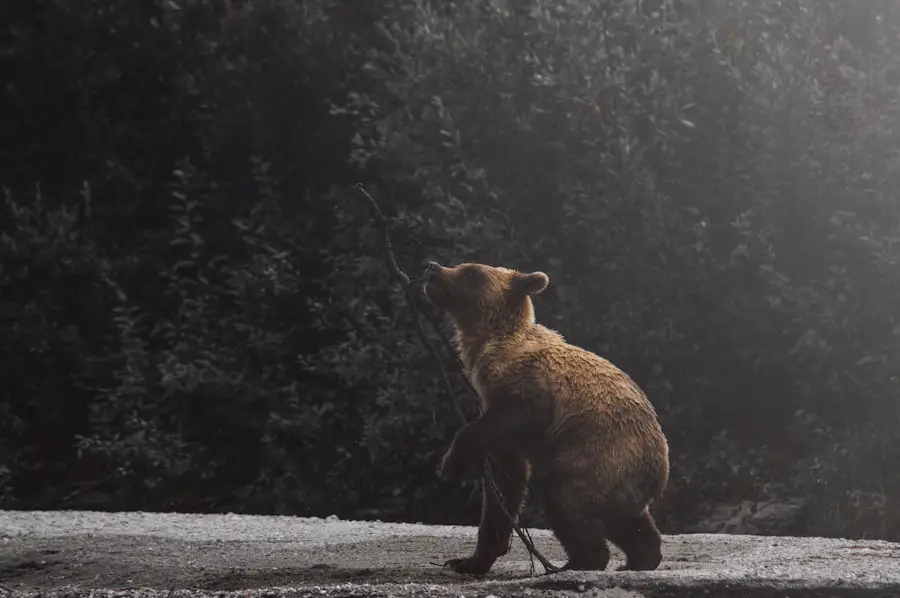
A bear may stand on its hind legs to see or smell better. That posture is usually curiosity, not a charge. Defensive signs can include huffing, jaw popping, swatting the ground, flattened ears, or a sudden rush that stops short. A bear that slowly and persistently follows, stalks, enters a tent, or shows unusual interest in a person may be acting in a predatory way.
Seasonal food sources can concentrate bears in berry patches, near spawning streams, around insect-rich logs, or beside animal carcasses. Give these places extra space. Never linger near a carcass or between a bear and a food source.
Warning: Do not approach a bear for a photo. If the bear changes its behavior because of your presence, you are too close.
Proper Food Storage
Proper food storage is one of the most important parts of staying safe in bear country. A bear that gets human food may return, become bolder, damage property, or create a danger for later visitors. Secure every attractant, not just meals.
Attractants can include food, trash, cooking grease, pet food, toiletries, toothpaste, lip balm, sunscreen, scented wipes, and clothing with food residue. Never keep these items in a tent. In developed campgrounds, use the provided locker, dumpster, or a locked hard-sided vehicle when local rules permit it.
For backcountry travel, use the method required by the land manager. Many areas require an approved bear-resistant food container. The Interagency Grizzly Bear Committee maintains information on tested bear-resistant products, but certification does not make a container impossible to breach and does not automatically satisfy every local rule.
Where hanging food is permitted, a common standard is at least 10 feet above the ground and 4 feet from anything a bear can climb. Some destinations require cooking, sleeping, and food-storage areas to be separated by 100 yards, while others use different distances or require canisters instead of hangs. Follow the rule for your exact location rather than treating one distance as universal.
Pro Tip: Confirm that every meal, wrapper, toiletry, and piece of trash fits inside your approved storage system before leaving the trailhead.
Making Noise While Hiking
Making noise gives a bear time to move away before you get close. Talk with your companions, clap, or call out at regular intervals. Increase the frequency near blind corners, dense brush, berry patches, windy ridges, and loud streams where a bear may not see, hear, or smell you early.
Do not rely on bear bells. The National Park Service says calling out and clapping are more effective because bells may not be loud enough to prevent a close surprise encounter.
Noise used to prevent a surprise is different from your response during a close encounter. Once a bear is aware of you, avoid screaming or making high-pitched sounds. Speak calmly and firmly while you assess its behavior and create distance.
Using Bear Spray
| Before the Trip | Check local rules, choose EPA-registered spray labeled for bears, inspect the expiration date, and practice with an inert trainer. |
| How to Carry It | Wear it in a chest or waist holster where either hand can reach it. Never bury it inside a backpack. |
| During a Charge | Stand your ground, remove the safety, account for wind, aim slightly downward, and deploy within the effective range stated on the label and by local guidance. |
| After Deployment | When the bear turns away, leave promptly without running. Report the encounter to local authorities. |
Bear spray is a last line of defense, not a substitute for distance, alertness, food storage, and group travel. It creates a cloud of capsaicin-based spray that can interrupt aggressive behavior without requiring precise aim.
Carry one canister per adult when local guidance recommends it. In poor visibility, keep it in your hand rather than waiting until a bear appears. The Yellowstone National Park instructions advise spraying a charging bear at roughly 30–60 feet to create a barrier, but product range and local instructions vary. Follow the label on your canister and the directions for the area you are visiting.
Do not spray bear spray on people, tents, packs, or campsites. It is a deterrent used during an encounter, not a preventive repellent. Keep it away from high heat, inspect the expiration date, and confirm transport rules before flying because bear spray cannot be carried on commercial aircraft.
Pro Tip: Use an inert training canister to practice drawing, removing the safety, aiming, and stepping away. Do not practice with live spray near people, pets, tents, or vehicles.
Warning: Bear spray inside your pack is unlikely to help during a fast charge. Carry it on your body where you can reach it in seconds.
Avoiding Mother Bears with Cubs
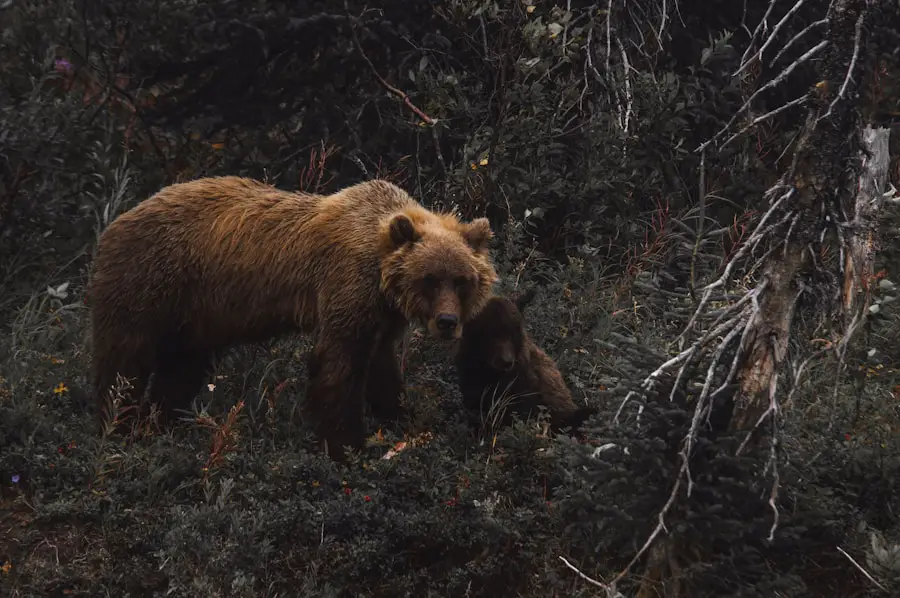
A mother bear may defend her cubs if she believes you are a threat. Never approach cubs, even when they appear to be alone, because the mother may be nearby or hidden by terrain or vegetation.
Do not place yourself between a mother and a cub. Keep your group together, give the family a clear escape route, and slowly leave the way you came. Do not linger for photographs or try to move around the bears at close range.
Cubs may stay with their mothers for more than one season, depending on the species and region. You do not need to identify their age to make the safe choice: create distance and let the bears control the route.
Recognizing Bear Signs
Signs of bear activity include tracks, scat, claw marks, torn logs, rolled rocks, dug-up soil, hair on rough surfaces, and well-used animal paths. A fresh carcass, concentrated scavenger activity, or strong animal odor is a reason to leave immediately because a bear may be feeding nearby.
Track size and shape can offer clues, but color and size alone do not reliably identify a bear species. Black bears can be brown, cinnamon, blond, or black, while grizzly and brown bears also vary in color. Do not move closer to confirm an identification.
If you find fresh sign, stop and listen. Keep your group close, ready your bear spray, increase your calling, and consider turning around or taking a wide detour. Pay attention to wind, water noise, and thick vegetation that may reduce the warning a bear receives.
Hiking in Groups
Group travel reduces the chance of surprising a bear and makes people appear larger. Stay close enough to communicate instead of spreading out along the trail. The National Park Service commonly recommends groups of three or more in grizzly country, though local advice may differ.
Yellowstone reports that, since 1970, 91% of people injured by bears were hiking alone or with only one partner; 9% were in groups of three or more.
Before starting, agree on a simple plan: who carries spray, who gathers children, and how the group will back away without separating. In areas where bear spray is advised, each adult should carry an accessible canister and know how to use it.
What to Do If You Encounter a Bear
Stay calm and assess what the bear is doing. Keep the bear in view without staring aggressively. Speak in a calm, low voice so it can identify you as a person. Pick up small children, keep your group together, and keep your pack on.
If the Bear Has Not Seen You
Do not call attention to yourself at close range. Quietly move away the way you came, give the bear a wide route, and avoid getting downwind or closer for a better look.
If the Bear Sees You but Does Not Approach
Stand still at first, speak calmly, and slowly wave your arms. Then back away slowly and sideways. Do not turn your back, make sudden movements, block the bear’s escape route, or climb a tree.
If the Bear Approaches
Stop backing away and stand your ground. Make yourself look larger, keep the group together, and ready your bear spray. A curious or food-conditioned bear may need a firmer voice and more assertive behavior, while a defensive bear needs space and calm movement. Follow local instructions because recommended behavior can vary by species and setting.
If the Bear Charges
Do not run. Many charges stop or turn away before contact, but treat every charge seriously. Stand your ground and use bear spray within its effective range. Aim slightly downward to form a cloud between you and the bear, adjust for wind, and continue according to the product label and local guidance.
Warning: Never run from a bear. Running can trigger pursuit, and a person cannot outrun a bear.
If a Black Bear Makes Contact
Do not play dead. Try to reach a secure building or vehicle if one is immediately available. Otherwise, fight back vigorously with bear spray or any object you can use, focusing on the face and muzzle.
If a Grizzly or Brown Bear Makes Contact Defensively
Play dead. Lie flat on your stomach, keep your pack on, clasp your hands behind your neck, and spread your legs so the bear has more difficulty turning you over. Stay still until you are sure the bear has left. If the attack continues for an extended period, switch tactics and fight back.
If Any Bear Stalks You, Enters Your Tent, or Attacks Predatory
Do not play dead. Get to a secure building or vehicle if possible. If you cannot escape, fight back with everything available. A persistent, predatory attack requires the opposite response from a short defensive grizzly attack.
If a Bear Approaches Your Campsite
Secure food and attractants immediately, keep people together, and get bear spray ready. In many developed or established camps, officials advise making loud, forceful noise to drive the bear away. In a close defensive encounter, use calm, nonthreatening behavior instead. Never surround the bear or block its exit, and follow the site-specific instructions posted at the campground.
What to Do After an Encounter
- Leave the area without running once the bear moves away.
- Wait several minutes before getting up after playing dead, and listen carefully to confirm the bear has left.
- Report every aggressive encounter, charge, food-conditioning incident, or campsite visit to a ranger or land manager.
- Call 911 when there is an injury or an immediate danger and service is available.
- Seek medical care for any bite, scratch, fall, breathing problem, or bear-spray exposure that does not improve after moving to fresh air and rinsing affected skin.
- Do not return for dropped gear until officials say the area is safe.
Frequently Asked Questions
What should I do if I encounter a bear while hiking?
Stay calm, keep the bear in view, speak in a low voice, keep your group together, and back away slowly when the bear is stationary. Never run, climb a tree, drop your pack, or block the bear’s escape route. Ready bear spray and adjust your response to the bear’s behavior and species.
How can I prevent bear encounters while hiking?
Travel in a group, stay alert, leave headphones off, make your presence known near blind corners and noisy water, avoid carcasses and dense feeding areas, store attractants correctly, and follow trail closures. Check local guidance before the trip.
What should I do if a bear approaches my campsite?
Secure all food and scented items, gather your group, ready bear spray, and follow the campground’s posted response plan. In many developed camps, loud and forceful noise is used to drive a bear away. Do not surround it, feed it, or block its escape route, and report the visit.
What are the signs of bear activity in an area?
Look for tracks, scat, claw marks, torn logs, rolled rocks, dug-up soil, hair, animal trails, carcasses, and scavenger activity. Fresh signs are a reason to slow down, keep the group together, make more noise, ready bear spray, and consider turning around.
What should I do if a bear charges at me?
Stand your ground, do not run, and deploy bear spray within the effective range stated on the label and in local guidance. If a black bear makes contact, fight back. If a grizzly or brown bear makes defensive contact, play dead unless the attack continues.
Are bear bells effective?
Do not rely on them. National Park Service guidance says regular calling, talking, and clapping are more effective, especially near streams, in wind, in dense vegetation, and around blind corners.
Can I use ordinary pepper spray instead of bear spray?
No. Use an EPA-registered product specifically labeled as bear spray when it is allowed and recommended. Bear spray is designed to create a broad cloud at a longer range than personal-defense pepper spray. Check the expiration date and follow the label.
Safety Disclaimer: This article provides general educational information and does not replace local regulations, ranger instructions, emergency services, or hands-on wilderness training. Bear behavior varies. Follow the current guidance for the exact destination and report emergencies to local authorities.
Bear safety comes down to preparation, awareness, and a calm response. Store attractants correctly, make effective noise before a close encounter, carry bear spray where it is legal and easy to reach, and know the difference between a defensive and predatory attack. Give every bear space and a clear way out, then report serious encounters so other visitors and the bear can remain safe.
Sources
- National Park Service: Staying Safe Around Bears — general encounter, attack, cub, and retreat guidance
- Yellowstone National Park: Safety in Bear Country — bear spray use, group travel, charges, and campsite safety
- Glacier National Park: Bear Safety — noise, bear bells, group hiking, and situational awareness
- Denali National Park: Bear Safety — food storage, campsite layout, and camp encounters
- U.S. Forest Service: Be Bear Aware — hiking, camping, pets, cubs, and local-rule guidance
- Interagency Grizzly Bear Committee: Bear-Resistant Products — certification limits and approved storage guidance
