
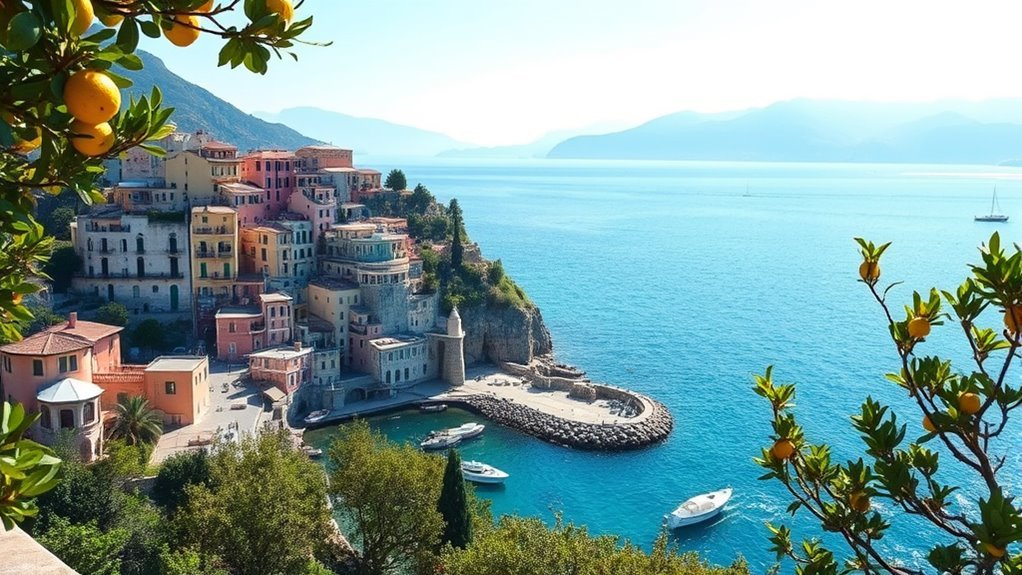
Last Updated on July 24, 2026 by Daniel Globe
Naples is one of Italy’s best bases for day trips because ancient cities, volcanic landscapes, royal palaces, islands, and coastal towns all sit within reach. Pompeii and Herculaneum are the easiest history-focused choices, while Capri, Sorrento, Positano, Caserta, Pozzuoli, Paestum, Ischia, and Procida suit different travel styles. The right choice depends on transport time, season, weather, and how much sightseeing you want to fit into one day.
Quick Answer
Pompeii is the best all-around day trip from Naples for first-time visitors. Choose Herculaneum for a shorter and less tiring archaeological visit, Capri or Procida for an island day, Caserta for art and gardens, and Sorrento or Positano for coastal scenery. Check same-day transport and site notices before leaving.
Key Takeaways
- Best first trip: Pompeii offers the strongest mix of easy transport, major sights, and historical importance.
- Best half-day: Herculaneum is smaller, well preserved, and easier to explore in two to three hours.
- Best scenery: Capri, Sorrento, Positano, and the Amalfi Coast reward an early start, but ferries and buses are seasonal or weather-sensitive.
- Best low-stress alternative: Caserta is reached by direct regional trains and gives you a full day of palace rooms, fountains, and gardens.
- Most important planning step: Recheck official schedules, admission rules, and temporary closures on the morning of your trip.
Disclosure: As an Amazon Associate I earn from qualifying purchases. Some links on this page are affiliate links, at no extra cost to you.
How to Choose the Best Day Trip From Naples

Start with the experience you want most: ancient ruins, coastal scenery, island time, hiking, or royal architecture. Then compare the total door-to-door journey, not only the time shown on a train or ferry timetable. Transfers, ticket lines, traffic, and the walk from a station or port can add an hour or more to your day.
Pompeii, Herculaneum, Sorrento, Caserta, and Paestum are practical by rail. Capri, Ischia, and Procida depend on ferries or hydrofoils. Positano and other Amalfi Coast towns may require a seasonal ferry, a train-and-bus combination, or a private transfer. Pozzuoli is close, but transport and archaeological access can change after seismic activity in the Campi Flegrei area.
| Destination | Best For | Typical One-Way Travel | Ideal Time There |
|---|---|---|---|
| Pompeii | Major Roman ruins | About 35–45 minutes by local train | 4–6 hours |
| Herculaneum | Compact archaeological visit | About 20–30 minutes by local train | 2–3 hours |
| Mount Vesuvius | Volcano hike and views | About 1.5–2.5 hours with connections | 2 hours at the crater area |
| Capri | Iconic island scenery | About 50–85 minutes by boat | 6–8 hours |
| Procida | Relaxed island streets and harbors | About 35–75 minutes by boat | 5–7 hours |
| Sorrento | Easy coastal town day | About 60–75 minutes by local train | 5–7 hours |
| Positano | Amalfi Coast views | About 1.5–2.5 hours, route-dependent | 4–6 hours |
| Caserta | Palace interiors and gardens | About 35–50 minutes by regional train | 5–7 hours |
| Paestum | Greek temples and museum | About 75–100 minutes by regional train | 4–6 hours |
Note: Travel times are planning ranges, not guarantees. Local rail work, road traffic, rough seas, strikes, weather, and seasonal schedules can change the fastest route.
Products Worth Considering

Pompeii Day Trip From Naples
Pompeii is the classic Naples day trip and the best choice when you want a large archaeological site with streets, houses, baths, temples, shops, and public spaces. The ancient city covers about 66 hectares, with roughly 44 hectares excavated. Because the site is so large, a focused route is better than trying to see every open building.
Products Worth Considering

Getting to Pompeii
Take an EAV Circumvesuviana train from Napoli Garibaldi toward Sorrento and get off at Pompei Scavi–Villa dei Misteri. The journey commonly takes about 35 to 45 minutes, but service patterns change, so check the current EAV railway timetable before leaving. The Porta Marina entrance is a short walk from the station.
As of July 2026, the official Pompeii ticket page lists the ancient-city ticket at €20 and the ticket including the suburban villas and related sites at €25. Tickets are personal, and the park limits daily admissions, so advance booking is sensible on busy dates.
Top Pompeii Highlights
A first visit should usually include the Forum, the Basilica, the Forum Baths, the amphitheater, a bakery or thermopolium, and one or two major houses. The House of the Vettii is known for restored frescoes, while the Villa of the Mysteries sits outside the main urban core and requires extra walking. Building access can change for conservation or staffing reasons, so use the official map and open-building list on the day.
- Forum: the political and religious center of the city
- House of the Vettii: richly decorated rooms and frescoes
- Villa of the Mysteries: famous large-scale wall paintings
- Plaster casts: a powerful record of people caught in the eruption
- Amphitheater: one of the oldest surviving Roman amphitheaters
Pompeii Visit Tips
Allow four to six hours for a useful first visit. Wear sturdy shoes because the ancient paving is rough and uneven. Carry water, sun protection, and a simple route plan. Pompeii has refill points and visitor services, but long distances between facilities can still make the visit tiring in hot weather.
Pro Tip: Enter early, choose six to eight priority sights, and stop trying to cover the entire map. A shorter planned route usually gives you more time to understand the buildings you do see.
Herculaneum Day Trip From Naples
Herculaneum is smaller than Pompeii but preserves multi-story buildings, wooden objects, mosaics, wall decoration, and details of private homes with unusual clarity. The city was buried beneath about 20 meters of volcanic material during the AD 79 eruption. Its compact layout makes it a strong half-day option or a better choice for travelers who do not want to walk across Pompeii’s much larger site.
Ride the Circumvesuviana toward Sorrento and leave at Ercolano Scavi. The train commonly takes 20 to 30 minutes from Napoli Garibaldi, followed by a downhill walk to the entrance. The official Herculaneum ticket page lists a standard ticket at €16 as of July 2026.
| Highlight | Why It Matters |
|---|---|
| Ancient Beach | Connects the ruins to the human remains found near the shoreline and boat sheds |
| House of the Wooden Partition | Shows rare surviving carbonized wood |
| House of Neptune and Amphitrite | Contains a striking mosaic-covered dining area |
| Suburban Baths | Reveals the design and decoration of Roman bathing spaces |
Plan two to three hours inside, then allow time for the uphill walk back to the station. The Villa of the Papyri is not part of the normal open route, so do not build your visit around entering it.
Mount Vesuvius Day Trip From Naples
Mount Vesuvius gives you a close look at the volcano that transformed Pompeii, Herculaneum, and the Bay of Naples in AD 79. It works as a half-day trip only when your transfers line up well. From Naples, most visitors first reach Ercolano Scavi or Pompei Scavi and continue by an authorized shuttle, taxi, tour vehicle, or the public EAV bus from Pompeii when operating.
The official Vesuvius National Park page requires advance online admission for the Gran Cono trail. As of July 2026, the listed full price is €11.68 including the booking charge. The main route is about 4 kilometers round trip, and you should allow around two hours for the crater visit rather than only 30 minutes.
- Wear closed shoes with grip because the surface includes loose ash and lapilli.
- Carry water and sun protection; exposed sections can feel very hot.
- Buy the crater ticket before arranging parking or a transfer.
- Check weather alerts because access can close for safety.
- Do not expect parking or full visitor facilities directly at the upper entrance.
Warning: The crater trail can close because of weather or safety conditions. Use only official access points, stay on the marked route, and do not buy an unofficial ticket that cannot be verified by the park.
Products Worth Considering

✓ More Room to Move: Your toes were never meant to be squeezed. Our wide toe box gives them space to spread naturally, improving balance, reducing pressure, and keeping...
Capri Day Trip From Naples
Capri is the most famous island day trip from Naples. High-speed boats from Molo Beverello often take about 50 to 60 minutes, while regular ferries from Calata Porta di Massa may take around 80 to 85 minutes. Check the operator, departure port, and return sailing carefully because the word “ferry” is often used for several different vessel types.
From Marina Grande, the funicular climbs to Capri town in a few minutes. The single fare listed for 2026 is €2.40, but lines can be long from spring through early autumn. Once above the port, choose two or three priorities rather than racing across the island.
- Gardens of Augustus: easy viewpoints over the Faraglioni and Via Krupp area
- Anacapri: a quieter base for Villa San Michele and Monte Solaro
- Boat tour: useful for coastal views, subject to sea conditions
- Villa Jovis: a rewarding but longer walk from Capri town
- Faraglioni viewpoints: available from gardens, paths, and boat routes
Book an early outbound sailing and secure a realistic return. Rough seas can delay or cancel hydrofoils before larger ferries. The Caremar timetable is one official place to check current island services.
Ischia Day Trip From Naples
Ischia is larger and more spread out than Capri, so it is best when you choose one part of the island instead of trying to circle everything. Hydrofoils commonly take about an hour, while slower ferries may take around 90 to 110 minutes. Good one-day plans include Ischia Porto and Ischia Ponte, the Aragonese Castle area, or a prebooked thermal park.
Public buses connect the main towns, but summer traffic can be slow. Leave extra time to return to the port, especially if your final boat is the last practical connection to Naples.
Procida Day Trip From Naples
Procida is a compact, lower-pressure island choice with colorful harbors, steep lanes, and fewer must-see attractions competing for your time. Official Caremar schedules show hydrofoil crossings as short as about 35 to 40 minutes and regular ferries around an hour or a little longer.
Walk or use the local bus between Marina Grande, Terra Murata, and Marina Corricella. Procida suits travelers who value atmosphere, photography, and a long lunch more than a checklist of major monuments.
Sorrento Day Trip From Naples
Sorrento is one of the easiest coastal day trips because the Circumvesuviana runs directly from Napoli Garibaldi. The ride usually takes about 60 to 75 minutes. The town is busy and polished rather than remote, but it offers sea views, shopping streets, restaurants, and access to the waterfront without the more complicated transfers required for Positano.
- Historic center: lanes around Piazza Tasso and Via San Cesareo
- Marina Grande: fishing-harbor atmosphere and seafood restaurants
- Villa Comunale: an easy viewpoint over the Bay of Naples
- Bagni Regina Giovanna: a scenic swimming spot that requires extra transport and walking
- Local food: citrus desserts, seafood, gnocchi alla sorrentina, and limoncello
Do not underestimate the walk between the cliff-top center and the marinas. Elevators and local transport can save energy, but queues increase in peak season.
Positano and the Amalfi Coast
Positano is beautiful but less straightforward than Pompeii, Sorrento, or Caserta. There is no railway station in Positano. Depending on the season, you may travel by direct or connecting ferry, take the Circumvesuviana to Sorrento and continue by SITA bus, travel by train to Salerno and continue by ferry, or book a private transfer.
A direct or connecting boat can be the most enjoyable option in warm months, but sea conditions and seasonal timetables matter. The bus runs year-round, yet traffic on the narrow coast road can create long delays and crowded vehicles. For a day trip, choose one main town. Trying to see Positano, Amalfi, and Ravello properly in a single day from Naples usually turns the experience into a transport race.
| Highlight | Planning Note |
|---|---|
| Spiaggia Grande | Easy to reach from the center, but beach clubs can be expensive and busy |
| Santa Maria Assunta | Central landmark with the town’s distinctive tiled dome |
| Upper viewpoints | Excellent views, but expect many stairs and steep lanes |
| Amalfi or Ravello | Better treated as a separate day unless you book a structured tour |
Pro Tip: In summer, compare the final return ferry with the final practical bus connection before buying the outbound ticket. The prettiest route is not useful if it leaves no safe margin for returning to Naples.
Royal Palace of Caserta Day Trip
The Royal Palace of Caserta is the best day trip for travelers who want architecture, decorative art, and formal gardens without a ferry or mountain transfer. The palace covers about 47,000 square meters across five floors and contains roughly 1,400 rooms. Outside, the Royal Park extends across 123 hectares, with a three-kilometer waterway leading toward fountains and the English Garden.
Palace Highlights
- Royal Staircase and Upper Vestibule
- Throne Room and state apartments
- Palatine Chapel
- Court Theatre when open
- Via d’Acqua, fountains, and English Garden
The official museum suggests around two to two and a half hours for the palace and about four hours for the park and English Garden. You may not need the full recommended time, but the distances make this a true full-day visit if you want both interiors and grounds.
Getting There
Direct regional trains from Napoli Centrale commonly reach Caserta in about 35 to 50 minutes. The palace stands opposite the station, so the final walk is simple. As of July 2026, the official Royal Palace of Caserta ticket page lists the combined palace, park, and English Garden ticket at €18, plus an online booking fee. The site is ordinarily closed on Tuesdays, and park hours change by month.
| Option | Typical Time | Notes |
|---|---|---|
| Regional train | 35–50 minutes | Usually the easiest choice |
| Car | 45 minutes or more | Traffic and parking add uncertainty |
| Palace visit | 2–2.5 hours | Focuses on interiors |
| Palace and park | 5–7 hours | Best full experience |
Pozzuoli and Campi Flegrei
Pozzuoli combines Roman archaeology, a working waterfront, and the volcanic landscape of Campi Flegrei. The Flavian Amphitheatre is the main dependable archaeological attraction, while Rione Terra adds layered history and broad views over the bay.
This destination requires extra checking in 2026. As of July 24, 2026, Trenitalia reports an interruption between Napoli Campi Flegrei and Pozzuoli Solfatara on Line 2, with replacement buses. EAV’s Cumana line is another route from Montesanto, but parts of that service have also used substitute buses. Check both operators before deciding which station to use.
The official Campi Flegrei archaeological park information page lists the Flavian Amphitheatre as open but says the Macellum of Pozzuoli is temporarily closed. Do not plan to enter the Solfatara crater as a normal visitor attraction. Seismic activity can also trigger short-notice safety checks and temporary closures across the area.
- Flavian Amphitheatre: large Roman arena with impressive underground structures when accessible
- Rione Terra: historic hill and archaeological layers above the port
- Pozzuoli waterfront: an easy place for lunch and harbor views
- Macellum: historically important but temporarily closed at the time of verification
- Campi Flegrei sites: Cuma, Baia, and the archaeological museum can justify a separate day
Warning: Follow official closure notices and local instructions in Campi Flegrei. Never cross barriers or enter restricted volcanic or archaeological areas, even when steam vents or ruins are visible from public roads.
Paestum and the Cilento Coast
Paestum is one of the most rewarding long-distance day trips from Naples. Its three major Greek temples stand within an archaeological park that also includes Roman remains and the National Archaeological Museum. Direct regional trains can reach Paestum in roughly 75 to 100 minutes, depending on the service.
Paestum’s Greek Temples
The Temple of Hera, the Temple of Neptune, and the Temple of Athena are among the best-preserved Greek temples in Italy. The museum adds context through sculpture, painted tombs, and objects from the ancient city. The Tomb of the Diver is the best-known museum highlight.
The official Paestum and Velia ticket page lists a full ticket at €15 from March through November and €10 from December through February. The ticket covers Paestum, its museum, and Velia and is valid for three consecutive days.
- Allow at least three hours for the temples and museum.
- Wear flat shoes because much of the route is outdoors.
- Bring sun protection; shade is limited around the temples.
- Check the return train before adding a beach stop.
Cilento Coast Beaches
The wider Cilento Coast offers sandy beaches, clear water, villages, and national-park landscapes, but it is not one compact attraction next to the Paestum station. A simple beach extension near Paestum may require a taxi, local bus, bicycle, or a long walk. Towns such as Santa Maria di Castellabate are better with a car or as a separate outing.
If your priority is archaeology, spend the full day at Paestum and enjoy local buffalo mozzarella nearby. If your priority is the coast, choose one beach area and plan transport before leaving Naples.
Exploring By Car
A car gives you the most flexibility for combining Paestum with a dairy visit, the coastal road, or Cilento National Park. The drive from Naples often takes around 1.5 to 2 hours before traffic. Do not overload the route: temples, museum, lunch, one coastal stop, and the return drive already fill a long day.
- Paestum archaeological area and museum
- Buffalo mozzarella dairy or farm shop
- One selected beach or coastal village
- Extra time for traffic and parking
- A planned fuel and return stop before evening
How to Combine Day Trips Without Rushing
Some destinations pair naturally, while others should remain separate. Pompeii and Mount Vesuvius can fit into one long day if you book timed admission, start early, and accept a shorter visit at each. Herculaneum and Vesuvius are another practical combination, although transfers still need planning.
Do not combine Capri with Positano unless you book a boat itinerary designed for both. Do not combine Caserta with Pompeii if you want a meaningful visit at either site. Sorrento and Positano can work together, but the result depends heavily on traffic or ferry timing.
One major destination plus one nearby secondary stop usually creates a better Naples day trip than three famous places connected by rushed transfers.
Practical Planning Tips for Naples Day Trips
- Check two return options: Know your preferred departure and the next practical backup.
- Use the correct Naples station or port: Napoli Garibaldi serves Circumvesuviana trains, while Molo Beverello and Calata Porta di Massa serve different boats.
- Carry identification: Some attraction tickets are personal or require proof for reduced admission.
- Start early in summer: Heat, crowds, and road traffic become harder later in the day.
- Keep valuables secure: Busy stations, crowded trains, ports, and buses require normal city precautions.
- Plan for mobility needs: Ancient paving, steep island lanes, cliff towns, and volcanic trails can be difficult for wheelchairs, strollers, or limited mobility.
- Do not rely on a last connection: Leave a buffer for delayed trains, road traffic, or rough seas.
Frequently Asked Questions
What is the best day trip from Naples?
Pompeii is the best all-around choice for most first-time visitors because it is historically important, directly connected by local train, and large enough to fill most of a day. Choose Herculaneum when you want a shorter archaeological visit and Caserta when you prefer palace interiors and gardens.
What is worth seeing around Naples?
The strongest nearby sights include Pompeii, Herculaneum, Mount Vesuvius, Capri, Procida, Sorrento, the Royal Palace of Caserta, Paestum, and the Roman sites around Pozzuoli. Positano and the Amalfi Coast are also possible, but they require more transport planning.
What is close to Naples, Italy, to visit?
Herculaneum, Pozzuoli, Pompeii, and Caserta are among the closest major day-trip choices. Herculaneum and Pozzuoli are physically nearest, while Pompeii and Caserta are often easier than expected because of direct rail connections.
How many days in Naples are enough?
Plan at least three full days for Naples itself and one nearby excursion. Four to five days gives you time for the historic center, major museums, food neighborhoods, and one or two day trips without turning every day into a rushed schedule.
Can you visit Pompeii and Mount Vesuvius in one day?
Yes, but it is a long day. Book both admissions in advance, visit Pompeii early, limit the archaeological route to key sights, and leave enough time for the transfer and the two-hour crater visit. Bad weather or transport disruption can make the combination impractical.
Do you need a car for day trips from Naples?
No. Pompeii, Herculaneum, Sorrento, Caserta, Paestum, Capri, Ischia, and Procida are practical without a car. A car helps most for rural Cilento stops, selected Amalfi Coast routes, and places with weak local transport, but traffic and parking can erase the advantage.
Sources
- Pompeii Archaeological Park: Timetables and Tickets — current admission prices, hours, and visitor limits
- Herculaneum Archaeological Park: Tickets — current prices, hours, and access notices
- Vesuvius National Park: The Great Cono — ticket rules, route details, access hours, and safety guidance
- EAV Railway Timetables — current Circumvesuviana and Cumana service information
- Royal Palace of Caserta: Tickets — current admission options and recommended visit durations
- Campi Flegrei Archaeological Park: Visitor Information — open sites, temporary closures, and access rules
Conclusion
The best day trip from Naples is the one that matches your energy and transport tolerance. Pompeii gives you the strongest first-time experience, Herculaneum offers a compact alternative, and Caserta is the easiest grand indoor-and-garden day. Choose Capri, Procida, Sorrento, or Positano for coastal scenery, and save Vesuvius, Pozzuoli, or Paestum for days when you can check conditions and start early. With one clear priority and a reliable return plan, you can explore far beyond Naples without spending the whole day in transit.
