
Last Updated on July 28, 2026 by Daniel Globe
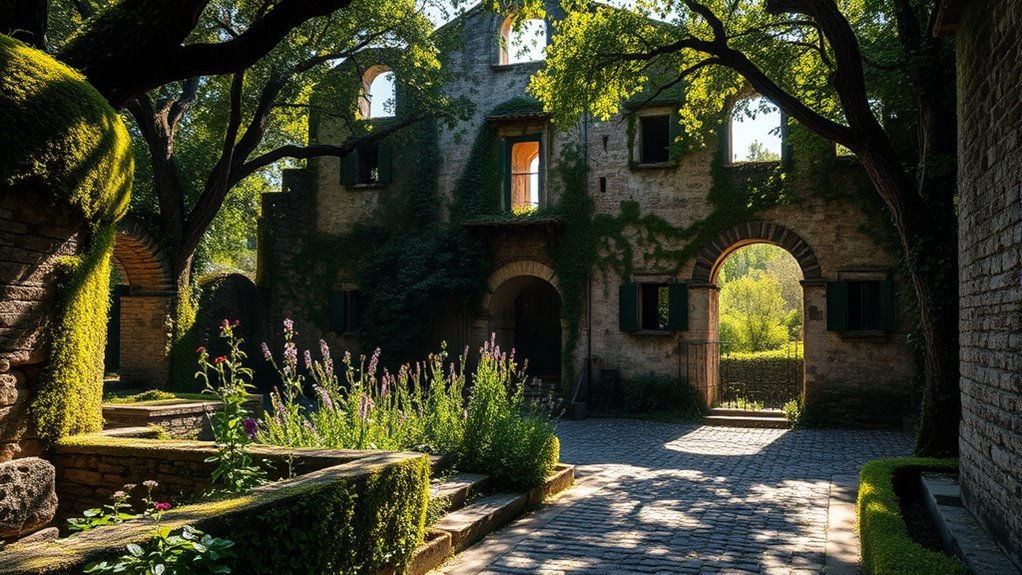
Italy’s abandoned places range from medieval ghost towns and emptied farming villages to industrial sites reclaimed by nature. However, not every location commonly placed on an “abandoned Italy” list is truly deserted. Some have restricted access, some have been restored, and others—such as Milan’s Idroscalo—are active public attractions. Knowing the difference helps you plan a safer and more rewarding visit.
Quick Answer
The most memorable abandoned places in Italy include Craco in Basilicata, Roscigno Vecchia in Campania, Pentedattilo in Calabria, Monteruga in Puglia, and Antuni in Lazio. Craco and Antuni have controlled access, while Idroscalo, Filanda di Forno, and the Cemetery of the Burci are better described as reclaimed or preserved heritage sites.
Key Takeaways
- Craco is one of Italy’s best-known ghost towns, but entry to the unstable historic core is controlled.
- Roscigno Vecchia was emptied because of landslide danger; its well-known last custodian died in 2024.
- Pentedattilo combines documented history with local legends, but it has also experienced restoration and cultural revival.
- Idroscalo and Filanda di Forno are not conventional abandoned sites; both now have managed public or cultural uses.
- Never assume access is legal. Check official information, remain on public paths, and do not enter unstable buildings without permission.
At a Glance
| Craco | True ghost town with unstable structures and controlled access. Check current authorized-tour arrangements before traveling. |
| Roscigno Vecchia | Historic village emptied because of landslide risk. Explore only public and locally approved areas. |
| Pentedattilo | Partly revived historic village associated with earthquakes, migration, restoration, and folklore. |
| Monteruga | Uninhabited agricultural settlement, but ownership and interior access should never be assumed. |
| Antuni | Depopulated village damaged during World War II. Visits may require an organized or authorized tour. |
| Idroscalo | Active lakeside park with aviation history; not an abandoned attraction. |
| Filanda di Forno | Former cotton mill being preserved and developed for cultural and museum use. |
| Cemetery of the Burci | Preserved river landscape with decaying cargo barges visible from an established trail. |
Disclosure: As an Amazon Associate I earn from qualifying purchases. Some links on this page are affiliate links, at no extra cost to you.
Exploring Parco Idroscalo: From Seaplane Station to Public Park
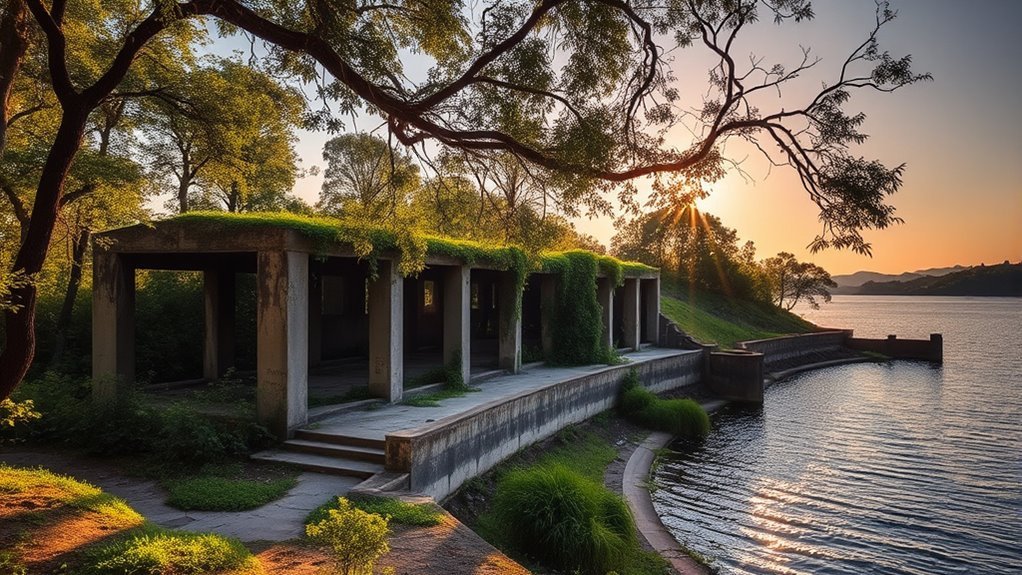
Parco Idroscalo belongs in a discussion of reused historic spaces, but it is not an abandoned site. The artificial basin east of Milan was designed as a station for seaplanes. The first seaplane landed there in May 1930, and the facility was officially inaugurated later that year.
Seaplane travel declined before the complex gained all the aviation infrastructure originally planned. Sports and recreation soon became more important, and the surrounding grounds developed into a major public park. Today, Idroscalo hosts water sports, walking, cycling, events, recreation areas, and family activities.
You can review its history on the official Idroscalo history page and check current entrances, hours, parking, and transport on the official visitor-information page.
Note: Visit Idroscalo for aviation history and successful reuse of an old transport project—not for abandoned-building exploration.
Craco: A Medieval Ghost Town in Basilicata
Craco is one of the clearest examples of a true Italian ghost town. The medieval settlement rises above the clay badlands of Basilicata, where unstable ground repeatedly threatened its streets and buildings. A major landslide in 1963 accelerated the evacuation, and later residents were moved away from the old center.
The skyline remains striking, with a Norman tower, churches, stone houses, steep lanes, and buildings broken open by ground movement. However, the photogenic appearance should not hide the danger. Floors, walls, roads, and slopes may be unstable, and the historic core is not a place for unsupervised entry.
Craco has also served as a film location. Verified productions include The Passion of the Christ, Christ Stopped at Eboli, and the James Bond film Quantum of Solace. The frequently repeated claim that No Time to Die filmed in Craco confuses it with nearby Matera.
Before traveling, check information from the official Italian tourism portal and the Municipality of Craco. Authorized routes, tour availability, and closures can change.
Warning: Do not climb barriers, enter closed buildings, or attempt to reach Craco’s restricted historic core without authorization. Landslide damage and structural collapse remain real hazards.
Roscigno Vecchia: Campania’s Abandoned Old Village
Roscigno Vecchia lies in the Cilento area of Campania. It is sometimes called the “Pompeii of the 20th century” because its old square, fountain, church, and stone buildings preserve the shape of a community that moved elsewhere.
The settlement began emptying in the early 20th century after authorities ordered residents to relocate because of repeated landslides and continuing ground instability. A new community, Roscigno Nuova, developed nearby while the older center remained largely frozen in time.
For years, Giuseppe Spagnuolo—known locally as “Libero”—acted as the village’s unofficial custodian, guide, and most famous inhabitant. That part of the original story is now outdated: Spagnuolo died on January 19, 2024. His role remains an important part of the village’s modern history, but visitors should not expect to find a sole resident living there today.
The broader Cilento region and Roscigno Vecchia are introduced by the official Italia.it tourism portal. Check locally before entering buildings or attending events, since preservation work and access conditions may change.
Pentedattilo: Legends, History, and a Hand-Shaped Mountain
Pentedattilo sits beneath a dramatic rock formation in Calabria whose five projecting peaks resemble the fingers of a hand. Its name comes from Greek words associated with “five fingers,” and the mountain gives the village one of the most recognizable silhouettes in southern Italy.
The history is more complex than a single disaster. The Alberti massacre took place in 1686 and later inspired local legends. A powerful earthquake caused severe damage in 1789. Further earthquakes, economic hardship, migration, and the development of a newer settlement contributed to gradual depopulation.
Pentedattilo should not now be described as completely abandoned. Restoration projects, artisans, cultural initiatives, and seasonal activity have brought limited life back to parts of the old village. The Calabria Region’s official tourism page provides historical context and current destination information.
Ghost Stories and Local Folklore
The Alberti massacre gave rise to stories of cries in the night, bloody handprints, and restless spirits. These tales are part of Pentedattilo’s folklore rather than documented evidence of paranormal activity. Presenting them as legends preserves the village’s storytelling tradition without confusing folklore with verified history.
Pentedattilo’s appeal comes from the meeting of real history, dramatic geology, local folklore, and a modern effort to give an old village new life.
What to See in Pentedattilo
- The five-fingered rock: The mountain formation is visible from the approach roads and village lanes.
- Historic streets: Narrow paths pass stone houses, arches, and restored spaces.
- Religious buildings: The village’s churches and sacred sites reflect its long community history.
- Landscape views: Elevated viewpoints look across Calabria toward the coast and surrounding valleys.
- Cultural activity: Workshops and events may operate seasonally, so check current schedules before visiting.
The Former Taino Explosives Works: Industrial Ruins With Unclear Access
The wooded area around Taino in Lombardy contains remains associated with a former explosives or powder-production complex. Historical references confirm industrial activity and serious accidents at the works during the 1930s. However, popular descriptions of a “19th-century gunpowder mill,” its exact acreage, and freely accessible machinery are not supported by a clear official visitor source.
That uncertainty changes how the site should be approached. It may be historically interesting, and vegetation may now surround parts of the former industrial landscape, but it should not be promoted as an open urban-exploration attraction.
View any remains only from legal public routes unless the owner or responsible authority has granted permission. Industrial sites can contain unstable roofs, shafts, contaminated material, rusted metal, concealed pits, or unexploded hazards.
Warning: Lack of a fence or warning sign does not make industrial property public. Never enter buildings, tunnels, fenced woodland, or restricted land without confirmed permission.
Filanda di Forno: From Cotton Mill to Industrial Heritage Site
Filanda di Forno, near Massa in Tuscany, began as a large cotton-production complex built during the 1880s. Full production started in 1891, and the factory had a major effect on employment and population growth in the mountain village.
The mill stopped operating in 1942 because raw materials were unavailable during World War II. German forces later removed equipment and damaged parts of the complex. After the war, its surviving turbine was used to generate electricity until 1970.
Although the main factory retains the visual power of an industrial ruin, the complex is no longer accurately described as a forgotten building left entirely to decay. The Municipality of Massa has undertaken recovery, documentation, accessibility, and museum-development work. Its current cultural plans describe a transition from historic factory to a museum of industrial archaeology.
Review the latest project and access information through the Municipality of Massa. Do not assume that every wing of the complex is open merely because part of the site has a museum or cultural function.
Monteruga Ghost Town: An Agricultural Settlement in Salento
Monteruga is an uninhabited rural settlement in the Salento area of Puglia. It developed around a large agricultural estate during the Fascist period and included workers’ housing, a church, a school, workshops, production facilities, and shared civic spaces.
The village’s decline was linked to changes in agricultural management, privatization, mechanization, and the loss of local employment. By the 1980s, the settlement had been emptied. Its planned layout and surviving service buildings now provide a visible record of organized rural life during the 20th century.
Monteruga may appear open because roads and exterior spaces remain visible, but that does not establish a legal right to enter its buildings. Ownership, land use, restoration proposals, and access restrictions can change. View the settlement from public routes and obtain permission before entering enclosed land or structures.
Note: Monteruga is valuable for its social and agricultural history. Treat it as a historic settlement, not as a playground for break-ins, staged photographs, or removal of objects.
Monte Antuni: Depopulation, War Damage, and Restoration
Monte Antuni occupies a steep peninsula beside Lake Turano in Lazio. The village is often described simply as a casualty of World War II, but its decline began before the bombing that damaged it.
The creation of Lake Turano during the 1930s changed the surrounding land and disrupted traditional farming and livestock work. Residents were already moving away when an air raid in 1944 caused further destruction. The settlement was subsequently abandoned, while parts of its palace and religious heritage later received restoration attention.
Antuni’s position above the lake creates exceptional views, but access is limited by steep terrain and controlled entry. The official Visit Lazio page for Castel di Tora provides regional context. Confirm current authorized-tour arrangements locally before making the climb.
Cemetery of the Burci: Riverboats Reclaimed by the Sile
The Cemetery of the Burci lies near Casier on a bend of the Sile River in Veneto. The decaying vessels are not ocean-going ships. They are remains of flat-bottomed river cargo boats known as burci, once used to carry goods between Venice, Treviso, and communities along the inland waterways.
As commercial river transport declined, numerous wooden boats were left along the river during the 20th century. Water, plants, insects, fungi, and time gradually broke down their timbers. The remains are now part of a protected river landscape rather than an invitation to climb aboard.
| Location | Sile River near Casier, in the Province of Treviso, Veneto |
| What You See | Partly submerged remains of wooden river cargo boats |
| Historical Value | Evidence of freight transport and working life along the Sile |
| Access | Visible from an established walking route; remain on the trail and boardwalk |
| Best For | Walking, nature observation, river history, and photography |
The Sile River Regional Natural Park explains how the burcio was built and used. The park setting makes this one of the easiest places in the article to experience without entering an unstable building.
Choosing Abandoned Places by Region
These locations are spread across Italy, so they do not form a practical single road trip. Group them by region and trip type instead.
- Northern Italy: Combine the Cemetery of the Burci with other Veneto river landscapes. Idroscalo works as a Milan-area history and recreation stop. Treat Taino as a research subject unless legal visitor access is confirmed.
- Central Italy: Filanda di Forno can fit into a Tuscany industrial-heritage itinerary, while Antuni is better paired with Lake Turano and nearby Lazio villages.
- Southern Italy: Craco, Roscigno Vecchia, Pentedattilo, and Monteruga offer the strongest concentration of emptied or partly revived settlements, but they remain many hours apart.
Pro Tip: Build a trip around one region rather than collecting as many ruins as possible. You will spend less time driving and gain more context from nearby museums, landscapes, and inhabited towns.
Products Worth Considering

When to Go, Accessibility, and Photography
Spring and early autumn usually provide comfortable walking temperatures and softer light. Summer can bring intense heat, especially at exposed southern sites such as Craco, Monteruga, and Pentedattilo. Winter rain can make stone paths, clay slopes, and overgrown ground slippery.
- Visit in daylight: Uneven ground, missing barriers, and damaged steps become harder to see after dark.
- Wear supportive shoes: Choose closed footwear with good grip rather than sandals or smooth-soled fashion shoes.
- Carry water: Many abandoned villages have no dependable shops, fountains, toilets, or shade.
- Check mobility limitations: Craco, Pentedattilo, and Antuni involve steep or uneven terrain and may not be suitable for wheelchairs or visitors with limited balance.
- Protect the site: Do not move doors, furniture, stones, religious objects, boat timbers, or industrial equipment for a photograph.
- Confirm drone rules: Airspace, privacy, protected landscapes, municipal rules, and site ownership can restrict drone use even when ground access is legal.
Products Worth Considering

Quick Drying: Unique and top-quality anti slip rubber sole,Open mesh on the upper and hole on the sole provides for superior breathability and quick drying which creates a cooler and healthier shoes environment.

SEEKWAY: Not just for protection, but also for company.

Comfortable Fabric: The upper fabric of water shoes is made of smooth and elastic material, which is breathable, elastic and quick-drying. They are soft like socks which perfectly fits your feet. Smooth and flexible barefoot shoes neckline designed would take care of your ankles and easy to wear or take off.
Tips for Visiting Abandoned Places in Italy
A memorable visit begins with legal access and realistic expectations. “Abandoned” does not mean ownerless, structurally sound, or open to the public.
- Research the current status. Use municipal, regional tourism, museum, or park websites rather than relying only on old blogs and social-media posts.
- Confirm permission. Obtain the owner’s consent before entering private land or a closed structure.
- Choose guided access when available. This is especially important for unstable historic centers such as Craco and controlled sites such as Antuni.
- Stay outside unsafe buildings. Never climb roofs, towers, staircases, floors, boats, machinery, or walls that have not been declared safe.
- Tell someone your route. Mobile coverage may be poor in mountain villages, woods, and remote lake areas.
- Leave everything in place. Removing a tile, sign, tool, piece of wood, or household object damages the site and may constitute theft.
- Know the emergency number. Dial 112 for emergency assistance in Italy and elsewhere in the European Union.
Warning: Never enter an abandoned structure alone. Rot, fire damage, landslides, unsecured wells, asbestos, broken glass, animals, and concealed drops may not be visible from the doorway.
Frequently Asked Questions
What is considered impolite in Italy?
Skipping a greeting when entering a small business, speaking loudly in religious spaces, ignoring dress rules at churches, trespassing, and touching protected objects can be considered disrespectful. Tipping is appreciated for good service but is not normally a requirement to tip generously in every situation.
What job is most in demand in Italy?
There is no single most in-demand job across all of Italy. Labor shortages vary by region, season, and skill level. Current European labor-market information identifies opportunities and shortages in areas such as tourism, construction, healthcare, skilled trades, and technical work. Applicants should check current regional vacancies and qualification requirements.
Is Italy offering $30,000 to move there?
Italy does not operate a blanket national program that automatically pays newcomers $30,000. Individual municipalities or regions occasionally publish limited relocation, home-purchase, renovation, or business grants. Each call has its own deadline, property rules, residency requirements, funding limits, and application process. Verify any offer on the responsible government website before spending money.
What is the most magical place in Italy?
There is no objective answer, but Pentedattilo is a strong choice for travelers drawn to mountain scenery, legends, and old stone lanes. Craco creates a more dramatic ghost-town impression, while the Cemetery of the Burci offers a quieter mix of river history and nature.
Can you enter Craco without a guide?
Do not assume that independent entry is allowed. Craco’s historic core contains unstable structures and controlled areas. Use an authorized route or guided visit when available, and confirm current arrangements with official local sources before traveling.
Is it legal to visit abandoned buildings in Italy?
Only when the site is publicly accessible or you have permission from the owner or responsible authority. An unused building can still be private property, protected heritage, an active work site, or officially closed for safety reasons.
Which site is easiest for a casual visitor?
The Cemetery of the Burci is among the easiest because the boat remains can be viewed from an established river trail. Idroscalo is also easy to visit, although it is an active public park rather than an abandoned site. Craco and Antuni require more planning.
Conclusion
Italy’s abandoned landscapes tell different stories. Craco and Roscigno Vecchia reveal the effects of unstable ground and forced relocation. Pentedattilo combines disaster, migration, folklore, and revival. Monteruga reflects changes in rural labor, while Antuni records economic displacement and wartime damage. Idroscalo, Filanda di Forno, and the Cemetery of the Burci show how former transport and industrial places can gain a second life through recreation, preservation, and public interpretation.
The best visit is not the one that takes you deepest into a ruin. It is the one that respects ownership, protects fragile history, and leaves you with a clearer understanding of the people who once lived and worked there.
Sources
- Italia.it: Craco — abandonment history and official destination context
- Official Idroscalo History — development of the seaplane basin and its transition to recreation
- Italia.it: Cilento — official regional context for Roscigno Vecchia
- Calabria Region: Pentedattilo — documented history, legends, and destination information
- Municipality of Massa — recovery and museum plans for Filanda di Forno
- Sile River Regional Natural Park — history and construction of the burci riverboats
