
Last Updated on July 28, 2026 by Daniel Globe
Rome rewards diners who plan around neighborhoods, traditional dishes, and reservation rules. The city’s best meals range from thin Roman pizza and market sandwiches to carbonara, cacio e pepe, and Testaccio’s historic offal cooking. This guide compares nine standout places and gives current booking, hours, menu, and dining tips so you can choose with confidence.
Quick Answer
The best places to eat in Rome depend on your plans: Emma for pizza, Armando al Pantheon and Roscioli for polished classics, Da Enzo and Roma Sparita for Trastevere atmosphere, Flavio and Checchino for Testaccio tradition, and Mercato di Testaccio for quick street food.
Key Takeaways
- Book small, popular restaurants through their official channels; several use limited booking windows or fixed dining shifts.
- Try Rome’s four classic pastas: cacio e pepe, gricia, carbonara, and amatriciana.
- Choose Testaccio for market food and old-school Roman cooking, Trastevere for lively trattorias, and the historic center for convenient landmark dining.
- Confirm hours on the day you visit because weekly closures, seasonal menus, and summer breaks change.
- Tell the restaurant about allergies before ordering, especially when kitchens handle egg, dairy, gluten, nuts, fish, and pork in the same space.
Disclosure: As an Amazon Associate I earn from qualifying purchases. Some links on this page are affiliate links, at no extra cost to you.
Why Rome Is a Culinary Paradise
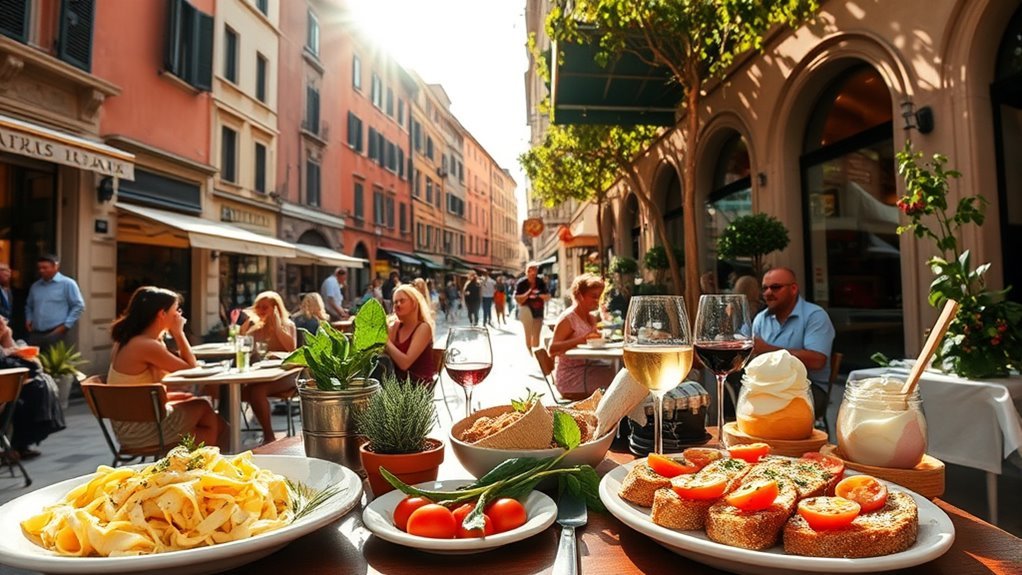
Roman cooking gets much of its character from a short list of bold ingredients: Pecorino Romano, guanciale, black pepper, eggs, tomatoes, seasonal vegetables, and inexpensive cuts that cooks learned to use well. The result is food that often looks simple but depends on timing, balance, and good raw materials.
You can experience that tradition in several ways. A pizzeria may pair a thin, crisp Roman base with carefully sourced toppings. A trattoria may focus on pasta, braised meat, artichokes, and chicory. A market stall may put slow-cooked Roman fillings into a sandwich that you eat at a counter. This range makes Rome a strong food city for both quick lunches and planned dinners.
A good Rome food plan mixes one reserved restaurant, one neighborhood trattoria, and one market or pizza stop instead of chasing every famous address.
What to Eat in Rome Before Choosing a Restaurant
The Four Classic Roman Pastas
The four best-known Roman pastas share a few core ingredients but taste very different. The Michelin Guide’s overview of Roman pasta is a useful reference before you order.
- Cacio e pepe: Pasta, Pecorino Romano, black pepper, and starchy pasta water. It is meat-free but contains dairy and usually gluten and may contain egg if fresh pasta is used.
- Gricia: Pasta with guanciale, Pecorino Romano, black pepper, and pasta water. Think of it as the pork-rich link between cacio e pepe and carbonara.
- Carbonara: Pasta coated with egg, guanciale, Pecorino Romano, and black pepper. A traditional version does not need cream.
- Amatriciana: Pasta with tomato, guanciale, Pecorino Romano, and often a little heat.
Roman Food Beyond Pasta
Do not spend every meal ordering pasta. Look for supplì (fried rice croquettes), pizza al taglio sold by weight, and seasonal artichokes prepared alla romana or alla giudia. Meat eaters can try saltimbocca, coda alla vaccinara, trippa alla romana, or the Testaccio tradition known as quinto quarto, which uses offal and other less prized cuts. For dessert, tiramisù, ricotta-based sweets, and a morning maritozzo are easy additions.
How to Plan Restaurant Meals in Rome
Reservations and Opening Hours
Use each restaurant’s official booking page, phone number, or email policy. Do not rely only on map listings or old travel posts. Some restaurants release tables only a few weeks ahead, some require a card guarantee, and Da Enzo al 29 does not accept reservations at all.
Pro Tip: Save the official booking confirmation and check the restaurant’s website again on the day of your meal. Rome restaurants may close for a weekly rest day, a private event, a holiday, or an August break.
Meal Times, Bills, and Tipping
Many restaurants begin lunch service around 12:30 and dinner service around 7:00 or 7:30, while local dining rooms often feel busier later. Your bill may include a coperto, a per-person cover charge shown on the menu. It is not the same as a tip. Tipping is discretionary; rounding up or leaving a modest amount for excellent service is enough in most casual restaurants.
Food Allergies and Dietary Needs
European Union rules require allergen information for food served in restaurants and cafés. Ask for the allergen list and explain the severity of your allergy before ordering. The European Commission’s allergen guidance notes that information must be available for non-prepacked food, but cross-contact can still happen in a shared kitchen.
Warning: Do not assume cacio e pepe is safe for every vegetarian or allergy-sensitive diner. Fresh pasta may contain egg, some traditional cheeses may not meet every diner’s definition of vegetarian, and shared pasta water, fryers, utensils, or prep areas can create cross-contact.
Emma Pizzeria: Pizza and Roman Classics Near Campo de’ Fiori
Emma Pizzeria is a pizzeria-restaurant with a deli and wine focus. Its official site emphasizes high-quality raw materials and attention to organic products. The menu goes beyond pizza, so it works well when one person wants a Roman-style pie and another wants pasta or a full meal.
Emma is a practical choice for a mixed group because pizza, Roman pasta, cured meats, and a deep wine list share the same menu.
Current menu highlights include:
- Roman-style pizza with a thin base and a wide choice of toppings.
- Carbonara with egg, guanciale, Pecorino Romano, and black pepper.
- Amatriciana with tomato, guanciale, and Pecorino Romano.
- Cacio e pepe made with fresh egg pasta and two styles of pecorino.
Telephone bookings receive priority, and the restaurant says same-day or weekend email requests may not be processed. Because service hours and menu files can change, check the official page or call before traveling across the city.
Armando al Pantheon: Classic Cuisine Near the Pantheon
Armando al Pantheon has served Roman cooking near the Pantheon since 1961. Its location makes it unusually convenient for a landmark day, but the food is rooted in a traditional trattoria menu rather than a generic tourist menu.
Look for Roman pasta, seasonal vegetables, and main courses such as saltimbocca when available. The dining room is small, so booking is not optional for most travelers. Reservations are released on a rolling 30-day window and are handled online.
Note: As posted in July 2026, Armando serves lunch from 12:30 to 3:00 p.m., dinner Monday through Friday from 6:00 to 11:00 p.m., closes Saturday evening and Sunday, and lists an August 9–31 summer closure. Recheck the official site because annual closures can change.
Salumeria Roscioli: A Deli-Restaurant for Carbonara Lovers
Salumeria Roscioli combines a delicatessen, wine cellar, and restaurant. The appeal is not only one pasta dish. You are eating among shelves and counters devoted to cheese, cured meat, wine, and pantry products, so the meal feels closely tied to the ingredients on display.
Signature Carbonara Dish
Roscioli’s carbonara is one of its best-known orders, but it helps to understand what you are tasting. A good Roman carbonara should be creamy from egg, cheese, rendered pork fat, and pasta water rather than added cream.
- Guanciale: Cured pork jowl that supplies rendered fat, crisp edges, and savory depth.
- Pecorino Romano: A salty sheep’s-milk cheese that gives the sauce its sharp finish.
- Egg: The base of the sauce; it should coat the pasta without turning into scrambled egg.
- Black pepper: A fragrant, spicy counterpoint to the rich sauce.
The official menu also highlights gricia, cacio e pepe, and amatriciana, making Roscioli useful for a table that wants to compare several Roman pastas.
Artisanal Ingredients Showcase
| Ingredient | Role in the Dish | Flavor and Texture |
|---|---|---|
| Guanciale | Provides fat and crisp pork pieces | Rich, salty, crisp |
| Pecorino Romano | Seasons and thickens the sauce | Sharp, savory, tangy |
| Egg | Emulsifies with cheese and pasta water | Silky, rich |
| Black pepper | Balances the fat and cheese | Warm, aromatic |
Roscioli currently uses fixed lunch and dinner booking shifts. A card is required to guarantee the table, and the posted policy allows a €20 charge per booked person if the reservation is not canceled by email under its rules. The restaurant currently lists daily service from 12:30 to 3:30 p.m. and 7:00 to 11:30 p.m.
Flavio al Velavevodetto: Cacio e Pepe and Tiramisù in Testaccio
The Testaccio branch of Flavio al Velavevodetto sits on Via di Monte Testaccio, close to the neighborhood’s historic food culture. Its official menu changes with the seasons, but the core Roman dishes remain.
Iconic Roman Dish
The restaurant’s tonnarelli cacio e pepe uses Pecorino Romano and black pepper. The best versions have a smooth coating rather than a heavy pool of sauce, with enough pepper to cut through the cheese. Flavio also lists amatriciana, gricia, carbonara, oxtail-sauce pasta, tripe, and seasonal artichokes.
- Best for: A broad survey of Testaccio-style Roman cooking.
- What to order: Cacio e pepe, a seasonal vegetable, and one braised or offal dish if your table is curious.
- What to know: The menu can change daily based on produce and meat availability.
- Booking: Reserve through the official restaurant page, especially for dinner and weekends.
Decadent Dessert Experience
The current menu includes the restaurant’s own style of tiramisù along with chocolate, sour-cherry, ricotta, and seasonal desserts. Tiramisù is a natural finish after peppery cacio e pepe, but ask what is freshest that day before deciding. That approach fits the restaurant’s seasonal menu better than treating one dessert as permanently guaranteed.
Trattoria Da Enzo al 29: A No-Reservation Trastevere Favorite
Trattoria Da Enzo al 29 serves Roman food on Via dei Vascellari in Trastevere. It is known for classic pasta, fried artichokes when in season, simple second courses, and a busy, informal dining room.
Da Enzo does not accept reservations, so your strategy is arrival time rather than a booking confirmation.
- Carbonara and amatriciana: Reliable starting points for first-time visitors.
- Seasonal dishes: Ask about artichokes, vegetables, and daily specials.
- No reservations: Arrive before opening or choose a weekday lunch to reduce the wait.
- Current hours: Monday through Saturday, noon to 3:00 p.m. and 6:30 to 10:30 p.m.; closed Sunday.
The line is part of the experience for some visitors, but it is not the best choice for a tight museum schedule, small children who cannot wait, or anyone who needs a guaranteed seating time.
Roma Sparita: Cacio e Pepe in Piazza di Santa Cecilia
Roma Sparita occupies a quieter corner of Trastevere in Piazza di Santa Cecilia. The restaurant serves Roman classics indoors and on a large outdoor terrace, making the setting a major part of the meal.
Authentic Roman Experience
The menu extends beyond one famous pasta, so consider sharing starters and ordering different Roman dishes across the table. Seasonal artichokes, oxtail, carbonara, and other classics may appear alongside cacio e pepe. The outdoor tables are especially appealing in mild weather, though they are also the first to fill.
- Setting: A broad terrace on Piazza di Santa Cecilia.
- Booking window: Reservations are accepted at least 24 hours ahead and currently open 15 days before the desired date.
- Hours: Lunch 12:30–2:30 p.m. and dinner 7:30–11:00 p.m.
- Closures: Weekly closing periods change between September–May and June–August, so check the official page.
Signature Cacio e Pepe
Roma Sparita’s cacio e pepe became internationally known after Anthony Bourdain visited in 2009 for No Reservations. The dish is associated with a crisp Pecorino basket presentation, but the real test is the pasta: a balanced cheese-and-pepper sauce that stays smooth and clings to each strand.
Cozy Atmosphere and Charm
The restaurant’s appeal is strongest when you have time to enjoy the square rather than rushing between attractions. Book early, request outdoor seating if that matters to you, and understand that a request is not always a guarantee. For a quieter meal, lunch can feel calmer than a prime dinner slot.
Hosteria Grappolo d’Oro: Seasonal Roman Classics Near Campo de’ Fiori
Hosteria Grappolo d’Oro, at Piazza della Cancelleria 80, is a convenient option near Campo de’ Fiori without limiting the menu to quick tourist food. It focuses on Roman recipes, seasonal produce, local suppliers, and a structured wine program.
| Feature | Current Details | Best For |
|---|---|---|
| Atmosphere | Relaxed dining room near the historic center | Couples and small groups |
| Menu Highlights | Carbonara, amatriciana, cacio e pepe, seasonal mains, homemade desserts | A broad Roman meal |
| Tasting Option | A June 2026 menu listed a four-course Percorso Romano at €36 per person | First-time visitors who want several courses |
| Hours | Daily 12:30–3:00 p.m. and 6:30–10:30 p.m.; Wednesday closed at lunch | Lunch or dinner near central sights |
Prices and dishes change, so use the current official menu rather than treating the tasting menu or any single pasta as permanent. Reservations are available online and are sensible during busy travel periods.
Mercato di Testaccio: A Street-Food and Market Lunch
Mercato di Testaccio is a covered neighborhood market with produce, meat, fish, household goods, and a strong street-food section. It is one of the easiest places to sample several Roman flavors without committing to a long sit-down meal.
- Pizza al taglio and supplì: Try stalls such as L’Angolo in Teglia or Food Box for pizza, fried rice croquettes, and rotating snacks.
- Mordi e Vai: Box 15 serves sandwiches filled with Roman-style braised meats, meatballs, tripe, sausage, vegetables, and other daily options.
- Fresh produce and seasonal vegetables: The market is a good place to see what is in season before you encounter the same ingredients on restaurant menus.
- Flexible lunch: Order from more than one stall, but arrive before the final hour because popular items can sell out.
The official market hours are Monday through Saturday from 7:00 a.m. to 3:30 p.m. Entrances are on Via Beniamino Franklin, Via Alessandro Volta, Via Aldo Manuzio, and Via Lorenzo Ghiberti. Sunday is the regular closing day.
Pro Tip: Visit around late morning for the best mix of open stalls and lunch options. Bring a backup choice because individual vendors may keep shorter hours than the market itself.
Checchino dal 1887: Historic Quinto Quarto Cooking
Checchino dal 1887 is one of Testaccio’s historic restaurants and a key place to understand quinto quarto, the Roman tradition built around offal and less prized cuts from the old slaughterhouse district.
For a gentle introduction, start with tonnarelli al sugo di coda, pasta dressed with a rich oxtail sauce. More adventurous options include trippa alla romana, pajata, veal tongue, sweetbreads, and mixed offal. The menu also has familiar pastas, meat dishes, vegetables, cheese, and desserts, so not every diner at the table must order organ meat.
The restaurant currently lists hours Wednesday through Sunday from 12:30 to 3:00 p.m. and 7:30 to 11:00 p.m. Reservations are wise, especially for dinner.
Note: Ask what each offal term means before ordering. Pajata, tripe, sweetbreads, tongue, and oxtail are different cuts with very different textures.
Which Rome Restaurant Fits Your Trip?
| Place | Area | Best For | Planning Note |
|---|---|---|---|
| Emma | Historic center | Pizza plus pasta and wine | Call for the strongest booking response |
| Armando al Pantheon | Pantheon | Traditional meal near major sights | Book online within the rolling window |
| Salumeria Roscioli | Campo de’ Fiori area | Carbonara, salumi, cheese, and wine | Card guarantee and fixed shifts |
| Flavio al Velavevodetto | Testaccio | Cacio e pepe and a wide Roman menu | Reserve and check seasonal dishes |
| Da Enzo al 29 | Trastevere | Busy, informal trattoria meal | No reservations; expect a line |
| Roma Sparita | Trastevere | Cacio e pepe and outdoor seating | Book within the posted 15-day window |
| Hosteria Grappolo d’Oro | Historic center | Seasonal menu and tasting path | Wednesday lunch is closed |
| Mercato di Testaccio | Testaccio | Fast, flexible market lunch | Go Monday–Saturday before mid-afternoon |
| Checchino dal 1887 | Testaccio | Historic offal and oxtail cooking | Closed Monday and Tuesday |
How to Avoid a Disappointing Meal in Rome
- Read the current menu: A famous dish may be seasonal, sold out, or removed.
- Check the booking policy: Some places charge a no-show fee or hold your table for only a short time.
- Do not over-schedule: Leave enough time for a line, a slower meal, and the walk between neighborhoods.
- Look beyond the four pastas: Seasonal vegetables, soups, braised meats, and daily specials often show more of the kitchen’s personality.
- Review the bill calmly: Check the listed coperto or service charge before deciding whether to leave an extra tip.
Frequently Asked Questions
What Is a Must to Eat in Rome?
Start with one of the four classic pastas: cacio e pepe, gricia, carbonara, or amatriciana. Add supplì, pizza al taglio, a seasonal artichoke, and one vegetable or meat dish so your trip is not built around pasta alone.
Is It Rude to Not Finish Your Plate in Italy?
No fixed rule says an unfinished plate is automatically rude or a sign of satisfaction. Eat what you comfortably can, avoid ordering more than you need, and politely explain if there is a problem with the dish. You do not need to force yourself to finish food.
What Time Do Most People Wake up in Italy?
There is no single national wake-up time; work, school, family, and region all matter. For food planning, restaurant hours are more useful: cafés often open early, lunch commonly starts around 12:30, and dinner service often begins around 7:00 or 7:30.
Which Is the Best Area to Eat in Rome?
Testaccio is the strongest choice for market food and historic Roman cooking. Trastevere has lively trattorias and outdoor dining, while the historic center offers convenience near the Pantheon, Campo de’ Fiori, and other major sights. The best area depends on your schedule and the style of meal you want.
Do I Need Restaurant Reservations in Rome?
Yes for small, famous restaurants such as Armando al Pantheon, Roscioli, and Roma Sparita. Follow the official booking window and cancellation policy. Da Enzo al 29 is the exception in this guide because it does not accept reservations.
How Much Should You Tip at a Restaurant in Rome?
A large percentage tip is not required at ordinary restaurants. Check whether the bill includes a coperto or service charge. You can round up or leave a modest extra amount for excellent service, but tipping should remain voluntary.
Conclusion
The best places to eat in Rome are not all the same. Emma suits a pizza-and-pasta group, Armando and Roscioli reward advance planning, Da Enzo offers a lively no-reservation meal, and Testaccio gives you both market food and historic cooking at Flavio or Checchino. Pick places that fit your neighborhood and schedule, confirm the latest hours, and order beyond the most famous dish when the seasonal menu looks good.
Sources
- Emma Pizzeria official site and menu — restaurant format, menu, and booking guidance.
- Armando al Pantheon official restaurant page — current opening hours, closures, and online reservation policy.
- Salumeria Roscioli official menu and booking pages — Roman pasta offerings, service hours, booking shifts, and guarantee policy.
- Velavevodetto official menu — current cacio e pepe, tiramisù, seasonal dishes, and Testaccio specialties.
- Mercato di Testaccio official information — market hours, entrances, and vendor directory.
- European Commission food-allergen guidance — allergen information requirements for restaurant and café food.
