
Last Updated on July 28, 2026 by Daniel Globe
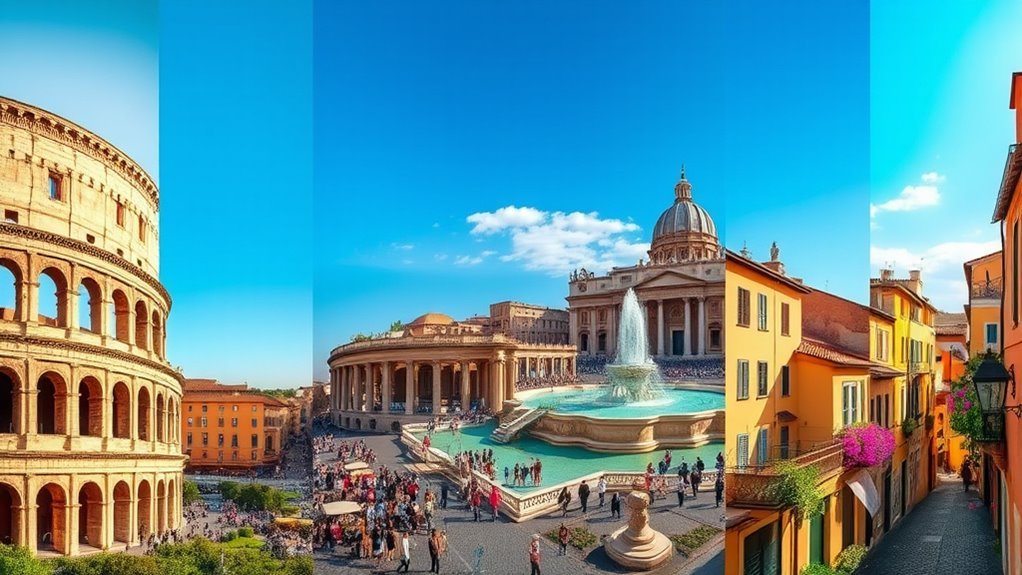
Rome rewards both careful planning and unhurried wandering. Its ancient ruins, churches, museums, fountains, neighborhoods, food markets, and evening gathering places could fill a week, but a first visit does not need to feel rushed. Book the hardest-to-get attractions first, group nearby sights together, and leave time for a slow meal or an unscheduled walk.
Quick Answer
The best things to do in Rome include touring the Colosseum and Roman Forum, visiting the Vatican Museums and St. Peter’s Basilica, entering the Pantheon, seeing the Trevi Fountain, exploring Trastevere, and tasting Roman food. Reserve timed-entry attractions before your trip and allow at least three full days.
Key Takeaways
- Book the Colosseum, Vatican Museums, Galleria Borghese, and other timed-entry sites before your visit.
- Three days cover Rome’s main landmarks; four or five days allow time for neighborhoods, museums, or a day trip.
- Expect long walks, uneven cobblestones, security lines, stairs, and intense summer heat.
- The Pantheon now has a €7 standard ticket, while close access to the Trevi Fountain basin costs €2 for most non-resident visitors.
- Use official ticket sites and check opening hours again shortly before your visit.
At a Glance
| Time Required | Three full days for the essentials; four to five days for museums, neighborhoods, or a day trip |
| Difficulty | Moderate; extensive walking, cobblestones, stairs, crowds, and summer heat |
| What to Bring | Supportive shoes, refillable bottle, sun protection, modest church clothing, phone, and portable charger |
| Cost | Varies widely; several squares and churches are free, while major archaeological sites and museums require tickets |
Disclosure: As an Amazon Associate I earn from qualifying purchases. Some links on this page are affiliate links, at no extra cost to you.
Plan Your Rome Visit Before You Arrive
Reserve the Most Popular Attractions First
Start with the attractions that use timed admission or regularly sell out. These include the Colosseum’s special-access areas, the Vatican Museums, and the Galleria Borghese. The Galleria Borghese requires a reservation for every ticket category, including free tickets.
Buy through official sites whenever possible. Third-party tours can be useful when they include a qualified guide or access you genuinely want, but unofficial resellers may add large markups or sell products with unclear meeting instructions.
Pro Tip: Group the Colosseum, Roman Forum, Palatine Hill, Capitoline Hill, and Victor Emmanuel II Monument on one day. Visit the Vatican Museums, St. Peter’s Basilica, and Castel Sant’Angelo on another.
Getting Around Rome
Central Rome is highly walkable, but the historic center is larger than it appears on a map. Metro, bus, and tram services help with longer journeys. According to ATAC’s current fare information, a 100-minute integrated ticket costs €1.50. The 24-hour, 48-hour, and 72-hour passes cost €8.50, €15, and €22 respectively.
Contactless Tap & Go is available on participating services. Use the same card or device consistently so the fare system can recognize your journeys.
Note: Metro accessibility is not uniform. ATAC currently lists Spagna, Barberini, Repubblica, and Vittorio Emanuele among the Line A stations without lifts or stair lifts connecting to the platforms. Check the official accessibility page before traveling.
Heat, Clothing, and Personal Security
Summer afternoons can be very hot, especially at the Roman Forum, Palatine Hill, Ostia Antica, and Tivoli. Carry water, use shade when available, and schedule exposed archaeological sites for the morning. Rome has many public drinking fountains, often called nasoni, where you can refill a bottle unless a sign says the water is not drinkable.
Churches may require shoulders and knees to be covered. Security screening is common at the Vatican and major monuments, so avoid oversized bags and leave extra time before a timed entry.
Warning: Watch your belongings in crowded squares, buses, metro cars, and queues. Keep phones and wallets out of open pockets, and do not hand money or documents to unofficial ticket sellers.
Explore the Colosseum: Rome’s Ancient Amphitheater
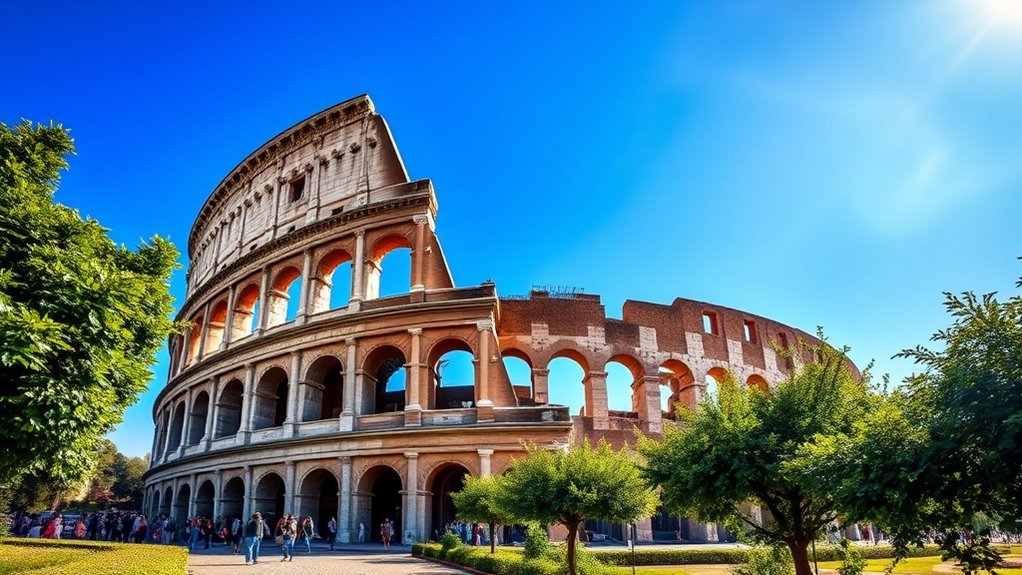
The Colosseum is one of Rome’s essential sights. Built in the first century AD, the amphitheater held tens of thousands of spectators for gladiatorial contests, animal hunts, public displays, and other spectacles. Its surviving corridors, seating levels, and arena structure reveal how Roman engineers moved large crowds through the building.
Standard admission products generally include access to the Colosseum, Roman Forum, and Palatine Hill, although the permitted areas and ticket validity depend on the product. Check the official Colosseum opening and ticket page before booking.
The underground area requires a special ticket or tour. This part of the site contains passages and service spaces used to hold stage equipment, workers, animals, and participants before they entered the arena. Official underground tickets are timed and limited, so reserve early and arrive before the stated check-in time.
Visit Vatican City and the Vatican Museums
Vatican City covers roughly 44 hectares and is the world’s smallest independent state. Its most visited sites are St. Peter’s Basilica, St. Peter’s Square, the Vatican Museums, and the Sistine Chapel.
The Vatican Museums contain vast collections of ancient sculpture, Renaissance painting, maps, tapestries, religious art, and modern works. Major rooms include the Raphael Rooms, Gallery of Maps, Pio-Clementine Museum, and Sistine Chapel.
A Vatican Museums ticket includes the museum route and the Sistine Chapel, but it is not the same as a general ticket to St. Peter’s Basilica. Entry routes and direct passages can change, so do not assume that a museum tour will always finish inside the basilica.
Note: The Vatican Museums enforce clothing, bag, photography, and conduct rules. Photography is not permitted inside the Sistine Chapel.
Stroll Through the Roman Forum and Palatine Hill
The Roman Forum was the ceremonial, political, commercial, and religious center of ancient Rome. It lies between the Palatine and Capitoline hills and forms part of Rome’s UNESCO-listed historic center.
| Key Monument | Why It Matters |
|---|---|
| Curia Julia | The restored Senate House associated with Roman political life |
| Temple of Saturn | A prominent temple linked to religion and the state treasury |
| Arch of Titus | A triumphal arch commemorating the Flavian victory in Judaea |
| Rostra | The platform used for speeches and public announcements |
| Basilica Julia | A civic building associated with courts and public business |
Allow at least two hours for the Forum and Palatine Hill, and longer if you enjoy archaeology. The terrain is uneven and exposed, with limited shade in several areas.
Marvel at the Pantheon’s Ancient Dome
The Pantheon is among the best-preserved buildings of ancient Rome. The present structure dates mainly to the reign of Emperor Hadrian and later became the Basilica of Santa Maria ad Martyres, which helped preserve it through centuries of continuous use.
Historical Significance
The building was associated with the worship of Roman deities before its conversion to a Christian church in the seventh century. It now contains the tombs of the artist Raphael and several Italian monarchs.
Architectural Details
The concrete dome spans approximately 43.3 meters, close to the interior height from the floor to the oculus. The open oculus, roughly 9 meters across, is the building’s main source of natural light. Rain can enter, but the floor includes drainage holes.
| Feature | Description |
|---|---|
| Dome diameter | Approximately 43.3 meters |
| Oculus | Approximately 9 meters across and open to the sky |
| Portico | Supported by monumental granite Corinthian columns |
| Current use | Catholic basilica and state-managed monument |
Tickets and Visiting Tips
Standard admission increased to €7 on July 1, 2026. Reduced and free-entry categories remain available, and worship arrangements differ from ordinary tourist admission. Buy official tickets through the channels listed by the Italian Ministry of Culture.
Visit near opening time for a quieter interior. The Pantheon remains an active church, so speak quietly, dress appropriately, and follow instructions during religious services.
Throw a Coin in the Trevi Fountain
The Trevi Fountain is an eighteenth-century Baroque monument designed by Nicola Salvi and completed in 1762. Its central figure is Oceanus, who stands above a dramatic arrangement of horses, tritons, rockwork, and flowing water.
Best Time to Visit
Early morning usually provides the clearest view and easiest photography. At night, artificial lighting emphasizes the sculptural details, but the square can remain crowded well into the evening.
History and Current Access
The fountain is supplied by the Aqua Virgo, an aqueduct with ancient Roman origins. Since February 2, 2026, most tourists and non-residents must pay €2 to enter the controlled basin area closest to the monument during ticketed hours. Viewing from the wider Piazza di Trevi remains separate from that close-access zone.
Rules, hours, and exemptions can change. Check the official Trevi Fountain visitor site before your trip.
Coin-Toss Tradition
- Stand with your back to the fountain.
- Use your right hand to toss one coin over your left shoulder.
- Avoid climbing on the stonework or entering the water.
- Follow staff directions in the controlled access area.
According to the popular legend, one coin promises a return to Rome. Collected coins are removed by authorized personnel and directed to charitable purposes; visitors should never attempt to retrieve them.
Relax at Piazza Navona
Piazza Navona follows the long, curved outline of the ancient Stadium of Domitian. Today it is one of Rome’s best-known Baroque public spaces.
| Feature | What to Notice |
|---|---|
| Fountain of the Four Rivers | Bernini’s central fountain and its monumental figures |
| Sant’Agnese in Agone | The Baroque church facing the central fountain |
| Street activity | Portrait artists, performers, cafés, and evening crowds |
| Best time | Early morning for space; evening for atmosphere |
The cafés directly on the square charge for their prime location. Walk one or two streets away when value matters more than the view.
Climb the Spanish Steps
The Spanish Steps connect Piazza di Spagna with the church of Trinità dei Monti. The staircase was built in the eighteenth century and forms one of Rome’s best-known urban views.
Scenic Views
Climb toward Trinità dei Monti for views over the rooftops and surrounding streets. The nearby Pincio Terrace offers a broader panorama and is especially attractive near sunset.
Historical Significance
The staircase was constructed between 1723 and 1726 under the direction of Francesco De Sanctis. In spring, displays of white and purple azaleas often decorate the steps.
| Feature | Visitor Information |
|---|---|
| Location | Between Piazza di Spagna and Trinità dei Monti |
| Spring display | Traditional Capitoline azaleas, usually from mid-April into May |
| Nearby shopping | Via dei Condotti and surrounding streets |
| Conduct rule | Do not sit, eat, or place luggage on the protected staircase |
Photo Opportunities
- Arrive early for softer light and fewer people.
- Use the Fontana della Barcaccia at the base as a foreground element.
- Photograph from the sides instead of blocking the main stairway.
- Continue uphill for wider city views.
Warning: Sitting on the Spanish Steps is prohibited. Local officers may enforce Rome’s heritage-protection rules with fines.
Discover Castel Sant’Angelo
Castel Sant’Angelo began as Emperor Hadrian’s mausoleum in the second century AD. It later became a fortress, papal refuge, prison, residence, and museum.
The route through the building reveals Roman foundations, defensive passages, decorated papal rooms, courtyards, and terraces. The upper terrace has a broad view across the Tiber toward central Rome and St. Peter’s dome.
The Passetto di Borgo links the fortress area with the Vatican. It served as a protected route during periods of danger, although public access to the passage is limited to designated visits and events.
Wander Through Villa Borghese Gardens
Villa Borghese is a large landscaped park in central Rome, covering roughly 80 hectares. Its paths connect gardens, museums, monuments, a boating lake, playgrounds, and viewpoints.
- Garden of the Lake: Rent a small boat when the service is operating and see the Temple of Aesculapius.
- Pincio Terrace: Walk toward the terrace for sunset views above Piazza del Popolo.
- Museums: The park includes the Galleria Borghese and several other cultural institutions.
- Open spaces: Use the lawns and shaded paths for a rest between museum visits.
The park is free to enter, but museums, rentals, and individual attractions charge separately.
Experience Trastevere’s Food and Nightlife
Trastevere lies west of the Tiber and is known for narrow lanes, small churches, restaurants, bars, and active evening squares. Its popularity means that the busiest streets can feel more tourist-oriented than residential.
Nightlife Scene
- Begin around Piazza di Santa Maria in Trastevere or Piazza Trilussa.
- Explore side streets instead of staying only on the busiest restaurant corridors.
- Check current event listings for live music rather than relying on old venue lists.
- Keep noise low when walking through residential streets late at night.
Food Experiences
Look for traditional Roman dishes such as carbonara, amatriciana, cacio e pepe, saltimbocca, and supplì. Restaurant quality varies, so compare recent menus and reviews rather than assuming that every old-looking trattoria is locally favored.
Street Atmosphere
Do not miss the Basilica of Santa Maria in Trastevere and its piazza. For a quieter walk, continue toward less crowded lanes south of the central square or climb Janiculum Hill for views.
Campo de’ Fiori is often paired with Trastevere in walking itineraries, but it is across the river in Rome’s historic center rather than inside Trastevere.
Explore Campo de’ Fiori
Campo de’ Fiori hosts a daytime market with produce, spices, flowers, packaged foods, and souvenirs. The square becomes a restaurant and nightlife area after the market closes.
A statue of the philosopher Giordano Bruno stands at the center. He was executed in the square in 1600, and the monument reflects the site’s complex history rather than a simple transition from “darkness to enlightenment.”
Arrive in the morning to see the market operating. For a broader local market experience, also consider Testaccio Market or neighborhood food markets outside the most visited center.
Stand in Awe at St. Peter’s Basilica
St. Peter’s Basilica is one of Christianity’s most important pilgrimage churches. The present building was created by several leading Renaissance and Baroque architects over more than a century.
Architectural Highlights
- The dome: Michelangelo developed the principal design, while Giacomo della Porta and Domenico Fontana completed it after his death.
- The Pietà: Michelangelo’s marble sculpture is protected behind glass near the entrance.
- Bernini’s baldachin: The monumental bronze canopy marks the papal altar.
- The dome climb: Visitors can use stairs or combine an elevator with additional stairs, subject to current access arrangements.
Spiritual Significance and Visitor Rules
The basilica stands over the traditional burial place of Saint Peter. It is an active place of worship, not merely an art museum, and schedules can change for Masses, papal ceremonies, and special events.
| Feature | What to Know |
|---|---|
| Basilica entry | General church entry is traditionally free, but optional reservations, tours, and experiences may cost extra |
| Dome access | Separate paid access with confined stairs near the top |
| Security | Airport-style screening can create long queues |
| Dress | Shoulders and knees should be covered |
Check current hours and services on the official St. Peter’s Basilica website.
Visit the Galleria Borghese
The Galleria Borghese displays an exceptional collection in the former villa of Cardinal Scipione Borghese. Highlights include paintings by Caravaggio and Raphael and major sculptures by Gian Lorenzo Bernini.
- Bernini sculptures: See Apollo and Daphne and The Rape of Proserpina.
- Caravaggio rooms: View several works together in an unusually concentrated display.
- Timed visits: Standard visits are organized into controlled entry shifts.
- Mandatory booking: Every visitor needs a reservation, even on free-entry days.
The gallery currently lists a standard full-price ticket of €16 plus a mandatory reservation fee, with prices subject to change during special exhibitions. Check the official ticket page before purchase.
Explore Rome’s Catacombs
Rome’s catacombs are underground burial complexes associated with early Christian and Jewish communities. Public sites include the Catacombs of San Callisto, San Sebastiano, Domitilla, Priscilla, and Sant’Agnese.
Do not treat the catacombs as one continuous tunnel network. Each complex has its own layout, history, schedule, and visitor route. San Sebastiano, for example, contains about 12 kilometers of galleries on several levels, though only a controlled portion is open to visitors.
Visits are guided at major public catacombs. Tours commonly last around 30 to 60 minutes and may include narrow passages, uneven steps, low light, and cool temperatures.
Warning: Catacomb tours may not suit visitors with serious walking difficulties or claustrophobia. San Sebastiano’s official rules note about 70 irregular steps on the route.
See the Victor Emmanuel II Monument
The Victor Emmanuel II Monument, also known as the Vittoriano or Altare della Patria, honors the first king of unified Italy. It was inaugurated in 1911, with later work continuing into the twentieth century.
- White marble terraces: Walk through the monumental stairways and exterior spaces.
- Tomb of the Unknown Soldier: Observe the memorial respectfully and do not sit on protected areas.
- Museums: Interior institutions explore Italian unification and national history.
- Panoramic terrace: A paid elevator leads to high-level views over the Forum and central Rome.
Take a Day Trip to Tivoli
Tivoli is about 30 kilometers east of Rome and contains two major UNESCO-listed villa complexes: Villa d’Este and Hadrian’s Villa. Seeing both in one day is possible but requires an early start and careful transport planning.
Villa d’Este Gardens
Villa d’Este is known for terraced Renaissance gardens filled with hundreds of fountains, jets, cascades, pools, and channels. Highlights include the Hundred Fountains, Fountain of the Organ, and Fountain of Neptune.
- Wear shoes with secure grip because paths and steps may be wet.
- Allow time for both the frescoed villa rooms and the gardens.
- Check whether water features are operating during maintenance or drought restrictions.
- Expect many stairs and sloped paths.
Hadrian’s Villa
Hadrian’s Villa is a vast archaeological complex rather than a single house. Emperor Hadrian developed it as an imperial residence with gardens, baths, pools, halls, living quarters, and buildings influenced by places across the Roman world.
| Villa d’Este | Hadrian’s Villa |
|---|---|
| Renaissance palace and gardens | Large Roman archaeological estate |
| Fountains and water engineering | Baths, halls, pools, and residential structures |
| Steep terraces and stairs | Long walking distances and exposed ground |
| Best for garden and design lovers | Best for archaeology and Roman history |
Explore Ostia Antica
Ostia Antica was Rome’s ancient harbor city near the mouth of the Tiber. It contains streets, apartment buildings, temples, warehouses, baths, mosaics, shops, and a theater that together show more of ordinary urban life than many central Roman monuments.
- The theater: A restored performance space with seating for several thousand spectators.
- The Forum: The civic and religious center of the ancient settlement.
- Bath complexes: Several preserve detailed black-and-white mosaics.
- Apartment buildings: Multi-story remains show how many residents lived and worked.
Allow at least three hours. The site is large, sunny, and uneven, so carry water and sun protection. From central Rome, the journey normally involves Metro Line B to Piramide or EUR Magliana and the Metromare rail connection toward Ostia Antica.
Visit the Pyramid of Cestius
The Pyramid of Cestius is a Roman tomb built for Gaius Cestius between approximately 18 and 12 BC. Its pointed profile reflects the popularity of Egyptian forms in Rome after the conquest of Egypt.
Historical Significance
- Roman-Egyptian exchange: The design shows how Egyptian imagery entered Roman elite culture.
- Funerary purpose: The structure was built as a private tomb, not as a temple.
- Aurelian Walls: The pyramid survived partly because later fortifications incorporated it.
- Preservation: Its marble-clad exterior remains one of Rome’s most unusual ancient monuments.
Architectural Features
The monument is about 36 meters high and is built from brick-faced concrete covered with marble slabs. Its steep angle distinguishes it from many Egyptian pyramids.
Surrounding Area
- Non-Catholic Cemetery: Visit the nearby cemetery where poets John Keats and Percy Bysshe Shelley are commemorated or buried.
- Porta San Paolo: See the surviving Roman gate and wall structures.
- Testaccio: Continue into the neighborhood for food and market visits.
- Interior visits: Access to the tomb is limited to scheduled openings or guided arrangements, so verify before traveling.
Visit the Baths of Caracalla
The Baths of Caracalla were built in the early third century AD and formed one of imperial Rome’s largest public bathing complexes. Visitors can walk through towering brick ruins that once enclosed heated rooms, cold pools, exercise areas, gardens, service corridors, and richly decorated halls.
The site is less enclosed than the Colosseum and often feels calmer, but it remains exposed to the weather. Digital reconstructions or an audio guide can help explain spaces whose marble walls, roofs, pools, and furnishings have disappeared.
Check the event calendar before visiting because concerts, restoration work, or special installations can affect routes and hours.
Seek Serenity at Santa Maria in Trastevere
The Basilica of Santa Maria in Trastevere is one of the neighborhood’s central landmarks. Its medieval mosaics, reused ancient columns, later chapels, and seventeenth-century ceiling reflect several periods of Roman church architecture.
Architectural Details
- Façade mosaic: A medieval image of the Virgin and Child with female figures.
- Apse mosaics: Rich gold mosaics associated with the medieval rebuilding of the church.
- Ancient columns: A varied row of reused columns divides the nave from the aisles.
- Ceiling: The gilded wooden ceiling includes a central painting traditionally attributed to Domenichino.
Peaceful Atmosphere
Visit in the morning for a quieter interior. Masses, weddings, funerals, and parish events take priority over tourism, so remain silent when services are underway and avoid photographing worshippers.
Enjoy Gelato at Giolitti
Giolitti dates to 1900 and is one of central Rome’s best-known historic gelaterias. It offers a broad rotating selection of fruit, nut, chocolate, cream, and seasonal flavors.
- Pay at the cashier before ordering when the shop is operating its traditional ticket system.
- Show the receipt to the server at the counter.
- Ask for whipped cream if you want the classic house-style finish.
- Expect queues during afternoons, weekends, and peak travel periods.
Giolitti is near the Pantheon and Parliament area, making it an easy stop during a historic-center walk. It is famous rather than hidden, so compare it with smaller neighborhood gelaterias as well.
Savor Authentic Roman Cuisine
Roman cooking is built around direct flavors and a relatively short list of ingredients. For carbonara, the traditional combination is pasta, guanciale, egg, Pecorino Romano, and black pepper rather than cream.
Other staples include cacio e pepe, amatriciana, gricia, saltimbocca, oxtail stew, and thin Roman-style pizza. Supplì are fried rice croquettes commonly filled with tomato-seasoned rice and mozzarella.
Seasonal artichoke dishes include carciofi alla romana, slowly cooked with herbs, and carciofi alla giudia, fried in the Roman Jewish tradition. Ask what is genuinely in season rather than expecting every specialty year-round.
Experience Nightlife in Testaccio
Testaccio combines traditional food businesses, a modern market, archaeological remains, restaurants, bars, and club spaces. Its nightlife has changed repeatedly as venues open, close, or alter their schedules.
- Testaccio Market: Visit during daytime hours for produce, prepared food, and local specialties.
- Monte Testaccio: See the ancient mound formed from discarded Roman amphora fragments.
- Late-night food: Look for pizza, supplì, sandwiches, or trapizzini after an evening out.
- Current listings: Check official venue calendars rather than relying on old club lists.
Night buses operate on selected routes, but service intervals may be long. Confirm your return route before staying out late.
Visit Centrale Montemartini
Centrale Montemartini places ancient Roman sculpture, mosaics, and archaeological finds inside a former power station. Marble statues stand beside preserved turbines, boilers, pipes, and industrial machinery.
The museum opened as a temporary exhibition space in 1997 and later became a permanent branch of the Capitoline Museums. Its contrast between classical art and industrial engineering makes it one of Rome’s most distinctive museum experiences.
It is in the Ostiense area, so combine it with the Pyramid of Cestius, Testaccio, or the Basilica of Saint Paul Outside the Walls.
Take a Vespa Tour
A Vespa tour can cover viewpoints, side streets, and neighborhoods more quickly than walking. Options include riding as a passenger with a guide or operating a scooter yourself.
- Passenger tours: A practical choice for visitors without extensive urban scooter experience.
- Driving requirements: Verify licensing, age, deposit, and insurance terms before booking.
- Protective gear: Wear the provided helmet correctly and choose closed shoes.
- Route quality: Favor tours that limit time on fast roads and explain safety procedures clearly.
Warning: Rome’s traffic, tram tracks, cobblestones, limited-traffic zones, and unpredictable lane changes can challenge inexperienced riders. Supplied helmets do not remove the risks of operating a scooter.
Explore Rome’s Jewish Quarter
Rome’s Jewish community has a history extending back more than 2,000 years. The district commonly called the Jewish Ghetto was formally established in 1555, although the community’s Roman history began much earlier.
Important places include the Great Synagogue, Jewish Museum of Rome, Portico of Octavia, Theatre of Marcellus, and memorial stones dedicated to residents deported during the Holocaust.
Food traditions include carciofi alla giudia, fried cod, baked goods, and dishes shaped by both Roman and Jewish dietary customs. Visit with respect: this is a living community as well as a historic district.
Attend a Football Match
AS Roma and SS Lazio play major home matches at Stadio Olimpico. A match offers a direct view of Roman supporter culture, including songs, flags, scarves, and carefully organized displays.
- Buy through the club’s official ticket channels or an authorized seller.
- Bring the identification required for a named ticket.
- Check prohibited-item and bag rules before leaving your hotel.
- Allow extra time for security checks and public transport after the match.
Ticket prices vary by club, opponent, competition, section, and demand. Derby matches and European fixtures require especially careful planning.
Visit the National Roman Museum
The National Roman Museum consists of four sites: Palazzo Massimo, Palazzo Altemps, the Baths of Diocletian, and Crypta Balbi. A combined ticket is available, although temporary closures and renovation work may affect individual rooms.
- Palazzo Massimo: Known for ancient sculpture, coins, mosaics, and Roman frescoes, including garden paintings from the Villa of Livia.
- Palazzo Altemps: Displays historic sculpture collections, including the Ludovisi Gaul, also called the Galatian Suicide.
- Baths of Diocletian: Combines monumental bath remains, inscriptions, and archaeological collections.
- Crypta Balbi: Examines the transformation of a central Roman neighborhood from antiquity through the medieval period.
Check the museum’s official ticket and closure page before deciding which sites to visit.
Discover Quartiere Coppedè
Quartiere Coppedè is a small architectural complex around Piazza Mincio rather than an official administrative district. Architect Gino Coppedè created its unusual mixture of Liberty, Art Deco, medieval, classical, Gothic, and Baroque references between 1915 and 1927.
- Palazzi degli Ambasciatori: Enter beneath the decorated arch and large hanging lamp.
- Fontana delle Rane: See the fountain of frogs in the center of Piazza Mincio.
- Palazzina del Ragno: Look for the large spider motif above the entrance.
- Villino delle Fate: Study its asymmetrical towers, arches, frescoes, and mixed materials.
The area is residential and can be explored in less than an hour. Keep voices low, stay off private steps, and do not block entrances while taking photographs.
Join a Roman Cooking Class
A cooking class gives you a more active introduction to Italian food than a restaurant meal alone. Classes may focus on fresh pasta, sauces, pizza, gelato, market shopping, or several dishes served as a complete meal.
| Dish or Pasta | Technique | Class Focus |
|---|---|---|
| Fettuccine | Mixing, kneading, rolling, and cutting | Fresh egg-pasta basics |
| Ravioli | Filling, sealing, and controlling moisture | Filled-pasta technique |
| Gnocchi | Balancing dough texture and shaping | Potato or semolina variations |
| Tagliatelle | Rolling dough to an even thickness | Regional Italian pasta methods |
| Lasagna | Preparing sheets, sauce, filling, and layers | Complete baked dish |
Prices vary by group size, menu, location, duration, and whether a market tour or wine is included. Before booking, confirm the class language, accessibility, allergy policy, cancellation terms, and whether you will cook individually or share tasks with a group.
How to Organize Rome by Trip Length
One Day in Rome
Choose either ancient Rome or the Vatican rather than trying to tour both deeply. A practical ancient-Rome day combines the Colosseum, Forum, Capitoline area, Pantheon, Trevi Fountain, and an evening walk through Piazza Navona.
Three Days in Rome
- Day 1: Colosseum, Roman Forum, Palatine Hill, Capitoline area, and Monti.
- Day 2: Vatican Museums, St. Peter’s Basilica, Castel Sant’Angelo, Piazza Navona, and Pantheon.
- Day 3: Galleria Borghese, Villa Borghese, Spanish Steps, Trevi Fountain, Jewish Quarter, and Trastevere.
Four or Five Days in Rome
Add Ostia Antica or Tivoli, then use the remaining time for the Baths of Caracalla, Appian Way, catacombs, National Roman Museum, Centrale Montemartini, Testaccio, or Quartiere Coppedè.
Pro Tip: Do not book every hour. A daily plan with one major morning reservation, one afternoon area, and an open evening is usually more enjoyable than crossing the city for back-to-back entry times.
Frequently Asked Questions
What should you not miss in Rome?
For a first visit, prioritize the Colosseum and Roman Forum, Vatican Museums and St. Peter’s Basilica, Pantheon, Trevi Fountain, Piazza Navona, and one neighborhood such as Trastevere. Galleria Borghese is an excellent addition for art lovers.
Is $10,000 enough for a trip to Italy?
It can be more than enough for many trips, but the answer depends on trip length, number of travelers, flights, season, hotel level, private tours, and dining choices. Prepare a daily budget for lodging, food, transport, attractions, and a contingency amount rather than judging the trip by one total alone.
Is three days in Rome too long?
No. Three full days are a practical minimum for first-time visitors who want to see ancient Rome, the Vatican, and the historic center without reducing every stop to a photograph. Four or five days allow a slower pace and a day trip.
What are the top five attractions in Rome?
A strong first-time list is the Colosseum and Roman Forum, Vatican Museums, St. Peter’s Basilica, Pantheon, and Trevi Fountain. Piazza Navona, Galleria Borghese, Castel Sant’Angelo, and Trastevere are close alternatives based on your interests.
Which Rome attractions should be booked in advance?
Book the Colosseum, Vatican Museums, Galleria Borghese, and popular guided tours before arrival. Special Colosseum access, weekend museum slots, and peak-season Vatican times can sell out well ahead.
Is Rome easy to explore on foot?
Many central attractions are within walking distance, but a sightseeing day can still involve several miles. Cobblestones, hills, stairs, heat, and uneven archaeological surfaces make supportive footwear important. Use public transport for the Vatican, Ostiense, Appian Way, and other longer connections.
What should you wear to the Vatican and Rome’s churches?
Wear clothing that covers shoulders and knees, especially at St. Peter’s Basilica and the Vatican Museums. Carry a light layer or scarf in warm weather, but do not depend on improvised coverings being accepted at every entrance.
Is the Trevi Fountain free to visit?
You can still view the fountain from the wider Piazza di Trevi, but since February 2, 2026, most tourists and non-residents need a €2 ticket to enter the controlled basin area closest to the monument during ticketed hours.
Conclusion
Rome’s most famous landmarks deserve their reputation, but the city becomes more memorable when you balance major reservations with slower experiences. Tour the Colosseum, Vatican, and Pantheon, then make room for a neighborhood walk, a market, a quiet church, or a long Roman meal. Three days cover the essentials, while extra time opens the door to museums, Ostia Antica, Tivoli, and the city’s less-visited districts.
Sources
- Parco archeologico del Colosseo — official Colosseum, Forum, Palatine Hill, ticket, and opening information
- Italian Ministry of Culture: Pantheon — official admission, ticket, and visitor information
- Vatican Museums — official collections, calendar, rules, and ticket information
- St. Peter’s Basilica — official hours, tours, reservations, and visitor services
- Turismo Roma — Roma Capitale’s official information for monuments, neighborhoods, transport, and events
- ATAC Roma — official public-transport fares, passes, payment methods, maps, and accessibility information
