
Last Updated on July 28, 2026 by Daniel Globe
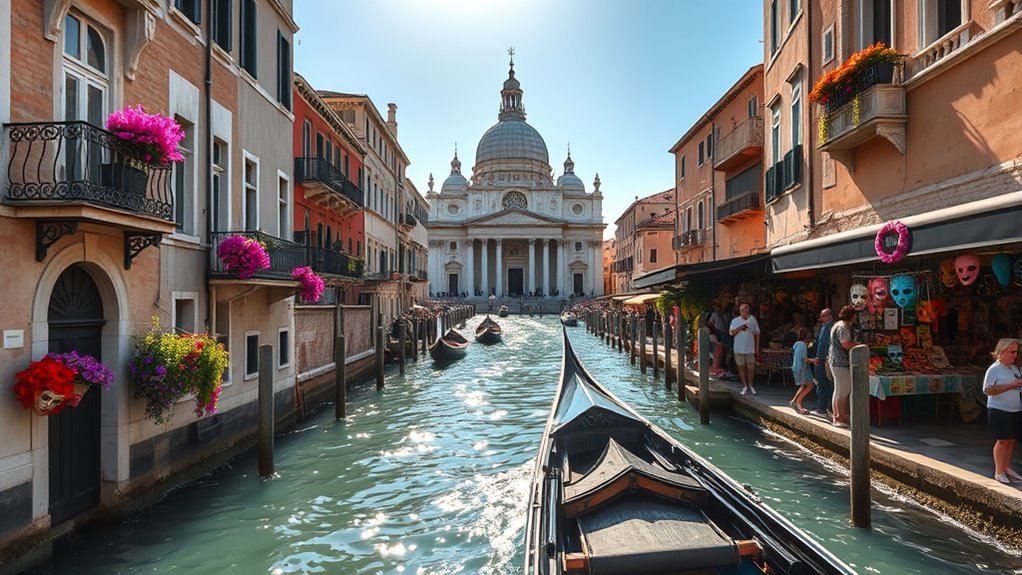
Venice rewards travelers who mix its famous landmarks with quieter neighborhoods, lagoon islands, local food, and time on the water. Start with St. Mark’s Basilica and the Doge’s Palace, cross the Rialto Bridge, ride the Grand Canal, and then slow down in Cannaregio or Dorsoduro. With thoughtful planning, even a short visit can feel rich rather than rushed.
Quick Answer
The best things to do in Venice include touring St. Mark’s Basilica and the Doge’s Palace, crossing the Rialto Bridge, riding a vaporetto or gondola, eating cicchetti, visiting Burano, seeing modern art in Dorsoduro, and exploring quieter canals in Cannaregio. Allow two or three days for a balanced first visit.
Key Takeaways
- Reserve St. Mark’s Basilica, the Doge’s Palace, and other high-demand attractions before your trip.
- A daytime gondola ride currently has an official base price of €90 for 30 minutes, covering up to five passengers.
- The vaporetto is the practical way to see the Grand Canal and reach islands such as Burano.
- Stay for two or three days when possible so you can see major sights without skipping Venice’s quieter neighborhoods.
- Check official attraction, transport, and access-fee websites shortly before traveling because schedules and rules can change.
Venice at a Glance
| Ideal Stay | Two to three full days; one day covers only the central highlights |
| Official Gondola Fare | €90 for 30 minutes by day; €110 for 35 minutes after 7 p.m.; maximum five passengers |
| ACTV Transport | €9.50 for a 75-minute ticket; current passes start at €25 for one day |
| Advance Booking | Recommended for St. Mark’s Basilica, the Doge’s Palace, the Campanile, and the Peggy Guggenheim Collection |
| Walking Conditions | Uneven paving, crowded lanes, many bridges, and frequent steps |
Disclosure: As an Amazon Associate I earn from qualifying purchases. Some links on this page are affiliate links, at no extra cost to you.
Plan Your Venice Visit Before You Arrive
Venice is compact on a map, but its lanes, bridges, crowds, and waterways make travel slower than expected. A two- or three-day stay gives you enough time for the central sights, a lagoon island, and at least one less-crowded neighborhood. With only one day, focus on St. Mark’s Square, the Doge’s Palace, Rialto, and the Grand Canal.
Book high-demand attractions through their official websites rather than relying on unofficial ticket sellers. Church services, restoration work, high water, holidays, and special events can affect visitor access.
Note: Venice’s 2026 access-fee trial ended on July 26, 2026. The fee does not apply from July 27, 2026, onward. Check the official Venice Access Fee portal before a future trip because later-year rules may differ.
Venice is best explored on foot and by ACTV waterbus. According to the official Venezia Unica ticket portal, a 75-minute transport ticket currently starts at €9.50. Current passes cost €25 for one day, €35 for two days, €45 for three days, and €65 for seven days. Airport transportation is generally priced separately.
Pro Tip: Visit St. Mark’s Square before 9 a.m., then return after dinner. Midday is usually the busiest period, while early morning and evening reveal a calmer, more atmospheric side of the city.
Travelers with limited mobility should review the city’s accessible routes before choosing a hotel or itinerary. Some major sites have elevators or step-free areas, but many bridges and narrow streets remain difficult to navigate.
Explore St. Mark’s Basilica
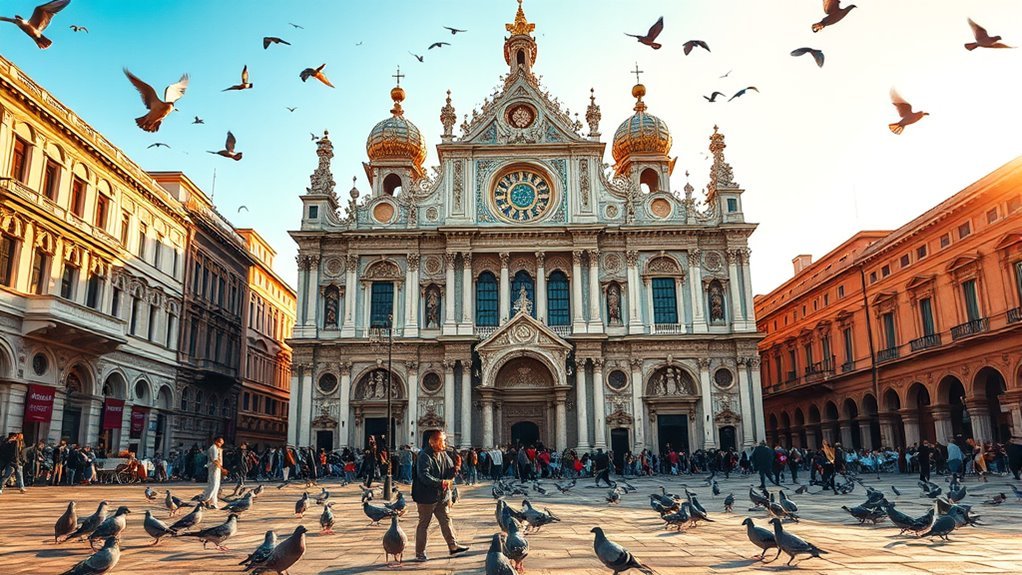
St. Mark’s Basilica is Venice’s great religious landmark and one of the most important buildings in the city. Its five-domed form, marble surfaces, and extensive golden mosaics reflect centuries of contact between Venice, Byzantium, and the eastern Mediterranean.
According to the official basilica history, the relics associated with St. Mark were brought from Alexandria to Venice in 828. The basilica later became both a sacred site and a powerful symbol of the Venetian Republic.
Inside, look for the glittering mosaics, the main altar associated with St. Mark, and the Pala d’Oro, an elaborate golden altarpiece decorated with enamels and precious materials. Separate tickets may be required for the Pala d’Oro, museum, Loggia dei Cavalli, or other parts of the complex.
Use the official St. Mark’s Basilica ticket office to review current options and available time slots. Dress respectfully for an active place of worship, keep voices low, and follow the current rules for bags and photography.
Visit the Doge’s Palace and Bridge of Sighs
The Doge’s Palace belongs on every first-time Venice itinerary. This Gothic palace served as the residence of the doge and the center of political and judicial power in the Venetian Republic.
The regular visitor route passes through the courtyard, Doge’s Apartments, government chambers, Armoury, picture galleries, and historic prisons. It also leads through the enclosed passage of the Bridge of Sighs, which connected the palace courts to the New Prisons.
Allow at least two hours for a standard visit and more time if you enjoy political history or large decorative interiors. Special tours, including the Secret Itineraries, require separate reservations and enter rooms not included in the usual route.
Current hours, ticket combinations, accessibility details, and special openings are published on the official Doge’s Palace website.
Wander Across the Rialto Bridge
The Rialto Bridge is the oldest of the present bridges crossing the Grand Canal. The current stone bridge was built between 1588 and 1592 under architect Antonio da Ponte, replacing earlier wooden structures.
Its broad arch carries two rows of small shops and three pedestrian passages. The outer walkways provide classic views of palaces, vaporetti, delivery boats, water taxis, and gondolas moving along the Grand Canal.
Visit early in the morning for more space or return near sunset for warmer light. The central steps and bridge approaches can become extremely crowded during the middle of the day.
After crossing, continue to the Rialto Market area in San Polo. The surrounding lanes help explain why Rialto developed as Venice’s historic commercial center rather than simply a scenic bridge.
Ride a Vaporetto Along the Grand Canal
A public waterbus ride is one of the best-value experiences in Venice. It gives you a water-level view of Grand Canal palaces while also serving as practical transportation between the railway station, Rialto, St. Mark’s area, and other districts.
Routes and stopping patterns can change, so check the official ACTV waterbus map before boarding. Validate your ticket as required and keep it available during the trip.
For the clearest views, choose an outdoor space when one is available, but do not block exits or luggage areas. Early mornings and evenings are usually more comfortable than peak sightseeing hours.
Cruise the Canals on a Gondola Ride
A gondola offers a quieter and more intimate view of Venice than a busy waterbus. Routes often combine small canals with a short stretch of a larger waterway, but the exact experience depends on the gondola station and local traffic.
The official Venice visitor portal currently lists a base fare of €90 for a 30-minute daytime ride. From 7 p.m. to 3 a.m., the official base fare is €110 for 35 minutes. A gondola can carry up to five passengers, and the tariff covers the boat rather than charging each passenger separately.
Discuss the expected route, length, and any requested extras before boarding. Singing, music, extended time, and customized routes may cost more than the base tariff.
Sunset is romantic but busy. Early morning can provide calmer canals, easier conversations, and better chances to hear the gondolier’s explanation without heavy boat traffic.
Warning: Venice’s canal edges may be wet, slippery, or unprotected. Stay behind barriers, supervise children closely, and never enter or swim in the canals.
Eat Cicchetti and Try a Venetian Spritz
Venice’s bacari are small bars where locals stop for drinks and cicchetti, the city’s bite-size snacks. Common choices include crostini topped with creamed salt cod, meatballs, marinated seafood, cheeses, vegetables, and small sandwiches.
Prices vary by neighborhood, ingredient, and venue, so check the posted menu rather than relying on a single citywide estimate. A casual bacaro crawl works best when you order one or two bites at several stops instead of treating one bar as a long formal meal.
A traditional Venetian-style spritz may be made with Select, prosecco, soda, ice, and a green olive. The official Select recipe uses 7.5 centiliters of prosecco, 5 centiliters of Select, and 2.5 centiliters of soda or seltzer.
Late afternoon and early evening are popular times for this ritual. Nonalcoholic drinks are widely available, and anyone drinking alcohol should do so responsibly.
Visit the Colorful Island of Burano
Burano provides a striking contrast to central Venice. Its low houses, bright facades, canals, fishing traditions, and lace-making heritage make it one of the lagoon’s most memorable islands.
According to local tradition, residents painted their houses in vivid colors so fishermen could recognize them through winter fog. The story is part of Burano’s identity, although it should be understood as tradition rather than a fully documented origin.
Browse carefully when shopping for lace. The island’s craft tradition is real, but not every inexpensive lace souvenir is handmade locally. The official Lace Museum explains the history of Burano lace and the island’s former lace school.
| Attraction | Why It Is Worth Seeing |
|---|---|
| Colorful Houses | Bright canal-side facades and one of the lagoon’s most distinctive streetscapes |
| Lace Museum and Shops | A closer look at Burano’s lace-making tradition and surviving craftsmanship |
| Seafood Restaurants | Lagoon dishes served near working canals and fishing areas |
| San Martino Bell Tower | A visibly leaning landmark that helps define Burano’s skyline |
Allow at least half a day for Burano once transportation and waiting time are included. A visit becomes rushed when Burano, Murano, and Torcello are all squeezed into only a few hours.
Enjoy Coffee at Caffè Florian
Caffè Florian is more than a convenient coffee stop. Opened in St. Mark’s Square on December 29, 1720, it is the oldest coffeehouse in Italy and one of Venice’s most recognizable historic interiors.
Understand Its Historic Importance
The café originally opened as Alla Venezia Trionfante but soon became known by the name of its founder, Floriano Francesconi. Its rooms later became gathering places for aristocrats, merchants, writers, artists, political figures, and travelers.
Giacomo Casanova is closely associated with the café, while the establishment’s official history also discusses visitors and writers including Lord Byron, Goethe, Charles Dickens, Marcel Proust, and Jorge Luis Borges. Learn more through the official Caffè Florian history.
Expect an Elegant but Expensive Experience
The decorated rooms, mirrors, painted panels, formal service, and position on St. Mark’s Square are the main reasons to visit. Scheduled live music may add to the atmosphere, particularly during the warmer months.
Prices are higher than at an ordinary neighborhood café, and current menu or music-related charges should be reviewed before ordering. Decide whether you are paying for a quick drink or for time in a historic setting overlooking Venice’s most famous square.
Choose From the Current Menu
Coffee, tea, chocolate, pastries, cocktails, light meals, and seasonal specialties may be available. Instead of visiting for one supposedly essential drink, review the current menu and select something that suits your budget and the time of day.
| Element | What to Expect |
|---|---|
| Ambiance | Ornate historic rooms and views of St. Mark’s Square |
| Service | Formal table service rather than a quick counter coffee |
| Menu | Coffee, tea, chocolate, pastries, cocktails, and light dishes |
| People-watching | A front-row position in Venice’s busiest public square |
| Budget | Premium pricing; inspect the current menu before sitting down |
See Modern Art at the Peggy Guggenheim Collection
The Peggy Guggenheim Collection occupies Palazzo Venier dei Leoni, Peggy Guggenheim’s former home beside the Grand Canal. It is one of Italy’s leading museums of European and North American 20th-century art.
Explore Major Modern Art Movements
The collection includes works connected with Cubism, Futurism, Surrealism, European abstraction, avant-garde sculpture, and American Abstract Expressionism. Artists represented include Pablo Picasso, Jackson Pollock, Salvador Dalí, Vasily Kandinsky, Paul Klee, Marcel Duchamp, and Max Ernst.
The exact works on display may change because of loans, conservation, and temporary exhibitions. Check the official online collection when a particular artist or painting is central to your visit.
Enjoy the Canal-side Palazzo and Sculpture Garden
The museum’s low, unfinished palazzo creates an intimate setting that feels different from Venice’s larger civic museums. Its Grand Canal terrace and sculpture garden provide quiet breaks between the galleries.
The museum does not advertise canal-side dining as part of the visit. Afterward, walk toward the Accademia, Zattere, or Campo Santa Margherita for cafés, bacari, and restaurants in Dorsoduro.
Learn About Peggy Guggenheim’s Legacy
Peggy Guggenheim promoted many artists who helped shape modern art. She exhibited her collection at the 1948 Venice Biennale, purchased Palazzo Venier dei Leoni in 1949, and began opening her home and collection to the public in 1951.
The museum now presents her personal collection alongside other holdings, temporary exhibitions, educational talks, and the sculpture garden. Review current hours and tickets on the official museum website.
Explore Libreria Acqua Alta
Libreria Acqua Alta is a highly unusual independent bookstore where books are stored in shelves, tubs, boats, and a full-size gondola. The arrangement reflects the shop’s playful response to Venice’s recurring high-water conditions.
Its best-known feature is an outdoor staircase built from old books. From the top, visitors can glimpse a nearby canal and surrounding buildings. Resident cats may also appear among the crowded shelves.
The shop can become cramped when tour groups arrive. Visit early, move carefully through the narrow spaces, and remember that it remains a working bookstore rather than only a photography stop. Buying a book or print is a simple way to support the business.
See Venice From the Campanile di San Marco
St. Mark’s Campanile rises 98.6 meters above the square and offers one of the broadest views in Venice. From the observation level, you can look across the city’s roofs, church domes, lagoon, islands, and distant mainland.
An elevator carries visitors to the viewing level, making this viewpoint more accessible than towers reached only by stairs. Weather, maintenance, and crowd-control measures may affect admission.
Sunset light can be beautiful, but the tower’s closing time does not always line up with sunset. Check the official Campanile ticket page before planning an evening visit.
Arrive before your preferred viewing time so you do not miss the light while waiting. Morning is another strong option, especially when visibility is clear and queues are shorter.
Explore Cannaregio and Dorsoduro
Cannaregio and Dorsoduro reveal a more lived-in side of Venice beyond its busiest central route. Both districts have important cultural sites, attractive canals, local restaurants, and space for an unhurried walk.
In Cannaregio, visit the Venetian Ghetto with appropriate historical context. The Venetian Senate established it on March 29, 1516, forcing Jewish residents into a segregated enclosure. The word “ghetto” later spread from this Venetian place name. The neighborhood remains home to synagogues, Jewish institutions, memorials, businesses, and residents.
Consult the Jewish Community of Venice or the Jewish Museum before visiting. Guided synagogue access, museum areas, and restoration conditions may vary.
In Dorsoduro, combine the Peggy Guggenheim Collection with the Basilica di Santa Maria della Salute, the Zattere waterfront, Accademia area, artisan workshops, and evening activity around Campo Santa Margherita.
| Neighborhood | Cultural Highlights | Food and Atmosphere |
|---|---|---|
| Cannaregio | Venetian Ghetto, synagogues, churches, and quieter northern canals | Traditional bacari, kosher options, and relaxed canalside evenings |
| Dorsoduro | Peggy Guggenheim Collection, Accademia, and Santa Maria della Salute | Waterfront walks, student energy, bacari, cafés, and casual restaurants |
| Both | Artisan shops, churches, small squares, and residential canals | A slower pace and more local atmosphere than the San Marco–Rialto corridor |
How to Organize One, Two, or Three Days in Venice
One Day in Venice
Begin at St. Mark’s Basilica when it opens, then tour the Doge’s Palace. Walk to the Rialto Bridge through the Mercerie, eat cicchetti in San Polo, and ride a vaporetto along the Grand Canal. End with the Campanile, a gondola ride, or an evening walk through Dorsoduro.
Two Days in Venice
Follow the one-day plan at a slower pace. On the second day, visit the Peggy Guggenheim Collection, walk the Zattere, browse Libreria Acqua Alta, and spend the evening in Cannaregio. This schedule allows time for both headline attractions and less-crowded canals.
Three Days in Venice
Use the first two days for central Venice, then devote the third day to Burano. Return for dinner in Cannaregio or Dorsoduro. Travelers with a strong interest in glassmaking may add Murano, but combining several islands reduces the time available on each one.
Follow Venice Safety and Etiquette Rules
Venice is a living city with narrow public spaces and fragile historic structures. Keep entrances, bridges, docks, and residential doorways clear. Do not swim in canals, feed pigeons, leave trash, attach locks to bridges, or sit on monuments and church steps where prohibited.
Wear shoes with reliable grip because paving stones, boat landings, and bridge steps can become slippery. During high-water events, follow barriers and temporary walkways rather than attempting to cross flooded areas without guidance.
Busy areas around St. Mark’s Square, Rialto, railway stations, and crowded boats require normal precautions against pickpocketing. Keep valuables secured and avoid placing phones or wallets in open exterior pockets.
Travelers who need step-free routes should consult Venezia Unica’s official planning information and contact individual attractions. Accessibility differs sharply between neighborhoods and historic buildings.
Frequently Asked Questions
What should I not miss in Venice?
First-time visitors should prioritize St. Mark’s Basilica, the Doge’s Palace, the Rialto Bridge, and a Grand Canal ride. Add cicchetti, one quieter neighborhood, and either a gondola ride, Burano, or a major art museum according to your interests.
Is three days enough in Venice?
Yes. Three days provide enough time for the major San Marco and Rialto sights, Dorsoduro or Cannaregio, and a half- or full-day lagoon excursion. Two days can also work, while a single day requires a tightly focused itinerary.
What is Venice best known for?
Venice is best known for its canals, lagoon setting, gondolas, Byzantine and Gothic architecture, St. Mark’s Square, Grand Canal palaces, art collections, glassmaking, lace, seafood, cicchetti, and the history of the Venetian Republic.
What is the number one attraction in Venice?
St. Mark’s Basilica is often treated as the city’s signature attraction, but the best first visit combines it with the neighboring Doge’s Palace. Together, they explain Venice’s religious, artistic, political, and maritime history.
How much does a gondola ride cost in Venice?
The current official base fare is €90 for a 30-minute daytime ride and €110 for a 35-minute ride from 7 p.m. to 3 a.m. The price covers the gondola for up to five passengers. Extra time, music, singing, or a special route may cost more.
Do I need to pay an access fee to visit Venice?
The 2026 access-fee trial ended on July 26, 2026, so the fee does not apply from July 27, 2026, onward. Venice may approve different rules for future years, so check the official access-fee portal before traveling.
How much time should I allow for Burano?
Set aside at least half a day, including waterbus travel and waiting time. Allow longer when visiting the Lace Museum, having lunch, taking photographs, or combining Burano with another lagoon island.
Conclusion
Venice offers more than a checklist of famous views. Its greatest experiences connect architecture, art, food, water, and neighborhood life. See St. Mark’s Basilica and the Doge’s Palace, cross Rialto, ride the Grand Canal, and then leave space for a quiet canal, a bacaro, a museum, or Burano. Thoughtful timing will make the city feel far more rewarding than a rushed race between landmarks.
Sources
- Venezia Unica: Useful Information — official gondola tariffs and general visitor guidance
- Venezia Unica: Public Transport Tickets — current ACTV ticket and pass prices
- Basilica di San Marco — basilica, relic, Pala d’Oro, and Campanile history
- Doge’s Palace Official Website — visitor route, tickets, opening information, and accessibility
- Peggy Guggenheim Collection — official collection, exhibition, garden, and visitor information
- Official Venice Access Fee Portal — current access-fee status and future updates
