
Last Updated on September 11, 2026 by Daniel Globe
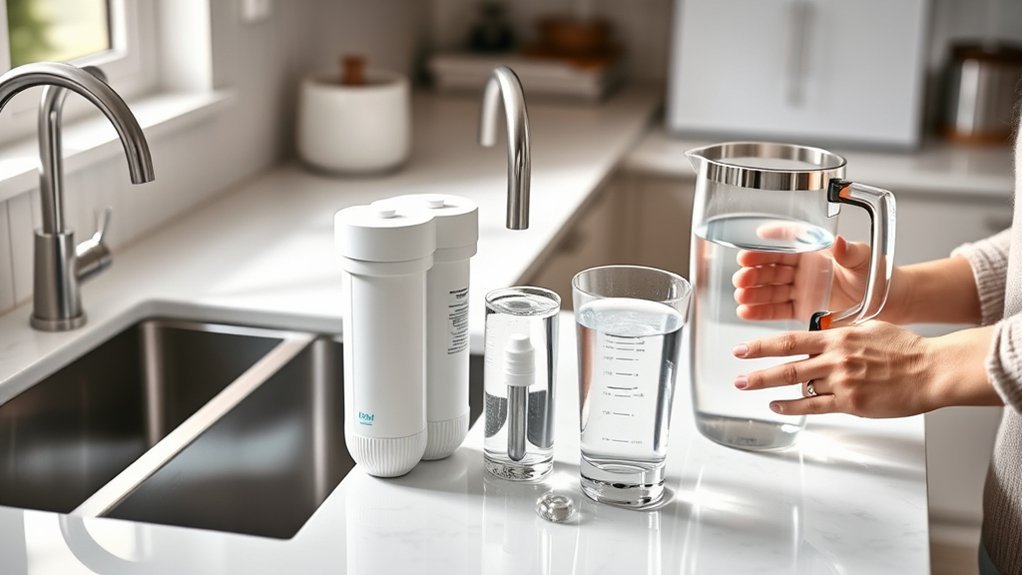
Choosing a home water filter starts with one question: what, if anything, needs to be removed from your water? Review your utility’s water quality report or use a certified laboratory when direct testing is needed. Then compare treatment technology, contaminant-specific certification, flow rate, capacity, installation requirements, and replacement costs. A simple carbon filter may solve chlorine taste, while lead, PFAS, nitrate, microbes, hardness, or arsenic may require a different system.
Quick Answer
Choose a water filter only after you know what needs treatment. Review your utility report or use a certified lab, then select a system certified for each target contaminant. Use carbon for chlorine and taste, RO for specific dissolved contaminants, UV for microbes, and whole-house treatment only when every tap needs protection.
Key Takeaways
- Public-water customers should review their annual water quality report before paying for broad laboratory testing.
- Private-well owners should use a certified laboratory at least annually and test for additional local risks.
- A certification logo is not enough. Verify the exact model, standard, contaminant claim, and rated filter capacity.
- Point-of-use filters are often enough for drinking and cooking water. Whole-house treatment is useful only when the problem affects water throughout the home.
- Include cartridges, membranes, service, electricity, water waste, and installation when comparing long-term cost.
Disclosure: As an Amazon Associate I earn from qualifying purchases. Some links on this page are affiliate links, at no extra cost to you.
What Water Tests Should You Run First?
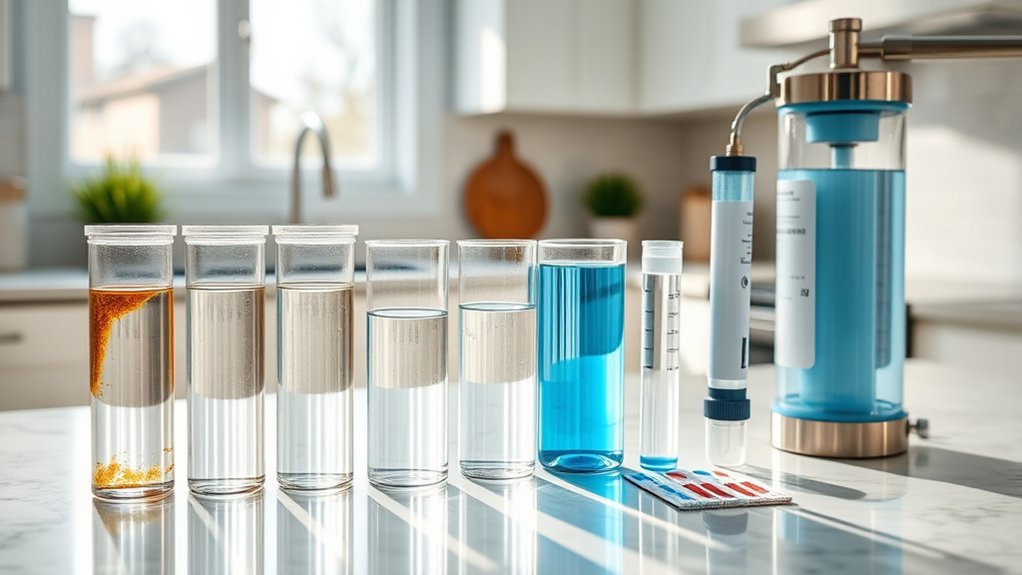
The right starting point depends on whether your home receives water from a public utility, a private well, or a rainwater system. Taste, odor, and appearance cannot confirm that water is safe because many harmful contaminants have no obvious sensory warning.
Testing Public Water
If you receive municipal water, begin with your utility’s annual Consumer Confidence Report. It lists regulated contaminants detected in the public system and shows how the results compare with federal limits.
The report describes water leaving the utility, but it may not reveal a problem caused by your building’s service line, plumbing, fixtures, or a localized event. Consider direct tap testing when:
- Your home may have a lead service line or older plumbing.
- A local authority has issued a contamination notice.
- Your water changes suddenly in color, taste, or odor.
- Nearby construction, flooding, or a plumbing repair may have affected the supply.
- A household member is pregnant, an infant, immunocompromised, or otherwise more vulnerable to contaminants.
Testing Private Well or Rainwater
Private wells are not routinely monitored in the same way as public systems. The U.S. Environmental Protection Agency recommends annual testing for total coliform bacteria, nitrate, total dissolved solids, and pH. Your local health department may also recommend testing for arsenic, lead, manganese, iron, pesticides, PFAS, radionuclides, or other contaminants found in your area.
Use a state-certified or otherwise accredited drinking-water laboratory. A screening strip may help you monitor characteristics such as chlorine or hardness, but it should not replace laboratory testing when you are making a health-related treatment decision.
Warning: Do not assume that a normal-looking glass of water is safe. During a boil-water advisory or after confirmed microbial contamination, follow the instructions from your utility or health department. A normal pitcher or refrigerator filter may not make the water safe to drink.
Do You Need a Water Filter at All?
You may not need additional treatment when your public water meets applicable standards, your household plumbing is not adding contaminants, and you are satisfied with the taste and odor. A filter can still be used for taste preferences, but it should not be presented as necessary protection without evidence of a problem.
Additional treatment may be reasonable when:
- A test or water report identifies a contaminant you want to reduce.
- Lead or another contaminant may enter through household plumbing.
- You use untreated well or rainwater.
- Chlorine, chloramine, sulfur, sediment, iron, or hardness creates a clear aesthetic or plumbing problem.
- A healthcare professional or public-health authority recommends added protection for a vulnerable person.
Note: Removing a disinfectant such as chlorine from all water entering the home can allow more microbial growth in household plumbing. Use whole-house dechlorination only when it solves a defined problem and the system can be maintained correctly.
Which Water Filter Fits Your Home?
Match the treatment location and technology to your test results. Buying the most complex system is not automatically safer or more economical.
Choose Point-of-Use or Whole-House Treatment
| System type | Where it treats water | Best fit | Main tradeoff |
|---|---|---|---|
| Pitcher or countertop | Small batches of drinking water | Taste, odor, or a certified drinking-water contaminant claim | Limited capacity and frequent refilling |
| Faucet-mounted | One faucet | Simple point-of-use treatment without cabinet plumbing | May reduce faucet flow and may not fit every fixture |
| Under-sink | Kitchen faucet or dedicated drinking-water faucet | Higher capacity for drinking and cooking | Requires plumbing space and leak-safe installation |
| Whole-house or point-of-entry | Water entering the home | Sediment, chlorine, iron, radon, hardness, or another issue affecting all fixtures | Higher cost, greater flow requirements, and more complex maintenance |
Match the Technology to the Contaminant
| Water concern | Common treatment options | What to verify |
|---|---|---|
| Chlorine taste or odor | Activated carbon or catalytic carbon | NSF/ANSI 42 chlorine or chloramine claim |
| Lead | Certified adsorption filter or reverse osmosis | Specific lead-reduction claim under NSF/ANSI 53 or 58 |
| PFAS | Granular activated carbon, ion exchange, or reverse osmosis | Specific PFAS claim under NSF/ANSI 53 or 58 and the rated cartridge life |
| Nitrate or nitrite | Reverse osmosis or contaminant-specific ion exchange | Certified nitrate/nitrite claim and incoming concentration limit |
| Arsenic | Reverse osmosis or arsenic-specific adsorption media | Arsenic species, water chemistry, pretreatment needs, and exact reduction claim |
| Bacteria, parasites, or viruses | UV, suitable membrane filtration, RO, or another validated disinfection process | Microorganism claim, flow rate, water clarity, dose, lamp condition, and pretreatment |
| Sediment | Spun, pleated, or backwashing sediment filter | Micron rating, pressure drop, service flow, and replacement or cleaning schedule |
| Hardness and scale | Ion-exchange water softener or scale-control technology | Hardness capacity, salt or media use, regeneration efficiency, and NSF/ANSI 44 certification where applicable |
| Radon in well water | Point-of-entry aeration or specialized granular activated carbon | Professional design, ventilation, carbon handling, and local health guidance |
Pro Tip: Ask for the product’s performance data sheet before buying. Confirm the exact model number, contaminant claim, test concentration, rated gallon capacity, required replacement interval, flow rate, and operating conditions.
Is a Water Softener the Same as a Filter?
No. A conventional ion-exchange softener is designed mainly to reduce calcium and magnesium hardness. It can help prevent scale, but it should not be assumed to remove lead, PFAS, microbes, nitrate, chlorine, or other contaminants unless the exact system has a separate certified claim for them.
How Does Reverse Osmosis Compare to Carbon Filters?
Activated carbon and reverse osmosis solve different problems. Carbon is often the simpler option for chlorine, taste, odor, and selected organic chemicals. RO can reduce a wider range of dissolved contaminants, but it uses a membrane, normally includes several filter stages, and produces reject water.
| Factor | Activated carbon | Reverse osmosis |
|---|---|---|
| Common strengths | Chlorine, taste, odor, and selected VOC, lead, or PFAS claims when certified | Selected dissolved salts, metals, nitrate, fluoride, PFAS, and other model-specific claims |
| Microorganisms | Standard carbon filters do not disinfect water | RO can reduce certain germs, but a normal residential unit should not be assumed suitable for microbiologically unsafe water |
| Minerals and TDS | Usually leaves most dissolved minerals and TDS in the water | Reduces many dissolved ions and may substantially lower TDS |
| Water waste | Normally no reject-water stream | Creates treated water and reject water |
| Maintenance | One or more cartridges changed by time or gallon rating | Prefilters, postfilters, and an RO membrane with separate schedules |
| Installation | Ranges from a pitcher to a whole-house tank | Usually requires a feed connection, treated-water faucet or connection, and a drain line |
Do not select RO only because it sounds more powerful. Choose it when a certified RO system addresses contaminants shown in your water data and when you can accept its installation, maintenance, and reject-water requirements.
EPA reports that a typical point-of-use RO system may send five or more gallons to the drain for every gallon treated. A WaterSense-labeled system must limit that amount to 2.3 gallons or less per gallon of treated water.
Check the system’s verified efficiency or recovery rating. The EPA WaterSense point-of-use RO program can help you find models that meet current efficiency and performance requirements.
What Water Filter Certifications Matter Most?
Certification is useful only when it applies to the exact model and contaminant you want to reduce. The number of the standard is not a quality score, and certification to one standard does not prove that a product removes every contaminant covered by that standard.
| Standard | What it generally covers | Important limit |
|---|---|---|
| NSF/ANSI 42 | Aesthetic effects such as chlorine, taste, odor, and particulates | Does not by itself prove health-related contaminant reduction |
| NSF/ANSI 53 | Specific contaminants with health effects, including claims such as lead, cysts, VOCs, or PFAS | Claims vary by model, so check the certification listing |
| NSF/ANSI 58 | Reverse-osmosis system construction, performance, efficiency information, and selected contaminant claims | RO certification does not mean every optional contaminant claim applies |
| NSF/ANSI 401 | Selected emerging or incidental contaminants | It covers listed claims, not every pharmaceutical, pesticide, or emerging chemical |
| NSF/ANSI 55 | Ultraviolet microbiological water-treatment systems | Proper flow, UV dose, lamp condition, water clarity, and pretreatment remain essential |
| NSF/ANSI 44 | Residential cation-exchange water softeners | A softener is not a general drinking-water purifier |
| NSF/ANSI 62 | Drinking-water distillation systems | Volatile contaminants may require additional treatment |
| NSF/ANSI/CAN 372 | Lead content of materials and components | It addresses material lead content, not lead removal from water |
Products may be certified by NSF, the Water Quality Association, IAPMO R&T, or another accredited certification body. Verify the exact model in an official database:
- NSF Certified Products and Systems
- WQA Certified Product Listings
- IAPMO R&T Product Listing Directory
Be careful with wording such as “tested to NSF standards,” “uses NSF-certified components,” or “designed to meet NSF requirements.” Those phrases are not necessarily the same as full system certification for the contaminant claim you need.
How Much Does a Water Filter Cost?
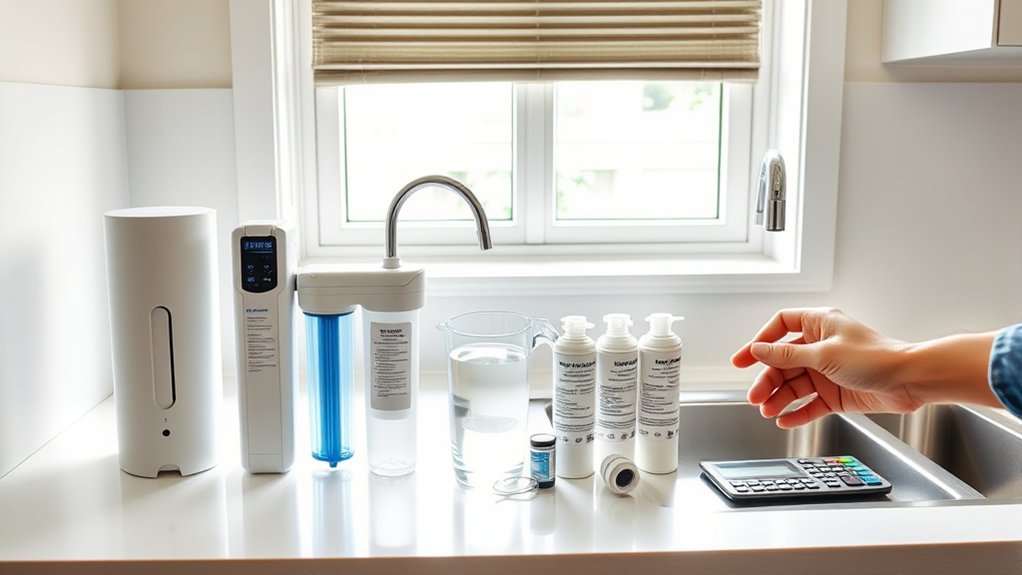
EPA guidance shows that home filters can cost as little as about $20 or more than $1,000 before maintenance, depending on the treatment method and installation. Basic pitchers and tap filters commonly cost less than $100. Whole-house equipment, plumbing changes, professional labor, pretreatment, and ongoing service can push the total much higher.
| System | Upfront cost pattern | Ongoing costs to include |
|---|---|---|
| Pitcher or faucet filter | Usually the lowest | Replacement cartridges and limited rated capacity |
| Countertop system | Low to moderate, depending on technology | Multiple cartridges, cleaning, electricity for some units, and descaling where required |
| Under-sink carbon system | Moderate | Cartridge sets, fittings, possible installation, and leak monitoring |
| Under-sink RO | Moderate to high | Prefilters, postfilters, membrane, reject water, sanitizing, and installation |
| Whole-house system | Usually the highest | Professional installation, prefilters, media, backwashing water, salt or chemicals, electricity, and service |
Calculate total ownership cost instead of comparing the purchase price alone:
- Add equipment and installation.
- Add the expected annual cost of every cartridge, membrane, lamp, media bed, salt refill, or service visit.
- Include electricity and extra water use where applicable.
- Divide the total by the system’s realistic service life or the amount of treated water your household uses.
- Check whether replacement parts are proprietary and readily available.
Which Water Filter Has the Lowest Maintenance?
There is no universal lowest-maintenance filter. A simple pitcher may have only one cartridge, but a household that uses a large amount of water may replace it frequently. A larger system may have longer intervals but require sanitizing, prefilter service, professional work, or several cartridges.
The examples below use current manufacturer-stated schedules. They are not directly comparable, and the actual service life can be shorter because of sediment, hardness, contaminant concentration, pressure, or heavy use.
| System | Manufacturer-stated maintenance pattern | Important consideration |
|---|---|---|
| AquaTru Classic | Prefilter at 6 months or 600 gallons, VOC filter at 12 months or 600 gallons, and RO membrane at 24 months or 1,200 gallons | Several cartridges have separate schedules, and hard water may create additional descaling needs |
| SpringWell CF | Prefilter every 6–9 months; manufacturer rates the main media for up to 10 years or 1,000,000 gallons | It is a whole-house carbon system, not a substitute for microbial disinfection or every contaminant-specific treatment |
| Waterdrop G3 P800 | Manufacturer lists cartridge intervals of approximately 6, 12, and 24 months | Three replacement stages, a drain connection, and model-specific certification must be checked |
| Clearly Filtered Under Sink | Three cartridges replaced together at up to 2,000 gallons, normally about 9–15 months depending on household use | All cartridges are replaced as a set, so annual replacement cost matters |
For low maintenance, look for a long certified capacity, widely available replacement parts, simple cartridge access, a clear reminder system, low pressure drop, and no unnecessary treatment stages.
Which Contaminants Should Your Filter Remove?
Your filter should remove the contaminants confirmed by testing or reported by your water supplier. It does not need to remove every substance mentioned in marketing materials.
- Chlorine, chloramine, taste, and odor: Choose a carbon system carrying the exact reduction claim you need. Chloramine usually requires more contact time or catalytic carbon.
- Lead: Look for a certified lead-reduction claim under NSF/ANSI 53 or 58. Check the rated gallon limit and replace the cartridge on time.
- PFAS: Consider certified activated carbon, ion-exchange, or RO treatment. Verify a specific PFAS claim under NSF/ANSI 53 or 58 rather than relying on a general “forever chemicals” statement.
- Nitrate: Use a system specifically rated for nitrate or nitrate/nitrite reduction. Carbon alone is not a reliable nitrate treatment.
- Arsenic: Test the water and consult a qualified treatment professional because arsenic form and water chemistry affect performance.
- Microorganisms: Use a validated disinfection or membrane process designed for the organisms and source water. UV does not remove dissolved chemicals, metals, or sediment.
- Hardness: Use a softener or scale-control system. Do not expect a normal carbon filter to correct hardness.
- Iron, manganese, sulfur, and sediment: Identify the form and concentration before selecting oxidation, filtration, aeration, or another whole-house process.
For current PFAS guidance, see the EPA’s home-filter information for reducing PFAS. The agency recommends checking the exact certification and replacing cartridges according to the manufacturer’s schedule.
How Do Flow Rate and Capacity Matter?
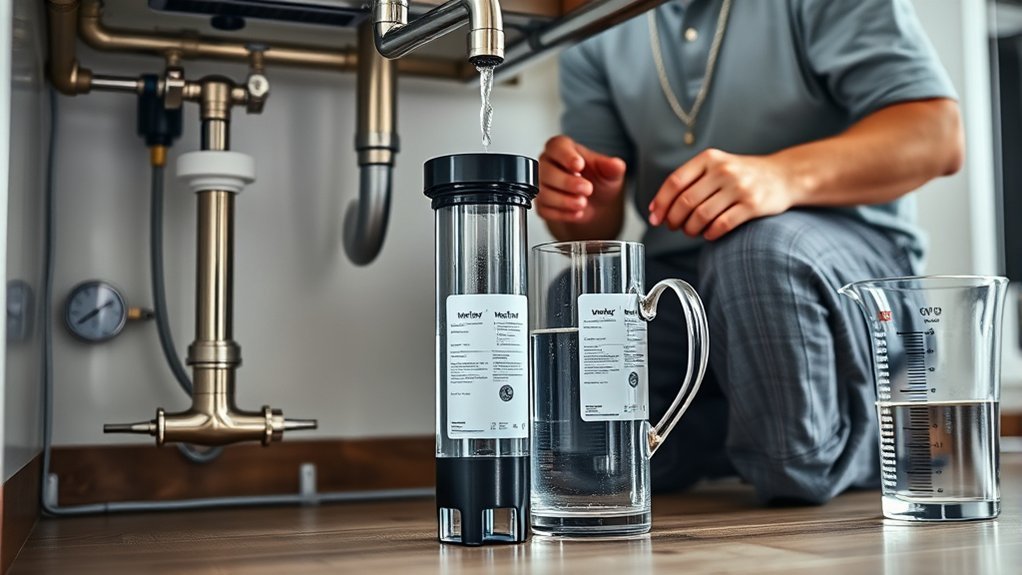
Flow rate describes how quickly a system can deliver treated water. Capacity describes how much water it can treat before a cartridge or media bed requires replacement. A filter may have excellent contaminant reduction but still be frustrating if it causes low pressure or needs constant replacement.
| Metric | What to check | Why it matters |
|---|---|---|
| Service flow | Verified gallons per minute at the stated pressure | Shows whether a whole-house system can support simultaneous fixtures |
| Dispensing flow | Faucet or treated-water flow rate | Affects filling speed and everyday convenience |
| Pressure drop | Pressure loss at normal and peak flow | Helps prevent weak showers and slow appliances |
| Rated capacity | Certified gallons and calendar limit | Determines replacement frequency and whether contaminant claims remain valid |
| Recovery or efficiency | Treated-water percentage and reject-water ratio for RO | Shows how much incoming water becomes treated water |
| Peak household demand | Fixtures and appliances used at the same time | Prevents undersizing a point-of-entry system |
For a whole-house system, estimate which showers, faucets, toilets, washing machines, and other fixtures may operate together. Compare that demand with the manufacturer’s verified service-flow rating, not a short-duration maximum-flow claim. Also confirm that your pipe size and incoming pressure meet the installation requirements.
For a point-of-use filter, divide the rated gallon capacity by your household’s estimated daily drinking and cooking-water use. Replace the cartridge when you reach either the gallon limit or calendar limit, whichever comes first.
Which Water Filters Offer the Best Value?
The best value is the least expensive system that carries verified claims for your actual contaminants, supplies enough water, and can be maintained correctly. A cheap filter that lacks the required contaminant claim has little value, while an expensive whole-house system may be unnecessary when only drinking water needs treatment.
The named products in the original comparison represent different categories and should not be ranked as direct substitutes:
| Product example | System category | Potential fit | Main value question |
|---|---|---|---|
| AquaTru | Countertop RO | Renters or households wanting RO without permanent under-sink plumbing | Do its exact certified claims justify the multiple cartridges and countertop space? |
| SpringWell CF | Whole-house carbon | Chlorine, taste, odor, or selected chemical concerns throughout the home | Is whole-house treatment necessary, and can its rated service flow meet peak demand? |
| Waterdrop G3 P800 | Tankless under-sink RO | Higher-volume point-of-use RO where cabinet plumbing and a drain are available | What exact model claims, replacement costs, and verified efficiency apply? |
| Culligan ZeroWater | Pour-through pitcher using carbon and ion exchange | Small-batch treatment with certified claims for the exact pitcher and cartridge | How quickly will the cartridge reach its rated capacity with your source-water TDS? |
| Clearly Filtered Under Sink | Non-RO under-sink system | Households wanting filtered cold water through an existing faucet | Do its independent test results and certification status match your contaminants, and is the full cartridge-set cost acceptable? |
Before selecting any named product, verify the current model in a certification database. Do not transfer a certification from one model, cartridge, or system configuration to another.
What Do You Need Before Installing a Water Filter?
Complete these checks before installation:
- Confirm the treatment goal: Keep your water report or laboratory results available and list the exact contaminants to address.
- Verify the complete system: Match the model number, cartridges, faucet, membrane, tank, and other required components to the certification listing.
- Check operating conditions: Confirm water pressure, temperature, pH, hardness, TDS, turbidity, pipe size, and required pretreatment.
- Measure the space: Allow room for cartridge removal, shutoff access, drain tubing, storage tanks, electrical connections, and future service.
- Review plumbing requirements: RO systems usually need a drain connection. Whole-house systems may need bypass valves, drainage, backflow protection, and professional plumbing.
- Check replacement access: Make sure cartridges, lamps, membranes, and proprietary fittings are available at a reasonable cost.
- Plan for leaks: Use approved fittings, support tubing correctly, install a leak detector when practical, and inspect the system after pressurizing it.
- Flush and sanitize: Follow the manufacturer’s startup procedure before drinking the water.
Warning: Do not install a drinking-water filter on a hot-water line unless the product is specifically designed and rated for that use. Whole-house systems, UV equipment, softeners, and RO drain connections may also be subject to local plumbing codes.
Should You Test the Water After Installation?
Retesting is a good practice when the system was installed to address a health-related contaminant such as lead, nitrate, arsenic, PFAS, or a microbial risk. Use an appropriate laboratory method and collect the sample according to the lab’s instructions. Retest after major repairs, a suspected breakthrough, an overdue cartridge, flooding, or an unexpected change in water quality.
Frequently Asked Questions
How often should I replace filter cartridges?
Follow the exact model’s certified gallon capacity and manufacturer time limit, replacing the cartridge when either limit is reached. Depending on the system, intervals may range from a few months to several years. Heavy sediment, high contaminant levels, or unusually high use may shorten the service life.
Can I install a water filter myself safely?
Many pitchers, faucet filters, countertop units, and simple under-sink systems are designed for DIY setup. Shut off the water, relieve pressure, use approved fittings, follow the manual, flush the system, and check repeatedly for leaks. Use a qualified plumber for complex whole-house work, unfamiliar drain connections, electrical equipment, or code-sensitive installations.
Will filtered water taste different?
It may. Carbon filtration can reduce chlorine, odor, and some taste compounds. RO can reduce dissolved minerals and salts, creating a more noticeable change. Taste is subjective and does not prove that a filter is removing a health-related contaminant.
Do I need a whole-house system?
Choose whole-house treatment only when the problem needs to be addressed at most or all fixtures. Examples include sediment, hardness, iron, radon, or a contaminant that creates inhalation or skin-exposure concerns. A point-of-use system is normally more economical when only drinking and cooking water requires treatment.
How do I know when my filter stops working?
Slow flow, pressure loss, leaks, unusual noise, odor, taste, or visible sediment can indicate a problem, but some contaminants break through without sensory signs. Track installation dates and gallons, replace components on schedule, and retest when the system treats a health-related contaminant.
Does a low TDS reading prove that water is safe?
No. A TDS meter estimates dissolved ionic material, but it does not identify individual contaminants or detect many microorganisms and organic chemicals. Low TDS can show that an RO or ion-exchange process is changing the water, but it cannot replace contaminant-specific testing.
Can I use my filter during a boil-water advisory?
Follow the instructions from your water utility or health department. Most ordinary pitcher, refrigerator, and carbon filters do not make microbiologically unsafe water safe. You may also need to replace, disinfect, or flush the filter after the advisory ends.
Sources
- CDC: About Choosing Home Water Filters — testing, treatment types, maintenance, pore size, germs, and point-of-use versus whole-house guidance.
- EPA: Protect Your Home’s Water — private-well testing frequency and certified laboratory guidance.
- EPA: Understanding Your Annual Water Quality Report — Consumer Confidence Reports for public-water customers.
- EPA WaterSense: Point-of-Use Reverse Osmosis Systems — RO reject-water ratios, efficiency, and WaterSense requirements.
- NSF: Standards for Water Treatment Systems — NSF/ANSI certification standards and contaminant-specific claim guidance.
- EPA: Reducing PFAS in Drinking Water with a Home Filter — PFAS treatment options, certification, cost, and cartridge replacement guidance.
Conclusion
The best water filter is not automatically the system with the most stages, the highest price, or the longest contaminant list. Start with reliable water-quality information, decide whether treatment is needed at one tap or throughout the home, and choose technology certified for each target contaminant. Then confirm flow, capacity, installation requirements, replacement schedules, water efficiency, and total ownership cost. A properly matched and maintained system offers more dependable value than an oversized filter built around claims your household does not need.
