
Last Updated on July 23, 2026 by Daniel Globe
A branch snaps behind you on a quiet trail. Your heart jumps before you even turn around. Bear encounters can unfold quickly, so preparation matters. This guide explains how to plan, pack, prevent surprise encounters, store food, use bear spray, and respond if a black bear or brown/grizzly bear approaches.
Quick Answer
To stay safe in bear country, check local rules, hike in a group when possible, make your presence known near blind spots, secure all food and scented items, and carry accessible bear spray where it is legal and recommended. If you see a bear, stay calm, never run, and follow behavior- and species-specific guidance.
What’s in This Article
- What to Check Before Entering Bear Country
- How Bear Behavior Changes Your Response
- What Gear to Pack for Bear Country
- How to Make Noise and Avoid Surprise Encounters
- How to Store Food and Manage Waste
- How to Spot and Avoid High-Risk Bear Areas
- How to Tell the Difference Between Black and Grizzly Bears
- When and How to Use Bear Spray
- How to React During a Bear Encounter
- Frequently Asked Questions
Key Takeaways
- Check the latest park or land-management rules because food-storage, pet, distance, and bear-spray requirements vary by location.
- Talk, clap, or call out near blind corners, thick brush, wind, and rushing water; do not rely on bear bells alone.
- Store food, trash, cookware, toiletries, pet food, and other scented items exactly as local rules require.
- Carry bear spray in a chest or belt holster where you can reach it within seconds, and practice with an inert trainer.
- Never run from a bear. Your response to physical contact depends on the species and whether the attack is defensive or predatory.
At a Glance
| Time Required | About 15–30 minutes to review local rules and practice your gear before the trip |
| Difficulty | Beginner-friendly, but correct reactions require advance practice |
| Tools Needed | Approved food storage, bear spray where allowed, map, first-aid kit, communication plan, and suitable outdoor gear |
| Cost | Varies by destination, gear choice, and whether canisters or bear spray are available to rent |
Disclosure: As an Amazon Associate I earn from qualifying purchases. Some links on this page are affiliate links, at no extra cost to you.
What to Check Before Entering Bear Country
Start with the official website or ranger office for the exact place you plan to visit. Bear behavior, local species, closures, food-storage rules, pet restrictions, legal viewing distances, and bear-spray guidance can differ from one park or forest to another. The National Park Service bear-safety guidance also advises visitors to ask locally for the latest information.
- Check current bear sightings, temporary closures, and trail conditions.
- Learn which bear species live in the area and how local rangers tell visitors to respond.
- Confirm whether a canister, food locker, vehicle, or approved hang is required.
- Confirm whether bear spray is recommended, allowed, or restricted.
- Tell someone your route and return time, and carry a map that works without cell service.
- Know how you will call for help if the area has no mobile coverage.
Note: No single bear-safety rule works in every location or every encounter. Local ranger guidance should take priority over general advice.
How Bear Behavior Changes Your Response
Bears usually prefer to avoid people, but any bear can be dangerous. A bear may react defensively when it is surprised, protecting cubs, guarding a carcass or food source, or trying to create space. Defensive behavior can include huffing, jaw-popping, swatting the ground, lowered head position, or a sudden charge.
A non-defensive or potentially predatory bear may watch, follow, circle, approach quietly, or keep returning after you try to leave. Predatory attacks are rare, but they require a different response: seek hard-sided shelter if possible and prepare to fight back if the bear attacks.
Species still matters. Brown bears and grizzly bears are the same species, while American black bears are a different species. However, do not rely on simple claims such as “black bears are harmless” or “grizzlies are always aggressive.” The bear’s behavior, the setting, and local guidance all matter.
What Gear to Pack for Bear Country
Pack for prevention first. A bear-resistant food container, food locker, or approved hanging system may be required depending on the destination. When buying a portable container, check both the park’s approved list and the current Interagency Grizzly Bear Committee list of certified bear-resistant products.
Carry an EPA-registered bear spray specifically labeled for bears where local rules allow or recommend it. Keep it in a chest or belt holster, not inside your backpack. Each adult should be able to reach a canister quickly rather than depending on one person at the back of the group.
- Bear-resistant food storage that meets local rules
- Accessible bear spray and an inert practice canister
- First-aid kit and any personal medicine
- Offline map, compass or GPS, and a charged communication device
- Headlamp, weather layers, water, and emergency shelter
- Resealable bags for trash, toiletries, and used hygiene products
Unscented toiletries may reduce strong odors, but they do not make an item bear-safe. Store toiletries, medicines, lip balm, sunscreen, insect repellent, pet food, and other scented items with your food whenever local rules require it.
How to Make Noise and Avoid Surprise Encounters
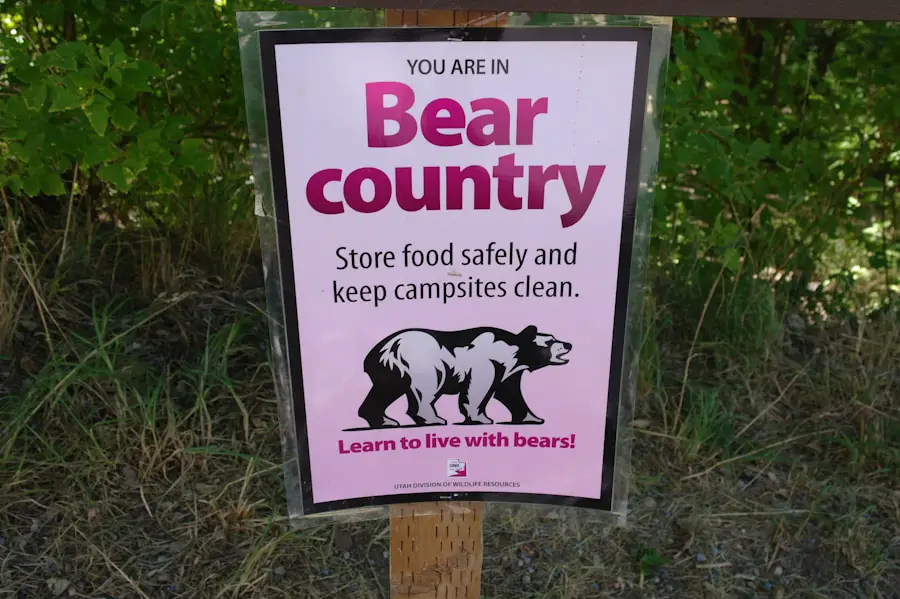
Make your presence known before you get close to a bear. Talk with your hiking partners, clap, or call out at regular intervals. Make extra noise near blind corners, trail crests, thick brush, rushing water, and during strong wind, where a bear may not hear you coming.
Do not rely on bear bells alone. The National Park Service says talking, clapping, and calling out are more effective because bells may not be loud enough to warn a bear before you are close.
Hike in a group when possible and keep the group together. Stay alert, avoid headphones that block natural sounds, and do not trail-run in areas with active bears or poor visibility. If practical, avoid hiking at dawn, dusk, or night, when bears may be more active.
Pro Tip: Noise is for preventing a surprise encounter. Once a bear has noticed you, switch to a calm, low voice and avoid screaming or sudden movements.
How to Store Food and Manage Waste
Proper food storage protects both people and bears. A bear that gets human food may return to campsites, damage property, or become dangerous. Treat anything with an odor as an attractant, including food, drinks, trash, cookware, stoves, coolers, toiletries, medicine, sunscreen, insect repellent, pet food, and empty packaging.
Follow the exact rule for your destination. Some parks require a certified canister or food locker and prohibit hanging. Other areas allow a hang that may need to be at least 10 feet above the ground and 4 feet from a trunk or support. Do not assume that one measurement is legal everywhere.
- Keep the canister closed and locked whenever food is not in your hands.
- Place it where a bear cannot roll it into water, over a cliff, or down a steep slope.
- Cook, eat, and store food at the distance required by the local agency.
- Never keep food, toothpaste, trash, or other scented items in your tent.
- Do not bury or burn food scraps or garbage. Pack them out or use a bear-resistant bin.
- Clean cookware and pick up crumbs immediately after eating.
Human-waste rules are separate from food-storage rules. Where catholes are allowed, a common guideline is 6–8 inches deep and at least 200 feet from water, camps, and trails. Some high-use or sensitive areas require you to pack out all human waste, so check before your trip.
How to Spot and Avoid High-Risk Bear Areas
Bears use many habitats, so you cannot avoid every place where a bear may appear. You can reduce surprise encounters by slowing down and becoming more alert in areas with thick vegetation, berry patches, nut-producing trees, streams, fish, animal carcasses, fresh digging, or poor visibility.
Watch for fresh tracks, scat, claw marks, torn logs, overturned rocks, digging, and strong animal odors. A carcass is especially important because a bear may be nearby and may defend it. Leave the area immediately without approaching for a closer look.
If you see fresh sign or a bear ahead, detour or turn around when you can do so safely. Obey all closures and ask local wildlife staff about recent activity before starting your route.
How to Tell the Difference Between Black and Grizzly Bears
Do not identify a bear by color alone. Black bears can be black, brown, cinnamon, blonde, gray, or nearly white. Size can also mislead you because age, sex, food supply, and distance affect how large a bear looks. The National Park Service recommends using several body features together.
American Black Bear Features
- No prominent shoulder hump
- Straighter facial profile
- Taller, more oval ears
- Shorter, more curved front claws
- Rump often appears higher than the shoulders
Brown or Grizzly Bear Features
- Prominent muscular shoulder hump
- Dished facial profile
- Short, rounded ears
- Longer, less-curved front claws
- Rump often appears lower than the shoulder hump
Note: Learn which species live at your destination before the trip. Trying to identify a bear for the first time during a charge is not a safe plan.
When and How to Use Bear Spray
Bear spray is a non-lethal last line of defense for an aggressive, charging, or attacking bear. It uses capsaicin-related compounds to cause intense temporary irritation to the bear’s eyes, nose, mouth, throat, and lungs. It does not replace safe hiking, food storage, distance, or awareness.
Choose and Carry It Correctly
- Use an EPA-registered product labeled for bears, not personal-defense pepper spray.
- Check the printed expiration date, safety clip, canister condition, and product label before every trip.
- Carry it in a chest or belt holster where either hand can reach it.
- Practice removing the safety clip with an inert trainer before entering bear country.
- Do not leave the canister in a hot vehicle or near a heat source.
Deploy It During a Charge
- Stand your ground and remove the safety clip.
- Point the nozzle slightly downward toward the space in front of the bear.
- Account for crosswind without delaying your response.
- When the bear is within the distance stated on the label and local guidance, spray a cloud between you and the bear.
- Continue as directed if the bear keeps charging, then leave the area promptly without running.
The Denali National Park bear-spray guide explains that range varies by product and conditions. Wind, rain, cold, age, and storage can affect performance.
Warning: Bear spray is a deterrent, not a repellent. Never spray it on your body, tent, clothing, backpack, or campsite.
How to React During a Bear Encounter
Your first goal is to prevent the encounter from escalating. Stay calm, keep the group together, pick up small children, secure food, and keep your backpack on. Never run, climb a tree, or approach the bear for a photo.
Viewing-distance rules vary. Some parks require at least 100 yards from bears, while others set different limits. Always obey the local rule. Even beyond the legal minimum, you are too close if your presence changes the bear’s behavior.
If the Bear Has Not Noticed You
Do not shout at it. Back away quietly, take a wide detour, or wait for the bear to leave. Keep watching from the side without approaching or blocking its route.
If the Bear Notices You but Is Not Aggressive
Speak in a calm, low voice so the bear can identify you as human. Slowly move away sideways while keeping the bear in view. Give it a clear escape route. If the bear follows, stop and stand your ground rather than turning and running.
If the Bear Approaches or Charges
Stand your ground, ready your bear spray, and follow the product label and local ranger guidance. Some charges stop short, but treat every charge seriously. Do not scream, drop your pack, or throw food to distract the bear.
A bear can outrun a person. Running can trigger pursuit, so your safest general response is to stay calm, hold your ground when necessary, and move away slowly when the bear allows it.
If a Bear Makes Physical Contact
- Defensive brown/grizzly bear attack: Leave your pack on and play dead. Lie face down, spread your legs, and clasp your hands behind your neck. Stay still until you are sure the bear has left. If the attack continues for a prolonged time or becomes predatory, fight back.
- Black bear attack: Do not play dead. Try to reach a hard-sided building or vehicle. If you cannot escape, fight back aggressively and aim blows at the face and muzzle.
- Predatory attack by any bear: If a bear stalks you, attacks inside a tent, or continues trying to feed on you, fight back with bear spray and any available object.
Warning: Never place yourself between a mother and her cubs. Back away slowly, keep the family together in view, and leave a clear route for the bears to escape.
After the Bear Leaves
Walk away without running. Treat injuries, move to a secure location, and call emergency services if anyone is hurt or the bear remains a threat. Report the encounter or conflict to a ranger or wildlife agency as soon as possible. Your report can protect other visitors and help staff respond to a food-conditioned or aggressive bear.
Keep your phone charged for emergencies, but do not depend on cell service. A reliable power bank, offline map, first-aid kit, and satellite communicator where appropriate can provide useful backup. Wear clothing suited to the weather and terrain, and keep critical items secure and easy to reach.
Love travel? Join our Facebook community for more practical travel and outdoor-safety tips.
Frequently Asked Questions
What should I do if I startle a bear on the trail?
Stay calm, do not run, and speak in a low voice. Keep your group together, pick up small children, and slowly back away sideways if the bear is stationary. Ready your bear spray. If the bear charges, stand your ground and follow local guidance.
Do bear bells actually prevent encounters?
Do not rely on them. Bells may be too quiet to warn a bear early enough. Talking, clapping, and calling out near blind corners, dense vegetation, wind, and rushing water are more effective ways to announce your presence.
What should I do if a bear attacks my tent at night?
Fight back. An attack on an occupied tent may be predatory, regardless of species. Use bear spray if you can deploy it safely, strike the bear’s face and muzzle with available objects, and move to a hard-sided shelter if an escape route is open.
How long does bear spray last before expiring?
There is no universal three- or four-year rule. Use the expiration date printed on your canister and replace it sooner if it is damaged, leaking, partly discharged, corroded, or stored outside the manufacturer’s limits.
Can I bring my dog hiking in bear country?
Check the destination first because many trails prohibit pets. Where dogs are allowed, keep the dog on a short physical leash and under control. Never allow it to chase, bark at, or corner a bear. Turn around and leave if you see a bear.
How far should I stay from a bear?
Use the legal minimum set by the park or land agency. Some national parks require 100 yards, but that is not a universal rule. Never approach a bear, and move farther away whenever your presence changes its behavior.
Can I hang food instead of carrying a bear canister?
Only where the local agency allows it. Some parks prohibit hanging and require an approved canister or locker. Other areas set their own height, distance, rope, or pole rules. Check the exact destination before choosing your storage method.
What if I cannot tell whether it is a black bear or grizzly?
Learn the local species before your trip and use several body features, not color alone. During an encounter, focus first on staying calm, not running, giving the bear space, and readying bear spray. Follow the destination’s ranger guidance for physical-contact scenarios.
Safety Disclaimer: This article provides general educational information, not a guarantee of safety or a substitute for local ranger instructions. Bear behavior is unpredictable, and regulations vary. Check current official guidance for your destination before entering bear country, and call emergency services for an active threat or injury.
Safe travel in bear country comes down to preparation, clean food storage, awareness, and a practiced response. Check local rules before you leave, keep bear spray and other emergency gear within reach, stay alert on the trail, and give every bear plenty of space.
Sources
- National Park Service: Staying Safe Around Bears — general avoidance, encounter, attack, and bear-spray guidance
- National Park Service: Bear Attacks — defensive, predatory, black-bear, and brown/grizzly response guidance
- National Park Service: Hiking in Bear Country — groups, noise, bear bells, habitat awareness, and avoiding surprise encounters
- National Park Service: Bear Safety — Storing Food — scented-item definitions and park-specific storage rules
- National Park Service: Bear Identification — physical differences between black and brown/grizzly bears
- Denali National Park and Preserve: Bear Spray — selection, carrying, range, wind, and deployment guidance
