
Last Updated on July 27, 2026 by Daniel Globe
Florence is one of Italy’s most interesting cities for jewelry shopping, but the best choice depends on what you actually want to buy. Traditional 18k-gold shops cluster around the Ponte Vecchio and Santa Croce, while specialist ateliers such as DelBrenna offer a different mix of handmade sterling silver and gold-finished jewelry.
Quick Answer
Florence’s strongest jewelry-shopping options fall into three groups: historic high-jewelry ateliers on Ponte Vecchio, 18k-gold shops around Santa Croce, and artisan boutiques elsewhere in the center. For heritage and bespoke work, start with Fratelli Piccini or Torrini; for broad 18k selection, compare Santa Croce shops; for handcrafted silver and gold-over-silver, consider DelBrenna.
Key Takeaways
- 18k gold, marked 750, is common in Florence’s traditional fine-jewelry shops, but not every Florentine piece is solid 18k gold.
- Fratelli Piccini dates to 1903 on Ponte Vecchio, while Torrini documents its history back to a goldsmith’s mark registered in 1369.
- Santa Croce and Ponte Vecchio are both worth comparing; do not assume one district is automatically cheaper for an equivalent piece.
- Eligible non-EU residents can use Italy’s tax-free-shopping system on qualifying purchases above €70, effectively making the current threshold €70.01.
- Before paying, confirm the metal fineness, weight, stone details, return or resizing policy, and whether tax-free paperwork is available.
Discovering Florence’s Jewelry Scene
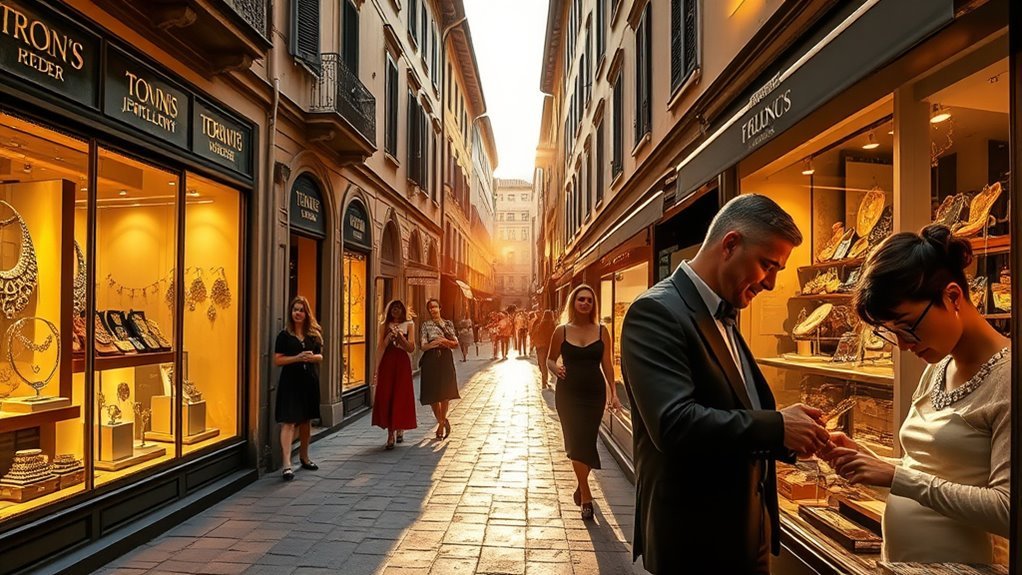
Florence’s reputation for gold jewelry is tied closely to the Ponte Vecchio. In 1593, Ferdinand I de’ Medici ordered the bridge’s butchers, fishmongers, and tanners to make way for goldsmiths and jewelers, according to Visit Tuscany. Jewelry shops still dominate the bridge today.
That does not mean you should shop only on the Ponte Vecchio. Around Piazza di Santa Croce, The Gold Market and The Gold Corner give visitors additional places to compare Italian gold. Near Santa Trinita, DelBrenna offers handmade Tuscan jewelry with a different material mix, while Torrini’s current workshop and showroom are on Via San Gallo.
Florence’s jewelry tradition is not confined to one street: Ponte Vecchio provides the historic setting, while Santa Croce and independent ateliers elsewhere in the center broaden the choice.
Best Florence Jewelry Shops at a Glance
| Shop | Area | Best For | What to Know |
|---|---|---|---|
| The Gold Market | Piazza Santa Croce 20 | Broad 18k-gold selection | Operating since 1973; Florentine, mosaic, Byzantine, and other collections. |
| The Gold Corner | Piazza Santa Croce 15R | Comparing Italian gold in Santa Croce | Ask for weight, fineness, total price, and return terms before buying. |
| DelBrenna | Borgo Santi Apostoli 45R | Handmade chains and accessible artisan pieces | Many pieces use 925 sterling silver with 24k gold applied over the silver rather than solid 18k gold. |
| Fratelli Piccini | Ponte Vecchio 21/23R | High jewelry and bespoke work | Historic atelier founded in 1903; expect fine-jewelry pricing rather than souvenir-shop pricing. |
| Torrini | Via San Gallo 9R | Historic Florentine motifs and custom work | Current single headquarters combines its goldsmith workshop with direct sales. |
Tips for Shopping Jewelry in Florence
Florence has excellent jewelry, but location alone does not tell you whether a piece is good value. Compare the metal, weight, stones, workmanship, design, brand, and after-sale service instead of comparing only the sticker price.
Check Gold Hallmarks and Materials
Italy regulates precious-metal fineness and identification marks. The Italian Ministry of Enterprises and Made in Italy explains that precious-metal objects generally carry a fineness mark in thousandths together with an identification mark. Legal Italian gold finenesses include 750, 585, and 375.
- 750 gold = 75% pure gold = 18 karat.
- 585 gold = 58.5% pure gold = 14 karat.
- 375 gold = 37.5% pure gold = 9 karat.
- 925 silver = sterling silver containing 92.5% silver.
Note: A gold-colored piece is not automatically solid gold. Ask whether it is solid 18k gold, gold vermeil, gold over sterling silver, or another plated/fashion-jewelry construction.
Local Recommendations Matter
Recommendations can help you build a shortlist, but inspect the actual piece before treating any shop as automatically cheaper or better. A few practical rules make comparison easier:
- Compare like with like: an 18k solid-gold chain should not be compared directly with gold-over-silver jewelry simply because both look yellow.
- Ask for the weight: weight helps you understand how much precious metal is present, although craftsmanship, stones, design, brand, and retail service also affect the price.
- Visit more than one shop: Santa Croce makes it easy to compare nearby gold stores, while Ponte Vecchio gives you access to historic ateliers.
- Shop when staff have time to talk: visiting soon after opening can make detailed questions, resizing discussions, and custom consultations easier.
- Check current hours: Florence shops may change schedules for holidays, seasons, or private appointments.
Engage With Shop Staff
Good jewelry staff should be able to explain exactly what you are buying. Useful questions include:
| Question | Why It Matters |
|---|---|
| What is the fineness and total weight? | Confirms the precious-metal content you are paying for. |
| Is this solid gold, gold over silver, or plated? | Prevents confusion between very different materials. |
| Are the gemstones natural, lab-grown, or treated? | Affects price, disclosure, and future appraisal. |
| Can you resize, repair, or service it later? | Important for rings, chains, clasps, and bespoke work. |
| What is the return or exchange policy? | Custom, engraved, or altered pieces may be final sale. |
| Do you process tax-free shopping? | Eligible non-EU residents may be able to recover part of the VAT. |
Understand Tax-Free Shopping Before You Buy
Italy lowered its tax-free-shopping threshold in 2024. The Italian Ministry of Tourism states that the threshold is €70.01 for eligible extra-EU travelers.
The European Commission explains that the traveler must normally reside outside the EU, take the goods out of the EU within three months of purchase, and obtain the required customs validation. Retailers may process the refund directly or use an intermediary, and fees can reduce the amount you actually receive.
Warning: Tax-free shopping in Italy does not automatically make the jewelry duty-free when you enter your home country. Check your destination country’s customs rules and declare purchases when required. U.S. Customs and Border Protection states that most eligible returning travelers have an $800 personal exemption, subject to conditions and exceptions.
The Gold Market: A Top Jewelry Store in Florence
Located at Piazza Santa Croce 20, The Gold Market says it has operated since 1973 and specializes in Italian 18k-gold jewelry. Its current collections include Florentine, mosaic, Byzantine, diamond-cut, and contemporary designs.
More than five decades at the same Santa Croce address make The Gold Market one of the area’s longest-running 18k-gold shopping stops.
- Established location: The business dates its Santa Croce presence to 1973.
- 18k focus: Its official site specifically promotes artisan-made 18k gold.
- Broad design range: Collections span traditional Florentine-inspired work and more contemporary styles.
- Current hours: Its official site presently lists daily opening from 9:30 a.m. to 5:30 p.m.; confirm again before your visit.
Custom work, sizing, international shipping, and return terms should be discussed before purchase, particularly for altered or personalized pieces.
DelBrenna: Handmade Tuscan Jewelry Near Santa Trinita
DelBrenna’s Florence atelier opened in 2023 at Borgo Santi Apostoli 45R, close to Via de’ Tornabuoni and Santa Trinita. Unlike Florence shops centered on solid 18k gold, DelBrenna is especially useful for shoppers looking for handmade Tuscan jewelry at more accessible price points.
Unique Design Philosophy
DelBrenna says its jewelry is designed, crafted, and finished in Tuscany by the third generation of the family. Its signature chains are assembled one link at a time rather than simply selected from mass-produced finished chain.
- Handmade chainwork: Link-by-link construction is central to the brand’s identity.
- Sterling-silver base: Many current pieces use 925 sterling silver.
- Gold finishes: Current product listings include 24k yellow gold applied over sterling silver.
- Tuscan production: The brand states that its original pieces are made in its Tuscan workshop.
Note: DelBrenna should not be compared with a solid-18k shop on gold content alone. Its appeal is handmade design and Tuscan production, while many pieces use sterling silver with a gold finish.
Artisan Craftsmanship Focus
The Florence boutique displays the brand’s handmade chains, necklaces, bracelets, earrings, and other pieces. Staff can explain the difference between the underlying silver, the decorative finish, and the chain-making process, which is useful if you are unfamiliar with vermeil or gold-over-silver jewelry.
Prime Florence Location
The atelier sits at Borgo Santi Apostoli 45R, a short walk from Piazza Santa Trinita and Via de’ Tornabuoni. The official Florence page currently lists opening from Monday through Saturday, 10 a.m. to 7 p.m., with holiday closures.
- Distinctive material choice: A useful alternative to solid 18k-gold jewelry.
- Central location: Easy to combine with a Ponte Vecchio visit.
- Personal explanation: The chain-making process is a major part of the in-store experience.
- Lower entry point: Sterling-silver-based pieces generally require a smaller budget than handcrafted solid 18k high jewelry.
Fratelli Piccini: A Legacy of Artisan Jewelry
Fratelli Piccini traces its Ponte Vecchio atelier to 1903, when founder Pirro Piccini opened his shop at number 23. The company is now led by fourth-generation jeweler Elisa Tozzi Piccini.
Pirro handed the company to his sons Renzo, Tebaldo, and Armando in 1951, when the business became Fratelli Piccini. In 1958, the house won first place at the International Diamond Awards in New York with a handcrafted gold, platinum, and diamond powder case.
The company’s official atelier page describes its workshop as the only operating goldsmith laboratory on the Ponte Vecchio. Current collections include Bloom, Anita, Intreccio, and Dot. Bloom pieces draw directly from Botticelli imagery and include hand engraving, miniature painting, and enamel.
Expect high-jewelry pricing. Current online pieces commonly run into the thousands of euros, while one-of-a-kind and bespoke work can cost considerably more. In a 2019 Forbes interview, Elisa Tozzi Piccini said the house’s entry price was around $2,000 at that time and approximately 35% of pieces were one-of-a-kind bespoke orders. Those figures are useful historical context, not a current price guarantee.
Torrini: Centuries of Jewelry Craftsmanship
Torrini’s documented history reaches back to 1369, when a goldsmith named Jacopus registered a mark in Florence. The company’s current official site describes Torrini as representing 24 generations of goldsmiths.
Rich Heritage and Legacy
Rather than relying on claims about the “world’s oldest continuously used trademark,” the safer documented point is that Torrini preserves historical records reaching to the 14th century while operating a modern Florentine workshop.
- Historic documentation: Torrini’s archive includes the 1369 registration associated with Jacopus.
- Current family identity: The official site describes 24 generations of goldsmiths.
- Precious materials: Current collections include 18k gold and sterling silver.
- In-house production: The company says its Via San Gallo headquarters combines its goldsmith workshop with direct public sales.
Note: Torrini no longer sells from its former Piazza Duomo location. Its official site says sales there ended in 2018 and identifies Via San Gallo 9R as its single current Florence headquarters, workshop, and direct-sales location.
Masterful Craftsmanship Techniques
Torrini combines traditional bench work with modern production tools. One recognizable house treatment is its proprietary “Torrini Originale Nativo” finish, used on selected pieces. The current official catalog describes it as a registered process associated with Torrini’s goldsmithing tradition.
Unique Jewelry Collections Offered
Florence-inspired motifs are a major part of Torrini’s catalog. Its current shop includes an 18k-gold Fiorino charm based on the historic Florentine coin, along with lily motifs, rings, necklaces, earrings, bracelets, sterling-silver pieces, and made-to-measure work.
- Florentine Fiorino jewelry: Current 18k pieces reproduce imagery from Florence’s historic currency.
- 18k fine jewelry: Rings, necklaces, earrings, and bracelets appear in the current Assoluto 18K collection.
- Sterling silver: More accessible 925-silver designs are also available.
- Custom work: Torrini advertises made-to-measure jewelry and personalization.
Premium Italian Jewelry: Innovative Designs
Florentine jewelry is not defined by one material or one technique. The Gold Market emphasizes 18k gold and Florentine-inspired collections; Fratelli Piccini combines 18k gold, precious stones, enamel, and engraving; Torrini offers gold, silver, and proprietary finishes; and DelBrenna builds handmade chains primarily around sterling-silver-based designs.
This variety is exactly why material disclosure matters. Two pieces can look similar in a display case while differing greatly in gold content, weight, gemstone quality, labor, and long-term maintenance needs.
Pro Tip: When comparing two pieces, write down the fineness, total weight, gemstone details, and final tax-inclusive price. That gives you a much fairer comparison than judging by appearance alone.
The Gold Corner: Italian Gold in Santa Croce
The Gold Corner is located at Piazza di Santa Croce 15R, only a few doors from other jewelry businesses around the square. Its official site focuses on Italian gold jewelry and provides direct contact information for remote assistance as well as in-person shopping.
Independent customer feedback is mixed, so it is better to treat the shop as one comparison stop rather than assume that every piece will automatically beat Ponte Vecchio pricing.
Santa Croce is useful because several jewelry stores sit close together, making it easier to compare metal content, weight, workmanship, and final price before committing.
- Italian gold focus: A convenient stop for shoppers specifically browsing gold jewelry.
- Comparison opportunity: Its Santa Croce location makes side-by-side shopping practical.
- Ask detailed questions: Confirm fineness, weight, construction, warranty or repair terms, and tax-free paperwork.
- Central location: It sits directly on Piazza di Santa Croce.
Pro Tip: Do not compare a Santa Croce price with a Ponte Vecchio price until you know whether the pieces have the same gold fineness, approximate weight, stone quality, construction, and after-sale service.
A Practical Florence Jewelry Shopping Route
If you want to compare several styles without backtracking across the city, use Florence’s compact historic center to your advantage:
- Start at Santa Croce: Visit The Gold Market and The Gold Corner to establish a baseline for 18k-gold styles and prices.
- Continue to Ponte Vecchio: Visit Fratelli Piccini if you want to see high jewelry, bespoke work, and a functioning historic atelier.
- Walk toward Santa Trinita: Stop at DelBrenna on Borgo Santi Apostoli for handmade silver and gold-over-silver jewelry.
- Finish at Via San Gallo: Visit Torrini’s current workshop and showroom if its historical Florentine motifs and custom work appeal to you.
You do not need to buy at the first stop. Photograph labels when permitted, write down weights and materials, and compare the actual specifications before deciding.
One-of-a-Kind Florentine Jewelry for Special Occasions
Florence is particularly strong when the goal is a milestone piece rather than a generic souvenir. Fratelli Piccini maintains an “Entirely Bespoke” service inside its Ponte Vecchio workshop, while Torrini advertises made-to-measure work from Via San Gallo.
A 2019 Forbes interview reported that roughly 35% of Fratelli Piccini’s output at that time consisted of entirely one-of-a-kind bespoke orders. Current proportions and prices can change, but the house still actively promotes commissioned jewelry.
For a custom piece, ask about design approval, deposits, gemstone documentation, engraving, resizing, completion time, insured shipping, and what happens if the work is not finished before you leave Florence.
A custom ring, Florence-inspired pendant, hand-engraved enamel piece, or artisan chain can make a memorable purchase, but the best choice is the one whose materials and construction you understand before committing.
Why Quality Matters in Fine Jewelry
Quality matters because jewelry is handled, worn, cleaned, resized, and repaired over many years. A well-made piece should have secure settings, sound clasps, appropriate construction for its weight, and clear documentation of its materials.
The best jewelry purchase is not simply the one with the highest gold content; it is the one whose materials, construction, price, and after-sale support all make sense for how you plan to wear it.
- Material longevity: Solid gold does not have a thin gold surface layer that can wear through, although 18k gold is still relatively soft and can scratch.
- Stone security: Well-built prongs, bezels, and settings help protect gemstones during normal wear.
- Repairability: Established workshops may be able to resize, polish, repair, or reproduce parts later.
- Documentation: A detailed receipt, hallmark information, gemstone certificate when applicable, and authenticity paperwork make future servicing or appraisal easier.
Note: Fine jewelry should not be treated as a guaranteed investment. Resale value depends on metal prices, brand, condition, rarity, gemstones, demand, and selling costs.
Frequently Asked Questions
What jewelry is Florence, Italy known for?
Florence is especially associated with goldsmithing, 18k gold, engraving, enamel, Florentine motifs, and jewelry shops on the Ponte Vecchio. The city also has contemporary artisan studios working in sterling silver and other materials.
Where is the best place to buy jewelry in Florence?
Ponte Vecchio is best for the historic goldsmith setting and high-end ateliers such as Fratelli Piccini. Santa Croce is useful for comparing several 18k-gold shops within a small area. Torrini on Via San Gallo and DelBrenna near Santa Trinita add different styles and price points.
Where can I buy the best jewelry in Italy?
There is no single best shop for every buyer. Look for established jewelers or artisan workshops that clearly disclose metal fineness, gemstone details, manufacturing origin, pricing, return terms, and after-sale service.
What is a must-buy jewelry souvenir in Florence?
A Florence-inspired piece such as an 18k Fiorino charm, Florentine lily motif, engraved gold piece, or artisan-made chain makes a distinctive souvenir. Torrini currently sells an 18k Fiorino charm based on the city’s historic currency.
What does 750 mean on Italian gold jewelry?
A 750 fineness mark means the alloy contains 750 parts gold per 1,000, or 75% pure gold. That is equivalent to 18-karat gold.
Can tourists get a VAT refund on jewelry bought in Florence?
Eligible travelers who reside outside the EU can use Italy’s tax-free-shopping system on qualifying purchases above €70, making the operative minimum €70.01. The goods must generally leave the EU within three months, customs validation is required, and refund-provider fees can reduce the amount returned.
Is jewelry cheaper in Santa Croce than on Ponte Vecchio?
Not necessarily. Some travelers find attractive prices around Santa Croce, but there is no universal district rule. Compare equivalent pieces by gold fineness, weight, gemstones, workmanship, brand, warranty, and final price before deciding.
Conclusion
Florence rewards jewelry shoppers who look beyond the first display window. Ponte Vecchio offers the historic goldsmith setting and high-jewelry ateliers; Santa Croce makes comparison shopping easy; DelBrenna provides handmade Tuscan silver and gold-finished designs; and Torrini offers centuries of documented Florentine identity from its current Via San Gallo workshop.
Whatever you choose, ask what the piece is made from, check its fineness and weight, understand the stones and return terms, and get the proper receipt or certificate. A few extra questions are the best way to leave Florence with jewelry whose craftsmanship and price you fully understand.
Sources
- Italian Ministry of Enterprises and Made in Italy — Precious Metals — Italian fineness and identification-mark requirements.
- Italian Ministry of Tourism — Tax-Free Shopping — current €70.01 threshold for eligible extra-EU travelers.
- Visit Tuscany — Ponte Vecchio — 1593 transition from butchers and tanners to goldsmiths and jewelers.
- Fratelli Piccini — Official History — 1903 founding, 1951 transition, and 1958 International Diamond Awards win.
- Torrini — Official Site — 24-generation description, current Via San Gallo headquarters, materials, and present-day workshop information.
- DelBrenna — Official Locations — Florence atelier address, 2023 establishment, and current visitor information.
