
Last Updated on September 11, 2026 by Daniel Globe
Geographically, you’re looking at about 380 miles, or roughly 613 kilometers, between Egypt and the Promised Land/Canaan in a direct line. If you traveled on foot, that could mean about 19 to 21 days under ideal conditions, though the Exodus route was far longer. The Israelites didn’t take a straight path; they crossed the wilderness, which stretched the journey into years. If you want the full route, the major stops, and what slowed them down, keep going.
How Far Is Egypt From the Promised Land?

How far is Egypt from the Promised Land? In direct terms, you’re looking at roughly 380 miles, or about 613 kilometers. That span once shaped a people’s hope, struggle, and endurance, giving the journey deep historical context. If you could travel it straight, you’d usually need about 19 to 21 days on foot. Yet the numbers only tell part of the story. This corridor carries great geographical significance: it links captivity to covenant, oppression to freedom, and memory to promise. For you, that distance can symbolize more than land between two places; it can mark the hard road every liberated people walks toward dignity. The Israelites’ path stretched far longer because of spiritual tests and practical burdens, and scripture frames that delay as a lesson in faith, patience, and obedience.
What Route Did the Israelites Take?
The distance from Egypt to the Promised Land was only part of the story; the route the Israelites actually took made the journey far more dramatic. You’d expect a straight shot across ancient routes, but God led them away from Philistine territory and toward the Red Sea, choosing a path that protected them from immediate conflict. Their first camp at Pihahiroth set the stage for a crossing that changed everything. Along the way, you’d pass through:
God led them by a longer road, away from conflict and into the wilderness.
- Mara, where bitter water tested hope
- Elim, with its oasis of relief
- Mount Sinai, where covenant shaped a free people
This wasn’t a quick march; desert challenges forced patience, faith, and endurance. Though the physical distance was about 380 miles, the journey stretched into 40 years because the people weren’t yet ready to enter their inheritance. If you seek liberation, this route reminds you that freedom often grows through wilderness, not around it.
How Did Moses Lead the Exodus?
Moses stepped forward as the divinely chosen leader who pulled the Israelites out of Egypt and set their long march toward Canaan in motion. You see Moses’ leadership in every decisive act: he confronted Pharaoh, guided the people into the wilderness, and kept them moving toward freedom. When the sea blocked the way, he lifted his staff and watched God split the waters; when the people needed direction, he received the Ten Commandments and taught them covenant living.
| Moment | Action | Meaning |
|---|---|---|
| Egypt | Led departure | Freedom begins |
| Red Sea | Parted waters | Deliverance opens |
| Sinai | Received law | Identity formed |
Along the road, you watch him model courage, patience, and trust. He didn’t just move a crowd; he shaped a nation. His voice called for worship, obedience, and steadfast hope. Yet Israelite faith often wavered, and their murmuring weakened the journey’s momentum. Still, Moses kept leading, turning hardship into a living lesson about liberation and belonging.
Why Did the Journey Last 40 Years?
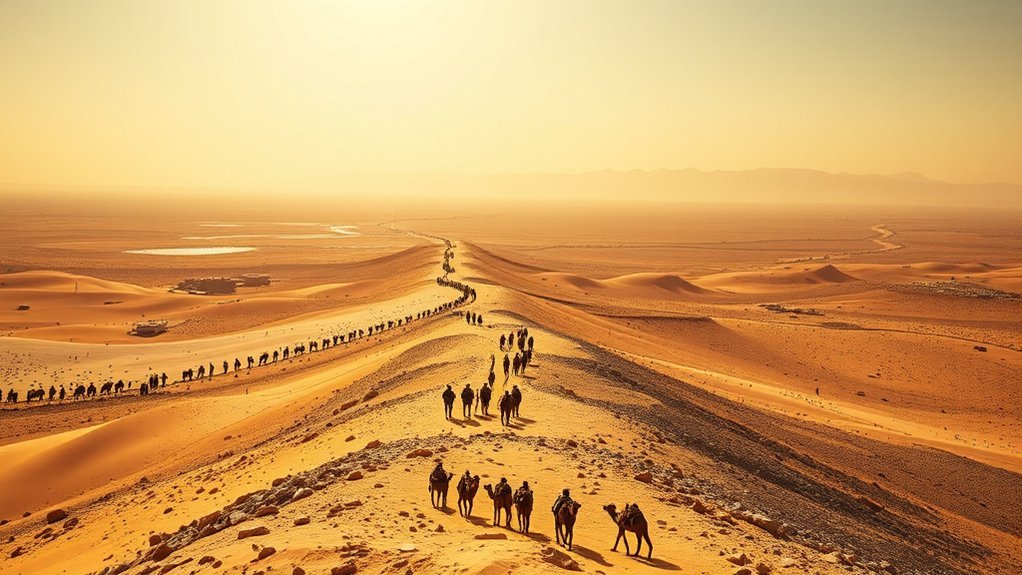
Though the route from Egypt to the Promised Land was only about 380 miles and could normally be walked in roughly three weeks, Israel’s journey stretched into 40 years because the people kept resisting God’s direction. You can see how disobedience consequences turned a short path into a long wilderness lesson. Instead of trusting the One who led them out, they complained, doubted, and stalled.
- Their murmuring hardened their hearts.
- Their lack of faith slowed their advance.
- Their spiritual growth lagged behind God’s promise.
God wasn’t punishing them aimlessly; He was preparing them. The desert exposed what still needed healing, shaping a people ready to live free under His care. If you want liberation, you must learn this pattern: freedom starts with obedience, and blessing follows trust. The 40 years remind you that God’s guidance is sure, but your readiness matters too.
What Delayed the Israelites in the Wilderness?
What delayed the Israelites in the wilderness wasn’t distance, but disobedience: a journey that could’ve taken about 19 to 21 days stretched into 40 years because they refused to trust God’s direction. You can see how murmuring hardened the road; complaint spread like a cancer, slowing every step and poisoning hope. Instead of moving with confidence, they clung to Egypt’s comforts, letting old memories chain their feet. Their hearts weren’t ready for the Promised Land, and that spiritual unpreparedness kept them circling dry ground. The wilderness became a fierce faith testing ground, where God’s instructions demanded surrender, not excuses. If you’re longing for liberation, notice this: delay often grows where distrust lives. Their journey shows you that spiritual growth requires obedience, courage, and a willingness to leave familiar bondage behind. When you resist God’s leading, you don’t just lose time—you lose momentum, clarity, and the freedom waiting ahead.
What Did the Wilderness Teach Israel?
The wilderness taught Israel that freedom without faith can still leave you wandering, because God was shaping more than their route—He was shaping their hearts. You see faith lessons in every dusty step: trust when supplies run low, obey when your own plans fail, and wait when the promise feels far away. Their journey showed you that spiritual growth doesn’t happen in comfort; it grows through hardship, correction, and patience.
- Disobedience stretched their journey and exposed shallow trust.
- Idols reminded them that true worship demands undivided devotion.
- Shared hardship forged community building around God’s instructions.
In the heat, silence, and scarcity, you learn that liberation isn’t only leaving Egypt; it’s becoming ready for the life God has prepared. The wilderness stripped away illusions and trained Israel to honor His nature, so they could enter the land not just free, but faithful, united, and prepared.
How Far Is Egypt From Canaan Today?
How far is Egypt from Canaan today? You’re looking at roughly 200 miles, or about 320 kilometers, as the crow flies. From Cairo to the land near modern-day Israel, the direct span stretches closer to 600 kilometers, about 373 miles. That’s a short line on a map, yet desert winds, mountains, and border crossings can still shape your movement.
| Measure | Distance |
|---|---|
| Direct span | 200 miles |
| Direct span | 320 km |
| Cairo to Canaan | 373 miles |
| Cairo to Canaan | 600 km |
With modern travel, you can cover this route in about 5-7 days, depending on your pace and transport. Ancient routes, however, wound through harsh terrain, turning a near passage into a demanding road. For you, that contrast matters: liberation can be near, even when the path feels long.
What Does the Exodus Teach About Patience?
Though the trip from Egypt to the Promised Land could’ve taken only a few weeks, the Israelites spent 40 years in the wilderness because of disobedience and doubt. You can see patience as more than waiting; it’s a liberation skill. The Exodus shows you that spiritual lessons often arrive through delay, not speed. When you murmur, you stall your own faith journey; when you trust, you move with purpose.
- Patience keeps your heart open to divine timing.
- Complaining can slow your growth process.
- Trust development turns wandering into wisdom.
Ecclesiastes 7:8 reminds you that the end matters, and God’s plan unfolds in full. So, if your path feels long, don’t panic. The wilderness can become your school for patience cultivation, where freedom matures inside you before it appears outside you. Embrace God’s timing; it shapes endurance, prepares your spirit, and brings you closer to the promise.
Frequently Asked Questions
What Is the Distance Between Egypt and the Promised Land in the Bible?
It’s about 380 miles, or roughly 613 kilometers, from Egypt to the Promised Land. In Biblical geography, that stretch shaped Ancient trade routes and your understanding of liberation, journey, and covenant.
How Many Miles Did Mary and Joseph Have to Travel to Reach Bethlehem?
They’d travel about 70 miles from Nazareth to Bethlehem. You’d see historical routes, harsh travel challenges, deep cultural significance, and modern implications, imagining the rugged journey on foot, maybe with a donkey carrying supplies.
What Is Canaan Called Today?
You’d call Canaan modern-day Israel and parts of Palestine, a land of sunlit hills and ancient dust. Its Canaan historical significance lives on in Jerusalem, Bethlehem, and Jericho, shaping today’s sacred, liberating geography.
How Far Was Biblical Canaan From Egypt?
Biblical Canaan sat about 200 miles, or 320 kilometers, from Egypt. In Canaan geography, you’d see a rugged route shaped by deserts and mountains, so your biblical migration could take weeks, not days.
Conclusion
So, as you trace Egypt’s dusty departure to the promised land’s distant horizon, you see more than miles—you see a journey of faith. You’ve followed the wandering winds, the weary waits, and the wilderness lessons that shaped Israel’s story. Today, the route still reminds you that true travel takes time, trust, and tenacity. When you face your own long road, remember: patience can pave progress, and promises often arrive after perseverance.
