
Last Updated on July 29, 2026 by Daniel Globe
Rome’s food is built on a small set of bold ingredients, including guanciale, Pecorino Romano, black pepper, eggs, tomatoes, seasonal vegetables, and slow-cooked cuts of meat. The essential dishes go far beyond carbonara. To taste the city properly, try its four classic pastas, fried street food, Roman-Jewish specialties, traditional main courses, pastries, and artisan gelato.
Quick Answer
Start with Rome’s four classic pastas: carbonara, amatriciana, cacio e pepe, and gricia. Then try supplì, pizza al taglio, carciofi alla romana or alla giudia, saltimbocca, maritozzi, and artisan gelato. Look for simple recipes, seasonal produce, guanciale, and Pecorino Romano rather than heavy sauces or oversized tourist menus.
Key Takeaways
- Carbonara, amatriciana, cacio e pepe, and gricia are the four core Roman pasta dishes.
- Supplì and pizza al taglio are convenient choices for a quick, inexpensive meal.
- Carciofi alla giudia reflect Rome’s important Jewish-Roman culinary tradition.
- Traditional Roman menus also include saltimbocca, oxtail, tripe, lamb, fried vegetables, and semolina gnocchi.
- Restaurant recipes vary, so ask about pork, dairy, eggs, gluten, anchovies, and cross-contact when you have dietary restrictions.
Disclosure: As an Amazon Associate I earn from qualifying purchases. Some links on this page are affiliate links, at no extra cost to you.
What Makes Roman Cuisine Unique?
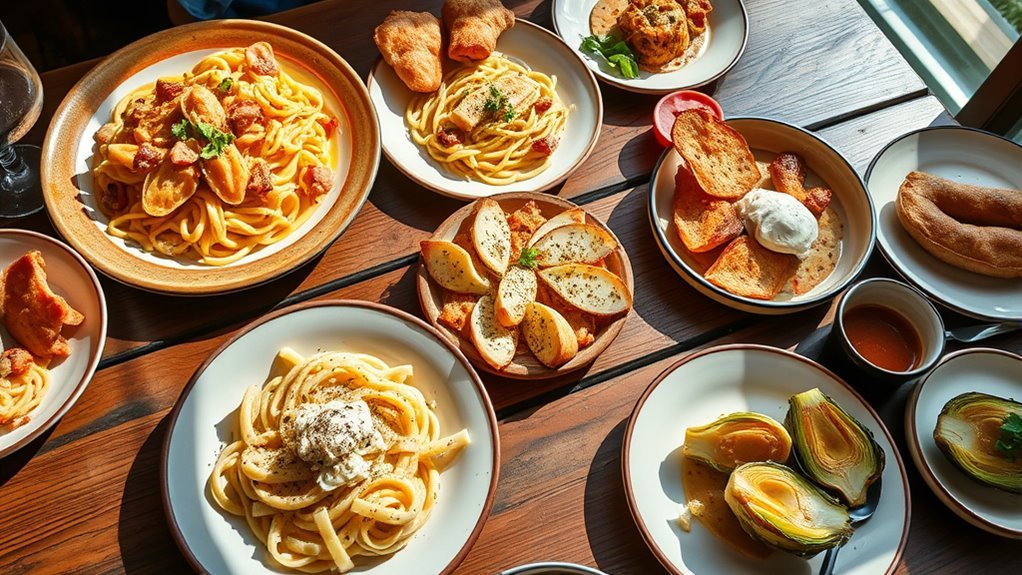
Roman cuisine is known for turning modest ingredients into strongly flavored food. Many recipes grew from cucina povera, or resourceful everyday cooking, in which bread, pasta, vegetables, legumes, cheese, cured pork, and less expensive cuts of meat were used with little waste.
Turismo Roma’s guide to traditional cuisine highlights pasta dishes such as carbonara, amatriciana, and gricia alongside tripe, oxtail, saltimbocca, and recipes made from the “fifth quarter,” the offal and remaining cuts once associated with Testaccio’s slaughterhouse workers.
Seasonality also matters. Artichokes, puntarelle, chicory, peas, and broad beans appear when they are at their best. Pecorino Romano adds a salty, sharp edge, while guanciale supplies rich pork flavor to several of the city’s most famous pastas.
Rome’s food is also shaped by its Jewish community. Fried artichokes, fried zucchini flowers, anchovy and endive dishes, and other Jewish-Roman specialties form an essential part of the city’s culinary identity.
Note: On a menu, alla romana means Roman-style. Alla giudia means Jewish-style and usually points to Rome’s historic Jewish-Roman cooking tradition.
Rigatoni Carbonara: A Modern Roman Classic
Carbonara combines pasta with guanciale, eggs, Pecorino Romano, freshly ground black pepper, and sometimes a small amount of pasta water. The silky texture comes from emulsifying the egg-and-cheese mixture with hot pasta and rendered guanciale fat. Traditional Roman carbonara does not need cream.
Rigatoni is a popular choice because its ridges and hollow center catch the sauce, although spaghetti is also common. A well-made carbonara should taste of cured pork, pepper, and sharp sheep’s-milk cheese without being greasy or scrambled.
The dish’s origin is still debated. Stories connect it to charcoal workers, Roman cooks, and food available to Allied troops during and after World War II. What is clearer is that the documentary history is modern: La Cucina Italiana published an early Italian recipe in 1954, and the ingredients continued to evolve before the current Roman version became standard.
Restaurants such as Trattoria Da Enzo are frequently associated with Roman pasta classics, but no single restaurant owns the dish. A busy neighborhood trattoria with a short Roman menu can be just as rewarding.
Pro Tip: Carbonara should be creamy from eggs and cheese, not from added cream. The sauce should coat the pasta without forming firm pieces of scrambled egg.
Bucatini Amatriciana: Guanciale, Tomato, and Pecorino
Bucatini all’amatriciana brings together cured pork, tomato, Pecorino cheese, and a little heat. The hollow bucatini strands hold the sauce well, although spaghetti and rigatoni are also served with it in Rome.
Origins and History
Amatriciana comes from Amatrice, a town in the Lazio region northeast of Rome. It developed from pasta alla gricia, a preparation of guanciale, Pecorino, and pepper, after tomato became part of the sauce. The dish later became deeply established in Roman trattorias.
In 2020, the European Union registered “Amatriciana Tradizionale” as a Traditional Speciality Guaranteed. The registration protects a defined preparation rather than claiming that every restaurant must serve an identical version.
Ingredients and Preparation
The protected preparation centers on guanciale, tomatoes, Pecorino from the Amatrice or Romano tradition, dry white wine, pepper or chili, and salt. It does not call for garlic, onion, or pancetta. Roman restaurants may serve variations, but those additions are not part of the registered traditional specification.
The guanciale is rendered until its fat is released, then combined with tomato. The cooked pasta is finished in the sauce and topped with grated Pecorino. The result should be savory and lightly sharp rather than sweet or overloaded with tomato.
Pairings and Serving
A medium-bodied Cesanese is a local red-wine option that can stand up to guanciale and tomato. A dry Frascati offers a lighter white-wine pairing. Sparkling water is also a good choice when you want the pasta’s salty, spicy flavors to remain the focus.
Wine pairing is a preference, not a rule. Order the drink you enjoy and ask for tap or bottled water alongside it.
Tonnarelli Cacio e Pepe: Rome’s Three-Ingredient Pasta
Cacio e pepe is based on pasta, Pecorino Romano, and black pepper. Starchy pasta water brings those ingredients together into a smooth sauce. No cream is needed.
Tonnarelli is especially popular because the thick, square-cut strands give the cheese sauce plenty of surface to cling to. Spaghetti is also traditional, and Turismo Roma’s recipe uses spaghetti, Pecorino Romano, and pepper.
The dish sounds simple, but temperature control matters. If the cheese becomes too hot, it can tighten into clumps. A good restaurant version is glossy and peppery, with enough pasta water to coat the noodles without leaving a pool of thin liquid.
- Flavor: Salty, sharp, and peppery.
- Texture: Creamy from emulsified cheese and pasta water.
- Best for: Diners who want a meat-free Roman pasta, although strict vegetarians may wish to confirm how the Pecorino was produced.
Pasta alla Gricia: The Missing Fourth Roman Pasta
Gricia completes Rome’s group of four classic pastas. It combines guanciale, Pecorino Romano, black pepper, and pasta water. There is no tomato and no egg.
You can think of it as the bridge between cacio e pepe and amatriciana. It has the cheese and pepper of cacio e pepe, adds crisp guanciale, and provides the base from which tomato-based amatriciana developed.
Rigatoni, mezze maniche, spaghetti, and other shapes may be used. The best versions balance crisp pieces of pork with enough rendered fat and starchy water to create a sauce rather than leaving the pasta dry.
Carbonara adds egg, amatriciana adds tomato, gricia centers on guanciale and Pecorino, and cacio e pepe leaves out the pork.
Why Supplì Is at the Heart of Roman Street Food
Supplì are elongated fried rice croquettes with a crisp breadcrumb coating. The classic version contains tomato-seasoned rice and a center of mozzarella. When a hot supplì is pulled apart, the melted cheese stretches between the two halves, creating the effect known as supplì al telefono.
The name is commonly linked to an Italian rendering of the French word surprise, referring to the cheese hidden inside. It does not come from soupir, the French word for “sigh.” Turismo Roma describes supplì as a cornerstone of Roman street food.
Recipes vary, and no single rice variety defines the dish. What matters is rice firm enough to hold its shape, a properly chilled filling, an even coating, and hot oil that produces a crisp shell without making the center greasy.
Modern pizzerias often sell flavored versions alongside the classic:
| Variation | Typical Filling | What to Know |
|---|---|---|
| Classic Supplì | Tomato-seasoned rice and mozzarella | The standard Roman version; some recipes include meat in the sauce. |
| Cacio e Pepe | Pecorino and black pepper | A modern variation inspired by the pasta dish. |
| Funghi e Formaggio | Mushrooms and cheese | Often meat-free, but ask whether the rice or mushrooms were cooked in meat stock. |
| Carciofi | Artichoke and cheese | More likely to appear when artichokes are in season. |
| Spicy | Chili, tomato, and mozzarella | Heat levels and additional ingredients vary by shop. |
Pizza al Taglio: A Roman Classic Sold by Weight
Pizza al taglio is baked in large trays or on a long baking surface, cut to the size you request, and commonly priced by weight. Italia.it identifies tray-baked and paddle-baked pizza as two styles strongly associated with Rome.
The dough is usually more hydrated and thicker than a thin Roman round pizza. A long fermentation can produce a light interior with open bubbles and a crisp base. Toppings range from tomato and mozzarella to potatoes, seasonal vegetables, cured meats, and creative combinations.
- Pizza rossa: A simple tray pizza with tomato.
- Pizza bianca: An oil-and-salt flatbread that may be eaten alone or filled with mortadella.
- Prosciutto e fichi: Pizza bianca with prosciutto and fresh figs when figs are in season.
- Seasonal slices: Artichokes, zucchini flowers, mushrooms, potatoes, and local cheeses may change throughout the year.
Pro Tip: At a pizza-al-taglio counter, point to the pizza and show how large a piece you want. The server cuts it, weighs it, and may warm it before serving.
Products Worth Considering

No seasoning required - ready for production

SET OF TWO 15.75" NONSTICK PIZZA PANS: Air-insulated and perforated to reduce moisture while baking frozen or homemade pizzas or heating up leftover slices to promote a crispier crust for a fresh taste
The Sweet Tradition of Maritozzi
A modern Roman maritozzo is a soft, lightly sweetened bun split down the middle and generously filled with whipped cream. It is sold in bakeries, pastry shops, and cafés and can be eaten at breakfast or as an afternoon treat.
Cultural Significance
The word maritozzo is related to marito, the Italian word for husband. A familiar Roman tradition says that a fiancé once gave the sweet bun to his bride-to-be, sometimes with a small gift hidden inside. Rome’s tourism authority still presents the cream-filled maritozzo as a romantic city tradition.
Older breads and fasting-period buns may have influenced the pastry, but claims that the modern cream-filled version has continued unchanged since Ancient Rome should be treated cautiously. Its importance comes from its place in Roman bakery culture today, not from the need to prove one uninterrupted recipe.
Traditional Preparation Methods
The enriched dough is mixed until soft, allowed to rise, shaped into oval buns, and baked until lightly golden. Citrus zest, raisins, pine nuts, or other flavorings appear in some older or regional versions. The familiar café version is cooled, cut open, and filled with whipped cream shortly before serving.
Modern pastry shops may add chocolate, pistachio, fruit, or flavored cream. Try a plain cream-filled maritozzo first if you want the version most closely associated with Rome.
Roman-Style Artichokes: Alla Romana vs. Alla Giudia
Artichokes are among Rome’s most important seasonal vegetables. The local Romanesco type is especially associated with winter and spring, with the strongest season commonly falling around March and April.
- Carciofi alla romana: Artichokes are trimmed, filled with garlic, parsley, and Roman mint, then gently cooked with oil and liquid until tender.
- Carciofi alla giudia: Artichokes from the Jewish-Roman tradition are opened and fried until the leaves become crisp and flower-like.
- Texture: Alla romana is soft, moist, and herbal; alla giudia is crisp outside with a tender center.
- Where to try them: Traditional trattorias serve both styles, while restaurants in and around Rome’s Jewish Ghetto are especially associated with carciofi alla giudia.
Turismo Roma provides recipes for both preparations and identifies alla giudia as part of Rome’s historic Jewish cooking tradition.
Note: Fresh artichoke dishes may disappear from traditional menus outside the main season. A shorter seasonal menu is often a better sign than a restaurant promising every Roman specialty all year.
Why Try Saltimbocca alla Romana?
Saltimbocca alla romana is made from thin veal slices topped with prosciutto and fresh sage. The pieces are secured together and quickly cooked, often with butter or oil and dry white wine.
The name means roughly “jumps in the mouth,” a reference to the dish’s immediate savory flavor. The origin is debated and is sometimes connected to Brescia, but saltimbocca has long been established as a symbol of Roman restaurant cooking. Turismo Roma notes that Pellegrino Artusi recorded the Roman version after eating it in Rome in the late 19th century.
The prosciutto already contributes salt, so a balanced version should not be heavily seasoned. Side dishes vary and may include roast potatoes, sautéed chicory, peas, or other seasonal vegetables.
Other Traditional Roman Dishes Worth Ordering
The most famous pastas are only one part of Roman cuisine. These dishes provide a broader picture of what local trattorias serve.
Hearty Meat and Offal Dishes
- Coda alla vaccinara: Oxtail slowly braised with tomato, celery, and aromatics until the meat becomes tender. Some versions add raisins, pine nuts, or a little cocoa.
- Trippa alla romana: Tripe cooked with tomato and finished with Pecorino Romano and mint. It is traditionally associated with Saturday menus in Roman trattorias.
- Abbacchio: Young lamb prepared roasted, fried, or grilled as scottadito. It is especially connected with Easter and celebratory meals.
- Rigatoni con la pajata: A historic Roman offal dish made with veal intestine. It has a distinctive flavor and is best approached as a specialty rather than a general pasta recommendation.
Vegetables, Fried Foods, and Sides
- Gnocchi alla romana: Discs made from semolina, milk, butter, and cheese, then baked until golden. They are different from potato gnocchi.
- Fiori di zucca: Zucchini flowers commonly filled with mozzarella and anchovy, coated in batter, and fried.
- Filetti di baccalà: Battered and fried salt cod, often sold with other Roman fried foods.
- Puntarelle: Crisp chicory shoots usually dressed with anchovy, garlic, vinegar, and oil.
- Cicoria ripassata: Chicory sautéed with olive oil, garlic, and chili.
Warning: A dish that looks vegetarian may contain meat stock, guanciale, anchovy, animal rennet, or shared frying oil. Tell the restaurant about allergies and dietary restrictions rather than relying only on the menu title.
Where to Find Good Gelato in Rome
Rome has historic gelaterie, small artisan shops, and modern businesses with several branches. “Best” is subjective, so treat any list as a starting point and check current locations and opening hours before making a special trip.
- Giolitti: A historic central shop operating at its well-known Via degli Uffici del Vicario location since 1900, with a large selection of traditional flavors.
- Neve di Latte: An artisan gelateria with several Rome locations and a focus on carefully sourced ingredients and seasonal fruit.
- Otaleg: A Trastevere gelateria known for both classic and unconventional flavors. The name is “gelato” spelled backward.
- Gelateria Fatamorgana: A Roman business known for creative combinations and multiple locations.
- Gelateria dei Gracchi: An established artisan gelateria associated with traditional nut, chocolate, and fruit flavors.
Good gelato should look dense rather than whipped into towering piles. Natural pistachio is usually muted green or brownish rather than fluorescent green, and banana should be pale rather than bright yellow. Seasonal fruit flavors are another encouraging sign.
Pro Tip: Try two small flavors that complement each other, such as pistachio with dark chocolate or lemon with seasonal fruit. Ask which flavors are made without dairy when you need a vegan or lactose-free option.
Products Worth Considering

Talenti Sicilian Pistachio Gelato 1 Pint

BUILT-IN BODY WASH + BUFFER: Enjoy a spa-like experience with our loofah sponge that combines fragrant body wash and refreshing exfoliation.
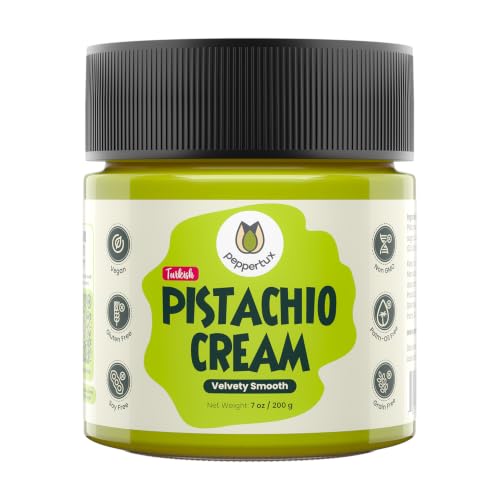
Turkish Pistachios Flavor: Get ready to savor the delicious taste of pistachios with every spoonful. Our vegan pistachio cream is made from Turkish Antep pistachios. You can use this in cookies, lattes, oats, granola, waffles, cakes, ice cream, and more.
How to Order and Eat Well in Rome
Different types of food are best found in different kinds of businesses:
- Trattoria or osteria: Sit-down pasta, artichokes, meat dishes, and traditional sides.
- Forno: Bread, pizza bianca, pizza rossa, and baked snacks.
- Pizzeria al taglio: Tray pizza and supplì for a quick meal.
- Pasticceria or bar: Maritozzi, pastries, coffee, and breakfast.
- Gelateria: Gelato and sorbet served in a cup or cone.
A long menu containing food from every region of Italy is not always the best place to seek specifically Roman cooking. Look for a manageable list that includes seasonal dishes and uses Italian names with clear descriptions.
Ask what is available that day. Artichokes, zucchini flowers, puntarelle, mushrooms, and fresh fruit should change with the season. Specials written on a board may be more interesting than dishes printed permanently on a laminated menu.
For a first Roman meal, order one fried starter to share, choose one of the four classic pastas, add a vegetable side, and finish with a maritozzo or gelato later in the day. You do not need to fit every specialty into one sitting.
Frequently Asked Questions
What dishes is Rome most famous for?
Rome is most famous for carbonara, amatriciana, cacio e pepe, gricia, supplì, pizza al taglio, carciofi alla romana, carciofi alla giudia, saltimbocca, coda alla vaccinara, maritozzi, and gelato.
What are the four classic Roman pasta dishes?
The four classics are carbonara, amatriciana, cacio e pepe, and gricia. Carbonara adds egg, amatriciana adds tomato, gricia uses guanciale and Pecorino without egg or tomato, and cacio e pepe uses cheese and pepper without pork.
What is Rome’s main dish?
Rome does not have one official main dish. Carbonara is probably the city’s most internationally recognized pasta, while cacio e pepe, gricia, and amatriciana are equally important to Roman food culture.
What are five famous Italian dishes beyond Rome?
Well-known dishes from other Italian regions include Neapolitan pizza, lasagne alla bolognese, risotto alla milanese, osso buco, and Sicilian arancini. Italian cooking is highly regional, so the specialties change as you travel.
Which Roman foods are vegetarian?
Cacio e pepe, carciofi alla romana, carciofi alla giudia, pizza rossa, many vegetable pizzas, and some maritozzi may be meat-free. Confirm stock, anchovies, animal rennet, frying oil, and cross-contact with the restaurant.
What is guanciale?
Guanciale is cured pork jowl. It has a rich fat content and a distinctive flavor that differs from pancetta, which comes from pork belly. Guanciale is central to carbonara, gricia, and amatriciana.
When are Roman artichokes in season?
Romanesco artichokes are mainly associated with winter and spring. Availability often runs from January into May, with March and April commonly considered the strongest period.
How can you recognize good gelato?
Look for dense gelato stored level with or below the top of its container, natural-looking colors, seasonal fruit flavors, and clearly identified ingredients. Large, brightly colored mounds can indicate excessive air, coloring, or stabilizers.
Conclusion
Rome’s essential food begins with carbonara, amatriciana, cacio e pepe, and gricia, but it should not end there. Supplì and pizza al taglio show the city’s casual side, while artichokes, saltimbocca, oxtail, tripe, and lamb reveal its seasonal and working-class traditions. Leave room for a cream-filled maritozzo or a small cup of artisan gelato, and choose restaurants that favor focused menus, clear ingredients, and dishes suited to the season.
Sources
- Turismo Roma: Traditional Cuisine — Roman pasta, offal, meat dishes, and culinary background.
- Turismo Roma: Traditional Carbonara — ingredients and the absence of cream in the Roman preparation.
- European Commission Regulation 2020/395 — registration of Amatriciana Tradizionale as a Traditional Speciality Guaranteed.
- Turismo Roma: Street Food in Rome — supplì ingredients, shape, mozzarella center, and commonly cited name origin.
- Turismo Roma: Roman Artichokes — carciofi alla romana and carciofi alla giudia.
- Italia.it: Types of Pizza in Italy — Roman tray pizza, paddle pizza, and sale by weight.
