
Last Updated on July 28, 2026 by Daniel Globe
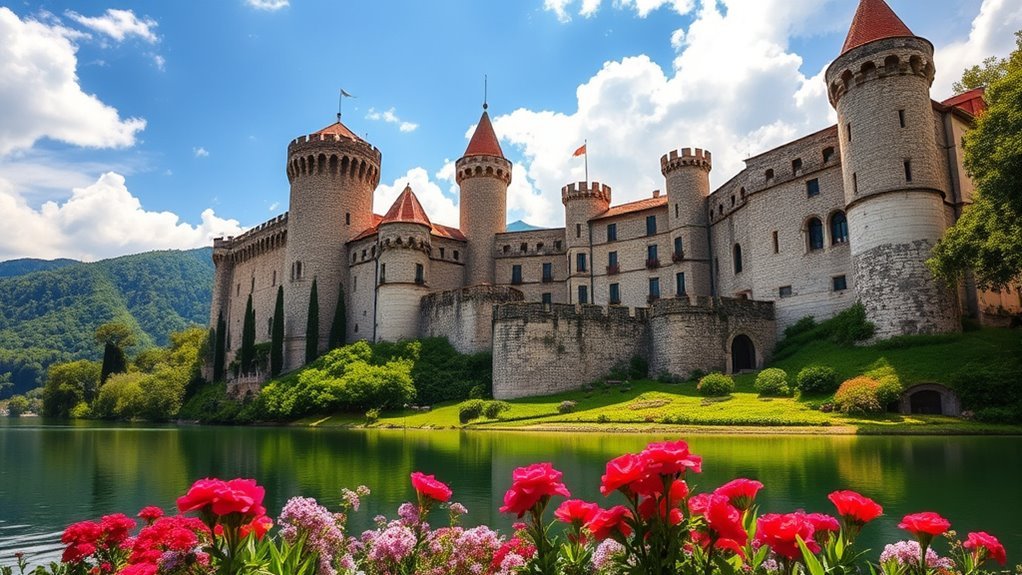
Campania is home to some of Italy‘s most spectacular castles, each with its own layered history and view. From the fortified islet of Castel dell’Ovo to the Baroque splendor of Reggia di Caserta, this guide covers the region’s must-see fortresses, royal palaces, and romantic ruins — along with the stories behind them.
Quick Answer
Campania’s top castles include Castel dell’Ovo and Castel Nuovo in Naples, the Reggia di Caserta royal palace, Castel Sant’Elmo for panoramic views, the Aragonese Castle on Ischia, and Arechi Castle in Salerno. Each offers a distinct mix of medieval, Baroque, or Aragonese history and coastal scenery.
Key Takeaways
- Castel dell’Ovo dates to the 12th century and sits on the islet of Megaride in Naples’ bay, associated with the ancient legend of Virgil’s Egg.
- Reggia di Caserta, a UNESCO World Heritage Site, features 1,200 rooms and 120 hectares of gardens, earning it the title “Versailles of Italy.”
- Castel Sant’Elmo offers 360-degree views of Naples, Mount Vesuvius, and the bay from Vomero hill.
- The Aragonese Castle on Ischia has origins dating back to 474 BC, connected to the island by a stone causeway built in 1441.
- Villa Cimbrone’s gardens feature the world-famous Terrace of Infinity overlooking the Amalfi Coast in Ravello.
Pro Tip: Planning to visit multiple landmarks across Naples and Campania? Consider purchasing the Campania Artecard. It offers discounted or free entry to sites like Castel Sant’Elmo, Castel Nuovo, and Reggia di Caserta, alongside integrated public transport options.
Disclosure: As an Amazon Associate I earn from qualifying purchases. Some links on this page are affiliate links, at no extra cost to you.
Discover the Enchantment of Castel dell’Ovo
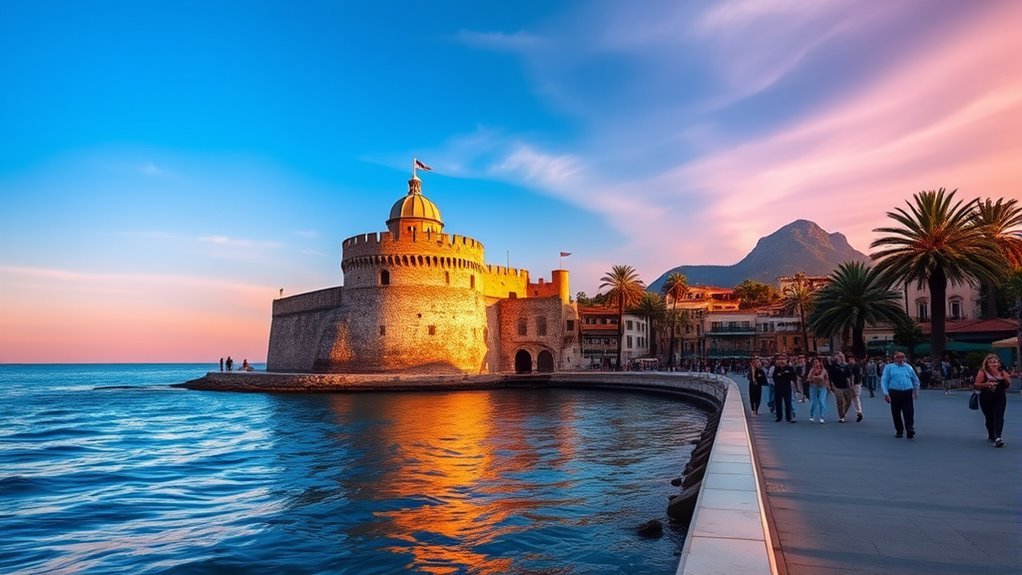
As you stroll along the vibrant waterfront of Naples, you’re immediately drawn to the captivating silhouette of Castel dell’Ovo. This ancient fortress, dating back to the 12th century, stands proudly on the islet of Megaride. Local legend holds that the Roman poet Virgil placed a magical egg within its foundations to protect the city — giving the “Egg Castle” its famous name.
Its striking architecture features a blend of Norman and medieval fortifications. The views of the Bay of Naples from its ramparts provide phenomenal vantage points for scenic photography, with Mount Vesuvius framing the horizon.
Easily accessible by public transport or a scenic seaside walk, Castel dell’Ovo is a must-see landmark for anyone eager to explore Naples’ rich historical heritage.
Experience Royal Grandeur at Reggia Di Caserta
Stepping into the Reggia di Caserta reveals the extraordinary grandeur of Bourbon monarchy architecture. Designed in the 18th century, this royal palace features over 1,200 rooms filled with period artwork, intricate frescoes, and regal furnishings. Beyond the palace walls lie 120 hectares of manicured Italianate gardens and grand fountains.
Architectural Marvels
Designed by master architect Luigi Vanvitelli, Reggia di Caserta is widely celebrated as the “Versailles of Italy.” As you wander through its grand corridors, you’ll encounter the monumental Grand Staircase, the royal apartments, an authentic 18th-century court theater, and a vast library housing priceless manuscripts. Recognized as a UNESCO World Heritage Site, the palace stands as a supreme triumph of Italian Baroque architecture.
Lush Gardens Exploration
The gardens at Reggia di Caserta stretch over three kilometers along a central canal axis. Highlights include the magnificent Fountain of Diana and Actaeon, fed by the Carolino Aqueduct, and the picturesque English Garden commissioned by Queen Maria Carolina. Cascading waterfalls, classical statues, and winding forest paths make exploring the grounds an unforgettable experience.
Reggia di Caserta’s 120 hectares of gardens and 1,200 rooms make it one of the largest royal residences ever built in Europe.
Marvel at Castel Nuovo’s Historical Significance
Dominating Naples’ Piazza Municipio near the port, Castel Nuovo (commonly known as *Maschio Angioino*) is one of the city’s most recognizable medieval landmarks. Commissioned in 1279 by King Charles I of Anjou, the fortress later underwent major Renaissance expansions under Alfonso V of Aragon.
Inside, visitors can explore the Gothic Palatina Chapel, the soaring Hall of the Barons, and the Municipal Museum, which houses impressive regional artwork spanning the 14th to 19th centuries.
| Feature | Description |
|---|---|
| Year Constructed | 1279 (Angevin Era) |
| Architectural Style | Gothic and Catalan Renaissance |
| Key Highlight | Triumphal Arch of Alfonso of Aragon |
| Cultural Role | Civic Museum & historical venue |
Take in the Scenic Views From Sant’Elmo Castle
Perched at the highest point of the Vomero hill, Castel Sant’Elmo is a massive 14th-century star-shaped fortress carved directly out of Neapolitan yellow tufa stone. It offers arguably the single best vantage point over Naples.
Breathtaking Panoramic Vistas
From Sant’Elmo’s broad walkway roof, visitors enjoy an uninterrupted 360-degree view of Spaccanapoli, Mount Vesuvius, the Sorrento Peninsula, and the islands of Capri and Ischia. Plan to spend 1.5 to 2 hours exploring both the outer ramparts and the Museo Novecento housed within the fortress complex.
Note: Opening hours and ticket prices for Castel Sant’Elmo can vary by season. You can easily reach Vomero hill by taking the Montesanto or Centrale funiculars from central Naples.
Historical Significance of Sant’Elmo
Originally constructed under Robert of Anjou and expanded during Spanish viceregal rule in the 16th century, Sant’Elmo served as a formidable military stronghold and state prison. Its unique six-pointed star layout allowed defenders to cover all angles against attackers, making it a masterpiece of early modern military engineering.
Relax in the Beautiful Gardens of Villa Cimbrone
High above the Amalfi Coast in Ravello, Villa Cimbrone combines historic architecture with magnificent botanical gardens. Originating as a noble estate in the 11th century, the property was restored in the early 20th century by Lord Grimthorpe.
| Feature | Description | Visitor Experience |
|---|---|---|
| Terrace of Infinity | Marble bust-lined balcony overlooking the sea | Unmatched Mediterranean panoramas |
| Winding Pathways | Tree-lined avenues and rose gardens | Peaceful strolls amidst exotic flora |
| Classical Temples | Temple of Bacchus and Tea Room pavilion | Romantic, historic garden spots |
Step Back in Time at Arechi Castle
Overlooking the Gulf of Salerno, Arechi Castle (*Castello di Arechi*) sits perched 300 meters above sea level. This 8th-century fortress was expanded by the Lombard Prince Arechi II to fortify Salerno as the capital of his duchy.
Its elevated stone towers offer sweeping views across Salerno’s coastline. An on-site archaeological museum displays medieval weaponry, ceramics, and coins uncovered during site excavations.
Enjoy Coastal Beauty at Agropoli Castle
Guarding the northern entrance to the Cilento Coast, Agropoli Castle sits atop a rocky promontory overlooking the Tyrrhenian Sea. Built on Byzantine foundations and reshaped by the Aragonese, the fortress features triangular towers, high stone walls, and a deep dry moat.
| Feature | Description | Ideal For |
|---|---|---|
| Medieval Architecture | Well-preserved walls and courtyard gates | History buffs & sightseers |
| Coastal Vistas | Overlooks Agropoli harbor and beaches | Photography lovers |
| Cultural Events | Open-air concerts and summer exhibits | Evening entertainment |
Visit the Historic Aragonese Castle on Ischia
Located on a volcanic rock island connected to Ischia by a 220-meter stone bridge, the Aragonese Castle (*Castello Aragonese*) is one of the island’s premier highlights. Originally fortified in 474 BC by Hiero I of Syracuse, the present structure owes its dramatic layout to Alfonso V of Aragon, who built the connecting causeway in 1441.
Inside, visitors can tour ancient churches, the Nunnery of the Clarisses, historic olive presses, and lush terrace gardens with sea views.
Uncover the History and Vistas of Castel Lauritano
High above the Amalfi Coast in Agerola — the gateway to the famous Path of the Gods (*Sentiero degli Dei*) — lie the historic ruins of Castel Lauritano.
Legends and Lore of Agerola
Perched on high cliffs overlooking Amalfi and Positano, Castel Lauritano served as a strategic military lookout for the Maritime Republic of Amalfi. Local folklore speaks of medieval sentinels watching the horizon for incoming pirate fleets, signaling warnings down to the coastal towns below.
Historical Context of Lauritano
Constructed during the Middle Ages, Lauritano was built by noble local families to defend mountain passes connecting the Gulf of Naples with the Amalfi Coast. Its elevated position provided natural protection against invaders.
Architectural Significance of Ruins
Though largely in ruins today, the remaining stone bastions demonstrate medieval defense tactics:
- Thick limestone walls designed to withstand mountain weather and sieges
- Strategic lookout points with commanding views of the Tyrrhenian Coast
- Integration into the natural rock formations of Mount Faito
Experience the Fairytale Vibe of Castello Lancellotti
Located in Lauro (Avellino province), Castello Lancellotti looks like something out of a classic storybook. Built on 11th-century foundations, this castle blends Gothic, Renaissance, and Baroque architectural styles.
After being damaged during the Napoleonic wars in 1799, Prince Filippo Lancellotti restored the castle in 1872. Today, guided tours take visitors through grand courtyard gardens, historical armories, and period-decorated rooms.
Frequently Asked Questions
What is the most beautiful castle in Italy?
Many visitors consider Reggia di Caserta among the most beautiful in Italy. Its Baroque architecture and expansive gardens make it a standout example of royal grandeur, though “most beautiful” ultimately comes down to personal taste among Italy’s many remarkable castles.
What is Campania, Italy famous for?
Campania is known for Neapolitan cuisine, including pizza, along with historical landmarks like Pompeii and Herculaneum, the Amalfi Coast, and cities such as Naples and Salerno with centuries of layered history.
What are the World Heritage Sites in Campania?
Campania’s UNESCO World Heritage Sites include the Historic Centre of Naples, the Royal Palace of Caserta (Reggia di Caserta) with its aqueduct and park, and the archaeological areas of Pompeii, Herculaneum, and Torre Annunziata.
What is considered the most beautiful castle?
Reggia di Caserta is frequently cited as one of Italy’s most beautiful palace-castles, prized for its scale, Baroque design, and gardens, which together earned it UNESCO World Heritage status.
Conclusion
As you explore these stunning castles in Campania, you’ll feel the deep pull of Italian history and coastal architecture. Whether you’re standing on the Terrace of Infinity at Villa Cimbrone, admiring the grandeur of Reggia di Caserta, or gazing over Naples from Castel Sant’Elmo, each site offers a captivating story and an unforgettable view.
Sources
- Aragonese Castle — Wikipedia — History and background of the Ischia fortress
- Villa Cimbrone — Wikipedia — Overview of Ravello estate history and terrace views
- UNESCO World Heritage Centre — Official listing details for the Royal Palace of Caserta
- Reggia di Caserta Official Site — Visitor details, royal apartments, and garden guides
