
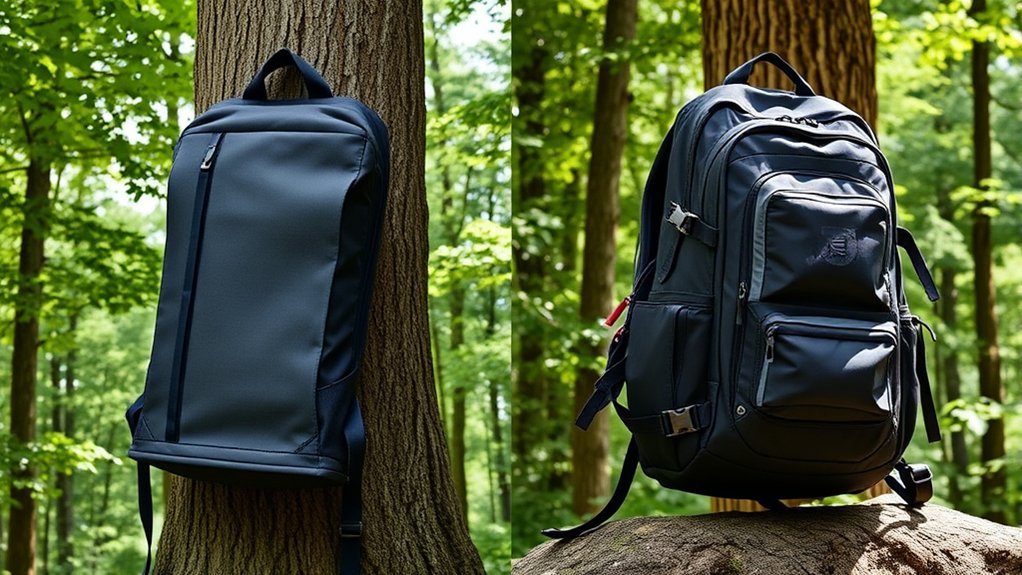
When choosing between internal and external frame backpacks, it’s essential to understand their key differences. Internal frame packs are lightweight, compact, and provide excellent stability for technical trails, while external frames distribute weight effectively, making them ideal for heavy loads on flat terrain. Internal frames often lack organizational features but excel in fit, whereas external frames offer numerous pockets for gear. Each type has unique advantages, and if you explore further, you’ll uncover even more insights to guide your decision.
What Is an Internal Frame Backpack?
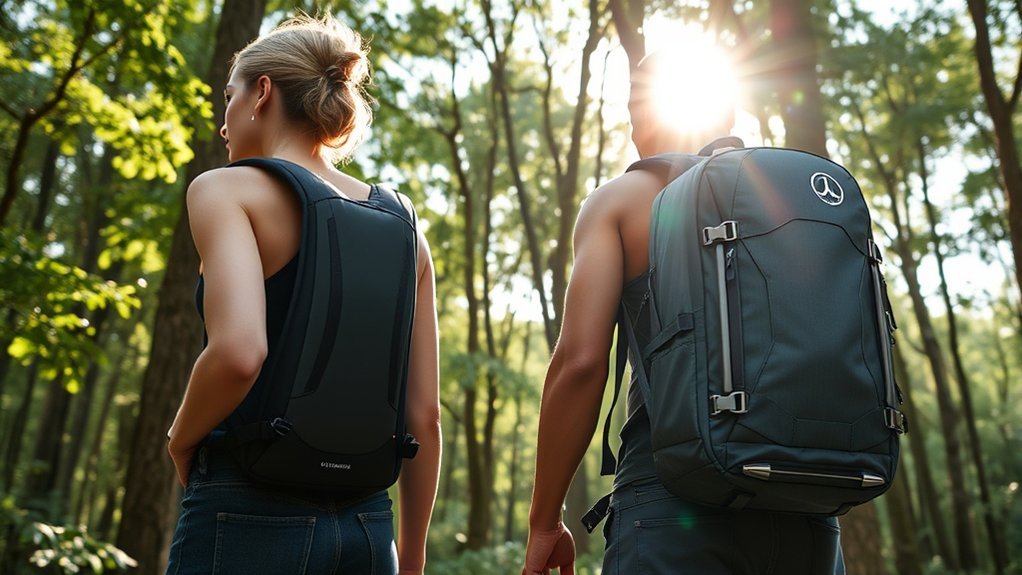
An internal frame backpack is designed for those who value stability and comfort during their outdoor adventures. With a supportive frame nestled within the pack, it hugs your back closely, maintaining a natural center of gravity as you move. This design is perfect for activities that require you to shift your weight and adjust your body position, thanks to its aluminum stays that offer customizable rigidity for your comfort.
These backpacks often boast a larger internal capacity, keeping your gear safe from the elements while also featuring easily adjustable shoulder straps for a snug fit. However, be prepared for a potential drawback: the close fit can lead to a sweaty back, and you may find fewer external attachment options for your gear. Priced between $200 and $300+, internal frame backpacks reflect their technical design and versatility, empowering you to embrace your wildest outdoor escapades.
What Is an External Frame Backpack?
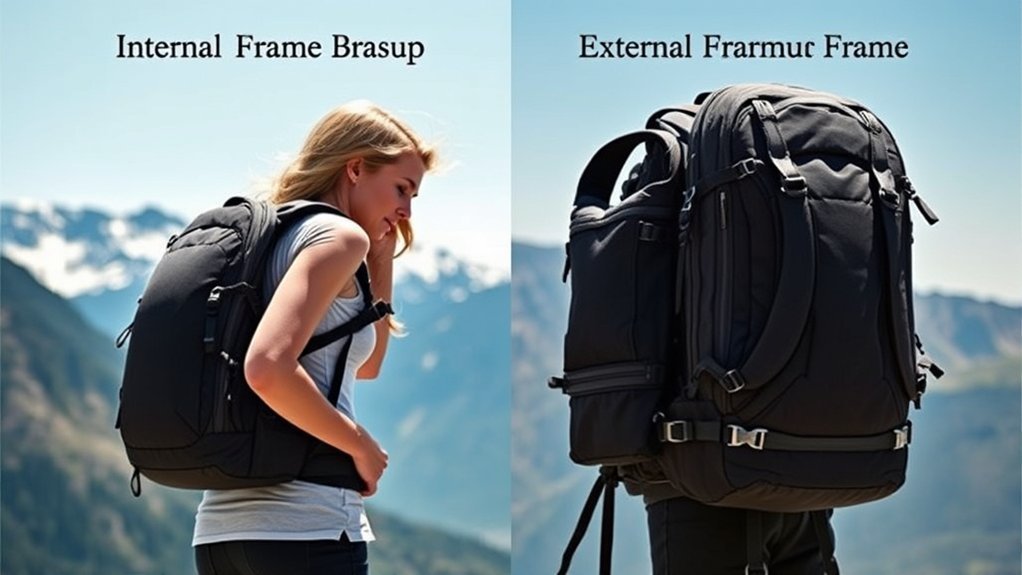
An external frame backpack features a sturdy frame on the outside, designed to transfer weight more effectively to your lower body, enhancing your comfort on long hikes. This design allows the pack to sit away from your back, promoting better airflow and reducing sweat. With its rigid suspension and multiple compartments, it’s perfect for carrying heavier loads and keeping your gear organized.
Structure and Design Features
While exploring the world of outdoor gear, you’ll find that external frame backpacks stand out due to their unique structure and design features. These packs have a supportive frame that sits outside, allowing for gear attachment and enhancing ventilation. With multiple compartments, they offer better organization compared to internal frames.
Here’s a quick overview of their key features:
| Feature | Description |
|---|---|
| Frame Location | Outside the pack for ventilation |
| Weight Transfer | Transfers weight to the lower body |
| Durability | Stronger construction; frame bears the load |
| Organization | Multiple compartments for easy access |
| Bulkiness | Generally bulkier, suited for heavy loads |
External frame backpacks are perfect for those who prioritize comfort and accessibility on their adventures.
Load Distribution Benefits
When you choose an external frame backpack, you benefit from superior load distribution that enhances your hiking experience. The supportive frame sits away from your body, allowing for better ventilation and keeping you cooler. This design effectively transfers weight to your lower body, improving your posture and comfort on the trail. You’ll find it easier to attach extra gear directly to the frame, perfect for those who crave adventure. With multiple smaller pockets, accessing your essentials becomes a breeze, ensuring you’re organized and ready. Plus, the durability of the external frame means it can handle the weight without compromising. Embrace the freedom of the outdoors with a pack that truly supports your journey!
Current Trends in Backpack Design
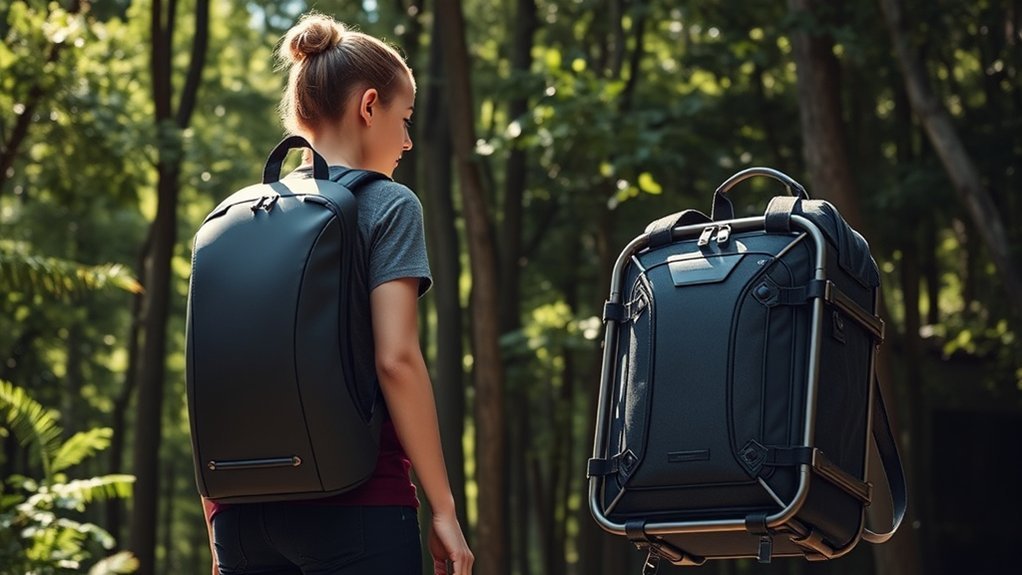
As the outdoor gear market evolves, backpack design trends are shifting towards internal frames due to their adaptability and modern enhancements. You’ll find that internal frame backpacks dominate the market, delivering versatility with prices typically ranging from $200 to $300+. However, external frame backpacks are still around, appealing to those nostalgic for retro designs, with brands like Kelty keeping the tradition alive.
Emerging hybrid designs combine features from both styles, catering to diverse hiking needs. Here are some key trends to reflect upon:
- Increased Comfort: Advanced materials enhance fit and support.
- Sustainability: Eco-friendly materials are becoming more common.
- Modular Features: Customizable compartments cater to specific activities.
- Lightweight Innovations: New tech reduces weight without sacrificing durability.
These trends reflect a desire for liberation and adaptability, making your outdoor adventures more enjoyable than ever.
Weight and Size Comparison
When choosing between internal and external frame backpacks, weight and size can greatly influence your hiking experience. Internal frame packs, like the Osprey Levity 45, offer a lightweight design perfect for easy maneuverability, while external frames may weigh you down but often provide more pockets for organization. Understanding these differences helps you find a pack that suits your adventure style and packing needs.
Pack Weight Differences
Though both internal and external frame backpacks serve the same purpose, their weight and size differences can greatly impact your hiking experience. Here’s a breakdown of what to expect:
- Weight: Internal frame packs, like the Osprey Levity 45 at 1lb 12oz, are lighter than classic external frames that start at around 5lbs.
- Load Positioning: External frames position weight higher, enhancing posture, while internal frames require a forward lean for balance.
- Compactness: Internal frames are more compact, making them easier to pack and store than bulkier external counterparts.
- Organization: External frames often provide more pockets for organized storage, while internal frames use fewer but include lashing straps for gear attachment.
Choosing between them can redefine your freedom on the trail!
Size and Capacity Insights
Pack weight plays a significant role in your hiking experience, but size and capacity are just as important when choosing between internal and external frame backpacks. Internal frame packs, like the Vargo Exoti AR2 at 2lb 12oz or the Osprey Levity 45 at a mere 1lb 12oz, are lighter and more packable, hugging your back for comfort. In contrast, classic external frame packs usually weigh at least 5lb, making them bulkier. They offer around 65L of capacity like their internal counterparts, but feature more pockets for organization. While external frames allow for gear attachments, exposing items to the elements, internal frames provide a snug fit, enhancing stability, albeit with a trade-off in packing flexibility. Choose wisely for your adventure!
Storage Capacity and Load Distribution
Storage capacity and load distribution are essential factors to take into account when choosing between internal and external frame backpacks. Each type has its strengths, so understanding these differences can enhance your outdoor experience.
- Internal Frame Backpacks: Typically have one or two large compartments, offering a streamlined, compact design that feels less bulky.
- External Frame Backpacks: Provide larger overall capacity and more pockets for better organization, though items strapped outside may be exposed to the elements.
- Load Distribution: Internal frames transfer weight to your hips, keeping the center of gravity close, while external frames position weight higher, aiding lower body support.
- Support for Heavy Loads: External frames’ rigid structure effectively supports heavier loads, making them ideal for extended trips with larger gear.
Choosing the right backpack helps you move freely, allowing you to embrace the wilderness without constraints.
Fit and Comfort Considerations
How do you prioritize fit and comfort when selecting a backpack for your outdoor adventures? Choosing between internal and external frame backpacks can greatly impact your experience. Internal frame packs hug your back, enhancing stability and weight distribution—perfect for activities that demand agility, like scrambling. Their adjustable shoulder straps offer a tailored fit, accommodating various body types for ultimate comfort.
On the other hand, external frame packs sit away from your torso, promoting airflow and reducing sweat, making them ideal for long hikes in hot weather. While they tend to be bulkier and less stable on technical terrain, they’re more forgiving during packing. If precision isn’t your forte, an external frame can provide comfort without the stress of meticulous organization.
Ultimately, the right fit and comfort depend on your adventure style—choose wisely to embrace the liberation of your outdoor journey!
Durability and Longevity
Choosing the right backpack is vital, especially when durability and longevity are at stake. When you’re out in nature, you want gear that can withstand the elements and the test of time. Here are key factors to take into account:
Choosing the right backpack ensures durability and longevity, essential for withstanding nature’s elements.
- Load Distribution: External frame packs distribute weight more evenly, reducing stress on seams and straps, which can fray in internal frame packs.
- Material Quality: The materials used in external frames allow for easier repairs, extending their lifespan compared to internal packs.
- Compact Design: Internal frame packs may wear quicker in high-stress areas due to their compact design, while external frames remain robust.
- Maintenance: Regular care is vital for both types; keeping zippers clean and checking for wear can maximize durability.
Price Range and Options
When it comes to price range and options, you’ll find a fascinating landscape between internal and external frame backpacks. Internal frame packs typically start around $200 and can soar above $300 for high-end models. On the flip side, external frame backpacks like the Kelty Trekker 65 are budget-friendly at about $149, making them a solid choice for frugal adventurers.
Here’s a quick comparison:
| Backpack Type | Price Range | Features |
|---|---|---|
| Internal Frame | $200 – $300+ | Advanced materials & features |
| External Frame | $149 – $200 | Cost-effective & durable |
| Used External Frame | $50 – $100 | Great deals on platforms like eBay |
| High-End Internal | $300+ | Premium performance & comfort |
| Variety | Wider for internal | Rarer for external |
While both types can be found at similar prices, internal frames often offer more options, reflecting their growing popularity among adventurers.
Final Verdict on Frame Types
While both internal and external frame backpacks have their unique advantages, your choice ultimately hinges on your specific needs and preferences. Here’s a quick breakdown to help you decide:
Choosing between internal and external frame backpacks depends on your unique needs and outdoor adventures.
- Terrain: If you’re tackling technical trails, an internal frame pack offers stability and maneuverability. For long, flat hikes, consider an external frame for comfort with heavy loads.
- Ventilation: External frames sit away from your body, enhancing airflow and reducing sweat, making them great for hot climates.
- Organization: Prefer multiple pockets? Go with an external frame pack; it’s designed with organization in mind. Internal frames focus on large capacity instead.
- Budget and Options: Both types have similar price ranges, but internal frames often provide more advanced features and variety.
Ultimately, weigh these factors against your personal style and adventure goals to find your perfect match. Liberation in your outdoor experience starts with the right pack!
Frequently Asked Questions
Can Internal Frame Backpacks Accommodate Hydration Reservoirs?
Yes, internal frame backpacks can accommodate hydration reservoirs. They often feature designated compartments and hose ports, allowing you to easily access water while hiking, ensuring you stay hydrated without compromising your movement or comfort.
Are External Frame Backpacks Suitable for Winter Hiking?
Yes, external frame backpacks can be suitable for winter hiking. They offer great ventilation and can carry heavy loads, but make certain you pack insulation layers securely to maintain warmth and keep your gear accessible during your adventure.
How Do Frame Types Affect Packing Efficiency?
Frame types shape your packing efficiency; internal frames hug your body, allowing for better balance and compactness, while external frames create space but may shift weight. Choose wisely for your adventure’s freedom and comfort.
Which Frame Type Is Better for Children?
For children, an internal frame backpack’s snug fit and stability make it ideal. It helps them balance loads better, allowing for easier movement on trails, while an external frame can feel bulky and cumbersome for smaller bodies.
Can I Attach Additional Gear to Either Frame Type?
Yes, you can attach additional gear to both frame types. Internal frames often have straps for securing items, while external frames feature more attachment points, giving you flexibility in carrying your essentials and enjoying your adventure.
Conclusion
In the end, choosing between an internal and external frame backpack is like selecting a partner for an adventure—each has its strengths and nuances. Internal frames offer sleekness and agility, perfect for traversing tight trails, while external frames provide stability and ample storage. Consider your journey, and let your needs guide you. After all, the right backpack not only carries your gear but also supports your spirit as you explore the great outdoors. Choose wisely!
