
Last Updated on July 30, 2026 by Caleb Warren
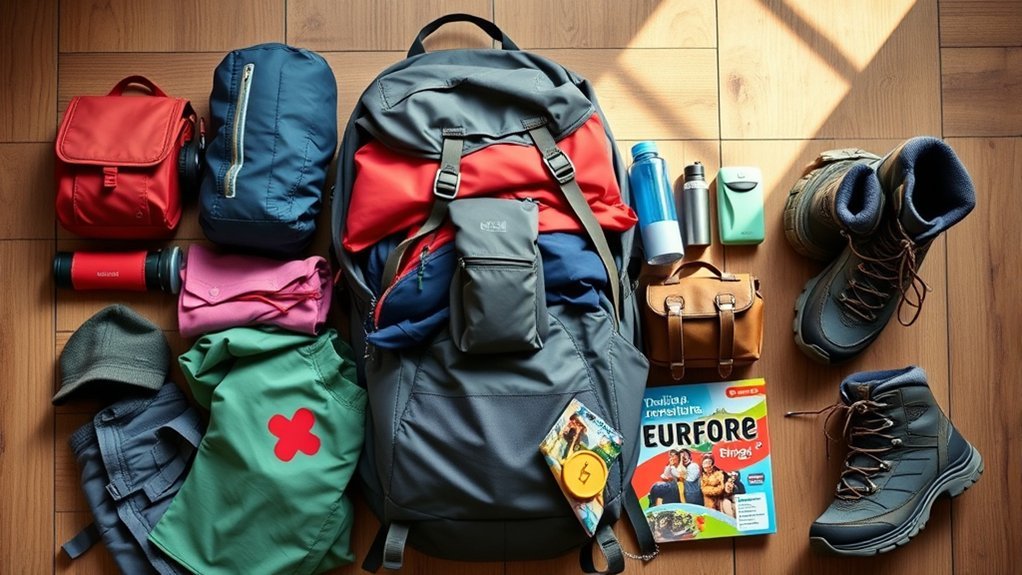
Backpacking through Europe is easier when every item earns its space. The goal is not to follow one rigid packing formula, but to carry a small, comfortable load that fits your airlines, route, weather, hostel setup, and planned activities. A one-week clothing cycle, two practical pairs of shoes, secure document storage, and a few well-chosen accessories will cover most city-to-city trips.
Quick Answer
For most backpacking trips in Europe, choose a carry-on-size pack, plan to do laundry every five to seven days, and bring mix-and-match layers, two pairs of broken-in shoes, compact toiletries, essential documents, a plug adapter, and a carry-on-safe power bank. Check every airline’s size and weight rules before packing.
Key Takeaways
- Pack for one week and schedule laundry instead of packing a fresh outfit for every day.
- Airline dimensions and weight limits matter more than a backpack’s advertised liter capacity.
- Use layers for changing weather and limit footwear to two practical pairs whenever possible.
- Keep your passport, medicines, phone, payment cards, and power bank in your carry-on or personal item.
- Review entry rules, insurance exclusions, liquid limits, and battery rules before departure.
At a Glance
| Time Required | About 60–90 minutes for a first pack and test fit |
| Difficulty | Easy |
| Tools Needed | Backpack, packing checklist, household or luggage scale, and optional packing cubes |
| Cost | Often $0 with gear you already own; roughly $30–$150 for missing basics |
Disclosure: As an Amazon Associate I earn from qualifying purchases. Some links on this page are affiliate links, at no extra cost to you.
Essential Packing Tips for Backpacking Europe
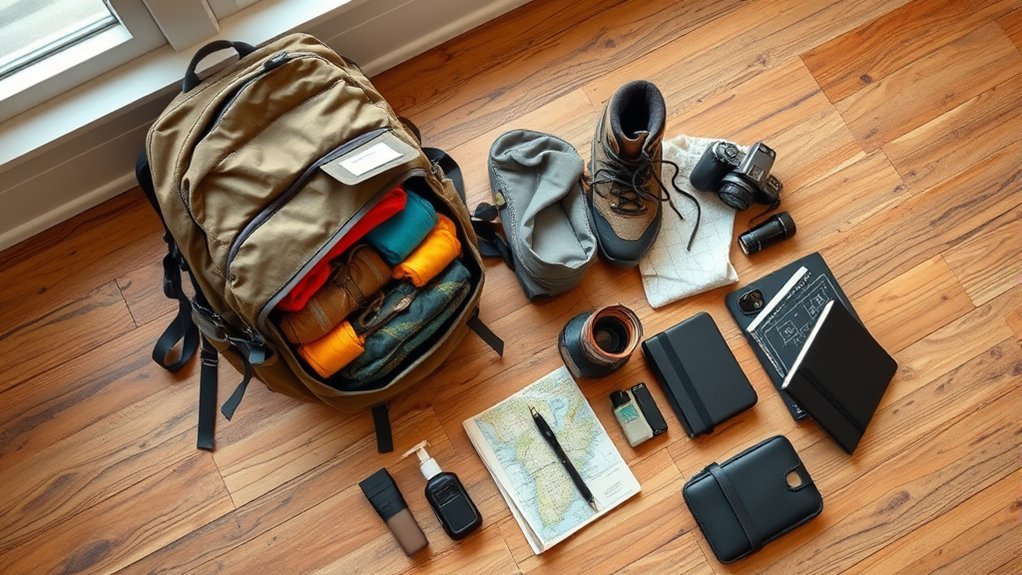
Start with your route rather than a generic packing list. Southern Spain in August, the Scottish Highlands in October, and Alpine towns in winter require different clothing. Also note how often you will change cities, whether you will stay in hostels, and whether your trip includes hiking, nightlife, beaches, religious sites, or formal events.
Check Airline Limits Before Choosing a Pack
A target of 20–22 pounds may feel comfortable for some travelers, but it is not a universal airline allowance. The International Air Transport Association notes that cabin baggage rules vary by airline, cabin class, and aircraft. Many carriers use dimensions near 56 × 45 × 25 cm, while some weight limits begin at 5 kg or 11 pounds.
A backpack can be labeled “carry-on size” and still exceed a specific airline’s limit. Check the operating carrier for every flight, including budget-airline connections.
Measure the packed bag from its widest points, including handles, straps, and stuffed exterior pockets. Weigh it after adding water, snacks, and electronics. Leave a little empty space for food, a warmer layer, or small purchases during the trip.
Choose a Comfortable Backpack Size and Fit
Many city-to-city travelers can manage with a 30–40 liter travel pack, but capacity alone does not determine whether it fits in an overhead bin. Look for a pack that opens from the front, has lockable zipper pulls, and fits your torso. A supportive hip belt is useful when you will walk farther than a station-to-hostel transfer.
- Adjust the shoulder straps so the pack sits close to your back.
- Position the hip belt over the top of your hip bones, not around your waist.
- Keep dense items close to your spine and near the middle of the bag.
- Test the fully loaded pack on stairs and during a 15-minute walk.
Pro Tip: Pack for a five- to seven-day laundry cycle. A three-week trip does not require three weeks of clothing when you can wash items along the way.
Plan Documents and Entry Requirements
Check passport validity, visa rules, and entry requirements for every country on your itinerary, including non-EU destinations such as the United Kingdom, Switzerland, and Balkan countries. Keep a digital copy of your passport and insurance details in secure cloud storage, plus a paper copy separate from the original.
Note: As of July 30, 2026, the EU Entry/Exit System is fully operational for covered short-stay travelers. ETIAS is not yet operating and is expected to begin in the last quarter of 2026. Check the official EU pages shortly before departure because the rollout schedule can change.
Clothing Essentials for Your Trip

Build a capsule wardrobe around colors and fabrics that work together. For a typical trip with weekly laundry, begin with five tops total, two or three bottoms, five to seven pairs of underwear and socks, sleepwear, one warm layer, and one rain layer. Merino wool and moisture-wicking synthetic fabrics dry faster than heavy cotton, but you do not need to replace clothing that already works well.
Basic One-Week Clothing List
- 5 tops: A mix of T-shirts and one or two casual button-up shirts or blouses.
- 2–3 bottoms: For example, dark jeans or travel pants, neutral chinos, a skirt, or shorts suited to the weather.
- 5–7 pairs of underwear and socks: Choose quick-drying synthetic or merino options if you plan to hand-wash.
- 1 set of sleepwear: Pick something suitable for shared hostel spaces.
- 1 lightweight sweater or fleece: Useful on cool evenings, trains, and flights.
- 1 rain shell: A packable waterproof jacket is more flexible than relying on an umbrella alone.
- 1 insulated layer when needed: A lightweight puffy jacket works well in cold or shoulder-season weather.
- Optional activity items: Swimsuit, hiking clothing, gym clothes, or a modest outfit for religious sites.
Adjust Your List for the Season
| Season | Useful Additions | Common Mistake |
|---|---|---|
| Summer | Breathable tops, sun hat, swimsuit, light scarf, sunscreen | Packing only hot-weather clothes and no rain or indoor layer |
| Spring or fall | Fleece or sweater, rain shell, light thermal layer | Bringing one bulky coat instead of flexible layers |
| Winter | Insulated coat, base layers, gloves, warm hat, weatherproof shoes | Assuming a small summer-style carry-on will hold bulky winter gear |
Limit Shoes and Break Them In
Two pairs are enough for most trips: supportive walking shoes and a lighter second pair such as sandals, flats, or simple dress shoes. Bring waterproof hiking footwear only when your route and activities require it. Three pairs can work for a specialized trip, but shoes take up more space and weight than almost any other clothing item.
Warning: Do not begin a multi-city trip with new shoes. Wear each pair on several long walks before departure and pack blister care in your first-aid pouch.
Travel Accessories to Enhance Your Experience

The best accessories solve a specific problem without adding much weight. Packing cubes speed up unpacking, a quick-drying towel helps in hostels that charge for towels, and a reusable bottle cuts down on single-use plastic. Avoid filling the bag with organizers that weigh more than the items inside them.
Essential Travel Accessories
| Accessory | Purpose | What to Look For |
|---|---|---|
| Quality backpack | Comfort and durability | Correct torso fit, sturdy zippers, practical opening, airline-compatible dimensions |
| Packing cubes | Separate and organize clothing | Lightweight fabric and sizes that match your pack |
| Reusable water bottle | Hydration and less plastic waste | Leak-resistant lid; collapsible models such as the Platypus SoftBottle save space when empty |
| Compact umbrella | Convenience during light rain | Small, durable model; pair it with a rain shell in windy weather |
| Hostel padlock | Secure a locker | A sturdy lock with a shackle that fits common locker holes; TSA recognition is not required for hostel use |
| Quick-drying towel | Hostels, beaches, and laundry days | Compact size with a hanging loop |
Brands such as Osprey, Tortuga, Eagle Creek, and eBags offer travel-focused products, but fit, packed weight, and return policy matter more than a model name. Older recommendations may refer to discontinued products, so confirm that specifications are current before ordering.
Organization Tools Benefits
Use one cube for tops, one for bottoms, and one small pouch for underwear and socks. A separate laundry bag keeps worn clothing away from clean items. Zipper bags are useful for wet items, snacks, cables, and possible leaks, but do not use them as a substitute for a proper liquids bag at airport security.
Pack the item you need first where you can reach it. Your rain shell, medication, charging cable, travel documents, and one warm layer should not be buried at the bottom. A front-loading backpack makes this much easier than a top-loading hiking pack.
Comfort and Safety Items
- Sleep kit: Earplugs and an eye mask are useful in dorm rooms and on overnight transport.
- Small day bag: Choose a zippered crossbody, sling, or packable daypack for daily sightseeing.
- Deep storage: A money belt can hold backup cash or a spare card under clothing, but avoid opening it in public.
- UV-rated sunglasses: Choose verified UV protection; an expensive brand such as Ray-Ban is optional, not necessary.
- Compact toiletry bag: A hanging, leak-resistant design works well in small shared bathrooms.
- Emergency information: Save local emergency contacts. The common emergency number 112 works throughout the EU.
Electronics You Should Bring
A smartphone can handle maps, tickets, translation, photography, banking alerts, and hostel communication. Download offline maps and reservation details before travel days. Bring only the devices you will use often; a laptop or tablet is helpful for work or long-term travel but unnecessary for many vacations.
- Phone and charging cable
- Multi-port USB charger rated for the voltage used at your destinations
- Plug adapter for the countries on your route, including separate UK or Swiss plug types when needed
- Power bank for long train, bus, and sightseeing days
- Earbuds or noise-canceling headphones for shared rooms and transport
- Optional camera only when its image quality or controls justify the extra weight
Warning: A plug adapter changes the plug shape; it does not automatically convert voltage. Check the input label on every charger or appliance. Also keep power banks and spare lithium batteries in your carry-on, as required by TSA battery guidance and airline rules.
A travel power strip can charge several devices, but many household surge protectors are not designed for 230-volt systems. A compact, reputable multi-port USB charger is usually smaller and simpler. Check your airline’s watt-hour limits before bringing a large power bank.
Travel Toiletries Checklist
Pack the products you use every day and skip “just in case” bottles that are easy to replace. If you are traveling with carry-on luggage, containers must meet the departure airport’s liquid rules. The European Commission’s air-travel guidance limits carry-on liquids at EU airports to containers no larger than 100 ml inside the required transparent bag. Travelers departing from the United States should also review the TSA 3-1-1 liquids rule.
Pack light, but do not omit personal-care or medical items that would be difficult to replace safely during the trip.
- Toothbrush, toothpaste, floss, and deodorant
- Small shampoo, conditioner, and body wash, or suitable solid alternatives
- Sunscreen and lip balm
- Razor and basic grooming items
- Menstrual products or other personal-care supplies
- Contact lenses, case, and solution when needed
- Hand sanitizer and a small packet of tissues or wipes
- Leak-resistant travel bottles filled from products you already tolerate
- Small first-aid pouch with bandages, blister care, and medicines appropriate for you
Bring prescription medicine in its original labeled container and carry copies of written prescriptions using generic drug names. The CDC’s guidance for traveling abroad with medicine also recommends checking whether a destination restricts your medication. Keep essential medicine in your carry-on, not in a checked bag.
Documents, Money, and Connectivity
Clothing is replaceable; travel documents are not. Build a small document system before you leave and keep originals separate from backup copies.
- Passport and required visa or authorization: Check each destination’s official entry page and confirm passport-validity rules.
- Copies: Store encrypted digital copies and one paper copy away from the original passport.
- Reservations: Save offline copies of the first accommodation address, transport tickets, and insurance information.
- Payment: Bring two cards from different networks when possible and keep the backup card separately.
- Cash: Carry a modest amount for small purchases, lockers, laundry machines, and places that do not accept cards.
- Connectivity: Compare your home carrier’s roaming plan with a local SIM or eSIM, and make sure your phone is unlocked if required.
- Emergency plan: Share your itinerary with a trusted contact and know how to report a lost passport.
The U.S. Department of State’s international travel checklist recommends checking passport validity early, making document copies, reviewing destination information, and considering travel medical insurance.
Pro Tip: Put the address of your first night’s accommodation in your phone notes and on paper. You may need it at immigration or when your phone has no signal.
Importance of Travel Insurance
Travel insurance can reduce the financial impact of covered emergencies, but it is not a promise that every cancellation, medical bill, theft, or delay will be reimbursed. Compare benefits, deductibles, coverage limits, exclusions, and claim requirements before purchasing a policy.
Coverage for Trip Interruptions
Trip-cancellation and interruption benefits may reimburse eligible prepaid, non-refundable expenses when a listed covered event disrupts your plans. Delay and missed-connection benefits may help with meals, lodging, or new transportation after a qualifying delay. Reasons, waiting periods, and documentation rules vary by policy.
Before buying, check whether the plan covers:
- Trip cancellation and interruption for the events you are concerned about
- Travel delays and missed connections
- Lost or delayed luggage
- Prepaid tours, rail passes, or accommodation
- Supplier failure, strikes, or severe weather, when specifically listed
Medical Emergency Protection
Do not assume your domestic health plan will pay for treatment or evacuation abroad. Review emergency medical coverage, medical evacuation, repatriation, deductibles, exclusions, and rules for pre-existing conditions. The U.S. Department of State’s travel-insurance guidance advises travelers to understand what existing insurance covers overseas and to consider medical and evacuation protection.
Save the insurer’s 24-hour assistance number and know whether the company requires preauthorization before non-emergency treatment. Carry the policy number both digitally and on paper.
Gear and Theft Coverage
Baggage benefits often have per-item limits, total limits, deductibles, and exclusions for unattended property. Expensive cameras, laptops, and phones may be covered only up to a small amount. Review whether your renters, homeowners, or credit-card benefits already provide some protection.
- Keep receipts or serial numbers for valuable electronics.
- Report theft promptly to local police and obtain a written report.
- Report airline baggage problems before leaving the airport.
- Keep replacement-purchase receipts and transport-delay records.
- Do not leave valuables unsecured in a dorm room or unattended bag.
Note: Commercial providers, including backpacker-focused companies such as World Nomads, offer different benefits by residence and destination. Compare the actual policy wording rather than choosing a plan from brand recognition alone.
Items You Can Leave Behind
Overpacking usually comes from carrying duplicate items or preparing for unlikely situations. Remove anything that does not match your route, season, health needs, or booked accommodation.
| Item | Why You May Skip It | Better Alternative |
|---|---|---|
| Sleeping bag | Many hostels provide bedding, and some do not allow outside sleeping bags | Confirm the property’s bedding policy before arrival |
| Water filter | Public drinking water is regulated across EU member states, but local conditions vary | Use a refillable bottle and check local advisories; carry treatment for remote hikes when needed |
| Printed books | Several books quickly add weight | E-reader, phone app, or hostel book swap |
| Full-size beach towel | Bulky and slow to dry | Quick-drying travel towel |
| Excess cosmetics and clothes | Duplicates consume space and make the bag harder to manage | Choose tested, versatile products and a coordinated wardrobe |
| “Just in case” laptop or camera | Adds weight, cables, security concerns, and insurance exposure | Use your phone unless the larger device has a clear purpose |
The European Commission’s drinking-water framework supports safe public water across EU member states. That does not mean every fountain, rural source, or temporary local supply is safe, so follow posted signs and local notices.
Where to Purchase Your Travel Gear
Use gear you already own when it is comfortable and reliable. New equipment should solve a real problem, not simply match someone else’s packing list. Try backpacks with weight inside, confirm return policies, and check product dimensions rather than relying on “European carry-on” marketing.
- Outdoor retailers such as REI: Useful for in-person pack fitting and technical clothing.
- Manufacturers such as Patagonia, The North Face, Osprey, and Tortuga: Useful for comparing current specifications and warranties.
- Online retailers such as Amazon and Backcountry: Convenient for comparing options, but verify the seller and return policy.
- Local outdoor shops: Helpful for fit advice and destination-specific equipment.
- Thrift and resale stores: Good for budget-friendly layers, pouches, and secondhand clothing.
Sales during off-peak seasons can lower costs, but do not delay essential items such as broken-in shoes or prescription supplies. Avoid buying an unfamiliar backpack immediately before departure; test it while fully loaded.
Advanced Packing Techniques for Effortless Travel
Packing cubes help with organization, but they do not reduce weight. Use them to group items by purpose and to keep your bag tidy during frequent moves. Compression can save volume, although tightly compressing every item may create wrinkles and make the bag rigid.
Use a Flexible Capsule Formula
The 5-4-3-2-1 method can be a useful starting point: five tops, four bottoms, three pairs of shoes, two layers or dresses, and one accessory set. It is not a rule. For many backpackers, four bottoms and three pairs of shoes are more than necessary. Adjust the formula to your climate, activities, laundry access, and personal style.
Multi-use and reversible clothing can create more combinations, but only pack pieces you genuinely enjoy wearing. Neutral colors are easy to coordinate, yet a capsule wardrobe can include color as long as the items work together.
Pack in the Order You Will Use Items
- Place a light, rarely used item at the bottom, such as sleepwear or a spare layer.
- Keep dense items near the middle and close to your back.
- Fill shoes with socks or other soft items.
- Keep liquids upright in a leak-resistant pouch.
- Put documents, medicine, electronics, and the power bank in your personal item.
- Store the rain shell, water bottle, and travel-day snacks where you can reach them.
Perform a Final Test Pack
Weigh the bag, measure it, and wear it for at least 15 minutes. Climb stairs, sit down, and remove the items you would need at airport security. If the bag is uncomfortable at home, it will feel worse after a long train ride or uphill hostel walk.
Pro Tip: Lay out everything you plan to pack, then remove one duplicate outfit, one “maybe” gadget, and one unnecessary organizer. Small cuts often save more space than complicated folding methods.
Final Backpacking Europe Packing Checklist
Bags and Organization
- Comfortable airline-compatible backpack
- Small day bag or crossbody bag
- Packing cubes or lightweight pouches
- Laundry bag
- Hostel padlock
- Quick-drying towel
- Reusable water bottle
Clothing and Footwear
- Five mix-and-match tops
- Two or three bottoms
- Five to seven pairs of underwear and socks
- Sleepwear
- Warm mid-layer
- Rain shell
- Seasonal outerwear and accessories
- Two pairs of broken-in shoes
- Activity-specific clothing only when needed
Documents and Money
- Passport and required visas or travel authorizations
- Paper and secure digital document copies
- Insurance policy and assistance number
- Two payment cards stored separately
- Small amount of local currency
- Reservations and first-night address saved offline
Electronics and Toiletries
- Phone, cables, and multi-port charger
- Correct plug adapters
- Carry-on-safe power bank
- Earbuds or headphones
- 100 ml-compliant liquids when flying carry-on only
- Daily toiletries and sun protection
- Prescription medicine in original labeled containers
- Small first-aid and blister-care kit
Frequently Asked Questions
How do I choose the right backpack size for my trip?
Start with the strictest airline dimensions and weight limit on your itinerary. A 30–40 liter pack often works for one-bag city travel, but a pack’s external measurements matter more than its liter rating. Choose a larger pack only when winter gear, camping equipment, accessibility supplies, or specialized activities truly require it.
What are the best materials for travel clothing?
Merino wool and moisture-wicking synthetic fabrics are useful because they dry faster than heavy cotton and can be comfortable across changing temperatures. Lightweight nylon blends also work well for pants and outer layers. The best choice is clothing that fits, layers easily, and has already proved comfortable.
How can I prevent my clothes from wrinkling while packed?
Choose wrinkle-resistant fabrics, smooth garments before packing, and avoid crushing delicate pieces in overfilled compression cubes. Rolling works well for many casual items, while folding along natural seams is better for structured shirts and trousers. Hang clothing in a steamy bathroom after arrival if the fabric allows it.
What should I do if my luggage gets lost?
Report missing checked luggage to the airline before leaving the airport and keep the baggage-report number. Save receipts for necessary replacement items, track the bag through the airline, and contact your insurer if the delay meets policy requirements. Keep medicine, documents, valuables, and one basic clothing change in your carry-on.
How can I pack efficiently for different weather conditions?
Use a three-part layering system: a comfortable base, a warm mid-layer, and a wind- or rain-resistant outer layer. Check the forecast for each region shortly before departure, then adjust for altitude and nighttime temperatures. Wear the bulkiest layer while traveling instead of filling the backpack with it.
Do I need a universal power adapter for Europe?
You need plug adapters that match the countries on your route. Much of continental Europe uses Type C-compatible outlets, but the United Kingdom, Ireland, Switzerland, and some other destinations use different plugs. Confirm each country and check that your devices support local voltage; an adapter alone does not convert voltage.
Can I put a portable charger in checked luggage?
No. Power banks and spare lithium batteries should be packed in carry-on baggage, not checked luggage. Protect exposed terminals and review your airline’s capacity limits before flying, especially for power banks rated above 100 watt-hours.
Is ETIAS required for Europe in 2026?
As of July 30, 2026, ETIAS is not yet operating. The EU expects it to begin in the last quarter of 2026, but the exact date must be confirmed on the official ETIAS website before travel. ETIAS applies only to eligible visa-exempt travelers visiting participating European countries.
Conclusion
Your backpack should help you move freely, not force you to manage extra belongings at every station and hostel. Check airline limits, pack a one-week capsule wardrobe, plan for laundry, protect essential documents and medicines, and keep electronics simple. Once the fully loaded bag feels comfortable and still has a little spare room, you are ready to travel through Europe with less weight and more flexibility.
Sources
- International Air Transport Association — Passenger Baggage Rules — cabin-bag dimensions, weight limits, and airline variation
- European Commission — Information for Air Travellers — EU hand-luggage and liquid-security requirements
- Transportation Security Administration — Power Banks — carry-on placement for portable chargers and spare lithium batteries
- Centers for Disease Control and Prevention — Traveling Abroad With Medicine — medication containers, prescriptions, and destination restrictions
- U.S. Department of State — Travel Insurance — medical, evacuation, interruption, and policy-review guidance
- European Union — Travel to Europe — official EES and ETIAS status and traveler guidance

