

Last Updated on July 30, 2026 by Caleb Warren
Minimalist backpack travel is not about owning the smallest bag or following a rigid item count. It is about carrying what your specific trip requires while removing duplicates, bulky “just in case” items, and gear you are unlikely to use. The best packing list fits your airline, destination, activities, laundry plan, and comfort needs.
Quick Answer
Pack for the trip you are taking, not every possible problem. Check your airline’s size and weight limits, choose a comfortable backpack that fits them, build a small capsule wardrobe, limit liquids, carry batteries and medicines correctly, and leave enough free space for food, layers, or purchases.
Key Takeaways
- Your airline’s published dimensions and weight allowance—not a universal 7 kg rule—determine whether a backpack qualifies as cabin baggage.
- Pack a repeatable capsule wardrobe based on climate, activities, and the number of days between laundry stops.
- Carry power banks, spare lithium batteries, essential medicine, travel documents, and valuables in your cabin bag.
- Place dense items near the middle of your back and keep frequently used items accessible.
- Perform a full test pack and carry the loaded bag before departure.
At a Glance
| Time Required | 45–90 minutes for a first packing plan; 15–30 minutes once you have a tested list |
| Difficulty | Easy to moderate |
| Tools Needed | Backpack, airline baggage page, luggage scale, packing list, and optional packing cubes or pouches |
| Cost | $0 when using gear you already own; optional organizers, travel bottles, or a luggage scale add cost |
Disclosure: As an Amazon Associate I earn from qualifying purchases. Some links on this page are affiliate links, at no extra cost to you.
Essential Tips for Minimalist Packing
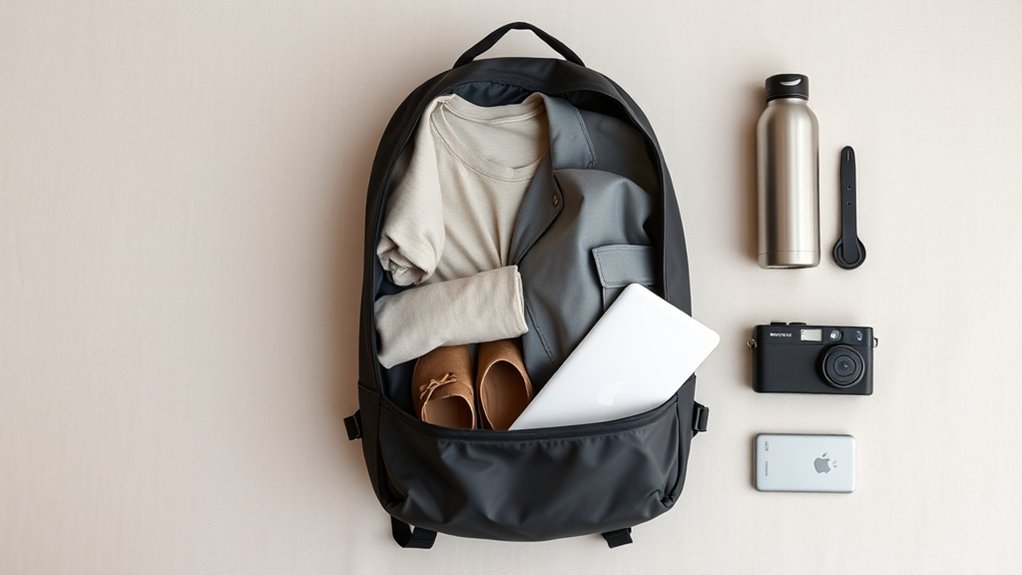
Begin with the limits that cannot be negotiated: your airline’s baggage allowance, the expected weather, required activities, necessary medicines, and entry documents. Everything else should earn its place through frequent use, comfort, or a clear safety purpose.
Check Your Airline’s Baggage Rules
There is no universal 7 kg cabin-bag limit. Allowances can vary by airline, fare, cabin class, route, and aircraft. Check the operating airline’s current page for maximum dimensions, weight, and whether your fare includes an overhead carry-on or only an under-seat personal item. The International Air Transport Association also notes that airline allowances vary.
Warning: A backpack can be too large even when it is below the weight limit. Measure it after packing, including filled exterior pockets, handles, and anything strapped to the outside.
If your airline’s limit is 7 kg, do not plan to finish at exactly 7 kg. A small buffer accounts for scale differences, water, snacks, or items added during the trip. Weigh the empty backpack first so you know how much of the allowance the bag itself uses.
Build a Simple Weight Budget
Lay out every item before placing anything in the backpack. Group the load into clothing, toiletries, electronics, documents, health items, and accessories. Weigh the heaviest groups first. Shoes, laptops, chargers, liquids, and the backpack itself usually offer the largest opportunities for reduction.
- Pack required items first: Identification, passport or visa documents, essential medicine, payment methods, prescription eyewear, and trip-specific safety gear.
- Add daily-use items: Clothing, toiletries, phone, charger, and weather protection.
- Add conditional items: Laptop, camera, second footwear option, umbrella, or activity gear only when the itinerary supports them.
- Remove duplicates: Keep one primary version of each function unless a backup is important for health or safety.
- Leave free space: Avoid packing the main compartment so tightly that every airport check or clothing change becomes difficult.
Use the One-Trip Rule
Do not pack for every climate or social event that might occur. Build the list around confirmed plans. A lightweight rain shell is more adaptable than a second bulky jacket, while a washable shirt that works for sightseeing and dinner may replace two specialized tops.
Pro Tip: After returning home, mark every item you did not use. Before the next similar trip, remove unused items unless they served an essential emergency, medical, weather, or legal purpose.
Creating a Travel Capsule Wardrobe
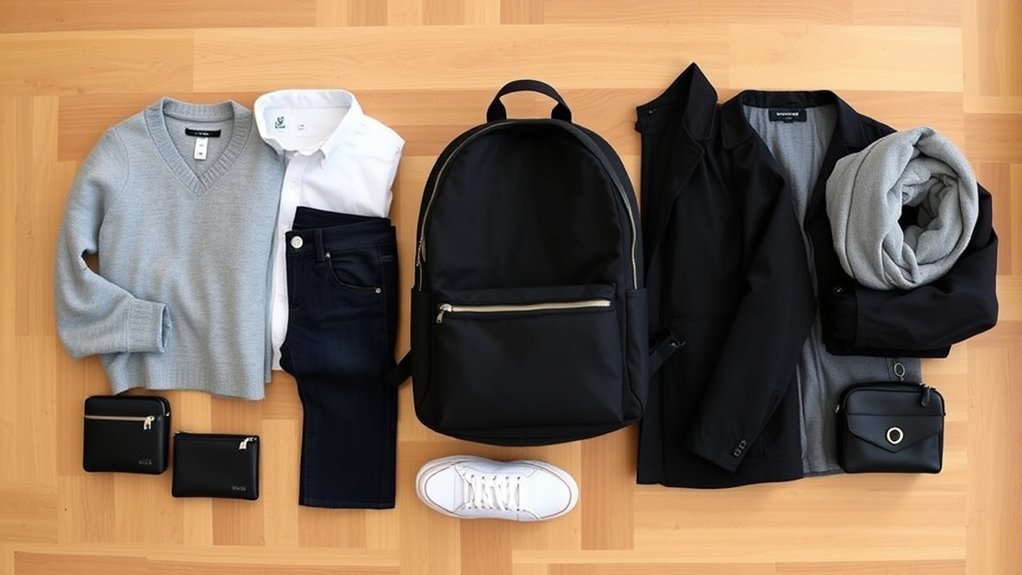
A travel capsule wardrobe uses a limited number of compatible garments to create several outfits. The goal is not to follow an exact formula. Choose enough clothing to reach your next laundry stop while accounting for heat, rain, cultural expectations, exercise, and personal comfort.
Choose Versatile Travel Clothing
For a typical five-to-seven-day trip with one laundry stop, a practical starting point is:
- Three or four tops, including the one worn in transit
- Two bottoms, including the one worn
- Three to five pairs of underwear, based on laundry access
- Three or four pairs of socks
- One sleep outfit
- One warm layer
- One compact rain or wind layer when the forecast requires it
- One activity-specific item, such as swimwear or exercise clothing
These quantities are adjustable. Pack more underwear for hot weather or limited laundry access. Pack fewer tops when they dry quickly and you are comfortable washing them frequently.
Lightweight synthetic blends and merino wool can dry faster than heavy cotton and may work well for repeated wear. Cotton can still be comfortable in dry, warm conditions, so fabric choice should reflect the destination rather than a universal rule.
Use a Cohesive Color Palette
Choose two or three neutral base colors and one or two accent colors. Every top should work with every bottom whenever possible. This reduces the number of garments required without forcing you to dress identically each day.
- Start with bottoms: Select one everyday pair and one lighter, dressier, or activity-specific option.
- Add coordinating tops: Include different sleeve lengths or levels of formality.
- Add one adaptable layer: A cardigan, overshirt, fleece, or light jacket can provide warmth and change the look of an outfit.
- Test complete outfits: Try on each combination before packing, including shoes and outerwear.
Limit Accessories and Footwear
Accessories should either solve a practical problem or expand several outfits. A scarf may provide warmth, sun coverage, or modesty. A reversible belt may work with both casual and smarter clothing, but only pack one if your trousers need it.
For most minimalist trips, wear the heaviest pair of shoes and pack no more than one additional pair. The second pair should serve a confirmed purpose, such as sandals for hot weather, water shoes, running shoes, or smarter footwear for a scheduled event. Do not pack formal shoes simply because a generic checklist includes them.
Note: Shoes consume more space than most clothing. Eliminating an unnecessary second pair often saves more room than compressing several shirts.
Must-Have Toiletries for Backpack Travel
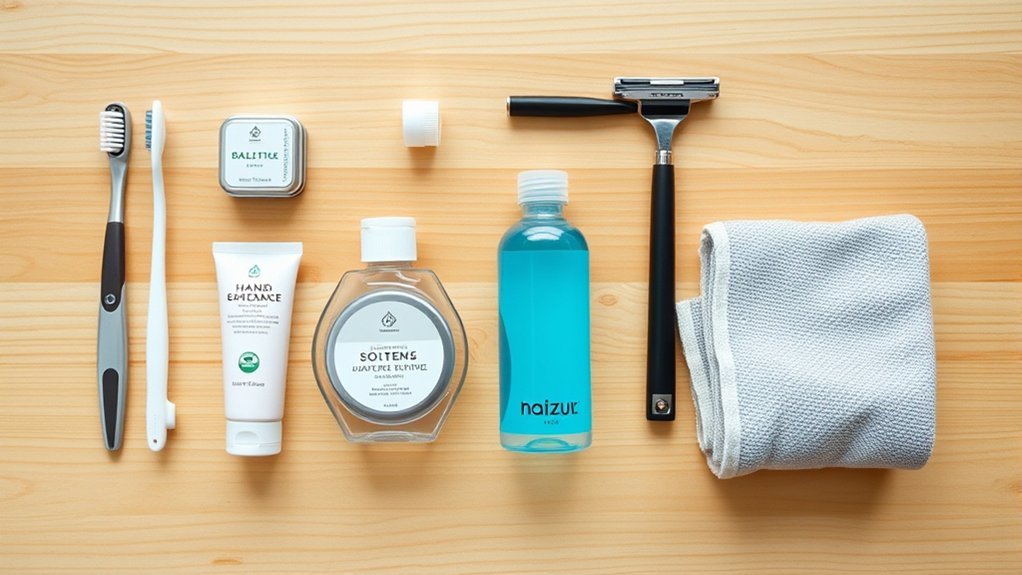
Pack enough personal-care products to stay comfortable until you can replenish them. Avoid carrying full-size containers when a smaller amount will cover the trip, but do not reduce essential medicine or medically required products simply to save weight.
Products Worth Considering

【One-Stop Service】-- Package Included:15 x portable travel Pouch (30ml size x 5, 50ml size x 5, 100ml size x 5)/2 x dispensing pump /2 x spray bottle top /2 x cream jar (10ml) / 1 x toiletry bag/2 x mini funnel / 2 x mini spatula /3 x page labels . The sufficient quantity and variety of containers will perfectly meet all your needs.
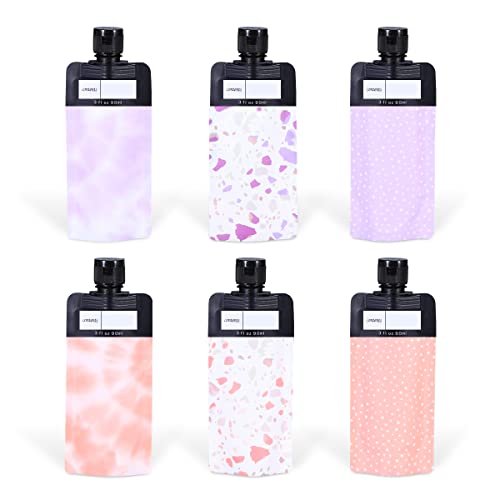
100% Leak-Proof Design: This portable travel liquid toiletry bag features a leak-proof design. The tight stitching prevents any leaks, keeping air and contaminants out, ensuring your luggage stays clean. With a 3oz capacity, this travel toiletry pouch complies with TSA standards and is specifically designed to meet travel needs.This liquid travel pouches offers convenient squeezable functionality, ensuring that the liquid travel pouches won’t leak and are reusable.
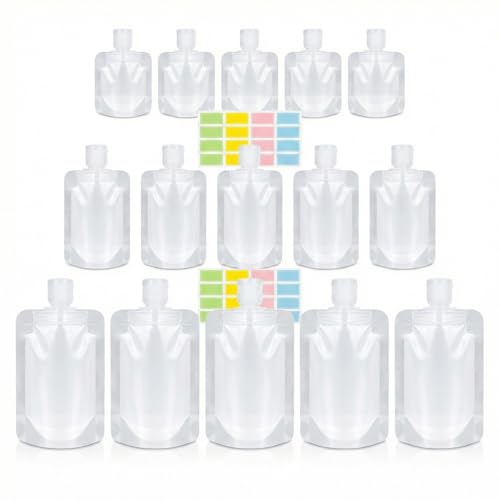
No Leaks in Your Luggage: Designed for travelers worried about spills, these leak proof travel pouches for toiletries feature a tightly sealed screw cap and thickened PET body to prevent shampoo, lotion, or soap from leaking during flights or road trips
Essential Toiletries to Pack
- Toothbrush, toothpaste, and dental floss
- Deodorant
- Soap or body wash
- Shampoo and conditioner when they are not supplied
- Facial cleanser or moisturizer when regularly used
- Sunscreen and lip protection appropriate for the destination
- Razor or grooming items when needed
- Menstrual products when needed
- Prescription medicine and a small supply of relevant over-the-counter items
- A few adhesive bandages and basic first-aid supplies appropriate for the trip
Keep wet products in a leak-resistant pouch and dry items in a separate organizer. This makes security screening easier and protects clothing if a cap opens.
Follow Current Liquid Rules
For standard U.S. checkpoint screening, the TSA liquids rule generally limits carry-on liquids, aerosols, gels, creams, and pastes to containers of 3.4 ounces or 100 ml or less, with the containers fitting inside one quart-size bag. Medically necessary liquids may follow a different screening process.
Rules and technology can differ by country and departure airport. Check the airport and security authority used for each flight instead of assuming that one rule applies worldwide.
- Decant only what you will use: Label reusable containers so products cannot be confused.
- Choose solid alternatives selectively: A solid shampoo, soap, or deodorant may reduce liquid volume when the product works for you.
- Prevent leaks: Tighten lids, clean container threads, and place liquids upright in a sealed pouch.
- Buy common consumables later: For a long trip, purchasing ordinary shampoo or toothpaste at the destination may be lighter than carrying a full supply.
Use Lower-Waste Hygiene Options Carefully
A refillable toiletry bottle, durable toothbrush, reusable razor, or solid product may reduce disposable packaging when used repeatedly. However, a product labeled “natural” or “biodegradable” is not automatically harmless in every environment.
Warning: Never wash with soap directly in a lake, river, or stream. Leave No Trace advises carrying water at least 200 feet away, using only a small amount of biodegradable soap where permitted, and disposing of wastewater responsibly.
Electronics, Documents, and Health Essentials
Products Worth Considering

Triple 100W USB-C Ports for Multi-Device Charging: Ideal for laptop users, this 25,000mAh power bank features three 100W USB-C ports for simultaneous charging—perfect for remote work, home offices, or powering up multiple devices on the go.

【𝗗𝘂𝗿𝗮𝗯𝗹𝗲 𝗣𝗼𝘄𝗲𝗿 𝗳𝗼𝗿 𝗘𝘃𝗲𝗿𝘆𝗱𝗮𝘆 𝗮𝗻𝗱 𝗢𝘂𝘁𝗱𝗼𝗼𝗿 𝗨𝘀𝗲】This 20000mAh solar phone charger power bank features an aviation-grade smart chip that intelligently adjusts voltage for different devices to help protect battery health. UL, FCC, CE, and RoHS certifications support trusted safety. As a portable charger solar, it helps keep phones and other essentials powered more reliably during outages, travel delays, and outdoor use when electricity is limited or unavailable.

30% Smaller, Effortlessly Portable: Leveraging industry-first TinyCell high-density battery technology, we’ve shrunk 20,000mAh into a frame 30% smaller than other power banks of the same capacity. At just 11.5oz—the weight of a 330ml can of cola, it slides effortlessly into your crossbody bag.
Pack Electronics by Function
Start with a phone and one dependable charging setup. Add a laptop, tablet, camera, keyboard, or other device only when it supports work, navigation, communication, or a planned activity.
- Phone and protective case
- Compact wall charger with enough ports for your devices
- One cable per required connector type
- Destination-compatible plug adapter when needed
- Earbuds or headphones
- Optional laptop, tablet, camera, or e-reader
- Optional power bank with its watt-hour rating visible
The FAA requires power banks and spare lithium batteries to remain in carry-on baggage. Protect exposed terminals from short circuits. Lithium-ion batteries up to 100 Wh are generally allowed for personal use, while larger 101–160 Wh spares require airline approval and are subject to quantity limits.
Warning: If cabin baggage is taken at the gate and placed in the hold, remove power banks, spare batteries, medicine, travel documents, and other valuables first.
Protect Documents and Money
- Passport or government-issued identification
- Required visas, permits, vaccination records, or entry documents
- Boarding passes and confirmed accommodation details
- Primary payment card and a separate backup payment method
- A small amount of destination-appropriate cash when useful
- Travel-insurance information
- Emergency contacts and relevant medical information
- Copies of important documents stored separately from the originals
The U.S. State Department international travel checklist recommends keeping copies of important travel documents separate from the originals and leaving another set with a trusted person.
Carry Medicine Safely
Keep essential medicine in your cabin bag so it remains available if checked baggage is delayed. The CDC advises travelers to retain medicines in original labeled containers, bring copies of prescriptions, and pack enough for the trip plus possible delays. Confirm destination rules before traveling with controlled medicines, injectable products, or large quantities.
Organizing Your Backpack Efficiently
Organization should make the bag easier to carry and use, not add unnecessary pouches and weight. Use one or two packing cubes for clothing, a toiletry pouch, and a small technology organizer only when they prevent loose items from spreading through the bag.
How to Load a Travel Backpack
- Start with low-priority soft items: Place sleepwear, spare clothing, or a light packable layer in the bottom area.
- Position dense items near your back: Keep a laptop, compact toiletry kit, or other heavy gear close to the middle of your back rather than at the outer edge.
- Stabilize the load: Fill gaps with soft clothing so dense items cannot shift.
- Protect electronics: Use the backpack’s padded sleeve and avoid placing hard bottles or sharp objects against a screen.
- Keep security items accessible: Place the liquids bag and electronics where they can be removed without unpacking the main compartment.
- Reserve quick-access pockets: Use them for documents, snacks, tissues, a pen, or other items needed in transit.
- Keep the exterior tidy: Avoid dangling shoes, bottles, or straps that may catch on seats, conveyors, or storage bins.
Rolling works well for soft shirts, underwear, and casual trousers. Folding is often better for structured shirts, jackets, or garments that crease at rolled edges. Use whichever combination fits the bag without stretching seams or crushing delicate items.
Pro Tip: Pack complete clothing categories together rather than creating a separate pouch for every day. You can change an outfit without opening several bundles, and clean clothing remains easier to separate from laundry.
Recommended Travel Accessories
Accessories are worthwhile when they solve a likely problem and will be used repeatedly. Avoid buying miniature travel products simply because they look convenient.
- Refillable water bottle: Carry it empty through airport security and refill it after screening where safe drinking water is available.
- Packable tote or day bag: Useful for groceries, laundry, beach gear, or daily sightseeing when your main backpack stays at the accommodation.
- Compact umbrella or rain shell: Choose the option that best matches the forecast and local conditions.
- Luggage scale: Helpful when the airline enforces a strict cabin-bag weight allowance.
- Small laundry bag: Keeps worn clothing separate without requiring a bulky organizer.
- Simple lock: Useful for lockers or lockable zippers, although it cannot make an unattended bag theft-proof.
- Bladeless multi-tool: Optional for travelers with a specific use for it. Check the security rules for every departure point before packing it.
- Reusable utensil: A spoon or non-bladed utensil may be useful for takeaway meals, subject to local security rules.
A portable charger can be valuable on long transit days, but choose the smallest capacity that reliably meets your needs. A larger battery adds weight and may create additional airline restrictions.
Products Worth Considering

Safe Material: Made of food-grade silicone, BPA free for safe drinking.

TSA APPROVED: Perfect 3.4 oz size meets airline carry-on requirements for liquids, making these bottles ideal for air travel

DISHWASHER SAFE: The water bottle with screw top is dishwasher safe, and the lid + strap are easy to clean by hand. The aesthetic water bottle is completely BPA-free and non toxic
Sustainable Packing Practices
The most sustainable item is often one you already own and will use for years. Reuse existing clothing, bottles, organizers, and bags before buying specialized travel replacements.
- Carry a refillable water bottle where tap or refill water is safe.
- Use durable containers instead of repeatedly buying miniature toiletries.
- Choose washable clothing that works in several outfits.
- Repair usable equipment before replacing it.
- Borrow or rent rare-use activity gear at the destination when practical.
- Pack reusable shopping or laundry bags.
- Avoid transferring products into containers that are difficult to clean or likely to leak.
Lightweight equipment can reduce what you carry, but low weight alone does not prove that an item was manufactured sustainably. Consider durability, repairability, frequency of use, and end-of-life disposal rather than relying only on “eco-friendly” marketing language.
Minimalist packing works best when every item has a clear job, fits the actual itinerary, and can be carried comfortably for the longest walking day of the trip.
Personalizing Your Minimalist Packing List
A packing list should change with the destination and traveler. Before finalizing it, consider the trip length, climate, cultural expectations, planned activities, access to laundry, health needs, and the consequences of an item being unavailable.
- Check the forecast and seasonal range: Plan layers for realistic conditions rather than packing an outfit for every possible temperature.
- Review the itinerary: Add only confirmed work, hiking, swimming, formal, or specialist equipment.
- Set a laundry interval: Pack enough base layers to reach the next realistic wash.
- Protect non-negotiable items: Medicine, accessibility equipment, documents, and required safety gear take priority over an arbitrary item count.
- Account for local access: Common toiletries may be easy to buy, while prescription products or unusual sizes may not be.
Sample Five-to-Seven-Day Minimalist Packing List
Use this as a starting point rather than a fixed rule.
Clothing Worn in Transit
- One comfortable top
- One pair of trousers, jeans, or travel pants
- Underwear and socks
- Main walking shoes
- Warm layer or jacket when needed
Clothing Packed
- Two or three additional tops
- One additional bottom
- Two to four additional pairs of underwear
- Two or three additional pairs of socks
- Sleepwear
- Compact rain layer
- Swimwear or one activity-specific outfit when needed
- One optional second pair of lightweight footwear
Toiletries and Health Items
- Toothbrush, toothpaste, floss, deodorant, and basic washing products
- Sunscreen and destination-specific skin protection
- Prescription medicine in labeled containers
- Small first-aid supply
- Menstrual or personal-care products as needed
Technology
- Phone
- Wall charger and required cables
- Plug adapter when required
- Earbuds or headphones
- Power bank when transit time justifies it
- Laptop, tablet, e-reader, or camera only when the trip requires it
Documents and Accessories
- Passport or identification
- Visas, tickets, insurance details, and accommodation information
- Payment cards, backup payment method, and useful cash
- Document copies and emergency contacts
- Refillable bottle
- Sunglasses or sun hat
- Packable tote or day bag
- Laundry bag
- Compact umbrella, lock, or other itinerary-specific accessory
Final 24-Hour Pack Check
- Confirm the operating airline’s current baggage dimensions and weight allowance.
- Measure and weigh the backpack after every pocket is packed.
- Check the departure airport’s liquids, medicine, battery, and tool restrictions.
- Verify passport validity, visas, tickets, accommodation details, and required health documents.
- Charge devices and confirm that every cable fits the intended device.
- Download offline maps, tickets, reservations, and essential contact information.
- Walk with the loaded backpack for at least 20–30 minutes.
- Climb stairs, sit down, and remove the bag several times to identify pressure points.
- Make sure medicine, valuables, batteries, liquids, and documents can be removed quickly.
- Leave some usable space instead of forcing every zipper closed.
Troubleshooting an Overpacked Backpack
The Backpack Is Over the Weight Limit
Remove the heaviest nonessential item first. Common candidates include a second pair of shoes, full-size liquids, a large laptop charger, redundant camera gear, thick cotton clothing, and bulky organizers. Reweigh the bag after each change instead of removing many useful small items at random.
The Backpack Will Not Fit the Sizer
Empty or flatten exterior pockets, move soft items inward, and remove anything strapped outside. Compression cannot fix a rigid frame that exceeds the allowed dimensions, so use a different bag when the backpack itself is too large.
The Load Pulls Away From Your Back
Move dense items closer to the middle of your back and fill open spaces so the contents cannot shift. Tighten the shoulder straps gradually and use the sternum strap or hip belt when the backpack provides them and they fit correctly.
The Laundry Plan Is Unrealistic
Add one extra base layer or schedule a laundromat instead of depending on daily sink washing. Hand washing is not always permitted, practical, or fast enough in humid weather.
Frequently Asked Questions
How do I choose the right backpack size for minimalist travel?
Start with the smallest baggage dimensions allowed by every airline on your itinerary. Then choose a backpack that fits your torso and holds the required items without being overstuffed. Many travelers can use a 20–35-liter bag, but the right capacity depends on climate, trip purpose, body size, equipment, and laundry access.
Is 7 kg the standard carry-on weight limit?
No. Some airlines use a 7 kg limit, but others allow less, allow more, or apply different rules by fare and cabin. Check the operating airline for every flight and leave a small buffer below its published limit.
Can I bring electronics without adding too much weight?
Yes. Carry a phone, one compact charger, and only the cables you need. Add a laptop, camera, tablet, or power bank only when it has a clear role. Use a single multi-port charger when it safely supports your devices instead of packing several separate adapters.
Can a power bank go in checked baggage?
No. Power banks and spare lithium batteries must remain in carry-on baggage. Protect their terminals and check the watt-hour rating. Batteries above 100 Wh may require airline approval, and larger batteries may be prohibited.
What are the best fabrics for travel clothing?
There is no single best fabric. Merino wool and lightweight synthetic blends can dry quickly and work well for repeated wear. Cotton may feel comfortable but usually dries more slowly. Choose fabric based on climate, skin sensitivity, activity level, washing method, and personal comfort.
How do I manage laundry while traveling?
Plan a realistic wash every three to five days or use local laundry services. Hand-wash small items only where it is allowed and practical. Carry a small laundry bag, avoid packing damp clothing, and allow more drying time in cold or humid weather.
Is it better to roll or fold clothes for packing?
Use both methods. Roll soft T-shirts, underwear, and casual trousers. Fold structured shirts, jackets, and garments that crease easily. The better method is the one that keeps clothing organized without stretching the backpack or crushing delicate items.
Do all carry-on liquids need to be 100 ml or less?
Under the standard U.S. TSA rule, ordinary carry-on liquids, gels, aerosols, creams, and pastes must be in containers of 3.4 ounces or 100 ml or less and fit in one quart-size bag. Medically necessary liquids may qualify for different screening. Rules can vary outside the United States, so check the departure airport.
Conclusion
Minimalist backpack travel becomes easier when you replace generic item counts with a repeatable process. Confirm the airline rules, pack for the actual itinerary, build a compatible wardrobe, plan laundry, carry batteries and medicine correctly, and test the loaded bag before departure. After the trip, remove nonessential items you never used and keep the parts of the system that worked.
The goal is not to carry the fewest possible possessions. It is to carry a safe, comfortable, organized load that supports the trip without creating unnecessary weight or daily frustration.
Sources
- International Air Transport Association: Passenger Baggage Rules — airline-specific cabin baggage dimensions and weight allowances
- Transportation Security Administration: Liquids, Aerosols, and Gels Rule — standard U.S. carry-on liquid limits
- Federal Aviation Administration: Airline Passengers and Batteries — power-bank and spare lithium-battery restrictions
- Centers for Disease Control and Prevention: Traveling Abroad with Medicine — medicine labeling, prescriptions, and carry-on guidance
- U.S. Department of State: International Travel Checklist — travel-document preparation and backup copies
- Leave No Trace: Dispose of Waste Properly — responsible outdoor washing and biodegradable-soap use
