

Last Updated on July 30, 2026 by Caleb Warren
Backpacking Southeast Asia is easier when every item earns its place. Your exact list should match your route, season, activities, airline limits, and access to laundry. A compact pack, a small clothing rotation, secure document backups, and destination-specific health planning will usually serve you better than packing for every possible situation.
Quick Answer
For most Southeast Asia trips, use a 35-45 liter carry-on-sized backpack, pack five to seven days of quick-drying clothes, two versatile pairs of shoes, compact toiletries, a rain layer, documents, medication, insect repellent, and a carry-on power bank. Check every country’s entry, health, weather, and airline rules before departure.
Key Takeaways
- A 35-45 liter pack is a practical starting point for light travel, while a 50-60 liter pack may need to be checked.
- Pack enough clothing for about five to seven days and plan to use local laundry services.
- Bring one comfortable walking shoe, one sandal or flip-flop, and activity-specific footwear only when necessary.
- Verify passport, visa, medication, vaccine, insurance, and onward-travel requirements for every destination and transit point.
- Keep power banks in cabin baggage and store document backups separately from the originals.
At a Glance
| Time Required | About 2-4 hours to plan, pack, weigh, and test your load |
| Difficulty | Easy, with extra research required for multi-country routes |
| Tools Needed | Backpack, packing cubes, luggage scale, dry bag, document pouch, and refillable toiletry bottles |
| Cost | About $20-$150 for missing accessories and supplies, excluding a new backpack, insurance, vaccines, or prescription medicine |
Disclosure: As an Amazon Associate I earn from qualifying purchases. Some links on this page are affiliate links, at no extra cost to you.
Choosing the Right Backpack for Your Journey

A well-fitted backpack matters more than a large capacity or a long feature list. For many travelers, a 35-45 liter backpack provides enough room for a compact clothing rotation while remaining easier to carry on buses, trains, ferries, and city streets. A 50-60 liter backpack may suit longer treks or specialized equipment, but it is easier to overfill and may exceed airline carry-on limits.
Look for adjustable shoulder straps, a supportive hip belt, a sternum strap, lockable zipper pulls, and several practical compartments. A panel-opening design makes clothing easier to reach than a top-loading hiking pack. A rain cover helps during downpours, but valuables and electronics should still go inside waterproof pouches or dry bags because an external cover may not seal every opening.
Popular travel packs such as the Osprey Fairview 40 and 55 show the difference between a compact carry-on-oriented design and a larger system. Treat them as examples rather than automatic choices. Try on several packs with weight inside and make sure the torso length, hip belt, and shoulder straps fit your body.
Pro Tip: Load the backpack with your planned gear and walk for at least 20 minutes. If the shoulder straps dig in, the pack pulls backward, or the hip belt slips, adjust the fit or try another model before your trip.
Plan Your Packing List Around Your Route
Southeast Asia includes tropical islands, large cities, mountain areas, rainforests, and cooler highlands. One universal list cannot cover every route. Check the expected weather for each stop, including rainfall, overnight temperatures, and elevation, rather than relying on a single idea of the region’s climate.
Adjust your list for the activities you have actually booked:
- City and hostel travel: Prioritize breathable clothing, a compact day bag, secure document storage, and comfortable walking shoes.
- Beach and island travel: Add one or two swimsuits, a rash guard when needed, a dry bag, and quick-draining footwear.
- Hiking: Bring trail-capable shoes, suitable socks, sun protection, a refillable water bottle, and any safety gear required by the route or guide.
- Cool highlands or air-conditioned transport: Pack a light sweater or fleece and one pair of long pants.
- Rainy-season travel: Add a breathable rain jacket, pack cover, waterproof phone pouch, and quick-drying clothes.
- Religious and cultural sites: Carry clothing that covers the shoulders and knees, plus a lightweight scarf or sarong.
Airline baggage rules vary by carrier and ticket. Measure the packed bag, weigh it, and check every airline on your itinerary, including regional budget carriers. A backpack’s liter rating alone does not prove that it qualifies as carry-on baggage.
Essential Clothing for Southeast Asia Adventures
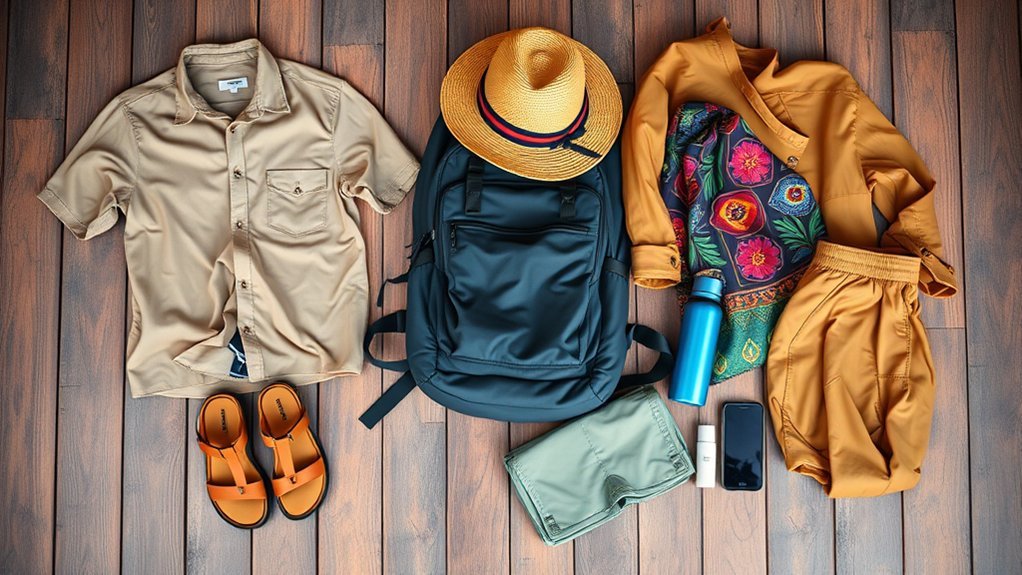
Choose clothing that is breathable, comfortable, modest when necessary, and easy to wash. Lightweight linen can work well, while quick-drying synthetic blends or merino are often easier to wash and dry overnight. Cotton feels comfortable but may stay damp longer in humid conditions.
A practical five-to-seven-day clothing rotation may include:
- Four to six lightweight tops
- Three to four bottoms, such as shorts, light trousers, or skirts
- One modest outfit that covers the shoulders and knees
- One light sweater, fleece, or long-sleeved shirt
- One breathable rain jacket or compact poncho
- One or two swimsuits rather than a dozen
- One rash guard if you expect extended sun exposure or water activities
- Five to seven pairs of underwear
- Three to five pairs of socks, based on footwear
- Sleepwear
- A wide-brimmed hat or cap
- A lightweight scarf or sarong
If you expect long gaps between laundry stops, you can increase the list to six or seven tops and four or five bottoms. Otherwise, the smaller rotation leaves room for medicine, electronics, and items you may pick up during the trip.
Note: Temple and religious-site dress rules vary. Carry one reliable modest outfit instead of assuming a scarf alone will meet every location’s requirements.
Laundry Supplies and Clothing Care
Affordable laundry services are common in many backpacking areas, so packing for one week is often enough even for a longer trip. Bring a small laundry bag, a few detergent sheets or a small sealed portion of detergent, a sink stopper, and a short travel clothesline if you plan to wash items yourself.
Dry clothes fully before returning them to packing cubes. Damp fabric can develop odors or mildew quickly in a hot, humid pack.
Must-Have Footwear for Comfort and Style
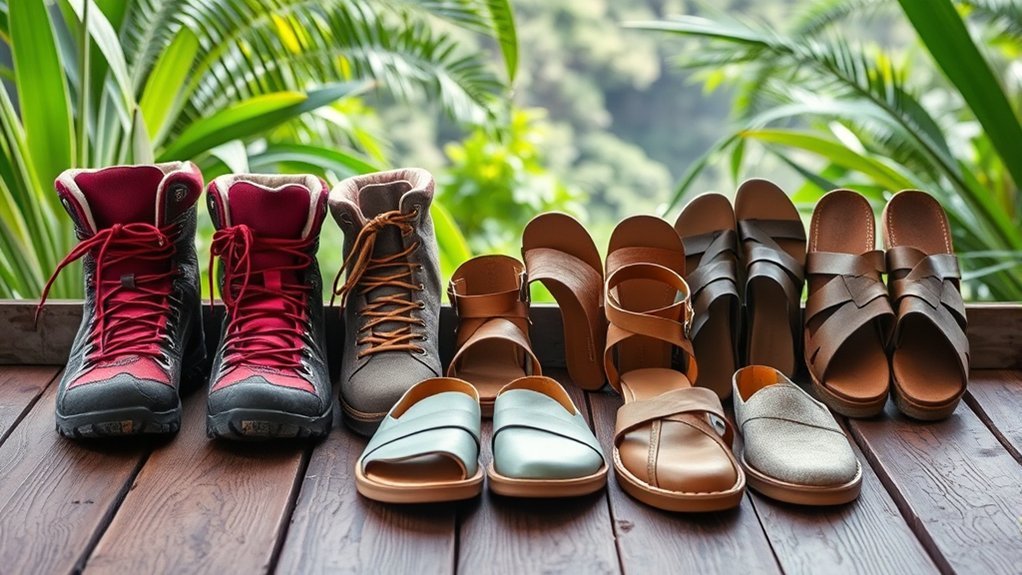
Most travelers need only two main pairs: one supportive walking shoe and one sandal or flip-flop. Add a third pair only when a specific activity requires it.
Versatile Shoe Choices
Supportive sandals such as Tevas or Birkenstocks can work for hot-weather sightseeing and casual outings, provided they fit securely and do not rub. Lightweight sneakers or trail-capable walking shoes are a better choice for long city days and easy hikes.
Ordinary road-running shoes may not have enough grip for muddy or rocky trails. For technical or multi-day hiking, use footwear recommended for the route. For kayaking, waterfalls, or boat trips, quick-draining water shoes may be more useful than waterproof trainers, which can feel hot and take time to dry once water gets inside.
Flip-flops remain useful for hostel showers, short beach trips, and walking around accommodation. Personalizing them with a small mark can help prevent mix-ups in shared spaces.
Comfort for Long Days
Break in every shoe before departure. Wear your main walking shoes on several long outings and check for pressure points, heel movement, and blisters. Pack blister dressings or moleskin, and choose socks that manage moisture.
Avoid packing heavy shoes only for style. A clean, neutral walking shoe or supportive sandal can usually cover casual evenings as well as daytime sightseeing.
Toiletries and Personal Care Items to Pack
Use leakproof, travel-sized containers for shampoo, conditioner, soap, moisturizer, and sunscreen. If you are flying from or through the United States with carry-on baggage, the TSA liquids rule generally limits containers to 3.4 ounces or 100 milliliters inside one quart-sized bag. Other airports may apply similar or different screening rules, so check each departure airport.
A compact toiletry kit can include:
- Toothbrush, toothpaste, and floss
- Deodorant
- Sunscreen
- Shampoo, conditioner, and soap
- Razor and grooming supplies
- Quick-drying travel towel
- Hand sanitizer
- Tissues or a small roll of toilet paper
- Menstrual products, including a menstrual cup if preferred
- Contact-lens supplies and spare glasses when needed
Mosquito-borne illnesses occur in parts of Southeast Asia, so pack an EPA-registered insect repellent and use it according to the label. CDC also recommends protective clothing and, where appropriate, clothing or gear treated with 0.5% permethrin. Never apply permethrin directly to skin. Review the CDC’s mosquito-bite prevention guidance before departure.
A product containing 50% DEET may provide long-lasting protection, but a concentration of at least 50% is not mandatory for every traveler. Choose an approved active ingredient and protection time that fit the destination, activity, age, and product directions.
Important Paperwork and Documents for Travel
Entry requirements differ by nationality, destination, transit country, and length of stay. Check official immigration or embassy information before booking and again shortly before departure. Do not rely only on a travel blog, social-media post, or old screenshot.
Essential Travel Documents Needed
- Passport: Confirm the required remaining validity and number of blank pages for every destination and transit point.
- Visas and electronic authorizations: Apply through official government channels and save confirmation documents.
- Proof of onward or return travel: Some immigration authorities or airlines may request it.
- Accommodation details: Keep the address and contact details for your first stay available offline.
- Travel-insurance documents: Save the policy number and emergency-assistance instructions.
- Prescription and medical documents: Carry prescriptions or a clinician’s letter when appropriate.
- Driving documents: Check whether you need an international driving permit and whether your license is accepted.
- Extra passport photos: A few copies can still be useful for permits, visas, or replacement documents.
Dual citizens should check which passport each country requires them to use when entering or leaving. Carrying both passports may be necessary for some itineraries, but the correct procedure depends on the countries involved.
Use the U.S. State Department International Travel Checklist as one planning resource if it applies to your citizenship, and confirm requirements with each destination’s immigration authority.
Financial Preparedness Tips
Bring at least two payment cards from different accounts or networks, and store them in separate places. A multi-currency card such as Wise can be convenient, but fees, limits, insurance, and availability should be checked before travel. Never depend on one card or one mobile wallet.
Withdraw or exchange enough local currency for transport, food stalls, small accommodation, and places that do not accept cards. A modest emergency reserve in a widely accepted currency may help on some routes, but USD and euros are not universal replacements for local money. Check currency-declaration rules before carrying a large amount of cash.
| Item | Why It Matters | Action |
|---|---|---|
| Passport | Required for international travel | Check validity and blank-page rules |
| Visa or authorization | Rules depend on nationality and destination | Apply only through official channels |
| Payment cards | A card can be blocked, lost, or rejected | Carry two and store them separately |
| Local cash | Small businesses may not accept cards | Carry a limited daily amount |
| Emergency reserve | Useful after card or ATM problems | Keep it hidden from daily spending money |
Safety Measures for Documents
Keep your passport, cards, and main cash in a secure pouch or locked accommodation storage when available. A belt bag or money pouch worn under clothing may help in crowded places, but it should not be your only security measure.
- Create encrypted digital copies: Save passport, visa, insurance, and prescription records in a secure account protected by a strong password and multi-factor authentication.
- Carry a paper backup separately: Do not store the only copy beside the original passport.
- Separate payment methods: Keep your backup card and emergency cash away from your daily wallet.
- Save emergency contacts offline: Include the insurer, card issuers, accommodation, embassy or consulate, and a trusted contact at home.
Technology and Gadgets for the Modern Backpacker
Technology should solve a clear travel problem rather than add weight. A phone, compact charger, suitable adapter, and power bank cover most needs.
- Unlocked phone: Confirm that it supports the mobile networks and eSIM services used on your route.
- Local SIM or eSIM: Providers such as Airalo can be convenient, but compare coverage, data limits, hotspot rules, and phone compatibility. A local physical SIM may offer better value in some countries.
- Offline maps: Download Google Maps or Maps.me areas before arrival. Check whether Grab or another local ride-hailing app operates in each destination.
- International adapter: Choose one that supports the plug types on your route and has enough ports for your devices.
- Voltage check: An adapter changes the plug shape; it does not convert voltage. Check each device’s input label before connecting it.
- Portable charger: Select a reliable power bank with its capacity clearly marked.
- E-reader: A Kindle or similar device can replace several books.
- Headphones: Noise-canceling headphones or compact earplugs can make flights, buses, and shared rooms more comfortable.
Warning: Power banks and spare lithium batteries must remain in cabin baggage and must not be placed in checked luggage. Protect exposed terminals and check your airline’s battery-capacity limits. Review the FAA PackSafe lithium-battery guidance before flying.
Health and Safety: Medications and First Aid
Health risks differ by country, province, season, trip length, accommodation, and planned activities. Review the CDC destination pages or the equivalent travel-health authority for your country, and arrange a travel-health appointment at least one month before departure when possible.
Before You Travel
- Confirm that routine vaccinations are current.
- Ask a travel-health professional about destination-specific vaccines and malaria prevention.
- Check current disease notices and travel advisories.
- Confirm whether each prescription and over-the-counter medicine is legal in every destination and transit country.
- Pack enough prescription medicine for the full trip plus a reasonable delay.
- Keep essential medicine in carry-on baggage in its original labeled packaging.
- Carry a prescription copy or clinician’s letter when appropriate.
Basic First Aid Kit
A small medicine and first-aid kit may include:
- Adhesive bandages and sterile gauze
- Antiseptic wipes
- Blister dressings or moleskin
- Tweezers and small medical scissors permitted by your carrier
- Pain reliever suitable for you
- Allergy medication suitable for you
- Oral rehydration salts
- Motion-sickness medicine if needed
- Personal prescription medicine
- Loperamide for appropriate cases of non-bloody diarrhea, if a healthcare professional says it is suitable for you
Warning: Do not rely on loperamide alone when diarrhea is bloody or accompanied by fever. Seek medical care for severe dehydration, persistent vomiting, severe abdominal pain, confusion, fainting, breathing trouble, or symptoms that are rapidly worsening. Review the CDC travelers’ diarrhea guidance.
Choosing Travel Insurance
Compare policies based on what they cover, not only their price. Check:
- Emergency medical treatment limits
- Medical evacuation and repatriation
- Direct payment to hospitals versus reimbursement
- Deductibles and claim documentation
- Pre-existing-condition terms
- Motorbike, trekking, diving, climbing, or other activity exclusions
- Trip cancellation, interruption, and delay
- Lost, delayed, or stolen baggage limits
- Coverage areas and travel-advisory exclusions
- Twenty-four-hour emergency assistance
The U.S. State Department recommends considering travel health and medical evacuation insurance for international trips. Review its travel-insurance guidance and read the full policy wording before buying.
Travel Accessories for an Organized Trip
A few lightweight accessories can make a compact pack easier to use:
- Packing cubes: Separate tops, bottoms, underwear, and clean or worn clothing.
- Dry bag: Protect electronics, documents, and valuables during rain or boat trips.
- Hanging toiletry bag: Keeps personal-care items together in small or shared bathrooms.
- Reusable water bottle: Choose a design that is easy to clean and refill with safe drinking water.
- Small daypack or sling: Carry water, a rain layer, and daily essentials while leaving the main pack secured.
- Compact lock: Useful for compatible hostel lockers, though you should confirm the required lock size.
- Travel clothesline: Helpful for hand-washed clothes.
- Reusable shopping bag: Serves as a grocery bag, beach bag, or overflow carrier.
- Earplugs and sleep mask: Useful on transport and in shared rooms.
- Luggage scale: Helps prevent baggage surprises before regional flights.
A multi-functional adapter and portable power bank remain useful, but avoid carrying duplicate chargers, oversized organizers, or accessories that solve only unlikely problems.
How to Pack and Test Your Backpack
- Lay everything out: Group clothing, documents, toiletries, health supplies, electronics, and activity gear.
- Remove “just in case” duplicates: Keep items tied to a real activity, climate, health need, or legal requirement.
- Separate cabin-only items: Put medication, passport, valuables, electronics, and power banks in the bag that stays with you.
- Use packing cubes: Roll or fold clothes consistently and keep frequently used items near the opening.
- Protect against rain: Place electronics and documents in waterproof inner pouches rather than relying only on the pack cover.
- Balance the load: Keep dense items close to your back and near the middle of the pack.
- Measure and weigh the bag: Compare the packed dimensions and weight with every airline’s current limits.
- Walk with it: Wear the complete pack for at least 20 minutes, including stairs if possible.
- Remove more weight: If the load is uncomfortable before the trip, it will not improve during a hot transfer or a long walk.
The best Southeast Asia packing list is not the longest one. It is the smallest list that safely supports your route, weather, health needs, and planned activities.
Frequently Asked Questions
How do I choose the right travel insurance for my trip?
Compare emergency medical limits, medical evacuation, activity exclusions, deductibles, direct hospital payment, pre-existing-condition terms, trip interruption, baggage limits, and emergency assistance. Read the full policy instead of relying on a short sales summary.
What are the best apps for navigating Southeast Asia?
Google Maps and Maps.me can provide navigation and offline maps. Grab or a local ride-hailing app may help in supported cities. Download maps, accommodation addresses, tickets, translations, and emergency contacts before traveling to areas with limited service.
How can I stay connected while traveling?
Use an unlocked phone with a local SIM or compatible eSIM. Compare coverage, data allowance, hotspot support, validity, and activation rules. Keep essential maps, reservations, and contact details available offline in case the signal fails.
What is the best way to manage my budget on the road?
Set a daily target for accommodation, transport, food, activities, and a contingency fund. Track expenses in an app or notebook, compare ATM and card fees, carry limited local cash, and keep a backup card and emergency reserve separate from your daily wallet.
Are there cultural etiquette tips I should know?
Local customs differ, but common respectful habits include dressing modestly at religious sites, removing shoes when requested, using polite greetings, asking before photographing people, avoiding disruptive behavior, and following posted rules. Research each destination rather than treating the entire region as one culture.
Is a 40-liter backpack enough for Southeast Asia?
A 40-liter backpack is enough for many travelers who pack a five-to-seven-day clothing rotation and use laundry services. Measure the packed bag because airline limits are based on dimensions and weight, not the advertised liter capacity.
How many clothes should I pack for a long trip?
Pack about five to seven days of clothing and wash items along the way. Four to six tops, three to four bottoms, one modest outfit, underwear, socks, sleepwear, a light layer, and a rain layer cover many routes without filling the pack.
What should I add for rainy-season travel?
Add a breathable rain jacket or poncho, backpack cover, waterproof inner pouches, a phone pouch, quick-drying clothes, and footwear with reliable wet-surface grip. Check local rainfall patterns because monsoon timing differs across the region.
Conclusion
A strong Southeast Asia backpacking packing list starts with a comfortable pack and a realistic plan. Pack for five to seven days, use laundry services, bring only activity-specific gear, and keep essential documents, medicine, cards, and electronics secure. Before leaving, verify entry rules, health advice, medication laws, insurance coverage, weather, and baggage limits for your exact route. Pack smart, test the load, and leave enough room to move comfortably.
Sources
- U.S. State Department International Travel Checklist — passport, entry-document, emergency, and international travel planning guidance
- CDC Travelers’ Health Destination List — destination-specific vaccines, medicines, notices, and health risks
- CDC: Preventing Mosquito Bites While Traveling — repellent, protective clothing, permethrin, and lodging precautions
- FAA PackSafe: Lithium Batteries — power-bank and spare-battery baggage requirements
- CDC Yellow Book: Travelers’ Diarrhea — prevention, symptom treatment, and loperamide cautions
- U.S. State Department Travel Insurance Guidance — travel health and medical evacuation coverage considerations

