
Last Updated on September 10, 2026 by Daniel Globe
Stains and odors on a travel pillow are usually easy to handle once you know what the pillow is made of and, just as importantly, what its care label allows. Memory foam, latex, microbeads, inflatable bladders, synthetic fill, and removable covers all need different treatment. Checking those instructions first can prevent torn foam, leaking beads, damaged seams, or a pillow that never dries properly.
Quick Answer
Check the care label before cleaning a travel pillow. Wash removable covers as directed, but spot clean most memory-foam, latex, and microbead cores unless the manufacturer specifically allows washing. Some inflatable and synthetic-fill pillows can be hand or machine washed. Use mild cleaner, avoid excess heat, and dry every part completely.
Key Takeaways
- Always follow the pillow’s care label or manufacturer’s instructions before using a washing machine, soaking the core, or applying a stain remover.
- Most solid memory-foam and latex cores should be spot cleaned rather than submerged, while removable covers are often washable.
- Microbead cores are commonly spot-clean-only; wetting or machine washing them can damage the filling or stress the seams.
- Inflatable pillows vary: some manufacturers permit hand washing with the valve closed, while other models should only be wiped down.
- Machine wash a whole pillow only when its care label specifically says the entire pillow is machine washable.
- Clean spills promptly and let every component dry completely before storing the pillow for your next trip.
Disclosure: As an Amazon Associate I earn from qualifying purchases. Some links on this page are affiliate links, at no extra cost to you.
Understanding the Importance of Cleaning Your Travel Pillow

A travel pillow sits against your face and neck for hours and can pick up sweat, skin oils, food residue, dust, and dirt from luggage or seats. Cleaning the washable parts helps remove that buildup and keeps the pillow more comfortable to use.
The goal is not to wash every part as aggressively as possible. Many travel pillows contain specialty foam, sealed air bladders, or loose beads that can be damaged by excess water, agitation, or heat. A removable cover often needs regular laundering while the protected core needs only occasional spot cleaning.
There is no universal rule that every travel pillow must be washed on the same schedule. Clean the cover when it looks or smells dirty, after especially sweaty trips, or according to its label. Clean a nonwashable core when a spill, stain, or odor makes it necessary.
At a Glance
| Time Required | About 10–30 minutes of cleaning, plus enough drying time for every component to become completely dry |
| Difficulty | Easy |
| Tools Needed | Mild detergent or soap, soft cloth or sponge, clean towels, and a sink or basin only when the care instructions permit hand washing |
| Cost | Usually under $5 when using basic household cleaning supplies |
Know Your Travel Pillow’s Material First
Start with the sewn-in care tag, packaging, or manufacturer’s care page. Material type is a useful clue, but it does not override model-specific instructions.
Note: The care label wins. Two travel pillows made from similar materials can have different covers, adhesives, seams, coatings, and internal construction, so they may require different cleaning methods.
| Pillow Type | Safest Default | What to Avoid |
|---|---|---|
| Solid memory foam | Remove and wash the cover if allowed; spot clean the foam with a barely damp cloth unless the manufacturer specifically permits more. | Machine washing, tumble drying, wringing, and unnecessary soaking. |
| Latex foam | Wash the removable cover according to its label and spot clean the latex core unless instructed otherwise. | Machine washing or tumble drying the latex core. |
| Microbead | Wash a removable cover if permitted; spot clean the sealed inner cushion. | Soaking the bead-filled core or stressing weak seams. |
| Inflatable | Wipe clean unless the manufacturer specifically provides a hand-washing method. | Machine washing, spin drying, tumble drying, or allowing water inside the bladder. |
| Synthetic fiberfill | Follow the label; many models can be washed on a gentle cycle. | Hot water or high heat unless specifically permitted. |
| Removable fabric cover | Wash separately using the temperature and drying method on its label. | Assuming the washable cover means the core is washable too. |
For example, Cabeau’s Evolution S3 care instructions say to machine wash its removable cover on a cool setting but not to wash the memory-foam insert. Tempur-Pedic likewise advises owners not to wash or submerge its pillow inserts unless the product’s instructions specifically say the insert is washable.
For microbeads, MUJI’s neck-cushion instructions say the removable cover can be washed but the microbead filling should not get wet. Inflatable pillows can differ: Sea to Summit instructs owners of its Aeros pillows to close the valve before hand washing, rinse thoroughly, then air dry with the valve open.
Warning: A removable, machine-washable cover does not mean the pillow core can go in the washer. Do not machine wash, soak, bleach, tumble dry, or iron any component unless its own care instructions allow that treatment.
Step-by-Step Guide to Treating Stains on Travel Pillows
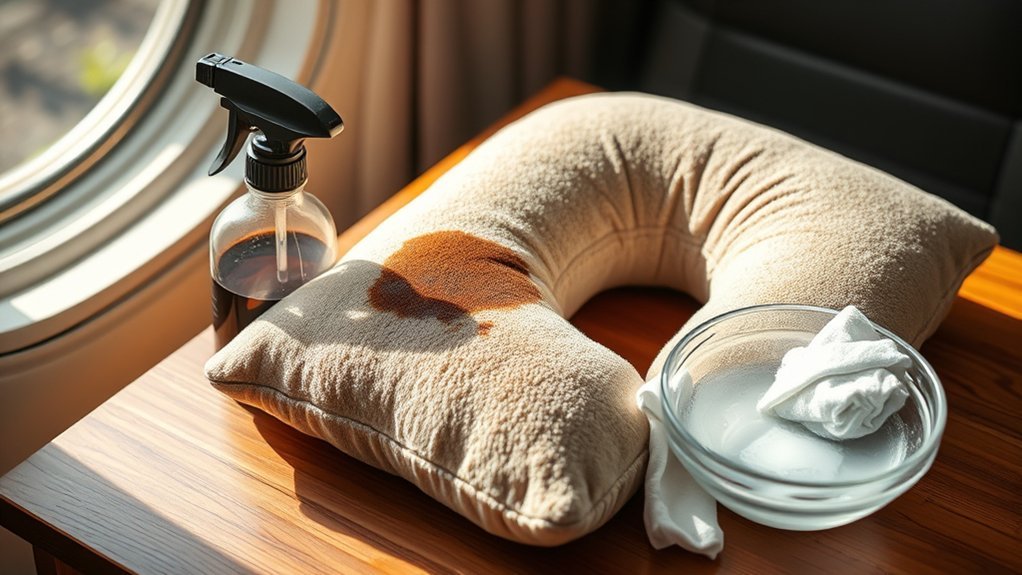
For a fresh spill, act before it has time to spread or dry. First remove the cover, if possible, and check the care instructions for both the cover and core.
- Blot the spill. Press a clean towel or cloth against the stain. Do not scrub aggressively, because that can push liquid deeper into fabric or foam.
- Mix a mild cleaning solution. A small amount of mild detergent or soap in water is a good starting point for most washable fabrics. Avoid soaking the area.
- Test first. Dab the solution on an inconspicuous part of the cover, especially if the fabric is brightly colored or has a special finish.
- Work from the outside inward. Blot toward the center of the stain so it does not spread.
- Remove soap residue. Use a second cloth dampened with clean water when spot cleaning. For washable covers, rinse or complete the wash cycle as directed.
- Dry completely. Do not reinstall a cover or pack the pillow until both the cover and core are fully dry.
Use a commercial stain remover only when it is compatible with the care label. Some foam and cover manufacturers specifically warn against harsh stain-removal products.
Pro Tip: When spot cleaning a nonwashable foam core, use as little liquid as possible. Blot the area afterward with a dry towel and increase airflow with a fan rather than squeezing, twisting, or applying heat.
Common Stains Found on Travel Pillows and Their Causes
Food, drinks, sweat, sunscreen, makeup, and natural skin oils are the most common sources of travel-pillow stains. The sooner you blot a fresh spill, the less cleaning solution and moisture you usually need later.
Food and Beverage Spills
Coffee, tea, juice, soda, sauces, and snacks can leave both color and odor behind. Blot fresh liquid immediately with an absorbent cloth. Then use a small amount of diluted mild detergent on the washable fabric or spot-cleanable surface.
Do not pour water directly onto a foam or microbead core to flush out a drink unless the manufacturer’s instructions expressly permit soaking. For a washable cover, remove it first and treat the fabric separately.
Sweat and Body Oils
Sweat and skin oils build up gradually where the pillow touches your neck, jaw, and face. A removable cover makes this easier to manage because you can clean the skin-contact layer without repeatedly wetting the core.
| Stain Type | Common Cause | Safest First Step |
|---|---|---|
| Sweat | Long skin contact in warm conditions | Wash a removable cover as directed; spot clean a nonwashable core |
| Body oils or sunscreen | Skin, hair, and sun-care products | Blot with diluted mild detergent, then remove residue with a damp cloth |
| Coffee, tea, or juice | Drink spills | Blot immediately; clean from the edge of the stain toward the center |
| Greasy food | Oily snacks or sauces | Lift excess residue without rubbing, then use a small amount of mild detergent if permitted |
| Musty odor | Stored moisture or incomplete drying | Air out the pillow and inspect carefully for dampness or mold |
Using the correct method for the pillow’s construction reduces the chance of turning a small stain into permanent material damage.
Must-Have Supplies for Effective Stain Removal on Travel Pillows
You do not need a cabinet full of cleaners. In most cases, a few simple supplies are enough:
- Mild, preferably unscented detergent or mild soap
- Soft, clean cloth or non-abrasive sponge
- Clean dry towels for blotting moisture
- A basin or sink only if the care instructions permit hand washing
- Laundry bag or mesh bag if recommended for a removable cover
- A well-ventilated drying area or fan
Start with the mildest method that can handle the stain. Strong solvents, chlorine bleach, concentrated fragrance sprays, and aggressive stain removers can damage specialty fabrics, foam, coatings, adhesives, or inflatable laminates.
Hand Washing Your Travel Pillow: When It Is Safe
Hand washing is appropriate only when the care label or manufacturer permits the component to be immersed. It is not a universal method for memory foam, latex, or microbead pillows.
For a washable synthetic-fill or other hand-washable pillow, fill a clean basin with lukewarm water and add a small amount of mild detergent. Gently press or knead the pillow according to its care instructions. Avoid twisting or wringing. Rinse until the water is free of detergent, then press out moisture gently with clean towels.
If the pillow has an inflatable bladder, follow its manufacturer’s instructions closely. Sea to Summit, for example, instructs owners of its Aeros inflatable pillows to close the valve before washing and to open the valve while the pillow air dries.
Spot Cleaning Memory Foam, Latex, and Microbeads
For a nonwashable core, remove the washable cover first. Mix a small amount of mild detergent with water, dampen a cloth, and wring it out well. Blot the stained surface without saturating the core.
Use a second barely damp cloth to lift away detergent residue, then press the area with a dry towel. Leave the core uncovered in a well-ventilated place until no dampness remains.
Avocado’s travel neck pillow guidance, for example, tells owners to machine wash its removable cotton outer shell but not to wash the latex core or inner liner.
Machine Washing Your Travel Pillow: When and How?
Machine washing is appropriate only for a removable cover, fabric component, or whole travel pillow that is explicitly labeled machine washable. A fabric exterior alone does not make the core machine safe.
Check the Care Label First
- Determine whether the instructions apply to the cover only or the entire pillow.
- Remove foam, plastic supports, inserts, or other components when the manufacturer tells you to do so.
- Check the approved water temperature.
- Check whether a gentle or delicate cycle is required.
- Check whether the item should air dry or can use a dryer.
If the label is missing and you cannot identify the product’s manufacturer, use the least aggressive method: wash a clearly removable ordinary fabric cover only if its construction appears washable, and spot clean specialty cores rather than gambling on a machine cycle.
Use Gentle Cycle Settings
When the label calls for machine washing, use the specified cycle and temperature. Cool or cold water and a mild detergent are common recommendations for travel-pillow covers, but the product label still takes priority.
Do not add chlorine bleach, fabric softener, stain remover, or other laundry additives unless the care instructions permit them. Remove the item promptly after the wash so it does not remain crumpled and wet.
Some unusual designs are designed to be partly disassembled before washing. For example, Trtl travel pillows use an internal support that is removed before the washable fabric portion goes into a cool wash. This is another reason not to judge washability from appearance alone.
How to Dry a Travel Pillow Safely
Drying is just as important as washing. A pillow that feels dry on the surface may still hold moisture inside thick fabric, fiberfill, seams, or foam.
- Follow the label first. Some washable covers can use a cool or low dryer setting, while others must hang dry.
- Air dry foam and specialty cores. Keep them away from direct heat unless the manufacturer specifically says otherwise.
- Increase airflow. A fan can help moisture evaporate without exposing sensitive material to high heat.
- Turn or reposition the pillow. When appropriate, expose different sides to moving air so damp spots are not trapped underneath.
- Wait until completely dry. Do not put the cover back on or place the pillow in a storage bag while any part feels damp or cool from retained moisture.
Warning: Never speed-dry memory foam, latex, microbeads, or an inflatable pillow with a hair dryer, radiator, clothes dryer, or other heat source unless the manufacturer expressly allows that method.
How to Remove Odors After Cleaning Your Travel Pillow
If a pillow smells stale but is not visibly dirty, start with the simplest option: remove the cover and let both pieces air out in a clean, dry, well-ventilated area.
- Wash the removable cover: Sweat and body oils often remain in the fabric closest to your skin, so laundering the cover may solve the odor without wetting the core.
- Use ventilation: Leave the pillow uncovered where air can circulate around it until any stored moisture has evaporated.
- Use baking soda cautiously: If the manufacturer allows it, a light layer on a dry fabric surface can help absorb odor. Vacuum or brush it away completely before use.
- Be careful with vinegar: Do not automatically add vinegar to a washer or apply it to specialty foam, coatings, or inflatable materials. Use it only when the pillow or washing-machine instructions allow it.
- Skip unnecessary fragrance: Fabric refresher or essential-oil sprays can leave residue, stain materials, or mask an odor caused by trapped moisture. They should not replace proper cleaning and drying.
Note: A persistent musty smell after thorough drying deserves a closer inspection. If a porous core has visible mold or the odor quickly returns, replacement may be safer than repeatedly soaking or chemically treating the pillow.
Proactive Care Tips to Prevent Stains on Your Travel Pillow
A few habits can reduce how often the core itself needs cleaning.
- Use the removable cover or a washable protector. It creates a barrier against sweat, skin oils, makeup, and food residue.
- Air the pillow after a trip. Let moisture evaporate before putting the pillow into a storage case.
- Store it clean and dry. A breathable, clean storage location is better than sealing a damp pillow in luggage.
- Avoid prolonged compression when the maker warns against it. Some foam pillows can be compressed for travel but should not remain tightly packed indefinitely.
- Keep food and drinks away when practical. Preventing a spill is easier than extracting coffee or oil from a specialty core.
- Handle quick cleanups carefully. A damp cloth is safer for many surfaces than an antibacterial wipe containing alcohol, bleach, fragrance, or other chemicals that the manufacturer has not approved.
These habits keep dirt on washable surfaces and reduce the amount of moisture the pillow core encounters during its life.
When to Replace a Travel Pillow Instead of Cleaning It
Cleaning cannot repair every problem. Replace the pillow or affected component when its structure is no longer safe or functional.
- Torn microbead seams: Stop using the pillow if beads are escaping or the liner is splitting.
- Damaged inflatable valve or bladder: Persistent air loss usually needs a manufacturer-approved repair or replacement rather than washing.
- Crumbling or permanently distorted foam: Cleaning will not restore support after the material has physically broken down.
- Persistent contamination: Replace a porous core if an unpleasant odor remains after correct cleaning and complete drying.
- Visible mold inside porous material: The U.S. Environmental Protection Agency notes that mold can penetrate porous materials deeply enough that complete cleaning may be difficult or impossible. See the EPA’s mold-cleanup guidance.
Replacing a damaged core can also protect your washable cover, luggage, and other travel gear from leaking beads, trapped moisture, or recurring odors.
Frequently Asked Questions
Can I use bleach to clean my travel pillow?
Usually not. Major travel-pillow and foam manufacturers commonly prohibit chlorine bleach because it can discolor fabric or damage materials. Use mild detergent or soap unless the care label for your exact pillow specifically allows another cleaner.
How often should I wash my travel pillow?
There is no universal schedule. Wash a removable cover when it becomes dirty, after particularly sweaty trips, or as its manufacturer recommends. Spot clean a nonwashable core when stains or odors appear instead of repeatedly soaking it.
Are there specific detergents recommended for travel pillows?
A small amount of mild detergent or mild soap is a common choice, but follow the care label. Avoid chlorine bleach, harsh stain removers, strong solvents, or heavily fragranced products unless the manufacturer specifically approves them.
What should I do if my travel pillow is non-machine washable?
Check whether the label calls for hand washing or spot cleaning. Do not assume those methods are interchangeable. Many solid memory-foam, latex, and microbead cores should only be spot cleaned, while certain inflatable or synthetic pillows can be hand washed.
Can I iron my travel pillow after washing?
Only iron a removable fabric cover if its care label explicitly says ironing is permitted. Do not iron foam, microbead, inflatable, or plastic-support components. Some travel-pillow manufacturers also prohibit ironing their removable covers.
Can I wash a memory-foam travel pillow?
Do not assume the foam itself is washable. Many memory-foam travel pillows have a machine-washable removable cover but a foam insert that should only be wiped or spot cleaned. Follow the instructions for your exact model.
What should I do if my travel pillow has mold?
Stop using it until you know the extent of the problem. A washable removable cover may be cleanable according to its label, but visible mold inside a porous foam or filled core can be difficult to remove completely. If mold has penetrated the core or a musty odor persists after proper drying, replacement is the safer choice.
Conclusion
Keeping a travel pillow clean starts with one simple rule: follow the instructions for the exact pillow rather than relying on a one-size-fits-all washing method. Removable covers are often easy to launder, while memory foam, latex, and microbead cores commonly need gentle spot cleaning. Inflatable and synthetic-fill models vary more widely.
Blot spills quickly, use mild cleaning products, avoid unnecessary heat and moisture, and let every component dry fully before reassembly or storage. Those habits help preserve the pillow’s shape and support while keeping it more pleasant for your next travel experience.
Sources
- Cabeau — Evolution S3 Neck Pillow Care — confirms that the removable cover can be machine washed while the memory-foam insert should not be washed.
- Tempur-Pedic — Pillow Cleaning Guidance — advises washing removable covers separately and not washing or submerging inserts unless specifically permitted.
- Sea to Summit — How to Wash an Aeros Pillow — provides manufacturer-specific hand-washing, valve, rinsing, and air-drying instructions for inflatable pillows.
- MUJI — Well-Fitted Neck Cushion Care — confirms that the removable cover can be washed while the microbead inner filling should not get wet.
- Avocado Green Mattress — Organic Latex Travel Neck Pillow — confirms that its removable cover is washable while the latex core and inner liner should not be washed.
- U.S. Environmental Protection Agency — Mold Cleanup — explains why mold in porous materials can be difficult or impossible to remove completely.

