

Last Updated on September 10, 2026 by Daniel Globe
Selecting the right travel pillow size is the difference between sleeping soundly on a long-haul flight and waking up with severe neck strain. While standard rectangular travel pillows typically measure 12" x 16", ergonomic U-shaped neck pillows generally feature dimensions around 11" x 11" x 4". Choosing the right dimensions requires balancing your body height, sleeping style, and luggage packing limits.
Quick Answer
The standard travel pillow size is 12" x 16" for flat rectangular designs and 11" x 11" x 4" for U-shaped neck pillows. Larger frames or side sleepers should select a thicker loft (4.5" to 5"), while small frames and children benefit from compact 10" x 14" sizes. Inflatable models offer the best packability, deflating down to less than 25% of their inflated volume.
Key Takeaways
- Standard Dimensions: Flat travel pillows average 12" x 16", while ergonomic neck rings range from 11" x 11" to 12" x 12".
- Loft Matters: Pillow thickness (loft) between 3.5" and 5" dictates cervical spine alignment during upright sleep.
- Packing Efficiency: Inflatable TPU pillows save up to 75% space compared to high-density memory foam.
- Body Fit: Measure the gap from your neck to your shoulder edge to choose the correct pillow height.
At a Glance
| Standard Size | 12" x 16" (Flat) / 11" x 11" x 4" (U-Shape) |
| Large / Extra Support | 15" x 18" to 15" x 20" (Loft: 4.5" – 5") |
| Child / Compact Size | 10" x 14" (Loft: 2.5" – 3") |
| Average Weight | Inflatable: 3–6 oz | Memory Foam: 10–18 oz |
Disclosure: As an Amazon Associate I earn from qualifying purchases. Some links on this page are affiliate links, at no extra cost to you.
Understanding Travel Pillow Sizes: A Quick Overview
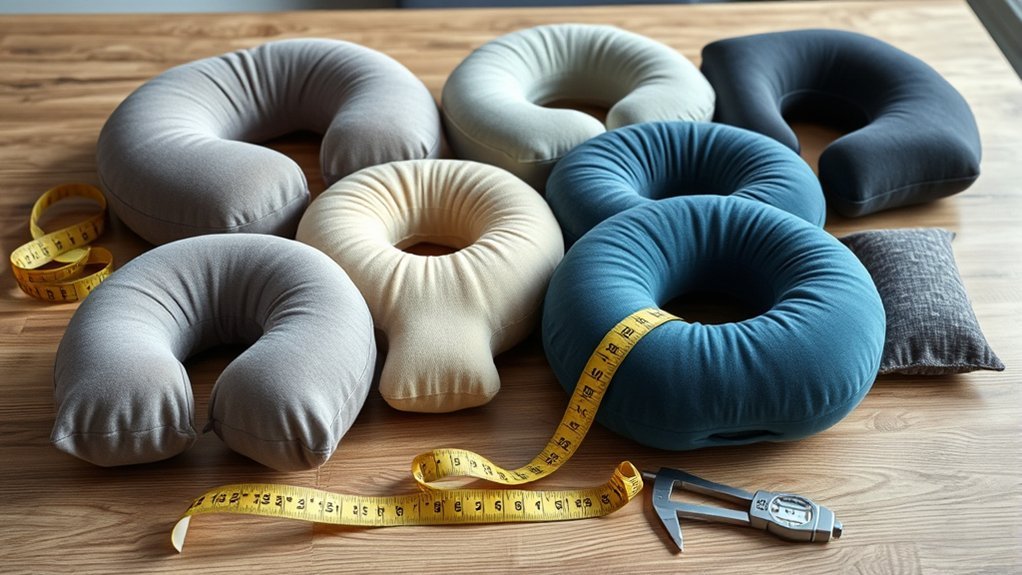
When you are selecting a travel pillow, understanding the various size options ensures proper anatomical support during transit. Travel pillows general dimensions fall into distinct categories. Standard rectangular travel pillows usually measure 12" x 16", whereas ergonomic U-shaped memory foam options typically measure around 15" x 11" x 4". For children or minimalist travelers, compact designs average 10" x 14".
The key factor beyond length and width is loft (pillow thickness). A pillow that is too thin allows your head to tilt awkwardly, while a pillow that is too thick pushes your neck forward against the airline seat. Inflatable options provide adjustable firmness and loft, compressing easily into carry-on bags, whereas molded memory foam delivers superior contouring at the cost of packing volume.
Common Travel Pillow Dimensions Explained
Different pillow styles serve specific sleeping angles and anatomical needs. Below is a detailed breakdown of how common dimensions align with travel functionality:
| Pillow Category | Standard Dimensions (L x W x H) | Best For |
|---|---|---|
| Rectangular Compact | 12” x 16” x 3” | Lumber support, hotel room padding, camp beds |
| Ergonomic U-Shape | 11” x 11” x 4” | Upright seat sleeping, preventing lateral head falls |
| Large / Extra Support | 15” x 18” x 5” | Broad-shouldered individuals, tall travelers |
| Contoured Memory Foam | 15” x 11” x 4” | Targeted cervical neck alignment |
| Inflatable TPU Ring | 14” x 10” x 3.5” (Inflated) | Ultra-light packing, carry-on strict space limits |
Pro Tip: Measure your airline seat’s headrest width before buying large 15" x 18" pillows. Some modern economy seats feature adjustable headrest wings that can push oversized travel pillows uncomfortably far forward.
Choosing the Right Size Travel Pillow: Standard, Large, or Small?
Finding the correct size comes down to balancing support requirements against your luggage capacity:
- Small / Kids (10" x 14"): Ideal for toddlers, small children, or adults seeking minimal lumbar padding. Fits easily inside small daypacks.
- Standard (12" x 16" or 11" x 11" U-Shape): The versatile choice for most adults. Fits comfortably on train, car, and airplane seats without encroaching on your neighbor’s space.
- Large (15" x 18" or 15" x 20"): Tailored for individuals over 6 feet tall or those with wide shoulders who require extra volume to bridge the gap between neck and shoulder.
How Body Size and Travel Type Affect Pillow Selection
Your physical frame dictates the pillow loft necessary to keep your spine neutral. According to ergonomic health guidelines from the National Institutes of Health, maintaining proper cervical alignment prevents muscle strain during prolonged sitting.
“Proper cervical support requires filling the anatomical gap between the earlobe and shoulder point without forcing the neck into unnatural flexion.”
If you have broad shoulders, a thin 3" pillow allows your head to tilt too far to the side. Conversely, smaller-framed travelers using a 5" thick pillow will experience forward head thrust, leading to lower neck strain.
Which Travel Pillow Shapes Should You Consider?
The structural shape of your pillow alters how its dimensions function in practice:
| Pillow Shape | Dimensions | Key Features |
|---|---|---|
| U-shaped | 12” x 16” / 11″ x 11″ | Classic 360-degree lateral chin and neck support |
| Inflatable | Adjustable | Customizable air firmness; packs flat |
| Memory Foam | 15” x 11” x 4” | Pressure-relieving contouring; bulky volume |
How to Measure for the Perfect Travel Pillow Size?
Avoid trial-and-error by taking two basic anatomical measurements before purchasing a travel pillow.
Consider Your Body Size
To determine your optimal pillow height (loft), use a flexible tape measure:
- Sit upright with your head facing straight ahead.
- Measure the distance from the base of your neck near the earlobe straight out to the edge of your acromion process (shoulder bone point).
- If the distance is under 4 inches: Choose a small/standard pillow with 3.5" to 4" loft.
- If the distance is 4.5 inches or greater: Opt for a large travel pillow with a 4.5" to 5" loft.
Assess Travel Duration Needs
For short trips under 3 hours, compact 10" x 14" or inflatable options are sufficient. On long-haul flights exceeding 6 hours, high-density memory foam (15" x 11" x 4") provides continuous support without collapsing under the weight of your head over time.
Evaluate Sleep Position Preference
- Side Sleepers: Need a thicker loft (4.5"–5") to bridge the full shoulder distance when leaning against a window wall.
- Back / Upright Sleepers: Require a thinner rear neck cushion (2"–3") with thicker side lobes so the head is supported sideways without being pushed forward.
Best Practices for Packing Your Travel Pillow
Integrating your travel pillow into carry-on luggage requires efficient packing strategies.
Warning: Always check TSA carry-on size limits. While travel pillows count as personal items or clothing accessories on most airlines, oversized non-compressible foam pillows attached outside your bag may be flagged by budget carriers as an extra carry-on item.
Size Considerations When Packing
Standard 12" x 16" flat pillows take up notable internal bag space unless compressed. Memory foam models measuring 15" x 11" x 4" often include cinch sacks that roll the foam down to approximately 50% of its expanded size.
Compression Techniques For Space
Using a dedicated compression sack or packing cube reduces memory foam volume by up to half. Inflatable TPU travel pillows compress even further—deflating down to roughly the size of a soda can (4" x 2" x 2"), freeing up vital room in your personal item bag.
Choosing Lightweight Materials
Material selection impacts both total luggage weight and breathability:
| Material | Portability Features |
|---|---|
| Microfiber / Polyester | Lightweight, washable cover, moderate compression |
| Inflatable TPU | Ultra-light (3–4 oz), maximum packing efficiency |
| Viscoelastic Memory Foam | Heavier (10–16 oz), maximum ergonomic support |
Frequently Asked Questions About Travel Pillow Sizes
Selecting the right size involves evaluating your travel frequency, body frame, and storage limitations.
What’s the Best Travel Pillow for Long Flights?
The optimal long-haul travel pillow combines contoured memory foam with a minimum 4-inch loft to hold your neck stable during sleep cycles.
| Pillow Type | Key Features |
|---|---|
| Memory Foam | Contours to neck anatomy, consistent long-haul support |
| Inflatable | Highly portable, customizable firmness levels |
| U-Shaped Ergonomic | Prevents forward and lateral neck slouching |
Frequently Asked Questions
Can travel pillows be machine washed or cleaned easily?
Most memory foam and fiber-fill travel pillows feature removable zippered covers that are machine washable on a gentle cycle. However, the inner core (especially memory foam) should never be submerged in water; spot clean foam cores with a damp cloth and warm water.
Are travel pillows suitable for children or infants?
Child-sized travel pillows measuring roughly 10" x 14" are designed specifically for children aged 3 and older. Travel pillows are not recommended for infants due to safety risks regarding airway alignment and suffocation hazards in car seats or strollers.
How do I inflate or deflate an inflatable travel pillow?
Modern inflatable travel pillows feature quick-bleed air valves. Open the primary valve top to inflate with 3–5 full breaths. To deflate instantly, press the internal spring valve button or open the full valve base, roll the pillow flat from end to valve, and seal the cap.
Can I use a travel pillow in a car or bus?
Yes. Standard 12" x 16" rectangular or U-shaped neck pillows work well in cars and buses. In automobiles, lean U-shaped pillows slightly to the side against the seatbelt or window frame for optimal lateral support.
What materials are commonly used in travel pillows?
Common materials include viscoelastic memory foam for ergonomic contouring, TPU-coated polyester for inflatables, polystyrene microbeads for moldability, and synthetic down-alternative fibers for traditional rectangular cushion feel.
Conclusion
When selecting the right travel pillow, matching the pillow dimensions to your shoulder-to-neck gap and sleeping style ensures reliable comfort on long journeys. Choosing an appropriate size—whether a compact 10" x 14" inflatable cushion or a contoured 15" x 11" memory foam design—helps maintain spinal alignment so you arrive at your destination well-rested.
Sources
- National Institutes of Health (NIH) — Ergonomic standards for cervical neck alignment and spinal health
- Transportation Security Administration (TSA) — Carry-on luggage rules and personal item dimensions
- Sleep Foundation — Pillow loft and ergonomics guidelines for upright sleeping positions
