

Last Updated on July 24, 2026 by Caleb Warren
Navigating airport security with comfort accessories can raise quick questions during packing, but bringing a travel pillow through TSA security checkpoints is generally straightforward and hassle-free. Transportation Security Administration guidelines permit standard travel pillows—including memory foam, microbead, and inflatable varieties—in both carry-on bags and checked luggage. Furthermore, most major airlines allow passengers to wear or carry a neck pillow on board without deducting from their official carry-on or personal item allowances.
Quick Answer
Yes, TSA allows standard travel pillows through airport security in carry-on and checked luggage. Standard memory foam, microbead, and inflatable pillows do not count toward liquid limits. Most major airlines allow you to wear a neck pillow without counting it as a personal item, though budget airlines may require it to fit inside your bag.
Key Takeaways
- TSA Permit: Standard dry travel pillows (memory foam, inflatable, microbead) are fully permitted through airport security checkpoints.
- Liquid Restrictions: Gel-filled or water-based travel pillows must comply with the TSA 3-1-1 liquid rule (3.4 oz / 100 ml max) if carried in hand luggage.
- Airline Baggage Rules: Legacy carriers rarely count neck pillows against personal item limits, whereas budget carriers (Spirit, Frontier, Ryanair) may strictly enforce bag allowances.
- Screening Efficiency: Place loose pillows in an X-ray bin when instructed, or leave them inside/attached to carry-on luggage at modern CT scanner lanes.
At a Glance
| Time Required | 1–2 minutes extra at checkpoint security |
| Difficulty | Very Easy |
| Tools Needed | Luggage clip, washable protective cover, storage bag |
| Cost | $0 (No additional TSA security fees) |
Disclosure: As an Amazon Associate I earn from qualifying purchases. Some links on this page are affiliate links, at no extra cost to you.
What Are TSA Regulations for Travel Pillows?
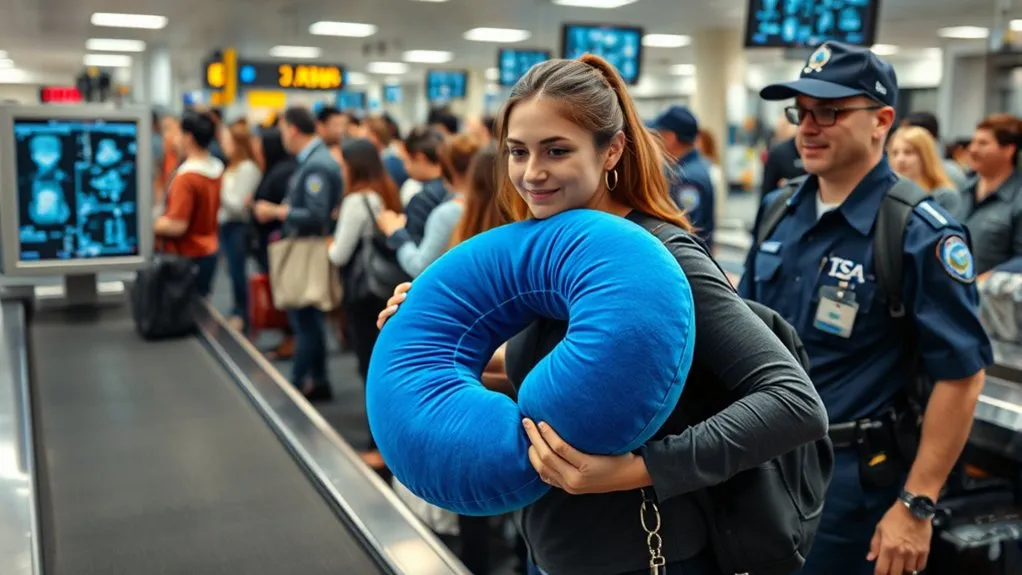
According to official regulations published on the TSA What Can I Bring directory, travel pillows are allowed in both carry-on bags and checked luggage. Standard pillow interior materials—such as solid memory foam, polyester fiberfill, microbeads, and air-inflatable bladders—do not pose security risks and can pass through screening without restriction.
Different pillow designs offer unique physical benefits for air travelers:
- Memory Foam Pillows: Provide dense ergonomic neck support, conforming to individual contours to prevent muscle stiffness during long-haul flights.
- Inflatable Pillows: Offer extreme packing efficiency, deflating down to the size of a soda can to conserve interior luggage capacity.
- Microbead Pillows: Lightweight and squishy, allowing flexible positioning for side and window sleepers.
Warning: Gel-infused or water-filled travel pillows are subject to the TSA 3-1-1 liquid rule. If the gel or liquid core exceeds 3.4 fluid ounces (100 ml), security officers will confiscate the item at the checkpoint. Always pack liquid- or heavy gel-filled pillows in checked baggage.
What to Expect During Security Screening
Passing through airport security with a neck pillow is typically fast. However, understanding exact screening procedures ensures you avoid unexpected delays at the X-ray conveyer belt.
Pillow Screening Process Overview
When approaching the screening queue, determine whether your checkpoint utilizes traditional X-ray machines or modern Computed Tomography (CT) scanners:
- Standard X-Ray Lanes: You may be requested to remove loose neck pillows from your body or bag handles and place them inside a plastic bin for independent scanning.
- 3D CT Scanner Lanes: At upgraded checkpoints, luggage items—including attached travel pillows—can frequently remain inside or secured to your carry-on bag.
X-Ray Machine Procedures
Because dense memory foam or metallic zipper pulls can block X-ray visibility, security officers occasionally flag pillows for secondary manual inspection.
| Screening Step | Action & Requirements |
|---|---|
| Initial Screening | Place the pillow flat inside a bin or keep attached to your carry-on per officer instructions. |
| X-Ray Imaging | The X-ray scanner scans internal density to verify no prohibited items are hidden inside. |
| Secondary Inspection | If foam density obscures imaging, officers perform a brief manual pat-down or swab testing. |
| Clearance Outcome | The overwhelming majority of travel pillows pass inspection within seconds. |
Note: Under federal law, the final decision on whether an item is permitted through the security checkpoint rests entirely on the individual TSA officer’s discretion.
Common Traveler Experiences
- Hassle-Free Screening: The vast majority of air travelers pass through security without removing or altering standard neck pillows.
- Wearing Through Checkpoints: While TSA officers will ask you to remove neck pillows when passing through body scanners or metal detectors, you can put the pillow right back on once cleared.
- Space-Saving Attachment: Most travelers clip their pillow onto purse straps or backpack handles to keep hands free during boarding.
Can You Use a Neck Pillow as a Personal Item?
A primary concern for travelers is whether wearing a neck pillow triggers additional baggage fees. Guidelines published across major air carriers, such as United Airlines baggage policies and Delta Air Lines carry-on rules, confirm that outerwear and neck pillows generally do not count against your carry-on or personal item allowance.
Pro Tip: On legacy carriers (United, Delta, American), simply wear your travel pillow around your neck or snap it onto your carry-on bag handle during gate boarding to ensure it isn’t questioned as extra luggage.
Warning regarding Budget Airlines & the “Pillow Hack”: Ultra-low-cost carriers (such as Spirit, Frontier, or Ryanair) strictly enforce bag limits. Gate agents at these airlines frequently enforce rules requiring neck pillows to fit entirely inside your paid personal item or carry-on bag. Additionally, attempting the viral travel hack of stuffing empty pillowcases with extra clothing can lead to forced gate-check fees if discovered.
How to Choose the Best Travel Pillow for Your Flight
Selecting the right travel pillow balances ergonomic comfort, physical space, and flight duration requirements:
- Material Performance: High-density memory foam provides superior contouring for ergonomic support, whereas air inflatable designs maximize space efficiency.
- Ergonomic Shape: Classic U-shape and chin-support designs prevent forward head slumping, protecting against cervical spine fatigue.
- Cover Breathability: Removable covers made from moisture-wicking bamboo or velvet blend fabrics maintain thermoregulation in cold cabin air.
- Portability & Compressibility: Pillows that compress into a travel pouch save interior carry-on volume while staying protected from airport dust.
How to Pack a Travel Pillow for Easy Access
Efficient packing ensures your travel pillow remains accessible while maintaining strict hygienic standards.
Best Packing Strategies
- Deflate Inflatables completely: Compress inflatable models into compact side pockets of your carry-on bag.
- Use External Snap Straps: Fasten U-shaped pillows directly around the top handle of your rolling suitcase.
- Utilize Compression Sacks: For memory foam pillows, roll tightly into dedicated compression sacks to reduce physical volume by up to 60%.
Quick Access Methods
| Packing Method | Key Advantages |
|---|---|
| External Carabiner Clip | Keeps interior bag space free while ensuring instant access at seat boarding. |
| Top-Bag Stacking | Places the pillow at the main zipper opening for swift retrieval at TSA security bins. |
| Wearing Boarding Strategy | Eliminates luggage weight completely while keeping hands free for boarding passes. |
Best Practices for Wearing a Neck Pillow for Optimal Comfort
Proper positioning makes a dramatic difference in spinal alignment and rest quality during flight turbulence:
“Reversing the classic U-shaped neck pillow—placing the thickest cushion beneath your chin—prevents forward head drop, reducing strain on the cervical spine during sleep.”
- Reverse Placement for Forward Sleepers: Turn the pillow so the opening faces backward. This supports your chin and stops sudden head drops when nodding off upright.
- Adjust Toggles and Clasps: Fasten front locking toggles snugly to stabilize neck positioning against aircraft window walls.
- Support the Lumbar Spine: On shorter flights, place thin travel pillows behind your lower back to relieve spinal compression caused by airplane seats.
How to Clean and Maintain Your Travel Pillow
Airport security trays and airplane cabin seats carry bacteria. Keeping your travel pillow sanitized protects your skin and prolongs product longevity.
Regular Washing Guidelines
- Removable Fabric Covers: Unzip and wash covers after every trip in warm water with mild detergent on a gentle cycle.
- Memory Foam Cores: Never place memory foam inside washing machines or dryers. Spot clean gently using damp microfiber cloths and mild soap.
- Air Drying Protocol: Always air-dry foam cores and outer covers thoroughly in well-ventilated areas to prevent mold accumulation.
Proper Storage Techniques
Store travel pillows uncompressed inside breathable cotton bags in cool, dry closets. Keeping memory foam compressed inside tight storage sacks for months can permanently damage internal foam cells.
Sanitizing Before and After Use
Wipe down non-washable pillow surfaces with alcohol-free disinfectant wipes before placing them on airport screening trays or wearing them on board.
Common Misconceptions About TSA Rules for Travel Pillows
- Myth 1: “Neck pillows count as full carry-on bags.”
Fact: Major airlines view travel pillows as personal apparel items, similar to coats or hats. - Myth 2: “You must put all travel pillows in checked luggage.”
Fact: Travel pillows are fully authorized in cabin hand luggage. - Myth 3: “Inflatable pillows pose cabin pressure explosion risks.”
Fact: Aircraft cabins are pressurized. Deflate inflatables slightly (to 80% capacity) before takeoff to accommodate minor air expansion safely.
Experiences From Travelers: Neck Pillow Success Stories
Experienced frequent flyers consistently rate travel pillows among their most vital gear:
- Hands-Free Convenience: Attaching clipped memory foam pillows to carry-on handles leaves hands completely free for maneuvering passports and mobile boarding passes.
- Enhanced Rest Quality: Combining chin-supporting travel pillows with noise-canceling headphones significantly improves rapid eye movement (REM) sleep on red-eye flights.
- Versatile Support: Travelers routinely repurpose neck pillows as lumbar cushions during long airport layovers.
Final Tips for a Comfortable Flight With a Travel Pillow
| Actionable Tip | Implementation Strategy | Traveler Benefit |
|---|---|---|
| Check Gel Content | Verify pillow contains no liquid or heavy gel cores exceeding 3.4 oz. | Prevents confiscation at TSA screening. |
| Protective Shielding | Keep a washable cover over the pillow during security bin inspection. | Protects fabric against tray surface germs. |
| Inflation Adjustment | Inflate inflatable pillows to 80% full at seat level. | Accommodates cabin pressure equalization comfortably. |
Frequently Asked Questions
Can I bring inflatable travel pillows through TSA security?
Yes, inflatable travel pillows are fully permitted through TSA security checkpoints in both deflated and inflated states. Deflating the pillow beforehand saves valuable space inside carry-on luggage.
Are there size limits for travel pillows in carry-on luggage?
TSA does not impose size limits on travel pillows. However, if you store the pillow inside your carry-on bag, the overall luggage piece must conform to your airline’s maximum dimensional requirements (typically 22 x 14 x 9 inches).
Do travel pillows need to be removed during security screening?
In standard screening lanes, officers may instruct you to place your pillow in a separate bin for X-ray inspection. In modern CT scanner lanes, travel pillows can generally remain inside or attached to carry-on bags.
Can I buy a travel pillow after passing through TSA security?
Yes. Airport retail shops located past security checkpoints regularly stock memory foam, microbead, and inflatable neck pillows ready for boarding.
Are there restrictions on materials used in travel pillows?
Standard foam, fabric, microbeads, and air bladders are fully permitted. However, gel-filled or water-based pillows must strictly comply with TSA 3-1-1 liquid limits (3.4 oz / 100 ml max) for carry-on screening.
Conclusion
Bringing a travel pillow through TSA security security is an easy process that substantially elevates flight comfort. By confirming your pillow material complies with standard screening rules—and paying attention to liquid restrictions if using gel designs—you can glide through airport checkpoints with ease. Wear your pillow around your neck or snap it onto your carry-on bag, select an ergonomic shape that suits your sleeping position, and enjoy a restful, comfortable flight.
Sources
- Transportation Security Administration (TSA) — Official “What Can I Bring?” Permitted Items List
- United Airlines — Carry-On & Personal Item Allowance Rules
- Delta Air Lines — Cabin Luggage Guidelines & Exceptions
- Federal Aviation Administration (FAA) — Passenger Safety & Baggage Regulations

