
Last Updated on July 24, 2026 by Mason Reed
Wind noise can ruin a night of camping, but the loudest flapping and rattling usually come from a small number of fixable problems. A loose rainfly, poorly positioned guylines, moving zipper pulls, weak anchors, or an exposed campsite can turn every gust into noise. Correcting the pitch normally works better than adding heavy soundproofing materials inside the tent.
Quick Answer
To reduce wind noise in a tent, choose a sheltered site, point the tent’s strongest pole structure into the wind, stake every corner, attach guylines to reinforced guy points, and tension the rainfly evenly. Recheck the pitch after rain or temperature changes. If stakes pull out or poles deform, move to safer shelter.
Key Takeaways
- Most tent wind noise comes from loose fabric, uneven rainfly tension, moving hardware, or weak anchors.
- Use the tent’s reinforced guy-out points and fly straps instead of clipping directly to unsupported fabric.
- Keep the rainfly taut but not overstretched, and maintain a ventilation gap between the fly and inner tent.
- Rooftop-rack whistling while driving is a separate problem that may require rubber channel infill or a compatible fairing.
- Heavy curtains and acoustic panels are rarely suitable for ordinary tents because they add weight and can restrict airflow.
- If poles bend sharply, stakes repeatedly pull out, branches begin falling, or lightning approaches, leave the tent and seek safer shelter.
At a Glance
| Time Required | About 10–30 minutes |
| Difficulty | Easy for normal pitching adjustments |
| Tools Needed | Tent instructions, suitable stakes, guylines, tensioners, and optional earplugs |
| Cost | Often free; otherwise varies by stakes, cord, channel infill, or replacement hardware |
What’s in This Article
- Why Wind Noise Matters for Sleep
- How to Find the Source of Tent Noise
- Quick Fixes for Wind Noise
- Rooftop-Tent and Roof-Rack Whistling
- Should You Wrap Tent Poles With Paracord?
- Using Acoustic Barriers Safely
- Are Noise-Reducing Curtains Practical?
- Choosing a Quieter Tent
- More Ways to Quiet Your Tent
- When to Pack Up or Seek Shelter
- Frequently Asked Questions
- Conclusion
Disclosure: As an Amazon Associate I earn from qualifying purchases. Some links on this page are affiliate links, at no extra cost to you.
Why Wind Noise Matters for a Good Night’s Sleep
Irregular flapping, snapping, and whistling can make it harder to fall asleep and may wake you repeatedly during the night. The World Health Organization’s environmental-noise guidance recognizes sleep disturbance as an important effect of unwanted nighttime noise.
A stable pitch improves more than comfort. It reduces repeated loading on the tent fabric, poles, stakes, and attachment points. The goal is not to make a fabric shelter completely silent. It is to remove avoidable movement while keeping the tent properly ventilated and structurally secure.
A quieter tent starts with a stable pitch, not with heavy materials hanging inside it.
How to Find the Source of Tent Wind Noise
Listen for the pattern before changing the setup. Different sounds point to different problems.
| Sound | Likely Source | First Fix to Try |
|---|---|---|
| Broad flapping | Loose rainfly or large fabric panel | Tension the fly evenly and attach the correct guylines |
| Sharp snapping at one corner | Loose strap, guyline, vestibule, or door panel | Secure that reinforced point without overstretching it |
| Buzzing or tapping | Zipper pulls, buckles, clips, or loose hardware | Secure removable parts with a short elastic loop or soft cord |
| Inner wall touching the fly | Insufficient fly separation or uneven pitching | Use fly-to-pole wraps and side guylines |
| High whistle only while driving | Open roof-rack channel, air gap, fairing, or mounting issue | Inspect the rack and use approved channel infill or a compatible fairing |
Quick Fixes for Wind Noise Reduction
Start with the parts designed to control the tent rather than adding new attachment points. The REI tent-pitching guide recommends using the rainfly straps, reinforced guy-out points, fly-to-pole wraps, suitable stakes, and evenly tensioned guylines.
- Check the site: Move away from exposed ridges, open fields, cliff edges, and low areas that may collect water.
- Inspect overhead hazards: Do not use trees as a windbreak when dead, cracked, hanging, or damaged branches are above the tent.
- Orient the structure: Point the side supported by the tent’s strongest pole structure toward the prevailing wind, following the manufacturer’s instructions.
- Stake every required point: Use stakes suited to the soil, sand, or snow and seat them securely.
- Attach guylines correctly: Run them outward from reinforced guy points and give each important windward line a dependable anchor.
- Tension the fly evenly: Remove loose panels without pulling seams or zippers out of alignment.
- Recheck the pitch: Fabric may loosen after rain, cooling, or changes in humidity.
Warning: Use tarp clips only on reinforced tarp edges or manufacturer-approved attachment areas. Clipping directly to unsupported lightweight tent fabric can concentrate force and cause a tear.
Tensioning tent fabric safely
A taut rainfly is quieter than a loose one, but tighter is not always better. Excess tension can distort the pole structure, strain seams, pull zippers out of line, and reduce the tent’s ability to flex during gusts.
| Method | How to Use It | What It Corrects |
|---|---|---|
| Corner straps | Tighten each corner gradually and evenly | Loose rainfly edges and uneven seams |
| Reinforced guylines | Pull outward in line with the supported pole or panel | Large flapping side panels |
| Fly-to-pole wraps | Fasten the built-in wraps around the matching poles | Fly movement and loss of structural support |
| Doors and zippers | Close or roll them exactly as the tent instructions show | Loose door panels and snapping vestibules |
| Periodic checks | Inspect anchors and tension before sleeping and after weather changes | Sagging fabric and shifting stakes |
Pro Tip: Adjust all corners in small amounts rather than tightening one side fully. The rainfly seams should remain aligned with the tent body and poles.
Low-Risk Personal Noise Reduction
After correcting the pitch, you can reduce the amount of remaining noise you personally hear. Properly fitted foam or silicone earplugs are lighter and more practical than hanging soundproofing materials. A folded blanket, spare clothing, or a soft floor mat may reduce minor rustling inside a large tent, but it will not stop the rainfly from flapping outside.
Do not seal vents, cover mesh panels, or pile belongings against wet tent walls. Ventilation helps limit condensation and keeps the rainfly separated from the inner sleeping area.
Note: Earplug package ratings come from controlled tests. The noise reduction you receive depends heavily on fit, and excessive isolation can make it harder to hear weather alerts, wildlife, children, or other campers who need help.
How to Handle Rooftop-Tent and Roof-Rack Whistling

First determine when the whistle occurs. If you hear it only while the vehicle is moving and the rooftop tent is closed, the source is probably the rack, a crossbar channel, an air gap, a fairing, or the mounting position. That is different from wind noise inside a deployed tent.
Some aerodynamic roof bars use rubber T-slot infill specifically to reduce wind noise. For example, Yakima describes T-slot rubber infill as part of its aerodynamic crossbar systems. A compatible wind fairing can also redirect airflow over the rack.
How to Diagnose an Open Channel
- Confirm that the tent is fully closed, latched, and mounted according to its instructions.
- Inspect the crossbar end caps, channel inserts, brackets, covers, straps, and fairing.
- Use a small piece of removable painter’s tape as a short diagnostic test over a suspected empty channel.
- Remove the test tape after identifying the source.
- Install the rack maker’s rubber channel infill, replacement end cap, approved fairing, or other specified part for the permanent repair.
Warning: Do not cover drainage paths, vents, seams, fasteners, latches, labels, moving joints, or structural mounting points. Confirm any modification with the rooftop-tent or rack manufacturer.
When Gorilla Tape May Help
Weather-resistant tape may temporarily change the airflow over an open metal channel and stop a whistle. It can therefore be useful as a diagnostic or short-term measure. However, heat, rain, dust, UV exposure, and removal can weaken the adhesive or leave residue, so tape should not automatically be treated as the final repair.
| Option | Best Use | Limitation |
|---|---|---|
| Painter’s tape | Short diagnostic test | Not weatherproof or permanent |
| Weather-resistant repair tape | Temporary sealing when approved | May leave residue or hide a mounting problem |
| Rubber T-slot infill | Open compatible rack channels | Must match the crossbar profile |
| Compatible fairing | Redirecting airflow over a roof rack | Fit and placement are vehicle-specific |
Should You Wrap Tent Poles With Paracord?
Wrapping cord in a spiral around a pole may appear similar to the helical strakes used on industrial cylindrical structures. NASA has documented engineered helical strakes that disrupt vortex shedding around cylindrical equipment. However, this does not establish that ordinary paracord will reliably quiet a flexible tent pole.
An improvised wrap may interfere with pole sleeves, clips, hubs, joints, or the rainfly. It can also retain water or grit against the pole finish. For most tents, paracord is more useful as spare guyline material or as a soft way to secure loose zipper pulls and accessories.
- Do not wrap cord over pole joints, hubs, clips, sleeves, or manufacturer labels.
- Do not depend on wetting or shrinkage to tighten a wrap.
- Remove any experimental wrap immediately if it affects pitching, folding, ventilation, or fabric clearance.
- Use purpose-made, low-stretch guyline for structural support whenever possible.
Note: Paracord pole wrapping is an experimental noise treatment, not a substitute for correct guylines, anchors, rainfly tension, or a wind-appropriate tent.
Using Acoustic Barriers to Block Wind Noise
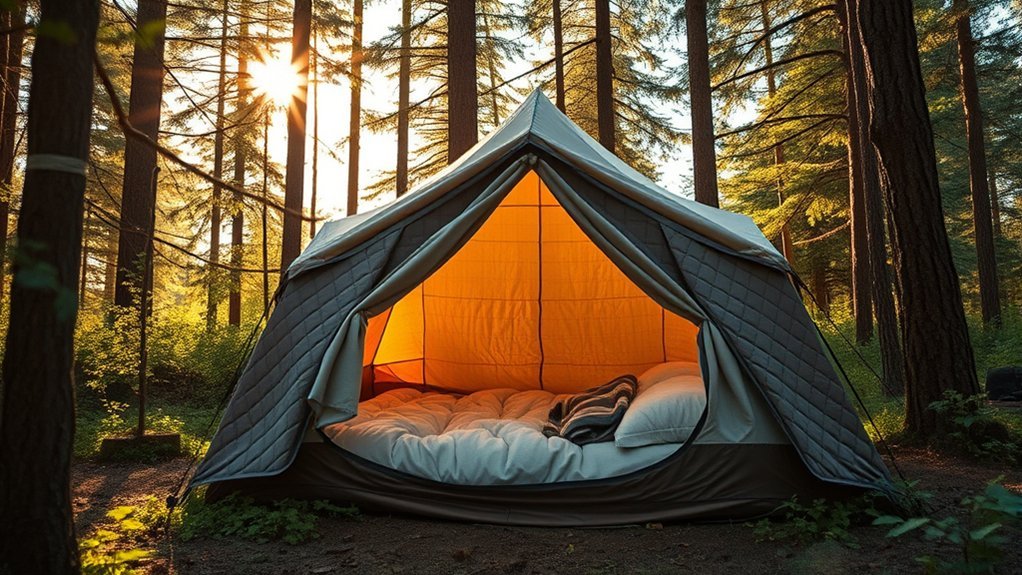
True sound barriers rely on mass, continuous coverage, and controlled gaps. Those qualities make them impractical for most lightweight tents. Foam panels and soft materials may reduce reflected sound inside a large shelter, but they do not correct an exterior rainfly that is snapping in the wind.
Heavy panels should not hang from mesh, zipper tracks, light loops, or flexible tent poles. They can strain the structure and obstruct ventilation. Big Agnes emphasizes tent ventilation and maintaining space between the rainfly and the inner tent to reduce condensation.
In a large canvas or glamping shelter, a lightweight floor covering may soften footsteps and interior rustling. Keep it dry, clear of exits, and away from heaters, stoves, lanterns, and open flames.
Are Noise-Reducing Curtains Practical in a Tent?
Heavy noise-reducing curtains are designed mainly for rigid rooms with strong mounting points. An ordinary camping tent does not provide the sealed walls, ceiling support, or safe load capacity those curtains need.
In a large, manufacturer-approved canvas shelter, a lightweight divider may block early morning light and provide limited sound absorption. It should not touch the outer wall, block vents, cover doors, or hang from unsupported poles.
- For light control: Use an eye mask instead of hanging heavy blackout fabric.
- For personal noise reduction: Use comfortable, properly fitted earplugs.
- For flapping: Correct the rainfly, guylines, stakes, doors, and loose hardware outside.
- For condensation control: Keep all designed vents open unless the manufacturer instructs otherwise.
Choosing a Quieter Tent
No fabric camping tent is completely soundproof. A better goal is to choose a design that remains stable and keeps loose material under control in the conditions where you camp.
Look for:
- A low-profile shape with a well-supported pole structure.
- A rainfly with multiple reinforced guy-out points.
- Fly straps and wraps that connect securely to the tent body or poles.
- Enough ventilation to reduce condensation without leaving large unsupported panels loose.
- A suitable season and weather rating for your trips.
- A size no larger than you need, since broad unsupported walls may catch more wind.
- Clear manufacturer instructions for strong-wind pitching.
A four-season or expedition-style tent may provide a stronger structure, but it is not automatically quiet, suitable for warm weather, or necessary for normal campground use. Compare the complete design rather than relying on labels such as “insulated” or “soundproof.”
More Ways to Quiet Your Tent
A sheltered campsite can reduce wind loading before it reaches the tent. The National Park Service campsite guide recommends considering wind, lightning, dead trees, flooding, and terrain when selecting a place to sleep.
- Use safe natural protection: A healthy stand of trees, terrain feature, or established windbreak may help, but never camp below damaged or hanging branches.
- Pitch before dark: Daylight makes it easier to inspect anchors, trees, drainage, and guyline routes.
- Use every important windward guy point: Add extra stakes rather than crowding several heavily loaded lines onto one weak anchor.
- Keep the fly off the inner tent: Use the supplied wraps and side guylines to preserve ventilation and reduce tapping.
- Secure zipper pulls: Join pairs with a small soft loop so they cannot strike each other or the tent body.
- Store loose equipment: Cups, cookware, poles, buckles, and hanging lights may create noise that sounds like a tent problem.
- Recheck wet fabric: Some fly materials loosen after becoming damp and need careful retensioning.
- Protect guylines: Route them where people will not trip, and make them visible at night.
- Use earplugs thoughtfully: Confirm that you can still respond to companions, alarms, severe weather, and nearby hazards.
Note: Earplugs reduce the noise reaching you, but they do not protect the tent. Structural movement, pulling stakes, and bending poles still require immediate attention.
When to Pack Up or Seek Safer Shelter
Noise can be an early sign that wind loading is becoming a structural problem. Stop trying to sleep through the conditions when the shelter is no longer under control.
Leave the tent or change plans when:
- One or more stakes repeatedly pull out despite suitable anchors.
- Poles bend sharply, invert, split, disconnect, or strike occupants.
- Fabric, seams, guy points, or zippers begin tearing.
- The tent shifts position or partially collapses.
- Branches, rocks, or other debris begin falling or blowing through camp.
- The site is exposed to flooding, unstable terrain, or damaged trees.
- A thunderstorm approaches and a substantial building or enclosed vehicle is available.
- Conditions exceed the limits stated by the tent manufacturer.
Warning: A tent is not safe lightning shelter. During dangerous wind or lightning, follow local emergency guidance and move to a substantial building or enclosed hard-top vehicle when one is safely accessible. Do not shelter beneath isolated, dead, cracked, or damaged trees.
The National Park Service wind-safety guidance stresses checking forecasts, preparing to change plans, and putting personal safety ahead of continuing an outdoor activity.
Frequently Asked Questions
Can I use regular tape instead of Gorilla tape?
Removable painter’s tape is better for briefly diagnosing a roof-rack channel whistle because it is easier to remove. For a permanent repair, use the rack manufacturer’s rubber channel infill, replacement cap, fairing, or approved part. Do not tape over vents, drains, fasteners, latches, or structural joints.
How does wind noise affect sleep quality?
Irregular flapping, snapping, and whistling can delay sleep, cause brief awakenings, and make sleep feel less restful. The effect varies with the sound level, pattern, duration, and the sleeper’s sensitivity. Correcting the pitch usually works better than trying to mask a loud structural problem.
Are there tents designed to reduce wind noise?
Some tents are more stable in wind because they have low profiles, strong pole structures, full rainflies, reinforced guy points, and fewer unsupported panels. They may produce less flapping when pitched correctly, but no normal fabric camping tent is completely soundproof.
Will wearing earplugs help with wind noise?
Yes, well-fitted earplugs can reduce the noise you hear. Fit and comfort matter more than simply choosing the highest package rating. Make sure you can still respond to alarms, severe weather, wildlife, children, or another camper who needs assistance.
Can I reduce wind noise without any tools?
You can improve the site position, turn the tent so its strongest supported side faces the wind, close loose doors, secure zipper pulls, and move rattling equipment. You still need the tent’s stakes and guylines for meaningful structural control in windy weather.
How tight should tent guylines be?
They should remove slack and support the related pole or fabric panel without distorting the tent. Seams, doors, poles, and fly panels should remain aligned. Recheck the lines after rain, cooling, or changing wind, and loosen any line that is pulling the structure out of shape.
Can I sew Velcro or extra guy points onto my tent?
Avoid modifying coated fabric or structural seams unless the manufacturer provides instructions. Needle holes, adhesives, and poorly positioned attachment points can weaken waterproofing or place loads where the tent was not designed to carry them. Use the supplied reinforced points or contact the manufacturer about an approved repair.
Conclusion
Reducing wind noise in a tent starts with finding what is moving. Choose a safe, sheltered campsite, orient the tent according to its pole structure, secure every required stake, attach guylines to reinforced points, and tension the rainfly evenly. Recheck the setup when fabric becomes wet or temperatures change.
Tape, paracord wraps, curtains, and interior panels should not replace a correct pitch. Treat driving-time rooftop-rack whistle as a separate issue and use compatible rack parts whenever possible. Most importantly, do not let the desire for a quiet night override safety. Pack up or seek stronger shelter when the tent, anchors, surrounding trees, or weather are no longer under control.
Sources
- REI: How to Set Up a Tent — campsite selection, rainfly tension, staking, orientation, and guyline guidance.
- Big Agnes: Tent Setup and Care Tips — guylines, fly separation, anchoring, and ventilation.
- National Park Service: Finding and Setting Up a Campsite — wind, lightning, terrain, flooding, and tree-hazard considerations.
- National Park Service: Wind Safety — forecast awareness and changing plans during dangerous wind.
- World Health Organization: Environmental Noise Guidance — sleep disturbance and other effects of unwanted environmental noise.
- NIOSH: Hearing Protection Guidance — earplug fit, real-world attenuation, and overprotection concerns.
