
Last Updated on July 27, 2026 by Mason Reed
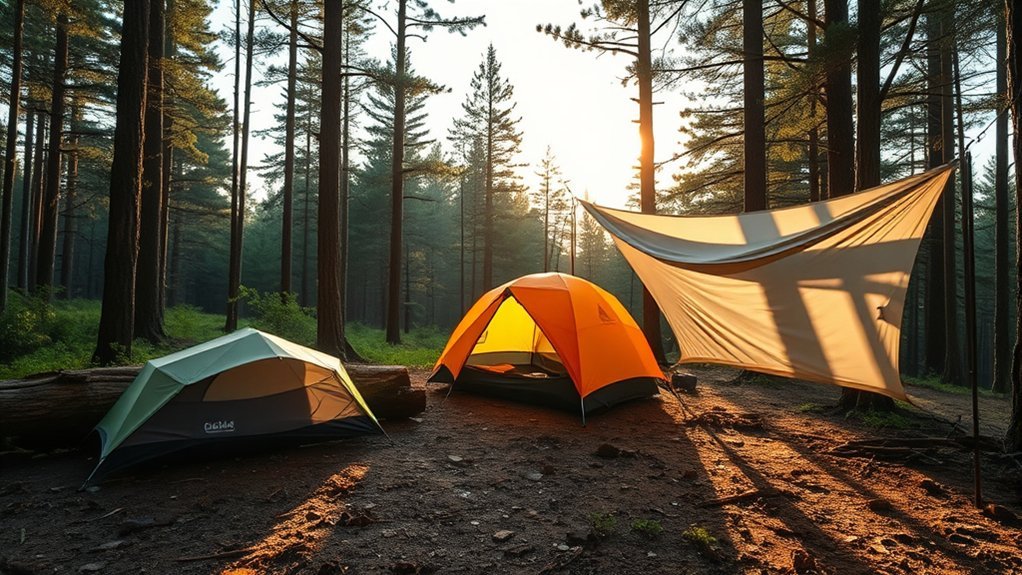
Choosing between a bivy, tent, or tarp comes down to the conditions you expect and the kind of camping experience you want. Bivies use very little space and suit fast solo travel. Tents provide the easiest all-around combination of rain, bug, and living-space protection. Tarps offer excellent ventilation and flexible pitches, but they demand more campsite judgment and setup skill.
Quick Answer
Choose a bivy for solo trips where tiny pack size and a small campsite footprint matter most. Choose a tent for the simplest all-around rain, bug, and living-space protection. Choose a tarp for low weight, ventilation, and adaptable pitches when you are comfortable managing guylines, site selection, and changing weather.
Key Takeaways
- Bivy: best for solo travelers who prioritize compact packing, a tiny footprint, and fast setup over interior space.
- Tent: the most forgiving choice for prolonged rain, heavy insects, shared trips, and time spent inside the shelter.
- Tarp: highly ventilated and adaptable, but weather protection depends heavily on pitch, site selection, and added bug or ground protection.
- Compare complete systems: poles, stakes, guylines, bug nets, groundsheets, and bivies can change both total weight and cost.
- Winter matters: a normal 3-season tent is not the same as a 4-season mountaineering shelter designed for strong winds and substantial snow loads.
Disclosure: As an Amazon Associate I earn from qualifying purchases. Some links on this page are affiliate links, at no extra cost to you.
Bivy vs Tent vs Tarp: Side-by-Side Comparison
| Shelter | Best For | Weather Protection | Bug Protection | Living Space | Main Trade-Off |
|---|---|---|---|---|---|
| Bivy | Solo fastpacking, bikepacking, alpine-style trips, tiny campsites | Varies from bug-only mesh to waterproof four-season models | Good when mesh is built in | Very limited | Condensation and little room for gear or sitting up |
| Tent | General backpacking, wet trips, bugs, two-person travel | Very good when matched to the season and correctly pitched | Excellent in fully enclosed models | Best of the three | More bulk, larger footprint, and usually more components |
| Tarp | Experienced ultralight hikers, mild weather, flexible camps | Good when properly sized and pitched; more exposed at open edges | None unless a net or bivy is added | Open and airy | Requires pitch skill and careful site selection |
Understanding Bivy Shelters
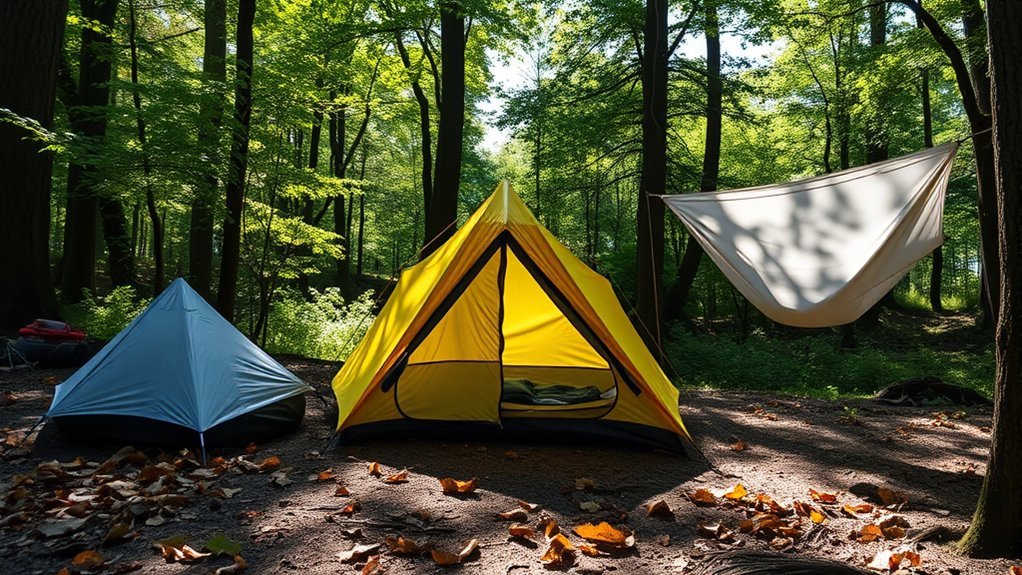
When you’re looking for a lightweight and compact sleeping solution, a bivy can be a game changer. However, not all bivies do the same job. A waterproof-breathable bivy is meant to protect your sleep system from weather, while a mesh bivy mainly provides insect protection and needs overhead shelter if rain is expected.
The Big Agnes Three Wire Hooped Bivy is an example of a pole-supported four-season bivy. It has a minimum trail weight of 1 lb 3 oz and uses a single pole to create headroom. Its waterproof-breathable upper, bathtub floor, taped seams, and closable ventilation opening make it much more weather-capable than a mesh-only bivy.
If bug protection without a full weatherproof upper is your priority, the Three Wire Mesh Bivy uses a full mesh upper and shallow bathtub floor. The current model is built for ventilation, insect protection, and minimal pack size rather than stand-alone rain protection. Its compact shape can fit easily in a bike frame bag or the corner of a backpack.
Bivies use very little ground space, which can be useful on narrow or rocky campsites where pitching a larger tent is difficult. They also have fewer shelter components than most tents. Hooped models still use a short pole and stakes, though, so they are not literally pole-free or setup-free.
The biggest compromises are livability and moisture management. There may be little or no protected room for your pack, shoes, or wet clothing, and the small air volume makes ventilation especially important.
Pro Tip: Treat a bivy as shelter, not as a substitute for an insulated sleep system. Choose a sleeping bag or quilt and sleeping pad that suit the temperatures you expect, then use the bivy’s vents or mesh openings whenever conditions allow to reduce condensation.
Exploring Tent Options
Tents offer the most familiar balance of weather protection, bug protection, interior space, and ease of use. For many backpackers, especially beginners or people traveling through uncertain three-season weather, that predictability is worth carrying a little more shelter.
The Big Agnes Tiger Wall UL2 Bikepack is a useful current bikepacking example. Big Agnes classifies it as a three-season, semi-freestanding tent. It has two doors, two vestibules, and a 12-inch Shortstik pole set designed to pack more conveniently on a bicycle.
The current Tiger Wall UL2 Bikepack is listed at 2 lb 6 oz trail weight and 3 lb packaged weight. Those numbers illustrate an important comparison rule: always check whether a manufacturer is quoting minimum/trail weight or the weight of everything supplied with the shelter.
Bikepacking-specific tents often use shorter pole sections and bike-friendly stuff sacks. A standard backpacking version can be a little lighter while packing longer. The current non-bikepack Tiger Wall UL2, for example, has longer packed dimensions than the Bikepack model, so riders may prefer the shorter pole package even when it adds a small amount of total weight.
| Tent Features | Considerations |
|---|---|
| Size | Needs more flat ground than most bivies |
| Weight | Tiger Wall UL2 Bikepack: 2 lb 6 oz trail weight; 3 lb packaged |
| Access | Dual doors and vestibules improve entry and gear storage |
| Versatility | Enclosed rain and bug protection for one or two people |
| Pole Design | 12-inch Shortstik segments improve bikepacking packability |
| Season Rating | This example is a 3-season tent, not a heavy-snow mountaineering tent |
The Versatility of Tarps
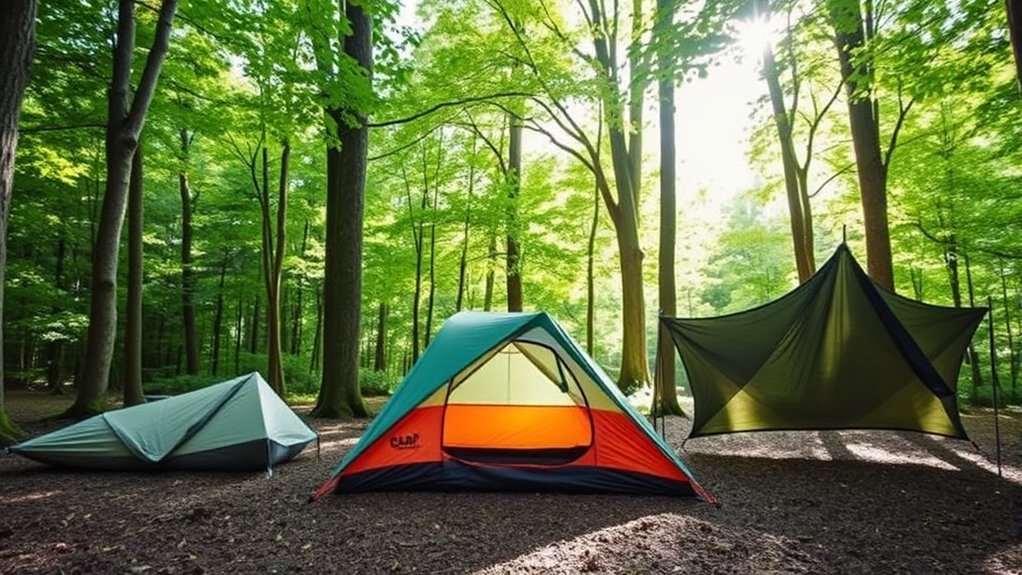
Tarps are the most configurable of the three options. You can pitch the same piece of fabric low for wind-driven rain, open one side for ventilation, or raise it high in warm weather. That flexibility is valuable, but it also puts more responsibility on you to read the wind, drainage, terrain, and available anchor points.
Creative Setup Configurations
Flat and shaped tarps can be pitched in different ways using trekking poles, suitable natural anchors, or dedicated tarp poles. An A-frame gives balanced coverage on both sides, while a lower lean-to or storm pitch can reduce exposure from one direction.
Combining a tarp with a bivy adds a protected sleeping compartment while leaving covered space for entering, exiting, and handling gear. Older hybrid shelters such as Gossamer Gear’s SpinnShelter illustrated the same idea by blending tarp-like weight and pitching with more enclosure, although that model should now be treated as a legacy example rather than a current product recommendation.
Weather Adaptability and Protection
A tarp’s biggest advantage is adaptability. Pitching it low and tight can reduce wind exposure and rain splash. Raising it creates more ventilation in warm or humid weather. Unlike a fixed-pole tent, however, a tarp’s protection depends heavily on pitch angle, orientation, tarp size, stake security, and campsite selection.
A tarp plus bivy is a popular modular approach because the tarp protects the sleeping area and gear-handling space while the bivy can supply insect protection or extra splash protection. The trade-off is a more complicated system with additional decisions about stakes, guylines, pole placement, drainage, and ventilation.
Weight Efficiency and Portability
Ultralight backpacking tarps can weigh well under a pound, but there is no useful universal tarp weight range. Larger tarps and more durable fabrics can weigh considerably more. The fairest comparison is the complete shelter system, including the tarp, guylines, stakes, poles if required, bug protection, and any groundsheet or bivy.
- Minimal fabric and hardware can reduce packed weight.
- Multiple pitches let one shelter adapt to rain, wind, heat, and campsite shape.
- Setup becomes fast once you know the pitch and knot system you use most often.
- Bug netting, a bivy, poles, and ground protection can narrow the weight advantage over an ultralight tent.
Note: Tarp setups have a learning curve. Practice your normal fair-weather and storm pitches at home before depending on them in rain or strong wind.
Weight Considerations for Each Shelter
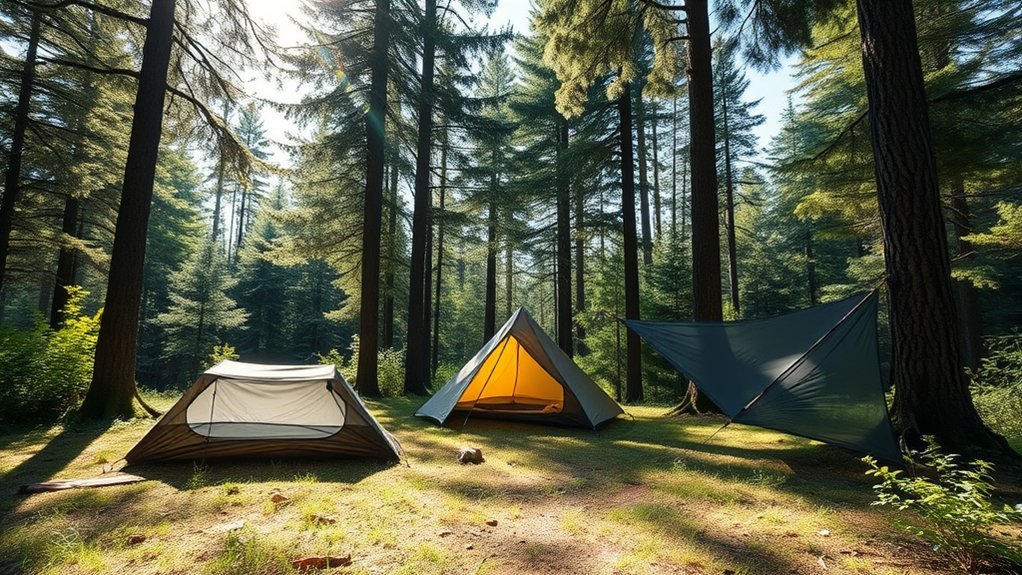
Weight is often the deciding factor for minimalist backpackers and bikepackers, but weight labels are easy to misread. “Minimum” or “trail” weight may omit stakes, stuff sacks, footprints, repair items, and optional components. Compare like with like whenever possible.
At a Glance: Shelter Weight Comparison
| Bivy: Three Wire Hooped | 1 lb 3 oz minimum trail weight; about 1 lb 6 oz packed |
| Bivy: Three Wire Mesh | About 15 oz listed weight; mesh upper is for bug protection rather than stand-alone rain protection |
| Tent: Tiger Wall UL2 Bikepack | 2 lb 6 oz trail weight; 3 lb packaged |
| Tarp or Tarp + Bivy | Highly model-dependent; total the tarp, bivy or bug net, guylines, stakes, poles, and ground protection before comparing |
The lightest-looking shelter on a product page is not always the lightest complete system. Compare everything you must carry to make that shelter work in the conditions you expect.
Setup and Flexibility in Different Conditions
Each shelter type calls for a different setup approach:
- Tarps offer the most pitching choices, but the result depends on stakes, anchors, wind direction, drainage, and your experience.
- Bivies require very little ground area and usually have fewer setup steps, although hooped versions still need a pole and stakes.
- Tents generally have more components, but their fixed geometry makes the finished pitch more predictable.
Site footprint matters as much as setup time. A bivy can fit on a narrow bench or small patch of durable ground. A tarp may span a larger area because of its guylines. A two-person tent needs enough level ground for its floor plus stake and vestibule space.
Hybrid and shaped tarp shelters split the difference by offering more enclosure than a flat tarp while keeping a modular or trekking-pole-supported design. They can be a good compromise when a standard tent feels too bulky but an open tarp feels too exposed.
Weather Protection and Performance
Your choice between a bivy, tent, or tarp has real consequences when conditions deteriorate, but the shelter category alone does not determine performance. Construction, season rating, fabric, pitch, ventilation, campsite exposure, and the exact model all matter.
Rain and Wind Resistance
A well-pitched enclosed 3-season tent is usually the most forgiving option for sustained three-season rain because the floor, rainfly, doors, and vestibules work as one system. A waterproof hooped bivy can also handle rain effectively, but entering, exiting, and storing gear are less convenient because so little covered space is available.
A tarp can perform very well in rain and wind when it is large enough, correctly oriented, pitched low, and securely anchored. Open sides leave less margin for wind shifts and splash, so site selection and skill matter more.
Heavy snow is a separate issue. Do not assume that any enclosed tent is a winter tent. The Tiger Wall UL2 Bikepack discussed here is a three-season shelter. Trips involving sustained strong wind, substantial snow loading, or true mountaineering conditions call for equipment specifically designed for those conditions.
Bug Protection Options
A mesh bivy gives insect protection with very little extra structure. A waterproof bivy may also include mesh panels so you can ventilate while keeping insects out. Tarps have no inherent bug barrier unless you add a bug bivy, net tent, head net, or similar protection.
Fully enclosed tents provide the simplest all-around insect barrier because their mesh and floor form a continuous enclosure. That can make a tent worth its extra weight in mosquito-heavy, tick-prone, or otherwise buggy environments.
Condensation and Ventilation
Condensation can occur in any shelter when warm, humid air meets a colder surface. It is especially noticeable in bivies because your body is close to the fabric and there is little interior air volume.
Whenever weather allows, use mesh openings or vents instead of sealing a bivy completely. With a tent, keep designed vents open and avoid blocking airflow. A tarp normally provides the most ventilation because its sides are open, although a very low storm pitch reduces airflow.
Do not assume that condensation means the shelter is leaking. Interior moisture can come from breathing, wet clothing, damp ground, and humid outside air as well as precipitation.
Seasonal Performance Differences
Warm and humid conditions: Tarps and mesh bivies offer excellent airflow, but you may need dedicated insect protection.
Typical three-season backpacking: An enclosed 3-season tent is the most straightforward choice when rain, wind, insects, and campsite conditions may vary.
Fast solo trips: A weatherproof bivy can save space and simplify camp when you do not need room to sit up or organize much gear.
Winter or mountaineering conditions: Choose a shelter specifically designed for the wind and snow loads you expect. A generic 3-season tent or open tarp should not be treated as a direct replacement for a purpose-built four-season shelter.
Safety and Campsite Selection
Warning: A tent, tarp, or bivy is not safe lightning shelter. The National Park Service recommends moving to a substantial building or enclosed hard-topped vehicle when lightning threatens. Plan an exit from exposed terrain before the storm reaches you.
Before pitching any shelter, look beyond comfort. The National Park Service recommends checking for hazards such as dead branches or trees, flash-flood-prone ravines, exposed ridges, cliffs, and low areas where water can collect.
Choose durable or established camping surfaces when regulations allow, avoid unnecessarily damaging vegetation, and follow the specific rules for the land you are visiting. A lighter shelter is not an advantage if its required pitch forces you into an unsafe or environmentally damaging campsite.
User Experiences and Preferences
Preference among backpackers usually comes down to weight, weather, campsite size, insects, and how much comfort you want at the end of the day rather than one shelter being objectively “best.”
| Shelter Type | Key Benefits |
|---|---|
| Bivy | Tiny campsite footprint, compact packing, and efficient solo shelter |
| Tent | Best all-around combination of enclosure, bug defense, gear storage, and living space |
| Tarp | Excellent ventilation, adaptable pitching, and potentially very low system weight |
Many solo travelers like bivies for short, fast trips because stopping for the night requires very little space. Tents make more sense when two people need to share shelter, insects are intense, or bad weather could keep you inside for hours. Tarps appeal to hikers who value airflow and modularity and are willing to spend more time learning how different pitches react to wind and rain.
Making the Right Choice for Your Adventure
Choose a bivy when you are traveling solo, campsite space is limited, and compact packing matters more than room to sit up or store gear.
Choose a tent when you expect changing three-season weather, heavy bugs, a shared sleeping space, or several nights where comfort and gear organization matter. For most first-time backpackers, it is the most forgiving option.
Choose a tarp when ventilation, adaptable coverage, and modular packing are priorities and you are comfortable choosing pitches for the wind, terrain, insects, and expected rain.
Choose a tarp plus bivy when you want the small sleeping footprint of a bivy plus overhead working space and additional rain coverage. Compare the entire system with a lightweight tent before assuming the combination will always be lighter or cheaper.
For winter or mountaineering trips, choose the exact shelter according to expected snow loading, wind exposure, temperature, and terrain rather than assuming “tent,” “tarp,” or “bivy” alone tells you enough about performance.
Frequently Asked Questions
How do bivies perform in wet conditions compared to tents?
A waterproof-breathable hooped bivy can protect your sleeping system from rain, but it provides far less covered living and gear space than a tent. Condensation can also be more noticeable because your body is close to the fabric. An enclosed tent is generally easier for prolonged wet weather because you can enter, exit, ventilate, and store gear under more protected space.
Can I use a tarp for winter camping?
Experienced campers do use tarps in winter, but a tarp does not automatically provide the structural strength of a four-season mountaineering tent. Snow loading, wind direction, anchors, drifting snow, sleeping-pad insulation, and your sleeping bag or quilt all matter. For severe or exposed conditions, use a shelter specifically designed for the expected environment.
What is the average lifespan of a bivy, tent, or tarp?
There is no reliable universal lifespan. UV exposure, abrasion, coating degradation, zipper wear, frequency of use, and storage conditions can make identical shelters age very differently. Store the shelter completely dry in a cool place, avoid prolonged sunlight when possible, clean it according to the manufacturer’s instructions, and repair small damage before it spreads.
Are there specific bivy designs for different climates?
Yes. Waterproof-breathable bivies with closable openings are designed for greater weather protection, while mesh-forward bivies prioritize airflow and insect protection in warmer conditions. Always check the exact materials and intended season rather than assuming every product sold as a bivy offers the same protection.
How do costs compare between bivies, tents, and tarps?
There is no fixed cheapest category. A simple nylon or polyester tarp can be inexpensive, while premium ultralight fabrics can make a tarp very costly. Weatherproof bivies and ultralight tents can also command premium prices. Compare the complete setup, including poles, stakes, guylines, bug protection, footprints, and groundsheets.
Is a tarp plus bivy always lighter than a tent?
No. Some combinations are extremely light, but the total depends on the tarp, bivy, guylines, stakes, poles, ground protection, and bug system. Modern ultralight tents can also be very light, so add every component you will actually carry before comparing systems.
Which shelter is best for humid and buggy conditions?
A fully enclosed tent is the easiest all-around option because it combines mesh insect protection with generous ventilation and a waterproof fly. A tarp plus mesh bivy can be lighter and airier, but it requires more setup. A fully waterproof bivy may feel more humid because of its smaller interior volume.
Conclusion
Choosing between a bivy, tent, or tarp comes down to the trade-offs you are willing to make. A bivy is compelling for solo travel when pack size and campsite footprint matter most. A tent is the most forgiving choice for variable three-season weather, insects, shared trips, and extended time under shelter. A tarp offers outstanding ventilation and flexibility when you have the experience to pitch it well.
For severe winter conditions, choose a purpose-built four-season shelter rather than relying on the category name alone. Whatever system you carry, compare its complete packed weight, practice setting it up before the trip, and choose campsites with weather, drainage, falling objects, and lightning exposure in mind.
Sources
- Big Agnes: Three Wire Hooped Bivy — current four-season design, construction, materials, and bivy specifications
- Big Agnes: Three Wire Mesh Bivy — mesh design, insect protection, ventilation, and construction
- Big Agnes: Tiger Wall UL2 Bikepack — three-season classification, Shortstik pole system, doors, vestibules, and current materials
- REI: Big Agnes Tiger Wall UL2 Bikepack — current trail weight, packaged weight, dimensions, and technical specifications
- U.S. National Park Service: Lightning Safety — why tents and other lightweight shelters are not safe lightning shelters
- U.S. National Park Service: Finding and Setting Up a Campsite — campsite hazards, terrain, drainage, falling trees, and exposure considerations

