

Last Updated on September 10, 2026 by Daniel Globe
Long flights, road trips, and cramped train seats can leave your head tilting forward or sideways while you sleep. Cooling gel travel pillows try to solve two comfort problems at once: supporting your head and neck while slowing heat buildup. The useful part is real, but the word “cooling” needs some context because these pillows use passive materials rather than refrigeration.
Quick Answer
Cooling gel travel pillows can feel cooler than ordinary dense foam by absorbing, spreading, or temporarily storing some body heat. They do not stay cold indefinitely. The best choice combines effective head and chin support, a breathable washable cover, a comfortable fit, and a cooling construction that matches how and where you travel.
Key Takeaways
- Cooling gel and phase-change material (PCM) are passive technologies. Their cooling effect changes as the pillow warms and depends on the product and surrounding temperature.
- Good neck support depends on the pillow’s height, shape, firmness, fit, and construction—not simply on whether it contains memory foam.
- “Cool-to-the-touch” does not mean a pillow will remain cold throughout a long flight.
- A removable, washable cover is useful for travel hygiene, but the foam or cooling insert usually requires different care.
- Test the pillow with your usual headphones, glasses, jacket, and seat position before a long trip.
- Adult travel pillows should never be used as infant sleep pillows or in a way that interferes with a child restraint, harness, or seat belt.
Disclosure: As an Amazon Associate I earn from qualifying purchases. Some links on this page are affiliate links, at no extra cost to you.
Understanding Cooling Gel Travel Pillows: What They Are
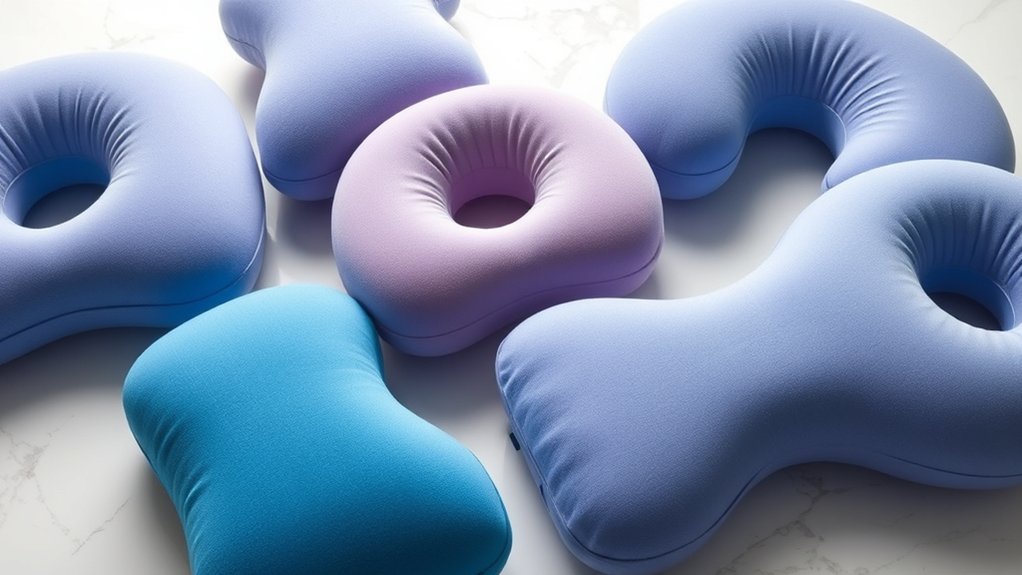
A cooling gel travel pillow usually combines a supportive fill—often polyurethane memory foam—with a surface or internal material designed to manage heat. Some use a gel layer or gel-infused foam. Others add a cooling fabric or phase-change material (PCM) to the cover or foam.
These approaches do not work exactly the same way. A gel surface can initially feel cool because heat moves from your warmer skin into the cooler material. As the gel warms, that temperature difference becomes smaller and the cool sensation fades.
PCM can temporarily store thermal energy during a phase transition. As explained by NASA’s overview of phase-change textiles, a PCM can absorb heat while changing phase and release stored heat when conditions cool again. NASA helped fund development of microencapsulated PCM textiles in the 1980s, building on earlier work for the U.S. Air Force.
That does not make a PCM pillow an air conditioner. It is still a passive system with a limited amount of material available to absorb heat.
| Cooling Feature | What It Does | Main Limitation |
|---|---|---|
| Gel layer | Can create a cooler initial contact and spread heat across a larger area. | Feels less cool as it approaches skin and cabin temperature. |
| Gel-infused foam | Combines foam support with materials intended to reduce heat buildup. | Dense foam can still restrict airflow. |
| PCM | Absorbs and later releases thermal energy around its designed transition temperature. | Performance depends on PCM formulation, quantity, ambient temperature, airflow, and heat load. |
| Breathable or moisture-wicking cover | Helps manage trapped moisture and allows more air movement at the surface. | Cannot overcome every heat-retention problem in a dense core. |
Most travel versions use a removable outer cover because it is easier to clean than the core. Cover materials, allergy claims, cooling treatments, and washing instructions vary by model, so check the actual product rather than assuming every cooling pillow has the same features.
Top Benefits of Cooling Gel Travel Pillows for Travelers
The main appeal is combining support with better temperature management in a seat where you have little control over the surrounding climate. Depending on the design, useful benefits can include:
- Head and neck support: A well-fitted pillow can reduce how far your head falls sideways or forward when you relax.
- Less heat buildup: Gel, PCM, ventilation, and breathable fabrics can make the contact area feel less warm than dense untreated foam.
- Pressure distribution: Contouring foam can spread contact pressure, although comfort depends on firmness and fit.
- Portability: Travel pillows are smaller than bed pillows, and many include a compression bag, snap, loop, or clip for luggage.
- Easier cleaning: A removable cover lets you wash the part that regularly touches your skin and travel surfaces.
The important limitation is that passive cooling is not endless. Gel and PCM do not continuously pump heat away. Once the material and its surroundings warm, the temperature difference you feel becomes smaller.
Pillow material alone does not determine neck comfort. Research indicates that pillow shape and height can be important to cervical alignment and symptoms, so fit should come before a “memory foam” label.
A 2021 systematic review of pillow-design research found that design characteristics can affect neck symptoms and satisfaction. That evidence comes largely from ordinary sleep pillows rather than airline travel pillows, so it supports careful fit selection rather than proving that any specific travel pillow treats neck pain.
Pro Tip: For overnight or long-haul travel, look for a secure front closure plus a luggage clip or carrying strap. A pillow that stays positioned around your neck and attaches easily to your bag is more useful than one that constantly slips or takes up half your carry-on.
How to Choose the Best Cooling Gel Travel Pillow
Cooling technology matters, but it should not be the first feature you judge in isolation. A pillow that feels cold in your hand but cannot hold your head comfortably is unlikely to help once you fall asleep.
- Cooling construction: Decide whether you mainly want a cool-to-the-touch surface, PCM temperature buffering, ventilation, moisture-wicking fabric, or a combination. Avoid treating any stated cooling duration as universal unless the manufacturer explains how it was tested.
- Fit and support height: The pillow should fill enough space around your neck to limit excessive tilting without pushing your head unnaturally forward. Research on pillow ergonomics consistently shows that height and shape matter.
- Firmness and core construction: Firmer foam generally resists collapse better, while softer foam can feel more cushioned. Neither is automatically better; your body size and sleeping posture matter.
- Chin support: If your head drops forward, look for a tall front section, overlapping wings, adjustable closure, J-shape, or wrap-style support instead of relying only on padding behind the neck.
- Cover material: A breathable, removable cover can reduce sweat buildup and make cleaning practical. Confirm the actual washing instructions before buying.
- Shape: Traditional U-shaped pillows provide cushioning around the sides and back. J-shaped and wrap-style designs can provide more support toward the front or one side, but the best shape depends on the direction your head normally falls.
- Packability: Compare compressed dimensions as well as full-size dimensions. Foam pillows usually pack larger than inflatable designs.
- Seat compatibility: A thick section behind your neck can collide with a high airline or vehicle headrest and push your head forward. A thinner rear section may work better in that situation.
- Material information: For polyurethane foam, one optional check is whether the foam is CertiPUR-US certified. The certification applies to the foam—not the entire finished pillow—and covers specified content, emissions, and durability criteria.
Test the Fit Before Your Trip
Try the pillow at home for at least 15 to 20 minutes in an upright chair before packing it. Let your neck relax instead of deliberately holding your head straight.
- Check whether your chin drops toward your chest.
- See whether your head can fall far enough sideways to strain your neck.
- Make sure the front closure is secure without feeling restrictive.
- Wear the headphones, glasses, hoodie, or jacket you normally use in transit.
- Lean against a headrest to see whether the pillow pushes your head forward.
- Confirm that you can turn your head enough to remain comfortable and aware of your surroundings.
Note: “Cool-to-the-touch” describes how a surface feels when you first contact it. It does not prove that the pillow will remain below skin temperature throughout a flight. For long-term comfort, airflow, moisture control, fit, cabin temperature, and the amount of cooling material all matter.
Debunking Myths About Cooling Gel Travel Pillows
Cooling-pillow marketing can make passive materials sound more powerful than they are. Understanding the limits makes it easier to compare products without paying extra for vague claims.
Misconceptions About Effectiveness
- Myth: A cooling pillow stays cold all night. Passive gel or PCM cannot remain permanently colder than your body and the surrounding air.
- Myth: More gel automatically means better cooling. Cooling depends on the complete design, including heat capacity, surface area, airflow, fabric, foam construction, and surrounding temperature.
- Myth: Cooling replaces proper support. Temperature regulation and head support are different jobs. A cool pillow can still fit poorly.
- Myth: Memory foam always supports the neck better. Shape, height, firmness, and fit may matter as much as or more than the foam label.
- Myth: A cooling cover can fix any hot pillow. A breathable cover helps, but dense foam underneath may still retain heat.
Real Cooling Capabilities
Plain gel mainly provides passive heat transfer and heat spreading. It often feels coolest when first contacted because it starts below skin temperature. As the gel warms, the initial cooling sensation decreases.
PCM adds another mechanism. During its designed phase transition, it can absorb thermal energy without the same immediate temperature rise that an ordinary material would experience. Peer-reviewed reviews of PCM-integrated textiles describe this thermal-storage behavior, but they do not establish one universal operating time for every consumer pillow.
How long you notice a difference depends on factors such as:
- the amount and type of PCM or gel;
- the material’s starting temperature;
- the PCM transition temperature;
- your skin temperature and contact area;
- cabin or room temperature;
- air movement around the pillow;
- cover thickness and breathability; and
- how much of the pillow remains in continuous contact with you.
Moving your head to an unused section may briefly feel cooler because that area has absorbed less body heat. Likewise, a pillow left unused in a cooler environment can return toward room temperature and regain its initial cool-to-the-touch sensation.
Note: PCM is designed to moderate temperature swings rather than remain “ice cold.” As the material later cools and changes back toward its original state, it releases stored thermal energy.
Maintenance Tips for Keeping Your Cooling Pillow Fresh
The cover and the inner pillow should be treated as separate components. Many foam inserts should not be machine washed or submerged, while removable covers are often easier to launder.
Regular Cover Washing
- Read the care tag first. Washing temperatures and drying rules vary by fabric and cooling treatment.
- Remove the cover completely before washing if the design allows it.
- Use a mild detergent and the cycle specified by the manufacturer.
- Dry exactly as directed. Some covers are air-dry only, while others permit a low or cool dryer setting.
- Wash after sweaty or dirty trips rather than relying on a fixed schedule regardless of use.
For example, Tempur-Pedic’s pillow-care instructions advise washing removable covers separately and not washing or submerging the insert unless the specific product instructions allow it. Your travel pillow may use different materials, so its own label takes priority.
Cleaning the Foam or Cooling Insert
Do not assume that a foam, gel, or PCM insert can go in a washing machine. Agitation, excess water, and heat may damage some foam structures, adhesives, or cooling components.
If the care label allows only spot cleaning, use as little moisture as practical and let the insert dry completely before replacing the cover or packing it. Never puncture, cut, or open a sealed gel insert.
Warning: Stop using a pillow if a gel pouch leaks, the insert splits, a closure breaks in a way that creates a choking hazard, or the product develops damage that exposes internal material. Follow the manufacturer’s disposal instructions where available.
Proper Storage Techniques
Store the pillow clean and completely dry in a cool location away from prolonged direct sunlight and high heat. Some foam can be compressed for travel, but long-term tight compression can slow recovery or deform certain products. Follow the manufacturer’s storage instructions when provided.
| Storage Tip | Best Practice |
|---|---|
| Ideal Location | Cool, dry area away from prolonged sunlight and high heat |
| Dust Protection | Use the supplied storage bag or a clean, breathable cover if the manufacturer permits it |
| Shape Maintenance | Release travel compression after the trip unless the manufacturer says long-term compression is acceptable |
| Before Packing | Make sure the cover and insert are fully dry |
Other Ways to Stay Cool on the Road
A cooling pillow works best as one part of your comfort setup rather than your only defense against a warm cabin or vehicle.
- Stay hydrated: Drink normally during your trip instead of relying on a pillow to make an overheated environment comfortable.
- Use airflow when practical: An overhead aircraft vent or small permitted portable fan can improve comfort because moving air helps heat and moisture leave the skin.
- Wear breathable layers: Light layers let you adjust quickly when a plane, train, or car changes from warm to cold.
- Avoid trapping heat around the pillow: A thick hood, scarf, or high collar can reduce airflow around your neck.
- Take cooler breaks: During road stops or layovers, moving into a cooler space gives both you and the pillow time to lose accumulated heat.
Comparing Cooling Gel Travel Pillows With Other Travel Pillow Types
Cooling gel is only one approach to travel comfort. Standard foam, inflatable pillows, soft fiber-filled pillows, and structured wraps each trade support, temperature, and packability differently.
| Type | Advantages | Tradeoffs |
|---|---|---|
| Cooling gel or PCM foam | Contoured feel plus passive temperature management | Usually bulkier than inflatable models; cooling is temporary |
| Standard memory foam | Contours to the user and holds a defined shape | Dense foam may retain more heat and takes more luggage space |
| Inflatable | Very compact; firmness can often be adjusted by changing air volume | May feel less cushioned and can fail if a valve or seam leaks |
| Fiber or microbead | Soft feel and usually inexpensive | Fill may shift or collapse and provide less consistent support |
| Wrap or internal-support design | Can control sideways or forward head movement with less bulky padding | Fit can feel restrictive and may require more careful adjustment |
Standard memory foam without a cooling treatment may feel warmer because dense foam can restrict airflow. Inflatable designs solve the luggage-space problem but offer a different feel. Cooling gel pillows sit between those approaches: they can provide contoured support and an initially cooler surface, but they are usually less compact than a deflated pillow.
Expert Tips for Choosing the Right Travel Pillow for Your Needs
If you are narrowing down several choices, prioritize them in this order:
- Fit and head control — determine where your head normally falls and choose a shape that supports that direction.
- Seat compatibility — make sure the rear of the pillow does not force your head forward against a tall headrest.
- Comfort and firmness — test whether you can relax without feeling squeezed or unsupported.
- Cooling construction — compare gel, PCM, breathable fabrics, ventilation, and moisture management rather than relying on the word “cooling.”
- Weight and packed size — especially important if you travel with only a personal item or small carry-on.
- Cover washability — confirm that the part touching your face and neck can be cleaned conveniently.
- Durability and replaceability — inspect closures, seams, gel pouches, and how well the foam rebounds after compression.
When to Replace a Travel Pillow
There is no universal number of years that applies to every cooling travel pillow. Replace yours based on its condition and the manufacturer’s guidance. Warning signs include foam that no longer rebounds, permanent deformation that changes your head position, a leaking or damaged gel component, broken fasteners, persistent odor that cleaning cannot remove, or a cover that can no longer be kept sanitary.
Travel Pillow Safety
A travel pillow is a comfort accessory, not a medical cervical brace. If you have persistent neck pain, numbness, weakness, pain after an injury, or symptoms that worsen when using a pillow, stop using it and seek appropriate medical advice.
Warning: Do not use an adult travel pillow as an infant sleep pillow or place pillows in an infant’s sleep space. The U.S. Consumer Product Safety Commission warns about suffocation and positioning hazards from infant support cushions. For children in cars or airplanes, a neck pillow should never interfere with the required car seat, harness, lap-and-shoulder belt, or approved child restraint.
Frequently Asked Questions
Are cooling gel travel pillows machine washable?
Usually the cover and insert have different care instructions. Many removable covers can be machine washed, while solid foam, sealed gel, and PCM inserts may require spot cleaning or may not tolerate immersion at all. Always follow the specific care label rather than putting the entire pillow in a washer.
How long do cooling gel travel pillows last?
There is no standard lifespan for the entire category. Material quality, frequency of use, compression, heat exposure, cleaning, and construction all matter. Replace the pillow when it stays misshapen, stops providing useful support, develops a damaged gel component, or can no longer be kept clean.
Can cooling gel travel pillows help with neck pain?
A well-fitted pillow may make upright rest more comfortable by limiting excessive head movement, but a cooling travel pillow is not a treatment for chronic neck pain. Support depends on shape, height, firmness, and individual fit. Persistent, severe, or injury-related neck symptoms deserve medical evaluation.
What sizes do cooling gel travel pillows come in?
There is no universal travel-pillow sizing standard. Brands use different neck openings, side heights, rear thicknesses, and overall dimensions. Check the actual measurements and closure range instead of relying only on labels such as compact, standard, or oversized.
Are there any age restrictions for using these pillows?
There is no single age rule that applies to every travel pillow. Adult travel pillows should not be used for infant sleep. For older children, follow the pillow manufacturer’s age and sizing guidance and make sure the product never changes the fit or routing of a car-seat harness, seat belt, or approved aircraft restraint.
Why does my cooling pillow stop feeling cool?
The pillow is absorbing heat from your skin. As its surface approaches your skin and cabin temperature, the temperature difference becomes smaller and the cool-to-the-touch sensation fades. Airflow, ambient temperature, cover thickness, and the amount of gel or PCM affect how quickly this happens.
Should I refrigerate or freeze a cooling gel travel pillow?
Only if the manufacturer specifically says the product is designed for refrigeration or freezing. Some foam, gel pouches, adhesives, fabrics, and PCM formulations are not intended for extreme temperatures. For an ordinary passive cooling pillow, allowing it to return to a comfortable room temperature is usually the safer default.
Conclusion
Cooling gel travel pillows address a real comfort problem, but the most accurate way to think about them is as temperature-managing travel pillows, not portable refrigeration. Gel can create an initially cooler surface, while PCM can temporarily absorb and later release thermal energy. Neither technology stays cold indefinitely.
For most travelers, fit should come first. Choose a pillow that controls the direction your head actually falls, works with the seat’s headrest, feels comfortable with your usual travel gear, and has a cover you can clean easily. Then compare cooling materials. That approach is more likely to improve a long flight, train ride, or road trip than choosing a pillow based on an unsupported cooling-duration claim.
Sources
- NASA Spinoff — NASA-Derived Textiles Go on Tour — explains how phase-change materials absorb and release thermal energy and describes NASA-supported PCM textile development.
- ACS Omega / PubMed Central — Fabrications, Classifications, and Environmental Impact of PCM-Incorporated Textiles — peer-reviewed review of PCM mechanisms and thermoregulating textile applications.
- PubMed — The Effects of Pillow Designs on Neck Pain, Waking Symptoms, Neck Disability, Sleep Quality and Spinal Alignment in Adults — systematic review supporting the importance of pillow design, height, and material when evaluating neck comfort.
- Tempur-Pedic — How Can I Keep My Pillow Clean? — manufacturer guidance illustrating why removable covers and foam inserts require separate care.
- U.S. Consumer Product Safety Commission — Infant Support Cushion Safety Standard — supports the infant pillow and positioning safety guidance.
- CertiPUR-US — Frequently Asked Questions — explains what polyurethane foam certification covers, including content, emissions, and durability criteria.
